This morning in Pensacola the temperature was a cool 71 degrees F. and the humidity was low. It makes all the difference in the world.
“How’s your day?” I asked my friend in the pool at the YMCA, and she grimaced. “I’m off to a bad start,” she said, “I hung my suit and towel and shoes on the line outside, and after the rain last night, everything was soaked this morning.
(We really needed the rain, and we got a soaker of a storm. Today, everything is blossoming in our yard and happy, moonflowers, African Irises, Ginger, plumbago, roses – they respond to a good soaking by blooming in delight.)
I grinned at her. “Did you wake up this morning? Do you have a heartbeat? Are you breathing? Are you here at the YMCA?” I was heartless, and persistent. She laughed.
I talked about the countries I’ve lived in; how in my first African country, Tunisia, back in the day, people competed for our garbage. My cleaning lady asked permission to take glass jars with lids, to take tuna cans. She asked that I give her any clothes I didn’t want. In the Middle East, there were restaurants where people waited near parked cars to beg for the leftovers we carried. Anything. Anything would do.
Some people didn’t have a towel, much less a swim suit, or shoes to hang on a line.
We live in the midst of plenty. Even Tunisia, when we went back twenty five years later, didn’t have the poverty we saw when we lived there. We didn’t see clubbed feet, we didn’t see hunched backs, we didn’t see crossed eyes. The little villa we had lived in had a second floor. There were signs everywhere of prosperity. We didn’t see any beggars, not one.
When I get all wrapped around the axel about the state of civility in my country, about our abuses at the border, about our increasing bureaucratic hardness-of-heart toward the least of these, I need to stop and take a deep breath and spend time acknowledging how very blessed we are. It gives me strength to go on fighting.
July 24, 2019
Posted by intlxpatr |
Africa, Aging, Beauty, Biography, Bureaucracy, Character, Charity, Civility, Community, Cultural, Exercise, Gardens, Interconnected, Living Conditions, Middle East, Pensacola, Political Issues, Quality of Life Issues, Social Issues, Spiritual, Tunisia |
Leave a comment
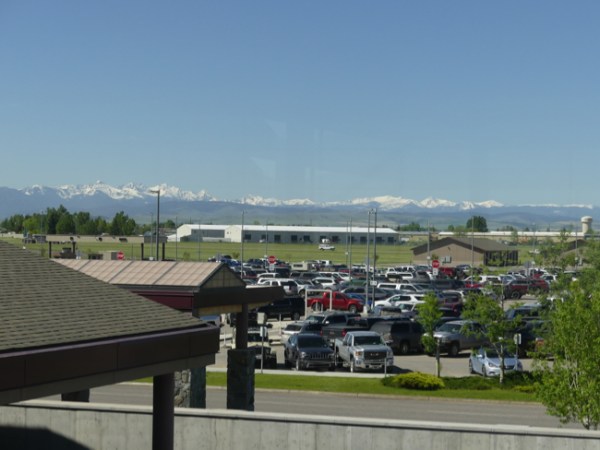
How often does an airport rate a blog entry? From the moment we landed in Bozeman to begin our trip, I was itching to take photos and show you what a beautiful job they have done positioning the Bozeman airport as the entry to Yellowstone and Glacier National Parks.
First, the airport is structured to look like a high-end game lodge. They have high ceilings, a huge stone fireplace, several sculptures and pieces (probably reproductions, but hey) from the Museum of the Rockies. I LOVE this airport.



I love the bobcat jumping off the ledge of the fireplace 🙂

And a last view of the mountains, from the airport.
June 28, 2019
Posted by intlxpatr |
Adventure, Arts & Handicrafts, Beauty, Building, Bureaucracy, Character, Heritage, Marketing, Public Art, Road Trips, Travel | Bozeman, Bozeman Yellowstone Glacier Airport, Montana |
Leave a comment
I lived through the 70’s and the ’80’s and as I have watched the young of our generation grow to maturity, I have had hope for a different kind of world. I believed I saw it coming, a new way of thinking, where women had equality, where all people had respect regardless of skin shade. I suspected it would be slow, but the dinosaurs my age and older would die off, leaving the more enlightened young people in charge.
When Obama was elected, I danced for joy. I saw it as a sign – a man of color elected President of the United States! To me, he embodied what our nation was established to attain. Freedom. Liberty. Justice for ALL. Equal opportunity.
This morning, AdventureMan and I were talking; as I was leaving his office I tweaked his photos by mere centimeters. They had shifted and were just a little crooked.
“I hope you don’t mind,” I said (and I had already done it.)
(Barely perceptible pause, but a pause none the less) “Oh no, my dear.”
We both broke out laughing. Sometimes people who have been married for a long time lie to each other in such a way, to be polite, not to rock the boat, but at the same time letting the other person know exactly how you feel about something.
That barely imperceptible pause had meaning. Nothing was something.
When you are a teen-age girl, there are a lot of things you tell yourself when trying to figure out what to do.
“Really, nothing happened . . . .”
“I wasn’t supposed to be at that party”
Maybe I shouldn’t have worn that bathing-suit. Maybe it was my fault”
“I know Mom and Dad would back me, but they would also be really pissed.”
“Do I want to be known as ‘that girl?'”
Maybe you talk to your friends. Most girls won’t talk to their parents, unless it is really severe and you can’t hide it.
I now – I worked with rape victims for two years at a Rape Crisis line. We listened. We offered information. We listened. We offered to go with them if they wanted to tell someone, like the police. We educated – police, hospital workers, first responders, parents. We listened. We went to court with the victims who chose to file charges. We listened.
The bravest woman I ever met was in Doha. I had agreed to meet with her when her mother told me she had been assaulted. She had been offered a ride home, the guy was the big brother of a school friend, driving her and her sister home. Instead, he and his friend drove deep into the desert, forced the girl out of the car and told her to co-operate and they would leave her little sister alone.
She negotiated. She wouldn’t do all that they tried to force her to do. Then they took her home.
She talked to a couple friends, who told her she needed to tell her parents because it had happened before, and could happen again. The young girls were like prey to these guys.
She went to the police, she named names. They were arrested, and when she saw them in the line-up, she told the police she needed for them to take off their clothes so she could tell for sure that it was them. She knew it was them. She also knew that they were from a good family and that nothing serious was going to happen to them no matter what the charges, but she wanted a moment where she could humiliate them in some small way for the way she had been abused and mistreated.
It was one of those unequal power moments, but she used what little power she had.
“I wanted to get this on the record,” she told me, “I wanted to make sure that when they go to get married, that their names will be on the record, and if not, people in Doha have long memories. Who will want to marry their daughters to these men?”
She was 16.
Her family suffered. Her father was heart-broken that he had brought his family to Doha and that he had, as he saw it, failed to protect his daughter. The family left Doha soon thereafter.
I still honor that girl, her courage, her wisdom, her dry-eyed willingness to speak out.
And I believe Dr. Ford. I believe she kept it to herself, maybe sharing a little with close friends. She was terrified and she was 15. She carried it for a long time. For most rape victims, like my 16 year old friend, the sexual violation pales in comparison to the violation of personal boundaries and the fear that you may not survive. You are in shock. You often blame yourself. You want to move on, and you don’t want to be known as “that girl that got raped.” She was younger than Kavanaugh, less powerful, a teen-ager.
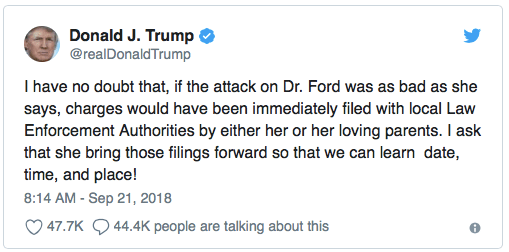
President Trump, you are just an ignorant oaf. You think you are something, but you are nothing. It’s not like women are assaulted and men aren’t. A thousand Catholic boys can tell you differently, and they feel the same shame as female victims feel. I hope everyone in America reads your ignorant, hateful, smarmy tweet and see the horror in having you as a President.
September 21, 2018
Posted by intlxpatr |
Character, Civility, Cross Cultural, Doha, ExPat Life, Family Issues, Generational, Interconnected, Leadership, Mating Behavior, Privacy, Quality of Life Issues, Rants, Relationships, Survival, Values, Women's Issues | Brett Kavanaugh, Christine Blasey Ford, Sexual assault |
Leave a comment

Today in the Lectionary readings, we come to the Gospel and one of my all time favorite verses and personal life guide. If you claim to follow Jesus, there are some basics. You have to follow the old Jewish traditions of loving God with all your heart, and loving your neighbor as yourself. You have to take care of the poor, the widowed (the single mother), the mentally ill, the children. You have to welcome the stranger, for we were strangers in Egypt.
Our national policies today are taking away medical benefits from our poorest citizens, are rolling back protections against pollution and contamination of air and water and even the foods we eat. The callousness of it all appalls me. Spiritually, we pay a price. As a country, I believe we will survive, but it will take a while to undo the damage that is being done, day by day.
As a cold warrior, I am horrified, but that is not a spiritual thing 🙂
Matthew 25:31-46
31 ‘When the Son of Man comes in his glory, and all the angels with him, then he will sit on the throne of his glory. 32All the nations will be gathered before him, and he will separate people one from another as a shepherd separates the sheep from the goats, 33and he will put the sheep at his right hand and the goats at the left. 34Then the king will say to those at his right hand, “Come, you that are blessed by my Father, inherit the kingdom prepared for you from the foundation of the world; 35for I was hungry and you gave me food, I was thirsty and you gave me something to drink, I was a stranger and you welcomed me, 36I was naked and you gave me clothing, I was sick and you took care of me, I was in prison and you visited me.” 37Then the righteous will answer him, “Lord, when was it that we saw you hungry and gave you food, or thirsty and gave you something to drink? 38And when was it that we saw you a stranger and welcomed you, or naked and gave you clothing? 39And when was it that we saw you sick or in prison and visited you?” 40And the king will answer them, “Truly I tell you, just as you did it to one of the least of these who are members of my family,* you did it to me.” 41Then he will say to those at his left hand, “You that are accursed, depart from me into the eternal fire prepared for the devil and his angels; 42for I was hungry and you gave me no food, I was thirsty and you gave me nothing to drink, 43I was a stranger and you did not welcome me, naked and you did not give me clothing, sick and in prison and you did not visit me.” 44Then they also will answer, “Lord, when was it that we saw you hungry or thirsty or a stranger or naked or sick or in prison, and did not take care of you?” 45Then he will answer them, “Truly I tell you, just as you did not do it to one of the least of these, you did not do it to me.” 46And these will go away into eternal punishment, but the righteous into eternal life.’
July 18, 2018
Posted by intlxpatr |
Aging, Character, Civility, Community, Cultural, Faith, fraud, Free Speech, Interconnected, Lectionary Readings, Living Conditions, Social Issues, Spiritual, Stranger in a Strange Land, Values | "the least of these", Mathew 25: 1 - 46 |
Leave a comment
The Psalm from today’s Lectionary readings:
140 Eripe me, Domine
1 Deliver me, O Lord, from evildoers; *
protect me from the violent,
2 Who devise evil in their hearts *
and stir up strife all day long.
3 They have sharpened their tongues like a serpent; *
adder’s poison is under their lips.
4 Keep me, O Lord, from the hands of the wicked; *
protect me from the violent,
who are determined to trip me up.
5 The proud have hidden a snare for me
and stretched out a net of cords; *
they have set traps for me along the path.
6 I have said to the Lord, “You are my God; *
listen, O Lord, to my supplication.
7 O Lord God, the strength of my salvation, *
you have covered my head in the day of battle.
8 Do not grant the desires of the wicked, O Lord, *
nor let their evil plans prosper.
9 Let not those who surround me lift up their heads; *
let the evil of their lips overwhelm them.
10 Let hot burning coals fall upon them; *
let them be cast into the mire, never to rise up again.”
11 A slanderer shall not be established on the earth, *
and evil shall hunt down the lawless.
12 I know that the Lord will maintain the cause of the poor *
and render justice to the needy.
13 Surely, the righteous will give thanks to your Name, *
and the upright shall continue in your sight.
Yesterday, several news sources discussed the rapid growth of the American Civil Liberties Union; this one is from Politicus USA:
Thanks to the election of Donald Trump as President of the United States, the American Civil Liberties Union (ACLU) has more than quadrupled its membership, according to an article in The New York Times.
Before Trump’s election the group had just 400,000 members and most of its actions were out of the public eye. But now, after 15 months of the Trump presidency, the membership is over 1.8 million and it has become one of the most active and visible opponents of Trump’s agenda.
Donations to the nonprofit group have also increased exponentially. The ACLU’s executive director, Anthony Romero, said that the organization has raised over $120 million since the 2016 presidential election. Before that watershed election, he said, donations had been in the range of just $3 million to $5 million annually.
Romero said that concerns over Trump’s attack on constitutional rights and civil liberties have brought a whole new generation of political activists into their group. “Until Trump most of our support came from people who have been with us since we challenged Nixon,” Romero told the Times. “Now we’re kind of cool. Cool’s not a word generally associated with us.”
The surge in membership, coupled with the massive increase in contributions, has for the first time given the ACLU all the resources it needs to fight Trump and other administration officials in court and elsewhere. They have been involved in more than 100 legal actions against Trump administration policies, including the White House’sseries of travel bans on the citizens of several Muslim-majority nations, which happened shortly after he took office.
More recently, the group has been challenging the Justice Department’s family separation policies, Trump’s voter fraud commission and the president’s reversal of an Obama-era contraception mandate.
According to Romero, his group has over 170 times taken what he calls “Trump-related legal actions” since he became president. This number includes the filing of 83 lawsuits, Romero said.
As the Trump administration steps up its attacks on refugees and asylum seekers, the ACLU has been filing class action lawsuits and also seeking injunctions to attempt to make the government stop separating families and incarcerating children. In some cases they have already been successful, and they are continuing to fight for the legal rights of people who may have been illegally detained and deprived of due process.
The large increase in ACLU membership is a good sign for American democracy. It shows that many Americans not only disapprove of Donald Trump’s policies and actions but are willing to support the fight against them. Ultimately this may be what saves our country from becoming a dictatorship and what preserves and protects the Constitution of the United States of America.
I’m one of those people. I used to think the ACLU was extreme, that was until I saw them first to man the tables offering free legal advice to incoming passengers the night Trump implemented his first travel ban. I sent my first check. I was asked why I had joined, and I told them because they are now our front line against thugs with no moral values, oppressors of the poor, led by a heartless, selfish, man who must be reined in. They sent me a sweet little ACLU pin, which I don’t dare wear in Pensacola.
July 6, 2018
Posted by intlxpatr |
Bureaucracy, Character, Civility, Crime, Cross Cultural, Cultural, Faith, Free Speech, Leadership, Lectionary Readings, Lies, Political Issues, Values | ACLU, American Civil Liberties Union |
Leave a comment
On Sunday, the organist played “America the Beautiful” in a minor key. It reflected what many of us are experiencing. We love our country. We hate what we are seeing.
An excerpt from an article from the Washington Post about declining democracies in the world, this part focused on the USA, land that I love:
Democracy declined precipitously in the United States
The United States fell 24 places in the country ranking on liberal democracy over the past two years, from seventh in 2015 to 31st in 2017. When we compare the United States’ score in 2017 with its average score over the past 10 years, the drop is precipitous and unprecedented.
 Liberal democracy in the United States: changes from the 10-year average.
Experts lowered their estimates of democracy in the United States because they began to be skeptical that the U.S. Congress will rein in executive overreach. Similarly, experts lost faith that the opposition party can contribute to overseeing, investigating or otherwise checking the majority party. The U.S. executive branch was assessed as showing less respect for the Constitution and compliance with the judiciary, two indicators that the judicial branch can restrain the executive.
For all four indicators, the score for the United States declined. The downward trend in the United States is much worse than in other countries. In terms of government compliance with decisions of the Supreme Court, the United States used to rank among the top countries of the world — but has now declined to No. 48.
I remember living in Kuwait, self-censoring my blog entries so I wouldn’t be expelled from the country, even blogging under a pseudonym. I think of the ICE officer who resigned, and was visited by law enforcement as he gave an interview to national news explaining why he (and others) were quitting ICE, disgusted and disheartened by the un-American practices they were being forced to engage in to export “illegals.” Yes, we still have freedom of speech, but we also look over our shoulders, now, never sure what new low will strike next.
July 5, 2018
Posted by intlxpatr |
Bureaucracy, Character, Civility, Cross Cultural, Cultural, Interconnected, Law and Order, Leadership, Living Conditions, Political Issues, Privacy, Quality of Life Issues, Social Issues, Values, Women's Issues, Work Related Issues | Democracy in decline |
Leave a comment

clipartxtras.com
AdventureMan is hollering from his office to mine “Can I read you something?”
We all find ways to express our indignation. He writes directly to our president, our representative (he calls him Trump’s butt-boy, to me, not to him), to Pruitt. He tells them, in acceptable language, exactly what he thinks.
“I’d say ( . . . . ), but as a retired army officer, I think I am still subject to the UCMJ (Uniform Code of Military Justice),” he says, and censors himself so that he is within civil boundaries.
How did we come to this, when our own national leader lies, again and again, even in the same day, and we have come to accept this as “normal?” How can we accept his calling people who are brown, and seeking a safer, better way of life “vermin” and their countries as “s-tholes?” The unthinkable has become our daily reality. It is not only the children, separated from their parents, who are becoming traumatized, it is also normal every-day Americans who believe that the American Dream is for everyone.
I think the American president is afraid of a world in which our nation is more brown than white, which it is well on it’s way to becoming. I think the thought of losing power terrifies him. I can’t imagine any other rational reason for his behavior towards the “other,” the stranger, those he labels as enemies.
So while I am startled when AdventureMan tells me he self-censors, I also understand. The unimaginable had manifested itself daily since this man was elected, and he will stop at no ends to complete his agenda. His cronies and fellow thugs will thrive, while we drink polluted water, and watch oil seep on to our shores from the off-shore drilling. We will watch our public schools fail, and our jails overflow. My heart breaks on a daily basis, watching what we, as a nation, are becoming.
I used to think the ACLU were a bunch of wackos. When the first travel ban went into effect, and we watched the stunned travelers arrive only to be told they must go back, the ACLU had tables in the airports offering free legal services. I sent my first check that night. I DO protest, via RESISTBOT (text Resist to 50409) wondering if my voice even matters. Sending checks to those who are resisting successfully gives me greater satisfaction. Reaching out my hands to “the other” gives me greater satisfaction. Building bridges and connections feeds my feelings of resistance, that together we can make a difference.
June 22, 2018
Posted by intlxpatr |
Character, Civility, Community, Counter-terrorism, Cultural, Faith, Family Issues, Free Speech, Interconnected, Leadership, Lies, Living Conditions, Political Issues, Quality of Life Issues, Random Musings, Relationships, Social Issues, Values |
Leave a comment
“She shows us the same things,” you might complain, and again I say “I write this blog for myself and for the love of writing about the things I love. You are welcome, all are welcome, and if you are not happy, you are welcome to go elsewhere!”
I’ve lived an odd life, a life I would’t trade with anyone. I grew up in Alaska, on an island with a lot of native Americans as my fellow students in my little elementary school. I grew up with Alaskan art, Indian artifacts, masks, baskets, and the hand made costumes, red and black images, sparked with trimming of white shirt buttons. I went to high school in Germany, traveling far and wide with my family or with friends through that continent, visiting more than a few churches and museums, even making special trips to see an exhibit or two.
Then a big change, life in the Middle East and Africa, where I learned to see things through a very different set of eyes and experiences, but something strange started happening, as I noted the differences, I could also see amazing similarities.
I love women’s handwork. I love the nomadic textiles, often made on very narrow looms that could be mostly a couple sticks and yarn from sheep or goats you’ve raised and slaughtered, died with whatever you could get your hands on. And, oddly, the weavings and patterns from Native American baskets and weavings have a lot in common with weavings from the Middle East, West Asia (the ‘Stans) and Africa. There is a love of working with black, white and red, for example, and a similarity to the structure of the animals, even when the animals themselves differ.
If you are interested in the work women do with their hands, you never lack for conversation wherever you go. There are always groups where women are teaching one another new techniques. I’ve met wonderful, creative women in Germany and in Kuwait and in Tunisia, all finding new and innovative ways to create, and also exploring preservation of early and ancient techniques.
So this Museum, the Columbia Gorge Discovery Center and Museum was richly rewarding for both AdventureMan and myself; it was rich in history, in interviews and movies showing early salmon runs, for example, and interviews with early Native Oregonians. It was also rich in exploring the techniques of early basket making and cooking techniques, preservation of salmon by drying and salting, etc. We spent hours in this museum, and we heartily recommend that you do, too 🙂 It is also a very gorgeous museum, rich in sensory impact, unforgettable.
I will show you pictures, and every now and then I will put in a little explanation.

Below is a dugout canoe, created from one very large cedar tree trunk, carved out by hand

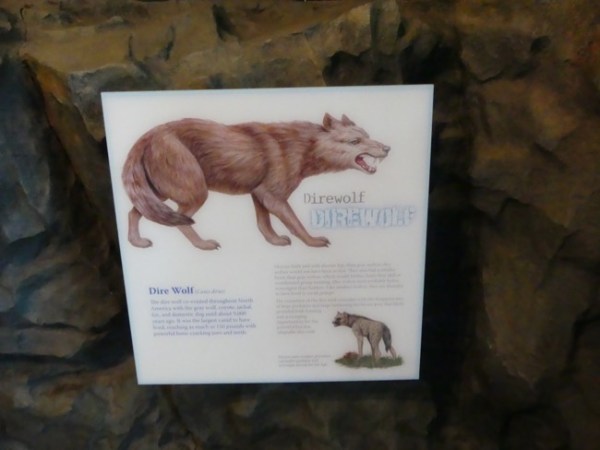
There were really Direwolfs? GOT didn’t make them up?


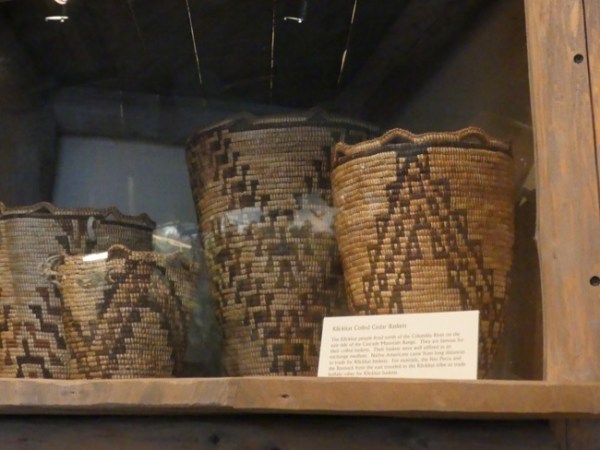
Look at the motifs on these baskets! African? Azerbaijani? Kazakh? Kuwaiti?





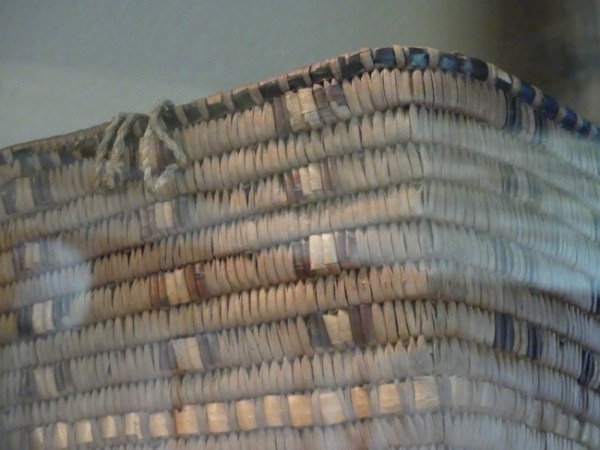


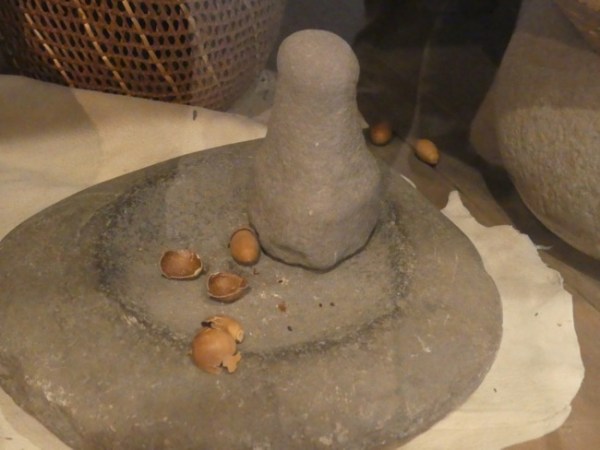
For grinding chestnuts into paste, then the paste is cooked into a kind of meal like oatmeal. The morter and pestle is the same in so many places.
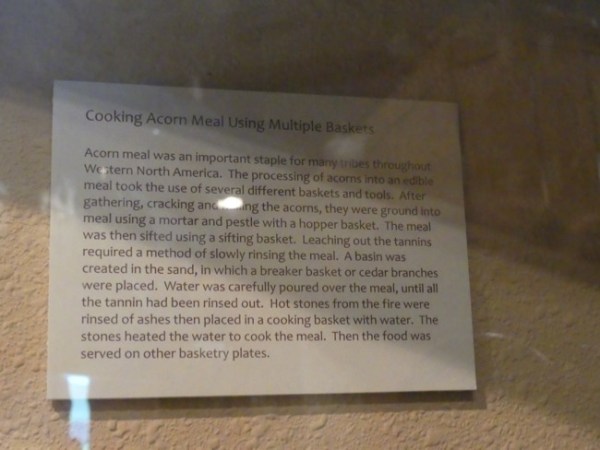
The round cooking stones, heated in fires, dropped into the meal, fished out once they start losing their heat, washed, reheated and put in again until the meal reaches a boil, all in this tightly woven basket.


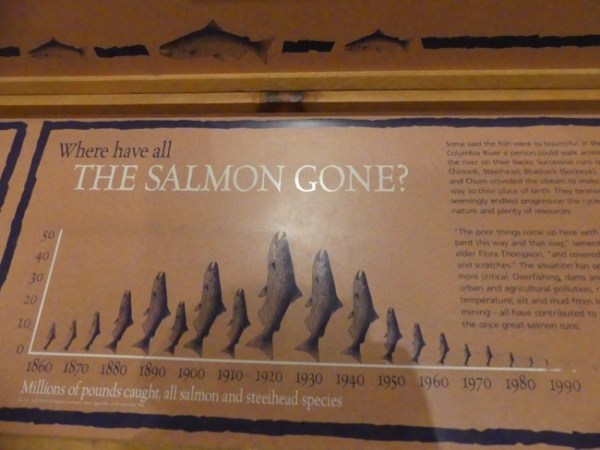
Activity in the Children’s exploration area

We love the creativity and persistence of humans who preserve our heritage and traditions for future generations. It is particularly delightful when the preservation is in a museum conceived and manifested with beautiful elements and natural materials.
June 4, 2018
Posted by intlxpatr |
Adventure, Afghanistan, Africa, Arts & Handicrafts, Beauty, Character, Cultural, Education, Entertainment, ExPat Life, Interconnected, Public Art, Quality of Life Issues, Road Trips, Travel, Values, Women's Issues, Work Related Issues |
Leave a comment
Most people, when they think of Fort Bragg, think of a military post in North Carolina. The Fort Bragg we discovered several years ago in California has little in common with the North Carolina Fort Bragg.
Our first time in Fort Bragg, as we left Cucina Verona, an Italian restaurant where we had eaten dinner, we were startled by the loud sound of hoofbeats, and the sudden appearance of two riders, galloping hell-bent down the middle of the road in Ft. Bragg. It was one of those adrenaline moments, when you wonder if you really saw what you just thing you saw, followed by all the things that could go wrong when you mix horses, highways, automobiles and high speed.
This time, one of the first things we saw was this sign:

But . . . it doesn’t say anything about riding horses, skateboards, or bicycles down the center of the street!
Ft. Bragg has a very laid back vibe. The town is full of couples who look a lot like us, maybe even a little older, maybe a little more hip and less retired military than we look, but relaxed, comfortable in their own skins. We love the vibe. My very favorite activity in Ft. Bragg is at the north end of the town, where they have a place called Glass Beach. Glass beach is where the old town dump used to be, a long time ago, and all the bottles dumped there broke and were washed by the waves, tumbled by the gravel and sand, and became beach glass. Most of what you find is pretty small these days; Glass Beach has been discovered, but if you venture out the the furthest inlets and rocks, you can find some larger pieces, sometimes even a green piece. I found one tiny little blue piece, the grand prize of all beach glass.
We love the North Cliff Hotel, where every room has the same view, looking out over the water at the inlet to the little bay.

We love the hot tub with a view.

We love the view. On the morning we were leaving, we looked out and someone had written a huge message on the sand, “Annie will you marry me?” How cool is that?!
Time is flexible in Ft. Bragg. We get up when we want to, we don’t have to drive to any destination, we can be lazy or we can just meander around, which is what we choose to do.
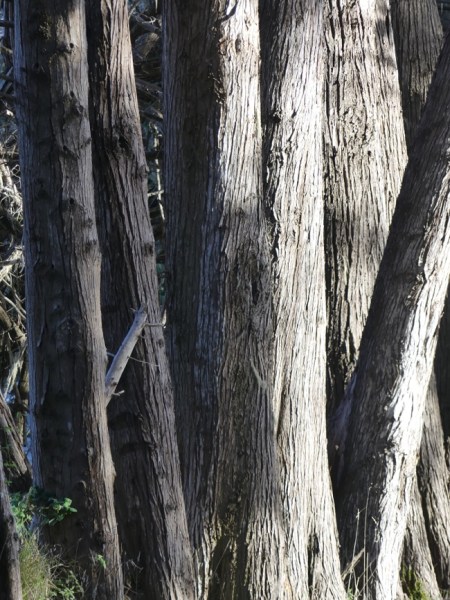
Love this tunnel of eucalyptus trees entering Ft. Bragg from the north:

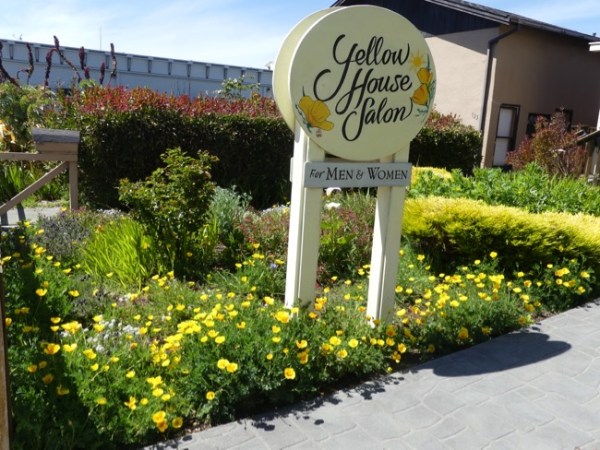
This yard had no flower but yellow flowers, and a LOT of yellow flowers!
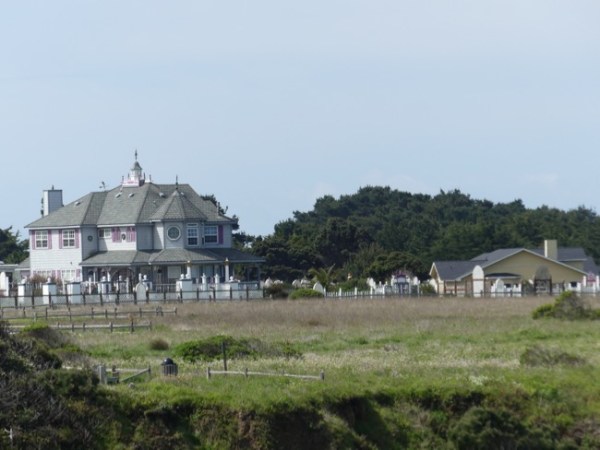


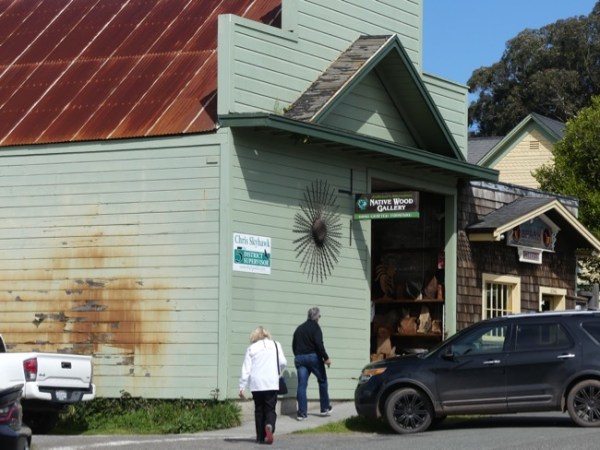
Just a short drive south is Mendocino, one of the most beautiful little California towns you could hope to find. We were looking for special gifts for two special people, and found them, polished carved natural bay laurel bowls, at this shop.
I read a recent article on how California leads the way for the American soul; it gives me hope for the future of our country. California pioneered gay rights, California champions the rights of immigrant children to education and health benefits, and Californians “welcome the stranger,” as all people of the book are supposed to do.
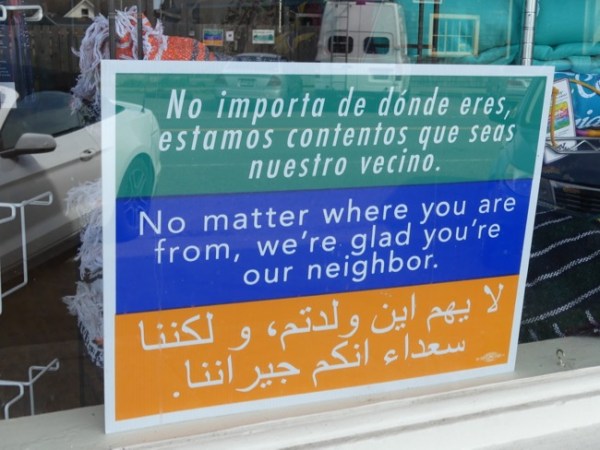
This was in the window of the main grocery/hardware/sundries store in Mendocino. When a woman saw me taking a photo, she asked me why, and I told her, it made me feel welcome and filled my heart with joy to know that it specifically would also make my Arab / Muslim friends feel welcome. She smiled, sternly, and said that they welcome ALL people, that is what California is all about. I was happily chastened. 🙂
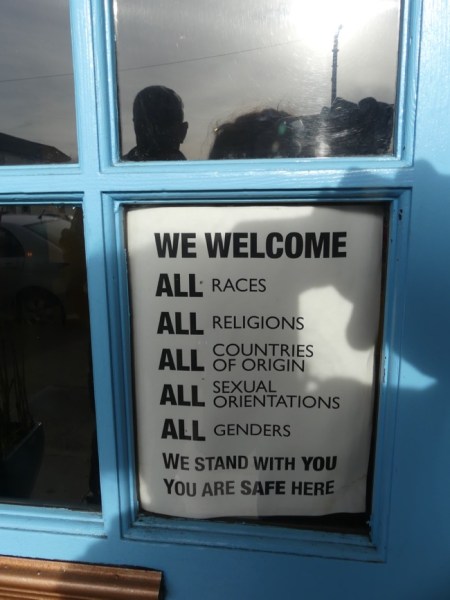
I want the United States of America to be a safe place for all people. No wonder I love California!
Well, there is another reason to love Ft. Bragg – they have one of the world’s best ice creameries right on the major through street in Ft. Bragg. 
Cowlicks Ice Cream is never not busy. On our first trip (we went twice in one day!) I had a scoop of ginger ice cream. It was a huge WOW. On the next trip, I had a chocolate which was really chocolaty, but I wished I had another scoop of ginger.
As we sat, eating our ice cream, I overheard a stylish but somewhat-frail looking 80’ish woman tell her daughter that she didn’t want to be bothered being married again, she was just looking to have a little fun without the complications of a relationship. Such is life in Ft. Bragg. 🙂
June 3, 2018
Posted by intlxpatr |
Adventure, Arts & Handicrafts, Beauty, Character, Civility, Community, Counter-terrorism, Cultural, ExPat Life, Faith, Hotels, Interconnected, Living Conditions, Quality of Life Issues, Road Trips, Social Issues, Travel, Values | California, Cowlicks Ice Cream, Ft. Bragg, Mendocino, North Cliff Hotel |
Leave a comment
Today the church remembers the martyrs of Sudan.
I have met one, personally, a wonderful journalist in the Sudan, who told us his story one December, just before Christmas. I have never forgotten him; we are still friends on FaceBook. He spent mot of his youth running from those attacking his village. As a child, sometimes he would be separated from his family for months. Although a treaty has been signed, the persecution continues in South Sudan, as even heavily pregnant women have to run for the swamps, or the nearest border, when the lawless janjaweed attack. South Sudan has oil.

The Christian bishops, chiefs, commanders, clergy and people of Sudan declared, on May 16, 1983, that they would not abandon God as God had revealed himself to them under threat of Shariah Law imposed by the fundamentalist Islamic government in Khartoum. Until a peace treaty was signed on January 9, 2005, the Episcopal Church of the Province of the Sudan suffered from persecution and devastation through twenty-two years of civil war. Two and a half million people were killed, half of whom were members of this church. Many clergy and lay leaders were singled out because of their religious leadership in their communities. No buildings, including churches and schools, are left standing in an area the size of Alaska.
Four million people are internally displaced, and a million are scattered around Africa and beyond in the Sudanese Diaspora. Twenty-two of the twenty-four dioceses exist in exile in Uganda or Kenya, and the majority of the clergy are unpaid. Only 5% of the population of Southern Sudan was Christian in 1983. Today over 85% of that region of six million is now mostly Episcopalian or Roman Catholic. A faith rooted deeply in the mercy of God has renewed their spirits through out the years of strife and sorrow.
(From the Lectionary, Martyrs of Sudan, for May 16, 2018)
This is the prayer for the Martyrs of Sudan:
O God, steadfast in the midst of persecution, by your providence the blood of the martyrs is the seed of the Church: As the martyrs of the Sudan refused to abandon Christ even in the face of torture and death, and so by their sacrifice brought forth a plentiful harvest, may we, too, be steadfast in our faith in Jesus Christ; who with you and the Holy Spirit lives and reigns, one God, for ever and ever. Amen.
May 16, 2018
Posted by intlxpatr |
Africa, Character, Circle of Life and Death, Community, Cultural, Faith, Lectionary Readings, Living Conditions, South Sudan, Sudan |
Leave a comment


