I am hearing those wonderful lines from Handel’s Messiah, because on this wonderful day, just after noon, a new child came into this world, a treasured girl-child, a warrior-princess is born. Thanks be to God, al hamd’allah!
Her Mother’s prayer for her is that she be the child that God created her to be. She hopes her daughter has courage, and a heart for adventure. When we met her, this amazing daughter-in-law, she played rugby, and she went off to France for a year to teach English.
We all pray that she will be healthy, and compassionate, with a heart for others. Courageous and passionate, and a woman of strength who will, like her Father, “give voice to those who have no voices.”
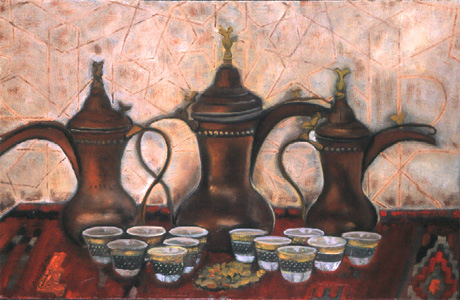
It is taking all our strength not to run to the hospital to visit. We feel very Middle-Eastern at this time; I am remembering my friend who went to Hamad hospital to have her babies. I took her daughters there the next morning, laden with canisters of coffee to serve guests.
“Guests?” I thought to myself. I had NO idea. Our Western idea is to give the new parents and their new baby time to recover from the physical and mental exertion of giving birth, time to bond as a small family unit.
When we got to Hamad Hospital, my friend had a huge suite, like a hotel suite, and her hospital bed was maybe King sized, with a curtain that could be drawn around it. She had a wall of mirrored closets and a seating area for about twenty people. No. I am not kidding.
We got there around seven in the morning, and within fifteen minutes, guests started arriving, all women, of course, come to give congratulations to the new Mom. Each came, greeted the new Mother, sat and drank a couple cups of coffee served by the delighted older daughters, greeted their friends, cousins and new arrivals, and then departed. Waves of guests arrived, and, thank God, waves of re-inforcing coffee pots.
So so different from our own customs, but today, oh, how I would love to fill a canister or two and be at the hospital sooner, rather than later, to greet the parents and to meet my new little lion-hearted grand-daughter, who insisted she would arrive when SHE wanted, LOL, not on schedule.
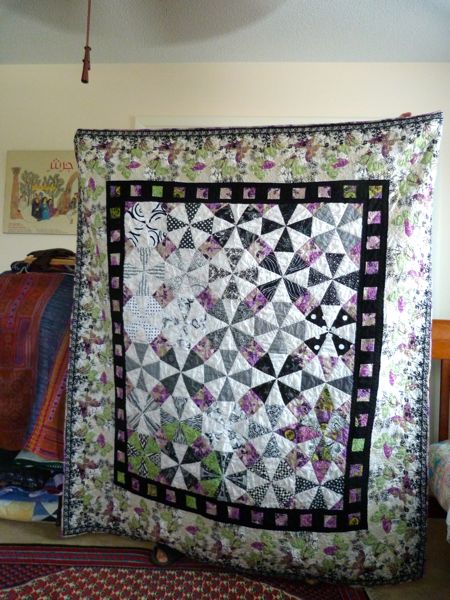
Here is the quilt I made for her:
And here is the guide to the colors; I bought the border five years ago:
When AdventureMan say it, he said “that doesn’t look like a baby quilt” because it is so black and white, but, if you have eyes to see, it isn’t all black and white, it also has shades of purple, fuchsia, and a celery Spring green. I made the center Kaleidoscope pieces with a variety of blacks and whites, because babies LOVE black and white, and it can fascinate them and calm them.
I call it “I See Things Differently” because no, it doesn’t look like a baby quilt, but it is very much a baby quilt, it just doesn’t meet our cultural expectations. The longer I live, the less I meet any one’s expectations, LOL!
Thanks be to God! Thanks be to God for the safe delivery of this precious baby!
It is a picturesque village. Along Main Street, and Fifth Avenue there are corner gardens, maintained by the city. This year, they are planted primarily with white flowers, big, fluffy flowers which make all the other flowers POP! with color. Overhead, from the lamp posts, are huge hanging baskets, full of a variety of plants, mostly purples, blues and fuchsias. The overall effect is stunning.
On our way to her manicure-pedicure, I drove Mom around looking at the sights. Down at the Edmonds Beach, I was shocked to see an eagle, perched on a piling. The shot isn’t very good, I jumped out of the car in a hurry and snapped, not taking enough time, but I was so surprised – I had never seen an eagle there before.
After lunch, as we headed out, we saw people touching up one of the murals Edmonds has painted on the sides of buildings there:
Here is another one, nearby:
I love it that this sweet little town, with its ferry coming faithfully in and out, preserves its identity and character in the face of changing times.
I know, I know, it is not a funny headline. But here is the thing. People have egos. You might wonder why anyone would stay in the face of a threat so grave. It isn’t by coincidence that so many prisoners were busted out of prison – hundreds in Iraq, in Yemen, also if I remember correctly, in Pakistan.
These countries, under international understandings and agreements, provide security for one another’s embassies. Like WE provide security for the Saudi and the Yemeni and French diplomats in the United States. When a country suffers massive prison breaks, it is only prudent to wonder how well they might be able to protect international diplomats – it’s all security.
But – and here is why a very serious headline can make me laugh so early in the morning – who wants to be “non-essential?” I’ve lived through similar situations; people want to think themselves important – you would be surprised how many people will choose to stay, knowing the dangers, because they want to consider themselves “mission-essential”. 🙂
WASHINGTON — The State Department on Tuesday ordered non-essential personnel at the U.S. Embassy in Yemen to leave the country following the threat by al-Qaida that has triggered temporary shutdowns of 19 American diplomatic posts across the Middle East and Africa.
The department said in a travel warning that it had ordered the departure of non-emergency U.S. government personnel from Yemen “due to the continued potential for terrorist attacks” and said U.S. citizens in Yemen should leave immediately because of an “extremely high” security threat level.
“As staff levels at the Embassy are restricted, our ability to assist U.S. citizens in an emergency and provide routine consular services remains limited and may be further constrained by the fluid security situation,” the travel warning said.
The U.S. Embassy is located in Sanaa, the capital of Yemen.
The State Department on Sunday closed a total of 19 diplomatic posts until next Saturday. They include posts in Bangladesh and across North Africa and the Middle East as well as East Africa, including Madagascar, Burundi, Rwanda and Mauritius.
This is a very troubling book, and, for me, a difficult book to read. It has taken me weeks, and I will admit I have often interrupted the reading of it to read other, easier books. This book makes me very uncomfortable. The stories and images trouble my sleep.
Uwem Akpan is of the tribe of Annang, from Nigeria, and has committed to an even larger tribe, the Catholic Church, of which he is a priest, and this gives him a unique perspective. The stories in this book often focus on tribal differences, including religious differences, and although they are set in different African states, have parallels in lives lived elsewhere. Those tribal differences are between Moslem and Christian, but also between Pentecostal and Catholic, Tutsi and Hutu, and, most significantly, the differences between to tribe of the very poor and the very rich.
Each story is told through the eyes of a child living in a different African state – Kenya, Benin, Ethiopia, Nigeria, Rwanda.
In one of my favorite segments of the book, strife has broken out in Nigeria, strife between the Moslems and the Christians, but also throw in the Pentecostals and the Pagans and really mix it up. A bus is waiting in the bus station to take people back to the southern part of Nigeria, and on this bus is a young man, half Moslem, half Christian. The bus stands idle for hours, while the bus driver seeks fuel to make the trip. During this time on the bus, many conversations take place, and what I loved was how alliances shifted with each conversation. The people on the bus were from different traditions, but came together as a community. No community is without arguments and dissensions, however, and consensus builds, diminishes, shifts – it is a microcosm of the tensions and stressors pulling apart the Nigerian nation state.
Uwem Akpan treats the children in each story lovingly, treasuring their innocent perspective and the sweetness of their hearts and vision. The adults don’t come off so well, passing their days in drug-induced stupors, drunk, selling children into slavery and prostitution, chopping off their limbs with machetes, and closing themselves off into groups which protect themselves and exploit others.
It would be an easier book to read if it were about aliens, or if these stories were confined to Africa, but the stories of these abused, neglected and exploited children echo in every continent, country and city in the world.
Uwem Akpan writes prose that is poetry; the surroundings are described with such detail that you feel in the moment, you see through the eyes of each child, and you see things that are beautiful as well as scenes you did not want to see. As you can see, I have a lot of ambiguous feelings about this book. At the same time I can admire the writing, the stories have left images in my mind that cannot be erased. Dark images. There is hope in the persistence and resilience of many of the children, but concern about their long term survival. It leaves a heavy weight on my heart.
Today’s meditation from Forward Day by Day touches on one of my very favorite stories – and its opposite. It’s all about the power of belief. The woman, suffering from bleeding, would have lived a terrible life, considered unclean, untouchable, and trying everything to be cured without success. Just a touch – one touch – and her illness is gone. Jesus is astonished and tells her that her faith has made her well.
In contrast, the people in his own village are skeptical. How can good ole Jesus, son of Mary and that carpenter, how can he be anything special? In the face of such callous disbelief, Jesus can do little.
SATURDAY, July 27
Mark 6:1-13. And he could do no deed of power there, except that he laid his hands on a few sick people and cured them.
What a contrast, in just a few verses. Yesterday the bleeding woman merely touched Jesus’ garment, and Jesus’ power streamed into her. Today he is home, and those who watched him grow up ask, “Just who do you think you are?” and the Son of God is stopped in his tracks, like Superman when he is exposed to kryptonite.
My field education rector preached on this passage a year ago, and I was spellbound by his ending. He asked, “If Jesus came to All Saints, would he be able to do deeds of power?” Then the rector got even more personal, asking, “If Jesus came to you, would he be able to deeds of power?”
Oh, how I hope so. I’m not sure how to have the faith that allows Jesus to perform deeds of power, but I can see what kind of behavior does. It is hopeful, brave actions that seem to open the way for Jesus to work; and it is arrogant, fear-based behavior that seems to block the way.
Lord, teach us not to fear the change you bring. Teach us to reach out to touch your garment.
When my Mother was still living on her own, there was a revolving guest room, and my sister left a CD for me there, as she departed and I arrived, which contained the song above. I want it sung at my funeral. It is a succinct statement of faith; it is the song of the bleeding woman who believes and is cured, and nothing is ever the same.
This little girl is lucky; she has a sympathetic uncle who protected her when her own mother, twice, tried to sell her into marriage.
She is an amazingly articulate and resourceful little girl. I look forward to seeing the woman she grows into, safe under her uncle’s care. I love it that he convinced one prospective husband that she was not modest enough to be his bride 🙂
In a bone-chilling three minutes, a young girl who evaded child marriage tells the world that she would “rather die,” than be forced to undergo an arranged marriage.
After learning that her parents had plans to marry her off to a wealthy suitor, brave Nada al-Ahdal of Yemen risked her life and fled to the refuge of her uncle. The precocious little girl, who saw how her teenage aunt took her own life after being abused in an arranged marriage, shared in a harrowing translated video the cruelty of the child bride practice.
“I would have had no life, no education. Don’t they have any compassion?,” Nada asks. “I’m better off dead. I’d rather die [than be forced into a marriage].”
According to NOW News, Nada’s uncle, Abdel Salam al-Ahdal, a montage and graphics technician at a TV station, has protected his niece from being married off twice. Nada’s parents first accepted an offer from a wealthy expatriate, but al-Ahdel intervened and told the prospective groom that Nada was not nearly modest enough for him, in order to “scare him off.”
“When I heard about the groom, I panicked,” he told NOW. “Nada was not even 11 years old; she was exactly 10 years and 3 months. I could not allow her to be married off and have her future destroyed.”
When Nada’s mother tried once again to marry off her daughter against her will, Nada — despite threats that she could be killed — fled to her uncle’s once more, and filed a complaint with the police. She’ll now be living with al-Ahdal permanently.
But such forced marriages, like Nada’s, are on the rise across the globe.
According to a World Vision study released in March, more child brides are being led into arranged marriages due to an increase in global poverty and crises. Parents who live in fear of natural disasters, political instability and financial ruin look to arranged marriages as a way to save their struggling families.
Every day, 39,000 girls, younger than 18, will marry, according to the World Health Organization.
“Women have no rights to give an opinion in the family,” Humaiya, a 16-year-old from Bangladesh who managed to escape marriage, told The Huffington Post in March. “My father didn’t listen.”
Nada, whose video on YouTube has already garnered more than 2 million hits, hopes that the world will hear her message loud and clear.
“They have killed our dreams. They have killed everything inside us,” Nada said in the video. “This is no upbringing. This is criminal, simply criminal.”
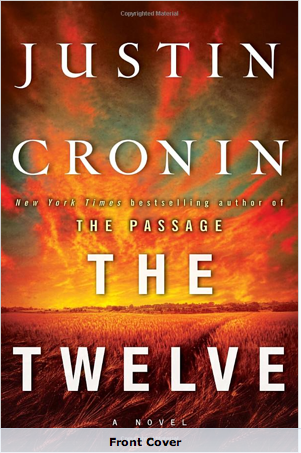
I had downloaded The Twelve to my iPad for a trip, but didn’t get to it, and sort of forgot it was there until my son mentioned he was listening to it on audio-books, and it was good, maybe even better than the first book in the trilogy, The Passage. He had loaned me The Passage several years ago when it came out, and as soon as I finished, I got on the list to download as soon as the next book came out – it was that good.
Cronin’s gift is an ability to create a future world entirely different from our own, with a devastating enemy – the virals – who, literally, are us, transformed. Cronin can make the enemy terrifying, destructive, truly horrifying – and can make them also captive to their repugnant nature and even pitiable. I think that is an amazing dance for an author to accomplish.
The setting is post-apocalyptic USA; the government had a sector working on a secret weapon which – of course – was not able to be contained, creating 12 super vampire-like creatures called Virals, who in turn create hordes of minions. This volume, The Twelve, is set more than 100 years later, but shifts back to earlier times to help us understand how this disaster occurred, and how characters relate back to the earliest times of the disaster. The populations live in fear of sudden attacks; one family, out on a picnic, are almost totally wiped out by an eclipse for which the Virals were prepared – and the families were not.
As I read his books, I find them very cinematic, but, as my son and I discussed, too complex for a movie; it would need a gritty HBO series like The Wire, or OZ, or Deadwood to capture the subtleties, the nuances that make this a best-selling series. The heroes and heroines are all make for the screen, their relationships – and inter-relationships – make them interesting, and then, as we learn more, interesting again. We never know enough to make a final judgement on any character; the characters are complex and the relationships obscure until the author chooses to reveal. It makes it fun to try to spot them before he tells us. I missed a couple!
Although it can be read as a great-adventure stand-alone, you’ll be happier if you read The Passage before you read The Twelve. If you have a problem with postponing gratification, you might want to wait until the third and conclusive volume of the trilogy is published – and that may be a year or so.
“I miss the highs. . . ” my friend said – just before she went off her meds.
I totally understood what she was saying. We belonged to a quilting group, and when she was beginning a manic phase, she produced knock-out quilts, quilts combining colors in unusual ways, and she could stay up all night to finish one. She was a lot of fun to be around, totally up and enthusiastic and creative. As the phase progressed, however, she got thinner and thinner, fell in love with the wrong men, and I always knew when she was just about to crash because she looked fabulous – new clothes, lots of shoes, and she talked a mile a minute.
Then the crash. Her biggest fear was the credit card bills; when she was on a high, she felt like it didn’t matter. When she slid into depression, it was complicated by the fact that she had real things to be depressed about – STDs, huge bills, and concerns at her workplace and her security clearance.
As long as she was on her meds, she was fine, but the medications made her feel sluggish; she said even colors were less colorful on her meds. She said it was like spending your life underwater, where things were not so clear. She said it was dull.
It’s easy, when you are not bi-polar, to say “stay on your meds.” It’s really hard to do it when the meds can make you feel like you are living in a prison.
My friend recommended a book by Kay Redfield Jamison called An Unquiet Mind. It was one of the most helpful books I have ever read, helping me to understand just how hard it is to give up the mania in spite of the huge price you pay for it with the depressions.
Fewer than half of Americans with bipolar disorder are properly diagnosed and treated, recent research shows. Could you spot bipolar symptoms – in yourself or in someone close to you?
Fewer than half of people in the United States who show classic signs of bipolar disorder actually get diagnosed and treated, says a recent Archives of General Psychiatry report on a survey of more than 61,000 adults in 11 countries — the United States, Mexico, China, Japan, Brazil, Colombia, India, Lebanon, Bulgaria, Romania, and New Zealand. Bipolar patients in lower-income nations get even less treatment — in some cases, as few as 25 percent receive help.
Compared to the other 10 countries studied, the United States had the highest rate of bipolar disorder (4.4 percent of those surveyed fell somewhere on the bipolar spectrum). India had the lowest (0.1 percent). Overall, about 2.4 percent of those interviewed in the face-to-face survey could be classified as having bipolar disorder.
Bipolar Disorder’s Most Surprising Symptoms
It may be buzz-worthy these days, but many people don’t fully understand bipolar disorder and the symptoms that can lead to proper diagnosis and treatment. Bipolar, also sometimes called manic-depressive disorder, is characterized by shifts from extreme highs (known as mania) to emotional lows (depression), with “normal” moods in between.
It’s bipolar disorder’s manic phase that most sets it apart from other common mental health issues, such as depression and anxiety. While many people associate mania with high energy and exaggeratedly good moods, these other key symptoms are more subtle:
Reckless spending. If a friend is blowing her paycheck on shopping sprees she can’t afford, watch out. A person in a manic phase of bipolar disorder is more likely to take big risks, including spending splurges that can lead to mountains of unmanageable debt.
Super-charged sex drive. A sudden revving up of a person’s sex drive, obsessively thinking or talking about sex, or engaging in sexual encounters he otherwise wouldn’t (like a one-night stand or sex with someone he doesn’t know well) are all symptoms of hypersexuality, another less-obvious mania clue.
Alcohol or drug abuse. These often go hand-in-hand with manic episodes: As many as 60 percent of people with bipolar disorder have abused alcohol or drugs at some point in their lives. Depressants such as alcohol or pain pills can send a person with mania straight into depression, while stimulants like cocaine can have the opposite effect.
Skimping on shut-eye. Little need for sleep is another red flag that a person may be having a manic episode.
Keep in mind that bipolar disorder can vary greatly in severity, and not everyone experiences every symptom. In fact, some patients experience hypomania, a less mild form of mania. But even hypomania, if left untreated, could spin into depression or develop into full-blown mania.
One important takeaway from the Archives study is that across all countries, patients with bipolar disorder faced challenges in their daily lives and were at increased risk of such health problems as panic attacks, substance abuse, and suicide. Untreated bipolar disorder can also lead to troubled relationships with friends and family and problems at work. If you’re concerned about yourself or a friend or loved one, get more information here on the best treatments for bipolar disorder.
The first time I read anything by Jeannette Walls, I had not read her autobiographical best-seller, The Glass Castle. If I had, when I read the opening pages of one of my all-time-favorite books, Half Broke Horses , three young children out checking on the cows in America of the mid-1800’s, I would have said “Oh, yes, this is Jeannette Walls” instead of being so shocked that these three children were so far from home with a storm approaching. Not only does the storm approach – the oldest sister pushes her younger sister and brother up a tree and they are stuck there through a violent storm all night. No adult comes looking for them.
“Where is their mother?” in shock I thought, “a mother with three children out in the storm goes looking for them!”
Not if you are a Jeannette Walls mother. To ‘get’ Jeannette Walls, you really have to start with The Glass Castle, and learn about how she and her siblings are at the mercy of an alcoholic mother and father, both big liars, maybe with some attendant mental problems. Half Broke Horses is fiction, based on her own grandmother, who, at 15 rides 28 days across Indian territory to teach at a far-away school (What mother lets her 15 year old DAUGHTER ride for a month across dangerous country ALONE??)
I was on the send-as-soon-as-it’s-published list for Silver Star. And even once it arrived, I waited until I knew I might have a few free hours in the evening to read it – once you start Jeannette Walls, you can’t put it down. Her heroines in this novel are 15 year old Liz and 12 year old Bean (Jean) whose mother ran away from her hometown in Virginia to pursue a career in music. The mother has a small inheritance to sustain them; when life sours, as it often does for her, she packs the girls into her worn Dodge Dart and takes off. She isn’t always good about paying her bills. She talks to her girls about what a great team they are, and then takes off for a day or two, usually with some man, leaving them to eat chicken pot pies. Then, she abandons them with no sign of when she will be back.
The girls are pistols. They are survivors, much like Jeannette Walls grandmother in Half Broke Horses. When social services start coming around asking where their mother is, they take off headed for their Mom’s old home town, across the continent, in Virginia.
The heart of the story finds the girls living in the old family mansion, scouting for odd jobs, learning more about themselves and their heritage, and learning how a small community can smother, judge and support their community members in unexpected ways.
If you are a negligent, man-oriented, self-absorbed mother, you don’t want to have a writer for a daughter. Jeannette Walls is having a ball; her books are both sad and hilarious, and she has utter scorn for mothers who do not take the reins of motherhood and behave like grown-ups.
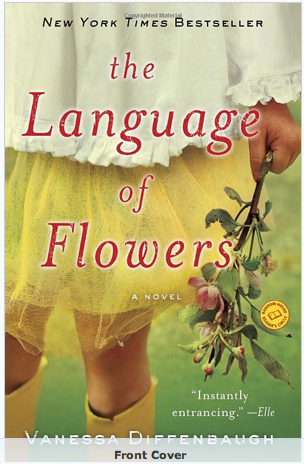
I didn’t expect to like this book as much as I did; from the first chapter I was hooked, so hooked I didn’t want to go to water aerobics of go to sleep until I had finished it. The title sounds girly and romantic, big yawn, but the book is anything but. The book is tough, and edgy, and tackles the foster care system without using sexual assault or out-of-the-ordinarily-cruel foster parents to bludgeon the point. She botches her one great chance at happiness when she sabotages her adoption by Elizabeth, who loves her dearly. The system can even be caring, but the effect of warehousing unwanted and neglected children damages their ability to trust, and to form relationships. We watch her as a child, self-destructive, angry, undermining her own chances of happiness.
Victoria even has a girly name to go with the title, but she is tough, and self-reliant, and very, very vulnerable, in spite of her toughness. Aging out of the system, she emerges a waif, with a hunger that stems more from emotional needs than physical.
She is greatly blessed to cross paths with people who look at her and truly see her, see her possibilities and her vulnerabilities, people who are willing to work with her, even to love her patiently, in spite of her prickliness and tendency to push people away. One of these is a florist, Renate, who recognizes in Victoria a gift for floral arrangement and is willing to work around her eccentricities. She gives Victoria a part-time job, in which Victoria flourishes.
In her emotional life, however, Victoria still has a lot of unresolved issues, stemming back to the very beginning when she was given up by a mother who, for whatever reason, didn’t want her. While she is hungry for love, she fears it as much as she wants it. Relationships overwhelm her. She abandons the love of her life, and then has to live with the consequences.
Watching her resolve her issues is cliff-hanging. You can’t stop reading. It’s not like watching a train-wreck; you know this girl has inner resources she has not yet tapped; you can read it in the loving evaluation of those who surround her. Every page of the way you are rooting for her to succeed.





 Here There and Everywhere