The Trials of Job
Today’s Lectionary readings feature the first chapter of Job, which is to me a very odd story, worth pondering. It is also interesting to me that this is a story that all three ‘people of the book’ share, and while I have met Moslems named Ayoub (Job) I have never met a Christian named Job.
I went to the Middle East with so many misconceptions. I believed the Moslems to be anti-Christian, and was astonished when I discovered that it was OK with my Moslem friends that I was a Christian. Like all the rest of us, they would prefer I share their beliefs, but they were happy that I was a believer, and that I practiced my religion. No, it didn’t stop them from trying to discuss religious matters with me – all in the goal of bringing me over from the dark side (LOL, i.e. clearing up my errors in thinking and believing), but in these discussions, I had a lot of surprises.
I have more Moslem friends with children named Jesus than I have Christian friends. One friend has a Jesus, a Mary and a Joseph. (She also has two Mohammeds 🙂 ) Noah is in the Quran, and Job, and of course Gabriel, who brought the good news to Mary, is also the angel who recited to Quran to the prophet Mohammed. How did I not know this? The longer I live, the more careful I become about what I take on as beliefs. I give thanks to God who sent me into the wilderness that I might have a better understanding of how things work in the world.
Today’s reading has some puzzles. The Lectionary defines the ‘heavenly beings’ who gathered as ‘sons of God.’ Satan is The Accuser, is in attendance, challenging God on Job’s faith – so is this before or after he has fallen from Grace? Does Satan still appear before God? I thought he was banished . . .
And what awful awful calamities befell Job because of this cosmic wager – imagine, not so much the loss of wealth, although his wealth was vast, but imagine the loss of all your sons and daughters, the loss of everything you cared the most about. And Job, righteous as he is, says the Lord gave it to him and he can take it away. Wow.
Job 1:1-22
1There was once a man in the land of Uz whose name was Job. That man was blameless and upright, one who feared God and turned away from evil. 2There were born to him seven sons and three daughters. 3He had seven thousand sheep, three thousand camels, five hundred yoke of oxen, five hundred donkeys, and very many servants; so that this man was the greatest of all the people of the east. 4His sons used to go and hold feasts in one another’s houses in turn; and they would send and invite their three sisters to eat and drink with them.
5And when the feast days had run their course, Job would send and sanctify them, and he would rise early in the morning and offer burnt-offerings according to the number of them all; for Job said, ‘It may be that my children have sinned, and cursed God in their hearts.’ This is what Job always did.
6 One day the heavenly beings* came to present themselves before the Lord, and Satan* also came among them. 7The Lord said to Satan,* ‘Where have you come from?’ Satan* answered the Lord, ‘From going to and fro on the earth, and from walking up and down on it.’ 8The Lord said to Satan,* ‘Have you considered my servant Job? There is no one like him on the earth, a blameless and upright man who fears God and turns away from evil.’
9Then Satan* answered the Lord, ‘Does Job fear God for nothing? 10Have you not put a fence around him and his house and all that he has, on every side? You have blessed the work of his hands, and his possessions have increased in the land. 11But stretch out your hand now, and touch all that he has, and he will curse you to your face.’ 12The Lord said to Satan,* ‘Very well, all that he has is in your power; only do not stretch out your hand against him!’ So Satan* went out from the presence of the Lord.
13 One day when his sons and daughters were eating and drinking wine in the eldest brother’s house, 14a messenger came to Job and said, ‘The oxen were ploughing and the donkeys were feeding beside them, 15and the Sabeans fell on them and carried them off, and killed the servants with the edge of the sword; I alone have escaped to tell you.’
16While he was still speaking, another came and said, ‘The fire of God fell from heaven and burned up the sheep and the servants, and consumed them; I alone have escaped to tell you.’
17While he was still speaking, another came and said, ‘The Chaldeans formed three columns, made a raid on the camels and carried them off, and killed the servants with the edge of the sword; I alone have escaped to tell you.’
18While he was still speaking, another came and said, ‘Your sons and daughters were eating and drinking wine in their eldest brother’s house, 19and suddenly a great wind came across the desert, struck the four corners of the house, and it fell on the young people, and they are dead; I alone have escaped to tell you.’
20 Then Job arose, tore his robe, shaved his head, and fell on the ground and worshipped. 21He said, ‘Naked I came from my mother’s womb, and naked shall I return there; the Lord gave, and the Lord has taken away; blessed be the name of the Lord.’
22 In all this Job did not sin or charge God with wrongdoing.
The New Revised Standard Version (Anglicized Edition), copyright 1989, 1995 by the Division of Christian Education of the National Council of the Churches of Christ in the United States of America. Used by permission. All rights reserved.
Shar’a Kaharabaa Today
One of our favorite places in Doha was Shar’a Kaharabaa, Electricity Street. Bombay Silk was there. the old Beirut restaurant was there and several very good and reasonable tailors worked there. All good quilters knew the Mumtaz Tailor, who had every notion in the world, and good prices, and knew where everything could be found in the chaos of his shop. You could always find parking.
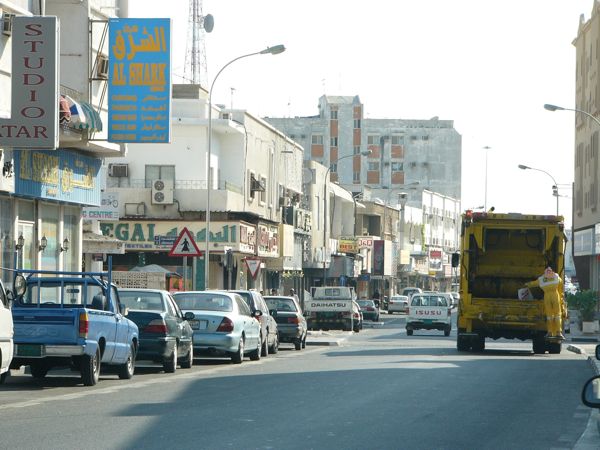



I dared to take a look at Sharia Kharabaa this morning, and I shouldn’t have. It’s that bare spot middle left. Al Rayyan, at the top of the photo, leads to the Souk al Waqif. One day, the old picturesque Sharia Kharabaa is supposed to be a grand walk way to the Souq.

That Cheeky Woman At The Well
Today’s Gospel reading from the Lectionary is one of my favorites, and every time I read it, I am amazed. Amazed that this good Jewish boy would speak to a woman who cavorted with men, having five husbands, and being with a man now who was not her husband. It’s the middle of the day, and he is sitting by a well having a conversation with a woman most good Jewish boys would run from, a woman of ill-repute!

She must have had a rough life, five husbands, etc. but it hasn’t broken her spirit, and she is joking around with Jesus. She knows something about Jewish traditions, but has no idea who Jesus might be. Then, oddity of oddity, he reveals himself to her as the Messiah – to this woman. He reveals himself to a woman at the very lowest end of the social scale, a woman barely tolerated in her own society. This woman believes him; for all her sins, she ‘hears’ the truth of what he is saying in her heart.
John 4:1-26
4Now when Jesus* learned that the Pharisees had heard, ‘Jesus is making and baptizing more disciples than John’— 2 although it was not Jesus himself but his disciples who baptized— 3he left Judea and started back to Galilee. 4But he had to go through Samaria. 5So he came to a Samaritan city called Sychar, near the plot of ground that Jacob had given to his son Joseph. 6Jacob’s well was there, and Jesus, tired out by his journey, was sitting by the well. It was about noon.
7 A Samaritan woman came to draw water, and Jesus said to her, ‘Give me a drink’. 8(His disciples had gone to the city to buy food.) 9The Samaritan woman said to him, ‘How is it that you, a Jew, ask a drink of me, a woman of Samaria?’ (Jews do not share things in common with Samaritans.)* 10Jesus answered her, ‘If you knew the gift of God, and who it is that is saying to you, “Give me a drink”, you would have asked him, and he would have given you living water.’ 11The woman said to him, ‘Sir, you have no bucket, and the well is deep. Where do you get that living water? 12Are you greater than our ancestor Jacob, who gave us the well, and with his sons and his flocks drank from it?’
13Jesus said to her, ‘Everyone who drinks of this water will be thirsty again, 14but those who drink of the water that I will give them will never be thirsty. The water that I will give will become in them a spring of water gushing up to eternal life.’ 15 The woman said to him, ‘Sir, give me this water, so that I may never be thirsty or have to keep coming here to draw water.’
16 Jesus said to her, ‘Go, call your husband, and come back.’ 17The woman answered him, ‘I have no husband.’ Jesus said to her, ‘You are right in saying, “I have no husband”; 18for you have had five husbands, and the one you have now is not your husband. What you have said is true!’ 19The woman said to him, ‘Sir, I see that you are a prophet. 20Our ancestors worshipped on this mountain, but you* say that the place where people must worship is in Jerusalem.’
21 Jesus said to her, ‘Woman, believe me, the hour is coming when you will worship the Father neither on this mountain nor in Jerusalem. 22You worship what you do not know; we worship what we know, for salvation is from the Jews. 23But the hour is coming, and is now here, when the true worshippers will worship the Father in spirit and truth, for the Father seeks such as these to worship him. 24God is spirit, and those who worship him must worship in spirit and truth.’ 25The woman said to him, ‘I know that Messiah is coming’ (who is called Christ). ‘When he comes, he will proclaim all things to us.’ 26Jesus said to her, ‘I am he,* the one who is speaking to you.’

Olympic Committee OK’s Hijab for Saudi Judo Contestant
From AOL/Huffpost
LONDON — A female judo fighter from Saudi Arabia will be allowed to compete in the Olympics wearing a form of headscarf after a compromise was reached that respects the “cultural sensitivity” of the Muslim kingdom.
Judo officials had previously said they would not let Wojdan Ali Seraj Abdulrahim Shahrkhani compete in a headscarf because it was against the principles of the sport and raised safety concerns.
But an agreement was reached after several days of IOC-brokered talks between the International Judo Federation and the Saudi Olympic Committee that clears the way for her to compete Friday in the heavyweight division.
“They have a solution that works for both parties, all parties involved,'” International Olympic Committee spokesman Mark Adams said. “The athlete will compete.”
The agreement was later formally announced in a joint statement by the judo federation and the Saudi committee.
“Working with the IOC, a proposal was approved by all parties,” the statement said. “The solution agreed guarantees a good balance between safety and cultural considerations.”
Ali Seraj Abdulrahim Shahrkhani, the judoka’s father, declined to describe what changes – if any – will be made to his daughter’s head cover for the competition.
He told The Associated Press his daughter has been training with women at a special facility in London for an hour and a half every day since she arrived with her parents and her brother. Shahrkhani said his daughter, who has a blue belt in judo, is preparing for Friday’s fight in seclusion.
“It’s her first time in competition and it’s the Olympic Games, so she is focused on that,” Shahrkhani said.
Saudi Arabia, which had never sent female athletes to the Olympics before, brought its two first female Olympians to London on condition they adhere to the kingdom’s Islamic traditions, including wearing a headscarf.
Shahrkhani’s participation was thrown into doubt last week when judo officials said a headscarf could be dangerous because of chokeholds and aggressive grabbing techniques.
Without giving precise details, Adams said the headscarf agreement is in line with Asian judo rules and is “safety compliant but allows for cultural sensitivity.'”
“In Asia, judo is a common practice so they asked for something that would be compliant with that, and the judo federations have reached a compromise that both are happy with,” he said.
Asian judo federations have previously allowed Muslim women to wear the headscarf, known as a hijab, during major competitions. Headscarves are allowed in taekwondo, but taekwondo fighters also wear a headguard, which covers the headscarf.
Shahrkhani may be the first judoka to fight at the Olympics who does not hold a black belt in judo, a Japanese martial art. She did not qualify for her Olympic spot like most of the other judo fighters. The IOC extended a special invitation for her to compete as part of negotiations to bring Saudi women to the Olympics for the first time. The other Saudi female athlete to compete in London is 19-year-old Sarah Attar, a California-based 800-meter runner.
Saudi Arabia, Qatar and Brunei had been the only three countries that had never fielded female Olympians in their teams. With all three now including women, these are the first Olympics in which every competing nation – 205 – is represented by female competitors.
“Our aim is that we want to have women from all national Olympic committees competing in the games,” Adams said. “Clearly one of those that is new is Saudi. We want to make sure we give a maximum chance for women from every NOC to take part in the games.”
Hemingway and A Movable Feast

After reading The Paris Wife, I had to read Hemingway’s A Movable Feast. I wanted to see how he saw his Paris years, and how his version integrated with the fiction version of Hadley’s. I was prepared to not like the book.
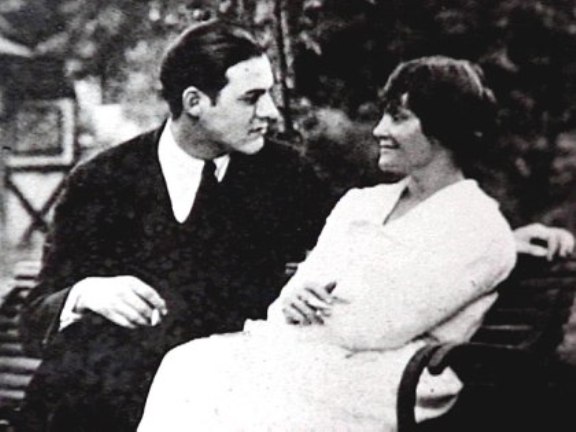
I was not prepared to like it as much as I did. Hemingway writes of the years when he was young, newly married and wildly happy, living a stimulating and lively life with lively friends. They were poor, but he was following his dream. They had a lot of fun.
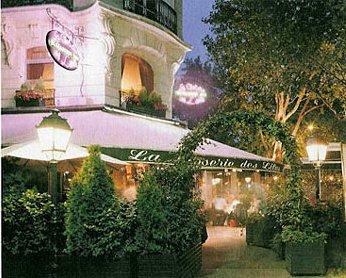
Hemingway wrote this book, full of stories of their Paris life, full of names you know – Ezra Pound, Scott and Zelda Fitzgerald, Picasso, Closerie des Lilas, Les Deux Magots, Brasserie Lipp, the Louvre . . . and as you read it, you are there. He writes in the moment; you are right there experiencing it along with him. He writes of people he likes, and people he doesn’t like. He writes about his own vices – an addiction to horse racing, for example – and he writes with enormous sadness about how he came to be distracted from his marriage and lost the most wonderful relationship that ever happened to him. He blames it on the careless rich. He takes some responsibility.
He also writes very frankly and openly about people he doesn’t like and why. I couldn’t help but think it is a heady thing, being an acclaimed author, where you can take revenge by putting people you dislike in your books. Hemingway uses real names and real people and often portrays them in a distinctly unflattering light. It made me wonder if he was planning to commit suicide all along; that or he just didn’t care what people think, and it seems he might have been the kind just not to care.
Just after finishing this book, and talking one last time with his first wife, Hadly, Hemingway committed suicide. It leaves me wondering if he was driven to suicide by regret, or by fears that his bigger-than-life life of adventure, travel, high life and travel was over, or if he had serious bouts of depression all his life, and this was just another, deeper depression?
It is a great read, especially paired with Paula McLain’s book, The Paris Wife. I thought it might be “he said – she said,” but Hemingway and the fictional Hadley in The Paris Wife both agree that they had a love and marriage that was very special, that Paris was a wonderful stimulating, alive environment, and that it was a great tragedy when the marriage ended. A Movable Feast seems to say that destroying his marriage to Hadley was one of a cocktail of self-destructive behaviors over which he tried to ride herd (gambling on the horse races, drinking, drugs, a coterie of star-struck sex partners outside of marriage, inability to focus on his work, a curmudgeonly nature . . .)

It’s also an easy read. I particularly enjoyed reading it on the iPad because you can do that swirly-finger-thing and find out what words mean or see the street locations as he walks Paris, see whether a cafe or restaurant in Paris still exist. It would be a good airline read – keeps your attention and finishes quickly.
As little as I like Woody Allen, it was fun to see Midnight in Paris, and to have some visuals of this go-go inter-war era.
Two things that stuck out for me: Hemingway loved walking in Paris, as do I. He also talks here and there about the benefits of being hungry. There were times when money was tight; they wore old shabby clothes, and there were times they didn’t have much food. He talks about hunger sharpening your other senses. On the other hand, very quickly when he has money, he has a great meal and a drink – or two – or three.
Bottom line, I’m glad I read this book. It’s given me a lot to think about.
Deepwater Horizon Spill and Hazards
On the front page of today’s Pensacola News Journal is a report by the Associated Press saying:

BP Missed Big Hazards, report says: Focus on worker safety obscured other problems.
HOUSTON – BP and the drilling contractor that operated the ill-fated Deepwater Horizon were so focused on worker safety they didn’t do enough to prevent major hazards, such as the 2010 rig explosion in the Gulf of Mexico that killed 11 people, federal investigators said yesterday.
Excuse me? Does that make sense to anyone?? So concerned with safety that 11 people got killed because they overlooked SAFETY problems?? I thought I must be crazy, but the report goes on to say the following:
The panel listed a litany of problems large and small they had already uncovered even though it has not received all of the records from Transocean, the drilling contractor that has challenged the board’s right to investigate the offshore incident.
Among the panel’s findings:
• BP and Transocean’s “bridging document,” designed to align safety procedures between the companies, was generic and addressed only six safety issues, but none of them dealt with major issues.
• The companies didn’t have key process limits or controls for safe drilling.
• There were no written instructions for how to conduct a crucial test at the end of the cementing process, one that ultimately was misinterpreted by the crew after it was conducted several times, each time differently.
• Similar concerns about too narrow a focus on personal safety were raised after an explosion in 2005 at BP’s Texas City refinery that killed 15 people, but few of the panel’s recommendations were implemented on the offshore rig.
“It’s always puzzled me why a company like BP … that has major resources available … is involved with two of the biggest accidents,” said John Bresland, a member of the board who is wrapping up his second five-year term and was involved in both investigations.
The drilling company doesn’t want to cooperate, and doesn’t think the federal government has the right to investigate? The company so focused on worker safety had an agreement with the drilling company that only focused on minor issues? NO key processes or controls?
What is wrong with this story? From this story, it is clear that worker safety was never a focus of BP. BP had another blowup with 15 deaths at a Texas refinery resulting from safety processes that were too narrowly focused, and now they are saying they are too focused on worker safety, and that is why they have so many worker deaths?
I guess, following the same reasoning, that the Deepwater Horizon blowup, which killed sealife, is still blackening beaches, which has created a tar carpet along the ocean floor, created birth defects among birds and mammals, and will create havok for a lifetime to come, all that resulted from BP’s excessive concern for the Environment?
Is this craziness? That kind of communication just makes me crazy.
I don’t care how much they end up paying to universities, groups promoting tourism, people who lost work, wildlife organizations, etc. as a result of the Deepwater Horizon explosion. You have to see that whatever they are paying is to buy silence, to buy complicity, to keep us from complaining too much when problems associated with the explosion continue to – literally – surface. Their money is to co-opt us. No matter what they are paying, it is too little.
Spy the Lie on the Diane Rehm Show

Thursday, July 24th, Diane Rehm had another wonderful show. Diane Rehm has a gift for asking thoughtful questions, listening carefully, and then following up with another thoughtful question. She treats her guests with great civility, but she never hesitates to ask the tough question.
Thursday, she interviewed Senator Marco Rubio, who did pretty well until she started asking him the tough, revealing questions, and you could actually hear him squirm.
Far more interesting than Senator Rubio was her interview with former CIA employees Philip Houston and Michael Floyd, discussing their new book Spy the Lie. We’ve all heard different ways liars give themselves away, but these two former interrogators told us how to ask questions, and a “cocktail” of responses – not one response, eyes shifting away, but a variety together – which tell you that you are being lied to.
Deflection, change of voice tone, swearing to God, anger at being asked – these and other giveaways work together. Bottom line – if your instincts are screaming “Lie! Lie!” then chances are good you are being lied to.
The truth is, most of us know when we are being lied to. There are times the liar will never admit to it, but you have to work with the knowledge that what he or she is saying is a lie. At least you know. You don’t have to buy into the lie. And you know my position – lying hurts the liar most of all.
James Lee Burke and the Creole Belle
James Lee Burke is number one on my guilty-pleasures list.

I first met his main character Dave Robicheaux in A Morning For Flamingos, a book I picked up in a military library at Lindsay Air Station, a post that doesn’t even exist any more. In the cold dark endless winter in Wiesbaden, Germany, James Lee Burke lit up my life. I had thought I was picking up just another escapist mystery novel, but when James Lee Burke puts words together to describe the way a storm moves in over the bayou, prose becomes poetry.
There is a downside. Whether it is his character Dave Robicheaux, the former New Orleans cop, now head homicide investigator in New Iberia, Louisiana, or his Hackberry Holland series set in West Texas, James Lee Burke’s books are filled with extreme violence and disturbing images that live in your head for a long time.
I’ve recommended James Lee Burke to friends, some of whom have said “Why do you read this trash??? It is HORRIBLE! It is full of over-the-top violence!”
And then again . . . he is writing about some really really bad people. They are out there. There are people who exist who inflict cruelty. I don’t understand it, I can’t begin to fathom where the urge would come from, but I’ve seen it. It’s out there. James Lee Burke pulls up that rock and exposes the dark happenings underneath.
On one level, as I started reading Creole Belle, I thought “Oh James Lee Burke, stop! Stop! It’s the same old formula! A downtrodden victim (often a beautiful woman) cries for help. You and Clete start looking for information and end up beating people up and then they retaliate by threatening your family! There is a rich, beautiful woman who seems vulnerable and who you kind of like, but she is complicated. There are rich amoral people who keep their hands clean, but who are calling the shots and never go to jail! Stop! Stop!”
Well, I should say that, and maybe I should stop. Then he starts talking about the smoke from the sugar cane fields and the bridge over the Bayou Teche, and the big Evangeline oak in St. Martinsville, and I am a goner. I’m sucked in, I’m hooked.
I detest the violence and the images. I keep coming back because James Lee Burke has some important things to say.
I’d love to have him to dinner. I’d love for him and our son to have a chance to talk about Law Enforcement. Here is what James Lee Burke has to say in Creole Bell:
There are three essential truths about law enforcement: Most crimes are not punished; most crimes are not solved through the use of forensic evidence; and informants product the lion’s share of information that puts the bad guys in a cage.
My son hates shows like CSI, and Law and Order, where the evidence convicts the criminals. He says it raises unreal expectations in juries, and makes it harder to get a conviction.
We watched a Violation of Parole hearing, or actually a series of hearings, where the judge asked each individual whose parole was about to be revoked what had happened when he or she was re-arrested. In each case, the parolee had done something stupid; drove a car with an expired license, drove to another state, was arrested driving drunk, etc. EVERY time. The judge made his point, I believe.
From Creole Belle:
But if Caruso was the pro Clete thought she was, she would avoid the mistakes and geographical settings common to the army of miscreants and dysfunctional individuals who constitute the criminal subculture of the United States. Few perpetrators are arrested during the commission of their crimes. They get pulled over for DWI, an expired license tag, or throwing litter on the street. They get busted in barroom beefs, prostitution stings, or fighting with a minimum-wage employee at a roach motel. Their addictions and compulsions govern their lives and place them in predictable circumstances and situations over and over, because they are incapable of changing who and what they are. Their level of stupidity is a source of humor at every stationhouse in the country. Unfortunately, the pros – high end safecrackers and jewel thieves and mobbed-up button men and second story creeps – are usually intelligent, pathological, skilled in what they do, middle class in their tastes and little different in dress and speech and behavior from the rest of us.
And then there are paragraphs like this that discuss the human experience, and have a far wider application than the book:
No one likes to be afraid. Fear is the enemy of love and faith and robs us of all serenity. It steals both our sleep and our sunrise and makes us treacherous and venal and dishonorble. It fills our glands with toxins and effaces our identity and gives flight to any vestige of self-respect. If you have ever been afraid, truly afraid, in a way that makes your hair soggy with sweat and turns your skin gray and fouls your blood and spiritually eviscerates you to the point where you cannot pray lest your prayers be a concesion to your conviction that you’re about to die, you know what I am talking about. This kind of fear has no remedy except motion, no matter what kind. Every person who has experienced war or natural ctastrophe or man-made calamity knows this. The adrenaline surge is so great that you can pick up an automobile with your bare hands, plunge through glass windows in flaming buildings, or attack an enemy whose numbers and weaponry are far superior to yours. No fear of self-injury is as great as the fear that turns your insides to gelatin and shrivels your soul to the size of an amoeba.
Last, but not least, this is what keeps me coming back to James Lee Burke, so much so that I buy the book almost as soon as it is released. James Lee Burke isn’t afraid to take on the big guys. He “gives voice to those who have no voices.” (Proverbs 31:8) His focus is always on the dignity of the common man, the dignity of hard work, done well, and on the dignity of doing unexpected kindnesses to those who have no expectation of kindness.
. . . All was not right with the world. Giant tentacles of oil that had the color and sheen of feces had spread all the way to Florida, and the argument that biodegradation would take care of the problem would be a hard sell with the locals. The photographs of pelicans and egrets and seagulls encased in sludge, their eyes barely visible, wounded the heart and caused parents to shield their children’s eyes. The testimony before congressional committees by Louisiana fisher-people whose way of life was being destroyed did not help matters, either. The oil company responsible for the blowout had spent an estimated $50 million trying to wipe their fingerprints off Louisiana’s wetlands. They hired black people and whites with hush-puppy accents to be their spokesmen on television. The company’s CEO’s tried their best to look ernest and humanitarian, even though the company’s safety record was the worst of any extractive industry doing business in the United States. They also had a way of chartering their offshore enterprises under the flag of countries like Panama. Their record of geopolitical intrigue went all the way back to the installation of the shah of Iran in the 1950’s. Their even bigger problem was an inability to shut their mouths.
They gave misleading information to the media and the government about the volume of oil escaping from the blown well, and made statements on worldwide television about wanting their lives back and the modest impact that millions of gallons of crude would have on the Gulf Coast. For the media, their tone-deafnessness was a gift from a divine hand. Central casting couild not have provided a more inept bunch of villains.
James Lee Burke has a voice, and he uses it. He could just cash in on his reputation as an Edgar Award winning author, but he uses his voice to speak out against injustice and corruption. He is a champion of the people. I’ve written several book reviews, and taken some trips just because I wanted to see James Lee Burke country; if you are interested in those, you can read them here.
I have a concern about this series, in that this book ended differently than all the others. So differently it made me seriously question whether Burke intends to continue writing about Dave Robicheaux or if Dave is about to hang up his shield and call it a day. He’s a guilty pleasure I am not yet ready to give up.
Laugh and Live Longer?
Found this fascinating article today in AOL News/HuffPost.
Do those who laugh the most live the longest?
Possibly so, according to a new study in the journal Aging.
Researchers from Albert Einstein College of Medicine and Yeshiva University found that people who possess certain personality traits based in genetics may live longer lives — particularly those who are optimistic, laugh a lot and are easygoing.
The study was based on an analysis of 243 people with an average age of 97.6. These people were part of a bigger study, called the Longevity Genes Project at Albert Einstein College of Medicine, which examines 500 Ashkenazi Jews ages 95 and older (Ashkenazi Jews are genetically homogenous, researchers said), as well as 700 of their offspring.
“When I started working with centenarians, I thought we’d find that they survived so long in part because they were mean and ornery,” study researcher Dr. Nir Barzilai, M.D., director of Einstein’s Institute for Aging Research, said in a statement.
“But when we assessed the personalities of these 243 centenarians, we found qualities that clearly reflect a positive attitude towards life,” he said. “Most were outgoing, optimistic and easygoing. They considered laughter an important part of life and had a large social network. They expressed emotions openly rather than bottling them up.”
The researchers also found that the study participants scored lower on tests for neurotic personality and scored higher on tests for conscientiousness, compared with comparable scores for the U.S. population.
Last year, a study in the journal Proceedings of the National Academy of Sciences showed that older people who are happy have a 35 percent lower risk of dying over a five-year period than unhappy people. That study included 3,853 people ages 52 to 79.
“The happiness could be a marker of some other aspect of people’s lives which is particularly important for health,” study researcher Andrew Steptoe, a professor at University College, London, told The Telegraph. “For example, happiness is quite strongly linked to good social relationships, and maybe it is things like that that are accounting for the link between happiness and health.”
She Cried

“I wanted to thank you,” I said to my son’s sixth grade teacher “I can’t imagine how hard it was to get 30 sixth graders to go through the paper-writing process, but I know my son learned from it and he will use the skills you taught him for many years to come. One day he will thank you in his heart, but I wanted to thank you now.”
It was one of those small expat military communities, where your child’s teacher also goes to the same church you go to and shops in the same commissary. We were at a church benefit, chatting before dinner.
She started crying.
She told me that every year, she teaches the sixth graders to write papers, and they hate it. She started with library research, making bibliography cards on little index cards, formal writing, footnotes and a formal bibliography at the end with a formal title page at the beginning.
I was the first one who had ever thanked her. She believed in what she was doing, but it was so hard, and she never got any positive feedback.
Imagine. Do you remember what sixth graders are like? This lady had courage, and persistence. She gave these students (in spite of themselves) a skill which would take them through the rest of high school and into college. They learned to do it right, so they never had to embarrass themselves by turning in an inferior, poorly-done paper. It was a great gift she gave these students – and no one thanked her.
Well, it would be a rare, very rare sixth grader who has the maturity to understand that while it was a difficult and demanding section in their school year, it was a tool in their tool box of life, a gift that just kept on giving.
Thank you. Thank you, all the teachers out there who knock themselves out to give our children (and grandchildren) the tools they need to be good students and good citizens.
Recent Comments
ExpatAlien on What Country am I Living … intlxpatr on Yellowstone: Old Faithful to C… Michelle on Yellowstone: Old Faithful to C… Cathy on No Grown-Ups in Charge intlxpatr on Waiting for Snow Wikipedia Donate Button

Amazina


Early Voting in Florida


 Here There and Everywhere