“You Go Into Southern Belle Mode”
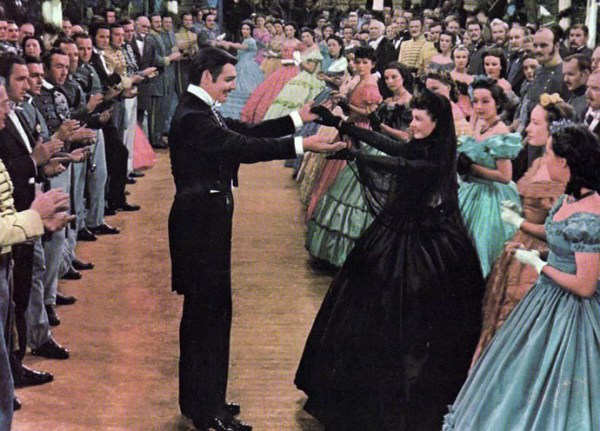
I’ve added a new category; I’ve written so many posts in this vein, and it looks like I will continue so to do. Might as well add it as a staple: Stranger in a Strange Land.
Probably the first mention of that phrase in literature is in Genesis; Moses kills an Egyptian and flees to the desert where he meets a nice girl and marries her. He refers to himself as an alien, a stranger in a strange land. Both Jewish culture and Islamic culture put a high value on taking care of the stranger. Our bible is full of references to taking care of the alien.
Here is one of my favorite stories about what my friend Donald Rumsfeld calls those “unknown unknowns. It’s what you don’t know you don’t know that gets you into trouble.
I was at a party, and in a conversation with two women who are widows. We were talking about some of the difficulties, and what has caught them by surprise.
I said I didn’t know how they got through it, that I had a feeling if AdventureMan goes before I go, I’m going to be really really angry, tearing my hair out and shrieking angry, shredding my clothes angry, not wanting to be around other people angry, so so so so angry because if I let myself feel sad I don’t know if I can ever pull myself out of that abyss.
The newest widow just looked at me like I had said something culturally inappropriate, which, it turns out, I had. There was one of those brief silences, you know, it may only be seconds but it feels like it goes on forever because you don’t know what you said.
“If you were from around here,” she said, “You’d know what to do. You go into Southern Belle mode. We’ve all seen it all our lives, so we know how to do it. You pick out your clothes. You smile and shake hands. You put your guests first. You stand and smile until the last guest has gone.”
I was stunned. “You hold yourself together through all that?” I asked.
“Well,” she said with a smile, “You have a plan. You know where you can go with a friend or cousin after the funeral, a place where you are safe and where you can get knee-walking drunk and do your wailing where you need to and no one will ever know.”
She didn’t even have to say “You must not be from around here” but I heard it, loud and clear. There are standards. No weeping and wailing, no public display of emotion, no lack of self-control, oh-my-goodness, I think I must be back in the Middle East. I am in my own country, and still, very much a stranger in a strange land.
Anacortes to Sidney, BC on Ferry Chelan
Aboard the Ferry Chelan, en route to Friday Harbor and Sidney, BC

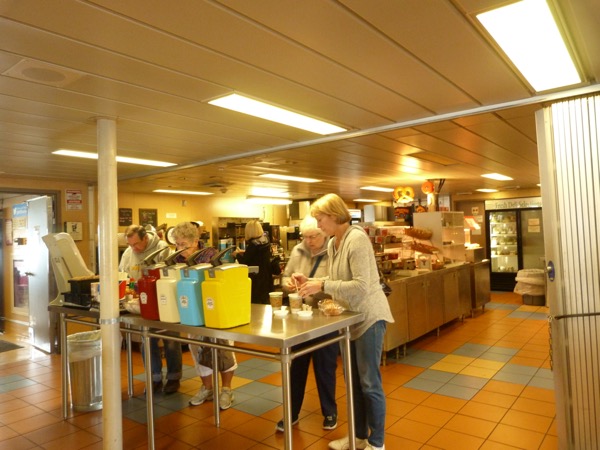
The cafeteria is open to aid caffein-deprived passengers 🙂
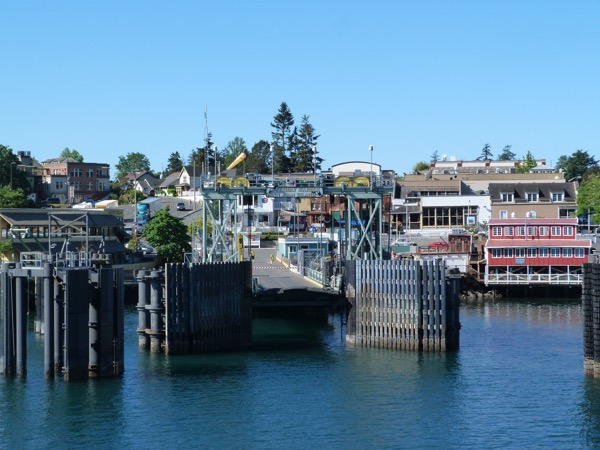
Coming into Friday Harbor

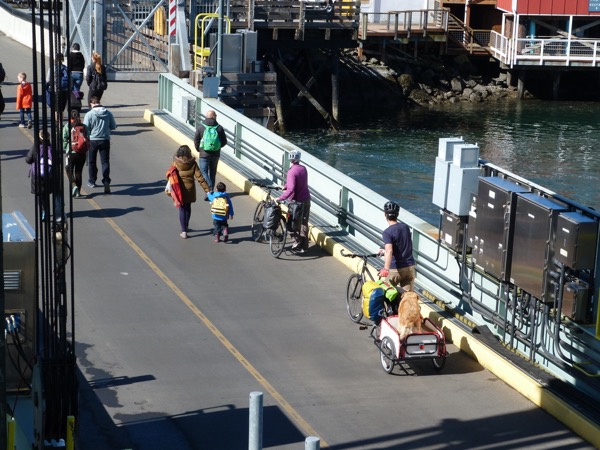
Passengers departing in Friday Harbor
I remember when the Canadian – American border was open. This time, we had to go through Canadian border guards, exceedingly polite, but so many questions! It breaks my heart that things have come to this, that once open borders allowed people of good will to freely pass back and forth, and now those open borders exist no more. I hate ISIS, I hate terrorists who make this necessary.
Afternoon in Washington Park, Anacortes, WA
“Is this park accessible by wheelchair” asks Trip Advisor, and I have to stop and think. Well, the Loop Road is paved, so a wheelchair bound person could be pushed along the entire route, and, of course, they could view from the car, as they drove the loop.
There are picnic areas where a wheelchair bound person could sit and visit with family and friends.
Off the paved roads, though, I would think a wheel chair might bog down in soft dirt and could get tangled in roots and vines and ferns.
So how do you answer the question?
I would say – if the required answer were not “yes” or “no” or “not sure” – take a chance. This park is so beautiful, and so much thought and care has been put into making it a joy for visitors – take a chance. There are spectacular hikes. There are spectacular vistas, land and sea, and roiling currents, and snow tipped mountains. There are eagles, perched and ready to strike the unsuspecting fish. There are kayakers, battling the currents. There is so much to see, and so much to appreciate.



Take a chance! You’ll be glad you did!
The Edmonds Little Free Library
We are working on a Little Free Library for our church, so I have become very aware of the Little Free Libraries wherever I go. As I was photographing this (utterly gorgeous) Little Free Library, an Edmonds resident passing by said “You know we have hundreds of the Little Free Libraries in Edmonds, but this is the most beautiful.”
Hundreds. Edmonds is a civil place, and a bookish place. Edmonds people share. Every year there is a huge tour of gardens, and it includes many many many gardens. People work hard on their gardens, to give joy to passers-by. It thrills my heart to think of so many Little Free Libraries.
But this is the most beautiful:

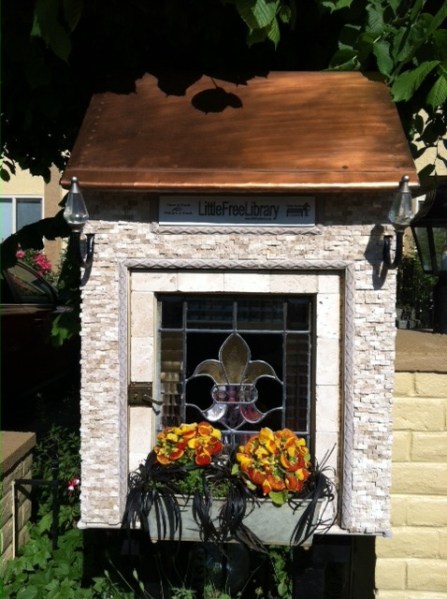
Bricks. A stained glass window. A copper roof. A window box – so much loving attention to detail, for something to give away to the public. I love this town.
Wouldn’t it be wonderful to think of Little Free Libraries popping up in Kuwait? Qatar? Saudi Arabia? Tunisia?
This is Edmonds
We’ve heard it so many times since we’ve arrived:
“You’ve arrived just in time for the best weather of the year!”
And it is true. Flying into Seattle, we saw every mountain, the air is crystal clear, the sun is out, and there are calming breezes and near 80 Degree (F) temperatures. The major secondary highway, Highway 99, is closed because there is a huge highway building program (YAYYY! Invest in infrastructure!) going on, and everyone warns us the traffic on I-5 going north will be hell. Because there are two of us, we can use the HOV (high occupancy) lanes, and we zoom straight north. The traffic isn’t the worst I have ever seen and we hit Edmonds in record time.
We are starving. We stop for a bite at Ivar’s, check in, and pick up my Mom to get her a new phone.
This is Edmonds. People are different here. Mom (in her wheelchair) and I have to wait, but not for long, and the specialist who deals with us is so kind. He talks to MOM, not me. Have you ever noticed when people are in a wheelchair some people treat them like they are invisible? I didn’t notice until Mom started using a wheelchair, and I had to remind people to talk to HER, not to me. Tyler, the telephone guy, talked to her, and walked her through her options. By the time we left – not with a phone, because the one she needs wasn’t in – she had a new friend. She has his card. She can call him to ask when the new phones are in, and she can call him with questions. He was genuinely kind, and treated her like a queen. This is Edmonds.
Of course, we are still on Central time, so wide awake at 0630. We hit breakfast around seven, thinking that since this is Saturday, we will have it mostly to ourselves, only to find that the breakfast room is full of athletically garbed people filling canteens, heading for mountains, boats, ferries, Saturday markets – when the weather is this fine, people take advantage of it! I’d forgotten – this is Edmonds.
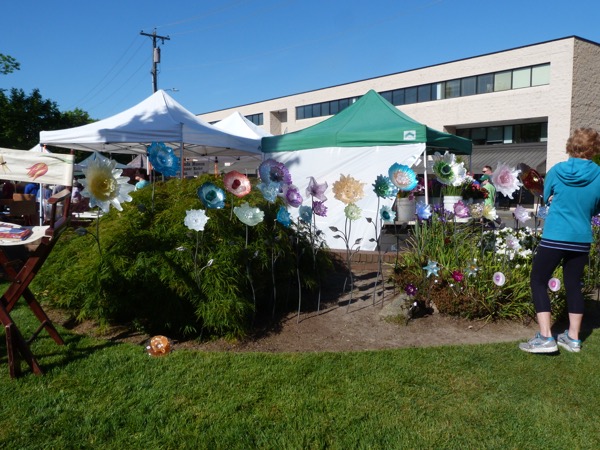
We hit the Fred Meyers and Trader Joes, stocking up for our road trip into Vancouver Island, then hit one our our favorite treats – The Edmonds Market. I thought it opened at nine, but at none, the place is packed.
I am a great fan of Dale Chihuly, the Seattle artist who specializes in spectacular pieces in glass. His vision is unbounded; once he filled the canals in Venice with his art pieces. Seattle has a huge Chihuly museum, and houses his studios. These are not Chihuly, but Seattle gives birth to a lot of people unafraid to try their hand at artistic pursuits. If I weren’t traveling, I would buy this piece in a heartbeat. It’s cool laciness reminds me of seafoam as the waves hit the shore:
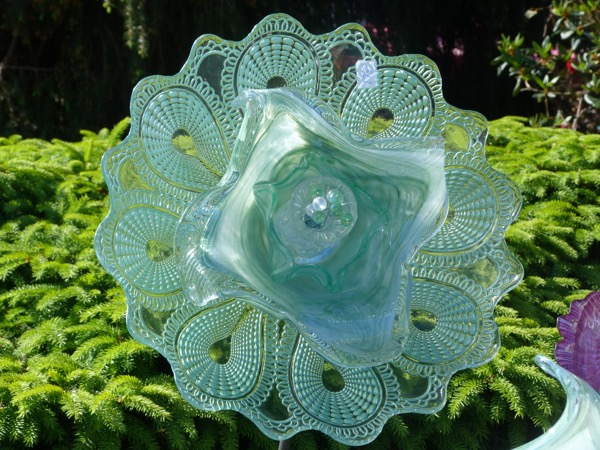
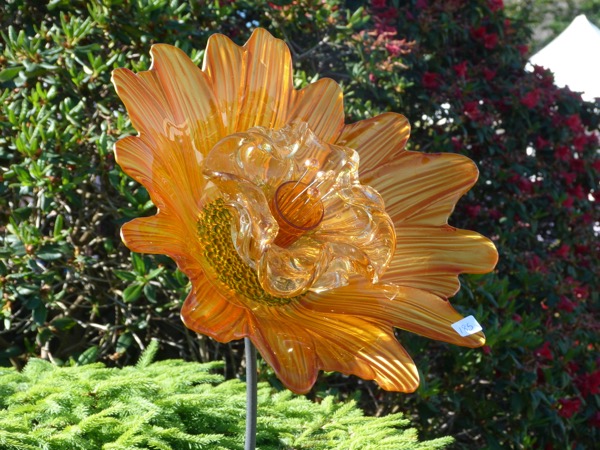
I wouldn’t buy this, but I appreciate its spirit!
Metalworks for sale, including Edmonds Salmons 🙂


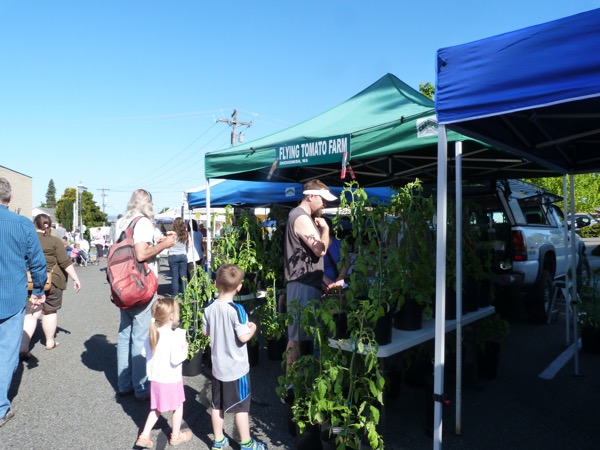
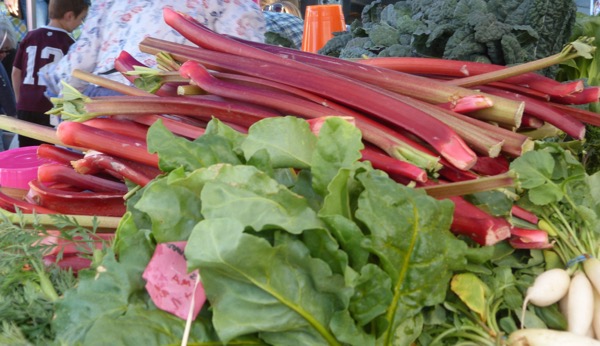
Rhubarb is in season! Rhubarb was one of the few plants I can remember flourishing in the cool growing seasons in Alaska, and it is a unique taste I love.
This is Edmonds version of a bread line. This artisanal baker has the most delicious looking full grain loaves, and people get there early to line up to buy his wares.

The Museum volunteers always have a central tent where they can sell their wares to support the Edmonds museum. Up the street is another volunteer, signing up volunteers for the annual Edmonds Arts Fest, almost always on Father’s Day weekend, in June.

The normally usual good prices for flowers are hiked, as everyone is buying bouquets for their Mothers!
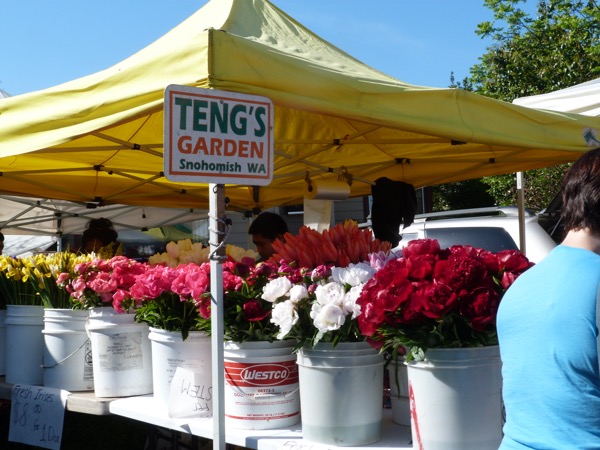
It’s an Edmonds kind of day 🙂
“You’ll Never Get Another Credit Card, F@%&ing B!}@h”
As a friend and I were talking today, a call came in on my land line. Very very odd – the call is from me! I answered the call, and a robogirl told me that there was no problem with my credit card, but my company wanted to give me a better rate. Just press 9 to speak with a service person who could help me.
I pressed 9, and got JuJu, very clearly Indian, who started talking about how smart I was to want a better rate. I told him I didn’t want a better rate, I wanted him to take us off his list, that we are on the do not call list. He said he wasn’t a telemarketer, he was calling from our credit card company. “Which company is that?” I asked, because we have a variety, each of which we use for a specific purpose. “Oh, we represent blah blah, and blah blah blah, and blah de blah” he said airily, and I am laughing because we don’t have any of those cards.
“We don’t have any of those cards, please connect me to your supervisor, I want our names taken off your list. We have never given permission for these kinds of phone calls,” I stated.
He started cursing me a blue streak, ending with “I am putting a black mark on your credit report right now! I am blackening your credit! You will never have another credit card, (expletive expletive expletive!!”
At this point, I put him on speaker-phone. My friend listened with me in horror as he cursed and swore and threatened. When I said his special offer didn’t interest me, he started in all over again. By this point, I am laughing, it is so unthinkable, he can’t be from a real marketing service. Finally, he hung up on me, and my friend and I just looked at each other, wide-eyed.
I called one of our banks and told the customer service person what had happened, and he said it’s totally a scam. The guy wanted my credit card information. I’m seriously thinking of getting rid of our land line.
“You Shall Love the Alien as Yourself”
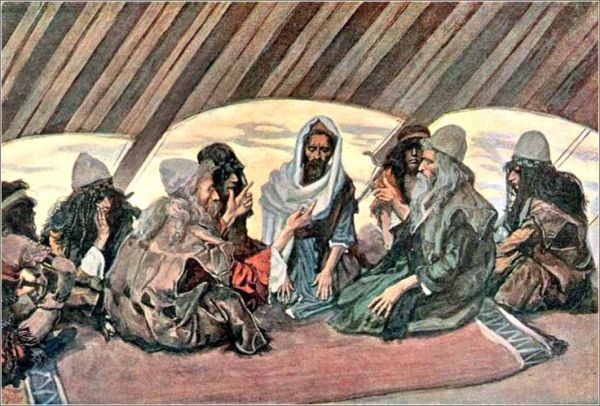
One of the disciplines available to those of the Episcopal faith is the reading of the Lectionary. Every day of the year are short readings from the Psalms, Old Testament, New Testament and Gospels. Every three year the cycle repeats itself. There are also additional readings on the “Saints” or remarkable people who have served God and his church.
Leviticus is not my favorite chapter, but today, I love Leviticus. As if the words were freshly spoken, I read Leviticus 19: 33-34:
33 When an alien resides with you in your land, you shall not oppress the alien. 34The alien who resides with you shall be to you as the citizen among you; you shall love the alien as yourself, for you were aliens in the land of Egypt: I am the Lord your God.
There are many references to the alien in the Bible, one of the earliest being Father Abraham, who is told to leave (what is now the current Iraq) and head for Canaan. When he arrives, peacefully, the local tribes are kind to him. They are good neighbors. Later, when Moses kills an Egyptian and flees to the desert tribes, he describes himself as “a stranger in a strange land.”
It’s who we are. It’s what our book tells us. We are to welcome the stranger. We are to leave wheat in the edges of our fields (yesterday’s reading) that he might not starve. We are not to oppress the alien, nor put up walls to fence them out. We are all aliens on this earth; waiting for the glory of the heavenly kingdom where we belong.
10 Science Proven Ways to be Happier
Happy – or happier – Saturday. Doesn’t everyone want to be happy? Happier? As it turns out, the science of being happy is studied, and there are ways proven to improve your feelings of happiness. I found this on a website called Motto, through AOL News:
10 Science-Proven Ways to Be Happier
Science continues to find ever more specific and idiosyncratic ways we can bring just a bit more of happiness into our lives
We never get tired of thinking about happiness, do we? Life is so much nicer when you’re able to couple it with joy and gratitude.
We’ve published posts before about simple ways to be happy and retraining your brain for more gratitude, and Buffer’s CEO Joel has even shared his own daily to-do list for happiness. (There’s also our popular list of things to stop doing to be happier.)
Meanwhile, science continues to study happiness, finding ever more specific and idiosyncratic ways we can bring just a bit more of this elusive quality into our lives.
I love keeping an eye on these studies, and thought I would share the latest batch with you here to see if any of them might resonate with you and make you just a bit happier.
Here are 10 truly unique ways to be happier that you can start today!
1. Do cultural activities
Need a boost of joy? Trying seeing a play or heading to a museum.
A study that collected data on the activities, mood and health of 50,000 adults in Norway found that people who participated in more cultural activities reported higher happiness levels and lower anxiety and depression.
“Participation in receptive and creative cultural activities was significantly associated with good health, good satisfaction with life, low anxiety and depression scores in both genders,” the researchers write.
Curiously, men saw stronger benefits from receptive, or passive, cultural activities (like visiting museums, art exhibitions, concerts or theaters) while women more enjoyed active participation events (like club meetings, singing, outdoor activities and dance).
2. Keep a diary: Rereading it brings joy
To learn to find more gratitude and joy in every day—not just special occasions, the boring days, too—try keeping a diary and re-reading it from time to time.
Researchers who did a variety of experiments involving keeping a journal discovered that “ordinary events came to be perceived as more extraordinary over time” as participants rediscovered them through their older writings.
In other words, simply writing down our ordinary, regular-day experiences is a way of banking up some happiness down the line, when the activities we describe could bring us unexpected joy.
3. Make small talk with a stranger
Chatting up your barista or cashier? Good for your health!
Behavioral scientists gave a group of Chicago train commuters a $5 Starbucks gift card in exchange for striking up a conversation with a stranger during their ride. (While another group kept to themselves.)
Those who started conversations reported a more positive experience than those who had stayed quiet—even though they had predicted they would feel happier being solitary.
Another study saw similar results from giving Starbucks visitors a $5 gift card in exchange for having a “genuine interaction with the cashier.”
It seems that connecting with another person—no matter how briefly—increases our happiness.
4. But have meaningful conversations, too
While positive small talk is great, more substantial conversations could up our happiness quotient even higher.
A study that tracked the conversations of 80 people for 4 days found that, in keeping with the small-talk study, higher well-being is associated with spending less time alone and more time talking to others.
But researchers also discovered that even higher well-being was associated with having less small talk and more substantive conversations.
“Together, the findings demonstrate that the happy life is social rather than solitary and conversationally deep rather than superficial,” the researchers write.
So dive deep in your conversations with friends and loved ones—it’s great for you.
5. Live in the suburbs and get involved
This one seems to apply to the U.S. A. only, but I still found it quite interesting.
I would have guessed that city dwellers might be the most satisfied with where they live, but in a poll of 1,600 U.S. adults, the highest rate of happiness was found in the suburbs.
84 percent of suburbanites rated the communities where they live as overall excellent or good, compared to 75 percent of urban dwellers and 78 percent of rural residents.
Another study on city happiness found that residents are happier if they feel connected to their cities and neighborhoods and feel positively about the state of city services.
So wherever you live, make sure to get involved in your community for maximum happiness.
6. Listen to sad songs: They provide emotional release
How could sad songs make us happy? And why do we seek them out?
That’s the question researchers wanted to answer with a survey of 722 people from around the world.
They discovered that there are 4 main reasons we take comfort in melancholy songs:
- They allow us to drift off into imagination
- They might provide us catharsis (emotion regulation)
- They allow us to relate to a common emotion (empathy), and
- They’re divorced from our actual problems (no “real-life” implications)
Researchers determined that “listening to sad music can lead to beneficial emotional effects such as regulation of negative emotion and mood as well as consolation.”
7. Spend money on experiences, not items
Here’s one that’s easy to understand but might be tougher to fix.
We know that spending money on life experiences will make us happier than spending money on material things (and it does!) but we can’t seem to stop ourselves from choosing the wrong option.
That’s what a study in The Journal of Positive Psychology found as they surveyed people before and after they made purchases.
The series of studies concluded that we’re more likely to spend on items than experiences because we can quantify them more easily and we want to see the best value for our dollars.
However, they found that the study subjects reported that after they spent, experiences brought them greater well-being and they considered them to be a better use of money.
So if we can keep that in mind, it’s possible to have our cake and eat it, too—definitely something to be happy about!
8. Set tiny, attainable goals: Make someone smile
It might be cliché, but making someone happy will make you happy, too.
And science says the more specific you can be with your goal, the better.
University of Houston professor Melanie Rudd found that a group of people who were told to make someone smile felt both happier and more confident that they’d actually achieved their goal than a similar group who’d been told simply to make someone else happy.
Even more interesting: In a separate experiment, people wrongly predicted that going for the bigger goal would make them happier.
“If you can meet or exceed your expectations of achieving a goal, you will be happier than if you fall short of your expectations,” Rudd explained.
9. Look at beautiful things: Design makes us happy
Could looking at a beautiful object make you feel happier?
The smartphone company HTC conducted a study that says yes.
In a series of laboratory and online experiments, volunteers looked at and interacted with objects that fell into 3 categories: beautiful, functional, or both beautiful and functional.
Their reactions uncovered some interesting findings, like:
- Well-designed objects that are both beautiful and functional trigger positive emotions like calmness and contentment, reducing negative feelings like anger and annoyance by almost a third.
- Purely beautiful objects (not functional) reduce negative emotions by 29%, increasing a sense of calmness and ease.
Objects that were both beautiful and functional created an especially high level of emotional arousal:
In general, people feel happier looking at and using beautiful objects that work well.
10. Eat more fruits and veggies
We know being healthier makes us happy, but can carrots give you purpose?
I have to admit I didn’t expect such a direct link between happiness and eating a lot of fruits and vegetables as researchers in New Zealand report.
Their 13-day study of 405 people who kept food diaries showed that people who ate more fruits and vegetables reported higher than average levels of curiosity, creativity, and positive emotions, as well as engagement, meaning, and purpose.
Even more interestingly, participants often scored higher on all of those scales on days when they ate more fruits and vegetables.
“These findings suggest that fruit and vegetable intake is related to other aspects of human flourishing, beyond just feeling happy,” writes the research team.
Philosophy in a Fortune Cooky

So on our way home from lunch today, at the Siam Thai, AdventureMan and I are talking about his fortune cookie. (Mine said “learn Chinese” on one side and I can’t even remember what on the other side, something so non-interesting.) AdventureMan’s fortune said “Good people learn wisdom by making mistakes,” or something like that.
Off we went. So if you are not good, can you learn from making mistakes? Do you just keep making the same mistakes? Does making the same mistakes mean that you are not a good person? Can you make a mistake and not learn wisdom? Are all wise people good? Can you be evil and be wise? Like is the devil wise? He is said to be sly, and crafty, so how do those vary from being wise? Is Satan wise? Can you be evil and wise?
Segue’ to Mother Jessica’s sermon at Christ Church Pensacola yesterday, and It’s Not About the Chocolate as she explained that giving up chocolate or coffee or meat was not what Lent was really all about as we walk the path to become better worshippers of God and followers of Jesus. At the end of the service, as we exited, they passed out little chocolates. AdventureMan still had his chocolate (which he ate in front of me) and told me he had never negotiated with God. “Never??” I asked, in a tone which really meant “I call bulls#!t” and he said, no, never; never said “Please please, if you will only do this, I will do that.”
“OK,” I continued, as I can be relentless, “what about in Vietnam, was there never a time you said ‘Please, Please, Please’ about anything?”
“Yes, but I was never bargaining,” he explained, ‘I was begging. I had nothing to bargain with.”
So is begging, with no leverage, is that still negotiating? I think it is, Mother Jessica said bargaining, and isn’t begging bargaining with no leverage? We couldn’t agree. He says that is not bargaining, and we had to agree to disagree.
And the real point is, none of us have anything to bargain with. God laughs at our pathetic attempts to bargain. He likes the honest ones, like AdventureMan, who just cower in his magnificence and power and trust in his ability, and so beg, “please! Please!” We have to trust in his mercy and his compassion.

The worst and most memorable Lent I ever observed was in Kuwait. I became aware that I had started swearing in the car as another car would nearly side-swipe me, or some arrogant idiot would park in four spaces (yes, yes, I promise you, one car CAN occupy four spaces) and I was giving people rides and really, really needed to not curse, not just to protect their ears, but also for my own soul. Calling people names is worse for me than it is for them. I devised a strategy of elaborate politeness. When someone was going to bump me out of the way, I would gesture “Tfadl!” (“YOU are to be preferred! or “after you”) with a grand gesture and a big smile like it was My idea. After a while, elaborate politeness became my mode, and I got a lot of pleasure out of it, and mostly, I stopped cursing at the idiot drivers. Actually, I got so good at it that I didn’t even say “Idiot!”, but I could not control it popping into my mind from time to time . . .
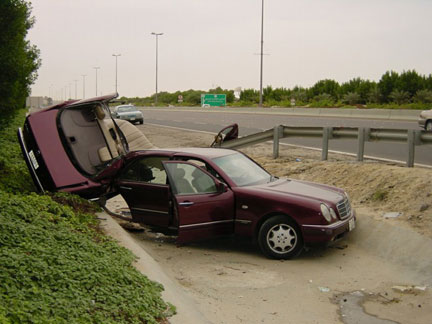
And, sadly, we have some of those same . . . umm . . . idiots . . . here in Pensacola, so perhaps I need to redo my Lenten sacrifice and work on my attitude toward inattentive and /or aggressive drivers, especially those in great big trucks with bad eyesight.
Did you know the word for ‘honey’ in Arabic is ‘asel?’ 😉
Beryl Markham and the EPIC Book Club
When the EPIC Book Club met this month, we were discussing Paula McLain’s Circling the Sun. Several of us had enjoyed her book about Ernest Hemingway, The Paris Wife, and had thought this one, about the famous early aviator, would be another great book. I was so impressed with The Paris Wife that I immediately read Hemingway’s The Movable Feast, his novel about the same period of time, and loved the way the books “danced together”. I think good historical fiction needs to stick to known facts.
It was a lively discussion; Beryl Markham was an unusual woman in an unusual culture in a time of transition. She grew up in Kenya as the British were beginning to colonize just after the first world war. Her mother abandoned the family, taking her frailer younger brother and leaving her, with no explanation. Some other woman moved in with her father; Beryl greatly raised herself with the indigenous people. Her father loved her, but was distant. He was first and foremost a horse breeder, and Beryl worked closely with him in breeding and training the horses.
She made a disastrous first marriage, leaving it to pursue a certificate – the first ever for a woman – as a horse trainer. She was spectacularly good at it, and worse (when it comes to the opinion of other women) she looked terrific in riding breeches. Men liked her. She liked men. She was not particular about boundaries, like marriage to other people or being the consort of her good friend, Karen Blixen. Later, she set records as one of the earliest female aviators.
It was also a time when women had few options, and most of the options required a man to take care of her. Beryl Markham had skills, and had more options.
So as we are discussing her behavior, which could be self-defeating and self-destructive, we discussed it in the context of Kenyan colonial society. Then one of the EPIC members mentioned that the same behaviors in the very church where we meet have been the spice of Pensacola gossip for more than a couple centuries; that people don’t change much. We were laughing, and another member mentioned being forbidden to read Peyton Place, many years ago when it was a banned book, and his wrestling coach told him “All the world is Peyton Place.”
I think of all the places I’ve lived and I am inclined to agree.
Recent Comments
tigerbutterya0c5ff1d… on Shampoo Ginger intlxpatr on British Soldier Kidnapped, Esc… John on British Soldier Kidnapped, Esc… intlxpatr on British Soldier Kidnapped, Esc… John Smith on British Soldier Kidnapped, Esc… Wikipedia Donate Button

Amazina


Early Voting in Florida


 Here There and Everywhere