Zambia: “What is it like where you live?”
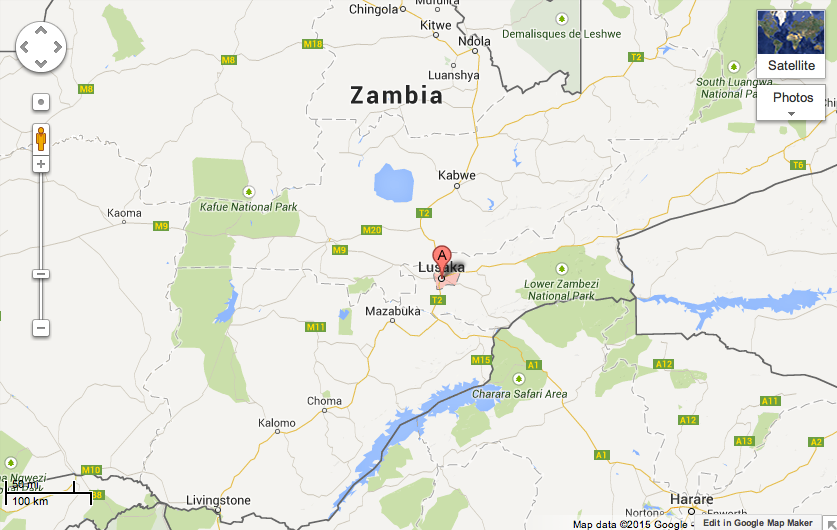
Today the church prays for the diocese of Lusaka, and I smile as I pray for my Zambian friends. We have stayed in Lusaka several times, and visited schools and clinics in remote parts of Zambia. Zambia is an amazing country – something like 70 different peoples and languages, and training in all the schools to help them learn how to live together.
One young Zambian told us that when they come into contact, it is normal to feel strange; the “other” doesn’t speak the same dialect, may be a traditional enemy, is just different, uncomfortable. They are trained to ask “What is it like where you live?” and to listen to the response.
I have used that phrase so many times; it is so useful. When you listen to an “other” talk about his or her life, you connect. You find similarities, and differences, and you learn the joys and challenges of this different life. It is a wonderful question. I used it the first time in Zambia, at a dinner with a lot of people we didn’t know. The woman next to me seemed stuffy, but sometimes that can be shy, so I asked “What is it like where you are from?” and she looked at me with concern and said, very sharply, “What do you mean?” I said “what is your life like, tell me about what you do in a day?” and she said “That is a very odd question!” but she went on to tell me about her life, her country house and her passion for riding. By the end, we were having a great conversation.
May God bless you richly, Zambia. May your peoples live together in God’s peace!
From Whom Every Tribe in Heaven and On Earth Takes Its Name
I’ve been looking for this line forever, but it is no wonder that I couldn’t find it, I remembered it wrong, or I was using a different translation. When Father Ian at Church of the Epiphany in Doha would begin the prayers, he began with that invocation, reminding us that we, too, are tribal in our passions and affiliations. He used that word, tribal, instead of family. It is probably more true to the original intent.
Once people start drawing and adhering to lines between them and us, things get ugly in a hurry. I liked what Pope Francis said about Freedom of Speech being fine but it had to include respect for the religions of others, and self restraint. We all need to remember that it is the one true God who is the father of us all, and he will be the only one to judge us in the end.
We all get a lot of things wrong. Let’s hope He is truly the all-merciful and all-compassionate.
Ephesians 3:14-21
14 For this reason I bow my knees before the Father,* 15 from whom every family* in heaven and on earth takes its name. 16 I pray that, according to the riches of his glory, he may grant that you may be strengthened in your inner being with power through his Spirit, 17 and that Christ may dwell in your hearts through faith, as you are being rooted and grounded in love. 18 I pray that you may have the power to comprehend, with all the saints, what is the breadth and length and height and depth, 19 and to know the love of Christ that surpasses knowledge, so that you may be filled with all the fullness of God.
20 Now to him who by the power at work within us is able to accomplish abundantly far more than all we can ask or imagine, 21 to him be glory in the church and in Christ Jesus to all generations, for ever and ever. Amen.
Parking Shame: No Excuse
In Qatar and Kuwait, I used to take photos of able bodied men and women parking in handicapped spots and strolling into the stores. There were penalties, but I guess these folks did not believe the law applied to them.
Parking karma exists. What goes around comes around.
People who drive these big-a$$ trucks get no sympathy from me. Squeeze, big guy. See, there are two little lines, and you are supposed to park between them. Parking like this is just ignorant.


Pensacola Christmas Parade
Why do they groan? Why do they grumble and look annoyed when I say it’s time for the Christmas Parade?
Once they get there, they have the best time! Who wouldn’t? It’s all noise and flash, great floats and loud bands, dancing in the street, dancing on the sidewalk, seeing all our friends from church and school and waving to friends on the floats – throwing BEADS!
Even 1 year old baby N totally gets into the beads! “Beads! Beads!” she shouts and holds out her hands. She marvels at their sparkle as they hang around her neck.
Here is what I love about Pensacola. It’s been a bad month, with Ferguson, with New York, and in Pensacola 50,000 people gather peacefully and party on the streets. It’s New Orleans with our clothes on, it’s Christmas/Mardi Gras Family Style. We dance, we party, we jump for those beads – and then we pass them along to the children. It’s a long, happy parade, with every school marching band and Mardi Gras group, a local radio station or two, the homeless, the counter culture, drinks in open containers, church groups, neighborhood meet-ups, Jesus is there, with Mary and Joseph – it’s all cool.
When the parade ends, we all go home. Peacefully.
Some may grumble, but for me, they show up, every year, and we celebrate a family tradition, the Pensacola Christmas Parade.


AdventureMan and his helper went down early Sunday morning and pulled a great Bead harvest out of the trees. Little grandson Q carefully sorted them into piles for his friend Chris, his mama and daddy, his two other sets of grandparents and for his room upstairs in our house.

ISIS in Mosul Unable to Sustain Economy
From AP via Kuwait Times:
High prices, shortages pressure IS – Black markets abound – Strict social laws bad for business
 BAGHDAD: Saadi Abdul-Rahman was recently forced to pull his three children out of school in the Iraqi city of Mosul, where Islamic State militants have ruled with an iron fist since June. The cost of living has soared there, and the family is barely able to make ends meet, even after putting the kids to work. “We are not able to pay for cooking gas, kerosene and food,” laments the 56-year-old retired government worker. “The situation in Mosul is miserable.”
The economy in the self-styled “caliphate” declared by the Islamic State group bridging Iraq and Syria is starting to show signs of strain. Prices of most staples have more than doubled as coalition airstrikes make it difficult for products to move in and out of militant strongholds, leading to shortages, price-gouging and the creation of black markets.
Resentment has grown among residents under the rule of the extremists, who initially won support with their ability to deliver services. In the early days of its rule, the Islamic State group subsidized food and gas prices through the wealth it accumulated from oil smuggling, extortion and ransom demands. They sold their smuggled oil at a discount – $25 to $60 a barrel for oil that normally cost $100 a barrel or more, according to analysts and government officials.
But in recent weeks, prices have soared in militant-held cities. Items like kerosene, used for heating and cooking, are in short supply, while others, such as alcohol and cigarettes, strictly banned by the group, are making a comeback at higher prices on the black market. Smoking is a punishable offense in militant-held Mosul. But at a warehouse on the outskirts of the city, cigarettes, as well as hard-to-come-by essentials like kerosene, can be found at hugely inflated prices on a black market run by the extremists. There, a pack of cigarettes sells for 30,000 dinars – the equivalent of $26 – more than double the pre-caliphate price, according to residents who spoke on condition of anonymity for fear of reprisals.
‘Unsustainable Economy’
The militants “are developing an unsustainable economy,” said Paul Sullivan, an expert on Middle East economies at the National Defense University in Washington. “Eventually the costs of keeping the subsidies and price controls going will overpower their smuggling funds, which are also used for offensive and defensive actions. They can collect taxes, extort money, and so forth,” he said. “But that will likely not be enough in the long run to keep such an unbalanced economic system going.”
In the Syrian city of Raqqa, the extremists’ so-called capital, the breakdown of security along the border with Iraq in areas under Islamic State control has led to flourishing trade with Mosul. Trucks are also able to access the city from Turkey, allowing for a steady supply of fruit and vegetables, wheat and textiles. However, the cost of living has surged since US-led airstrikes began in September, and power and water cuts grew more frequent, residents said.
In addition, the strict social laws imposed by the group have been very bad for business, said Bari Abdelatif, an activist in the Islamic State-controlled town of al-Bab in Syria’s northern Aleppo province. But, he said, foreign fighters were bringing with them lots of hard currency, making up somewhat for the shortfall. Last month, Abu Bakr Al-Baghdadi, the leader of the Islamic State group, decreed the minting of gold, silver and copper coins for the militants’ own currency the Islamic dinar – to “change the tyrannical monetary system” modelled on Western economies. But trade in most militant-held cities continues to be in Iraqi dinars and US dollars.
The start of winter has led to serious shortages of gasoline and kerosene. The official price for a liter of gas in government-controlled areas of Iraq is 450 dinars (40 cents) – but in Mosul, it sells for four times that. Two hundred-liter barrels of kerosene are now sold in Mosul for 250,000 dinars ($220), versus the official price of 30,000 dinars. In the western Iraqi city of Fallujah, under militant control for almost a year, residents have started cutting trees for firewood because kerosene is in such short supply. The city is surrounded by government troops and near-daily shelling often make parts of town too dangerous to visit.
Food and fuel prices have risen sharply as a result – a 50-kilo sack of rice costs 75,000 dinars ($65), up from 10,000 ($9) three months ago. A cylinder of cooking gas goes for 140,000 dinars ($115). That has put many staples out of reach for Abdul-Rahman and his family in Mosul, even with the additional money brought in by his sons, who left school to drive a taxi and work in a restaurant.
Decline in Business
A number of factors are driving the shortages and price hikes, according to residents in Mosul and Fallujah, the group’s biggest Iraqi strongholds. The militants have imposed a tax on vehicles entering their territory, leading to a decline in business. Deliveries are also subject to militant theft, and coalition airstrikes and military operations make many roads impassable. As a result, the trip from the Turkish border to Mosul took four hours prior to the militant takeover. Now, a delivery truck can spend as much as a week traveling the same road, and will pay a tax of as much as $300 for entry into Mosul, residents said.
According to Luay Al-Khateeb, director of the Iraqi Energy Institute and a visiting fellow at the Brookings Doha Center, the population of the areas under Islamic State control in Iraq and Syria is 6.5 million to 8 million people. “They need 150,000 barrels (of crude) a day just to meet local consumption,” he said. “And that is the bare minimum to meet the demands for transportation, bakeries, power generation. That doesn’t mean they have access to such supply,” he added.
Last month, the militants shut down cell phone service in Mosul, claiming that residents were tipping off US-led airstrikes to their whereabouts. Cell signals have not been restored, causing the city to come to a virtual standstill. Workshops, factories and markets are closed and bitterness is growing among business owners. “Most money-transfer operations are done by mobile calls,” said Osama Abdul-Aziz, the owner of a money-transfer office in Mosul. “We have the option of using the Internet, but this method is very slow and sometimes the Internet does not work at all, which causes big delays to our work.” At Mohammed Abdullah’s shop in Mosul, the pile of cell phone scratch cards is growing higher by the day. “Our business and means for living are in ruins now,” he said. – AP
Confuse, Confound, Devastate and Dissipate ISIS
When I was a kid, I did not like reading the Old Testament, all those old-timey people, and it all seemed very confusing to me. As I grew older, I find I like the Old Testament part of our readings very much, the people come alive in all their faults and bad decisions, and God’s mercy shines through as we continue to rebel against him and follow too much our own devices and desires of our hearts.
I love Genesis 11, where mankind, in all our pride, decides to build a tower, and it must have been pretty good because it got God’s attention and he didn’t like it. He didn’t like it so much that he created confusion among all the languages spoken, but I bet it was also confusion and dissension among the decision makers, too, to scatter the mighty population.
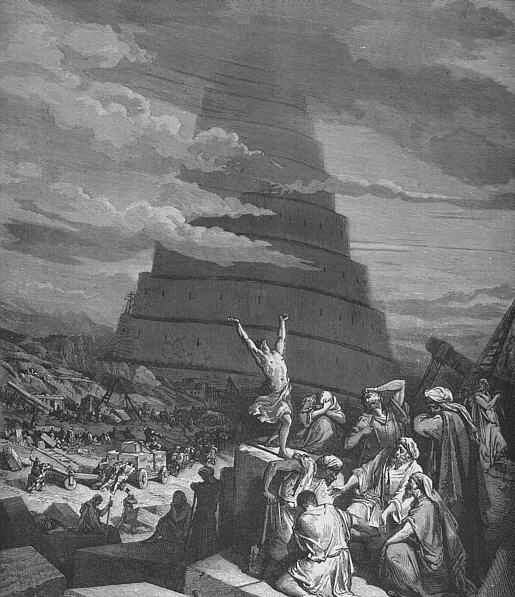
As the wandering descendants of Abraham began to settle, they often went up against armies and peoples much larger than they were, and God always told them not to worry, he would confuse the armies. He put fear in their hearts, in the confusion, mighty armies collapsed and scattered.
And why am I bringing this up, you might wonder?
This ISIS Army, it seems to me, is already cobbled together. I hear people people talking, people who know, they say ISIS is smart, fights smart. I believe they have some smart leaders, but I am willing to bet that they have some fatal flaws, also. They have overstretched. They are trying to enforce their will by violence and killing off the opposition, which might encourage the appearance of cooperation, but in reality breeds legions of those who will turn on them in a heartbeat.
Yes, we mistakenly dropped weapons which they were able to access. Mistakes happen in war zones all the time, with modern communication we just hear about it a lot sooner, not like 40 years from now when it is declassified and someone writes a book about it. Frankly, it’s not that big a deal.
What I believe is a big deal is their lack of cohesion. Lacking any strategic direct line to important decision makers, I am praying, and what I am praying is this, words from Psalms:
Confuse, O Lord, confound their speech
Disintegrate ISIS from the inside.
Create, Great and Merciful Father, miscommunications, misunderstandings, competing agendas and internal strife among the ISIS force.
All Mighty, All Powerful God, create a massive collapse, let their foot-soldiers drift away, drift home to their mothers and fathers and their families, and leave the Iraqi villages and the Syrian villages in peace.
Dry up the wealth of the Gulf, funneled through corrupt money changers in Kuwait, let it be mishandled, go missing, be stolen, be diverted and find its way to true charitable organizations providing a means of survival to those thousands of refugees who have been displaced.
Oh God! Collapse this abomination, the Islamic State of the Levant and Syria, collapse it utterly from within, strip it of all its power, devastate it like a virulent plague from within!
Oh God, bring good out of this downfall. Teach the remnants who return to their homes to live together in peace, to form peaceful and stable communities and then nations whose lives honor you!
All this is possible for the God who can do all things. Confound their speech, Lord, confuse them utterly, devastate and collapse them utterly from within. You are the one true God, there is no other God.
We are not without resources. We have the mighty fist of prayer.
The Devastating Power of Slander
Again, from the Lectionary readings for today, the devastation of gossip and slander, particularly appropriate during this season of vitriolic campaign ads, each more disgusting than the next:
Sirach 28:14-26
14 Slander* has shaken many,
and scattered them from nation to nation;
it has destroyed strong cities,
and overturned the houses of the great.
15 Slander* has driven virtuous women from their homes,
and deprived them of the fruit of their toil.
16 Those who pay heed to slander* will not find rest,
nor will they settle down in peace.
17 The blow of a whip raises a welt,
but a blow of the tongue crushes the bones.
18 Many have fallen by the edge of the sword,
but not as many as have fallen because of the tongue.
19 Happy is one who is protected from it,
who has not been exposed to its anger,
who has not borne its yoke,
and has not been bound with its fetters.
20 For its yoke is a yoke of iron,
and its fetters are fetters of bronze;
21 its death is an evil death,
and Hades is preferable to it.
22 It has no power over the godly;
they will not be burned in its flame.
23 Those who forsake the Lord will fall into its power;
it will burn among them and will not be put out.
It will be sent out against them like a lion;
like a leopard it will mangle them.
24a As you fence in your property with thorns,
25b so make a door and a bolt for your mouth.
24b As you lock up your silver and gold,
25a so make balances and scales for your words.
26 Take care not to err with your tongue,*
and fall victim to one lying in wait.
Jubans in Baton Rouge
So we’ve just had this strangeness with my new reinstated-credit card and my driver’s license, and AdventureMan is HUNGRY, and some very kind and helpful Baton Rouge friends have told us we have to try Juban’s for dinner, which sounds like exactly the place we would love our last night in Baton Rouge. Oddly, it is located in a non-descript strip mall, and the parking lot is so full we have to circle a couple times to find a spot.
When we find Juban’s, we are enchanged. It breathes elegance and atmosphere.
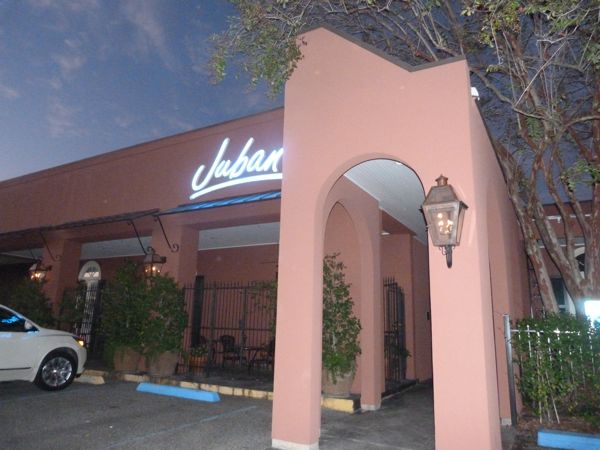
You evidently can dine outside, but no-one was dining outside.

There were a couple groups and a couple in front of us walking in; there were four large groups in various rooms (you can see this is where you schedule engagement parties, good-bye parties, getting-together with old friends parties, etc. This place is geared towards special times.) The groups were whisked away somewhere, and the couple in front of us was seated, and we were seated, almost immediately. We breathed a sigh of relief; we had no reservations, but we had a lovely table.
All around us were people gathered to have a good time. My favorite tables had children at them, and several generations, and the little girls all had dresses on and bows in their hairs, and the men were in coats and ties, and the groomed women wore nice dresses and pearls. At other tables, people were having business dinners, all dressed in coats and ties or nice business attire, the lighting was dim-but-good-enough-to-read-a-menu-by . . . . if we had a menu. We had no menus, and we didn’t seem to have a waiter.
We had plenty of time to observe.
After a good ten minutes, a waiter appeared and brought us two glasses of very very good wine . . . but no menus. He seemed annoyed when I asked for the menu; he was probably annoyed at the hostess, or something, I don’t know, but while he told us we had “the best waiter in the house” waiting on us, he never made us feel welcome in any way. He was entirely correct, in a very rushed, perfunctory kind of way.
We ordered. Food arrived fairly quickly. Our waiter never stopped by to ask how it was, or if we wanted more wine, or anything. It seemed to be an exceptionally busy evening; I didn’t see any of the waiters smiling or chatting cozily with any of the clients, so I wonder if it is part of the training that the waiters be rushed and perfunctory?

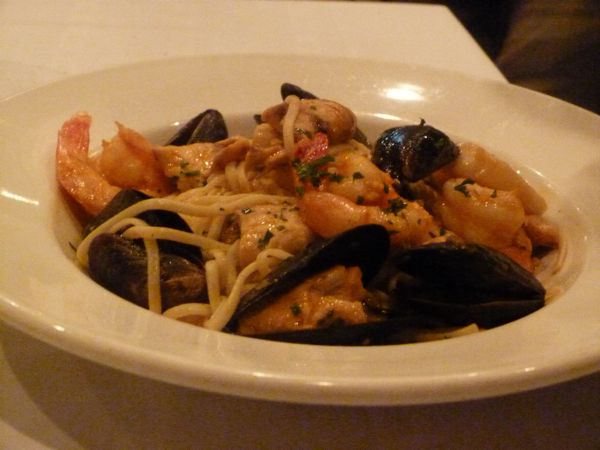
AdventureMan was the winner, with his Seafood Pasta. The sauce was intense, and truly wonderful, a sauce I would love to be able to make.
I had a perfectly nice salad and non-fried seafood, the Salad Napoleon. The salad part had taste; the seafood, not so much
:
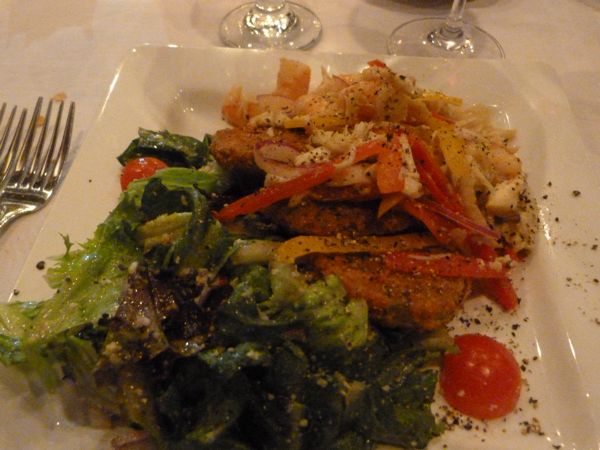
I did order coffee, while AdventureMan finished up his exquisite Seafood Pasta. Normally, on a night like this, in a lovely restaurant, we might also have dessert, but we were so nonplussed at our non-welcome that we decided to pay the bill and leave.
I would go back, one time. I would give them the benefit of the doubt; it might have been just a very very unexpectedly busy evening and they found themselves short-staffed. I would give them another try, but I just have the feeling that maybe stuffy, rushed service is the norm rather than the exception. Pity, that, because the venue itself is wonderful.
And it was just another little strangeness . . . .
Inequality: No Respect For Our First Nation Citizens (Blog Action Day)
I grew up in a small town, Juneau, Alaska, and not even in the main town, but on Douglas Island, across the Gastineau Channel from Juneau. My neighbors were fishermen, hunters, pilots, entrepreneurs and hard-working people struggling to make a living.
It was an upside down world. In most places, those who live there the longest are the leaders of society. In Southeast Alaska, those who lived there the longest were at the bottom of the heap, the Native Americans, the Tlingit, Haida and Tsimshian. I went to school with them. Yes, the boys carried knives. No, they were not dirty, and none of my little friends in elementary school were drunks. We were kids, we played together, we were all in the same classes all through elementary school – it was a small school.
Many of them did have family problems. There were problems of alcoholism, unemployment, domestic violence and hunger. They weren’t the only ones. The big problem was no respect. Although there were a few pieces of Native Art in the city museum, Native culture and Native craft were given little value. The Native way of life, living off the land, hunting and fishing, had greatly diminished as lands were apportioned off and hunting and fishing activities regulated.
In 1971 a huge lawsuit was settled and the Alaska Native Claims Settlement Act provided some restoration for the damaged peoples. Alaska Natives now have regional corporations to administer and grow funds to support the culture, to provide education for the children, to provide health clinics and hospitals. SEALASKA began to organize a biennial Celebration, a gathering of all the Alaska natives to share their stories, to celebrate their culture, to dance and to transmit culture to their children. It’s a great opportunity for people you might see every day in their western life to remember where they come from and to be proud of who they are. This Celebration is held every two years and includes Alaska Natives from all over Alaska who want to participate. It is a very inclusive Celebration. The next Celebration will be June 8 – 11, in 2016. You can read a little more about Celebration 2014 here.
They learn the legends of their clans – the Eagles, The Ravens, the Beavers, the Bears and a number of other clans. They spend the time between celebrations stitching together elaborate costumes for their parade and dance exhibitions, hollowing out canoes from trees, making elaborate hats and masks.
We first learned of the Celebration gathering in 2012, when we already had tickets to go back to Zambia at the exact time the Celebration was taking place, but my sweet husband promised we could go back for the 2014 Celebration. As we researched, we discovered just how much of Alaska we wanted to see, and did a reconnaissance trip in 2013. We loved our time there, and we were delighted to be able to return this last year for Celebration 2014.
It was one of the most thrilling moments of my life, to see the gathering, to see the old women cry as canoes came into sight full of young Alaskan natives, and say “I never thought I would see this again in my life”, to watch the exhilaration of the dancers, to feel the energy of the parade and especially – to see the children. To see the pride in marching, in dancing, to see the joy in being able to express who they are and to share that with others. I was moved beyond my ability to express in words; it was a feeling that in one small way, a train of events that had gone very off track had moved incrementally back in the right direction.
Here are some photos from the joyous Celebration of 2014:



Good2Go for Consensual Sex
Go figure. In spite of admonitions to the contrary, young people have sex. Problems arise when someone isn’t old enough to consent, isn’t coherent enough to have sex or is forced to have sex or participate in a sex act they don’t consent to.
I love this idea. It takes a little of the “he says – she says” out of the classic dilemma of who did what to whom and who should be held accountable? Was it consensual? Was it rape? Were both parties in a sober enough state to make that decision?
This is from SLATE Online magazine
Consensual Sex: There’s an App for That

Courtesy of Good2Go
Last June, Reason’s Robby Soave called for an iPhone app that would clear up pesky he-said, she-said rape cases by recording “mutual consent” to engage in sexual activity before two people do the deed: “Maybe they would have to input a password and then touch phones, or something?” he proposed. Last week, his prayers were answered: The Good2Gosexual consent app isn’t as touch-and-go as the app of Soave’s dreams, but it does encourage sex partners to assess their mutual interest in sex and record their intoxication levels before getting busy.
Here’s how it works: After deciding that you would like to have sex with someone, launch the Good2Go app (free on iTunes and Google Play), hand the phone off to your potential partner, and allow him or her to navigate the process to determine if he or she is ready and willing. “Are We Good2Go?” the first screen asks, prompting the partner to answer “No, Thanks,” “Yes, but … we need to talk,” or “I’m Good2Go.” If the partner chooses door No. 1, a black screen pops up that reads “Remember! No means No! Only Yes means Yes, BUT can be changed to NO at anytime!” If he or she opts instead to have a conversation before deciding—imagine, verbally communicating with someone with whom you may imminently engage in sexual intercourse—the app pauses to allow both parties to discuss.
If the partner—let’s assume for the purposes of this blog post, partner is a she—indicates that she is “Good2Go,” she’s sent to a second screen that asks if she is “Sober,” “Mildly Intoxicated,” “Intoxicated but Good2Go,” or “Pretty Wasted.” If she chooses “Pretty Wasted,” the app informs her that she “cannot consent” and she’s instructed to return the phone back to its owner (and presumably, not have sex under any circumstances, young lady). All other choices lead to a third screen, which asks the partner if she is an existing Good2Go user or a new one. If she’s a new user, she’s prompted to enter her phone number and a password, confirm that she is 18 years old, and press submit. (Minors are out of luck—the app is only for consentingadults.) Then, she’ll fill out a fourth prompt, which asks her to input a six-digit code that’s just been texted to her own cellphone to verify her identity with that app. (Previous users can just type in their phone number—which serves as their Good2Go username—and password.) Once that level is complete, she returns the phone to its owner, who can view a message explaining the terms of the partner’s consent. (For example, the “Partner is intoxicated but is Good2Go.”) Then, the instigator presses a button marked “Ok,” which reminds him again that yes can be changed to “NO at anytime!”
Then you get to have sex.
Easy, right? When I tried this process out with a partner, it took us four minutes to navigate through all the screens, mostly because he kept asking, “Why are we using an app for this?” and “Why do I have to give them my phone number?” (More on that later.) I was confused, too: As the instigator, I wasn’t asked to confirm that I wanted to have sex or to state my own intoxication level for my partner’s consideration. (A promotional video modeling the process begins by announcing how “simple” it is, then snaps out instructions for three minutes, but questions remain.) Perhaps the process is deliberately time-consuming: The app provides the “opportunity for two people to pause and reflect on what they really want to do, rather than entering an encounter that might lead to something one or both will later regret,” the app’s FAQ reads. Or maybe I’m just old: At 29, I find it much easier to just talk about sex than to use an app for that.
Lee Ann Allman, a creator of the app, says she was inspired to make it after talking with her college-aged kids about sexual assault on campuses across the country. They “are very aware of what’s happening, and they’re worried about it, but they’re confused about what to do. They don’t know how they should be approaching somebody they’re interested in,” she told me. Meanwhile, “kids are so used to having technology that helps them with issues in their lives” that Allman believes the app will help facilitate necessary conversations, encourage them to consider their level of intoxication, and remind young people that consent to sex should be affirmatively given and can be revoked at any time.
“Good2Go” is obviously a euphemism for sexual activity, but it’s not clear what that means exactly—is it making out, oral sex, vaginal intercourse, or anal sex, and with protection or not? (I guess you could always pause, grab phones, and start the process over to consent to another specific sexual activity—but at some point, you’d actually have to verbally explain what you’re agreeing to be Good2Go4.) The message that people need to consent to sex, and that they can withdraw consent, and they probably shouldn’t be totally wasted while they do it is one that college campuses are already administering to their students upon orientation. It may not always be getting though, but it’s not clear how the app (which is now being promoted through campus ambassadors) advances the cause.
In fact, Good2Go could contribute a dangerous new element to those he-said she-said rape cases. What Good2Go doesn’t tell users is that it keeps a private record of every “I’m Good2Go” agreement logged in its system, tied to both users’ personal phone numbers and Good2Go accounts. (Records of interactions where users say “No” or just want to talk are not logged in this way.) Allman says that regular users aren’t permitted access to those records, but a government official with a subpoena could. “It wouldn’t be released except under legal circumstances,” Allman told me. “But it does create a data point that there was an occasion where one party asked the other for affirmative consent, that could be useful in the future … there are cases, of course, as we know, where the accused is an innocent party, so in that case, it could be beneficial to him.”
That record may help the falsely accused, but it’s unlikely to aid a real victim. Good2Go may remind its users that consent can be revoked at any time, but there are still judges and juries that will take evidence that a person said “yes” to sex at one point, and conclude that they were asking for whatever happened later that night (or the next). Compared to that scenario, talking about sex doesn’t seem so scary.
Recent Comments
ExpatAlien on What Country am I Living … intlxpatr on Yellowstone: Old Faithful to C… Michelle on Yellowstone: Old Faithful to C… Cathy on No Grown-Ups in Charge intlxpatr on Waiting for Snow Wikipedia Donate Button

Amazina


Early Voting in Florida


 Here There and Everywhere