Bloggers Create Freedom Friday in Oppressed Eritrea
I heard whispers of this on National Public Radio, and found this write up on The International Business Times website. The message is simple – in a country where even a glance can be interpreted as treason, express your non-support of the government by STAYING AT HOME ON FRIDAY, the day Ethiopians usually go out and visit with friends, gather together and mingle. Ghandi would smile; this is civil expression at it’s most civil 🙂
Let the empty streets speak for you. LOL @ a tyrant making staying at home a crime against the government!
Eritrean bloggers outside of Ethiopia started it, smuggling an old Eritrean phone book out of the country and making calls to acquaintances – and strangers – in Eritrea. People didn’t even have to respond. they could just listen . . . then they developed a robo-call to help them enlarge the number they could reach.
Eritrea is considered one of the continent’s most opaque countries. National elections have not been held in the Horn of Africa country since it gained independence in 1993. Torture, arbitrary detention and severe restrictions on freedom of expression remain routine.
President Isaias Afwerki does not tolerate any independent media, the internet is strictly controlled and Reporters without Borders recently named it 179th out of 179 countries for freedom of expression.
It is illegal to criticise the government, prompting the Eritrean diaspora to set up a campaign to reverse the Arab-style call to take to the streets every Friday by emptying the streets in protest.

“We made phone calls from diaspora to Eritrea,” Meron Estefanos toldIBTimes UK. “We have a phone catalogue and called random numbers every Friday, telling them to stay at home and think about problems in our country.”
The phone calls “give them [Eritreans within the country] an opportunity to protest without risking too much”, according to Freedom Friday’s coordinator in the UK Selam Kidane.
The activists turned to a computerised auto-dialer called robocall to spread hundreds of thousands of taped messages to Eritrean phones. “It is time to restore our liberty and dignity” messages were sent automatically.
In another message, the mother of renowned political prisoner Aster Yohannes recalls the fate of her daughter, who was arrested in 2003 and has disappeared.
After two years, the movement is finally gaining momentum inside the country.
“Now they trust us inside the country, we have our team in Eritrea that puts out posters and leaflets late at night,” Estefanos said.
“The plan now that we have their trust is asking them to go out and demonstrate.”
About 1,500 Eritreans leave their country every month, according to the United Nations, paying up to 30,000 euros ($39,500) each to seek a new life free of grinding poverty and repression.
Earlier this year, Amnesty International put the spotlight on Eritrean asylum-seekers who are kidnapped from Sudanese refugee camps by the local Rashaida tribe, sold to Bedouin criminals in Egypt’s Sinai peninsula and severely abused while they are held for ransom.
One thousand refugees are held captive in the Sinai, according to reports. About 7,000 people in total may have been tortured and 4,000 may have died as a result of the people-trafficking in humans from 2009 to October 2012, according to recent data. A total of 3,000 people disappeared from 2007-11.
Pope Francis Defines Slave Labor
I have had wonderful women who have worked for me; they were from the Philippines, from Sri Lanka, from India. They worked hard and they didn’t spend their money. They sent their money home to help support mothers, fathers, siblings, children. They had some real horror stories to tell about how they had been treated in prior employment – employers with jealous wives, touchy-feelie employers and their sons, people who seemed to assume that because they were working under their sponsorship, they owned their lives. In Qatar and in Kuwait, Labor law provides for a mandatory day off – except for house-workers. Some work from crack of dawn getting the children ready for school until the last thobe is ironed, late late in the night.

I did a little research. Here is what 38 Euros per month – slave wages – is worth:
$50.13 US Dollars (Minimum wage $7.25/hour + social security)
Qatari Rial 182.52 (Qatar has not set a minimum wage)
Kuwaiti Dinar 14.24 (Minimum wage = 60 KD per month)
From Agence France Presse via AOL News:
Pope Francis on Wednesday condemned as “slave labour” the work conditions of victims of a factory collapse in Bangladesh in which more than 400 people have been found dead, Vatican radio reported.
“A headline that really struck me on the day of the tragedy in Bangladesh was ‘Living on 38 euros a month’. That is what the people who died were being paid. This is called slave labour,” the pope was quoted as saying at a private mass.
“Today in the world this slavery is being committed against something beautiful that God has given us — the capacity to create, to work, to have dignity. How many brothers and sisters find themselves in this situation!” he said.
“Not paying fairly, not giving a job because you are only looking at balance sheets, only looking at how to make a profit. That goes against God!” he was quoted as saying.
“There are many people who want to work but cannot. When a society is organised in a way that not everyone is given the chance to work, that society is not just,” he said.
Copyright (2013) AFP. All rights reserved.
If you have the time for some fascinating reading, it’s all available on the internet at the US State Departments Human Rights website; you can access by clicking here. Read – or skip – the overview, then go to the second column where you can see what is happening in every individual country. I’ve printed out labor excerpts below, but there are also fascinating observations on leadership, government, human rights and human trafficking.
QATAR: Labor Conditions according to
Country Reports on Human Rights Practices for 2012
a. Freedom of Association and the Right to Collective Bargaining
The law does not adequately protect the right of workers to form and join independent unions, conduct legal strikes, and bargain collectively, a situation that made the exercise of these rights difficult. The law provides workers in private sector enterprises that have 100 citizen workers who are18 and older a limited right to organize, strike, and bargain collectively. For those few workers covered by the law protecting the right to collective bargaining, the government circumscribed the right to bargain collectively through its control over the rules and procedures of the bargaining and agreement processes. The labor code allows for only one trade union, the General Union of Workers of Qatar (General Union), which was composed of general committees for workers in various trades or industries. Trade or industry committees were composed of worker committees at the individual firm level.
Noncitizens are not eligible to join worker committees or the national union, effectively banning foreign workers from organizing, striking, or bargaining collectively. The law explicitly prohibits public sector workers or the military from organizing.
Civil servants and domestic workers do not have the right to strike; the law also prohibits strikes at public utilities and health or security service facilities, which include the gas, petroleum, and transportation sectors. Although the law recognizes the right to strike for some workers, restrictive conditions made the likelihood of a legal strike extremely remote. The law requires approval for a strike by three-fourths of a company’s workers committee. The Complaint Department of the Ministry of Labor in coordination with the Ministry of Interior must rule on all industrial disputes before workers can call a strike.
In organizations with more than 30 workers, the law permits the establishment of “joint committees” with an equal number of worker and management representatives to deal with a limited number of workplace issues. Foreign workers may be members of joint labor-management committees. The law offers a means to file collective disputes. If not settled internally between the employees and employer, the Ministry of Labor can be brought in to mediate a solution to such disputes.
The law requires Ministry of Labor approval for worker organizations to affiliate with groups outside the country. The law does not prohibit antiunion discrimination or provide for reinstatement of workers fired for union activity.
Freedom of association and the right to collective bargaining were not respected in practice. The General Union was not a functioning entity. Employees could not freely practice collective bargaining, and there were no workers under collective bargaining contracts. While rare, when labor unrest occurred, mostly involving the country’s overwhelmingly foreign workforce, the government responded by dispatching large numbers of police to the work sites or labor camps involved; the strikes generally ended peacefully after these shows of force. In most cases the government summarily deported the workers’ leaders and organizers. For example, on January 24, 127 Nepali workers were detained after they went on strike to protest low pay; some were later deported.
b. Prohibition of Forced or Compulsory Labor
The law prohibits all forms of forced or compulsory labor, and the government generally enforced the law.
The government made efforts to prevent and eliminate forced labor during the year. The government arrested and prosecuted individuals for labor law violations; two cases each of forced labor and bonded labor were before courts at year’s end. In addition the government closed 15 recruitment firms during the year. The QFCHT and the NHRC conducted several training sessions during the year for migrant laborers to educate them on their rights in the country. The NHRC printed and distributed pamphlets that included pertinent articles of the labor and sponsorship laws in multiple languages to better educate migrant workers on their rights. In addition the Ministry of Labor opened a free legal clinic for low-income migrant workers in March.
There were continuing indications of forced labor, especially in the construction and domestic labor sectors, which disproportionately affected migrant workers. Exorbitant recruitment fees incurred abroad entrapped many workers in long-term debt, making them more vulnerable to being exploited for forced labor. Some foreign workers who voluntarily entered the country to work had their passports and pay withheld, were refused exit permits, and worked under conditions to which they had not agreed. In a critical June report, Human Rights Watch highlighted a number of these problems, including poor living conditions, employers who routinely confiscated worker passports, and a sponsorship system that gave employers inordinate control of workers.
Also see the Department of State’s Trafficking in Persons Report at www.state.gov/j/tip.
c. Prohibition of Child Labor and Minimum Age for Employment
The law sets the minimum age for employment at 16 and stipulates that minors between the ages of 16 and 18 can work with parental or guardian permission. Minors may not work more than six hours a day or more than 36 hours a week. Employers must provide the Labor Department with the names and occupations of their minor employees and obtain permission from the Ministry of Education to hire a minor. The Labor Department may prohibit the employment of minors in jobs judged dangerous to their health, safety, or morals. The government generally enforced relevant laws effectively, and child labor rarely occurred in practice.
d. Acceptable Conditions of Work
There is no minimum wage. The law requires equal pay for equal work in the private sector. The labor law prescribes a 48-hour workweek with a 24-hour rest period and paid annual leave days. Employees who work more than 48 hours per week or 36 hours per week during the holy month of Ramadan are entitled to an overtime pay supplement of at least a 25 percent. The law requires premium pay for overtime and prohibits excessive compulsory overtime. The government set occupational health and safety standards. The labor law and provisions for acceptable conditions of work do not apply to workers in the public sector, agriculture, or to domestic servants.
Responsibility for laws related to acceptable conditions of work fell primarily to the Ministry of Labor as well as the Ministry of Energy and Industry and the Ministry of Health. The government did not effectively enforce standards in all sectors; working conditions for citizens were generally adequate, as government agencies and the major private sector companies employing them generally followed relevant laws. Enforcement problems were in part due to insufficient training and lack of personnel. There were approximately 150 inspectors in the Ministry of Labor. Fear of penalties such as blacklisting, which allows the Ministry of Labor to suspend specific operations, appeared to have had some effect as a deterrent to some labor law violations.
The government took action to prevent violations and improve working conditions during the year. According to foreign diplomats and some individual migrant workers, the Ministry of Labor’s Department of Labor Affairs was perceived to be objective within its mandate when dealing with the nonpayment of wages, health and safety violations, and other labor law violations. The department claimed it resolved 80 percent of the 6,000 complaints filed by workers during the year. The ministry referred 292 cases to the labor courts for judgment. During the first half of the year, the labor courts heard 8,101 cases, of which 813 received final verdicts, 920 received preliminary verdicts, 5,236 were still under review, 1,111 were cancelled, and 21 were linked to existing cases. The courts ordered that companies provide both financial compensation and airline tickets to their country of origin for plaintiffs in 49 cases, financial compensation only in six cases, and airline tickets only in five cases. A limited number of labor complaints were referred to the criminal courts, but statistics were not publicly available.
The Labor Inspection Department conducted monthly and random inspections of labor camps; when it found them below minimum standards, the operators received a warning, and authorities ordered them to remedy the violations within one month. If they did not remedy the violations, the Ministry of Labor blacklisted the company and on occasion referred the matter to the public prosecutor for action. Some cases went to trial. During the year inspectors conducted 46,624 observations of work and labor housing sites. Inspectors found 90 percent of companies were compliant with the administrative aspects of the law, such as timely payment of salaries and work regulations, while 70 percent were found to be compliant with safety standards. The Ministry of Labor issued 7,337 warning notices, 5,245 for health and safety reasons and 2,092 for administrative reasons. There were 377 companies that were issued reports of violations, 231for health and safety reasons and 146 for administrative reasons. Violators faced penalties of up to 6,000 riyal ($1,648) and 30 days’ imprisonment in the most serious cases, but labor observers reported that most safety and health violations were handled through administrative fines or blacklisting. The Ministry of Labor maintained an office in Doha’s industrial area, where most unskilled laborers resided, to receive complaints about worker safety or nonpayment of wages.
Violations of wage, overtime, and safety and health standards were relatively common, especially in sectors employing foreign workers, in which working conditions were often poor. Employers often ignored working hour restrictions and other laws with respect to domestic workers and unskilled laborers, the majority of whom were foreigners. A November survey by Qatar University’s Social and Economic Survey Research Institute found that 90 percent of unskilled laborers worked on average six days per week and 9.3 hours per day. Many unskilled foreign laborers were housed in cramped, dirty, and hazardous conditions, often without running water, electricity, or adequate food. The International Trade Union Confederation (ITUC) has repeatedly reported abusive conditions, including unexplained and work-related deaths, for migrant workers, especially in the construction sector. After an ITUC investigation of working conditions for Nepali workers, the organization alleged that work-related deaths due to problems such as heat exhaustion were wrongly attributed to heart attacks or natural causes.
Domestic workers, who are not protected by the labor law, often faced unacceptable working conditions. Many such workers frequently worked seven days a week and more than 12 hours a day with few or no holidays, no overtime pay, and no effective means to redress grievances.
According to the ITUC and other organizations, foreign workers faced legal obstacles and lengthy legal processes that prevented them from seeking redress for violations and exploitative conditions. The sponsorship law was widely considered the root of these violations. Under the country’s sponsorship system, most employees cannot leave the country without permission and are prevented from switching jobs without a “no objection letter” from their employer. Employees leaving the country without a no objection letter are barred from reemployment in the country for two years.
Kuwait Labor Practices According to
Country Reports on Human Rights Practices for 2012
a. Freedom of Association and the Right to Collective Bargaining
The law protects the right of workers to form and join trade unions, conduct legal strikes, and bargain collectively, with significant restrictions. The law does not apply to public-sector employees, domestic workers, or maritime employees. Discrete labor laws set work conditions in the public and private sectors, with the oil industry treated separately. The law permits limited trade union pluralism at the local level, but there was only one government-authorized federation, the Kuwait Trade Union Federation (KTUF). The law also stipulates any new union must include at least 100 workers, and that at least 15 of the total must be Kuwaiti citizens.
The law provides workers a limited right to collective bargaining, excepting domestic servants, maritime workers, and civil servants. There is no minimum number of workers needed to conclude such agreements.
Public-sector workers do not have the right to strike. Private-sector workers have the right to strike, although cumbersome provisions calling for compulsory negotiation and arbitration in the case of disputes limit that right. Legal strikes require permission from the Ministry of Interior, which was rarely granted. The law does not prohibit retaliation against striking workers or prevent the government from interfering in union activities, including the right to strike.
The law prohibits antiunion discrimination and employer interference with union functions, and provides for reinstatement of workers fired for union activity.
However, the law empowers the courts to dissolve any union for violating labor laws or for threatening “public order and morals,” although a union can appeal such a court decision. The Ministry of Social Affairs and Labor can request the Court of First Instance to dissolve a union. Additionally, the emir may dissolve a union by decree.
Foreign workers, who constitute approximately 85 percent of the workforce, may join unions only as nonvoting members after five years of work in the particular sector the union represents, provided they obtain a certificate of good conduct and moral standing from the government. They cannot run for seats or vote in board elections. Both the International Labor Organization and the International Trade Union Confederation criticized the citizenship requirement for discouraging unions in sectors that employ few citizens, including much of private-sector employment, such as construction.
The government enforced applicable laws, and procedures were generally not subject to lengthy delay or appeals.
Although the law restricts freedom of association and collective bargaining rights, the government did not always enforce these limits. For example, according to KTUF, the government did not consistently enforce the requirement that foreign workers have at least five years working in Kuwait in a specific sector prior to joining a union.
The government also treated worker actions by citizens and noncitizens differently. While citizens and public-sector union leaders and workers faced no government repercussions for their roles in union or strike activities, companies directly threatened noncitizen workers calling for strikes with termination and deportation.
The government did not respect freedom of association and the right to collective bargaining. Worker organizations were generally not independent of the government, and the government interfered in union activities. The government essentially treated licensed unions as parastatal organizations, providing as much as 90 percent of their budgets and inspecting financial records; if a union ceases to exist, the government confiscates its assets.
While the National Trade Union Federation petitioned the government for official recognition during the year, it did not receive a license by year’s end.
b. Prohibition of Forced or Compulsory Labor
The law prohibits forced or compulsory labor “except in cases specified by law for national emergency and with just remuneration,” but the government did not effectively enforce the law.
Forced labor and conditions indicative of forced labor occurred in practice, especially among migrant workers. Such practices were usually a result of employer abuse of the sponsorship system for noncitizen workers. Employers frequently and illegally withheld salaries from domestic workers and minimum-wage laborers.
Domestic servitude was the most common type of forced labor, principally involving foreign domestic workers employed under the sponsorship system, but forced labor in the construction and sanitation sectors also existed. Forced labor conditions for migrant workers included nonpayment of wages, long working hours, deprivation of food, threats, physical and sexual abuse, and restrictions on movement, such as withholding passports or confinement to the workplace. There were numerous media reports throughout the year of domestic workers being abused by their sponsors or sustaining significant injuries while trying to escape from their sponsors; some reports alleged abuse resulted in workers’ deaths. Female domestic workers were particularly vulnerable to sexual abuse. Police and courts were reluctant to prosecute citizens for abuse in private residences.
See also the Department of State’s Trafficking in Persons Report at www.state.gov/j/tip.
c. Prohibition of Child Labor and Minimum Age for Employment
The law prohibits child labor. The legal minimum age for employment is 18 years; however, employers may obtain permits from the Ministry of Social Affairs and Labor to employ juveniles between 15 and 18 years old in some nonhazardous trades. Juveniles may work a maximum of six hours a day with no more than four consecutive hours followed by a one-hour rest period. Juveniles cannot work overtime nor between 7:00 p.m. and 6:00 a.m.
Although it was not extensive, there were credible reports of child labor by domestic servants of South Asian origin and Bidoon children. Some underage workers entered the country on travel documents with falsified birth dates.
Bidoon children as young as seven worked long hours as street vendors, sometimes under dangerous conditions, according to reports by human rights NGOs. Their need to provide for their families often led to poor educational performance or abandoning school.
The government made efforts to enforce the law effectively. Approximately 300 Ministry of Social Affairs and Labor inspectors routinely monitored private firms for labor law compliance, including laws against child labor. Noncompliant employers faced fines or a forced suspension of their company operations. However, the government did not enforce child labor laws in informal sector occupations, such as street vending.
d. Acceptable Conditions of Work
The law sets the national minimum private-sector wage at 60 dinars ($216) per month.
The law limits the standard workweek to 48 hours (40 hours for the petroleum industry), and gives private-sector workers 30 days of annual leave. The law also forbids requiring employees to work more than 60 hours per week or 10 hours per day. The law provides for 13 designated national holidays annually. Workers are entitled to 125 percent of base pay for working overtime and 150 percent of base pay for working on their designated weekly day off.
The government issued occupational health and safety standards. For example, the law provides that all outdoor work stop between 11 a.m. and 4 p.m. during June, July, and August or times when the temperature rises to more than 120 degrees Fahrenheit in the shade.
The law and regulations governing acceptable conditions of work do not apply to domestic workers. The Ministry of Interior has jurisdiction over domestic worker matters.
The Ministry of Social Affairs and Labor was responsible for enforcement of wage and hour, overtime, and occupational safety and health regulations. However, enforcement by the ministry was poor, especially with respect to unskilled foreign laborers.
Approximately 500 labor inspectors monitored private firms. The government periodically inspected enterprises to raise awareness among workers and employers and to ensure they abided by existing safety rules, controlled pollution in certain industries, trained workers to use machines, and reported violations.
The Ministry of Social Affairs and Labor monitored work sites to ensure compliance with rules banning summer work and recorded hundreds of violations during the year. Workers could also report these violations to their embassies, the KTUF, or the Labor Disputes Department. Noncompliant employers faced warnings, fines, or forced suspensions of company operations, but these were often not substantial enough to deter violators.
Workers submitted complaints to the Ministry of Social Affairs and Labor’s Labor Disputes Department; however, the government did not enforce the standards uniformly.
At times the Ministry of Social Affairs and Labor intervened to resolve labor disputes between foreign workers and their employers. The Ministry of Social Affairs and Labor’s labor arbitration panel sometimes ruled in favor of foreign laborers who claimed violations of work contracts by their employers. The government was more effective in resolving unpaid salary disputes involving private-sector laborers than those involving domestic workers. However, during the year the Ministry of Interior’s Department of Domestic Labor Office collected 8,340 dinars ($30,000) owed to 71 domestic workers by their employers.
Foreign workers were vulnerable to unacceptable conditions of work. Domestic servants and other unskilled foreign workers in the private sector frequently worked substantially in excess of 48 hours a week, often with no day of rest.
Since labor standards did not apply to domestic workers, such workers had little recourse when employers violated their rights. There were no inspections of private residences, the workplace of the majority of the country’s domestic workers, nor did the government make significant efforts to address working conditions for these workers. Reports commonly indicated employers forced domestic workers to work overtime without additional compensation. There were frequent reports of domestic workers committing or attempting suicide due to desperation over abuse or poor working conditions.
86 Expats Deported; “Kuwait Traffic Laws Will Be Strictly Implemented”
This is a very interesting article from the April 27th Kuwait Times; after stating all the things that will happen to expats violating traffic rules – like running a red light – Lt Gen Al Ali adds that “of course” they will deal strictly with Kuwaits when their violations might endanger the safety of people on the roads. Hmm. When Qatar implemented a very strict traffic code with high fines for violations, they quickly discovered that the majority of the violations were committed by Qataris, whose families were highly indignant that they would be expected to pay fines – high fines.
Traffic laws are only effective when equally applied across the board. I congratulate the Kuwaiti police for making the decision to implement this new law equally, against all traffic violators, native and expat alike.
KUWAIT: The Assistant Undersecretary for Traffic Affairs Lt Gen Abdul Fattah Al-Ali said 86 expats have been deported during the past few days, emphasizing that he is implementing the instructions of the First Deputy Premier and Interior Minister Sheikh Ahmad Al-Hmoud, and the Undersecretary Gen Ghazi Al-Omar. He said that traffic department will not allow any kind of violation of the country’s law.
The traffic department held an extended traffic campaign in Shuwaikh industrial area, with the participation of 72 traffic patrols and 17 cranes. The campaign resulted in more than 300 citations, and the detention of about 70 vehicles, . Lt Gen Al Ali also announced some new procedures to be taken besides activating the existing traffic law articles, to overcome all mistakes that used to happen before.
Al-Ali said: “We have received green light from the minister of interior and undersecretary to take strict actions against expatriates who do not abide by traffic rules, especially those who jump red traffic light and drive without driving license and over speed. Those instructions have been passed to all patrols, and was given the blessings of first deputy prime minister and minister of interior, which calls for immediate deportation of any expatriate who drives without license.
Also all expatriates who jump red signal or overspeed will be deported. Of course, we will also take strict actions against citizens who commit such traffic violations as those violations endanger the lives of other people. Therefore, article 33 of traffic law will be strictly implemented, and the vehicle of the citizen who breaks the law will be impounded for three months.”
Al Ali said that new procedures will be taken against owners of the cars that are taken into custody, and they will have to pay all fines in addition o detention charges and cost of transporting the vehicle to the dumping ground. He added that the Ministry of Interior will take strict actions against reckless driving in Wafra, Subhan and Fahaheel.
He added in his report to press reporters that once the law completely implemented,there will be safety and security on the road and the number of road accidents which costs the state billions of dinars annually will come down. Ministry of Interior started communicating with Ministry of Commerce to cancel the license of any garage found repairing cars without repair permit from the local police station.
By Hanan Al-Saadoun, Staff Writer

KUWAIT: MoI assistant undersecretary for traffic affairs, Maj General Abdul Fattajh Al-Ali said that citizens and bedoons would be detained for committing severe traffic violation whereas expats would be deported for doing the same. “Law must be applied without exceptions”, he said noting that drivers committing severe traffic violations such as driving through red lights, speeding, driving without holding a driver’s license or vehicle registration or illegal use of vehicle as a taxi would be immediately detained and a special record would be made of their ‘traffic records’ to check if they had committed the same violations earlier. —Al-Rai
Top MOI officials to retire in reshuffle
KUWAIT: Two top Interior Ministry officers are poised to retire by the end of the month in a prelude to major reshuffles planned by First Deputy Prime Minister and Minister of Interior Sheikh Ahmad Al-Hmoud Al-Sabah. This was published by Al-Rai on Thursday quoting “reliable sources” who indicated that Minister Al-Hmoud “did not request extending the service for Major General Mustafa Al- Zaabi and Major General Khalil Al-Shamali”, who occupy the posts of Assistant Undersecretary for Traffic Affairs and Assistant Undersecretary for Correctional Institutions Affairs respectively. The reshuffle which starts sometime this month is set to cover directors and deputy directors and will fill the vacuum left by the two assistant undersecretaries. In this regard, the sources who spoke on condition of anonymity indicated that Assistant Undersecretary for General Security Affairs, Major General Mahmoud Al-Dousary, is expected to be shifted to the traffic affairs department “in order to utilize his long experience in the field which can prove helpful in carrying out strategic plan to end the state’s traffic problem”. The same sources further indicated that the ministry plans to launch a “comprehensive study” to address the problem of the shortage of staff through measures that will include “simplifying enrollment conditions at the Saad Al-Abdullah Police Academy”. — Al-Rai
Wisdom of Solomon
Our church tradition includes several books of the bible that the mainline Protestant churches do not. Wisdom of Solomon is one of my favorites (I think I like Judith the best) This is our reading for today from the Old Testament in our Lectionary Readings:
Wisdom 1:1-15
1Love righteousness, you rulers of the earth,
think of the Lord in goodness
and seek him with sincerity of heart;
2 because he is found by those who do not put him to the test,
and manifests himself to those who do not distrust him.
3 For perverse thoughts separate people from God,
and when his power is tested, it exposes the foolish;
4 because wisdom will not enter a deceitful soul,
or dwell in a body enslaved to sin.
5 For a holy and disciplined spirit will flee from deceit,
and will leave foolish thoughts behind,
and will be ashamed at the approach of unrighteousness.
6 For wisdom is a kindly spirit,
but will not free blasphemers from the guilt of their words;
because God is witness of their inmost feelings,
and a true observer of their hearts, and a hearer of their tongues.
7 Because the spirit of the Lord has filled the world,
and that which holds all things together knows what is said,
8 therefore those who utter unrighteous things will not escape notice,
and justice, when it punishes, will not pass them by.
9 For inquiry will be made into the counsels of the ungodly,
and a report of their words will come to the Lord,
to convict them of their lawless deeds;
10 because a jealous ear hears all things,
and the sound of grumbling does not go unheard.
11 Beware then of useless grumbling,
and keep your tongue from slander;
because no secret word is without result,*
and a lying mouth destroys the soul.
12 Do not invite death by the error of your life,
or bring on destruction by the works of your hands;
13 because God did not make death,
and he does not delight in the death of the living.
14 For he created all things so that they might exist;
the generative forces* of the world are wholesome,
and there is no destructive poison in them,
and the dominion* of Hades is not on earth.
15 For righteousness is immortal.
This is Your Boston Marathon First Victim – SHAME
This is on AOL News – information on the first victim from the first blast in the Boston Marathon. This is your victim, bomber, an eight year old boy. His mother is also hospitalized. Hang your head in shame.

Martin Richard was standing near the finish line, waiting for his father to complete the grueling Boston Marathon on Monday, when an explosion took his life.
He was 8 years old and in the third grade.
Neighbor Jane Sherman told WCVB that Martin was a typical little boy, who loved to ride his bike and play baseball.
Martin’s mother, Denise, was hospitalized with “grievous injuries,” The Times of London reported. She reportedly underwent surgery late Monday for an injury to her brain.
His 6-year-old sister, a first grader whose name was not made public, lost her leg in the blast, WHDH reported.
The status of his father, William, has not been released. A third child was reportedly unharmed in the explosion.
Boston Marathon Winners, lost in the aftermath of the explosions:

This is the face of America – welcoming all nations and all races to compete in the Boston Marathon. The winners were Ethiopian and Kenyan, and we celebrate their victories, year after year. Their nationality doesn’t concern us, their race is irrelevant, their politics are their own – they are all welcome to race, runners from all nations.
BOSTON — The Kenyans finally face a challenge to their dominance of the Boston Marathon, and it’s from their East African neighbors.
Ethiopia’s Lelisa Desisa took the title in the 117th edition of the world’s oldest marathon on Monday, winning a three-way sprint down Boylston Street to finish in 2 hours, 10 minutes, 22 seconds and snap a string of three consecutive Kenyan victories.
“Here we have a relative newcomer,” said Ethiopia’s Gebregziabher Gebremariam, who finished third. “Everything changes.”
In just his second race at the 26.2-mile distance, Desisa finished 5 seconds ahead of Kenya’s Micah Kogo to earn $150,000 and the traditional olive wreath. American Jason Hartmann finished fourth for the second year in a row.
“It was more of a tactical race, the Ethiopian versus the Kenyans. That fight played out very well,” defending champion Wesley Korir, a Kenyan citizen and U.S. resident, said after finishing fifth.
Undoing Public Disclosure, One Small Move at a Time
I am appalled. I have scoured the TV News, have looked through newspapers – not a word! I steam at corruption in Kuwait and Qatar and Saudi Arabia, and then a small NPR Report on yesterday’s news alerts me to a measure, passed in Congress, WITHOUT A WHISPER!
(oh? I was shouting? Sorry. Carried away. Outraged) You can access the NPR station and listen to the entire repulsive report by clicking here.
Congress Repeals Financial Disclosure Requirements For Senior U.S. Officials
by EYDER PERALTA

A tourist takes cover underneath an umbrella while snapping a photo of the U.S. Capitol on March 6, 2013 in Washington, DC.
Chip Somodevilla/Getty Images
Joining the Senate, the House of Representatives approved a measure today that repeals a requirement that top government officials post financial disclosures on the Internet.
The House, like the Senate, acted quietly without a vote. Instead, they sent the measure to the president’s desk by unanimous consent.
The provision was part of the Stop Trading on Congressional Knowledge Act (Stock), which became law in March of 2012. The act was intended to stop members of congress from profiting from nonpublic information.
As NPR’s Tamara Keith reported, at the time, Sen. Joe Lieberman called the law “the most significant congressional ethics reform legislation to pass Congress in at least five years.”
“That law mainly addressed conflict-of-interest policies for members of Congress and their staffs, but it also included a requirement that the financial disclosure forms filed by some 28,000 high-ranking federal employees be posted online.
“While those forms are public records, they must be requested individually from employing agencies. The Stock Act envisions online posting first on agency sites and later in a central, searchable database.
“The posting requirement was delayed three times out of concerns about the potential for identity theft and other crimes against career employees, as well as security risks to the government.”
The Sunlight Foundation, which advocates for a more open government,called today’s repeal an “epic failure.”
The foundation explained that instead of addressing specific security concerns, Congress has acted broadly.
For instance, they note, the president, vice president, members of Congress, congressional candidates and individuals subject to Senate confirmation are still required to make their financial disclosures public. But the change in law now makes the posting of those disclosures on the Internet optional.
Sunlight adds:
“Not only does the change undermine the intent of the original bill to ensure government insiders are not profiting from non-public information (if anyone thinks high level congressional staffers don’t have as much or more insider information than their bosses, they should spend some time on Capitol Hill) but it sets an extraordinarily dangerous precedent suggesting that any risks stem not from information being public but from public information being online.
“Are we going to return to the days when the public can use the Internet to research everything exceptwhat their government is doing? Will Congress, in its twisted wisdom, decide that information is public if journalists, academics, advocates and citizens are forced to dig through file cabinets in basements in Washington, DC to find it? And does anyone think that makes us safer?
“As my colleague Tom Lee noted, ‘This approach is known as ‘security through obscurity.’ Essentially, the idea is that rather than fixing a system’s flaws, you can just make the system opaque or unusable or unpopular enough that those flaws never surface.'”
Update at 5:35 p.m. ET. 30 Seconds:
NPR’s Tamara Keith tells us the House procedure took exactly 30 seconds.
Correction at 5:29 p.m. ET. An earlier version of his post said the House followed the Senate. In fact, the Senate voted Thursday and the House voted today.
Shadrach, Meshach and Abednigo Survive the Test of Fire
Some of the stories you come across in the Bible are so horrifying – and so human – that they still have a compelling immediacy. People do the most horrible things to one another, it mystifies me. This King, Nebuchadnezzar, is so incensed that his Jewish bureaucrats won’t bow down and worship his statue that he orders them cast into a furnace, which he heats seven times hotter than normal. That’s pretty angry!
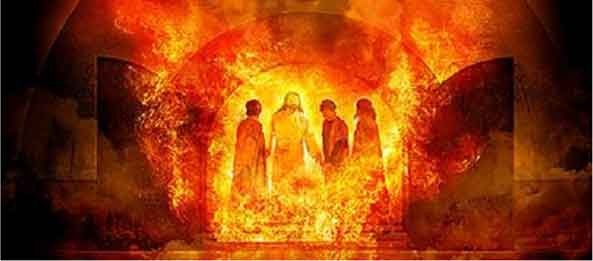
Daniel 3:19-30
19 Then Nebuchadnezzar was so filled with rage against Shadrach, Meshach, and Abednego that his face was distorted. He ordered the furnace to be heated up seven times more than was customary, 20and ordered some of the strongest guards in his army to bind Shadrach, Meshach, and Abednego and to throw them into the furnace of blazing fire. 21So the men were bound, still wearing their tunics,* their trousers,* their hats, and their other garments, and they were thrown into the furnace of blazing fire.
22Because the king’s command was urgent and the furnace was so overheated, the raging flames killed the men who lifted Shadrach, Meshach, and Abednego. 23But the three men, Shadrach, Meshach, and Abednego, fell down, bound, into the furnace of blazing fire.
24 Then King Nebuchadnezzar was astonished and rose up quickly. He said to his counsellors, ‘Was it not three men that we threw bound into the fire?’ They answered the king, ‘True, O king.’
25He replied, ‘But I see four men unbound, walking in the middle of the fire, and they are not hurt; and the fourth has the appearance of a god.’* 26Nebuchadnezzar then approached the door of the furnace of blazing fire and said, ‘Shadrach, Meshach, and Abednego, servants of the Most High God, come out! Come here!’
So Shadrach, Meshach, and Abednego came out from the fire. 27And the satraps, the prefects, the governors, and the king’s counsellors gathered together and saw that the fire had not had any power over the bodies of those men; the hair of their heads was not singed, their tunics* were not harmed, and not even the smell of fire came from them.
28Nebuchadnezzar said, ‘Blessed be the God of Shadrach, Meshach, and Abednego, who has sent his angel and delivered his servants who trusted in him. They disobeyed the king’s command and yielded up their bodies rather than serve and worship any god except their own God. 29Therefore I make a decree: Any people, nation, or language that utters blasphemy against the God of Shadrach, Meshach, and Abednego shall be torn limb from limb, and their houses laid in ruins; for there is no other god who is able to deliver in this way.’ 30Then the king promoted Shadrach, Meshach, and Abednego in the province of Babylon.
When I read this, I think of the recent legislation proposed in Kuwait against insulting God or his prophets. Let men insult. Let them build their gods, their statures, let them pursue their little gods of vanity, power and wealth. The one true God laughs. He holds all the true power. He doesn’t need our protection; he is in charge.
In Florida, some friends complain about “the law that says our kids can’t pray in school.” There is no law that says kids can’t pray in school. Kids pray in school all the time! I did, specially when I had a really hard test I hadn’t prepared adequately for 🙂 What the law says is that no one can make all pray together, using the same words, as we did at one time. It’s not such a bad thing; even as Christians, we don’t all share the same beliefs. You might not want your children praying a prayer I might compose 🙂 because I might have a dogmatic belief a little different from your own. Our job is to teach our children to pray; the Holy Spirit will be with them, and put the words in their hearts.
Mom Hugs; Babies Brains Get Bigger :-)
I saw this on one of the parenting posts on AOL and loved it. Hug your babies, yes, hug them and hug them again! Make their brains grow BIG and strong!

The Prophet Jeremiah Ponders the Ways of the Wicked
Today the prophet Jeremiah sounds like a modern man – asking why, when we know what is good and what is bad, that some choose bad, and seem to do just fine – even better than the rest of us?
From the Holy Week readings in The Lectionary:
Jeremiah 12:1-16
12You will be in the right, O Lord,
when I lay charges against you;
but let me put my case to you.
Why does the way of the guilty prosper?
Why do all who are treacherous thrive?
2 You plant them, and they take root;
they grow and bring forth fruit;
you are near in their mouths
yet far from their hearts.
3 But you, O Lord, know me;
You see me and test me—my heart is with you.
Pull them out like sheep for the slaughter,
and set them apart for the day of slaughter.
4 How long will the land mourn,
and the grass of every field wither?
For the wickedness of those who live in it
the animals and the birds are swept away,
and because people said, ‘He is blind to our ways.’*
Strangers in America; No American Friends
This article is so sad, and I have also seen it the other way around, hoardes of American students abroad, hanging out with other Americans, then other ex-pats, and lastly, the local inhabitants. It IS hard. The differences can seem overwhelming. (That is my very first blog entry, and it had to do with the risks you expose yourself to when you open yourself to a cross cultural relationship 🙂 ) Overcoming those differences makes life so much richer.
Thank you, Professor John Mueller, for forwarding this fascinating article:
Strangers in a Strange Land
March 4, 2013 – 3:00am
By
Elizabeth Redden
In interviews with 40 international students at four research universities, Chris R. Glass was struck by the relative absence of Americans from his subjects’ stories. The interviewees, half undergraduate and half graduate students, described close relationships with their international peers, including those coming from countries other than their own. But while they frequently characterized their American classmates as friendly or helpful, only rarely did they seem to play a significant role in their lives.
“Only one student has described a significant relationship with a U.S. peer and that student was from Western Europe and that peer was her boyfriend,” said Glass, an assistant professor of educational foundations and leadership at Old Dominion University. “That to me is a striking omission from the stories that they’re telling.”
As the number of international students at U.S. colleges continues to rise — and as the mix of international students has shifted in favor of undergraduates — there are increasing concerns as to how well they’re being integrated into campus life. There have been periodic reports of racist incidents and – overt discrimination aside – there is the question of disconnection raised by Glass’s research. Another study authored by Elisabeth Gareis, a communication studies scholar at Baruch College, found that nearly 40 percent of international students reported having no close American friends. In explanation, many of the students cited “internal factors” such as limited language proficiency or shyness, but they also described a perceived lack of interest on the part of American students.
At the recent Association of International Education Administrators annual conference, a roundtable session on the integration of international students (co-moderated by this Inside Higher Edreporter) drew a standing-room only crowd, as attendees discussed the difficulties they’ve encountered in encouraging and equipping American and international students to (productively) interact. Domestic students are not necessarily cross-culturally competent – a point made lucidly when one audience member described the tendency of American study abroad students to request compatriots as roommates. At the same time, international students may not always be interested in initiating contact. An audience member from a Midwestern institution shared his observation that a fair number of students from China – a rapidly growing and by far the biggest group of international undergraduates on U.S. campuses – seem to be more interested in interacting with one another than with their American classmates.
Yet, even those students who are interested may find social structures on campus to be exclusionary or mystifying or both. On American campuses dominated by fraternity and sorority life, or obsession over intercollegiate athletics, or where everyone seems to have gone to the same high school, international students may feel foreign in ways that go beyond their nationality. “The lack of interaction is as much due to individual attributes as it is to social context,” said Glass, who is conducting his qualitative research in collaboration with Rachawan Wongtrirat, the assistant director of Old Dominion’s international initiatives office. Given the natural tendency of people to gravitate toward others who are like them (what social psychologists call the “similarity-attraction effect”), “are universities creating contexts where these interactions can happen?” he asked.
In interviews with Inside Higher Ed, researchers and professionals in international education spoke about the challenges in this regard and their efforts to create opportunities for meaningful interactions between domestic and international students through programming. It seems that many universities have a long way to go in living up to the promise presented by increasing numbers of international undergraduates – the promise being increased opportunities for sustained and meaningful cross-cultural interactions in classrooms, dorm rooms, and so forth.
‘Encounters With Difference That Make a Difference’
“It’s a combination of factors that have made this issue so salient,” said Larry A. Braskamp, the president of the Global Perspective Institute and a professor emeritus at Loyola University Chicago. “One is there are just a lot more international students on campus now, particularly at institutions that have not historically had a lot. The second is that everybody is interested in global learning: we know we need to prepare students to be more globally competent. And the third is that these students represent on some campuses a fairly significant contribution to the bottom line. Most of these students pay full tuition and as a result a lot of institutions see them as one way to balance the budget. So they have to make sure that the retention rate is high; they have to develop a good reputation so that other students will come.”
In Braskamp’s research, he’s found that entering American freshmen do not tend to think complexly, are not comfortable amidst difference and do not typically have friends who are unlike them. “We’ve said, O.K., the implication of all this is we need to create ‘encounters with difference that make a difference,’ ” he said. “I’ve thought of it as students being on a journey: they start with rather simplistic views of themselves, of their social interactions and the ways in which they understand the world around them. So in some ways what we need to do in college is increasingly provide them opportunities for encounters to get them to rethink who they are, how they think, and how they relate to others. In many ways, international students coming on campus is an opportunity for students, faculty members, and international administrators to take advantage of that difference and that diversity. But it’s really hard work.”
Such encounters can be curricular, co-curricular or informal: in fact, Braskamp’s research suggests that informal encounters such as discussion of current events with other students may be the most impactful. Still, he emphasized that there’s much more that can be done in the classroom to facilitate such encounters. In a sample of about 48,000 undergraduates at more than 140 four-year colleges, he found that about one-third report never having taken a course that “focuses on significant global/international issues or problems” or that “included opportunities for intensive dialogue among students with different backgrounds and beliefs.”
As one audience member at the AIEA conference said, unless faculty members are on board, all the student services programs in the world won’t be enough: “Students really look to their professors to give them direction and advice and deepen their conversations, so if faculty were taught to embrace these conversations about ‘difference’ and ‘other’ and ‘cross-cultural competencies’ and international challenges in engineering, then those conversations would take on meaning for the students,” she said. Participants in the session described the value of professional development programs such as Duke University’s Intercultural Skills Development Program for faculty and staff.
Case Western Reserve University is another institution that has begun to offer training designed to help professors better serve international students and integrate them into the classroom: according to Molly Watkins, the university’s director of international affairs, the first two trainings focused on Chinese students and attracted 60 to 70 faculty members each. “There’s obviously a need,” Watkins said.
Opportunities for Meaningful Interaction
At the AIEA session, audience members discussed co-curricular strategies such as peer mentoring or “buddy” programs, living-learning communities and other residence life initiatives, and more robust orientations for international students. Many universities have some iteration of one or all of the above: Mount Holyoke College, for example, has a new “Global Partners” program that pairs returning study abroad students with new international students and holds “re-orientation” events for international students during the academic year. The University of Iowa is launching a new required online orientation program that will begin in the summer before the students arrive and continue with five to eight small-group sessions throughout the fall semester.
The University of Arkansas at Fayetteville, which had 611 international undergraduates last fall, has a host of programs with alliterative names like Campus Cousins, Friendship Families and Global Greeks, which pair international students with American students, local families and fraternity or sorority members, respectively. Wesleyan University is “trying to capitalize on the idea of roommates,” hosting a dinner for first-year international students and their roommates at the beginning of the fall semester, according to Alice Hadler, the associate dean for international student affairs and an instructor of English. St. Norbert College, a Roman Catholic institution in Wisconsin, has a living-learning community with 25 international and domestic students (international students are the resident advisers) and a 10-member interfaith group consisting of Muslim students from Saudi Arabia and domestic Christian students. Initiatives such as these reach only a small number of students, concedes Marcy O’Malley, St. Norbert’s director of international programming, but, she said, “What I’ve seen work is one-on-one.”
“Instead of superficial contact with a lot of people, do more meaningful contact with a smaller number, and let them be your ambassadors to the larger student body,” she said.
Christopher J. Viers, the associate vice president for international services at Indiana University at Bloomington, has used theInternational Student Barometer to survey students about their experiences, and cited the surprising finding that international students rate their relationships with American students as those that are most important to them (as compared to relationships with other students from their home country or international students in general). “In looking at the feedback that came in we thought very critically about what we could do to help facilitate opportunities for international and domestic students to interact in meaningful ways to hopefully have conversations and potentially build relationships,” Viers said.
In talking with colleagues across the country, Viers said he’s come to the conclusion that “too often our programming is limited to the one-time, big, annual event.” This event, which often takes the form of an international student fair or show, can be good in celebrating international students’ contributions to campus and perhaps can help a domestic student learn a bit about another culture or cultures, but, he said, “opportunities for meaningful transformative learning are pretty limited.” As such, he continued, “We work hard to provide the big annual event that helps to showcase the contributions of our students and the diversity of the population with the excitement and food and entertainment, but not a week goes by when we’re not putting together, hand-in-hand with students, small, highly interactive opportunities for domestic and international students to get together. We run a weekly noon concert series, for example, where students from our Jacobs School of Music perform classical music or folk music from their home country and then there’s a free lunch that’s provided. That regularly gets people who have an interest in music together.”
“It’s absolutely essential as colleges are putting in place plans to actively grow international enrollment that appropriate levels of service and support are put in place, and then the students have responsibilities as well,” Viers said. “So much of just about anything in life in terms of what you gain from an experience has much to do with what you put into it yourself. This is where at times perhaps those of us in the field of international education are not vocal about some of the very real, very significant additional hurdles and challenges that students from other countries face while they’re here: the enormous pressures that they’re under to succeed academically and to move as quickly as possible though a program. It’s very expensive to come to the U.S. to pursue an undergraduate degree. There are often major expectations from family members and others; there’s a lot of pressure to succeed and do well.” And then there are the extra academic challenges inherent in pursuing a degree in a non-native language. Is it any wonder that not every student will want to come out for mixers and “cultural coffee hours”?
“I think that sometimes we underestimate that pressure, and apply a different kind of meaning to the experience that we perceive a student is having,” Viers said.
Recent Comments
ExpatAlien on What Country am I Living … intlxpatr on Yellowstone: Old Faithful to C… Michelle on Yellowstone: Old Faithful to C… Cathy on No Grown-Ups in Charge intlxpatr on Waiting for Snow Wikipedia Donate Button

Amazina


Early Voting in Florida


 Here There and Everywhere