My First Favorite: 5 Star Pho
This is usually my very first stop when I get to Seattle. I CRAVE the 5 Star Pho salad rolls. They know me; they know I often stop on the way to my parent’s house to pick up an order, they have seen me fuzzy and smelly from my long travels. I bring my sisters and they put up with our laughter and chatter, I take my Mom here for noodle soup and green tea.

The owner and his wife always make us so welcome. It is a simple place, but they do steady business in the neighborhood – and it is also a favorite stop for the local cops.

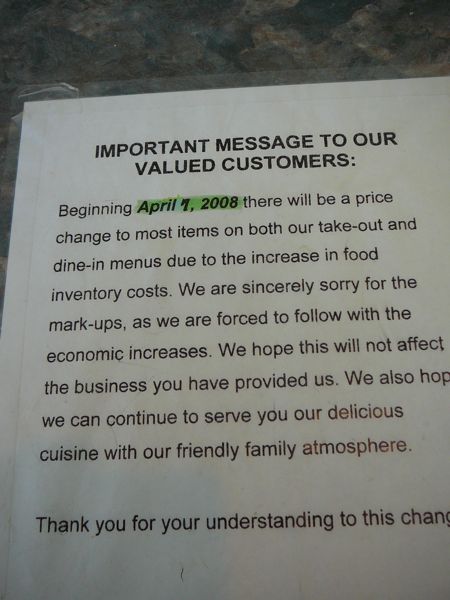
Like Kuwait, increasing food costs have forced prices up everywhere:
When my aunt died, I got her little cat that always sat up above her kitchen sink in Santa Barbara. I was told that a cat with right paw raised welcomes guests, and a cat with left paw raised welcomes prosperity. I was told that these are Chinese cats, but my Chinese friends think they are Japanese. I don’t know where they originated, but you often see them in Chinese restaurants, too.

And finally – what I have been craving, what I have been waiting for! The 5 Star Pho Shrimp Salad Rolls (yes, there is one missing):

Not Your Kuwait Driver’s License
Earlier this year, I wrote about getting my Kuwait Driver’s License never thinking I would be going through the process again this year here in Seattle. I know it sounds crazy, but it just didn’t occur to me that the license might expire. It isn’t a good thing to find out when you are about to pick up a rental car and your license is declined because it expired.
So I needed to go get a new license first thing this morning. I know how crowded the driver’s license place is early in the morning, so I didn’t go first thing. When I got there, there were about 15 people in front of me.
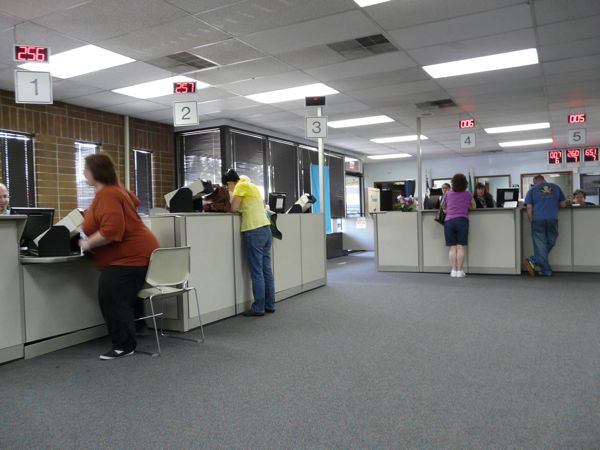
They have this system. You go in and they have a big list of services and fees posted. Then you go to a machine and press a button for the service you need, and you get a number. I waited five minutes.
The woman asked how she could help and I told her I needed to renew my expired driver’s license. She asked why it had expired and I told her I live in Kuwait, and she said “oh! other country” and put in that code. She asked about you, she asked how I liked living in Kuwait, she was worried about my safety – I get that a lot. I tell them about Kuwait, about how nice it is, how I have lots of good friends, and that it is a nice place to live. I tell them I feel safe (I don’t tell them about the driving!) and that if anything were to happen, I believe I have friends who would protect me. I could see a lot of this was news to her, and she was happy to hear it.
She asked me if I was restricted in my dress, and I laughed and said “well, I dress modestly, so it isn’t really a problem.” She stopped and thought a little and said “I dress modestly, too.”
All of that conversation, plus my paying for a new license and taking an eye test, took five minutes. I had to take five steps over to where my photo was taken, and 30 seconds later my temporary license, photo and all, was in my hands. My permanent license will be sent to me within a week.
How sweet is that?
It was SO orderly. No one pushing in front of anyone, waving papers, insisting on going first. Everyone takes a number, everyone gets the same courteous service and it is FAST. I was in and out in less than fifteen minutes, and that includes the waiting time and the conversation. I love systems and processes!
Jeep Mercy
I guess the guy felt sorry for me and was giving me a special treat. I always get just a small car, as long as it has four doors. Sometimes they give me something sporty, sometimes something clunky. Sometimes I take them back and say “this car doesn’t drive very well, I want something else” and they give me something else.
When he told me where the car was, I asked “what did you give me.” He grinned and said “You’ll like it; it’s a silver Jeep. I was thinking Jeep like a BIG YUKON kind of thing, but when I saw it, it is Jeep like the size of a Toyota Rav 4, and I really love silver.
On the other hand, I truly hate travelling for 24 hours straight and then getting into a strange car and driving for about an hour on Seattle’s congested freeways at going home time.
I think he felt sorry for me because when he entered my driver’s license it was DECLINED! It had expired! Thank God I had another one, a lifetime license from another country, but I have to run down to tomorrow and get a new Washington State one. I was SO embarrassed.
(Seattle is heartwrenchingly beautiful at this time of the year; blue skies, huge showy rhodedendrons in bloom, it is just gorgeous)
Here is what I saw: congestion congestion congestion – Seattle has outgrown the highways built many years ago. Potholes, bad spots in the pavement, accidents waiting to happen. Oh wait! These are the same things I complain about in Kuwait!
One thing you will NEVER hear me complain about in Kuwait – People in Seattle just drive SO slow. Penalties for speeding and penalties for accidents you cause are so huge, so severe, and people are stultifyingly SLOW!
Old Time Kuwait
Last night, driving around our area, we saw something new, something I love. In place of the now-departed semi-permanent constructed diwaniyyas with their comforts and air conditioning, we saw a return of the old diwaniyya benches, with cushions, and traditionally dressed men lounging, conversing, solving the problems of Kuwait and the world out in the relative cool of evening in Kuwait.
It looked like the old days. It could have been ten years ago.
I wonder if there isn’t a new feeling, with a change of venue? I wonder if the absence of walls and modernity will bring a new openness in diwaniyya attendance? At one diwaniyya, I even saw coffee being brewed in the old pots, over coals, in a brass brazier.
Poor AdventureMan. He knows I always have my camera with me. He is terrified I will embarass him by stopping and asking if I can take photos. Rest easy, AdventureMan, I don’t have that much courage. 🙂
AdventureMan wants to know: In Qatar, gatherings are called Majlis, the room is called a majlis. How does majlis differ from diwaniyya?
Kuwait Textile Arts Show
The Kuwait Textile Arts show has been postponed, because of the mourning period, and will not be opening tonight at the Dar Al Cid, but will open Monday night. It will run from Monday through Wednesday at the Dar al Cid.
Many many women in Kuwait learned Sadu weaving this year, and you will be astonished and amazed to see the results of their efforts at the show, along with embroidery, hand crafted bags, and a large number of gorgeous quilts.
The Dar al Cid is located in Jabriya, near the New English school, the Tarek Rajab Museum, and on the same street as the Tarek Rajab Museum of Islamic Calligraphy.
109° F / 43° C
My eyes just popped out of my head. As I was checking the blog, I saw that the current temperature has hit 109° F.
Hello??? This is May, not even mid-May. Holy Smokes, if this is what May looks like, I can hardly wait to see summer (said with tongue in cheek.)
Many many thanks to the hard working volunteers at Safat who got a whole bunch of us back in the aggregate. I don’t know what happened, but I know you guys don’t get paid and that you do this out of the goodness of your hearts, as a public service to the Kuwait community. God bless the work of your hands. Thank you.
AdventureMan said the highways were empty this morning as he headed in to work. What does this mourning period do to the elections in Kuwait, scheduled for this Saturday? Will they be postponed?
How We See Things in Kuwait
AdventureMan and I have an ongoing discussion over the cell phone ban while driving in Kuwait. I see people pulled over to the side of the road, at traffic circles, along the major north/south routes, pulled over in complicated neighborhoods. I love to see them – many are using their hands to help understand the directions, waving left, then straight, then left again – it warms my heart.
AdventureMan, on the other hand, he who loves the efficiency of being able to do two things at the same time, drive and do business or talk to me, says he sees people all the time using their cell phones while they are driving.
So I think we are seeing what we want to see.
He kids me, as I track diwaniyyas, where they used to be, those still being dismantled. Friends are telling me that they can now see around dangerous corners where someone had built an illegal little cabin for their driver to sleep in, trees and foliage have been cut back, neighborhoods have a new look. I find it exciting – obeying the law can be tough, it can be inconvenient, and the temptation in all of us is to say “it’s a great law for them, but it doesn’t apply to me.”
AdventureMan scowls when he has to obey a law that he doesn’t think should apply to him. I say scowling is OK, as long as you do it. There are times I am tempted to skirt the law, but this blog keeps me honest – how does it look if I’m always talking about law and order, and then I choose to break the law, too? Having a child keeps you honest – when you face temptation, you know those little eyes are watching you, and it gives you that little extra boost to make the right choice.
Pearls mentioned she thinks people are sticking closer to the speed limits with the new fines in force, and that the roads are much more enjoyable these days. I agree, with one exception, and that is when traffic slows on the major north/south roads, there are still those idiots who use the emergency lanes to get to the front of the line. We need some BIG fines for those guys.
Last but not least, my Co-op seems to be enforcing the no parking in the handicapped section once again, thanks be to God. The poor manager, I keep going in and telling him that “big strong men” should not be using those spots. He keeps thinking I want the spot and I laugh and say no, I am a strong woman and I can walk, but what about the heavily pregnant woman with her five children, or the old man with his walker or cane, or the one with emphysema.
Finally, I suggested that he have grocery packers assigned to watch, and to run out and insist on assisting anyone who parks there, a special service for the handicapped. Sometimes you can accomplish with kindness what you can’t hope to accomplish with signs and harsh words. Whatever he has chosen to do, it appears to be working, people are not parking in the handicapped spots. 🙂
No Release, No Travel, reports Darwish
In today’s Kuwait Times, Badria Darwish informs us that:
“the Ministry of Electricity and Water (MEW) has decided to ask all expatriates before exiting the country – whether on holiday or permanently – to obtain a certificate of clearance from the ministry. The certificate is only valid for one month. If the expat doesn’t have it, he will be returning from the airport the same day . . . “
On page 2, a news article confirms her report.
“The Ministry of Electricity and Water announced it is in the process of issuing a legislation. It said it instructed the Assistant Undersecretary Jassim Al-Linqawi, in charge of consumer affairs at the ministry, to coordinate with the Interior Ministry to enforce the legislation. The legislation, it added, will mandate all expatriates planning to proceed on vacation to obtain a clearance document from the Ministry of Electricity and Water that they are clear of all pending bills. All expatriates having arrears will not be permitted to travel either through the airport or the various surface borders around the country. The legislation is expected to be enforced soon . . .
The Ministry of Electricity also instructed the Interior Ministry to empower their employees, who collect electricity dues, to force their way into the residences of all those residences of al those residents who refuse to let them check the electricity meters. . . . “
Oh! Those pesky expats, running red lights and neglecting to pay their electricity and water bills. Yeh. Right.
This does present the bureaucracy with a fascinating challenge. First, to immediately construct a way in which all consumers can receive bills, like through a postal system. Second, to collect the accurate information for each customer, making sure that “no one is above the law.” Third, to bill consumers in a way that they know that they have been billed, and to have a follow up procedure – you know, like warnings, and a way to turn off the service? Fourth, a way to follow all this by computer – accurately. Oh, yes, and co-ordinating between the MEW and the MOI. And have it ready to be enforced “soon.”
Expats Run More Red Lights
This is from today’s Kuwait Times.
KUWAIT: The Interior Ministry defended a new policy of deporting expatriates who run red lights by arguing that “the highest percentage of traffic violations are committed by expats, adding that this constitutes a hazard on the lives of motorists,” reported Al-Jarida.
The ministry in a statement said it had the legal right according to the Foreigners Residency law to deport expats for such offenses. And added that the ministry used this right as it is its administrative right according to the law. (sic)
I am blown away that they can say this with a straight face.
Law of the Garbage Truck
A good friend sent this to me. I hadn’t seen it before, and thought you might like to see it, too.
I hopped in a taxi and we took off for the airport. We were driving in the right lane when suddenly a black car jumped out of a parking space right in front of us. My taxi driver slammed on his breaks, skidded, and missed the other car by just inches! The driver of the other car whipped his head around and started yelling at us. My taxi driver just smiled and waved at the guy. And I mean, he was really friendly.
So I asked, ‘Why did you just do that? This guy almost ruined your car and sent us to the hospital!’
This is when my taxi driver taught me what I now call, ‘The Law of the Garbage Truck.’
He explained that many people are like garbage trucks.
They run around full of garbage, full of frustration, full of anger and full of disappointment.
As their garbage piles up, they need a place to dump it and sometimes they’ll dump it on you.
Don’t take it personally, just smile, wave, wish them well and move on.
Don’t take their garbage and spread it to other people at work, at home, or on the streets.
The bottom line is that successful people do not let garbage trucks take over their day.
Life’s too short to wake up in the morning with regrets, so…..
‘Love the people who treat you right.
Pray for the ones who don’t.’
Recent Comments
intlxpatr on Shampoo Ginger tigerbutterya0c5ff1d… on Shampoo Ginger intlxpatr on British Soldier Kidnapped, Esc… John on British Soldier Kidnapped, Esc… intlxpatr on British Soldier Kidnapped, Esc… Wikipedia Donate Button

Amazina


Early Voting in Florida


