Barnes and Nobles: Paradise
We’d had guests, people we really like and admire, and now I was about to take them shopping. This kind of shopping is special. It is people-on-limited-budget shopping by people-who-may-never-visit-the-United-States-again and who have a lot of people hoping they will bring something back for them. We know this feeling – we’ve been those people on a limited budget who want to delight our family and friends with some exotic treasure.
I had a plan. Truthfully, I should know by now how it is going to work out, but I always plan bigger, just in case. This time, we started at TJ Maxx and The Dollar Store.
We park in a highly visible place. I know it sounds rude, but I escort them in, explain a few little things, then I go back to the car. I have a book with me, and Sudoku; they get to shop at their own pace without feeling like they are inconveniencing me. They have my phone number, and they know where the car is parked. Some groups come back and forth, many times, they bring packages, drop them, and head back again. This time, I didn’t see them, so after two hours, I went in and found them and told them this was their “one hour warning.” I had promised to have them back at their hotel by seven.
Almost on the minute one hour later, they came out, entered the car, and were so excited. One said she had finished all her shopping; she had something just right for everyone. The other said “Look! My friend wanted Bicycle cards! They had Bicycle cards!” They had found special gifts for all their friends and family, but the price was high. They had wanted to go to the Barnes and Noble store, but we had run out of time.
Deep sighs.
“It’s totally worth it,” the older one said, “I really really needed to have the peace of knowing my shopping was done. But . . . I’ve never seen the Barnes and Noble, only heard about it. Maybe I’ll have another chance at our next city . . . ”

I couldn’t bear it.
“The Barnes and Noble is only a short distance away,” I gave in, “I will take responsibility for getting you back late IF you promise me to only go in and look, just take a quick look, and come back out to the car.”
“Yes! Yes!” they both promised enthusiastically.
They were gone for twenty minutes. When they came back out, their faces were stunned. They got in the car, so silent I was afraid there was a problem.
The youngest leaned over, buried her head in her hands. She looked like she was going to be sick.
“What’s the matter?” I asked, alarmed.
“I almost feel sick,” she said. “So many books! We walked everywhere, but I stayed most of the time in the Business Management section; they had EVERYTHING. They had Who Moved My Cheese. Oh! They had so many good books, not the blah-blah-blah you get in textbooks, but the way they teach in parables, it’s so easy to understand their point. I can’t carry all the books I wanted to buy. I’m feeling shocked. All those books, right there where anyone can buy them! I want them all and I can’t have them.”
“You could order them, have them sent,” the older girl offered, and then remembered that no, she couldn’t have things sent in her country. She would never get them.
All the way to the hotel we had a great conversation about the flow of ideas, about censorship and the internet and cable television and Twitter, and how ideas flow more freely everywhere in the world, in spite of those who would try to restrict what their citizens might access. We also talked about freedom to travel – or the lack of freedom. We talked about families, caring for the elderly, and family responsibilities. We talked about what we’ve learned from one another, the truths travel teaches you about your prejudices and opinions, about others, and about yourself.
As I dropped them off, we all hugged, sadly realizing that we may never see one another again. Nonetheless, no regrets. Just the time I had with these two impressive young women was a great gift, and seeing the Barnes and Noble through their eyes – I will never again take a book shop for granted.
Emirates Women Seek Law Forcing Tourists to Dress Modestly
Qatari women have the same concerns in Qatar; this article from http://www.huffingtonpost.com/2012/07/06/emiratis-dress-code_n_1653446.html?utm_hp_ref=world:

ABU DHABI, United Arab Emirates — With the number of foreigners dwarfing that of locals in her hometown of Abu Dhabi, Asma al-Muhairi has become increasingly anxious at the prospect of her younger nieces abandoning their full-length black robes in favor of Western attire that seems to be everywhere she goes.
But it wasn’t until the 23-year-old marketing worker came face to face with two scantily-clad female foreigners at one of the many luxury shopping malls in the United Arab Emirates that she decided to take action.
“While going to a mall, I saw two ladies wearing … I can’t say even shorts. It was underwear,” said al-Muhairi, whose black abaya – a long garment worn by conservative Gulf women – is offset by a gold Versace watch and egg-shell blue handbag.
“Really, they were not shorts,” she said. “I was standing and thinking: `Why is this continuing? Why is it in the mall? I see families. I see kids around.'”
Failing to persuade the mall to intervene, al-Muhairi and another Emirati woman, Hanan al-Rayes, took to Twitter to air their concerns in May.
They were inundated with responses that prompted them to launch a Twitter campaign dubbed (at)UAEDressCode that aims to explore ways to combat the growing number of shoppers in low-cut dresses and hot pants.
As the campaign picked up steam, it also has served to symbolize the growing concerns among Emiratis, a tiny minority in their own country.
Emirati citizens account for a little more than 10 percent of the 8 million people living in the Gulf nation. Most of the population is made up of Asian, African and Middle Eastern guest workers, as well as Western expatriates living here temporarily.
The overall population more than doubled over the past decade as the country embarked on a building boom that transformed Dubai, up the coast from Abu Dhabi, into the Arabian Gulf’s financial hub and a popular tourist draw.
“I think in an increasingly tumultuous region and in an era of powerful and often intrusive globalizing forces, citizens of the UAE are increasingly concerned that their traditions and core values are being eroded,” said Christopher Davidson, an expert on Gulf affairs at Britain’s Durham University.
“In some senses, it is a grassroots reaction to authorities and leaders that have for many years done little to check this erosion,” he added. “We’ve seen reactions to alcohol, so now we are seeing a reaction to immodest dress.”
Jalal Bin Thaneya, an Emirati activist who has embraced the dress code campaign, said it is a way for Emiratis to show they are concerned about the loss of traditions.
“If we were the majority and had the same make up, things would be different,” Bin Thaneya said. “You wouldn’t need anything. You would see Emiratis everywhere and you would be afraid of offending them … Now, we’re a minority so you feel the need to reach out to an authority.”
As the number of foreigners has increased, so have the stories of them violating the UAE’s strict indecency code, which limits drinking to bars and nightclubs and bans public displays of affection. A drunken couple was caught having sex on the beach and another allegedly having sex in a taxi. A Pakistani was deported for flipping the middle finger at a motorist, and the courts are filled with cases of foreigners having sex out of wedlock.
Most Emiratis rarely come face-to-face with misbehaving foreigners.
The malls, however, are a different story.
They are one of the few places where everyone comes together to escape the brutal summer heat. The cultural clash is hard to ignore, as families of traditionally dressed Emiratis shop and relax in cafes alongside foreign women wearing tank tops, shorts and even transparent gowns over bikinis.
Most malls have policies in place that require “conservative” dress and encourage shoppers to avoid showing shoulders and knees, but few publicize them or enforce them. Police in Dubai, where the mall that al-Muhairi visited was located, didn’t respond to a request for comment. They told the Gulf News newspaper there is nothing they can do since there are no specific laws against immodest dress.
“People were seeing it for a long time but they didn’t say anything,” Bin Thaneya said. “You can’t go to the police for such stuff. There is no one to go to. You can’t go to the mall management. The mall security guard gets paid less than someone at McDonald’s. He isn’t going to do anything.”
Al-Muhairi’s campaign is just one of several over the years led by Emirati women who have tried in vain to enforce the dress code – handing out brochures, confronting foreigners. But hers has benefited from the growing popularity of social media as well as the Arab Spring popular uprisings, which has given Emiratis a sense they can speak out on some social issues.
The UAEDressCode feed has more than 3,300 followers with a lively discussion that includes plenty of support for a code but also concerns that it would unfairly target foreigners or create divisions between locals and foreigners. Unlike similar campaigns in Kuwait or Saudi Arabia, the impetus for a code has not come from Islamic hard-liners, but from moderate locals like al-Muhairi who love their Starbucks and Western movies but just want foreigners to respect local customs.
“We are not asking others to cover up like us. We are giving them freedom based on their beliefs and religion,” al-Muhairi said. “We are not judging and saying this shows she has other interests. We never want to judge. Do whatever you want and wear what you want but with limits. Just respect the public here.”
The campaign has caught the attention of the Federal National Council, which pledged last month to push for stronger measures to enforce the dress codes. That came after the country’s culture minister, Abdulrahman al-Owais, supported efforts to emphasize the conservative traditions of the UAE.
Members of a half-elected, half-appointed council have suggested a law could include warnings and fines but not jail time for offenders. But the FNC has no law-making powers, so any decision now rests with the UAE government.
“If there is a law, the behavior will be different,” said Hamad al-Rahoomi, an FNC member who compared a UAE dress code to laws in France that bans the niqab, in which a veil has only a slit exposing a woman’s eyes, or the new dress code at Royal Ascot in Britain that aims to limit provocative outfits.
“We don’t want to catch people. We just want people to think of the other parties,” al-Rahoomi said. “What I want is to go with my family in my country and not see something that is harming me.”
The Abu Dhabi police issued this week a booklet on dos and don’ts for tourists that will be available at the Abu Dhabi International Airport and hotels, according to The National newspaper. It advises tourists that public displays of affection including kissing are considered indecent and that they should wear “modest” clothing.
Tourists – some in skimpy summer dresses, others in shorts and T-shirts – defended their right to wear what they want, either because it is fashionable or keeps them cool in the summer heat. None of the 10 people interviewed in Dubai and Abu Dhabi knew about a mall dress code, nor were they advised their outfits violated it. Several said a dress code law would go too far.
“I think it’s ridiculous because most of the people in Dubai are tourists,” said Sarah, a 21-year-old tourist from Kenya wearing a short dress exposing her shoulders and legs. “I want to go somewhere where I would be comfortable in my own skin as a travel destination. I feel comfortable like this and this is how I will dress.”
Not the Day We Expected – Even Better
LOL, as our Friday dawned with thunder and lightning, our day totally changed. We had thought we would rush to our water aerobics class, rush home, hand up our clothes, head out to meet friends for Italian food near Destin, and then come home.
With the thunder and lightning, however, we knew there couldn’t be a class, and so we had an unexpected holiday from exercise, sort of puttered around the house taking care of things that needed taking care of, and headed off to meet up with our friends. We had a great time, great conversations, and they mentioned – as have other friends – how much they enjoyed The Best Exotic Marigold Hotel, and that we really needed to see it. After long, fond farewells, we headed home, via the beach, which we always love. So far, it was a much cooler day, only reaching the 80’s as we drove along, due to the cloud cover.
AdventureMan suggested we look at the GulfBreeze4, a really fun little theatre we love to go to where they show a lot of foreign movies or quirky movies that didn’t make it to the big screen, and there it was, the Best Exotic Marigold Hotel, and we were just in time for the afternoon showing.

It is a delightful movie. It has a lot of fun moments, some sad moments, many very human moments. You know me, I especially love the cross-cultural moments, and the thought that people can grow and adapt – no matter what age. We really enjoyed the movie.
And, when we left, we just had to have Indian food. We stopped at Taste of India on the way home and had Talli. It was one of those nights when almost every table was taken, but they had room for us.
“How spicy?” our favorite waitress asked.
“Spicy,” we stated emphatically.
“Oh!” she exclaimed, “Indian spicy!” and we said “Yes!”
When it came, it tasted like being back in Kuwait, eating food my friends had prepared. Not dumbed down food. Good, strong spicy food. We couldn’t even eat it all; but we know how good it will taste tomorrow. We brought a lot of it home 🙂
So it wasn’t the day we expected, but we feel blessed by the day we had. Good friends, good conversation, lots of laughing, good movie and a good time at Taste of India. A great day altogether.
She Cried

“I wanted to thank you,” I said to my son’s sixth grade teacher “I can’t imagine how hard it was to get 30 sixth graders to go through the paper-writing process, but I know my son learned from it and he will use the skills you taught him for many years to come. One day he will thank you in his heart, but I wanted to thank you now.”
It was one of those small expat military communities, where your child’s teacher also goes to the same church you go to and shops in the same commissary. We were at a church benefit, chatting before dinner.
She started crying.
She told me that every year, she teaches the sixth graders to write papers, and they hate it. She started with library research, making bibliography cards on little index cards, formal writing, footnotes and a formal bibliography at the end with a formal title page at the beginning.
I was the first one who had ever thanked her. She believed in what she was doing, but it was so hard, and she never got any positive feedback.
Imagine. Do you remember what sixth graders are like? This lady had courage, and persistence. She gave these students (in spite of themselves) a skill which would take them through the rest of high school and into college. They learned to do it right, so they never had to embarrass themselves by turning in an inferior, poorly-done paper. It was a great gift she gave these students – and no one thanked her.
Well, it would be a rare, very rare sixth grader who has the maturity to understand that while it was a difficult and demanding section in their school year, it was a tool in their tool box of life, a gift that just kept on giving.
Thank you. Thank you, all the teachers out there who knock themselves out to give our children (and grandchildren) the tools they need to be good students and good citizens.
Timbuktu Sufi Mausoleums Destroyed by Ansar Dine
From today’s Al Watan, Kuwait:

Mali Islamists destroy more holy Timbuktu sites
Monday,02 July 2012
Source : -Reuters
BAMAKO: Militants from the Al-Qaeda-linked Ansar Dine group destroyed mausoleums of Sufi saints with guns and pick-axes in the famed Mali city of Timbuktu for a second day, said witnesses on Sunday, ignoring international calls to halt the attacks.
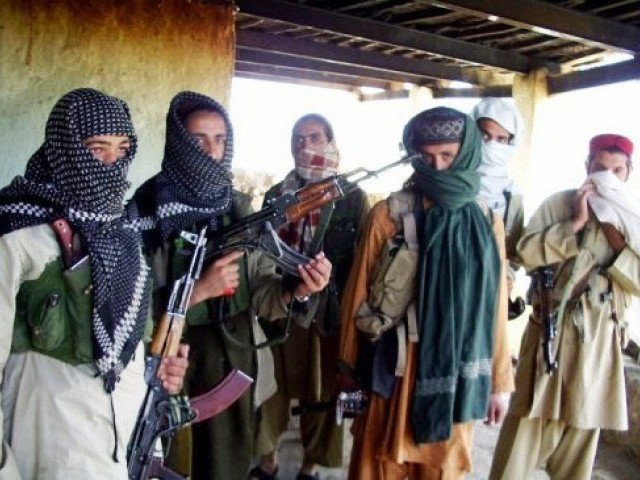
The salafist Ansar Dine backs strict sharia, Islamic law, and considers the centuries-old shrines of the local Sufi version of Islam in Timbuktu to be idolatrous.
Sufi shrines have been attacked by hard-line Salafists in Egypt and Libya in the past year.
The group has threatened to destroy all of the 16 main Sufi mausoleum sites in Timbuktu despite international outcry. UNESCO Director-General Irina Bokova has called for an immediate halt to the attacks.
Local journalist Yaya Tandina told Reuters that about 30 militants armed with Kalashnikovs and pick-axes destroyed three mausoleums of saints on Sunday.
“They had armed men guarding the door. Just like yesterday, the population did not react. They (local people) said we need to let them (the Islamists) do what they want, hoping that someday we will rebuild the tombs,” Tandina said.
Residents said the destruction was halted around midday when some of the militants went to a mosque in the centre of the city, but it was unclear if they would continue.
“We are subject to religion and not to international opinion. Building on graves is contrary to Islam. We are destroying the mausoleums because it is ordained by our religion,” Oumar Ould Hamaha, a spokesman for Ansar Dine, told Reuters by telephone from the northern Mali city on Sunday.
Timbuktu resident Hamed Mohamed said the Islamists destroyed the tombs of saints Sidi Elmety, Mahamane Elmety and Cheick Sidi Amar, all in the west of the city. -Reuters
Survey Shows Teens Hide True Internet Usage From Parents
This from a REUTERS news story posted on AOL News / Huffpost
It’s a parent’s worst nightmare.
By Gianna Palmer
NEW YORK (Reuters) – More and more teenagers are hiding their online activity from their parents, according to a U.S. survey of teen internet behavior released on Monday.
The survey, sponsored by the online security company McAfee, found that 70 percent of teens had hidden their online behavior from their parents in 2012, up from 45 percent of teens in 2010, when McAfee conducted the same survey.
“There’s a lot more to do on the Internet today, which ultimately means there’s a lot more to hide,” said McAfee spokesman Robert Siciliano.
Siciliano cited the explosion of social media and the wider availability of ad-supported pornography as two factors that have led teens to hide their online habits. The increased popularity of phones with Internet capabilities also means that teens have more opportunities to hide their online habits, he said.
“They have full Internet access wherever they are at this point,” Siciliano said.
The survey found that 43 percent of teens have accessed simulated violence online, 36 percent have read about sex online, and 32 percent went online to see nude photos or pornography.
The survey reported that teens use a variety of tactics to avoid being monitored by their parents. Over half of teens surveyed said that they had cleared their browser history, while 46 percent had closed or minimized browser windows when a parent walked into the room. Other strategies for keeping online habits from parents included hiding or deleting instant messages or videos and using a computer they knew their parents wouldn’t check.
Meanwhile, the survey found that 73.5 percent of parents trust their teens not to access age-inappropriate content online. Nearly one quarter of the surveyed parents (23 percent) reported that they are not monitoring their children’s online behaviors because they are overwhelmed by technology.
Siciliano said that is no excuse.
“Parents can put their foot down and they can get educated,” he said.
“They can learn about the technology at hand. They can learn about their children’s lives,” Siciliano said.
Many of the parents surveyed were already doing just that, with 49 percent of parents using parental controls and 44 percent obtaining their children’s email and social network passwords. Additionally, three in four parents said they’ve had a conversation about online safety with their kids.
The results were drawn from a nationwide online survey completed by 1,004 teens aged 13-17 and 1,013 parents, conducted May 4-29 by TRU of Chicago, a youth research company. Its margin of error was plus or minus 3 percent.
(Editing by Barbara Goldberg and Eric Walsh)
Wooo HOOO, Saudi Arabia Allowing Female Olympic Athletes
It hasn’t been so long in our own country since Title IX made it possible for more and more women to participate in athletic events, making funding possible, giving women in the United States an opportunity to participate in healthy athletic activities.
RIYADH, June 25 (Reuters) – Saudi Arabia will allow its women athletes to compete in the Olympic Games for the first time ever in London this summer, the Islamic kingdom’s London embassy said on its website.
Human rights groups had called on the International Olympic Committee to bar Saudi Arabia from competing in London, citing its failure ever to send a woman athlete to the Olympics and its ban on sports in girls’ state schools.
Powerful Muslim clerics in the ultra-conservative state have repeatedly spoken out against the participation of girls and women in sports.
“I think this is a victory for Saudi sportswomen and hopefully it will promote sports and women’s health awareness for the Saudi society,” said Lina al-Maeena, co-founder of Jeddah United Sports Company, a rare women’s exercise club that runs a female basketball team.
In Saudi Arabia women have a lower legal status than men, are banned from driving and need a male guardian’s permission to work, travel or open a bank account.
Under King Abdullah, however, the government has pushed for them to have better education and work opportunities and will allow them to vote in future municipal elections, the only public polls held in the kingdom.
Saudi women will be able to compete in the London Olympics only if they reach the qualifying standard for their event, and the Games opens in just over one month, on July 27.
“The kingdom of Saudi Arabia is looking forward to its complete participation in the London 2012 Olympic Games through the Saudi Arabian Olympic Committee, which will oversee the participation of women athletes who can qualify for the Games,” said a statement published on the embassy website.
The woman most likely to compete under the Saudi flag in London, show jumper Dalma Malhas, was ruled out on Monday when the World Equestrian Federation (FEI) said the 20-year-old’s mare Caramell KS had been sidelined by injury for a month during the qualifying period and had missed a June 17 deadline.
“Regretfully the Saudi Arabian rider Dalma Rushdi Malhas has not attained the minimum eligibility standards and … will not be competing” at the London Olympics, FEI secretary general Ingmar De Vos told the FEI website (www.fei.org).
Malhas won individual bronze at the junior Olympics in Singapore in 2010, but without official support or recognition.
In April the head of the General Presidency of Youth Welfare, which regulates sport in Saudi Arabia, said it would not prevent women from competing but they would not have official government endorsement.
The government’s role would be limited to ensuring that Saudi women’s participation “is in the proper framework and in conformity with sharia”, he said.
The IOC said on Monday that talks with the Saudis were “ongoing” and that “we are working to ensure the participation of Saudi women at the Games in London”.
The head of the kingdom’s Olympic mission, Khalid al-Dakheel, told Reuters on Sunday that he was unaware of any developments allowing women to participate.
Top Saudi clerics, who hold government positions and have always constituted an important support base for the ruling al-Saud royal family, have spoken against female participation in sports.
In 2009 a senior cleric said girls risked losing their virginity by tearing their hymen if they took part in energetic sport.
Physical education is banned in girls’ state schools in the kingdom, but Saudi Arabia’s only female deputy minister, Noura al-Fayez, has written to Human Rights Watch saying there is a plan to introduce it. (Reporting by Angus McDowall and Asma Alsharif; editing by Tim Pearce)
Adonna’s Pensacola for Breakfast
We’re all about small adventures for keeping life exciting, so we like to hit the Saturday morning market on Palafox in downtown Pensacola, picking up a home made jam or two, a plant to try in our garden, some fresh fruit or vegetables.
AdventureMan has a yen for biscuits and gravy, and it has to be Adonna’s. There are biscuits and gravy and biscuits and gravy, but he believes Adonna’s does it the best. I have to take his word for it; biscuits and gravy have no appeal to me, and I don’t touch them.

On the way in, I saw a couple runners eating outside, and I asked one what she was eating.
“OMG, it’s the best cinnamon roll French toast ever!” she enthused. I don’t usually order French toast, I can make a really good French toast myself, but I was just in a mood to try something new, so I ordered the Cinnamon Bun French Toast and grits, which I also never order.
I can’t let myself do it often. The Cinnamon Bun French Toast is just too good. It’s addictive, and I am really sure it is not at all good for me. But oh, heaven. It is so good. The grits were just grits, but not bland; they had a little salt in them. Not good enough to eat – for me – so I just took a nibble and was proud of myself for not eating them all 🙂

Adonna’s, near the Post Office on Palafox, serves breakfast and lunch.
Nsefu, Day One, Parting Ways
Friday, June 8
The sun rises on our first morning in Nsefu, we eat our porridge, and we head off on a game drive with our old friend Daudi.


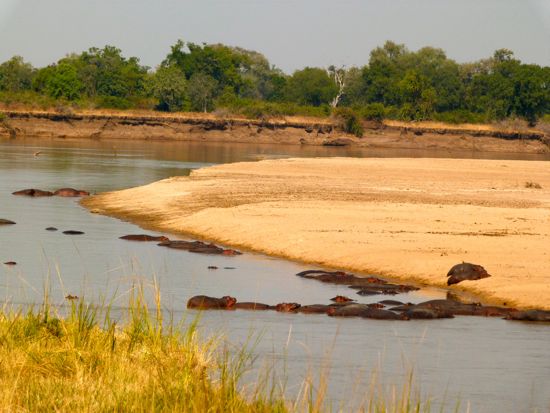
Our friends are off to visit Kawazaa village, warning us NOT to find lion without them, and we take off – of course, we are looking for lion! We are always looking for lion! We don’t find lion, but we find lots of raptors, the biggest eagle, cranes and herons, we watch hippos, and once back in camp, we spend hours watching the elephant families crossing the Luangwa.


As you might guess, it feels like we are eating all the time, but when we get back, we haven’t gained an ounce. I think it is because we are doing a lot of active riding; the roads are bumpy and you have to steady yourself, you are climbing in and out of the game vehicles, and there are a lot of crossings where the guide says “Hold on!” Here is Daudi, taking us across one of those river crossings:


As you can see, not every game drive stars lion, or leopard, but there are thrilling moments with birds, elephant, hippo – or crossing the river.
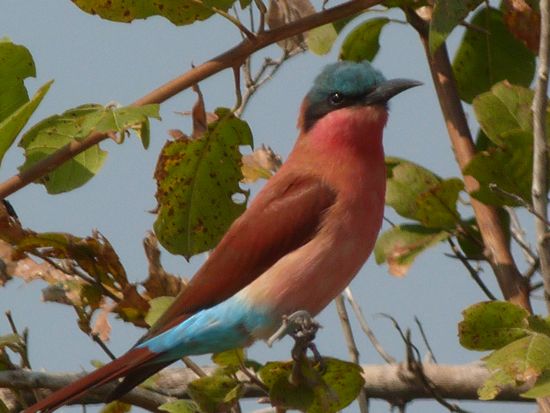
This is a Lillian’s Lovebird, one of my favorite birds in the world. The camps are full of them, but they are fleeting and flitting, and very difficult to capture in photos.

Morning tea at a hippo pond – you know how I love hippo:



Back at camp, it seems to be elephant river crossing day. One group will gather, and cross, while another group waits across the river. They meet and greet, and then head on their way, while another group crosses.


This group has a baby. The baby can actually walk most of the way, but when it is too deep, there is always a barrier of larger elephants on the downstream side of the baby elephant, who is holding on to Mama’s tail, and is supported from behind by another elephant.


At one point, something spooks the elephants crossing close to the dozing hippo, they start running and splashing, maybe an elephant accidentally steps on a hippo, and a loud ruckus breaks out. Elephants trumpet, hippos scold loudly. Fortunately, it is all show and no go, no real fight and no bloodshed, the elephants continue on and the hippos go back to slumber.


Our friends came back just in time for tea, and begged off the afternoon drive, saying the mating lions they had seen on the way to the village would have to be enough. They’ve been to the Kawazaa school, and to the village for lunch, visiting the clinic and even helping kill the chicken for lunch. It’s been so much fun, but also very stimulating, and they want to take a break.
Mating lions?! You saw mating lions? Let’s go see the mating lions!
Jonah found the mating lions in no time, which was a thrill, except that they had mated with such great vigor that now they were lying in sated stupor. We took some photos, but how many photos can you take of exhausted sleeping lions?



Nsefu Sunset:

We started back, but on the river road, saw an unusual sight – lions on the river banks across the river, and a lion climbing up the bank we were on.

He wasn’t wet, but he was calling to the lion damsels across the river, and had clearly made them some promises he intended to keep.
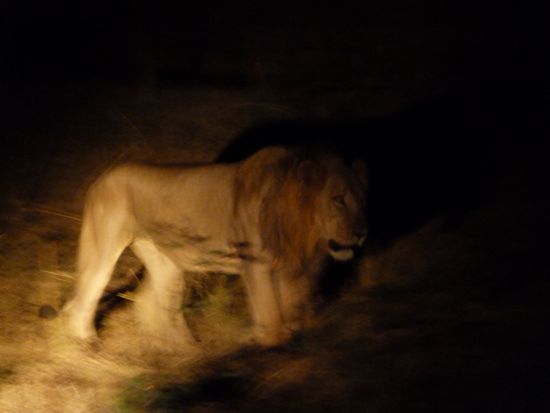
We tracked him for a while at a distance as he gauged his chances for a safe crossing here and there, and finally, we left him with our best wishes for a safe passage to lion nirvana.
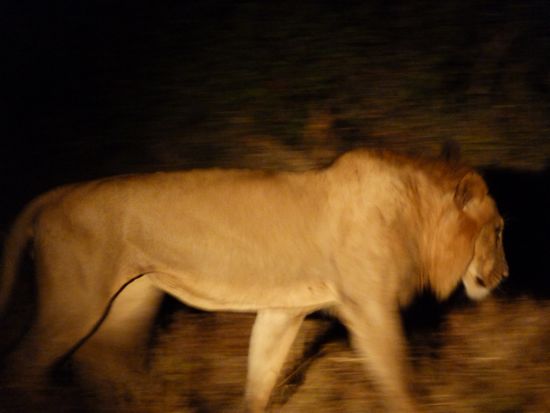
At dinner we finalized plans with Jonah for an early departure for another trip to the Chichele hot springs with hopes of finding that dark maned (older) lion Madolyn was able to photograph with her iPhone, with breakfast at the hot springs and back at Nsefu Camp noonish.
“Nobody wins. We’ve all lost.”
Guilty. A fitting end to a sorry story. A man who used his position to prey on the most vulnerable, poor children. He brought down one of America’s heroes, Joe Paterno, and cast a stain on a stellar football school. Although he is convicted, as one victim’s mother states, there are no winners here – the kids will have to live with his betrayal for the rest of their lives. My guess is he still believes he did nothing wrong. These guys tell themselves that their victims are willing. Put the man away.
BELLEFONTE, Pa.—Jerry Sandusky was convicted Friday of sexually assaulting 10 boys over 15 years, a swift and emphatic end to a case that shattered Penn State University’s Happy Valley image and brought down Hall of Fame football coach Joe Paterno.
Sandusky, a 68-year-old retired defensive coach who was once Paterno’s heir apparent, was found guilty of 45 of 48 counts and is almost certain to spend the rest of his life in prison.
The jury of seven women and five men, including nine with ties to Penn State, deliberated more than 20 hours over two days.
Sandusky showed little emotion as the verdict was read. Judge John Cleland revoked his bail and ordered him taken to the county jail to await sentencing in about three months. Many of the charges carry mandatory minimum sentences.
Sandusky half-waved toward his family in the courtroom as the sheriff led him away. Outside, he calmly walked to a sheriff’s car with his hands cuffed in front of him.
The accuser known in court papers as Victim 6 broke down in tears upon hearing the verdicts, and a prosecutor embraced him and said, “Did I ever lie to you?”
The man, now 25, testified that Sandusky called himself the “tickle monster” in a shower assault. He declined to comment to a reporter afterward, but his mother said: “Nobody wins. We’ve all lost.”
Almost immediately after the judge adjourned the case, loud cheers could be heard from a couple hundred people gathered outside the courthouse as word quickly spread that Sandusky had been convicted. The crowd included victim’s advocates and local residents with their children.
As Sandusky was placed in the cruiser to be taken to jail, someone yelled at him to “rot in hell.” Others hurled insults and he shook his head no in response.
Lead defense attorney Joe Amendola was interrupted by cheers from the crowd on courthouse steps when he said, “The sentence that Jerry will receive will be a life sentence.”
Eight young men testified in a central Pennsylvania courtroom about a range of abuse, from kissing and massages to groping, oral sex and anal rape. For two other alleged victims, prosecutors relied on testimony from a university janitor and then-graduate assistant Mike McQueary, whose account of a sexual encounter between Sandusky and a boy of about 10 ultimately led to Paterno’s firing and the university president’s ouster.
Sandusky did not take the stand in his own defense, which Amendola said was a last-minute strategy change.
Defense attorney Karl Rominger said it was “a tough case” with a lot of charges and that an appeal was certain. He said the defense team “didn’t exactly have a lot of time to prepare.”
Amendola praised the prosecution, the judge and the jury and added: “Jerry indicated he was disappointed with the verdict, but obviously he has to live with it.” He said he would appeal.
Pennsylvania Attorney General Linda Kelly thanked the accusers who testified, calling them “brave men.”
She said she hoped the verdict “helps these victims heal … and helps other victims of abuse to come forward.”
Jerry Sandusky faces up to 442 years in prison. (AP Photo)
“One of the recurring themes in this case was: Who would believe a kid?” she said. “The answer is: We here in Bellefonte, Pa., would believe a kid.”
Sandusky repeatedly denied the allegations, and his defense suggested that his accusers had a financial motive to make up stories, years after the fact. His attorney also painted Sandusky as the victim of overzealous police investigators who coached the alleged victims into giving accusatory statements.
But jurors believed the testimony that, in the words of lead prosecutor Joseph McGettigan III, Sandusky was a “predatory pedophile.”
One accuser testified that Sandusky molested him in the locker-room showers and in hotels while trying to ensure his silence with gifts and trips to bowl games. He also said Sandusky had sent him “creepy love letters.”
Another spoke of forced oral sex and instances of rape in the basement of Sandusky’s home, including abuse that left him bleeding. He said he once tried to scream for help, knowing that Sandusky’s wife was upstairs, but figured the basement must be soundproof.
Another, a foster child, said Sandusky warned that he would never see his family again if he ever told anyone what happened.
And just hours after the case went to jurors, lawyers for one of Sandusky’s six adopted children, Matt, said he had told authorities that his father abused him.
Matt Sandusky had been prepared to testify on behalf of prosecutors, the statement said. The lawyers said they arranged for Matt Sandusky to meet with law enforcement officials but did not explain why he didn’t testify.
Amendola said Sandusky reluctantly agreed not to testify in his own behalf because the son would have been called by the prosecution as a rebuttal witness and the defense feared that would destroy any chance of acquittal.
Defense witnesses, including Jerry Sandusky’s wife, Dottie, described his philanthropic work with children over the years, and many spoke in positive terms about his reputation in the community. Prosecutors had portrayed those efforts as an effective means by which Sandusky could camouflage his molestation as he targeted boys who were the same age as participants in The Second Mile, a charity he founded in the 1970s for at-risk youth.
Sandusky’s arrest in November led the Penn State trustees to fire Paterno as head coach, saying he exhibited a lack of leadership after fielding a report from McQueary. The scandal also led to the ouster of university president Graham Spanier, and criminal charges against two university administrators for failing to properly report suspected child abuse and perjury.
The two administrators, athletic director Tim Curley and now-retired vice president Gary Schultz, are fighting the allegations and await trial.
The family of Paterno, who died exactly five months before Sandusky’s conviction, released a statement saying: “Although we understand the task of healing is just beginning, today’s verdict is an important milestone. The community owes a measure of gratitude to the jurors for their diligent service. Our thoughts and prayers continue to be with the victims and their families.”
In a statement, Penn State praised the accusers who testified and said that it planned to invite the victims of Sandusky’s abuse to participate in a private program to address their concerns and compensate them for claims related to the school.
Sandusky had initially faced 52 counts of sex abuse. The judge dropped four counts during the trial, saying two were unproven, one was brought under a statute that didn’t apply and another was duplicative.
Recent Comments
ExpatAlien on What Country am I Living … intlxpatr on Yellowstone: Old Faithful to C… Michelle on Yellowstone: Old Faithful to C… Cathy on No Grown-Ups in Charge intlxpatr on Waiting for Snow Wikipedia Donate Button

Amazina


Early Voting in Florida


 Here There and Everywhere