Ramadan Mubarak 2009

(image from Islam101/Ramadan)
Greetings and best wishes from AdventureMan and me to all of our Muslim friends, fasting and purifying themselves during the Muslim month of Ramadan. May your fasting and your prayers bless you abundantly, and may the month build your spiritual wholeness in every good way.
Friday, during our church service, our priest asked the congregation if any of us had literature explaining why the Muslim God was not the same as the Christian God. We all looked at him in shock. Not one person raised his or her hands.
Then he smiled, a great big broad grin and said “Good! There is only one God, and our Moslem brothers and sisters worship the same one-God we do.”
His sermon was on one of the “hard teachings” of Jesus, teachings even those closest to him had trouble understanding. That there are not exceptions to the rules, that the rules apply across the board, to us all, to all creatures God created. When the Jews, the chosen ones, rejected Jesus, they had allowed a focus on the laws to take the place of the spirit of the law – that we love God, and that as a part of loving God, we serve him by loving and serving one another, regardless of divisions, of denominations or sects.
May all the blessings of the true spirit of Ramadan be yours, my brothers and sisters.
(Yes, Purg, you ARE my brother. 🙂 )
Ramadan For Non Muslims
This is becoming a tradition. I wrote the first Ramadan for Non Muslims post in 207, and repeated it last year. As Ramadan moves inexorably into the hottest months of the year, the sacrifice only increases. Ramadan is slated to start this year on August 22, but that will be determined by the moonsighting committee; those who watch for the very first glimmer of the thinnest crescent moon of the lunar month of Ramadan.
Already, stores are increasing their supplies of specialty foods, which includes, to my amusement, oatmeal, which I must eat, and I detest. There are also increased supplies of nuts and candied fruits, eggs and creams and fabulous desserts and exotic fruits. Little lambies are not long for this earth, and cows and grown sheep are not far behind. This is not the season for killing the fatted fig.
My first Ramadan ever, in Tunisia in 1979, I remember they had bananas – it was the only time all year we saw bananas, real Chiquita bananas, a boat brought them in. On the other hand, the night I had a dinner party, eggs totally disappeared, and cream, all bought up by what my friends call “the Ramadaners.”
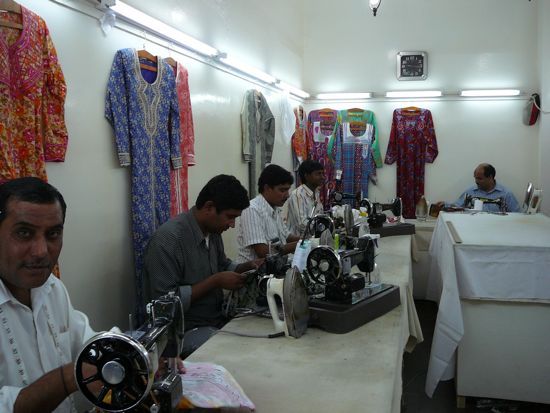
Imagine, if you can, an entire month of Advent and Christmas. Observant Moslems fast every day, from dawn to sunset, and gather with family and friends to celebrate and feast every night. Some women have a new dress for every day of Ramadan. The tailors are crazy; this and the Eid al Kebir provide them with guaranteed income and their busiest time of the year.
Most Westerners don’t understand Ramadan. I wrote the original article to try to explain Ramadan to them, that the season is as holy to them as our Lent and Easter are to us. Ramadan was the month when The Qur’an was transmitted to Mohammed by the angel Gabriel. Most Moslems try to read through the entire Qur’an at least one time during each Ramadan, and then many go to Mekka on the Hajj at the end of Ramadan. I have given you references to both of the original articles, because as is my great joy on this blog, my readers filled in a lot of blanks, and gave us a lot of information that I didn’t have. The comments at the end of the two articles are better than the original article, thanks to my readers.
Please, if you have anything to add, ahlen wa sahlen, you are welcome. It is a joy to learn from you.
First Ramadan for Non Muslims + comments
Second Ramadan for Non Muslims + comments
Ramadan started last night; it means that the very thinnest of crescent moons was sighted by official astronomers, and the lunar month of Ramadan might begin. You might think it odd that people wait, with eager anticipation, for a month of daytime fasting, but the Muslims do – they wait for it eagerly.
A friend explained to me that it is a time of purification, when your prayers and supplications are doubly powerful, and when God takes extra consideration of the good that you do and the intentions of your heart. It is also a time when the devil cannot be present, so if you are tempted, it is coming from your own heart, and you battle against the temptations of your own heart. Forgiveness flows in this month, and blessings, too.
We have similar beliefs – think about it. Our holy people fast when asking a particular boon of God. We try to keep ourselves particularly holy at certain times of the year.
In Muslim countries, the state supports Ramadan, so things are a little different. Schools start later. Offices are open fewer hours. The two most dangerous times of the day are the times when schools dismiss and parents are picking up kids, and just before sunset, as everyone rushes to be home for the breaking of the fast, which occurs as the sun goes down. In olden days, there was a cannon that everyone in the town could hear, that signalled the end of the fast. There may still be a cannon today – in Doha there was, and we could hear it, but if there is a cannon in Kuwait, we are too far away, and can’t hear it.
When the fast is broken, traditionally after the evening prayer, you take two or three dates, and water or special milk drink, a meal which helps restore normal blood sugar levels and takes the edge off the fast. Shortly, you will eat a larger meal, full of special dishes eaten only during Ramadan. Families visit one another, and you will see maids carrying covered dishes to sisters houses and friends houses – everyone makes a lot of food, and shares it with one another. When we lived in Tunisia, we would get a food delivery maybe once a week – it is a holy thing to share, especially with the poor and we always wondered if we were being shared with as neighbors, or shared with as poor people! I always tried to watch what they particularly liked when they would visit me, so I could sent plates to their houses during Ramadan.
Just before the sun comes up, there is another meal, Suhoor, and for that meal, people usually eat something that will stick to your ribs, and drink extra water, because you will not eat again until the sun goes down. People who can, usually go back to bed after the Suhoor meal and morning prayers. People who can, sleep a lot during the day, during Ramadan. Especially as Ramadan moves into the hotter months, the fasting, especially from water, becomes a heavier responsibility.
And because it is a Muslim state, and to avoid burdening our brothers and sisters who are fasting, even non-Muslims refrain from eating, drinking, touching someone of the opposite sex in public, even your own husband (not having sex in the daytime is also a part of fasting), smoking is forbidden, and if you are in a car accident and you might be at fault, the person might say “I am fasting, I am fasting” which means they cannot argue with you because they are trying to maintain a purity of soul. Even chewing gum is an offense. And these offenses are punishable by a heavy fine – nearly $400 – or a stay in the local jail.
Because I am not Muslim, there may be other things of which I am not aware, and my local readers are welcome to help fill in here. As for me, I find it not such a burden; I like that there is a whole month with a focus on God. You get used to NOT drinking or eating in public during the day, it’s not that difficult. The traffic just before (sunset) Ftoor can be deadly, but during Ftoor, traffic lightens dramatically (as all the Muslims are breaking their fast) and you can get places very quickly! Stores have special foods, restaurants have special offerings, and the feeling in the air is a lot like Christmas. People are joyful!
Maggie O’Farrell and The Vanishing Act of Esme Lennox
Maggie O’Farrel’s The Vanishing Act of Esme Lennox is also a book club pick, but oh, what a pick! I remember somewhere reading a review; I might never have picked this book up if I hadn’t needed to read it for the club. And oh, what I might have missed!
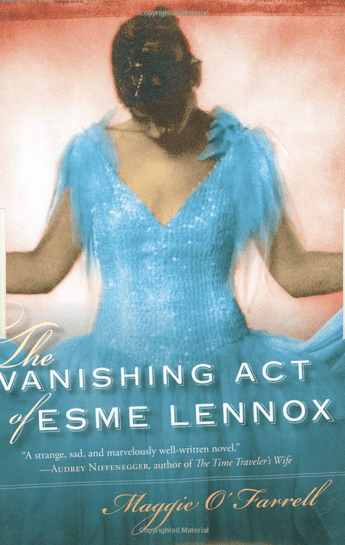
It’s like the scariest book ever written, scary in a Margaret Atwood kind of way, a reminder that women have not had rights for very long, and that those rights are still very fragile. When economies go bottoms-up, when unemployment begins rising, women are often the first to suffer, and women’s rights the first to go. In hard times, men will be preferred hirings, because they have families to support, laws to “protect” women are passed, especially laws which “protect” her finances, meaning gives the power of the money management to some man to do for her, or “protect” her person by requiring that some man accompany her to keep her from dangers. Protection = control. It keeps some smart, thinking women submissive to men who are in every way their inferior.
In Vanishing, Maggie O’Farrel writes of such a woman, Esme Lennox, who is a fey spirit, born in India, with the eyes of an artist. While her “good” sister Kitty obeys the rules, walks the straight and narrow path, Esme is messier. As she grows to adolescence, her eccentricity and her rebellion against the constricts of the life in turn-of-the-century Scotland chafe, she yearns for more room to breathe, intellectually, socially, as her family, her community and her society continues to pressure her to conform.
One of the key events in the book is the death of Esme’s baby brother, of typhoid fever. Abandoned, Esme sits holding her dead brother’s body for three days until her family returns (the baby-keeper also died and the other employees deserted while Esme’s family was away). Esme is devastated, but the focus is on her mother, who is wrought with guilt and isolates herself, and Esme, only a little girl, is forbidden to even say her beloved baby brother’s name. Part of what plays a huge role in this book is society, expectations, and all that is hidden and unspoken – as Esme becomes, a family secret, locked away for sixty years.
Their grandmother swept into the room ‘Kitty,’ there was an unaccustomed smile on her face, ‘stir yourself. You have a visitor.’
Kitty put down her needle. ‘Who?’
Their mother appeared behind the grandmother. ‘Kitty,’ she said ‘quickly put that away. He’s here, he’s downstairs . . . ‘
. . . .
Esme watched from the window-seat as her mother started fiddling with Kitty’s hari, tucking it behind her ears, then releasing it. . . . . Ishbel turned and, catching sight of Esme at the window, said ‘You, too. Quickly now.’
Esme took the stairs slowly. She had no desire to meet one of Kitty’s suitors. They all seemed the same to her – nervous men with over-combed hair, scrubbed hands and pressed shirts. They came and drank tea, and she and Kitty were expected to talk to them while their mother sat like an umpire in a chair across the room. The whole thing made Esme want to burst into honesty, to say, let’s forget this charade, do you want to marry her or not?
She dawdled on the landing, looking at a grim, grey-skied watercolour of the Fife coast. But her grandmother appeared in the hall below. ‘Esme!’ she hissed, and Esme clattered down the stairs.
In the drawing room, she plumped down in a chair with high arms in the corner. She wound her ankles round its polished legs and eyed the suitor. The same as ever. Perhaps a little more good-looking than some of the others. Blond hair, an arrogant forehead, fastidious cuffs. He was asking Ishbel something about the roses in a bowl on the table. Esme had to repress the urge to roll her eyes. Kitty was sitting bolt upright on the sofa, pouring tea into a cup, a blush creeping up her neck.
Esme began playing the game she often played with herself at times like this, looking over the room and working out how she might get round it without touching the floor. She could climb from the sofa to the low table and, from there, to the fender stool. Along that, and then –
She realized her mother was loooking at her, saying something.
‘What was that?” Esme said.
‘James was addressing you.’ her mother said, and the slight flare of her nostrils meant, Esme knew, that she’d better behave or there would be trouble later.
As with many inconvenient women, Esme ends up committed at a loony-bin, and sixty years later, is released into the custody of a grand-niece who never even knew Esme existed.
The thoughts, trials and escapades of three women, Esme, her sister Kitty, and Iris, the grand-niece, intertwine through out the book, and the picture is cloudy at first, blurry, shifting, fragmented The pattern becomes more and more clear as the three threads of thought are woven – ever more tightly – together.
I could not put this book down. Finding out how the picture came together became more important than checking my messages, my blog, or fixing dinner. It was compelling, and resulted in a quick and unforgettable read.
Obama and Dreams From My Father
It took me 20 days, but I finished Barack Obama’s Dreams From My Father. I didn’t read it because he is President of the United States, although that would be a good reason, but I read it because our book club is reading it, and I know how busy the next few months are going to be, so I read ahead during the slower times of summer.
And the trick to finishing it was not allowing myself to read anything else until I had finished – I had a stack of really intriguing books to urge me on. “As soon as I finish, I can read . . . ” Even with all that incentive, Obama’s book is a slog.
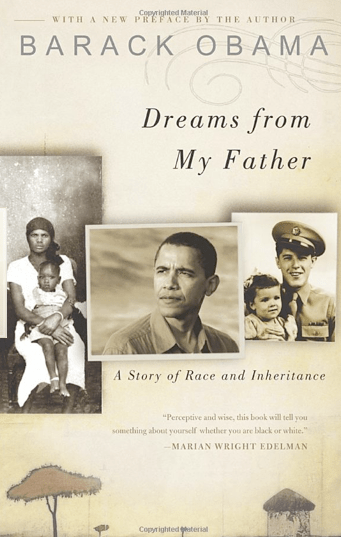
He is a gifted orator. He is a plodding writer. There is also a problem I find with autobiographies by anyone – we all fool ourselves, we all position ourselves in a better light, and we have no idea how transparent we are when we do so. Fellow bloggers, do you ever read anything you have written a couple years ago and squirm with embarrassment, or even delete? To be an author is a very very brave thing, when you have a book published, there is no going back, your transgressions are all right out there, and the public can be cruelly critical.
What I liked about the book is Obama-as-Third-Culture-Kid, a man of mixed identity. Most kids who have grown up moving or grown up in different countries from their own, or who have immigrated, can tell you, being an alien is no fun. Obama learns how to adapt, how to look for clues to fitting in, how to pass. It’s a common theme in Third-Culture-Kids.
My favorite part of the book was his return to Kenya, his openness to his African roots, the open-armed love with which his Kenyan half-brothers and sisters welcome him and his response. He had some truly extraordinary adventures, working out just who his father had been as a person. He was blessed to recognize the richness of his inheritance.
The book plods along, but it was worth the time. For all it’s flaws, I find I like that man, and I understand more about where he is coming from. (for grammarians, I understand more about from where the man is coming.) 🙂
Economic Turnaround Slow
Warren Buffet, one of the richest men in America, and one of the humblest, has written an Op-Ed piece for The New York Times (you can read the entire piece by clicking here) on the tiny signs of economic upturn and what they might forecast for the near and medium future. It makes fascinating reading – solutions come at a cost, and he spells out the costs.
One blogger jumps from this to forecast a turnaround in the real estate market. Not so fast, I think. There is a huge demographic factor, a huge bulge of the population stepping out of the productive work-force and into retirement, a population which has largely lived large – for today – with little thought to the retirement years.
Those who planned, and squirreled away their monies into investments, into businesses – have also been hit hard. Turnarounds take time, and even so, there is a cost. Not all will recover what they have lost.
Many of this aging bulge will be paring down their expectations and paring down their lifestyles. They will be paring down their spending, except for health care. I don’t think we have a clue what that is going to look like.
The Greenback Effect
By WARREN E. BUFFETT
Published: August 18, 2009
Omaha
IN nature, every action has consequences, a phenomenon called the butterfly effect. These consequences, moreover, are not necessarily proportional. For example, doubling the carbon dioxide we belch into the atmosphere may far more than double the subsequent problems for society. Realizing this, the world properly worries about greenhouse emissions.
The butterfly effect reaches into the financial world as well. Here, the United States is spewing a potentially damaging substance into our economy — greenback emissions.
To be sure, we’ve been doing this for a reason I resoundingly applaud. Last fall, our financial system stood on the brink of a collapse that threatened a depression. The crisis required our government to display wisdom, courage and decisiveness. Fortunately, the Federal Reserve and key economic officials in both the Bush and Obama administrations responded more than ably to the need.
They made mistakes, of course. How could it have been otherwise when supposedly indestructible pillars of our economic structure were tumbling all around them? A meltdown, though, was avoided, with a gusher of federal money playing an essential role in the rescue.
The United States economy is now out of the emergency room and appears to be on a slow path to recovery. But enormous dosages of monetary medicine continue to be administered and, before long, we will need to deal with their side effects. For now, most of those effects are invisible and could indeed remain latent for a long time. Still, their threat may be as ominous as that posed by the financial crisis itself.
To understand this threat, we need to look at where we stand historically. If we leave aside the war-impacted years of 1942 to 1946, the largest annual deficit the United States has incurred since 1920 was 6 percent of gross domestic product. This fiscal year, though, the deficit will rise to about 13 percent of G.D.P., more than twice the non-wartime record. In dollars, that equates to a staggering $1.8 trillion. Fiscally, we are in uncharted territory.
Because of this gigantic deficit, our country’s “net debt” (that is, the amount held publicly) is mushrooming. During this fiscal year, it will increase more than one percentage point per month, climbing to about 56 percent of G.D.P. from 41 percent. Admittedly, other countries, like Japan and Italy, have far higher ratios and no one can know the precise level of net debt to G.D.P. at which the United States will lose its reputation for financial integrity. But a few more years like this one and we will find out.
An increase in federal debt can be financed in three ways: borrowing from foreigners, borrowing from our own citizens or, through a roundabout process, printing money. Let’s look at the prospects for each individually — and in combination.
You can read the rest HERE
Apartment Building Coming Down
Expats have their own shorthand, we understand one another when we talk about Doha, although the locals would not have a clue what we are talking about. So I will tell you that this apartment building was newly built at-the-end-of-Indian-Crafts-Street, you know, where the Christmas shop is – and those expats who have lived in Doha for a while will know exactly where that is.
They never even put the glass windows and balcony doors in – at some point, they must have gotten word that all this will come down for the new Dohaland, or Heart of Doha – a revival of the historical district of Qatar.
I won’t complain. I love what they did for the Suq al Waqif, which has been reinvigorated by the new life injected with the restauraunts and cafes. The same shops line the interiors, only now they have more and varied customers.
it just seems like there might be more co-ordination. This apartment building should not have even been started. I hate waste.

At Least 41 Dead in Wedding Tent Fire in Kuwait
AdventureMan called first thing this morning on his way to work and said he heard this on the radio. We are so sorry this has happened. What a sad, sad ending to a joyful occasion.
AOL News and Associated Press report the death toll is at least 41 women and children.
KUWAIT CITY (Aug. 15) – A fire at a wedding tent Saturday has killed at least 41 women and children guests and injured 76 others, authorities said.
The official Kuwait News Agency quotes the fire department chief, Brig. Gen. Jassem al-Mansouri, as saying 41 bodies have been recovered from the scene in Jahra, a tribal area west of Kuwait City. KUNA said 76 people have been hospitalized with burns.
Jahra wedding fire kills dozens
Published Date: August 16, 2009
By Hanan Al-Saadoun
Kuwait Times
KUWAIT: Dozens of people were killed late yesterday when a fire broke out in a wedding tent in the Ayoun area of Jahra. Sources said all the victims were women. Rescue efforts were hampered because the burning tent collapsed on the women and the power supply failed. Many of the women were also killed in a stampede that ensued. Twenty fire trucks and dozens of firemen battled the blaze, while the injured were rushed to hospitals.
TV channels put the toll at more than 44. Incidentally the victims of yesterday’s fire, said to be from the Al-Enezi family, are relatives of a few ill-fated women who died in a similar accident in Jahra a few months ago.
The Director General of the Fire Department Major General Jassim Al-Mansouri earlier said fire fighters teams were continuing to recover dead bodies from the tent, noting that preliminary estimates put the number of fatalities at 13. Al-Mansouri said that the death toll could rise due to the large number of injuries as result of the stampede that followed the eruption of the fire at the tent that was packed with people.
The official added four fire fighter teams were mobilized, including Al-Jahra, Al-Jahra Al-Harafi, Al-Sulaibiya and Al-Ardiya departments, in addition to help from specialized departments in combating the fire and transferring those injured to nearby hospitals.
An investigation was opened to probe the reason behind the fire, Al-Mansouri added.
Doha Ramadan Frenzy
As my friend Grammy and I wandered through the back streets of Suq al Wa’ef 😉 yesterday, we came across this frenzied scene, all the machines humming, and new dresses for Ramadan being made. I asked if I could take a photo – I think it puzzles them that I would want to, but I loved watching them stitch away:
Doha Hazard
I’m driving along, getting ready to get in the right turn lane, when all of a sudden ahead of me, I can see a change in grade: Roadworks. Only in my lane. Here is the hazard – I can get in the lane now, and bump along, or I can stay in my curent lane and switch later, but I don’t know how many other drivers are adopting that strategy, and if I don’t make the right turn, I have to go many blocks out of my way. I signal and get in the raw, bumpy lane.

There just isn’t any good time to do roadworks. Some of the roads have serious potholes, many of the side roads have other serious defects. They have to be fixed, but oh the mess, the inconvenience. It’s the same in Kuwait, it’s the same in Seattle. I think of the bureaucrats who have to raise the funds (at least in Kuwait and Doha, it’s not taxes!), hire the companies, make the decisions and bear the howling complaints of the inconvenienced while the necessary work takes place.
At least on this day traffic is flowing smoothly and drivers are making allowances for one another. Things could be a lot worse.
Written Communication, Plusses and Minuses
I was e-mailing back and forth this morning with a dear friend who is traveling. She was about to visit an old school friend, and before visiting, dug out all the letters she had received from the friend – an enormous collection – and read through them all. She said it was a very moving experience, and I could tell that even before visiting her friend, she was feeling close from having read all those letters.
When was the last time you got a letter?
I have some letters my husband has written, saved away. 🙂 Most of my written communications these days are done by e-mail, instant-message, or texting. I used to have files of e-mails, but as they grew bigger and bigger, I sort of stopped saving them, except for important ones, or business-related ones.
These blogs are also written communication, but more like books, less personal and you never really know who is reading on any given day, and who isn’t, so like it is not the most reliable way to communicate something important, especially to one person or a small group of people; e-mail just makes more sense. Or picking up the telephone, which I don’t do all that often as I am not so much of a telephone person and many people I would call are in different time zones.
But it makes me wonder what record we will have of these times? I told my friend when I was in college, I worked part time in the university xerox department, and most things in the Northwest Collection came to me. I could read them as I copied them – diaries, letters, to-do lists, shopping lists – ephemeral things, but written on paper, and they give us a tiny peephole into the daily lives of people who lived a couple hundred years ago.
Think of your life, and how things have changed, even if you are in your twenties. Two hundred years from now, people will have so many questions about our lives, how we lived, why we did the things we did. With fewer lasting pieces of paper, will the record be so complete?
Think of our electronic storage devices – remember floppy disks? My computer wouldn’t even be able to read a floppy disk! Think of the tiny little USB devices we are saving onto now – how long will that technology last? In another generation, it will be as opaque and accessible as the ancient inscribes stones buried in the deserts.
As we go more and more paperless, how are we saving the ephemera?
As I upload a couple years worth of photos to be printed, I think of the scrap booking craze, how you take a few photos and decorate all around them, but do the resulting albums give you truth, or do they give you a fantasy of the truth?
I think of the photographs from a hundred years ago – people with somber faces. Serious faces. No one ever smiled for the photos. There are photos of my earliest relatives in Seattle, they are truly a grim looking bunch, I think it was the style then, and I have a feeling that they didn’t look like that most of the time; our family culture is pretty jokey. So I am also wondering about family lore, family history and realities. Like most of us expunge the photos of us that are unflattering – and destroy letters we would never want anyone to read. In so doing, we don’t change the real history, but we do change the transmission of history! Much of what gets transmitted ends up being censored, by us!
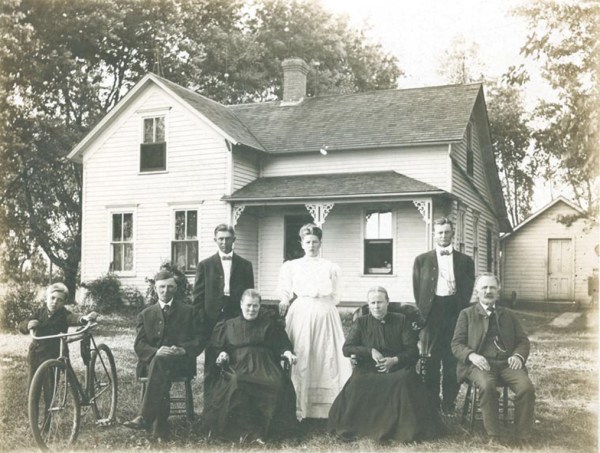
(This is not my family, just a photo from the early 1900’s from rootsweb.ancestry.com)
For years, I have taken my photos and put them in books – and they are heavy. But we actually take them out and look at the photos from time to time, whereas now, most of my photos are stored on the computer, and rarely do I take the time to upload them to be printed. I wonder what the photographic record will be, if there will be a downturn in photos showing what was going on because so few are printed in a relatively lasting format.
I have so much on the internet – photos, writing, etc. What is something happens to the internet. I haven’t even been saving back ups of the blogs. I used to, like the first six months, but, frankly, so much of it is trivial that I stopped backing it up. And if I lost everything, would it be a tragedy – or a huge relief? I think of friends who have lived through terrible events and who live their lives more lightly now – fewer purchases, fewer emotional turmoils – going through something horrible can truly streamline your life.
I guess I am just babbling.
Recent Comments
intlxpatr on Shampoo Ginger tigerbutterya0c5ff1d… on Shampoo Ginger intlxpatr on British Soldier Kidnapped, Esc… John on British Soldier Kidnapped, Esc… intlxpatr on British Soldier Kidnapped, Esc… Wikipedia Donate Button

Amazina


Early Voting in Florida


