Party Planning
I was idly contemplating a party, and wondering if I should think about Mardi Gras (think Jambalaya, bread pudding, and honky-tonk beads) or Chinese New Years (order in a bunch of Chinese Food, hang up some good luck signs, and some Rats – this will be the year of the Rat) and I thought I would check the dates.
Holy Smokes! Gras! Mardi Gras is February 5th, Lent starts February 6th and Chinese New Year starts February 7th!
Celebrating Chinese New Year on a Thursday night is cool (Thursday night in Kuwait is like Friday night where the weekend is Saturday/Sunday) but not so cool when everyone has just started fasting and spiritual examination. Lent is not like Ramadan; Lent is more spare, it’s introspective, it’s kind of like Danish modern, less is just LESS!
(I think I had better go for Mardi Gras.)
If YOU want to celebrate Chinese New Years, Here is where you can find out about what you need to eat for Good Luck in the new Chinese year like when you eat noodles, don’t cut them because long noodles signify long life, a whole fish signifies togetherness and abundance, and whatever you do, don’t eat tofu, which is white, and unlucky, signifying death and misfortune!

Inheritance of Loss

Most of the time, if I don’t like a book, I won’t even bother telling you about it. This book, The Inheritance of Loss, by Kiran Desai, is an exception for one reason – it IS worth reading.
Inheiritance of Loss showed up on the book club reading list for the year, and I ordered it. I read the cover when the book came, and it didn’t sound that good to me, so I read other books instead. The next time it came to mind was when a friend, reading the book, said she was having trouble with it, and asked me if I had started it. This friend is a READER, and a thinker. It caught my attention that she would have problems reading a book, so I decided to give it a try.
This is a very uncomfortable book. The characters live in the shadow of the Himalayan mountains. The most sympathetic character is a young orphaned girl, sent to live with her grandfather. With each chapter, we learn more about all the characters, how they came to be here, what they think, what their lives have looked like.
The author of this book has a very sour look on life. She has snotty things to say about every character. You can almost feel her peering around the corner, eyes slit with evil intent. She is that vicious neighbor who comes by and never says anything nice about anybody, and when you see her talking with your neighbor, you get the uneasy feeling she could be saying something mean about you, and she probably is.
The book covers a wide range of topics – Indian politics, Ghurka revolts, English colonization, Indian emigration to the US and UK, everyday vanities and pride in petty things, how people destroy their own lives, how people can be cruel to one another, oh it’s a great read (yes, that is sarcasm).
At the same time, this vicious unwelcome neighbor has a sharp eye for detail. You may not like what she is telling you, but you keep listening, because you can learn important tidbits of information from her. In my case, I learned a lot about how life is lived in a small mountain village in India, the struggles of illegals in America and how class lines are drawn, ever so finely, when people live together. I learned a lot about the legacy of colonialism, and the creep of globalization. This unwelcome neighbor has a sharp tongue, always complaining, and yet . . . some of her complaints have merit.
I don’t believe there was a single redeeming episode in the book. There was not a paragraph to feel good about. I am glad to be finished with the book – but, yes, I finished it, I didn’t just set it aside in disgust, or give it away without finishing.
Here is the reason I am telling you about this book – as uncomfortable as this book is to read, I have the feeling, upon finishing, that ideas and images from this book will stick with me for a long time. I have the feeling that it contributes to my greater understanding of how things work, how people think differently from other people, and on what levels we are very much the same.
Here is an excerpt from the book, at a time during which the Judge is a young Indian, studying in England:
The new boarding house boasted several rooms for rent, and here, among the other lodgers, he was to find his only friend in England: Bose.
They had similar inadequate clothes, similar forlornly empty rooms, similar poor native’s trunks. A look of recognition had passed between them at first sight, but also the assurance that they wouldn’t reveal one another’s secrets, not even to each other.
. . . Together they punted clumsily down the glaceed river to Grantchester and had tea among the jam sozzled wasps just as you were supposed to, enjoying themselves (but not really) as the heavy wasps fell from flight into their laps with a low battery buzz.
They had better luck in London, where they watched the changing of the guard at Buckingham Palace, avoided the other Indian students at Veeraswamy’s, ate shepherd’s pie instead, and agreed on the train home that Trafalgar Square was not quite up to British standards of hygiene – all those defecating pigeons, one of which had done a masala-colored doodle on Bose. It was Bose who showed Jemubhai what records to buy for his new gramophone: Caruso and Gigli. He also corrected his pronunciation: Jheelee, not Giggly. . . .
This it was that the judge eventually took revenge on his early confusions, his embarrassments gloved in something called “keeping up standards,” his accent behind a mask of a quiet. He found he began to be mistaken for something he wasn’t – a man of dignity. This accidental poise became more important than any other thing. He envied the English. He loathed Indians. He worked at being English with the passion of hatred and for what he would become, he would be despised by absolutely everyone, English and Indians both.
I consider this a review, and not particularly a recommendation. I read the book, I finished the book and I learned from the book. I didn’t like the book. I recommend it only as a challenge, for people who like to read and stretch their minds in new directions.
Baked Apples – So Simple, So Good!
Cold weather is the perfect time for baked apples. Apples are good for you, cinnamon is good for you, the smell as they are cooking is divine, and the heat from the oven is welcome in these cold winter evenings. 🙂
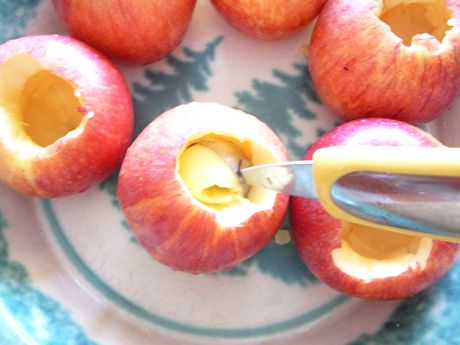
I slice a little bit off the bottom for the apples, so they will sit flat in the dish – not too much, just a little:

Use a knife to take out a cone from the core, then use a melon-ball maker to scoop the seeds out of the center of the apple. Don’t go through the bottom if you can help it. If you do, it’s not a big deal, but try not to.
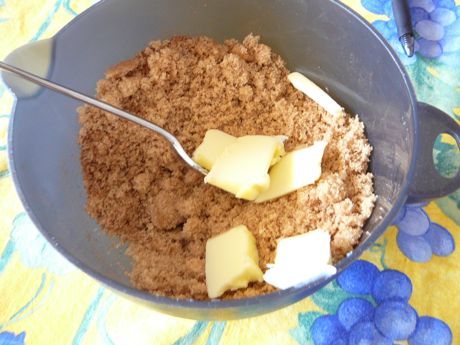
Mix up about a cup of brown sugar with about 1/2 teaspoon of cinnamon and some small pieces of real butter – you can use a fork to break the butter up and mix it into the sugar. It doesn’t have to be well mixed, some lumps are OK, you just want small pieces of butter.
Stuff apples with cinnamon butter, pack firmly into each apple cavity, and top with a small pat of butter:

Bake at 180 degrees C. or 350 degrees F. for 50 minutes.
This is how they look coming out of the oven:

Put each apple into a bowl, spoon sauce over apple, then top with a big dab of whipped cream:
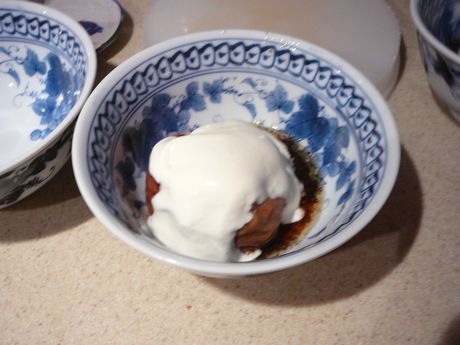
This whipped cream is whipped with confectioner’s (powdered) sugar and a drop of vanilla flavoring. YummmmmY!
Jambalaya
We had friends in for dinner last night, and it was perfect Jambalaya weather. Nights are cold, and you want something that will warm you up and “stick to your ribs.”
“What is this?” my Kuwaiti friend asked, and I told him it was machboos if it were made in New Orleans, which made him laugh.
Like machboos, the recipe is infinitely variable. A lot of times, you put in what you have. Here is what I used, and it was delicious!
1 chopped onion
1 chopped green (or red) sweet pepper
Sautee together in olive oil and a little butter for richness.
Sautee 2.5 cups of rice in more olive oil and butter with 1 Tablespoon Tony Cochere’s Cajun Seasoning (available at the Sultan Center)
Add five cups liquid, made up of 3 packets of tomato paste (like the small cans we use in the US) plus chicken broth plus any liquid from the shrimp), bring to a boil, turn down and let simmer for 40 minutes or until rice has absorbed most of the liquid)
Add:
1 or 2 chopped tomatoes, for texture and color
1 cup chopped artichoke hearts
1 cup chopped chicken
1 smoked beef sausage (in the US this might be pork) chopped into pieces, or you could use a packet of the “Little Smokies” you can find at Sultan Center), pre-cooked
1 lb (500 grams) great big Kuwaiti shrimp
Stir in and let sit five minutes to heat all ingredients and so flavors blend.
Serve! This feeds six people generously, and up to twelve if other dishes are also served – salads, vegetables, etc.
Swedish Pot Roast
You don’t think of fine cooking when you think of Sweden, and yet this pot roast is one of my family’s all time favorites. It has a unique flavor, sweet and rich, and you need a pressure cooker to fix this. It is old fashioned, but the taste is amazing. It’s a great January kind of meal, served with potatoes and maybe some Rot Kohl / Red Cabbage.
3 lb. beef pot roast (7 bone preferred) or chuck or brisket
1 t. nutmeg
1 t. cinnamon
1/2 t. ginger
2 t. salt
1/8 t. pepper
2 T. cooking oil
1 cup water
2 onions, sliced
4 bay leaves
1 clove garlic, crushed
1/2 cup brown sugar
1/2 cup red wine or vinegar
Combine nutmeg, cinnamon, ginger, salt, pepper; rub into meat.
In pressure cooker, brown meat on both sides.
Add onion, garlic, brown sugar and water, wine and bay leaves. Close cover of pressure cooker, place regulator on vent pipe and cook 35 minutes with regulator rocking slowly. Let pressure drop.
4 – 6 servings over egg noodles, or cooked potatoes.
WordPress and Statistics
I was on a roll – the numbers just kept going higher and higher. The gambler in my soul knew that it was all an illusion, that it had nothing to do with my current entries and everything to do with the Christmas season and seasonal entertainment, but you know how it is, when you’re rocking along, you get this euphoria that excludes logical thinking.
Christmas Day it all came to a screeching halt.
Numbers back to normal.
WordPress allows you to see how a post has performed over a lifetime. These are my all time top performers. All in all, I would estimate that people looking for tried-and-true recipes have accounted for a full tenth of my statistics.
Christmas Divinity Candy 4483
Christmas Punch, Rum and Rumless 2418
Easy Kraft Christmas Fudge 1526
My one wish in the New Year would be that WordPress would find a way to let us click somewhere and see our posts in order of all-time “hits.”
The highest scoring non-recipe hit-getter?
Levantine-Gulf-Persian Warrior Women, 1799, one of those posts you write in an idle moment with a idle question. And oh, the responses! I learned so much from my readers on this one.
Taboulah Check
I just spent a hilarious half hour catching up on a week’s worth of ICHC. It feels so good to laugh like that! So many clever people and so many hilarious photos.
This one reminds me of my family – we all love tabouli, and we all do the teeth-check at the end of the meal so we won’t embarrass ourselves.

moar funny pictures
Hussein Hustle, Montezuma’s Revenge, Etc.
The holiday season, and holiday travelling, is a peak time for food poisoning illnesses. Here is some information, and some reminders, from BBC News: Health on how you can avoid getting – and giving – food related illnesses this season:
Food Poisoning
What is it?
It’s estimated there are more than 9 million cases of gastroenteritis each year in England. For an increasing number of people, it’s due to food poisoning, something that’s preventable.
Gastroenteritis describes symptoms affecting digestion, such as nausea, vomiting, diarrhoea and stomach pain. Food poisoning is the type of gastroenteritis caused by eating or drinking something contaminated with micro-organisms or germs, or by toxic substances produced by these germs.
These illnesses are often accompanied by fever, muscle aches, shivering and feeling exhausted.
What causes it?
Micro-organisms enter the body in one of two ways:
In the food – the food isn’t cooked thoroughly, so the micro-organisms aren’t killed off, often the case with barbecued food.
On the food – the person preparing the food doesn’t wash their hands before handling the food, for example.
Campylobacter infection is the most common cause of food poisoning seen by GPs. It likes to live in milk and poultry.
Other common causes include salmonella, listeria, shigella and clostridia. Some take a few hours to cause symptoms, others a few days. Serious infections with E.coli are, fortunately, uncommon.
How can I prevent it?
Always wash your hands thoroughly before preparing food, after going to the toilet and after handling pets
Keep kitchen work surfaces clean
Make sure food is defrosted completely before cooking
Keep pets away from food
Ensure food is cooked thoroughly before eating. Meat shouldn’t have any pink bits
Serve reheated food piping hot
Keep raw meat and fish covered and store at the bottom of the fridge
Store all perishable foods at 5°C (41°F) or less
Keep raw food covered up
Rinse fruit and vegetables under running water before eating
Throw away any food that’s past its use-by date, doesn’t smell right and/or has fungus on it
Christmas Punch Update
AdventureMan awoke this morning with a cough and some sniffles. We are both awake early these days, which I love because I get to step out on my balcony while it is still dark and no one can see me, and watch the shoowi (old fashioned Gulf fishing boats) lights bobbing a couple hundred yards off the coast, sip my coffee, and shiver a little for a change, and then we get to watch the sun rise.
While I was on the balcony, the microwave was warming up a cup of Christmas Punch for AdventureMan. When he gets a tickle in his throat, there is nothing that makes him feel healthier than a cup of this punch to start the day.
The Christmas / Eid season is upon us! Make it for your friends, serve it hot – and then save the leftovers to be warmed up later. With the cranberry juice and the pineapple juice – it’s even good for you. 🙂
Christmas Rum Punch – and Rumless
2 32 oz. jars Cranberry Juice
1 32 oz. can Pineapple Juice (or 2 (1) litre containers of Fresh Pineapple juice from the Co-op or Sultan Center)
1 cup brown sugar (I often use a half cup)
12 inches cinnamon stick
3 Tablespoons whole cloves
1 orange peel
Original recipe: In 30 cup coffeemaker, put cranberry and pineapple juice in bottom, and place coffee basket with brown sugar, cinnamon, cloves and orange peel in top. Perk juices through basket. When ready light comes on, add 1 quart Meyer’s Dark Rum.
In Kuwait – don’t add the rum!
When you don’t have a 30 cup coffee pot – Put juices into large kettle, add cinnamon sticks, cloves, orange peel, sugar and bring to simmer. When hot, use strainer to fish out cinnamon sticks, cloves and orange peel – Do this sooner, rather than later, or the juice will get too spicy.
Add 1 quart of rum – or not! This is perfect for these chilly winter days, it’s good for you, and it gives your house a wonderful smell.
This is what it looks like if you use a pot, before you scoop out the spices and orange peel:
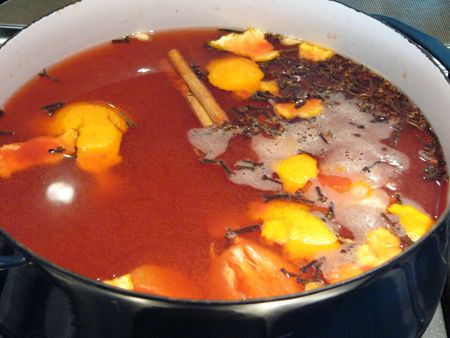
After scooping, you can transfer punch to a beautiful pitcher for pouring, or to a hot-drink container, or you can serve it using a ladle, straight out of the pot. To your good health and happy holidays! *raises a glass*
Expiration Dates
Thank God for other bloggers. Simply Stinni, in addition to having some drop-dead fabulous recipes, often has good little tips for shopping in Kuwait. One reminded me to check expiration dates, something I just don’t even think about doing.
As I was preparing for a party, I needed some cream cheese for a dip. When I checked the expiration date, this is what I saw:

From August 2007 to May 2008? Horrors! I am aghast. What kinds of preservatives would you have to use to give cream cheese such a long shelf life??
There must be some local equivalent, a very mild soft cheese that I could use. You know I love buying local, buying fresh – help me out here. What can I use in place of processed cream cheese?
Recent Comments
ExpatAlien on What Country am I Living … intlxpatr on Yellowstone: Old Faithful to C… Michelle on Yellowstone: Old Faithful to C… Cathy on No Grown-Ups in Charge intlxpatr on Waiting for Snow Wikipedia Donate Button

Amazina


Early Voting in Florida


 Here There and Everywhere