The Many Uses of Vinegar
When I wrote yesterday about being a mosquito magnet, Walzing Australiaquoted a recommendation about drinking vinegar every day to keep the mossies away. It tickled a brain cell, and I googled Vinegar and Health this morning and found pages and pages of information. Vinegar is amazing, even if it is HALF as good as all these articles claim.
From How Stuff Works: The Healing Power of Vinegar
Health Benefits of Vinegar Overview
Vinegar has been valued for its healing properties for thousands of years, and during that time, it has found its way from the apothecary’s shelf to the cook’s pot. Today, it can continue to play that dual role, taking the place of less healthful dietary ingredients and helping to regulate blood sugar levels while entertaining our taste buds with its tart flavor.
There seems hardly an ailment that vinegar has not been touted to cure at some point in history. And while science has yet to prove the effectiveness of many of these folk cures, scores of people still praise and value vinegar as a healthful and healing food. So let’s take a look at the history of vinegar, the healing claims made for it, and what science does and doesn’t have to say about those claims. Along the way, we’ll discover why vinegar deserves a place in every healthy kitchen.
The Healing History of Vinegar
For centuries, people from Asia and Europe have used different types of vinegar to add flavor and zest to their food. Read about how this tangy condiment was first discovered and then developed into a must-have for kitchens around the world. Learn the key ingredient that gives vingear its special sour taste and the basic chemical process used to create it.
Misconceptions About Vinegar’s Health Benefits
Although some people believe vinegar is a miracle cure, it can’t fix everything. Marketers have asserted that vinegar cures diseases such as diabetes, osteoperosis, cancer, and many other disorders. Some even claim that it halts the aging process. Obviously, these claims are exaggerated. Find out what’s being said, and learn the truth about the real nutritional value of vinegar.
How Vinegar Affects Digestion
Although vinegar can’t cure cancer, it can help improve your general health in many ways. Vinegar benefits the digestive system, improving the absorbtion and utilization of several essential nutrients. Learn about the different organ systems that are affected by simply adding vinegar to your diet, and find out how you can improve your health and the taste of your vegetables at the same time.
If you go to the above website, there are additional articles that elaborate on the uses of vinegar. There are so many websites about the positive powers of vinegar!
There are hundreds of articles about the health benefits of vinegar. One of the most comprehensive was at Vinegarbook: Vinegar tips for health where there are topics you can click on to get to the full article, such as Treat Dandruff with Vinegar, Itchy Skin Soothed with Vinegar, Urinary Tract Infections and Vinegar, Soothing Aching Feet with Vinegar and several articles about fighting off colds and sore throats with vinegar. Vinegar has some known anti-fungal properties, and also anti-microbial and antiseptic properties. Fascinating, all from a cheap little bottle of vinegar found on any grocery shelf.
Ultrametabolism and Kuwait Diet
I used to be thin. Really thin. Actually, I have been really thin several times in my life, but, *sigh* no longer.
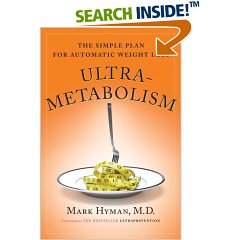
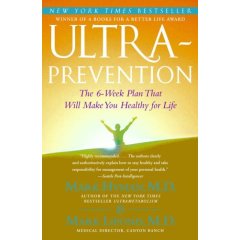
This morning as I was picking up my e-mail, this review on AOL caught my eye. Dr. Mark Hymon is one of the AOL Wellness Coaches, and he has written two books, one called Ultrametabolism, about using your built in genetic strengths to lose weight and maintain the weight loss naturally, and one called Ultraprevention about foods to eat (and not to eat) to contribute to overall wellness and good health.
If you’ve been reading me for a while, you will know that I can be a little cynical.
What I like about Dr. Hymon’s approach is that it makes sense.
Diets that totally eliminate foods you love just aren’t going to work. Give up pasta for the rest of your life? I don’t think so. But what Dr. Hymon asks us to do is to eat mostly non-processed, or minimally processed foods. He says that the processed foods have components that the body doesn’t even recognize as food, and that’s why after eating things like Twinkies, Mars bars, packaged crackers, etc. we still feel hungry – our bodies don’t recognize what we have eaten as food.
Here is what Dr. Hymon suggests (this is from the AOL Health and Fitness section):
How to use what you eat to tell your DNA how to slim you down and live a healthier life.
Day 1. Clean out your cabinets, refrigerator and freezer. Get rid of packaged items filled with processed fats and sugars. Check the lable – if it says “hydrogenated oil” or “high fructose corn syrum” get rid of it.
Day 2. Go shopping for whole foods. Find a farmer’s market in your area for fresh produce and schedule visits in your calendar weekly or biweekly over the next few months. At the grocery, choose items from the “perishable perimeter” of the store, instead of items in the center aisles where processed foods lurk.
Day 3. Change your oil! Throw out old oils, which can become rancid quickly. Replace vegetable oils like safflower and canola with extra-virgin olive oil and make it your primary oil for cooking and salad dressings.
Day 4. Visit a health food sotre. Leave there with 10 new items you’ve never tried before. Bulk-purchase whole grains, legumes and nuts. Look for new whole grain cereals, breads and snacks without processed additives, fats, sugars or preservatives. And remember: just because it’s in a health food store, doesn’t mean it’s good for you. Read the labels of any packaged foods you buy.
Day 5. Choose Eggs! Choose organic eggs farmed with omega-3 fats. Make yourself a spinach omelet for breakfast. Eggs are a good source of protein. You can enjoy as many as eight a week.
Day 6. Become wild about fish. Find a local fishmonger or educate yourself by talking to your local grocer. Or learn more about which fish are best to eat by visiting www. ultrametabolism.com. Print out a primer to bring with you when you shop.
Day 7. Prepare some healthy snacks for when you’re on-the-go. Pack a small zipper bag with a few servings of almonds or walnuts. One handful equals a serving.
Day 8. Don’t go thirsty. By now, you’ve tossed the sodas. Bring out the blender and learn to make high protein, no sugar smoothies. Experiment with crushed ice and fresh fruits. You can even make frozen nut cubes by soaking nuts overnight, blending them and then freezing them with a bit of water or milk in ice cube trays. Your smoothie will be creamy and full of good fats and proteins.
As I did his online mini-seminar, I found myself thinking “everything this Dr. Hymon is recommending is the way Kuwaitis USED TO eat.” And I also found myself thinking what a wealth of opportunity we are living amidst, here in Kuwait, where we can go to any market and buy FRESH fish, really fresh, right off the boats, in the local fish markets. We can buy fresh meats, and fresh vegetables, lots of them grown right here in Kuwait. We can buy fresh eggs. even fresh chicken when not under threat of Avian Flu. Kuwait is a paradise for exactly this kind of diet.
Not only do we have access to fresh, locally grown foods, but the cost is so much less than processed foods on the shelves. He is talking about lentils and grains commonly available here in those big sacks, down in the Souk Mubarakiyya, as well as in the co-ops and the Sultan Centers.
This isn’t anything new, eating low on the food chain, eating fresh, but it does strike me as a diet that particularly works in Kuwait, and a kind of diet that you can live with for the rest of your life, because it doesn’t make changes in your life that you can’t live with. Like he does tell us to give up soda, one of the main contributors to obesity in the world today. As you get older, carbonated beverages aren’t that hard to give up because they also give you heartburn, so just another reason to steer clear of all those unwanted calories the body can’t identify as food.
He didn’t say anything about chocolate . . . but I have ordered both books from Amazon.com hoping that the dark, semi-sweet, barely processed chocolate that I love will also be “just what the doctor ordered.” Meanwhile . . . I hear a spinach omelet calling my name!
Even After All this Time – Latifi
A good book can make your blood race faster. A good book may even require underlines, turned page corners to mark the places you liked the best. A good book may compell you to tell others about it. Above all, a good book is a book you think about long after you have turned the last page.
Some of my best “good books” come to me through Little Diamond, my neice who lives in Beirut. We share a family culture, but even better, we share a wacky sense of humor. There are times we can’t even let our eyes meet in family gatherings, because we are thinking the same thing and can’t afford to laugh out loud.
She recommended this book to me more than three years ago, and I bought it immediately. And then it sat in my “read me soon” pile(s), languishing, unread, until early this year.
Oh, what a treat this book is! Once I picked it up, I could hardly put it down!

The book is autobiographical, and begins in pre-revolutionary Iran, where Afchineh Latifi’s father is a soldier. You see the early years of her life with her sweet, struggling parents, and you feel like you lived in their home with them, the images are so vivid.
As a military officer, though, her father is suspect once the revolutionaries come into power, and her family’s fortunes fail. Her father is arrested. As Latifi’s mother bravely goes from jail to jail, trying to find her husband, her daughters are often with her. Once she finds him, she brings him comfort items – shaving kit, washcloth, etc. so he can maintain a small amount of dignity while he is being beaten and imprisoned. Latifi’s mother was young when this book opens, maybe in her thirties, with two daughters and two sons, and I am totally blown away by the courage it took to persist as her husband was transferred from prison to prison, increasingly brutalized, and then, immediately after the last visit – shot. So immediately that the family heard the shots.
And then the real nightmare begine. The young mother and her family have no income, and her (now dead) husband’s mother claims her house, even though they bought her a house of her own while her husband was alive. Latifi’s Mom never gives up. She gets her daughters visitor’s visas to Austria and puts them in a convent school, and then gets them to America – again on visitor’s visas – where they are forced to camp – for years – with a relative. Literally, years. Their brave mother eventually manages to get herself and her sons out of Iran, and join them in the US.
Their mother is a pistol. She is brave in the face of obstacles that would deter most of us. She never gives up. I am in total awe of her commitment to the survival – and thriving – of her family.
I love this book for two reasons – the first being the strength and courage of this family, and the second being that they immigrated to America. You will hear a lot of Americans who say terrible things about immigrants, and how they take up scarce resources better meant for “real” Americans. Who are they kidding? We are ALL immigrants, in America, except for the Native Americans! This family, their will to succeed, is the story of us all, and what makes the country great. It is still a country where you can work hard, and succeed, and thrive. It’s an every day story in our country, but a story I never get tired of hearing.
Here are some excerpts from the book:
She looked at me as if I were an alien, which in fact I was. “Yes,” she said, “You get a library card and you can borrow as many books as you want.”
“And it doesn’t cost a thing?” I asked.
“Not a penny,” the woman said. “Unless you bring the books back late. Then we charge you a late fee.”
This was news to me. There were libraries in Tehran to be sure, but we had never frequented them. Mom would come home every two or three weeks with armsful of new books, and we would devour them hungrily. We were much too spoiled to share books with anyone.
The librarian processed my card on the spot. I couldn’t believe it. It felt like the biggest gift of my life. . . . . By the end of the summer I discovered a whole new world. Books. Words. Stories. I got in touch with my inner geek. Reading was not only exciting, it offered escape. When I was reading, my other life didn’t exist. There were days when I didn’t even think of Mom.
Her Mother was still in Iran at this time, and she and her sister are living with relatives who have loud arguments wondering how much longer they will be burdened with these girls. Finally, the two sisters find jobs, as well as going to school, and save every penny, and get an apartment where they live while putting themselves through university. And, one day, their mother and brothers arrive. Life changes. They all live together again.
“It’s almost Norouz,” she said. “Or have you forgotten?”
I had indeed forgotten. She was referring to the Persian New Year, which on the Gregorian calendar falls in late March. About two weeks before the start of Norouz, many Persians take part in something called ‘khane tekani,’ which literally means ‘shaking your house.’ You will see people painting their homes, washing their carpets, sweeping out their attics, cleaning their yards. One could say that it is a form of spring cleaning, but that is only a very small part of it. In Persian ‘no’ means new, and ‘rouz’ means day. The last Wednesday of the year is known as ‘chahar shanbeh suri.’ At dusk, with the cleaning over, people light small bonfires and sing traditional songs, and those who can manage it are urged to jump over flames. Fire, too, is seen as a cleansing, purifying agent: it burns away all the negative things in one’s life – the bad habits, the misfortune, the sorrows. It’s all about cleanliness: clean house, clean soul, new beginnings.
On the “new day” itself, people focus on family and friends, and for the next two weeks there will be much visiting back and forth. In each house, one finds a ‘sofreh eid,’ . . . Laid out on this garment, one will find the ‘Haft Seen’ (Seven S’s) comprised of seven items that begin with the letter S. These are ‘sabzeh’ or sprouts (representing rebirth); samanu, a pudding (for sweetness in life); ‘senjed,’ the sweet, dry fruit of the lotus tree (representing love); ‘serkeh’ or vinegar (for patience); ‘seer’ or garlic (for its medicinal qualities); ‘somaq’ or sumak berries (for the color of sunrise); and ‘seeb’ or red apples (symbols of health and beauty. In addition there are candles laid out on the ‘sofreh eid” one for each member of the household. The lit candles represent the goodness and warmth that enter life with the coming of spring.
(For the first time, this year we are invited to a new year’s celebration, and I thank God that I read this book just at the right time, so I will know even just a little of what this is all about. I am excited to see the ‘haft seen.’ )
Something else happened that November that I will never forget: Our family celebrated Thanksgiving for the first time. We loved the whole idea behind the celebration. It wasn’t about religion, and it wasn’t about gifts; it was about people sitting down to enjoy a meal together and acknowledging everything that they had to be thankful for. And we had a lot to be thankful for.
By the end of the book, all four children have graduated from university with professional degrees. This isn’t a spoiler. The book is about the sacrifice, the hard work and the commitment it took to get them there. Even After All This Time is an inspirational book, a book you won’t soon forget, and a book you will want to share with your friends.
Amazon offers it used from $4.67 and in hardcover around $25.
And Happy New Year to my Persian friends.
Shrimp New Orleans
Mom’s Shrimp New Orleans
Mom used to make this a lot when we were in university. Then, twenty years later, I served it to them when they were visiting us in Florida. Mom said “This is delicious! I want the recipe!” It was HER recipe I was using!
It is quick and very easy – it will make you LOOK like a good cook. And – every ingredient is available in Kuwait.
1 medium onion, chopped
1 cup chopped celery
1 cup uncooked regular rice
2 Tablespoons butter
Melt butter, add other ingredients above and cook, stirring in large skillet for 5 minutes.
1 can Tomatoes (28 oz)
1 package Spaghetti sauce mix
Stir above into skillet, heat to boiling. Reduce heat and simmer about 25 minutes, until rice is tender.
1 can artichoke hearts (14 oz)
1 lb shrimp
Stir into rice mixture and cook for 5 minutes.
You can spice this up a little more if it is too bland for you. It easily feeds 6 people with a salad and garlic bread or dinner rolls.
St. Patrick’s Day, March 17
Even non-Irish around the world celebrate St. Patrick’s Day. St. Patrick was the saint who converted the majority of Irish to Christianity, and legend has it, made all the snakes leave Ireland.
People have parties, make Irish stew and soda bread, and drink beer colored green with food coloring.
And – they tell Irish jokes.
Here is one of my favorites:
Even God Enjoys A Good Laugh
There were 3 good arguments that Jesus could have been Black:
1. He called everyone “brother”
2. He liked Gospel
3. He couldn’t get a fair trial.
But then there were 3 equally good arguments that Jesus was Jewish:
1. He went into His Fathers business.
2. He lived at home until he was 33.
3. He was sure his Mother was a virgin and his mother was sure he was God.
But then there were 3 equally good arguments that Jesus could have been Italian:
1. He talked with his hands.
2. He had wine with every meal.
3. He used olive oil.
But then there were 3 equally good arguments that Jesus could have been a Californian:
1. He never cut his hair.
2. He walked around barefoot all the time.
3. He started a new religion.
But then there were 3 equally good arguments that Jesus could have been Irish:
1. He never got married.
2. He was always telling stories.
3. He loved green pastures.
But the most compelling evidence of all – 3 proofs that Jesus could have been a woman:
1. He fed a crowd at a moment’s notice when there was no food.
2. He kept trying to get a message across to a bunch of men who just didn’t get it..
3. And even when he was dead, He had to get up because there was more work to do.
You can find an entire website devoted to Irish Jokes by clicking here.
Fat Impairs Fertility?
Today’s (March 10) Kuwait Times
Fat lovers face slimmer chance of parenthood
PARIS: Love handles might help couples get a better grip but all that excess fat could dampen their chances of having a baby, a new study has shown. Researchers monitoring nearly 48,000 couples in Denmark between 1996 and 2002 found that when both parents were clinically obese, the risk of waiting more than a year before conceiving nearly tripled. The odds improved somewhat when the prospective parents were simply overweight, but even they had to persist in their efforts longer than their leaner counterparts. Obesity could even have a demographic impact in countries where the problem of fat has taken on epidemic proportions, said the study published this week in the British Journal of Human Reproduction
“If obesity is a cause of sub-fecundity . . . this reduced capacity to reproduce could become a serious health problem.” said lead author Cecilia Ramlau-Hansen, an epidemiologist at Aarhus University in Denmark, in an interview. “The heavier the population gets, the more problems we would see with infertility,” she said. Earlier research had already established a clear link between too much fat and levels of fertility hormones. In women, excess body fat has a negative impact on ovulation and conception; in men, it is linked with decreased semen quality and the level of reproductive hormones.
But this is the first study, which looked at the conception rate among obese couples, who are increasingly common. In the United States, 30 percent of the adults – some 60 million people – are clinically obese, according to the US National Center for Health Statistics. Within certain demographic groups, such as African-Americans, the rate is even higher. In Europe, Britain tops the list with 23%, nearly twice the rate in Germany, where 12% tip the scales into obesity, according to the Organization for Economic Cooperation and Development.
The benchmark for obesity is the body-mass index, defined as one’s weight in kilograms divided by the square of one’s height in meters. A BMI from 18.5 up to 25 is considered in the healthy range, from 25 up to 30 is overweight, and 30 or higher is obese. The authors add a word of caution, saying they did not know how often the couples in their study had sex.
“We cannot exclude that infrequent intercourse has delayed conception in overweight and obese couples,” they say, delicately. In other words, more fat may mean less sex . . . so the fertility problem could lie elsewhere.”
Bringing in the Harvest, Kuwaiti Style
Fresh seafood is one of the great blessings of living in Kuwait. Visiting Fehaheel with a friend one morning, I was delighted to see a boat docked, and fish being loaded into trucks.
You have this old old style boat, and everything they are doing is state-of-the-art in terms of hygiene. The fish are all iced as soon as they are caught, and transported with more ice. Some of the fish is delivered straight to the fish market in Fehaheel, where auctions are held almost daily.



I am only missing Kuwaiti shrimp, which is now out-of-season, to protect the shrimp production for future needs. I am willing to sacrifice for the long-term greater good, and besides, I can still find fresh-frozen Kuwaiti shrimp in my local co-op.
Yesterday I had a new treat – hammour kufte. Have you tried it? I saw it at the Sultan Center, and decided to try it. I sauteed it gently, not sure how it would respond, until it was cooked almost through, then flipped it and cooked the other side. Total WOW. I am a believer! If you haven’t tried it, you are in for a treat. How can anything taste that good AND be good for you?
(Segue) Have you visited the Al Kout Mall in Fehaheel recently? I often take visitors there – it is SO different from Marina Mall and Sharq Mall. There aren’t the bands of teenage marauders there, children are kept under control by their caring parents, and the cafes and restaurants along the fountains are busy day and night, mostly with families and quiet people, not the people who are more concerned with being seen. The stores often have things that are already shopped out at the other malls. There is a serenity in the architecture, and the way it incorporates the waterfront location, and a feeling of everything coming together as it ought.
Sometimes I am the only Westerner I see, outside the Sultan Center.
I took a friend there who had lived in Kuwait a long time ago. She was astounded when I took her there. “This is FEHAHEEL?” she exclaimed. She was in wonder and in shock. She remembered Fehaheel as being at the end of the earth, and a dangerous place to be.
It can still be a dangerous place to be, on a Thursday or Friday night, in competition for a parking place. It will get worse, once the Rotana Hotel opens in the Manshar complex. And the signs for the Villa Moda at the Al Manshar Mall are now disappeared – is Villa Moda NOT coming to the Manshar Mall?
ALASKAN Smoked Salmon
For a girl who grew up in Alaska, smoked salmon is as good as it gets. I’m not talking about the refined kind of smoked salmon that they farm in Scotland and serve in cold slices in posh restaurants. I am talking about the kind of salmon that used to be smoked in everyone’s backyard in Alaska. Each family had it’s own smokehouse, and excess fish was heavily smoked to eat through the long winters. And so far, salmon is thought to be very good for your health.
We didn’t have a smokehouse. But our neighbors on both sides did. 🙂
When a friend told me the Sultan Center (no, I am not taking money from them, but really, they SHOULD pay me!) was carrying Alaskan Smoked Salmon, I could scarce believe it. She was right! My heart is full!

These packets actually hold much more than a can of smoked salmon, which is about the size of a can of tuna. So you can make BOTH of the recipes below, and have some left over for Smoked Salmon Fettucine!
Warning: Alaska smoked salmon has a very strong flavor. Not everyone likes it. Maybe you have to grow up eating it, but most of my friends love these two (very very easy) recipes below:
Smoked Salmon Spread
Sometimes one small can of smoked salmon has to go a long way. This helps, and is one of the all-star recipes. Another one that after you have made it a few times, you don’t have to look at the recipe any more – it is all guesswork!
1 can smoked salmon
2 8 oz. packages cream cheese
2 green onions, chopped (white and green parts)
1 Tablespoon chopped fresh cilantro
1 Tablespoon pickle relish
Salt
pepper
optional: a couple chopped capers
Mix all together and serve with crackers.
Smoked Salmon Mousse
1 can tomato soup
1 8 ounce package cream cheese
2 envelopes Knox Gelatine
1 cup finely chopped onion
1 cup finely chopped celery
1/2 cup chopped green pepper
1 cup mayonnaise
1 cup (or one can) smoked salmon
1/4 cup cold water
Heat soup and add cream cheese, stir until it becomes all smooth and creamy. Remove from heat. Dissolve Knox Geletine in 1/4 cup cold water, add to soup and cream cheese mix. Let cool and add mayonnaise, onion, celery and shrimp. Pour into 1 1/2 quart mold and chill in refrigerator until firm. (I use two smaller molds) Unmold and serve with crackers.
Winter Cold Punch
We’re so romantic. Valentine’s Day found us sniffing and snorting, and coughing great big (highly unattractive) coughs. We did manage a great Valentine’s Dinner at a nearby restaurant. As we dined, we saw at least four young couples with tiny babies enjoying a romantic, candlelit dinner – it warmed our hearts. But we skipped date night, watched a movie and this morning I fixed up some hot punch to give us a psychological boost.
This is very much the same as the Christmas Rum Punch, but no rum, and lighter on the spices. It is full of vitamin C, goes down easy, and permeated even the stuffiest nose with the sweet smells of cinnamon and clove.
1 jar Cranberry Juice (Can be Cran-Rasberry, or Cran Grape, or what the Sultan Center has!)
1 quart/litre Pineapple Juice (Sultan Center has FRESH pineapple juice!)
1/4 cup brown sugar
12 inches cinnamon stick (4 sticks of the small Ceylon cinnamon sticks)
1 Tablespoons whole cloves
1 orange peel
Bring to a simmer, and quickly scoop out the cinnamon and clove pieces, or it will get too spicy. When cool, if there is any left, pour back into empty cranberry juice jar, refrigerate until the next time, and microwave until hot. It’s the combination of heat and Vitamin C that knocks out the cold/flu going around, and even better, it smells yummy.
Alison’s Clam Chowder
This is one of the first recipes in my collection. My very best friend from college taught me how to make it and gave me the recipe. You can get all the ingredients in Kuwait, and can buy Kuwaiti clams in the fish markets and at the Sultan Center.
Alison’s Clam Chowder
This is still one of our very favorite soups – especially on a cold winter’s day. Serve with a baguette (French bread, not a diamond!) and a green salad. It’s all you need.
2 strips bacon (beef or turkey bacon in Kuwait)
1 large onion, chopped
2 cans clams and juice (drain the juice, but save it)
2 cups water
4 cups milk
1 large potato
Sautee bacon slowly, so it releases lots of grease. Take out bacon, chop it up, and reserve it.
Sautee onion in bacon grease until soft. Cool, add water and clam juice, and chopped potato. Cook until potato is no longer hard, but not too soft.
Add milk and warm to serving temperature, add canned clams and reserved bacon pieces. Sooooooooo EASY!
Recent Comments
Kitchen on Isiais: Winding Down intlxpatr on Shampoo Ginger tigerbutterya0c5ff1d… on Shampoo Ginger intlxpatr on British Soldier Kidnapped, Esc… John on British Soldier Kidnapped, Esc… Wikipedia Donate Button

Amazina


Early Voting in Florida


