myafrica September Statistics
I like Africa anyway, but this blogger, Cerengeti, goes way outside the Africa box. He has gathered statistics from all over the world – and he gives all the references – that are amazing, horrifying, fascinating – from abortion in India to plagiarism in the United States – take a look at Myafrica’s Index for September 2006.
Addiction and Amy Tan
“I’ll just go in to get the birthday cards,” I said to myself, but the moment I opened the large brass-handled swinging doors, my heart started pounding, my breath came faster and like a moth to the flame, I headed straight toward that huge pile of “Best Sellers” just inside the door.
Mentally slapping myself and forcing myself back on the planned path, I forced myself away from the new arrivals and towards the cards. But oh, the temptations along the path . . . new sudoku. . . .oh a new Gregory Maguire . . . oh! oh! oh!
With great discipline, I manage to buy the cards and only two new books, a new Stephen King book, hot off the press, (my son had mentioned it and that it was getting great reviews) and the new Amy Tan book. Rationalization – I am returning to Kuwait and it is a looooooooooooonnnnnngggggg trip, easily a two book trip. But when you have an addiction, any excuse will do.
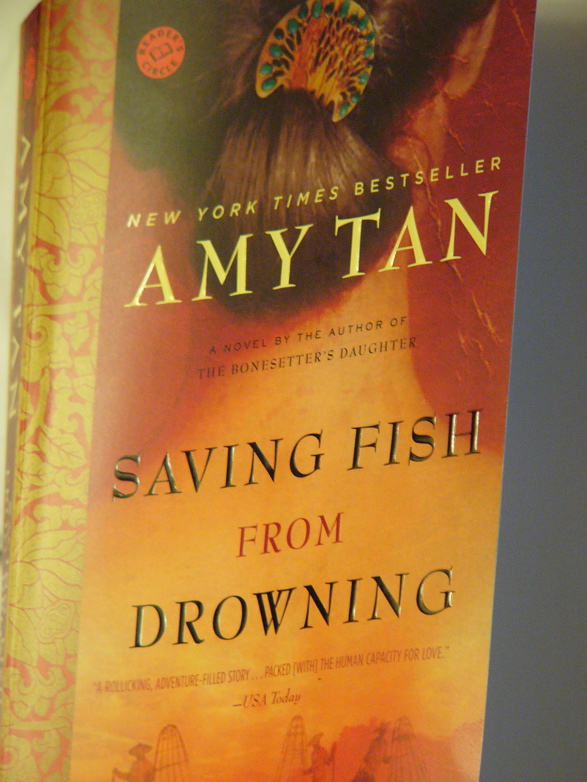
Amy Tan is always a rollicking good read. For one thing, her books focus on that big favorite theme of mine, cross cultural communication – and miscommunication. She has a keen eye, rapier sharp wit, and filets her characters neatly, but humanely.
Saving Fish from Drowning is about a tour group en route to China and Burma, told from the point of view of the tour group organizer – an art and museum patron who dies before the trip begins! She is with the group, however, in spirit – able to see everything, know what people are thinking, but not to intervene. Without her guidance, the group goes desperately awry – and it is funny, but also very very scary. You know something BAD is going to happen, and it isn’t going to be pretty.
Tan writes some great prose. Here is an excerpt about the main character, as she looks back over her life:
“But I ask myself now – was there ever a true great love? Anyone who became the object of my obsession and not simply my affections? I honestly don’t think so. In part, this was my fault. It was my nature, I suppose. I could not let myself become that unmindful. Isn’t that what love is – losing your mind? You don’t care what people think. You don’t see your beloved’s faults, the slight stinginess, the bit of carelessness, the occasional streak of meanness. You don’t mind that he is beneath you socially, educationally, financially and morally – that’t the worst I think, deficient morals.
“I always minded. I was always cautious of what could go wrong, and what was already “not ideal.” I paid attention to the divorce rates. I ask you this: What’s the chance of finding a lasting marriage? Twenty percent? Ten? Did I know any woman who excaped from having her heart crushed like a recyclable can? Not a one. From what I have observed, when the anesthesia of love wears off, there is always the pain of consequences. You don’t have to be stupid to marry the wrong man.”
Whew! Amy! You said a mouthful!
A Visit to Williams Sonoma
I am visiting Williams Sonoma looking for the elusive white truffel butter required in The Equalizer’s recipe for Pumpkin Risotto. Can’t find the white truffel butter, but I did find some very lovely things – things we can get a lot cheaper, maybe even better, in the Middle East.
First is what they call a Greek pepper grinder, for a mere $79.

I bought the same, beautiful pepper grinder in the Diraa souk in Riyadh for $10 – and I believe it came from Turkey. It grinds peppercorns beautifully and stores the grindings airtight in the bottom until you need to use them.
Then these two pots. The first one is $200, and the second ranges from the low $200’s to $320, depending on the size . . .


they are beautiful, hammered copper from Italy . . .and we bought beautiful, heavier pots with beautiful handles in Damascus for a fraction of what these cost. If I had to choose, I would choose Damascus any day for shopping, over Dubai. 😉
Is there anyplace in Kuwait where you can get copper pots re-tinned? Or has that, too, gone by the wayside?
(And a BIG shout-out to Joan of Arc who patiently taught me how to link pretty)
Dubai 2010
My niece (Little Diamond aka adiamondinsunlight) doesn’t have her own blog yet. Until she does, I get to share all the information she shares with me.
This one is from New Left Review and is a fascinating article about the Dubai of the Future, a playground for the rich and idle, with unimaginable luxuries – but at what cost?
“Trending” toward Democrat
I love to watch language change and evolve, and it’s happening all the time. Today on NPR the announcer was talking about the upcoming mid-term elections in the US in November, and he was talking about states that are “trending towards Democrats”. I haven’t heard “trend” used as a verb before, but why not? I “google”, and been googled. I blog! All kinds of words are transitioning from noun to verb. I wonder if the same thing is happening in Arabic?
Amazing Race Kuwait: Dying Laughing
The funniest part of all is watching the contestants on the Amazing Race Kuwait trying to find Souk Soulabiyya. The funniest thing of all is watching them look at the maps and say “it isn’t on here!” No kidding!
The coolest thing of all the the gracious people who help, even dropping their own errands to lead them in the right direction.
And the most amazing to me, is that one member of each team had to climb up the outside of the Kuwaiti water towers – holy smokes. Even those who had a terrible fear of heights were determined to make it. I was in awe of how they faced their fears and prevailed.
But oh, watching them try to navigate the roads – dying laughing! If you don’t laugh, you’re gonna cry.
Thought I had published this last night, but found it this morning in drafts. Drat!
Some Things Just Don’t Translate
Three sets of eyes looked at me with disbelief, mixed with horror. I was explaining to my three students that I was having a group of American university students at my house for Halloween. We would all welcome the Hallowe’en trick-or-treaters as they came around in our compound. We expected hundreds – children from far and wide throughout the city came to trick-or-treat where the westerners lived. Even if the children didn’t “get” Halloween, they liked the costumes and the candy.
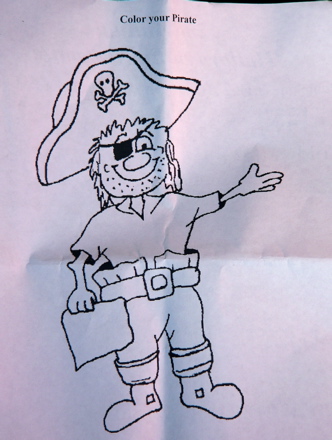
It wasn’t the trick-or-treating my students didn’t get. It was that I had said we would all be dressed as pirates. We would have patches and capes and bandannas, some would have hooks, others would have swords. We would say things like “Ay matey!” and “Aaargh” and “Pieces of eight.”
They didn’t know what pirates were. They had never seen Peter Pan with Captain Hook, they hadn’t seen Johnny Depp in his fey performance as Captain Jack Sparrow in Pirates of the Caribbean. I started off with enthusiasm.
“Oh, pirates lived a long time ago. Hmmm, no actually, there are still pirates today. They sail old ships, and then they stop and capture ships on the high seas and like hold people for ransom. They sing songs and drink grog and some of them have peg legs, or hooks for hands . . .” even I could see that this was not going well.

“No no!” one cried. “Why would you want to be a pirate?”
“hmmm, well you’re right, REAL pirates weren’t very nice, I guess. They raped and stole from others, but for some reason we just dress up and PRETEND to be pirates. . .”
Now, it’s even starting to sound lame to me.
“There were some good pirates, too. . .”
“What did they do, khalti?”
(I am totally blank. I have an image of a deer in the headlights; the deer is me with no where to run.)
I don’t know. Were there any good pirates? Why do we think pirates are so much fun? Is it the costumes? As kids we would make each other walk the plank, and swashbuckle around, it was a good break from cowboys and Indians. Seeing it through my students’ eyes, though, it just wasn’t working.
Some things just don’t translate.
“We Don’t Judge You By Our Standards”
It’s never a good thing when a sentence starts with “we don’t judge you by our standards.” You know that whatever comes next isn’t going to be good.
It was our favorite time during Arabic studies. We were sitting around in the majlis room, sprawled against the cushions. We had finished all the lessons of the day, practiced new verbs, done all the dialogues to death, and we had a few minutes left before classes ended. Our teachers were really special women, and during these last minutes it was always question time, when we could ask them anything, anything, and they would answer, even if sometimes to laugh and tell us it was none of our business. We had so many questions!
“When we go downtown, ” I had started, “we have a good time. We laugh and we talk and chat among ourselves as we shop. But when we see local women shopping, we see you in groups, but you aren’t laughing or chatting. Is there some prohibition against it?”
There was a long silence. I really liked this teacher, and she really liked me. I knew, as the silence dragged on, she was seeking for a way to be kind. Finally, she spoke.
“You know, we understand you have other ways, not our ways. We don’t judge you by our standards. . .” and she gave a little sigh.
“In our culture, for a woman to laugh out loud in public . . .it would be taken as lack of self control. People could criticize. It could keep a young woman from making a good marriage.”
You could hear the collective gasp. Although it was said with great kindness, it was a serious blow.
When you are first learning a new language, and a new culture, it can be intimidating, but mostly, if it is well taught, it is fun, exciting, and stimulating to be mastering a new skill. The women at this language center went to a lot of trouble to insure that we were entertained while we were learning. They taught us Ramadan customs, they prepared an Iftar supper for us, they brought in all their jewelry and produced a bride. They henna’d our hands, and poured us tiny cups of qa’wa and chai with milk and spices. They took us on field trips. They treated us like sisters, or daughters. They were so kind, and babied us along as we struggled with the new language.
I give this teacher a lot of credit. She could have finessed the question, but she didn’t. She considered her answer, she knew it could offend us. And she chose to answer us honestly, trusting we would deal with it.
I had a physical reaction. I wanted so badly to “get” Arabic, to understand all the customs . . . but to give up laughter? I went through all the stages of grief, staying longest with denial and anger. I thought of all the times I headed for the souks in a gaggle of laughing women, and I felt ignorant, and ashamed, and also angry. It was a real struggle for me, a blow to my pride, an embarrassment. I felt sick to my stomach, and stayed depressed for a couple weeks. I didn’t want to change. I didn’t want to have to give up laughter.
And then one day, somehow, it stopped mattering so much. Time did its work. Life went on. The teacher kept teaching, we kept learning. I no longer go downtown in groups of more than three, and we keep our voices down. We’re still our loud, noisy selves most of the time, among ourselves, but in public – we don’t want to be thought of as women who lack self-control.
Hiking with Robin Pope in Zambia (One)
Today it is rainy and cold, and I have “miles to go before I sleep.” In my mind, I fly back to a happier time, and today I choose to be back in Zambia.
We fell in love with Zambia our first time there. We flew in to Lusaka, and our bags didn’t make it. We called frantically from the Holiday Inn and got a different answer every time we called. First we heard that our bags would be in on a later flight that day – which was what we wanted to hear, as we were leaving early the next morning. Later, the harried British Air office told us with clear annoyance in her voice that there were no more flights from Johannesburg, and our bags would catch up with us . . . Catch up with us? We were off to the bush for two weeks!
I was in a skirt. It was cold in the bush, and we had nothing with us but our camera equipment (Thank God!) and a change of underwear. We looked at each other and said “Holy smokes. We’re screwed. What do we do now?”
It was five o’clock at night. We grabbed a taxi and asked him to take us to a place with stores with clothing. He took us to a small strip mall, and waited for us while we ran in and searched desperately for socks, pants, sweatshirts and spare underwear. It was . . .fun! Almost everything we found was from China, but we managed to find it all pretty much in green. The underwear was really cheap stuff and wouldn’t wear well, but it just had to last until our bags caught up with us. Part of what was fun was that we had read Lusaka was dangerous at night, but at least here in the shops area there seemed to be plenty of security and the shops took Visa cards. Within an hour, we had jeans, sweatshirts, socks and enough to live on until the bags came.
At five the next morning we headed back to the airport and out to Nkwali, the first stop in the Robin Pope series of camps. Our large cabin at Nkwali overlooked a huge pod of hippos, and all night we could hear them talking to one another, and occasionally having a huge, very noisy family argument. The food at Nkwali was delicious, and we loved getting to see the kitchen and meet the people who prepared the foods. They grow a lot of their own produce, and have agreements with local farmers to supply much of what they cook up for the guests.
At Nkwali, they provided beautiful linen bathrobes for us to wear after our showers in our enclosed outdoor shower, and kikoy, a multi-purpose shawl/wrap thing in wonderful colors that you can use as headgear, neck gear, wet down to keep cool in the heat of the afternoon, as a wrap – they are both big – maybe 150 cm long by 110 cm wide – and lightweight, very flexible.
Nkwali is such a cool camp. Every detail is managed. The camp manager visited us and assured us they were in contact with British Air, and our bags would reach us the next day. Relieved of that worry, we went out on our first game drive, saw leopard and lion and a million gorgeous birds, and had drinks at sundown overlooking a field full of wildlife action. After dinner, we went to bed to the sound of the soft grunting sounds of the hippo. Paradise, here on earth.

Mary Doria Russell Duo
Some of the very best books on cross-cultural miscommunications are written in science fiction, and by some of the greatest names, the oldies but goodies. Now I know by naming a couple, I am going to offend some of those out there by leaving out your favorites – please feel free to jump in (comments section) and make additonal recommendations.
One of the great classics is Robert Heinlein’s Stranger in a Strange Land. It is a hilarious book, with occasional moments of pathos, but an easy read, and an unforgettable book.
Ursula K. LeGuin’s The Left Hand of Darkness is another primer in the kinds of misunderstandings that can come with the best of intentions. She also deals with the changes that living in an alien culture makes in the visitor, as well as the visited.
More recently written is a duo by Mary Doria Russell. Her hero, Father Emilio Sandoz, is a Jesuit priest. Sent as an intergalactic evangelist, he runs into some serious problems. These are very strong book, adult books with adult topics and sexual content, not for those who want an easy read and feel good at the end. It is about spiritual testing, as well as survival. There are parts of these two books where you will laugh out loud, and parts where you will be so depressed you don’t want to continue reading. At the same time, they are deeply spiritual.
The saddest, funniest, most horrible part of all is that the worst things happen as a result of the very best intentions. Russel’s characters try to get into one another’s way of thinking – and fail miserably. The results are horrorific.
And yet . . . in the end, there is redemption. These are books that get you thinking, and keep you thinking for a long time. They stretch your mind, opening topics you never dreamed existed.
You can read either of these two books, The Sparrow and The Children of God as a stand-alone read, or you can read them together. I personally found The Children of God the better book, but because I find Russell so addictive, so insightful, I recommend them both. They are available from Amazon at around $10/each in paperback.
Recent Comments
intlxpatr on Shampoo Ginger tigerbutterya0c5ff1d… on Shampoo Ginger intlxpatr on British Soldier Kidnapped, Esc… John on British Soldier Kidnapped, Esc… intlxpatr on British Soldier Kidnapped, Esc… Wikipedia Donate Button

Amazina


Early Voting in Florida


