Lamborghini Aventador: Qatari Royal’s £350k supercar towed in Knightsbridge
LLOOOLLLLL! Great story, thanks John Mueller!
Little cross cultural problem going on . . . no license? No registration? No problem, you know my uncle, right, the Amir of Qatar . . . LOL!
Batman wouldn’t stand for it: Police peer inside the garish car’s doors (Picture: SWNS)

It’s hard not to notice a bright purple Lamborghini with orange trim. So the driver of this £350,000 supercar was asking for trouble when he went for a spin without a front numberplate.
Police spotted the infringement and impounded the vehicle after its 24-year-old owner – thought to be a member of the Qatari royal family – was unable to produce evidence that he had a driving licence or insurance.
Crowds gathered as the 220mph Aventador was towed away in London’s Knightsbridge.

Arab playboys descend on the wealthy neighbourhood each summer in costly cars flown from home and often hit trouble for lacking the correct papers.
The mean machines are a draw for petrolheads but the roaring engines annoy residents.
Off we tow: The Lamborghini Aventador is loaded onto a truck (Picture: SWNS)
Dozens of onlookers gathered to photograph the scissor-doored supercar, which has been customised by a Japanese tuning company.
One fan said: ‘It is great when the wealthy foreign tourists come over to London every summer as you always see these amazing supercars.
‘The Lamborghini looked like something out of Tron, it was absolutely stunning.
‘Hopefully there was just some confusion over the correct paperwork and it will be back on the road
UPDATE:
First it was carted off on the back of a truck, then it faced the crusher, now glow-in-the dark Lamborghini is ticketed in Mayfair
- Police impounded £350k supercar after owner failed to produce documents
- But he was slapped with ticket just hours after retrieving it from police
- Purple Lamborghini Aventador customised to glow in the dark
- Owner believed to be Nasser Al-Thani, 24, of Qatar’s ruling family
PUBLISHED: 04:49 EST, 5 July 2013 | UPDATED: 14:32 EST, 5 July 2013
He was only a hair’s breadth away from seeing his beloved £350,000 supercar crushed to a pulp after it was seized by police for driving offences.
So you might think the owner of this glow-in-the-dark Lamborghini would be a bit more careful next time.
But within hours of retrieving his purple sports car from the Metropolitan Police, he found himself on the wrong side of the law again after being slapped with a parking ticket.
Americanah and Chimamanda Ngozi Adichie
Rushing from one meeting to another yesterday, I had just an hour – but during that hour, Terry Gross was interviewing one of my favorite authors, Chimamanda Ngozi Adichie, and Chimamanda Ngozi Adichie does GREAT interviews. She is funny, and educated and insightful; she can talk about painful topics and make you laugh and cry with her. That interview was a blessing on my day.
I started reading Chimamanda Ngozi Adichie when I was in Kuwait. A good friend approached me and asked me to form a book club. LOL. This is a friend I can’t say no to. Every introverted bone in my body was screaming “NO! NO!” and I smiled at her and said “Yes.”
God is good. He laughed when I said “yes” and through the book club, introduced me to authors I might never otherwise read. The club was made up of many nationalities, and we read books from everywhere, unforgettable books. We read Chimamanda Ngozi Adichie “Half of a Yellow Sun.” Once you read Chimamanda Ngozi Adichie, there is no going back. I wonder if I will be able to hold out on Americanah until it comes out in paperback?
This is from the National Public Radio website, so you can actually listen to the interview yourself, should you want to get to know this delightful author a little better.
‘Americanah’ Author Explains ‘Learning’ To Be Black In The U.S.

When the novelist Chimamanda Ngozi Adichie was growing up in Nigeria she was not used to being identified by the color of her skin. That changed when she arrived in the United States for college. As a black African in America, Adichie was suddenly confronted with what it meant to be a person of color in the United States. Race as an idea became something that she had to navigate and learn.
The learning process took some time and was episodic. Adichie recalls, for example, an undergraduate class in which the subject of watermelon came up. A student had said something about watermelon to an African-American classmate, who was offended by the comment.
“I remember sitting there thinking, ‘But what’s so bad about watermelons? Because I quite like watermelons,’ ” Adichie tells Fresh Air‘s Terry Gross.
She felt that her African-American classmate was annoyed with her because Adichie didn’t share her anger — but she didn’t have the context to understand why. The history of the trans-Atlantic slave trade was not taught to students in Nigeria. Adichie had yet to learn fully about the history of slavery — and its continuing reverberations — in the U.S.
“Race is such a strange construct,” says Adichie, “because you have to learn what it means to be black in America. So you have to learn that watermelon is supposed to be offensive.”
Adichie is a MacArthur Fellowship winner and author of the novels Purple Hibiscusand Half of A Yellow Sun. Her new novel, Americanah, explores this question of what it means to be black in the U.S., and tells the story of a young Nigerian couple, one of whom leaves for England and the other of whom leaves for America.
The title, she says, is a Nigerian word for those who have been to the U.S. and return with American affectations.
“It’s often used,” she says, “in the context of a kind of gentle mockery.”
St. John the Baptist and the Holy Spirit

This entry is a totally Here There and Everywhere moment; the impetus of which is today’s reading from Luke about the birth of John the Baptist, or as he is known in the Moslem world, the Prophet Yahya. We visited his tomb in Damascus; at our church in Kuwait on the Feast of the Nativity of St. John the Baptist, one of the readings was from the Quran. I love it when our worlds intersect and we can discover what we can learn from one another, to the advantage of all.
I also love it that each meditation from Forward Day by Day lists at the bottom the area of the world we are to include in our daily prayers. I love praying for Nigeria. I have old friends from my Kuwait church living there, and also a neighbor from Doha, a sweet book-club friend who lived across the street, who now lives in Lagos.
When I pray for Nigeria, I see the tiny flame of the holy spirit entering into each heart, and then I see God blowing lightly on each person, so that the flame grows. The flame helps them reach out and encourage one another, and others see, and are attracted, and thus the holy spirit spreads. I imagine it covering Nigeria, all believers, seeing one another as fellow believers, not as Ibo or Christian or village or . . . you get the drill. I pray that the light spreads through all Africa, and tiny embers spread out to join, and then further, so that sparks unite all over the world.
I pray, too, for Damascus, and for Syria, and all our friends there; I think of all the wonderful adventures and times we have shared in Syria, and I know and trust with all my heart that our good and loving God can bring good out of this horror. I pray for it to happen sooner rather than to allow this suffering to endure.
. . . And that was just ONE synapse connecting early on a Monday morning, LOL. Have a great day. 🙂
MONDAY, June 24 The Nativity of Saint John the Baptist
Luke 1:57-80.
On the eighth day they came to circumcise the child, and they were going to name him Zechariah after his father. But his mother said, “No; he is to be called John.”
Most of us don’t receive such pointed visions that show us the fork in the road—“this way, not that way”—but all of us are constantly cultivating either a disposition of “my will be done” or of “thy will be done” that will suddenly show up in those crossroads moments. It may appear like divine intervention, but it is long-term divine cultivation.
Living into a larger pattern is both exciting and terrifying, because it means letting go of convention and stepping into new territory. Like Elizabeth and Zechariah, we do not step forward blind but with a promise: God remembers, and God is gracious.
Countdown
“We’ve started the count-down calendar,” said my beautiful and very pregnant daughter-in-law, “We have so many things we want to get done before the baby comes.”
We were gathered at one of our favorite casual lunch places, a place where we could eat well and our 3 year old could be both free to roam a little, and safe to roam, while the grown-ups talked.
“We’ve started, too,” I smiled at her, “I need to finish up her baby quilt, and two quilts for the homeless project I have due in September. And of course, we will be out of the loop the last two weeks before she is born, so I need to keep motivated now.” I know she will call on me once the new baby is here; I am the back-up, the “can you fix dinner / wash the dishes / hold the baby while I shower / clean up the baby spit / run to the grocery store/ feed the cats” person. I love it. It’s why we moved here, to be here when they need us, when they need the help. Being close to family, being there to help when they need the help – this is one of the great lessons we learned from our friends in Amman, in Kuwait, in Doha, in Tunis.
We also have an Alaska adventure in store, planned before any of us knew the new baby was en route. It’s not Africa, but we aren’t up for another of those 17 hour rides from Atlanta to Johannesburg this year. Alaska will be fun, a sentimental journey back to my origins for me, and a whole new environment for AdventureMan.
“We’ll also have the school break to cover,” beautiful D-I-L added, “but I know there is going to be a cousin’s camp; I just don’t know when it is going to be.”
Cousins camp – oh what fun. All the little like-aged cousins get together for a week of hell-bent-for-leather activities, from water parks to fire departments to scavenger hunts, they keep those little rascals so busy that they just fall into bed at night. It’s all good.
“I know it’s all going to fall into place,” she sighed, smiling at our son, “but we need that calendar to keep us on track.”
Yeh. Us too!
And The Mountains Echoed by Khaled Hosseini
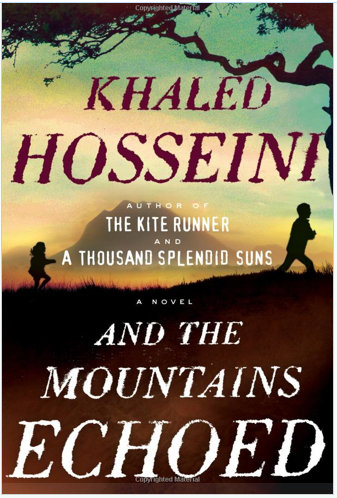
I danced when I saw the Amazon box; rarely do I buy hardcover (hurts too much when they fall over if I fall asleep reading, too bulky to carry on planes) but this one I was on the waiting list for, mail it as soon as it is published! Khaled Housseini, author of Kite Runner and A Thousand Splendid Suns has a new runaway best-seller; thanks to him I’ve just spent three days in Afghanistan, Paris and Los Angeles.
As the book opens, I am big brother to a baby sister whose Mom died in childbirth, living in a remote village in Afghanistan. Life is tough, but through the eyes of these children, life is idyllic, even though food is scarce and winters are cold. We have a huge oak tree with a swing, we play with the other children, and we have each other. Our father’s new wife is kind enough, but is busy with her own children, and the drudgery of cooking, cleaning and making do in a very small, poor Afghan village.
Later, I am Pari, living in Paris with an alcoholic, self-absorbed mother, making a life for myself, but always with a nagging feeling of something just outside my peripheral vision, another life . . .
The tale is told through the eyes of many, and on the way to the end of the tale we meet a wide spectrum of humanity, suffer the ills of war, callousness and unintended cruelties. We find that the man with superficial charm also saves and changes the lives of many, we find a doctor who finds fulfillment serving in the poorly resourced hospitals of Afghanistan, and we feel the agonies of a dutiful daughter watching her father fade into the world of Alzheimer’s.
It’s a wonderful, wild ride, richly textured, and when it finishes, you are not ready for it to end.
Prohibited For Travel in Kuwait
LOL, the have you been to the web page of all the items that are banned for traveling in and out of Kuwait? It’s all in Arabic, but you can understand the photos.
My last move to Kuwait, I was allowed several hundred pounds to take on the airplane. I packed an entire set of flatware, and all my good kitchen knives, and lots of scissors. . . like, who can live without scissors???
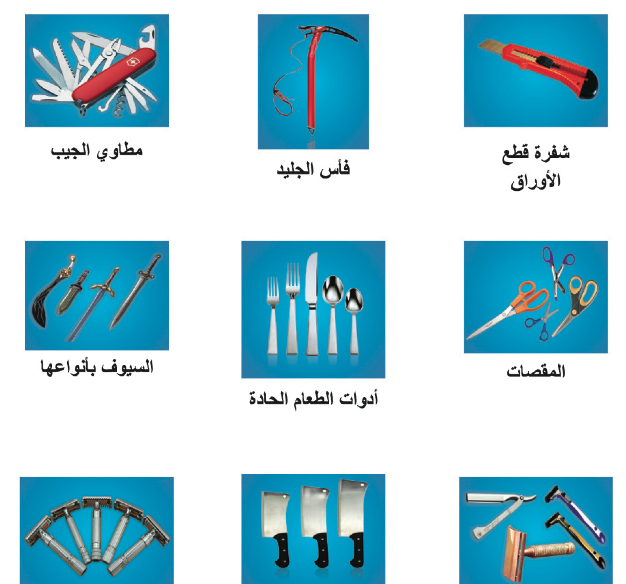
Honest Judge, so sorry, I had NO idea! No one asked me if I was carrying dangerous flatware in my baggage!
What Are Kuwait Traffic Laws?
You all know me – I am a law and order kind of gal. I like order, I like laws, especially those voted on by the people. I like laws which can be enforced, and are enforced, equally, for all people equally in the country. Oh? I did? I said EQUALLY twice?
We are all equal before the law.
Now here is the tricky part. Have you ever seen a listing of traffic laws in Kuwait? Can you find a listing of laws, violations, and their charges? When we apply for driver’s licenses in almost any country, we get a little booklet to memorize, with the laws written inside it. The laws are clear. Clear laws are enforceable.
I’ve looked at the MOI website. I see something that looks like it might be a traffic code in Arabic. I have looked everywhere; I cannot find one in English. I find no reference to any handbooks for people applying for their driver’s license.
How can you enforce a law if the law is not published? Is there a code somewhere listing violations and fines? I published one many years ago, something that all the expats were sending around as ‘the new Kuwait traffic rules’ but IF it was, there was never anything in the paper about it to confirm its validity.

If you are going to have a major campaign to enforce traffic codes, you might want to publish the laws . . . in all major languages use today in Kuwait.
From the Kuwait Times:
Ali vows to rid traffic ‘disease’
Interior Ministry Assistant Undersecretary Maj Gen Abdulfattah Al-Ali
KUWAIT: Interior Ministry Assistant Undersecretary Maj Gen Abdulfattah Al-Ali stressed that all traffic violation-related deportations are in accordance with the law. Speaking at a press conference at the Kuwait Journalists Association (KJA) headquarters, Ali said that deporting people for traffic violations was also adopted by the US and other countries worldwide. “The problem is that we were very tolerant with violators and this does not mean that law violation is a right for motorists,” he underlined, urging all human rights organizations who have criticized Kuwait’s traffic police to examine human rights in their respective countries before talking about Kuwait.
“We have filed over 70,000 traffic citations including 43,000 serious ones such as running red lights, driving under the influence of alcohol, driving on the wrong side and many others,” he elaborated, pointing out that those already deported did not want to respect the traffic laws they had repeatedly violated. Ali added that the results of studies of traffic problems revealed many and that once one problem was solved, another emerged immediately.
“We have various problems… including the fact that motorists speak many languages and dialects which requires a large number of specialists to develop their traffic awareness,” he explained, noting that the traffic remedy strategy started by diagnosing the “disease” by studying random “specimens” at different times of the day at places with heavy traffic flows such as Jleeb Al-Shuyoukh, Shuwaikh Industrial Area, Amman Street, Bnaid Al-Gar, Khaitan, Farwaniya and Fahaheel.
“The specimens showed some major problems such as domestic drivers using private vehicles as taxis, taxi and large vehicle drivers who do not hold general driver’s licenses and people driving without licenses at all,” he said, adding that this called for strict law enforcement.
“Traffic in Kuwait is like an old sick man who once treated for one aliment develops another,” he noted, adding that 18 traffic inspection teams dressed in civilian clothes had been formed and deployed in various places. “Fortunately, traffic police only file 100 daily citations in Jleeb compared to 1,000-1,500 in the past”, he concluded.
The Secret Lives of Baba Segi’s Wives by Lola Shoneyin

I don’t know what it is about summer reading, but now and then I go on a theme-fest; a couple years ago it was Nigerian literature, and, once hooked . . . when my friend who is now living in Lagos recommended The Secret Lives of Baba Segi’s Wives, I ordered it right away, thinking from the title it would be maybe light and sweet and humorous.
From the start, that assumption was blown. This is a direct and edgy Nigeria, darker, rougher and full of family secrets, domestic details and messy relationships.
It is a very Nigerian book – this is a good thing. There are cultural things that are not explained, but it all ends up making sense in the end. There are foods I have never heard of – ekuro with shrimp sauce, asun. There is a rudeness in the way they speak to one another, (“Is this a parking lot?” “Do I look like a parking attendant?”), a crudeness in the constant need to carry small bills for bribes, even on public streets. People speak their minds, with little or no mitigation, depending on the status of the person and their own personal goals and agendas.
At the weekly meeting of wives, the senior wife, Iya Segi, doles out rations of household supplies to the other wives, including chocolate powder and hair conditioner . . . and as the senior wives complain about the new wife thrown in their midst, she says:
“You will trip over in your hate if you are not careful, woman. Your mouth discharges words like diarrhea. Let Bolanle draw on every skill she learned in her university! Let her employ every sparkle of youth! Let her use her fist-full breasts. Listen to me, this is not a world she knows. When she doesn’t find what she came looking for, she will go back to wherever she came from.”
There is a whole other world in that one paragraph – a whole other way of seeing life and expressing thoughts. The culture may be alien, but I thoroughly enjoyed being a tiny mouse in the corner at that meeting – and others – and inside the minds of the wives, of Baba Segi, of the driver – so many good stories, so many points of view, and I learned things from behind those high compound walls and closed and locked doors that I might never otherwise have learned. Alien as it was, for me, this was a very good book, new ways of looking at things, and a great recommendation from my friend in Lagos.
Ramadan in Kuwait Starts July 9


Ramadan on July 9
KUWAIT: The fasting month of Ramadan is forecast to begin on July 9 on the basis of astronomical calculations, said astronomer Adel Al-Saadoun yesterday. Saadoun told KUNA the crescent will be visible on July 8 at 10:14 am and disappear some four minutes after sunset.
He added the sighting of the crescent would not be possible at any spot throughout the Muslim world, but would be seen through telescope in southern America. However on July 9, it would be visible in some countries including Kuwait.
Ramadan is a yearly month of fasting observed by millions of Muslims throughout the world. Kuwaitis observe and celebrate its advent and Eid Al-Fitr marking its end. People fast from dawn to dusk, and public eating, drinking or smoking is punishable by law.
My very first year blogging, I wrote a post which has become one of my all time statistical highlights, Ramadan for Non-Muslims. It was a rich time for blogging in Kuwait, lots of interchange of ideas. If you want to know more about Ramadan, be sure to read the comments by clicking on ‘comments’ at the end of the article.
One in Five Qataris Needs Mental Health Assistance
A Qatar Mental Health survey shows 1 in 5 Qataris suffering from a mental ailment, commonly depression or schizophrenia, with fewer than 1 in 4 of those afflicted receiving treatment, due to fears of social stigma . . . from the Gulf Times, Qatar.
By Noimot Olayiwola/Staff Reporter
A Mental Health Strategy, which is awaiting the endorsement of the Supreme Council of Health’s executive committee, is expected to be completed this year.
It is being envisaged that the Mental Health Strategy will lead to a reduction in the incidence and severity of mental illness in Qatar, besides increasing the proportion of people with emerging or established mental illness who are able to access the right care at the right time, with a focus on early intervention.
The strategy will also provide the opportunity to increase the ability of people with mental illness to participate in education, employment and training, enhance public education and awareness and thereby reduce the stigma associated with mental ailment, reduce the prevalence of risk factors that contribute to the onset of mental illness and prevent longer-term recovery, and establish Qatar as a centre of academic excellence in mental health research and education.
Speaking on the strategy at an event held recently, Hamad Medical Corporation’s (HMC) General Adult Psychiatry senior consultant and Weill Cornell Medical College in Qatar assistant professor Dr Suhaila Ghuloum said the mental health initiative contributes to the Human Development pillar of Qatar National Vision 2030, which recognises that a healthy mind is as important as a healthy body.
She said a study has shown that around 20% of the country’s population suffers from a form of mental disorder and less than 25% of the people with mental ailments actually receive the care that they need.
Stating that the actual prevalence rate of mental health ailments would soon be published, Dr Ghuloum added that around 20% and 18% of the population also suffered from depression and anxiety disorder, respectively.
The Psychiatry Department is the only facility providing primary, secondary and tertiary care for people with mental illness in Qatar. “We conducted the study on adult patients visiting the primary healthcare centres and found that one in five people here will experience a mental disorder with conditions such as schizophrenia and depression on top of the list,” she said.
According to her, schizophrenia, depression and substance abuse are three of the top five causes of disabilities in Qatar. “A condition like schizophrenia can prevent a child from attending school,” she said.
Dr Ghuloum said social stigma, which is a combination of ignorance and discrimination, is the biggest challenge facing people with mental illness in Qatar.
“Through interaction with some of our patients, we realised that many had delayed getting medical help due to fear of stigma and the negative attitudes of some of the patients themselves, their family members as well as physicians,” she noted.
The official called for comprehensive care for people with mental illness, saying the Psychiatry Department has already started a system that is all encompassing and comprehensive – through primary care – besides providing treatment for some patients on an in-patient basis, who are co-located in general hospitals, as well as community-based services being offered to those in need of long-term care.
“The transformation of Qatar’s mental health services focuses on early intervention and recovery, and will give people a range of options on how to access mental healthcare tailored to their needs. Whether it is in a primary care, community-based or a hospital setting, people with mental health issues will have access to the right care, at the right time and in the right place,” she asserted.
Recent Comments
ExpatAlien on What Country am I Living … intlxpatr on Yellowstone: Old Faithful to C… Michelle on Yellowstone: Old Faithful to C… Cathy on No Grown-Ups in Charge intlxpatr on Waiting for Snow Wikipedia Donate Button

Amazina


Early Voting in Florida


 Here There and Everywhere