The Tiger’s Wife by Tea Obreht
The Tiger’s Wife was the perfect book to get me from Pensacola to Seattle, and through the Atlanta airport, full of bustle on a Sunday, packed flights, no quiet, no privacy. Thank God for a good, engrossing book, that takes you totally out of where you are to a world where things are not always what they seem.

The book is set in an unnamed country in East Europe which has just come out of a war, and the main character and her best friend are en route across a border which did not exist before the war, on an aid mission to immunize children who were once neighbors, and are now in a different country.
The primary relationship in the book is the bond between a young girl and her grandfather, and the stories he tells her as they walk up to the zoo, the Jungle Book he reads to her as they visit the animals, and the stories she finds for herself as she participates in the post-war rebuilding. It is a fascinating book because what she is writing about is not always what she is really writing about; the stories and legends and experiences are metaphors for another reality and a life lesson.
I don’t want you to think that this is one of the mindless airport books I sometimes tell you about. If it were, I would tell you “this is not great literature; this is an airport read.” Not this book. This book is literature. This book has meaning, and events you will think about and talk over with other readers long after you have finished the book.
In the back of The Tiger’s Wife is an interview in which one of my favorite new authors, Jennifer Egan (A Visit From the Good Squad) interviews Tea Obreht about her writing process, her life, her vision, etc. Fascinating reading, too, and also reader’s guide questions help you see things you might need to see and might otherwise miss.
Dubai Flash Mob – And I MIssed It!
Looks to me like maybe the Dubai Airport had a part in this . . . 🙂
My Life in France by Julia Child with Alex Prud’homme
I wish I had more self-discipline, and read more heavy weight books, but what I find is that when I read heavy non-fiction these days, it falls over when I fall asleep. Mostly, I read the New Yorker, or catch up with my news online, while listening to NPR.
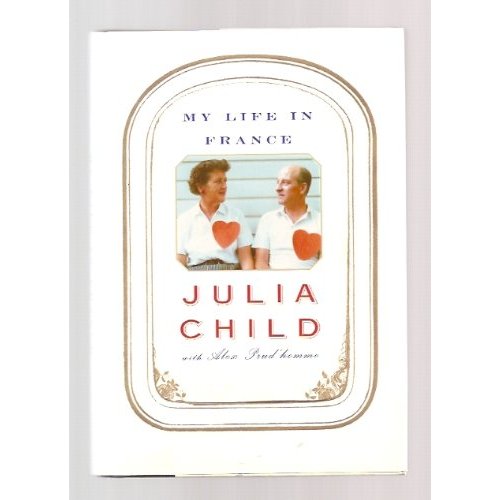
I don’t know how I got My Life in France, if I ordered it or if I bought it in B&N. I’ve had it for a while. We’ve always loved Julia Child; her programs were a hoot, and she was an accomplished woman who never took herself too seriously. I will never forget one time I saw her on a Martha Stewart Christmas Special; they were doing a tall Croquembouche, and at one point, Julia was not throwing on the caramelized sugar strings the way Martha wanted her to and she grabbed the little thrower-thing out of Julia’s hand to show her how. I gasped! That is like grabbing a spoon from the Queen of England, no! No! You can’t grab a spoon from Julia Childs! You can’t show Julia Childs how to do it, Martha, you BOW to Julia Childs!
Julia Childs, classy woman that she was, just watched Martha with fascination and never showed an ounce of annoyance.
The book is hilarious. While alive, she worked with her grandson, Alex Prud-homme, gathering correspondence – she was a copious letter writer, and people in those days kept their snail mail to refer back to, the way we keep e-mails. They sat in her sunny garden, and he would ask her a few questions, and off she would go, regaling him with stories of people, places, occasions, parties, and especially FOODS.
Julia Childs worked for the OSS in World War II, the forerunner to the CIA. Stationed in India, she met her husband, and after the war ended, they married. Stifled in her California life, and and Paul jumped at a chance to live overseas. Imagine – Paris! She had to adapt to a totally different way of life, totally different living space, a totally different way of shopping for food, and she had to learn to cook. Since she was in Paris, and because she is the woman she is, she signed up for cooking classes at the Cordon Bleu, where she worked hard to master the techniques to successfully produce the sauces and delicate flavors which makes French cuisine so delicious.
She also moves to Marseilles, to post-war Germany, and to Norway, and manages to produce two books, each of which took, literally, years to finalize, because of her attention to detail, and wanting to make sure that women using her books could understand exactly what to do, and when to do it.
This is a really fun book. I would have loved to know this adventurous, courageous woman, who meticulously tested every recipe for Mastering the Art of French Cooking and changed the lives of serious cooks in America. No, I have never cooked from her book. No, I don’t have her book. I have a Larousse Gastronomique, from which she worked to get the ‘true’ Frenchness of French cooking, but I don’t have any cook books by Julia. I have put out a hint, though, and I am hoping to get one for Christmas. 🙂 Not just for me – AdventureMan is making serious inroads into adventurous cooking. He has mastered blackened fish tacos, and seared tuna, woo hoooo! He is working on the ultimate cornbread. Just wait until I get him started on the quintessential French Onion Soup, or even – maybe – French bread!
“How Was Your Day?”
We were all standing in line, a very long line, at Pensacola’s Greek Festival at The Annunciation Greek Orthodox Church when my son asked how our day was. (AdventureMan and the Happy Baby were off exploring.)
“Oh, it was GREAT!” I enthused. “Time passes so much faster when you’re retired and you spend your time having fun!”
“So what did you do?” he asked.
“Oh! We went to water aerobics, and stopped by the bank to cash a check so we would have money for the weekend. Then your Dad vacuumed so I can mop the floors tomorrow, while I cleaned upstairs, dusted, did the bathrooms, etc. At lunch we went to Chow Time, and drove down here to check out parking, and then I had a quilting meeting this afternoon, and then we met you!”
As I finished, their faces were somewhere between blank and confused . . . and I realized my idea of fun was a relative thing.
Here is what is fun. Fun is getting to CHOOSE when you vacuum or mop the floors, or wipe down the blinds, or clean the bathrooms. Fun is having the time to do it even on a weekday, not having to scramble on Sundays to get it all done, like we used to. Fun is not having gobs of money, but having enough that we can go to the bank and take some out when we need it for the weekend. Fun is meeting up with our son and his wife and our grandson because our schedule isn’t full with business meetings, and working late at the office. Fun is having groups we belong to because we really want to.
The truth is, in many ways, we are busier than we ever have been, but it is busy-ness of our own choosing.
Fun is even babysitting your grandson when he gets sick, just because you can, or helping carry him around a big festival, taking turns, so everyone gets to eat. It’s fun because we can, and because this is what we have chosen.
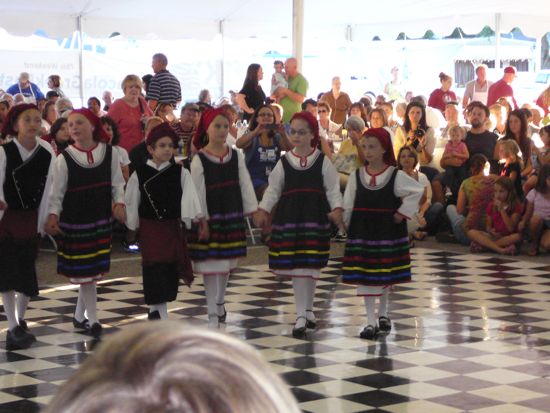
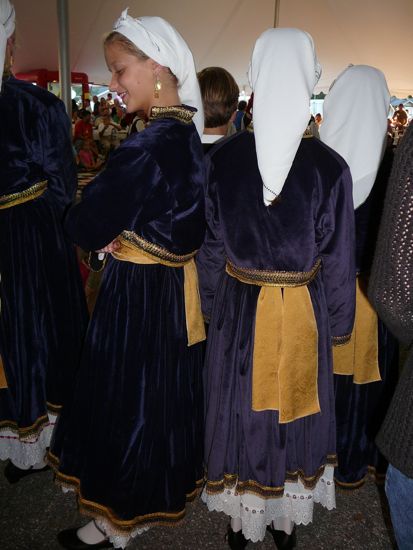
EnviroGirl and I picked up the dinners while AdventureMan and L&O Man scouted for seats in the tent so we could sit and eat dinner – moussaka, chicken, lamb, all kinds of specialities. There was also a very long dessert line – this festival is all about the food, and the music and dancing. I’ve taken some photos for you, but once we had the food, I didn’t get a chance to get any more photos. We only had to stand in line about thirty minutes; although there is a huge crowd, there is also a system, and they get people in and through the serving lines very efficiently.




Harlan Coben: Long Lost

This totally light weight mystery was just right for a beach read. It was light on motivation, light on character description, light on substance – it was a very fluffy mystery.
Long lost love calls and says “come to Paris; I need you” and doltish hero heads off. Confusing plotting calls for some irrational police interaction, some unknown bogeymen, and a truly thin story line.
You can read it in about an hour, though, or stretched out between beach activities, it might be good for a weekend. Not only lightweight, but forgettable.
Uyen Nichole Duong: Mimi and Her Mirror
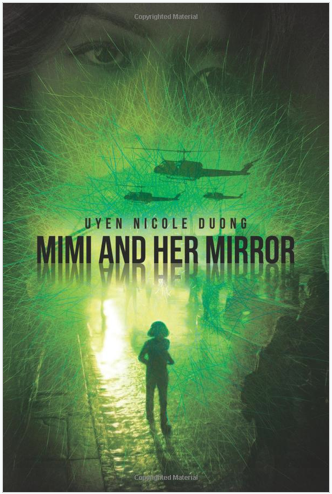
I must be on a streak. I really wanted to like this main character, Mi Chou (Mimi) but I found her obsessive, impulsive, overly emotional, self-absorbed and boastful. Her strongest relationship in the book is with her three way mirror. She specifically claims not to be narcissistic, and I think the story tells us otherwise.
The book is supposed to be fictional, and I truly hope some parts are fictional, but the strengths of the book lie in the ‘coming to America’ experience, which she captures well. She has a strong eye for ironies, hypocrisies and cultural differences. Her beginnings are vague, as is often the case when an immigrant goes through the shell-shock of being cut off from their own culture and grafted into another. I believe the author drew strongly on her own experiences to write this part of the book, and to me, it is the strongest part.
Mi Chau and her family leave Viet Nam during the great evacuation, and are given a spot on the planes that should have gone to someone else. Her entire family, mother, father, sister and brother all escape together, leaving behind a beloved grandmother who refuses to leave. Their entry into the US goes smoothly. They are the first wave of Vietnamese, the lucky ones. They have support, they have jobs. They have lost their own world, and they struggle. All this is part of the normal immigrant experience.
Neither is it abnormal that the children thrive through their struggles, and achieve excellent eduations. What is distracting to me in the book is how Mimi bases her self worth first on her academic excellence, and later in life on what she owns, and on her status. She has accomplished so much, she owns high-status symbols, but she is miserable and her life is empty.
Is it because of her experience as she evacuates out of Vietnam? Is it a character defect? There are no meaningful relationships in her life, she lives an empty and soulless existence, focusing on work and accomplishment and status symbols. Her major problem, as I see it, is an unwillingness to connect, to step out of herself and see through other’s eyes.
It’s an interesting book. There are, in my opinion, better books about the Vietnamese coming-to-America experience, and one is Anne Fadiman’s The Spirit Catches You and You Fall Down about immigrant Hmong, which is rich in cultural teachings, rich in relationships, and I still remember details more than ten years after I first read it. It is only available in Kindle format now, through Amazon, although they may have a used copy from time to time. Way better book than Mimi.

Kuwait House in Pensacola
We were exploring a new neighborhood to look at a house I’d seen. We loved the neighborhood. As we were driving, I said “Oh! Look! That’s what I’ve always loved!”
A new house is being built, and high up, it has a large covered terrace. I used to see something like it in Safety Harbor; a large screened, covered terrace.
“It’s a Kuwait house,” said AdventureMan. “Look, it has a dome. It just LOOKS like a Kuwait house.”
He’s right. I agree. This house, sitting on the Bayou, could be a house in Kuwait.

Terrorism at the Mall of America
I’ve been listening to a very painful report on National Public Radio, Under Suspicion at the Mall of America, a report about counter-terrorism measures being taken at the Mall of America, a huge mall, in Minnesota. One reason I’ve always wanted to go there is that I think I remember it having a huge, huge swim area, with lots of water slides and wave machines, and it just looked like a lot of fun. When I look at the mall map, I don’t see any pool area. You know malls – they change, and it’s been years. It was probably a liability issue.
So this is the ten year anniversary of 9/11, an event so awful most of us barely want to think about it. There are some things that just go so deep, you could get lost in the horror of it all. Officials are warning of the possibility of anniversary acts of terrorism, and Mall of America has always felt itself to be a vulnerable symbol, due to its name.
This is a lengthy report of “suspicious” incidents at Mall of America. They make me want to cry. You can read the report, but if you listen to the audio (you just click on the audio symbol) it is a richer, more detailed report. Listen – and weep.
Under Suspicion at the Mall of America
Below is an excerpt:
A Missing Cellphone
Yet look what happened when Najam Qureshi’s father came under suspicion at the Mall of America.
Najam Qureshi was born in Pakistan, but he’s been a U.S. citizen since he was a teenager. Today, he manages computer systems for a major company near Minneapolis. He and his family live on a pretty suburban street.
Najam Qureshi’s father came under suspicion at the Mall of America after leaving his cellphone in the food court.
In January 2007, an FBI agent showed up on his doorstep. It turned out that a few weeks before, Qureshi’s father had left his cellphone on a table in the Mall of America’s food court. When the mall’s counterterrorism unit saw the unattended phone, plus someone else’s cooler and stroller, guards cordoned off the area. Qureshi’s father wandered back, looking for his phone, and the RAM unit interrogated him and then reported him to the Bloomington police. In turn, the police reported the incident to the FBI. The documents we obtained show that the mall’s reports went to state and federal law enforcement, in roughly half the cases. The incident with Qureshi’s father led the FBI to want to question Qureshi himself, in his own home.
“He asked me if I knew anybody in Afghanistan. And that was kind of like, what?! And, then he asked me if I had any friends in Pakistan,” Qureshi says.
The FBI also asked him if he knew anybody that would try to hurt the U.S. government, according to Qureshi.
“My reaction in my mind, was, ‘How dare this guy in my house, come in and say this,’ ” he recalls.
But mall officials stand by their program of identifying suspicious people.
“You’re talking about a handful of people that are complaining, out of the 750 million plus that have been through these doors since 1992,” Bausch says. “And we apologize if it, you know, if it caused them any inconvenience, I mean we really do.”
“Unfortunately the world has changed,” says Bausch. “We assume you’d want your family and friends to be safe if they are in the building. And we simply noticed something that we didn’t think was right.”
A commander with the Bloomington police said these reports would be kept on file for decades. When Qureshi found out that the 11-page report reading “suspicious person” would be kept that long, his eyes filled with tears.
“It shattered an image of the U.S. that I had, fundamentally. I don’t know, especially when I saw some of these reports. It’s definitely bothersome, how small things can just, you know, trickle up that quickly, and all of a sudden you’re labeled. And once you’re labeled, you’re basically messed up, right?”
Sobering Reading on Wealth
It’s a long weekend, Labor Day weekend, and Pensacola awakes to rain-sodden streets and forecasts of a rain soggy three day weekend (bad for hotels and restaurants at the beach who hope for a sell-out Labor Day) and high surf from off-shore storms.
The reading for today from James is equally gloomy. I always think of “Insh’allah” when I read it, because it probably has an equivalent somewhere in the Quran, and my Muslim friends say “Insh’allah” (As God wills, or If God wills it) when they state a planned event.
While we are not rich, we have a large homeless population in Pensacola, sleeping out under the skies in hidden camps, scrounging for food, often with a dog, seeking handouts, seeking scraps. They are a constant reminder, to me, of how comfortable we are, and how comfort wars with the religious spirit. When we are too comfortable, we often fail to keep our focus on God, and are distracted by our toys and interests.
(I told you this would be gloomy.)
On the other hand, I wonder how spiritual I would be if I were hungry, worried about getting enough to eat, worried about my safety sleeping out in one of the camps. I wonder if their community looks after one another, or if it is a brutal and chaotic life. I wonder how you can keep your mind on things of the spirit when the search for basic necessities takes up a large part of your life.
James 4:13-5:6
13 Come now, you who say, ‘Today or tomorrow we will go to such and such a town and spend a year there, doing business and making money.’ 14Yet you do not even know what tomorrow will bring. What is your life? For you are a mist that appears for a little while and then vanishes. 15Instead you ought to say, ‘If the Lord wishes, we will live and do this or that.’ 16As it is, you boast in your arrogance; all such boasting is evil. 17Anyone, then, who knows the right thing to do and fails to do it, commits sin.
5Come now, you rich people, weep and wail for the miseries that are coming to you. 2Your riches have rotted, and your clothes are moth-eaten. 3Your gold and silver have rusted, and their rust will be evidence against you, and it will eat your flesh like fire. You have laid up treasure* for the last days. 4Listen! The wages of the labourers who mowed your fields, which you kept back by fraud, cry out, and the cries of the harvesters have reached the ears of the Lord of hosts.
5You have lived on the earth in luxury and in pleasure; you have fattened your hearts on a day of slaughter. 6You have condemned and murdered the righteous one, who does not resist you.
What Tiny Qatar Stands To Gain In Libya
Another fascinating discussion on National Public Radio, which covers subjects not covered by major national news sources.
Of course, anything having to do with Qatar is of interest to us, as we lived there for four years during a time of breathtaking and exhilarating change. It is astounding, and wonderful, to us, that Qatar defies the lethargy and inertia of the Gulf Countries, and has transformed itself into a major influence, in spite of its smaller size, and even smaller population of native Qataris. They have taken the huge influx of cash that came with the discovery of natural gas, and leveraged it into massive modernization, transformation, and influence on the international scene. It’s an amazing accomplishment.

ROBERT SIEGEL, host: The Libyan rebels received decisive air support from NATO. But there was another, less publicized, smaller-scale but equally remarkable foreign involvement in support of the uprising, the involvement of Qatar, Q-A-T-A-R.
Qatar is a peninsula, a little smaller than Connecticut. It juts north into the Persian Gulf. On the south, it borders Saudi Arabia. It is rich in oil and natural gas. Its population is only about 900,000. And while it is an Arab country, a monarchy ruled by the al-Thani family, the majority of its residents are non-Arabs, non-citizens from India and Pakistan. Qatar is also home to the TV channel Al Jazeera. It will host soccer’s World Cup and it was an important player in Libya.
Ibrahim Sharqieh is deputy director of the Brookings Doha Center. Doha is the capital of Qatar. And, Ibrahim, first, what did the Qataris do in support of the Libyan rebels?
Dr. IBRAHIM SHARQIEH: That Qataris’ support to the Libyan rebels has been politically, diplomatically and militarily. We had about five Qatari fighter jets. In Qatar, we had about the training of Libyan rebels. And Qatar also played an important role in developing an Arab League support through the military intervention in Libya, which this Arab League support actually has provided the umbrella for the NATO intervention and for the military intervention and provided the legitimacy that, for example, was missing in Iraq.
SIEGEL: Why? What are the motives behind Qatar’s involvement in Libya and some of its broader ambitions in the region?
SHARQIEH: Oh, there are many theories. The one that makes the most sense in my view is that Qatar is supporting the revolution for humanitarian reasons. And in addition to this, Qatar is working and supporting the revolution is they’re strictly with its vision for its role in the region and in the world.
SIEGEL: One thing we should note, though, in this year of the Arab Spring, one thing Qatar isn’t is it isn’t a democracy. It isn’t an elected parliamentary republic.
SHARQIEH: Well, there is very high level satisfaction of the people here in the country, of the political system and of its leadership. So there haven’t been – we haven’t seen any cause for change or any protests or any different types of complaints. So the system seems to work and we seem to have a stable country. That distance itself very far away from the protests that are happening in the region.
SIEGEL: How would you describe U.S.-Qatar relations?
SHARQIEH: We know it’s a strong relationship. Qatar hosts a military base, the largest in the region here, in Al Udeid. And this has been a sophisticated policy where Qatar managed to have a good relationship between the United States and other rivals in the region, like Iran. In order to protect yourself as a small, wealthy country, some sort of striking a balance is needed and Qatar has been more influential in this crisis and other regions in Benghazi.
Going back to Libya, when you go outside the offices of the National Transition Council, you see the American flag. You see the French flag. You see the British flag, and you see also the Qatari flag.
SIEGEL: Yes. Here’s a country that aspires to a very high profile in regional affairs, but it consists of fewer than a million people. And of them only about 350,000 I read are citizens. That doesn’t sound like a country that can really be a world player, you know? It just sounds too tiny.
SHARQIEH: Well, it is too tiny but, hey, we are living in an international system that you have the means to play it right and become an important player. Qatar has invested in the right political market by mediation. Qatar was successful in the mediating an agreement between the Yemeni government and the Houthi rebels. Prevented a civil war almost in Lebanon, brokered peace agreements between the Palestinians, Fatah and Hamas, and also intervened in the fall in Sudan.
So, Qatar has proved to me an important, major emerging power in the region and to play it right and position itself very well in the international scene.
SIEGEL: Well, Ibrahim Sharqieh, thank you very much for talking with us about Qatar.
SHARQIEH: My pleasure. Thank you for having me, Robert.
SIEGEL: Ibrahim Sharqieh is deputy director of the Brookings Doha Center. Doha is the capital city of Qatar.

Recent Comments
ExpatAlien on What Country am I Living … intlxpatr on Yellowstone: Old Faithful to C… Michelle on Yellowstone: Old Faithful to C… Cathy on No Grown-Ups in Charge intlxpatr on Waiting for Snow Wikipedia Donate Button

Amazina


Early Voting in Florida


 Here There and Everywhere