Kisses From Katie by Katie Davis

This is a photo from Katie’s blog: Kisses From Katie.
Do you believe in God? Do you believe that God believes in you? Then how do you live your life? Do you commit 100% to God and trust him to provide as you leave all your riches behind and follow him, serving the poorest of the poor, speaking for those who have no voices?
I will warn you, this unforgettable book has a lot of talk about God in it. A part of me watches in horror, wondering how long Katie can continue to serve God with all her heart, with all her soul, and with all her mind? How long she can work against all odds, trusting in God to lift her and provide for her and her children. This is a true story, an ongoing life. A part of me fears a terrible crash, but the greater part of me prays for Katie, and stands in awe of her courage and her commitment.
I don’t know who told me about Kisses for Katie, the blog. As soon as I started reading it, I was addicted.
Now for the shocker: Katie is only 23 years old. A year before she graduated from high school, she felt an undeniable call to do a 6 week mission teaching in a school in one of the poorest parts of Uganda. At the end of her six weeks, she couldn’t bear to leave. She returned, finished out her senior year in high school (HIGH SCHOOL!) but she never felt entirely ‘home,’ her heart was with the children of Uganda, the poorest of the poor.
Although her parents had her doubts, the strength and consistency of Katie’s belief that she was called to serve in Africa brought them around, and they agreed she could go work for a year in this small, poor village, before starting university. At eighteen, Katie was teaching, raising money for food, tuition and uniforms for over 100 children, and working to prepare all the meals, bathe all the children, and teach them about the love of Jesus.
When I saw, a month ago, that Katie had a book published, I had to buy it. Kisses from Katie is inspirational and unforgettable. Her story continues on her blog, but the book lays all the groundwork, the heartaches and the joys, the delights of her 13 adopted daughters, the horrors of the Ugandan bureaucracy, Katie’s dogged day-by-day fight to claim and save lives. She is a remarkable young woman, powered by an awesome God.
If Katie were going to burn out, I think it would have happened earlier, as she suffered terrible disappointments, and made truly amazing sacrifices to raise her girls, to be their “mommy” and to insure the educations of over a hundred children. With a growing foundation, Amazina, and a growing group of contributors, she carries on, and the miracle of this book is that she doesn’t seem to sense the amazing woman that she is at all, she seems to believe that she is a simple woman following God’s will for her life, and reveling in it, joyfully surrounded by her 13 adopted daughters and frequent foster babies. She feels blessed to have the life that God created her to live.
I stand in awe.
You can order this book from Amazon.com for $12.49 plus shipping. It might even change your life, or how you view your life. Yes, I own stock in Amazon.com. No, I make no money from recommending this book. 🙂
Leaving Seattle
It is so much easier now, now that I am not flying to Qatar or Kuwait or even Germany. I kept a storage locker in Seattle all those years, with boxes and mailing materials, with Christmas wrap, with winter sweaters and boots and coats for Decembers, and shamelessly sleeveless tops and dresses for summer that I couldn’t wear in the more conservative countries where I was living. I kept spare make-up, a back-up hairdryer, shampoos, paper towels, coffee filters, detergent – things I didn’t want to have to keep buying every time I flew into Seattle, which one year was six times.
My last day was always a mad dash to the storage locker to put away all the stuff that stayed behind, maybe mail one last box or two with exotic items like grainy organic cornmeal, quilting supplies, Tony Chachere Jambalaya Mix, or peppermint candies for Christmas cookies (yes, they got them in Kuwait and Qatar, but sometimes not until February) and then there was the rush to the airport, check in the rental car, and go through the drill at check-in.
Yes, I have a special visa, right there. No, you probably can’t read it; it’s largely in Arabic, but trust me, it’s the right visa. Yes, I like living there. Yes, you would be surprised how kind the people are! No, I don’t have any problems. Yes! We do have a church! No, Moslems don’t hate Christians! Not the ones I know!
Before the big downturn, I was usually trudging two big bags, packed to bursting, full of books and things I couldn’t get so easily. By the grace of God, I never lost a bag.
So, this time it is SO much easier. Because it is Christmas, I am still trudging two check-in bags, but they are not so heavy, and not packed to the bursting point. No hassles; I have my printed-out check in, all I have to do is turn in my baggage, piece of cake, woooo HOOOO!
And I have time! I don’t have to get up too early, I have a little time with Mom in the morning, and then I head out for a leisurely drive to the airport.
Uh oh!
This is what I see when I am inside my car:

It bites into my time, just a little, but I warm the car up, flick on the heat and blowers to clear the frost off the windows, and shortly I am driving along the mildly icy-frosty streets to the airport. I’ve missed the peak of rush hour, traffic is still zipping along, and I make the trip to the airport in no time, even glimpsed sunshine a moment or two.
Love flying through Memphis, perfect timing, I get there for dinner and get to grab a Memphis BBQ, oh yum. One of my favorite airports.
Home again, home again, it takes nearly a full day, and it feels so good to be home.
The Tiger’s Wife by Tea Obreht
The Tiger’s Wife was the perfect book to get me from Pensacola to Seattle, and through the Atlanta airport, full of bustle on a Sunday, packed flights, no quiet, no privacy. Thank God for a good, engrossing book, that takes you totally out of where you are to a world where things are not always what they seem.

The book is set in an unnamed country in East Europe which has just come out of a war, and the main character and her best friend are en route across a border which did not exist before the war, on an aid mission to immunize children who were once neighbors, and are now in a different country.
The primary relationship in the book is the bond between a young girl and her grandfather, and the stories he tells her as they walk up to the zoo, the Jungle Book he reads to her as they visit the animals, and the stories she finds for herself as she participates in the post-war rebuilding. It is a fascinating book because what she is writing about is not always what she is really writing about; the stories and legends and experiences are metaphors for another reality and a life lesson.
I don’t want you to think that this is one of the mindless airport books I sometimes tell you about. If it were, I would tell you “this is not great literature; this is an airport read.” Not this book. This book is literature. This book has meaning, and events you will think about and talk over with other readers long after you have finished the book.
In the back of The Tiger’s Wife is an interview in which one of my favorite new authors, Jennifer Egan (A Visit From the Good Squad) interviews Tea Obreht about her writing process, her life, her vision, etc. Fascinating reading, too, and also reader’s guide questions help you see things you might need to see and might otherwise miss.
Dubai Flash Mob – And I MIssed It!
Looks to me like maybe the Dubai Airport had a part in this . . . 🙂
My Life in France by Julia Child with Alex Prud’homme
I wish I had more self-discipline, and read more heavy weight books, but what I find is that when I read heavy non-fiction these days, it falls over when I fall asleep. Mostly, I read the New Yorker, or catch up with my news online, while listening to NPR.

I don’t know how I got My Life in France, if I ordered it or if I bought it in B&N. I’ve had it for a while. We’ve always loved Julia Child; her programs were a hoot, and she was an accomplished woman who never took herself too seriously. I will never forget one time I saw her on a Martha Stewart Christmas Special; they were doing a tall Croquembouche, and at one point, Julia was not throwing on the caramelized sugar strings the way Martha wanted her to and she grabbed the little thrower-thing out of Julia’s hand to show her how. I gasped! That is like grabbing a spoon from the Queen of England, no! No! You can’t grab a spoon from Julia Childs! You can’t show Julia Childs how to do it, Martha, you BOW to Julia Childs!
Julia Childs, classy woman that she was, just watched Martha with fascination and never showed an ounce of annoyance.
The book is hilarious. While alive, she worked with her grandson, Alex Prud-homme, gathering correspondence – she was a copious letter writer, and people in those days kept their snail mail to refer back to, the way we keep e-mails. They sat in her sunny garden, and he would ask her a few questions, and off she would go, regaling him with stories of people, places, occasions, parties, and especially FOODS.
Julia Childs worked for the OSS in World War II, the forerunner to the CIA. Stationed in India, she met her husband, and after the war ended, they married. Stifled in her California life, and and Paul jumped at a chance to live overseas. Imagine – Paris! She had to adapt to a totally different way of life, totally different living space, a totally different way of shopping for food, and she had to learn to cook. Since she was in Paris, and because she is the woman she is, she signed up for cooking classes at the Cordon Bleu, where she worked hard to master the techniques to successfully produce the sauces and delicate flavors which makes French cuisine so delicious.
She also moves to Marseilles, to post-war Germany, and to Norway, and manages to produce two books, each of which took, literally, years to finalize, because of her attention to detail, and wanting to make sure that women using her books could understand exactly what to do, and when to do it.
This is a really fun book. I would have loved to know this adventurous, courageous woman, who meticulously tested every recipe for Mastering the Art of French Cooking and changed the lives of serious cooks in America. No, I have never cooked from her book. No, I don’t have her book. I have a Larousse Gastronomique, from which she worked to get the ‘true’ Frenchness of French cooking, but I don’t have any cook books by Julia. I have put out a hint, though, and I am hoping to get one for Christmas. 🙂 Not just for me – AdventureMan is making serious inroads into adventurous cooking. He has mastered blackened fish tacos, and seared tuna, woo hoooo! He is working on the ultimate cornbread. Just wait until I get him started on the quintessential French Onion Soup, or even – maybe – French bread!
“How Was Your Day?”
We were all standing in line, a very long line, at Pensacola’s Greek Festival at The Annunciation Greek Orthodox Church when my son asked how our day was. (AdventureMan and the Happy Baby were off exploring.)
“Oh, it was GREAT!” I enthused. “Time passes so much faster when you’re retired and you spend your time having fun!”
“So what did you do?” he asked.
“Oh! We went to water aerobics, and stopped by the bank to cash a check so we would have money for the weekend. Then your Dad vacuumed so I can mop the floors tomorrow, while I cleaned upstairs, dusted, did the bathrooms, etc. At lunch we went to Chow Time, and drove down here to check out parking, and then I had a quilting meeting this afternoon, and then we met you!”
As I finished, their faces were somewhere between blank and confused . . . and I realized my idea of fun was a relative thing.
Here is what is fun. Fun is getting to CHOOSE when you vacuum or mop the floors, or wipe down the blinds, or clean the bathrooms. Fun is having the time to do it even on a weekday, not having to scramble on Sundays to get it all done, like we used to. Fun is not having gobs of money, but having enough that we can go to the bank and take some out when we need it for the weekend. Fun is meeting up with our son and his wife and our grandson because our schedule isn’t full with business meetings, and working late at the office. Fun is having groups we belong to because we really want to.
The truth is, in many ways, we are busier than we ever have been, but it is busy-ness of our own choosing.
Fun is even babysitting your grandson when he gets sick, just because you can, or helping carry him around a big festival, taking turns, so everyone gets to eat. It’s fun because we can, and because this is what we have chosen.
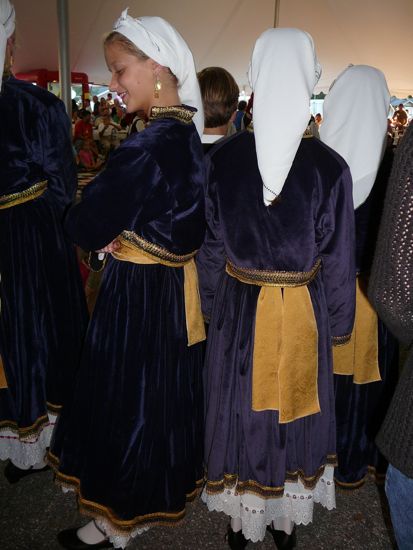
EnviroGirl and I picked up the dinners while AdventureMan and L&O Man scouted for seats in the tent so we could sit and eat dinner – moussaka, chicken, lamb, all kinds of specialities. There was also a very long dessert line – this festival is all about the food, and the music and dancing. I’ve taken some photos for you, but once we had the food, I didn’t get a chance to get any more photos. We only had to stand in line about thirty minutes; although there is a huge crowd, there is also a system, and they get people in and through the serving lines very efficiently.





Harlan Coben: Long Lost

This totally light weight mystery was just right for a beach read. It was light on motivation, light on character description, light on substance – it was a very fluffy mystery.
Long lost love calls and says “come to Paris; I need you” and doltish hero heads off. Confusing plotting calls for some irrational police interaction, some unknown bogeymen, and a truly thin story line.
You can read it in about an hour, though, or stretched out between beach activities, it might be good for a weekend. Not only lightweight, but forgettable.
Uyen Nichole Duong: Mimi and Her Mirror
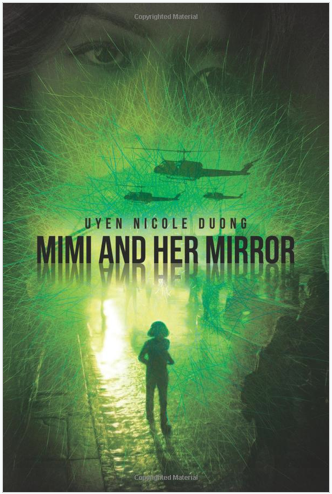
I must be on a streak. I really wanted to like this main character, Mi Chou (Mimi) but I found her obsessive, impulsive, overly emotional, self-absorbed and boastful. Her strongest relationship in the book is with her three way mirror. She specifically claims not to be narcissistic, and I think the story tells us otherwise.
The book is supposed to be fictional, and I truly hope some parts are fictional, but the strengths of the book lie in the ‘coming to America’ experience, which she captures well. She has a strong eye for ironies, hypocrisies and cultural differences. Her beginnings are vague, as is often the case when an immigrant goes through the shell-shock of being cut off from their own culture and grafted into another. I believe the author drew strongly on her own experiences to write this part of the book, and to me, it is the strongest part.
Mi Chau and her family leave Viet Nam during the great evacuation, and are given a spot on the planes that should have gone to someone else. Her entire family, mother, father, sister and brother all escape together, leaving behind a beloved grandmother who refuses to leave. Their entry into the US goes smoothly. They are the first wave of Vietnamese, the lucky ones. They have support, they have jobs. They have lost their own world, and they struggle. All this is part of the normal immigrant experience.
Neither is it abnormal that the children thrive through their struggles, and achieve excellent eduations. What is distracting to me in the book is how Mimi bases her self worth first on her academic excellence, and later in life on what she owns, and on her status. She has accomplished so much, she owns high-status symbols, but she is miserable and her life is empty.
Is it because of her experience as she evacuates out of Vietnam? Is it a character defect? There are no meaningful relationships in her life, she lives an empty and soulless existence, focusing on work and accomplishment and status symbols. Her major problem, as I see it, is an unwillingness to connect, to step out of herself and see through other’s eyes.
It’s an interesting book. There are, in my opinion, better books about the Vietnamese coming-to-America experience, and one is Anne Fadiman’s The Spirit Catches You and You Fall Down about immigrant Hmong, which is rich in cultural teachings, rich in relationships, and I still remember details more than ten years after I first read it. It is only available in Kindle format now, through Amazon, although they may have a used copy from time to time. Way better book than Mimi.

Kuwait House in Pensacola
We were exploring a new neighborhood to look at a house I’d seen. We loved the neighborhood. As we were driving, I said “Oh! Look! That’s what I’ve always loved!”
A new house is being built, and high up, it has a large covered terrace. I used to see something like it in Safety Harbor; a large screened, covered terrace.
“It’s a Kuwait house,” said AdventureMan. “Look, it has a dome. It just LOOKS like a Kuwait house.”
He’s right. I agree. This house, sitting on the Bayou, could be a house in Kuwait.

Terrorism at the Mall of America
I’ve been listening to a very painful report on National Public Radio, Under Suspicion at the Mall of America, a report about counter-terrorism measures being taken at the Mall of America, a huge mall, in Minnesota. One reason I’ve always wanted to go there is that I think I remember it having a huge, huge swim area, with lots of water slides and wave machines, and it just looked like a lot of fun. When I look at the mall map, I don’t see any pool area. You know malls – they change, and it’s been years. It was probably a liability issue.
So this is the ten year anniversary of 9/11, an event so awful most of us barely want to think about it. There are some things that just go so deep, you could get lost in the horror of it all. Officials are warning of the possibility of anniversary acts of terrorism, and Mall of America has always felt itself to be a vulnerable symbol, due to its name.
This is a lengthy report of “suspicious” incidents at Mall of America. They make me want to cry. You can read the report, but if you listen to the audio (you just click on the audio symbol) it is a richer, more detailed report. Listen – and weep.
Under Suspicion at the Mall of America
Below is an excerpt:
A Missing Cellphone
Yet look what happened when Najam Qureshi’s father came under suspicion at the Mall of America.
Najam Qureshi was born in Pakistan, but he’s been a U.S. citizen since he was a teenager. Today, he manages computer systems for a major company near Minneapolis. He and his family live on a pretty suburban street.
Najam Qureshi’s father came under suspicion at the Mall of America after leaving his cellphone in the food court.
In January 2007, an FBI agent showed up on his doorstep. It turned out that a few weeks before, Qureshi’s father had left his cellphone on a table in the Mall of America’s food court. When the mall’s counterterrorism unit saw the unattended phone, plus someone else’s cooler and stroller, guards cordoned off the area. Qureshi’s father wandered back, looking for his phone, and the RAM unit interrogated him and then reported him to the Bloomington police. In turn, the police reported the incident to the FBI. The documents we obtained show that the mall’s reports went to state and federal law enforcement, in roughly half the cases. The incident with Qureshi’s father led the FBI to want to question Qureshi himself, in his own home.
“He asked me if I knew anybody in Afghanistan. And that was kind of like, what?! And, then he asked me if I had any friends in Pakistan,” Qureshi says.
The FBI also asked him if he knew anybody that would try to hurt the U.S. government, according to Qureshi.
“My reaction in my mind, was, ‘How dare this guy in my house, come in and say this,’ ” he recalls.
But mall officials stand by their program of identifying suspicious people.
“You’re talking about a handful of people that are complaining, out of the 750 million plus that have been through these doors since 1992,” Bausch says. “And we apologize if it, you know, if it caused them any inconvenience, I mean we really do.”
“Unfortunately the world has changed,” says Bausch. “We assume you’d want your family and friends to be safe if they are in the building. And we simply noticed something that we didn’t think was right.”
A commander with the Bloomington police said these reports would be kept on file for decades. When Qureshi found out that the 11-page report reading “suspicious person” would be kept that long, his eyes filled with tears.
“It shattered an image of the U.S. that I had, fundamentally. I don’t know, especially when I saw some of these reports. It’s definitely bothersome, how small things can just, you know, trickle up that quickly, and all of a sudden you’re labeled. And once you’re labeled, you’re basically messed up, right?”
Recent Comments
intlxpatr on Shampoo Ginger tigerbutterya0c5ff1d… on Shampoo Ginger intlxpatr on British Soldier Kidnapped, Esc… John on British Soldier Kidnapped, Esc… intlxpatr on British Soldier Kidnapped, Esc… Wikipedia Donate Button

Amazina


Early Voting in Florida


