Adaobi Tricia Nwaubani: I Do Not Come to You by Chance
This book, the first novel from Adaobi Tricia Nwaubani, is hilarious, with moments of pathos, and a fresh point of view.
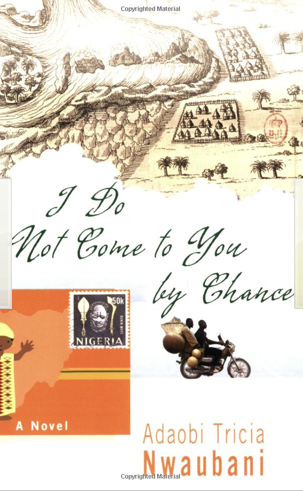
Amazon.com recommended it to me as I was busy buying books by author Chimamanda Ngozi Adichie; I thought ‘OK, I’ll read a series of Nigerian books as part of my summer reading.
Young Kingsley Ibe is the family’s first born male, and with that status goes many privileges – and responsibilities. After graduating with a Masters in Chemical Engineering, he has no success in his search for a job with an oil company in Nigeria, and consequently loses the love of his life, Ola, to another who has secure employment.
Worse, his retired father has a stroke, and the family discovers that with all the fees required, they haven’t enough for his continued care, so Kingsley must approach his uncle, Boniface Mbamalu, more familiarly known as Cash Daddy, for funds to transfer his father to a long term care facility, and, later, for his father’s funeral.
Serious Kingsley’s eyes nearly pop as he sees the life his uncle is living, cars, women, designer watches, shoes, suits and all the trappings of new wealth. Soon, his uncle makes a convincing case for Kingsley coming to work for him, the better to help out his family of mother, brothers and sister, now that he is the senior male in the family.
Kingsley discovers he has a gift for the work – which is writing 419s, those scam letters which I frequently publish in this column. I loved being on the inside, learning how strong possibility e-mail addresses are netted, how response e-mails are massaged – not unlike fund raising techniques by charitable organizations in the US. Kingsley’s education helps him achieve enormous financial success in a very short time – but he finds that all the cash and designer goods in the word do not solve his problems nor make him happy.
I learned a lot about how successful many of these scammers are, and how the money made is spread throughout the Nigerian communities. The author takes a balanced view, balancing the way the cash makes life easier for people – a lot of people, because the rich man has many obligations to his community, balanced against the disgust, and sick fear felt by his religious mother and aunt, and his one time girlfriend, when they learn the work he is doing. They are disappointed that a man of such promise has sunk to making so much money in a dishonest way. The book also does not deal sympathetically with those who have given or lost money to the scammers, nor, in my opinion, does the ending satisfy.
This is one of the funniest parts of the book – a group of Nigerian scammers is about to meet with a representative of a major US investment firm. He thinks he will be meeting with the Nigerian Minister of Transportation to discuss building a new airport; the reality is that Cash Daddy, in disguise, will be pretending to be the minister. Kingsley protests that Cash Daddy looks nothing like the minister, and Cash Daddy responds:
“Let me tell you something . . . Me, I really like these oyibo people. They’re very very nice people. See how they came and showed us that the ground where we’ve been dancing Atilogwu has crude oil under it. If not for them, we might never have found out. But Kings,” he dragged in his dangling foot and sat up in the tub, “white man doesn’t understand black man’s face. Do you know tht I can give you my passport to travel with . . . Even if your nose is ten times bigger than my own, they won’t even notice?”
It was a fascinating book. I understand better now why 419 scams work. (419 is the section of the Nigerian criminal code making scam e-mails a crime; thus the crime is called ‘a 419’) There are some very funny and very insightful moments in the book. It is no where near the level of literature that you experience with Chimamanda Ngozi Adichie, but there is more humor, and the book shows a more modern day Nigeria. Not a bad summer read, but not great literature.
Chimamanda Ngozi Adichie: The Thing Around Your Neck

Chimamanda Ngozi Adichie has compiled a series of elegant vignettes in her most recent book, The Thing Around Your Neck. I had just read Half of a Yellow Sun, and was still wallowing in stunned admiration, when I heard an interview with the author on BBC, and learned she had written this book, The Thing Around Your Neck.
I loved Half of a Yellow Sun. I loved Purple Hibiscus. I felt I began to understand just a little bit about life in transitional Nigeria, with all the social and political forces blowing to and fro, straining the very fabric of nationhood.
In The Thing Around Your Neck, something else happens. It shares with Cutting for Stone and other books I like the impressions of those who come to live in the USA for the first time.
“Would that the wee wee giftie gi’e us, To see ourselves as others see us . . . ”
I’ve had a lot of experience going to live in foreign countries. One of the things I learned is that most of what I learn the first couple years isn’t much. You learn a lot of things wrong. You filter everything through your own cultural biases; you judge, you interpret, you try to make sense of things that just seem wrong.
I love to watch Chimamanda Ngozi Adichie’s characters do this in reverse, come to America and make judgements based on their own cultural expectations. I love to see us through these eyes.
Once, many many years ago, we entertained a Nigerian in our home, and when we served dinner, steaks, he looked at his plate and said “This would feed my family for a week.” We kind of laughed. We kind of thought he was exaggerating, or even kidding. We just didn’t know. We had never seen anyone truly hungry, we had always lived in this land of plenty. We had no idea what we didn’t know. We saw only what we knew.
Each story is a gem. Each treats the expat experience, coming here, or the reverse, coming to America and then going back and seeing Nigeria through eyes which have changed.
One story I had read before, in the New Yorker magazine and loved reading again, The Headstrong Historian. It starts with a smart woman, weaving her way among the ways of her people, whose husband’s family wants her husband to take another wife. He doesn’t want to. These two chose each other, and managed to live their lives together as best they could, by their own standards. Her son disappoints her, but her granddaughter – she sees her husband’s brave, courageous spirit in the eyes of her little grand daughter. You’ll have to read the story to find out the rest.
Other stories have to do with newlyweds, with students, with love and marriage and affairs – the full spectrum of human experience, through Nigerian expat eyes. There are settings common from all three books, the college campus at Nsukka, a prison outside of town, small villages outside the city. If you read all her books, you recognize place: “Aha! I’ve been her before, in Purple Hibiscus!” You learn how to bribe the guards so you can bring in food for your imprisoned family member, you learn to keep your eyes down to show respect, you learn how Nigeria smells when the rains come, and how dry and dusty it gets during the harmattan.
I’m just sorry there isn’t another book by this author – yet – that I can read!
I guess these books that I love deal with a theme dear to my heart – that we are culturally blind to so many things, and that as human beings we are more alike than we are different. Short of packing up all our lives and our assumptions and moving to many different countries, the best we can hope for in learning different ways of thinking is for books like these by Chimamanda Ngozi Adichie, which show us how differently we perceive things, depending on our cultures, and how alike we are in the things that we feel, as human beings.
Doha Debates and Where Are You From?
The Baked Salmon Dijon for last night’s dinner took a little longer to cook because Joe Patti’s cuts the salmon steaks so thick (we cook two, split one and freeze the other for another night), so while I was waiting, I flipped around and found WSRE’s Doha Debate coverage.
Who knew?
I didn’t know I could still watch the debates in Pensacola! This one was about whether or not Egypt should postpone elections in the interest of forming a more representative democracy. The vote was 84% in favor; the two young supporters carried the house. 🙂 This was the March debate and you can hear the entire 48 minutes by clicking here.

The winning female debater used a slogan I had not heard, but I love, because it is graphic and memorable – “we do not want a fast-food democracy that brings only indigestion.” The younger debaters want to scrap the entire constitution and re-write it, claiming the current structure needs to be thoroughly revised in order for democracy to have a chance of success.
I love it that these issues have a forum for debate in Doha.
Following the debate was a cringe-worthy video about asking people where they are from. His point was that when he is asked where he is from, and he answers ‘The Bronx,’ people say “No, where are you REALLY from?’ and the implication is racist. He says it is the same as saying that his color is darker, therefore he is not like us, so he must not be from around here.
I’ve asked that question. Never meant it to be insulting, but I will stop now. Or I will only ask those with a slight accent, maybe. Wherever we have lived, we have been asked that question – but then, in Kuwait and Qatar, most of the work force is not Qattari or Kuwaiti. Even in Germany, however, where we might look a lot like them, we are asked where we are from. It used to be a courteous way of showing interest, or initiating a conversation.
One time in Doha, a local man asked me about my breeding, LOL. I told him I was a product of the American melting pot, and from the earliest settlers to the latest, my family includes just about a little of everything. We were at the veterinarian’s office, and I knew the purity of his dog’s blood lines mattered, and probably his own, but I also felt a little insulted, and I haven’t forgotten it. Doesn’t science teach us that diversity in blood lines is a good thing?
We are in the middle of a heat spell in Pensacola, early this year, and because we haven’t gotten anywhere near the normal rainfall, there are also wildfires. The firefighters are struggling to put out the fires, and also fighting heat exhaustion. AdventureMan is out watering all our new plantings, and our tomatoes, every morning, God bless him, because when the temperatures go high, I just want to stay inside.
A God of Infinite Mercy
This morning, Father Neal Goldsborough of Christ Church Pensacola gave a sermon that held us all totally spellbound. It had to do with the fundamentalist preacher who – once again – forecast the coming rapture, which he says was scheduled for yesterday. (I wonder what he has to say today? He was wrong once before, in 1994. Or maybe people were raptured yesterday, but all the folk I know are, like me, sinners who didn’t make the cut.)

Father Neal talked about his service in the chaplain corp overseas, and faiths which exclude based on narrow rules, specific rules, churches and religions who say ‘this is the only way and all the rest of you are damned to everlasting fire” whether they use those words or paraphrases. He pointed to Jesus, who broke the rules of his time and flagrantly spent time with sinners, and the unclean, and showed them by his love and by his actions what the infinite love and mercy and forgiveness of Almighty God looks like.
It couldn’t have come at a better time for me.
Soon, I will be meeting up with three women who are particularly dear to me, friends for many years in Qatar, friends who worshipped at the Church of the Epiphany in Doha, Qatar. The new Anglican Church of the Epiphany is being built on land dedicated to church use by His Highness Sheikh Hamad bin Khalifa Al-Thani, the Emir of Qatar, and will be used by many denominations.
My friends and I all returned to the USA within months of one another, and have been sending e-mails with “reply to all” as we struggle with our re-entry into our old church communities. We struggle with the hatreds and prejudices and ignorance about our Moslem brothers and sisters, and we struggle with the narrow strictures imposed by our churches and study groups. I thank God to have these wonderful women among whom we can share our dismay and our hurting hearts, and re-inforce the lessons we learned living in a very exotic, and sometimes alien culture, but which had so many wonderful and mighty lessons to teach us. I often joke that in my life, God kept sending me back to the Middle East (Tunisia, Jordan, Saudi Arabia, Qatar and Kuwait) until he saw that I finally got it. My sisters-in-faith were quicker studies than I was. 🙂
It was a breath of the Holy Spirit I felt this morning, as Father Neal spoke about God’s mercy, his plan to redeem ALL of his creation, God’s desire for our love and our service. I couldn’t help it, it made me weep with relief to know my church is a church that serves God by including, rather than excluding, and which mercifully welcomes sinners like me.
Here is the really cool part. Christ Church Pensacola has recently begun putting the sermons online. If there is one thing Christ Church has, it is great sermons – and if you want to hear Father Neal’s sermon, you can click HERE, in a few days and you can hear his sermon for yourself. 🙂 Look for the May 22 sermon by Father Neal Goldsborough.
Perfect Pensacola Evening
After weeks of early and sultry heat, Pensacola has had a spell of cooler weather, nights down into the 50’s and even high 40’s, and days in the mid 70’s – and not humid. Great weather for working in the garden or going to a park, weather that just makes you want to be outside.
Last night we went to a meeting of the Gulf Coast Diplomatic Council at a beautiful home out in Gulf Breeze, with a view of the water that goes forever. As you walk in, you can smell wood – or at least I can. I grew up with houses that used a lot of wood, and I love the smell. The heart of the house was a kitchen – dining room – sitting area with that forever view.
It was a lively group. The group only gets together a couple times a year, but what a fun group – all people who are willing to host foreign visitors when they come to Pensacola. I am guessing one of the reasons that Pensacola gets so many groups (besides those glorious sugar-white sand beaches, and the multicolors of the Gulf, and all the seafood and palms and balmy weather) is that the GCDC has developed a sterling reputation with visitors, and the Department of State is happy to send them to a place where they will get such a warm reception.
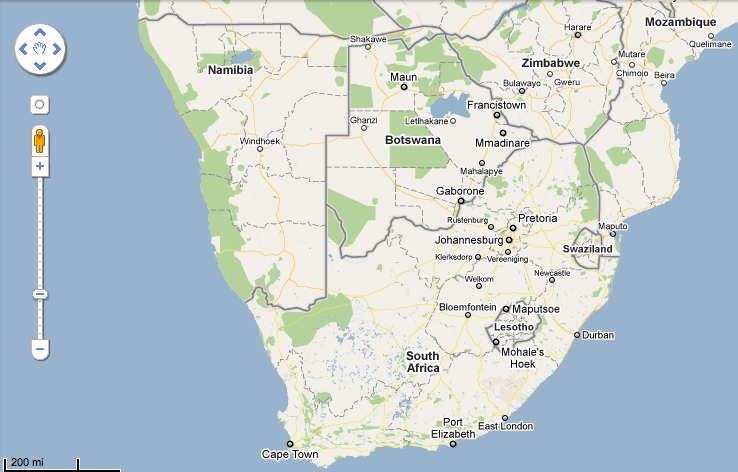
Attending also were some delegates from other countries. We spent some time with a Namibian farmer, who wants to find market outlets for poor rural women in Namibia. We spent two weeks in Namibia – it seems a lifetime ago – and loved our time there. We made a circuit of the country, from the farms in the east to the great Etosha game park, to the Demaraland, and down the Skeleton coast to Sossossvlei, where we climbed the mountainous sand dunes. It was a great adventure for us, and we have such happy memories of Namibia, and our delegate was so happy to meet people who had spent time in her country, We had a great visit with her and a great time altogether.
There were mountains of food available, but you know how awkward it is to be talking with people and they ask you a question just as you have taken a bite of something that needs to be chewed and swallowed before you can answer? We passed on the food so we could focus on the conversations. In the back of our minds, too, we knew we were close to one of our favorite places, Flounders, so we popped over there for a bowl of chowder, grilled grouper po’ boy (AdventureMan) and grilled shrimp Ceasar (me). The evening was perfect – no humidity, temperature perfect, slight breeze but not too hot or too cold – perfect.
This weekend we are taking care of Happy Baby while our son and his wife head off to a family wedding. Happy Baby is fifteen months old, and a live wire. So much energy and no inhibitions! You have to watch him every minute. He loves climbing, but he has no sense of danger. It takes both of us to keep up with him! He is so much fun to be around, that although it will be exhausting, it will also be a lot of fun.

Did you Tell Him We’re Going Dancing?

I was laughing as I heard AdventureMan talking with his Saudi friend, making a time when they could get together. I knew he had called about tonight.
“Did you tell him we were going dancing?” I laughed as I asked him.
“Uhhh . . . no,” he said.
This is new to us. We are taking dancing lessons, ballroom dancing, at the YMCA. We both had those lessons you take in eighth grade, but we’ve forgotten most of what we learned. I don’t care about going dancing, or fancy dresses, or competitions. I don’t even watch dance stuff on TV; I just don’t care that much. These classes are something we’ve wanted to do for a long time, and it really takes us out of our comfort zones.
We really are having fun. The first lesson – not so much. It is hard work! It doesn’t come naturally, it comes with PRACTICE! Lots of PRACTICE! It’s like fencing lessons, or horseback riding, or karate, or gymnastics – After a while, your body knows what to do, but at the beginning, it can be a little excruciating. As for AdventureMan and I, we mess up a lot, but we laugh a lot too. We are getting better, but best of all we are having a lot of fun. These kinds of things rewire your brains; it may not be easy, but it is good for us.
And I am still laughing, thinking of AdventureMan not telling his friend that he was going dancing with his wife, LOL!
The Minority Prayer

I listen to National Public Radio in my car and in my project room. I finally figured out how to stream WUWF, my local station. Until today, unless I wanted to use my wind-up radio, I had to stream KUOW in Seattle, or NPR which I like because it has so much BBC.
I am really delighted to figure out how to stream WUWF, because it has a lot of local news and events I might miss streaming one of the other stations, and I also like hearing who the sponsors are, so I can tell them how much I enjoy National Public Radio.
So today I am listening to Talk of the Nations, a segment on Pakistani-Americans, and this particularly articulate young lawyer mentions ‘the Minority Prayer.
Do you know what that is? I didn’t. But I laughed when he explained it, because we have prayed it so often living overseas . . .
He was talking about when attending a Muslim-American Lawyers National meeting, and how the buzz spread that Osama Bin Laden had been killed, and how they all sent up a quick minority prayer – “Please, Lord, don’t let it be Pakistan where he was found” – and of course, it was Pakistan. He was very wry, and I enjoyed listening to what he had to say. At the same time, I was grinning. I cannot count the number of times we have heard rumors – in Germany, in Kuwait, in Qatar, in Tunisia, in Jordan – and prayed . . . “Please Lord, don’t let it be the USA who did this . . . ”
It’s very much an expat’s prayer.
If you want to listen to the interview yourself, you can find it here.
AdventureMan’s New Adventure: Cinco de Mayo
When he ‘retired,’ AdventureMan chose Thursdays as his day to cook. It’s worked out well. Recently, he has perfected Naan, baked on our grill. We’ve had it several times – it just tastes so good, fresh off the grill, and he bastes it with either olive oil and garlic, or olive oil and sesame seeds. Oh, yummmmmm.
“I’m feeling stressed,” he admitted yesterday morning. “It’s my day to cook and I don’t have any ideas.”
“It’s also Cinco de Mayo,” I said, and that was all I had to say, he was off and running.
All I can say is BRAVO. BRAVO, AdventureMan, Cinco de Mayo was a taste treat. They were fabulous.
He found his recipe on AllRecipes.com, and made it pretty much just as they said to make it, serving it with a small bowl of home-made pico de gallo and a small bowl of sour cream. Oh YUMMMM. This is the recipe he used:

Pico de Gallo Chicken Quesadillas
By: Tony Cortez
Ingredients
2 tomatoes, diced
1 onion, finely chopped
2 limes, juiced
2 tablespoons chopped fresh cilantro
1 jalapeno pepper, seeded and minced
salt and pepper to taste
2 tablespoons olive oil, divided
2 skinless, boneless chicken breast halves – cut into strips
1/2 onion, thinly sliced
1 green bell pepper, thinly sliced
2 cloves garlic, minced
4 (12 inch) flour tortillas
1 cup shredded Monterey Jack cheese
1/4 cup sour cream, for topping
Directions
In a small bowl, combine tomatoes, onion, lime juice, cilantro, jalapeno, salt and pepper. Set aside. (This is the pico de gallo)
In a large skillet, heat 1 tablespoon olive oil. Add chicken and saute until cooked through and juices run clear. Remove chicken from skillet and set aside.
Put the remaining 1 tablespoon of olive oil in the hot skillet and saute the sliced onion and green pepper until tender. Stir in the minced garlic and saute until the aroma is strong. Mix in half of the pico de gallo and chicken breast meat. Set aside; keep warm.
In a heavy skillet, heat one flour tortilla. Spread 1/4 cup shredded cheese on the tortilla and top with 1/2 the chicken mixture. Sprinkle another 1/4 cup cheese over the chicken and top with another tortilla. When bottom tortilla is lightly brown and cheese has started to melt, flip quesadilla and cook on the opposite side. Remove quesadilla from skillet and cut into quarters.
Repeat with remaining ingredients. Serve quesadillas with sour cream and remaining pico de gallo.
I’ve never seen him so happy as he has been the last couple months.
Ewww. Just Ewwww.
This one just creeps me out, and it didn’t even end up in the spam file. Ewww. Just Ewwwww.
Hello dear friend.
Glad that I’m just browsing now in the Internet and found your profile here on (intlxpatr.wordpress.com) i was much feelings over it, I’m miss vera khalifa by name, please i will like us to hold a good relationship with a real love, I’m happy to look at your profile today, you sound so gentle to me that was the reason why i fall very much interested in you, for more introduction also i will sent my pictures to you so we can know more about each other, i will be happy to see your email, your love vera
I was much feelings, too, Vera, and not good. Sorry.
Two Saints of the Church
Here is the prayer given for today in the Lectionary:
PRAYER (traditional language)
Loving God, we offer thanks for the ministries of Edward Thomas Demby and Henry Beard Delany, bishops of thy Church who, though limited by segregation, served faithfully to thy honor and glory. Assist us, we pray, to break through the limitations of our own time, that we may minister in obedience to Jesus Christ; who with thee and the Holy Spirit livest and reignest, one God, now and for ever. Amen.
BISHOPS, 1928, 1957
Delany, Henry Beard [Feb. 5, 1858-April 14, 1928] was the second African American bishop in the Episcopal Church, being elected Suffragan Bishop of North Carolina in 1918. He is probably better known as the father of Sadie and Bessy Delany, authors of the popular book, Having Our Say, which chronicled their lives.
Edward Thomas Demby [Feb. 13, 1869-Oct. 14, 1957] was the first African American bishop in the Episcopal Church. He served his first parish in Mason, Tenn. He became “Suffragan Bishop for Colored Work in Arkansas and the Province of the Southwest” in 1918. His career has been covered in a book, Black Bishop.
As we begin to transition from the Lenten season to the great feast of Easter, my heart takes hope from the courage of those who stood in the face of prejudice and exclusion, and focused on doing their jobs and doing them with grace. I think of how hate blinds us. I think of how Catholics and Protestants slaughtered one another, how Mormons were driven West, how Sunnis and Shiites are clashing in Iraq, how Christians and Moslems are battling to the death, and when I am near to losing hope, I try to focus on how earlier conflicts have almost totally disappeared. We are all believers. We believe in the one true God. We squabble like children over his inheritance.
Recent Comments
ExpatAlien on What Country am I Living … intlxpatr on Yellowstone: Old Faithful to C… Michelle on Yellowstone: Old Faithful to C… Cathy on No Grown-Ups in Charge intlxpatr on Waiting for Snow Wikipedia Donate Button

Amazina


Early Voting in Florida


 Here There and Everywhere