Morocco Malta and the Med: Tunisian Interlude
We aren’t just sailing away from Malta. We are sailing toward a part of our history, and please pardon that these photos are not that great; I don’t even know what kind of camera we were using and they are now very old.
We lived in Tunis for two years, courtesy of the US Government, wanting us to be linguistically and culturally more fluent. For me, it was scary at first – coming from Monterey, CA and entering into what seemed to be a very alien culture.
It began a great leap in opening our visions to other ways of thinking.
Below is our old villa – I am showing you this because when we went to visit it, it looked entirely different.
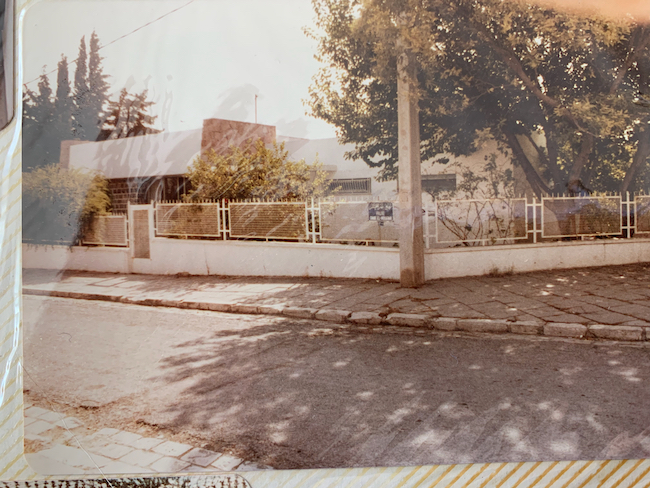
Our son went to a local Pre-School, Joie de Vivre, the Joy of Life 😊. This is his class photo.

AdventureMan on our back porch, where we often ate. We only had air conditioning in our bedrooms. The candelabras (there were two) were made for us in Binzerte.


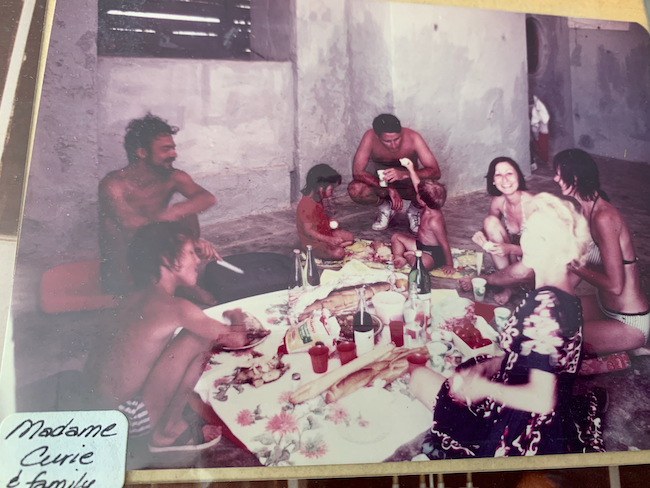
My French teacher, Madame Huguette Curie invited us into her culture; she lived on Avenue Habib Bourgiba in a palatial apartment and had this seaside cottage where we could swim and picnic together. She was beautiful and cultured, and helped us learn about and love our time in Tunisia.


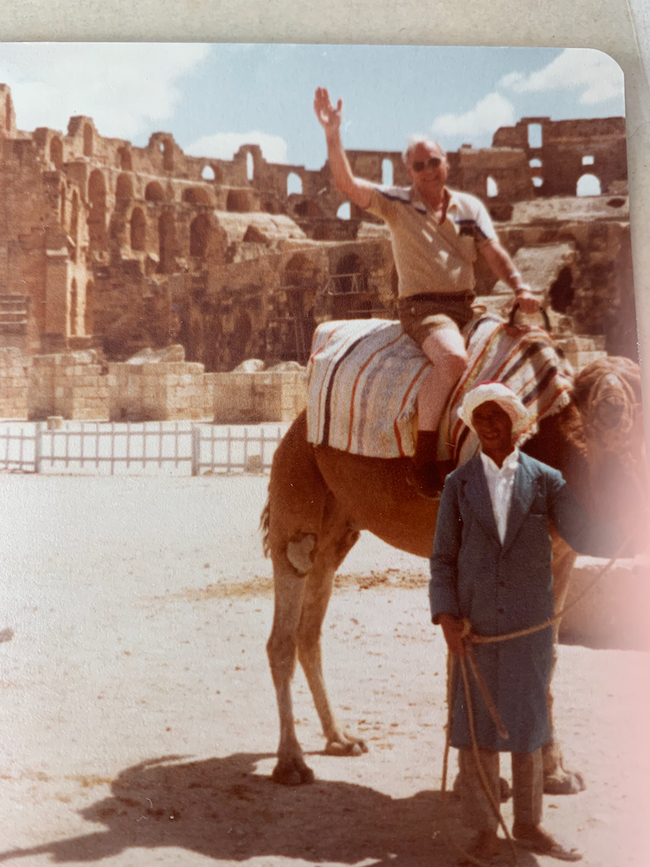
My parents came to visit, and we had a wonderful time showing them Tunisia. This was at the Ampitheatre in El Jem.

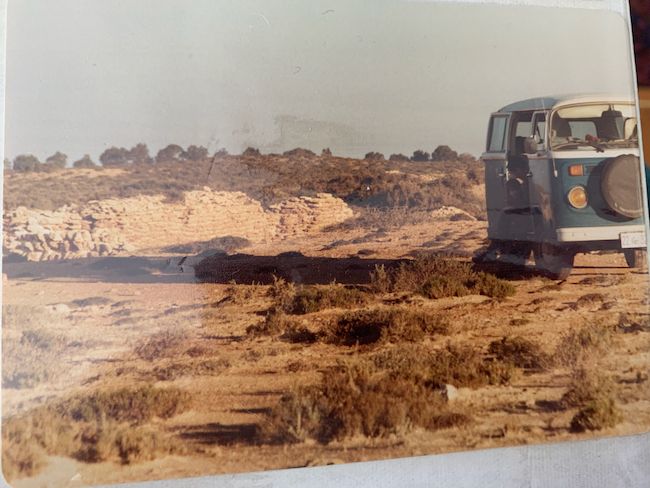
We camped in desolate areas – now built up – in our Volkswagon Bus.
Once a year, there was a Bedouin festival in Douz (where much of the original Star Wars was filmed.) We camped there, too, and have never been colder in our lives than in the Tunisian desert in late November.

The Camel Market in Nabuel was a great weekend favorite.
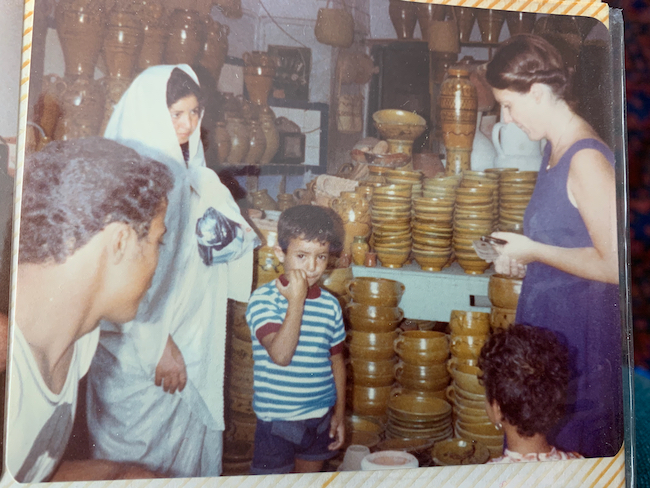
So my friends, on! on! We are on our way back to Tunis, 46 years later.
Morocco Malta and the Med: Day 2 Barcelona and Monserrat
Traveling with Viking passengers is to see ourselves in others. After a good nights sleep, we are up at dawn to have breakfast before our guide, James will arrive to pick us up at 8:15 to get us to Monserrat and in to see the Black Virgin before the crowds.
Too late. When we get to the restaurant, there is already a line of Viking early-birds in front of us. Fortunately, it is a large restaurant, and we all get seated quickly. The buffet breakfast is lovely, all kinds of cereals, breads and condiments, fresh egg dishes, lots of breakfast meats. It seems to be there is something to make everyone happy.

The restaurant is on the top floor and has views to die for in every direction. I’ve been trying to get to the roof deck and pool, but it seems it can only be accessed through the restaurant, and only during certain times. I kept trying. I never made it. It may be because it is mid-November and most people aren’t looking for a pool.
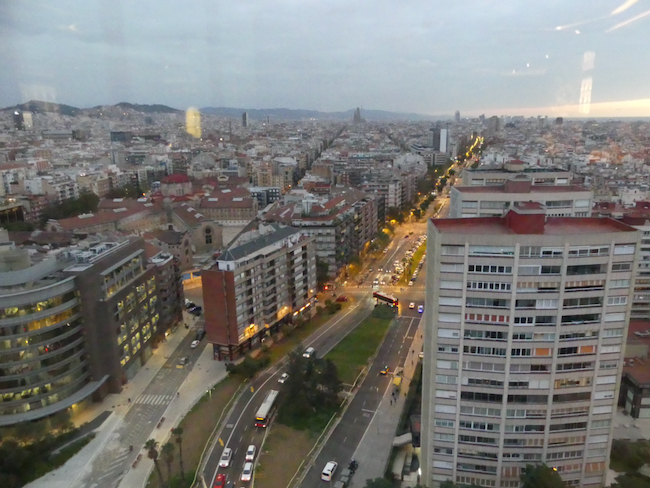

We booked with Autos Driver through Viator. Our driver and guide, James, showed up promptly at 8:10 (we were ready) in a suit with a slick shiny new Mercedes. We were impressed. He explained what we were seeing as we exited Barcelona to head for the serrated mountains (the meaning of the name Monserrat), and made it all relatable by putting it all in context. We really liked James. The statue below is in the industrial area.

Looking back toward Barcelona and the sun rising through the haze.


You can see why it is called “serrated mountains.”



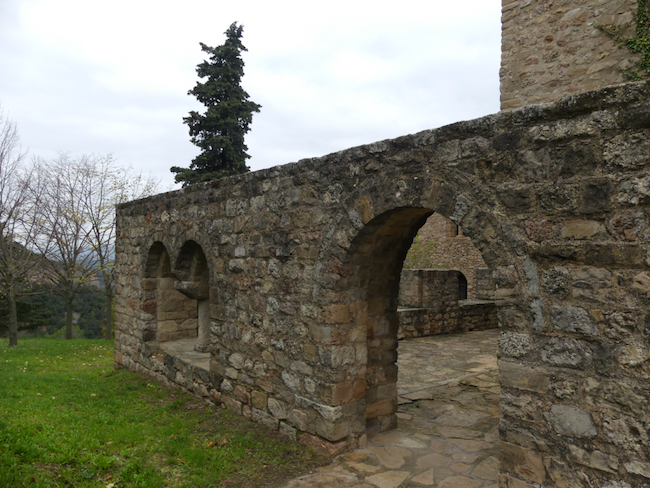
We stopped for a stretch break at Santa Cecilia, a former nunnery, now an event venue.

On the left is James, who made this day so special for us, telling us the inside stories of Barcelona.
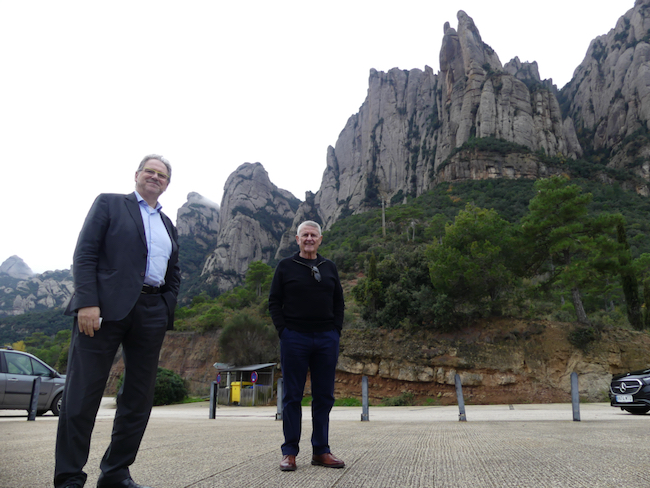
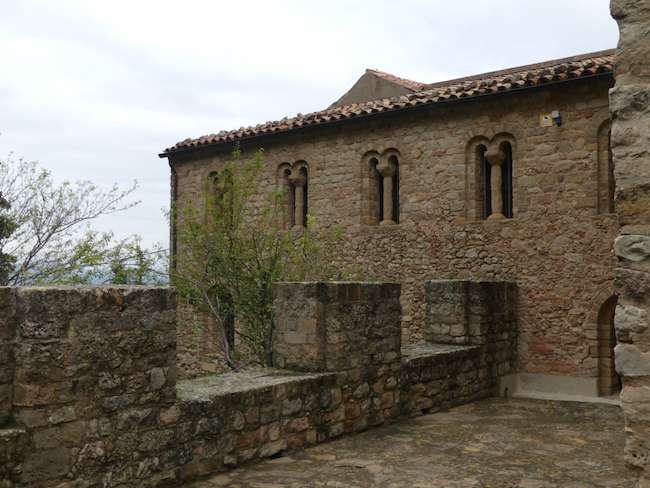

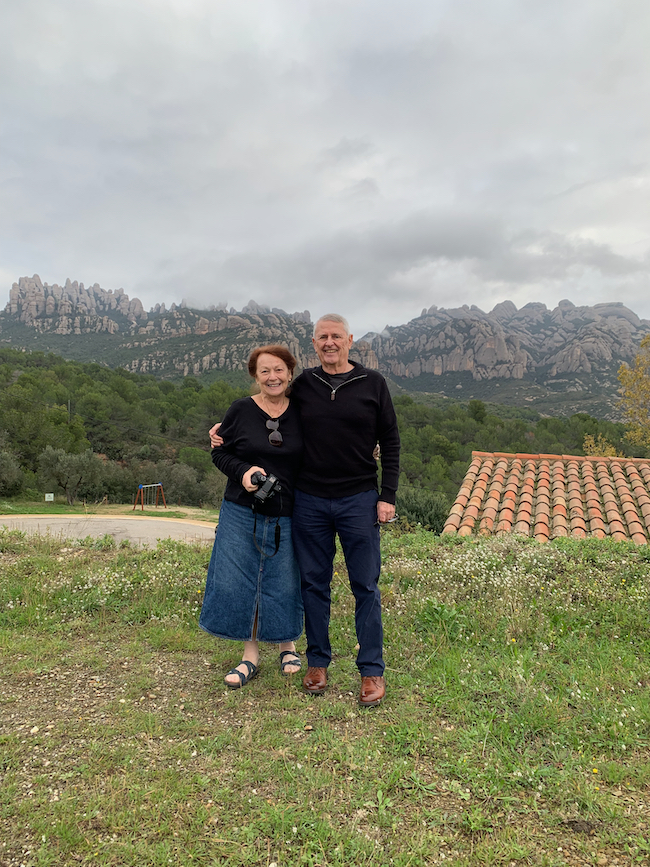
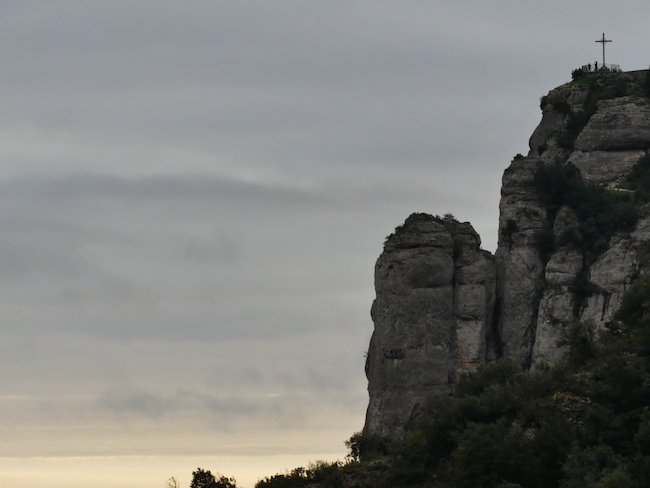
Our first view of Monserrat is of St. Michael’s Cross:
Tickets have to be reserved, and are for certain times only. James was looking out for us, contacted us ahead of time, picked up the tickets and had us to the line with plenty of time. He showed us where to meet with him after the tour of the Church and the Black Virgin.
It’s November. We had thought it would not be too crowded early in the morning, but it was full of Japanese tour groups, mostly school groups. We wedged between two groups as we waited to see the Black Virgin.


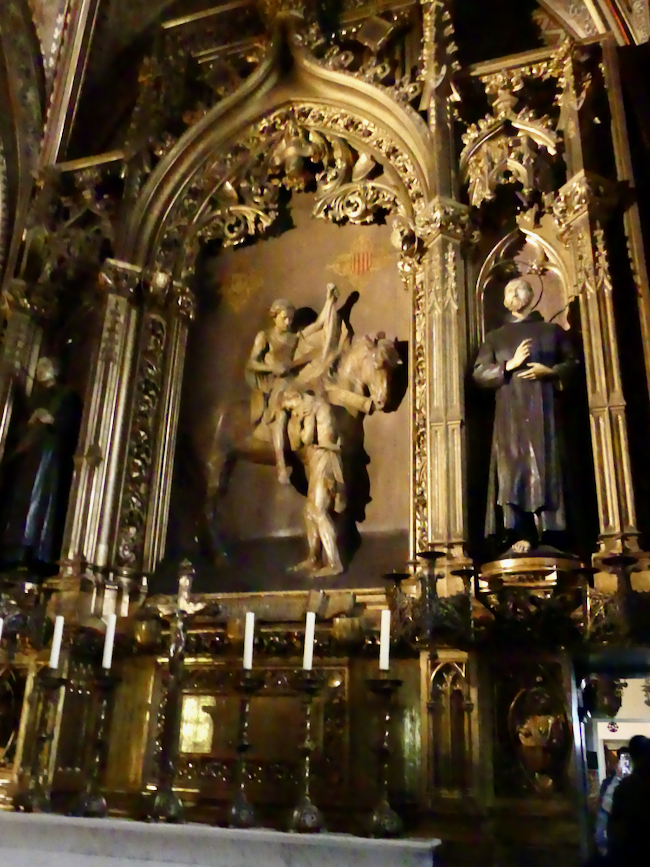

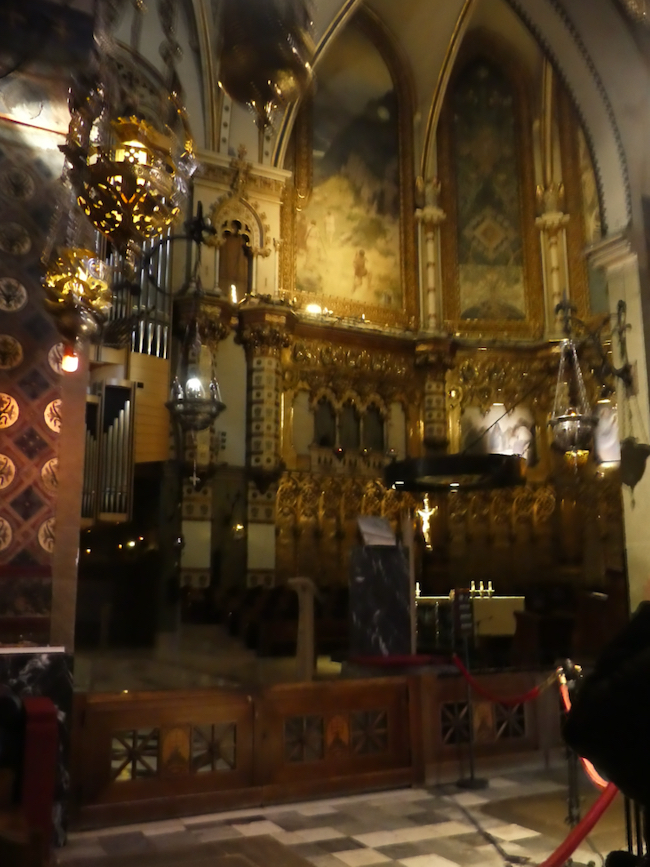





At last, one at a time, we are allowed about 10 seconds with the Black Virgin. The legend is that this Madonna and Child was carved in the earliest days of Christianity. Said to have been moved to Monserrat (home to the Goddess Venus) in the 700s to avoid Moorish explorers, she was found underground and was to be transported to some church but was not able to be moved, so they built a monastery around her.


You can see an orb in the Virgin’s hand. One at a time each Japanese school girl put both hands on the orb and looked solemn while one of the teachers (?) chaperones (?) guides (?) took a photo of her.


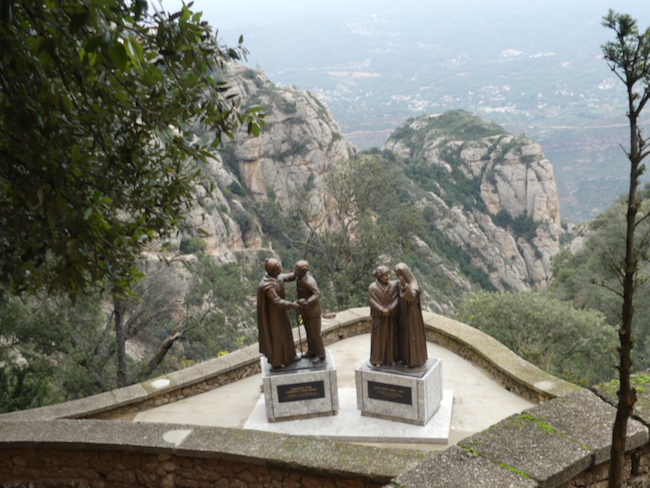
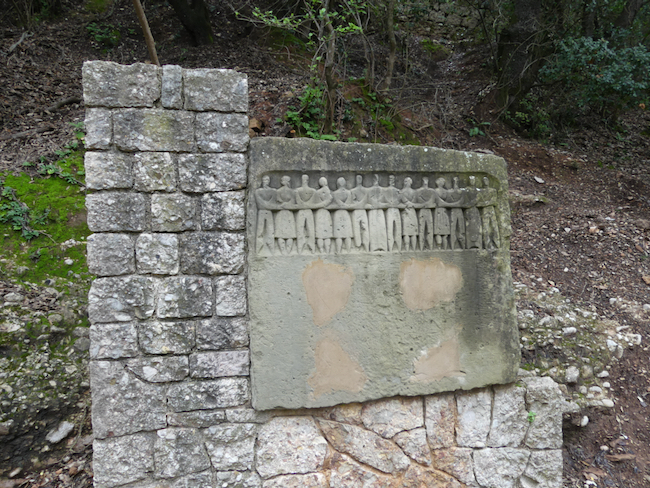
We had enough time to walk part way to Saint Michael’s Cross:


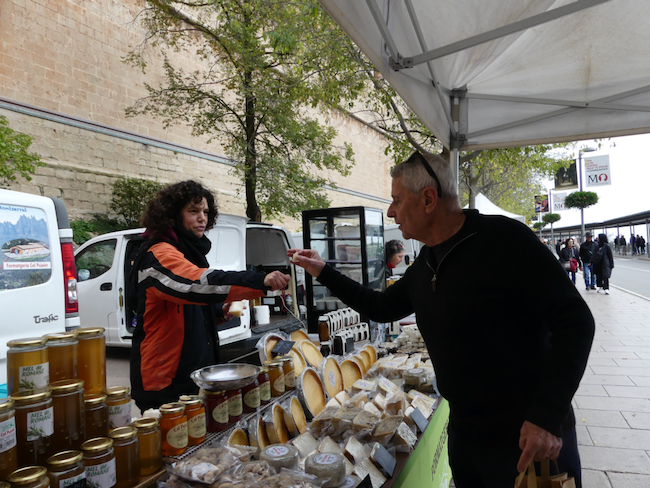
AdventureMan wanted to have some good cheese to have on board so we could have wine and cheese before dinner, and he found a really good one! We enjoyed this cheese so much, dry, nutty, salty, kind of grainy, and delicious!


We met up with James, had a great drive back to Barcelona as he answered all our questions, we talked ecology, climate change, cultural differences and economics. We talked about the impact of COVID-19 on our countries and social practices. Before he let us out in downtown Barcelona, he gave us directions to the oldest chocolate shop in Barcelona, not far off Las Ramblas, but far enough that not a lot of tourists get there.
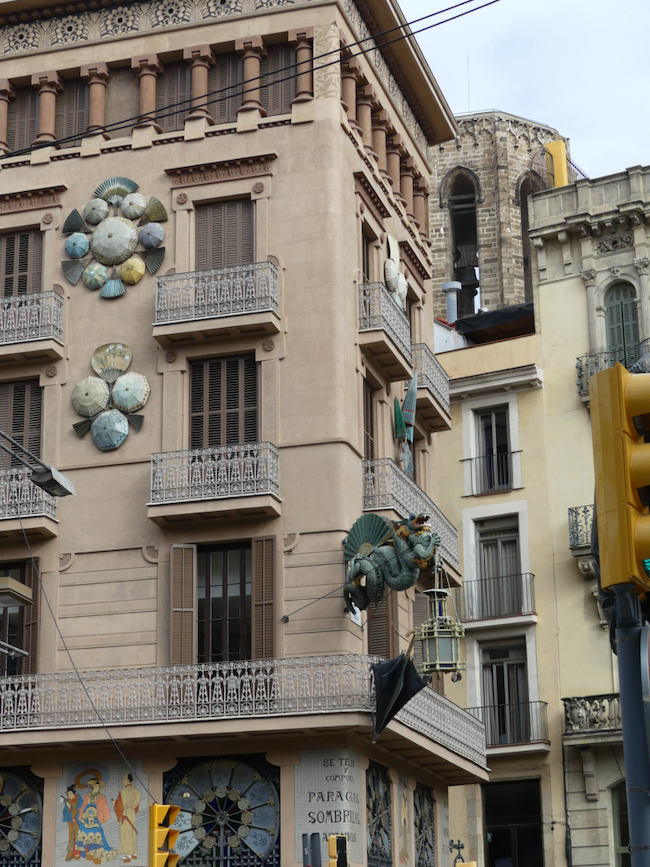
Love these old signs on Las Ramblas.
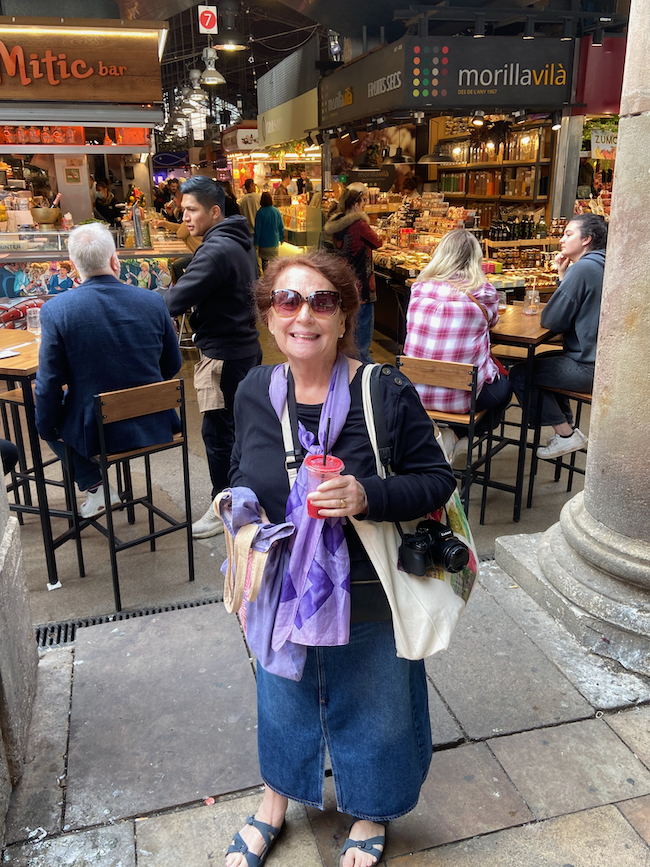
Last time we were in Barcelona, we had grabbed empanadas at the Boqueria, along with fruit drinks, and AdventureMan wanted a particular spicy beef empanada we had the last time. We darted up and down the aisles until we found the exact shop, and both bought spicy beef enpanadas, and fruit drinks, then found a place to sit at the little plaza behine the Boqueria to eat in peace, except for the pigeons.

We ate lightly so that we could have hot chocolate at the oldest chocolate shop in Barcelona, very close to the Boqueria. The name is La Granja, and it is a couple streets behind La Rambla and the Boqueria.

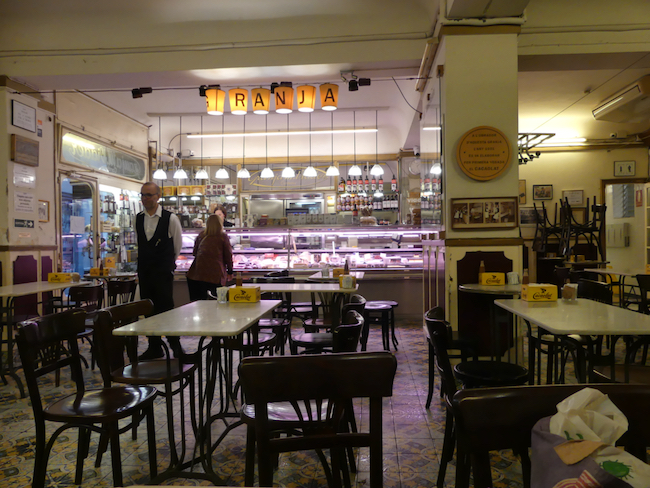
It was delicious and fun. When we got there, they wanted to make sure we knew they were closing for the mid-day break. We assured them we only wanted chocolate, and creme brulee, and they welcomed us. We loved the place, with customers coming in for cut meats and other kinds of delicacies, we don’t really know what because we don’t speak Spanish except for a few words. It didn’t matter. The chocolate was thick and smooth and like eating a little bit of heaven, if heaven to you is chocolate, thick dark chocolate, as it is to me. The creme brulee’ is to be tapped with the spoon to break the crust before you eat.


On a total sugar high, we head out to find the metro and head back to the hotel for a nap. The metro takes us half a block from our hotel – why don’t all cities have great public transportation like Paris and Barcelona?
We are ready for a nap 😊.
Saying Goodbye to Al Marai Coffee Cups

All my nomadic life, I have had to sift, sort and weigh the value of my belongings – literally. As an Army wife and later a corporate wife, I had a weight allowance as we moved from country to country. My life was full of leaving things behind – friends, churches, social groups, jobs, my identity – as well as belongings.
Unlikely items made the cut. In 2003, when we moved to Doha, Qatar, I discovered a nearby store, the LuLu (which means lovely large pearl), where a gallon of Al Rifai milk came with a free coffee cup sturdily taped to it. I was delighted. I’ve always believed good design does not necessarily correlate with price – and these cups were a perfect size and had these wonderful scenes from Doha life, where there was a dhow harbor in the center of town, dhows in the harbor, and camel races with human riders on Saturdays. Look! The dhow coffee cup even has a wind tower in the background.
So yesterday, Christmas Day, as I opened two beautiful new coffee cups, one from Giverney and one from Barcelona, my husband looked at me sorrowfully, and approached the subject gently.
“It’s time we give up the Doha coffee cups,” he said.
“They have served us well. They are over 20 years old. They were free, probably made in China from materials we don’t even want to think about. I use them all the time, and even as I do, I wonder what might be leaching into my drink.”
I know he is right. There is no marking of any kind to indicate origin. After all these years, marks are appearing where we have stirred for twenty years. And yet – these cups have served me loyally. They are still bright and unmarred. I love their memorialization of a slower time in Doha. And I have options.
At Christmas breakfast, I have the cups out on display and offer them to my son. He is a discerning collector of first editions by selected authors, first edition Legos from the space exploration collections, edged weapons, and selected items that catch his attention. He also knows how to buy and sell on the Internet when he wants to refine his collections.
He expresses interest but does not take them with him. Their departure, however, is Christmas Day chaotic – bags full of presents, the food divided to be used for quick meals in the coming week (even our grandchildren contributed to our Christmas Eve dinner, my grandson a crab dip and my granddaughter a wreath made of crescent roll wrapped little smokies. My son, who was never interested in cooking, astonished us with a baked Brie!) and last-minute check-ins on upcoming family plans.
I am a patient woman. I know those cups deserve to find new appreciation in a new home. I believe my son will get involved but if not, I have other options.
Update: This is what it is like to be me. It is not that I am getting older, it is that I will tell you things I believe to be true, and they are close, but not the same.
My friend Yusuf, below, said he thought it must be Al Marai, and that sounded familiar. AdventureMan said maybe really we should keep the cups, and as he handled them, He found Al Marai logos on the cups. Not just one. Two on each cup.

In our family, we are all very very sure we are right. When we are not right, we are required to humbly state it. I was wrong, so very very wrong; the cups were labeled, Al Marai, not Al Rifai, and YOU, Yusef and AdventureMan, were RIGHT.
And we are keeping the cups!
Thank You, Montana
A moment of clarity and good will brought to us by one of the manliest, reddest states in the
USA. Every family has individuals with gender issues. We’ve learned not to demonize our brothers and sisters, not to punish them for the way they are wired. Thank you, Montana for a breath of fresh air and good sense. Thank you, Washington Post, for a lucid exposition of the actions taken.
With GOP help, Montana lawmakers vote down transgender bathroom rule
The measure would have barred Rep. Zooey Zephyr from using women’s bathrooms near the House and Senate chambers.

Montana state Rep. Zooey Zephyr (D) stands in protest on the House floor on April 24, 2023 at the state Capitol in Helena. (Thom Bridge/Independent Record/AP)
Several Montana Republicans joined Democrats on Tuesday to block a measure that would have barred transgender lawmakers from using the state Capitol bathrooms that aligned with their gender identities.
The proposed measure would have banned Rep. Zooey Zephyr, a transgender Democratic lawmaker who was reelected in November, from using the women’s bathroom outside Montana’s House and Senate chambers. Last year, Zephyr was silenced in the House after speaking out against her Republican colleagues for their support of a ban on gender-affirming care for transgender children.
Weeks ahead of her return to the House floor, Zephyr’s colleagues in the chamber rejected the bathroom measure in a 12-10 vote. Three Republicans joined Democrats in voting against it, characterizing it as a rule that would not add value to their work while also noting they didn’t necessarily disagree with the ideology driving it.
Zephyr told The Washington Post on Wednesday that she was grateful to her GOP colleagues who voted “no.” She said she has a “good working relationship” with them, adding that their votes against the measure showed they were “able to recognize this for the distraction that it is.”
(Created with Datawrapper/The Washington Post)
Anti-trans bills have doubled since 2022. Our map shows where states stand.
“I hope that it serves as a signal to other Republicans across the country that there are more important things that governments should be focusing on besides targeting transgender people,” Zephyr said.
Montana’s measure paralleled a resolution introduced by Rep. Nancy Mace (R-South Carolina) last month that proposed changing House rules to ban trans lawmakers and visitors to the U.S. Capitol from using bathrooms associated with their gender identity. Mace’s resolution came two weeks after Sarah McBride, a Democrat from Delaware, became the first openly trans person elected to Congress.
Ahead of Tuesday’s vote, state Rep. David Bedey (R) said he would “reluctantly” cast a “no” vote, describing the measure as “a distraction.” Bedey, though, also made clear that he still had his “own opinion” on gender dysphoria, which he said was a “scientific issue actually that needs to be resolved.”
“This particular action will have the effect of making people famous in the national news and will not contribute to the effective conduct of our business,” Bedey said.
The Montana legislature made headlines across the country in April 2023, when the House was discussing four anti-trans bills — one of them a ban on gender-affirming care for trans children.
During an April 18 debate on the House floor, Zephyr said restricting access to care for trans minors was “tantamount to torture.”
“This body should be ashamed,” she said.
Later on in her remarks, addressing colleagues supporting the ban, Zephyr said: “I hope the next time there’s an invocation, when you bow your heads in prayer, you see the blood on your hands.”
Afterward, GOP leaders in the House silenced Zephyr, declining to recognize her during debate for days. Protests ensued, and about one week later, Zephyr’s Republican colleagues voted to formally punish her, saying that her comments were derogatory and that she had violated decorum in the legislature.
Zephyr was no longer allowed to debate and could only vote remotely.
Montana’s legislature did not meet this year, meaning Zephyr’s reelection last month opened the door for her to return to the House floor in January for the first time in 19 months.
On Tuesday, the Joint Rules Committee met to discuss amending rules ahead of the new legislative session, including the bathroom measure.
State Rep. Jerry Schillinger opened the discussion by saying that the proposal put forth a “relatively simple rule change.”
“It says what probably shouldn’t need to be said and puts into rules what probably shouldn’t need to be put into rules,” Schillinger said.
Multiple Republicans agreed with him.
State Rep. Jedediah Hinkle (R) said he knew multiple lawmakers who did not use the women’s bathroom outside the House and Senate chambers, adding that they walked across the Capitol to use a different one because they were uncomfortable “being in the same bathroom with a man,” an apparentreference to Zephyr.
He urged his colleagues to help Montana set an early precedent as lawmakers around the country are beginning to confront the same issue in legislative buildings.
Hinkle did not call out Zephyr by name but indirectly referenced her in his argument supporting the measure.
“We have one representative right now, but in the future, we could have many,” Hinkle said. “This could be an ongoing thing, and I think it’s time that this body addresses this issue now, as they are addressing it nationally.”
During the last legislative session, Hinkle said, lawmakers had installed locks on the doors leading into multi-stall bathrooms to permit individual legislators to use them alone if they desired.But that accommodation did not work, he said, adding that it kept lawmakers from their duties. Bedey, one of the Republicans who voted against the measure, later countered Hinkle’s point, saying that there was no evidence that lawmakers had missed votes.
Otherwise, Bedey said, he “might have a different opinion.” Following about 12 minutes of discussion, the measure passed in the Senate committee, 11-7. But the House voted it down, aided by the Republican votes. Zephyr commended her GOP colleagues who voted against it.
“I think those Republicans are likely talking to people in their district who are also saying, ‘Listen, people of Montana are struggling right now,’” Zephyr told The Post.
She said Wednesday that there were issues — including housing and health care — to address in the months to come, and a measure about the Montana Capitol bathrooms “is not helpful for the work that we were sent here to do.”
International Cooperation: How to
I came across this article by accident, and it communicates how I believe we can make this world a better, safer place – by rubbing shoulders with “the other.”
I spent many years living in Germany and a variety of countries in the Middle East. It was always, initially, very uncomfortable. Slowly, in each country, I met people who were kind to me. At first, I would hear their strange languages as harsh, even hostile. As I rubbed shoulders with them, I came to learn that we had important things in common. Most of my friends were religious, just not the same religious expression as mine. Most loved their families and wanted the best for their children. Some were as suspicious of me as I was of them, and as time passed, surprising thngs happened – we became friends.
This article confirms my own belief – working together, spending time together, diminishes fears and hostilities.
80th Flying Training Wing at SAFB celebrates ENJJPT graduation
KFDX Wichita FallsTYSHIN DAWSON
October 18, 2024 at 9:05 PM
WICHITA FALLS (KFDX/KJTL) — It’s a program unlike any other in the world, where students from the U.S. and 14 NATO countries train side by side to become the best pilots in the skies.
The Euro-NATO Joint Jet Pilot Training Program is one of a kind, and here is why.
“We like to focus on how do we break down that communication barrier, with other nations, how they interact with us, as well as build out those relationships with each other, to kind of further our combat capabilities, around the world, as well as fostering those relations so we can work with them more clearly.”

ENJJPT Wing Commander Jeff Shulman said with so much going on overseas; this program is especially important.
“For some of these nations, we are the sole source and production of their fighter pilots, so if I do not produce quality fighter pilots on time for that nation, they do not have a combat air force, including right now is doing a lot of things in Europe. And he’s right in their backyard. So for them, right, it’s a strategic imperative that my program produces quality fighter pilots on time for the need of minds,” Shulman said.
As you can imagine, these pilot graduates are put through a very rigorous process. They take about a year of training, which involves 12-hour days, 5-6 days a week. These are some of the top academic graduates in the world.
ENJJPT Graduate 1st Lt. Giles Beebe talked about his experience in the program.
“I think, and just has kind of some advantages that a lot of pilot training is doing. Mainly international, working with people from different nations. I think that’s huge for multiple reasons, and really, we have, like, instructors that are worth their weight in gold here,” Beebe said.
His parents praised the mentorship aspect of the ENJJPT Program.
“We could see as our son was going through that, the journey, how incredible the program is in terms of all that mentoring and leadership that’s embedded throughout even before this. It’s really, really quite a program.”
When the call of duty rings, we can proudly say that the aviators who are walking out of this program will be more than prepared to hold the line.
“I Think She’s a Liar!”

AdventureMan has just come back from running errands and he has some tales to tell. One of his adventures has to do with meeting a woman a little older than him.
“No matter what I said, she’d been there, done that,” he said. “Like we talked about war experience, and I told her I fought in VietNam. She just nodded and said “I lost two husbands fighting in VietNam.”
“We talked about travel in Africa, and as it turns out, she had been everywhere. She’s travelled all the places we’ve been. I think she’s a liar.”
We’ve all run into them – the lunatics who make themselves big by lying.
And then I stopped, caught by a thought. This blog. My own experiences, roaming the world and then settling down in a small Southern city. It sounds wild. Unbelievable.
I have a friend who once told me “Isn’t it wonderful God blessed us with our different kind of lives? I never wanted to travel, and I love that I got to grow up in a small Southern town where I knew everyone.”
She was right. The thought of living all my life in one place makes me choke; I feel strangled. And living here, I am careful not to talk too much about all the places we have lived, and all the places we have visited. I am careful not to talk about the risks we have taken and the adventures we have had. I got the life I was created to live, and it might sound incredible to others.
It brought me up short. I think of people reading this blog and wondering how it can all be true. I read entries from years ago and I can hardly believe it myself! And I believe it’s entirely possible that people might think I am exaggerating or elaborating.
I shrug my shoulders. Yes, I want to have credibility. No, I am not to concerned with whether people believe me or not. And it is interesting to me to be given a sudden shift in perspective. I know how I see myself, and then, in an instant, I see how I might be perceived in another way.
A Bientôt Paris!
We have a family joke – I have an alarm on my phone; I find it very gentle, it is called “Twinkle” and sounds like little stars coming out. That’s how it sounds to me. I use it all the time, and my husband will yell “Time to hustle the bags out to the car!” He hates Twinkle, it reminds him of all our very early morning scrambles to get to the airport, turn in our rental car, lug our baggage to check-in, and all that jazz.
We have an early flight, so when we hear Twinkle, we are up and ready. Our bags are packed. We might wait for a baggage person, but it is 4:45 a.m and our car is due at 5:00 so we take our own bags down (I am proud; I have lived this entire trip out of one carry-on suitcase and one personal item/bag.)
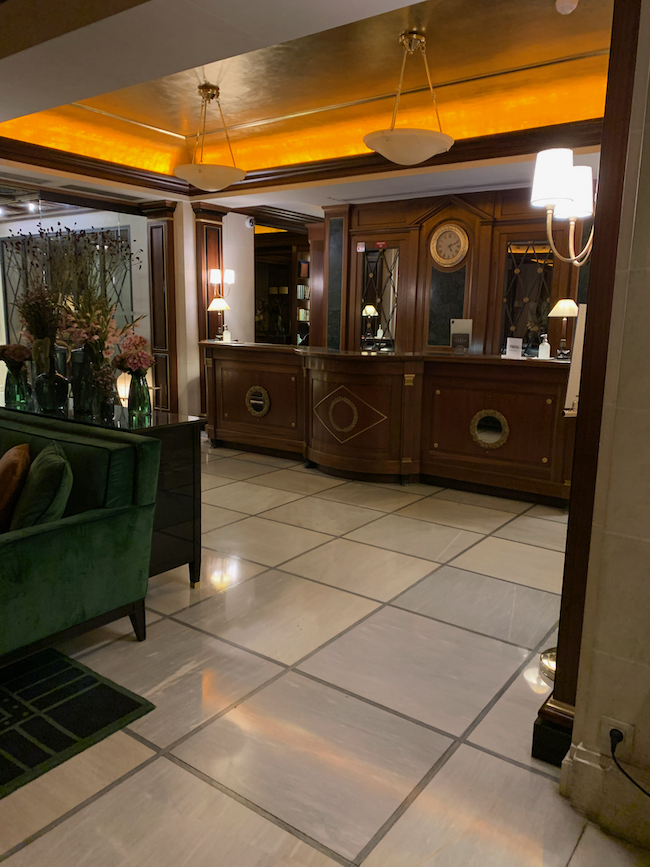

We did the right thing. We awakened the baggage person and the desk clerk; I don’t think they would have awakened us or come for our bags. Our car showed up exactly on time (a Mercedes this time, thank you Tauck, but not a Tesla) and we got to the airport in record time.
We got to the airport and went to line up at Air France and a beautiful airport Air France person asked to see our tickets, and said “Oh! You are on our partner, Delta! Not here! I invite you to walk just over there and you can arrange for your flight!”
So French! Not to be directed, not to be told, but to be INVITED to go elsewhere. We loved it.
We checked our bags, full of dirty laundry, who cares if they don’t show up on time? And we headed to the Air France lounge, which evidently IS a part of the partnership, even if we have to check in elsewhere.
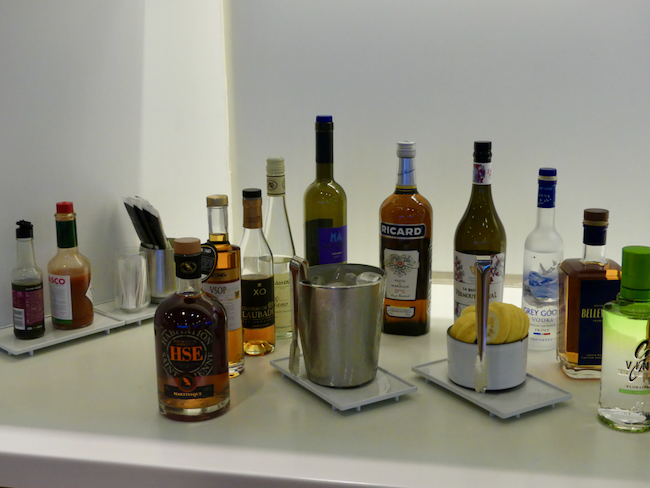
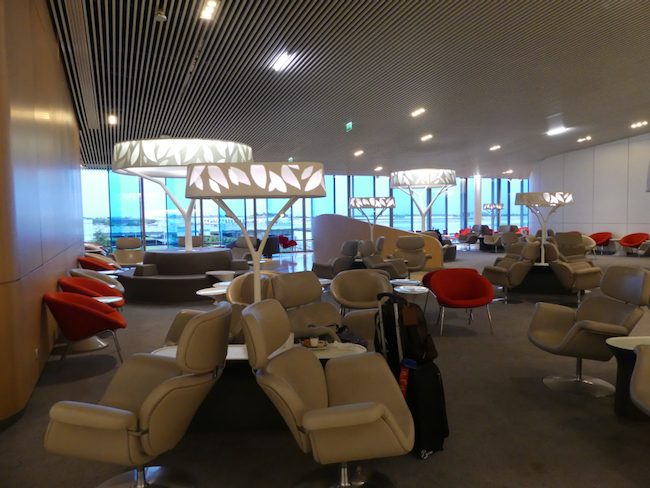
The Air France lounge is huge. The buffet is lavish. The drinks are set out and available at oh-dark-hundred in the morning. There are even showers, if I needed another shower.


We boarded on time, but our flight was late leaving because while boarding, one of the passengers tripped and fell and had to be taken to the hospital, which also required his bags be removed, and it all took time. They made up most of the time, we got to Atlanta in time to catch our Pensacola flight and our son was at the airport to transport us home.
You know me. I’m a happy kind of person. I had a great time; this trip was perfect. I wept. I didn’t want it to end, and I didn’t want to leave France.
Paris, Le Train Bleu, and Adieu
We have just enough time when we get back to the Napoleon Hotel to wash up and head right back out again to catch the Metro to Le Gare du Lyon where we have a reservation for lunch at Le Train Bleu. This is where those Navigo Easy Pass cards come in so handy – no stopping to buy tickets, we already have trips loaded on our cards.
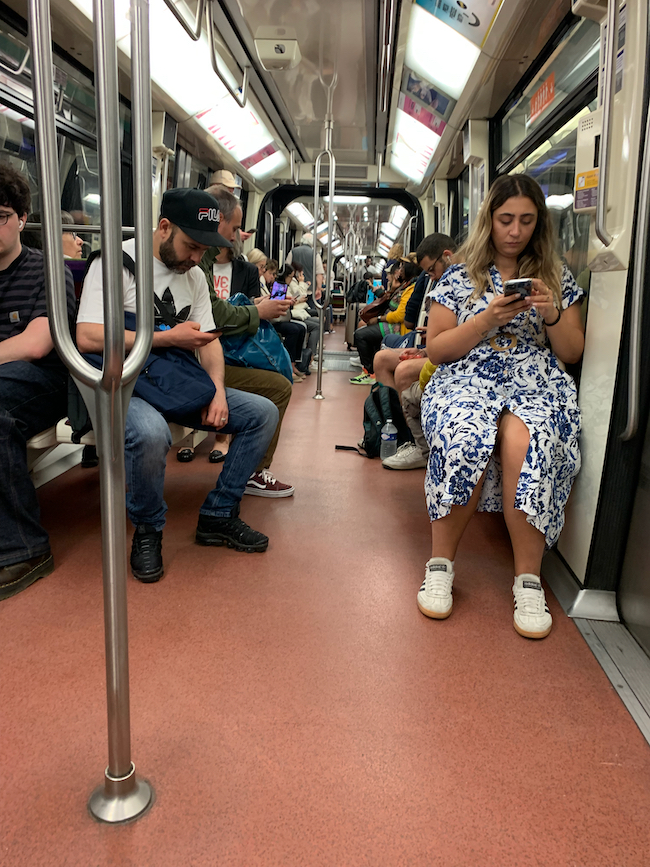
We have noticed some changes – look at this metro car – can you see how clean it is? This is not the metro I remember. I never saw a busker, not a singer, not a violin player. The French, except for one snooty shoe saleswoman, were infallibly polite and welcoming. People who waited on us in restaurants, even waiting on people with children, were patient and kind. We wondered if there had been a campaign to train people in preparation for the Olympics?
We don’t like to be late, so we often arrive too early. Never mind, there are always things to look at, and this train station, Le Gare du Lyon, is full of interesting sights and people.
One group of well-dressed, attractive young women were handing people something – religious tracts? bracelets? something for “free” but they also wanted to talk, and we could tell that the talk was about making a donation. We had heard of this technique, but this was the only time we saw it happen. We think maybe the heavy police presence in Paris has deterred a certain amount of begging and scamming, maybe even the pick-pocketing.


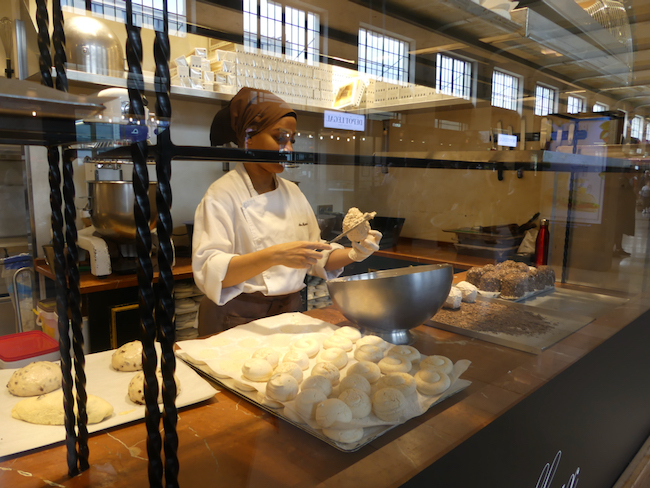

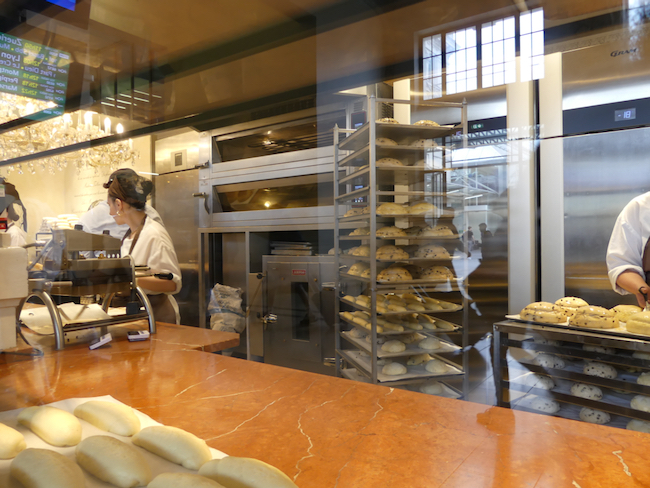
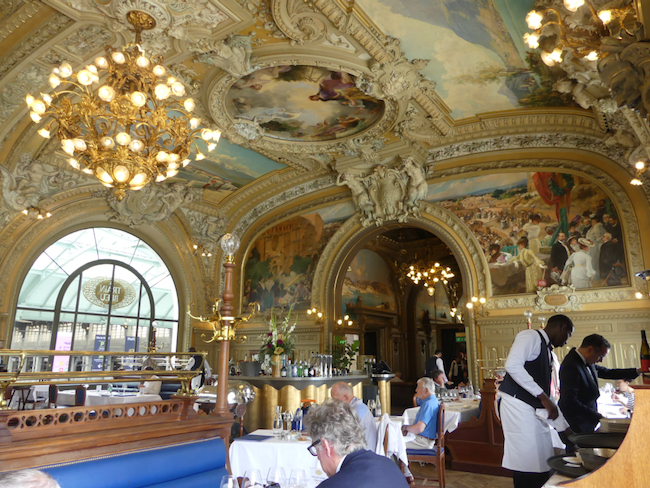
AdventureMan is hungry; he checks at Le Train Bleu to see if we can get in a little earlier than our reservation, and the answer is a very gracious “Yes!” We love the location of our table, on the side of the restaurant looking out, but with a good view of the entire (huge) restaurant.


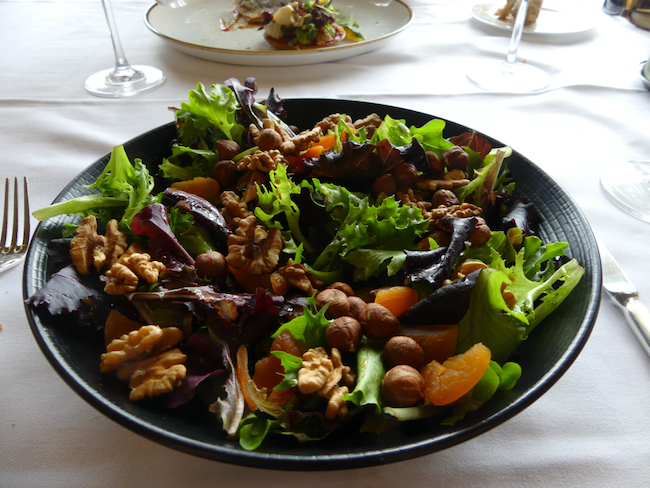
I knew what I wanted – Paté to start, and a salad for my main course. AdventureMan also had the paté and then a fish, with a sauce.


It was a lovely celebratory meal, in a glorious location. Well done, AdventureMan!
We wandered back to the hotel, repacked our bags for the following day, napped a little, and then had another small supper at Chez Barbara’s.
The “Righteous Gentiles”
Today in our church Lectionary, we celebrate those who stood up to the Nazi policies and shielded and rescued thousands of Jewish people who might otherwise not have survived the torture, imprisonment and extermination, solely for being “the other.”
PRAYER (contemporary language)
Lord of the Exodus, who delivers your people with a strong hand and a mighty arm: Strengthen your Church with the examples of the Righteous Gentiles of World War II to defy oppression for the rescue of the innocent; through Jesus Christ our Lord, who lives and reigns with you and the Holy Spirit, one God, now and for ever. Amen.
“THE RIGHTEOUS GENTILES”
Although the phrase “Righteous Gentiles” has become a general term for any non-Jew who risked their life to save Jews during the Holocaust, it here appears to apply specifically to: Raoul Wallenberg [Swedish, d. 1947] Hiram Bingham IV [d. 1988, American]; Karl Lutz [d. 1975, Swiss]; C. Sujihara [d. 1986, Japanese]; and Andre Trocme [d. 1971, French].

Raoul Wallenberg (August 4, 1912 – July 17, 1947?) was a Swedish humanitarian who worked in Budapest, Hungary, during World War II to rescue Jews from the Holocaust. Between July and December 1944, he issued protective passports and housed Jews, saving tens of thousands of Jewish lives.
On January 17, 1945, he was arrested in Budapest by the Soviets after they wrested control of the city from the Germans, and was reported to have been executed while a prisoner at Lubyanka Prison, although this is not entirely certain.
Wallenberg has been honored numerous times. He is an honorary citizen of the United States, Canada, Hungary and Israel. Israel has also designated Wallenberg one of the Righteous among the Nations. Monuments have been dedicated to him, and streets have been named after him throughout the world.
— more at Wikipedia

Hiram “Harry” Bingham IV (July 17, 1903 – January 12, 1988) was an American diplomat. He served as a Vice-Consul in Marseille, France, during World War II, and helped over 2,500 Jews to flee from France as Nazi forces advanced.
In 1939, Bingham was posted to the US Consulate in Marseille, where he, together with another vice-consul named Myles Standish, was in charge of issuing entry visas to the USA.
On June 10, 1940, Adolf Hitler’s forces invaded France and the French government fell. Several influential Europeans tried to lobby the American government to issue visas so that German and Jewish refugees could freely leave France and escape persecution.
Anxious to limit immigration to the United States and to maintain good relations with the Vichy government, the State Department actively discouraged diplomats from helping refugees. However, Bingham cooperated in issuing visas and helping refugees escape France. Hiram Bingham gave about 2,000 visas, most of them to well-known personalities, speaking English, including Max Ernst, André Breton, Hannah Arendt, Marc Chagall, Lion Feuchtwanger and Nobel prize winner Otto Meyerhof.
— more at Wikipedia
Carl Lutz (b. Walzenhausen, 30 March 1895; d. Berne, 12 February 1975) was the Swiss Vice-Consul in Budapest, Hungary from 1942 until the end of World War II. He helped save the lives of tens of thousands of Jews from deportation to Nazi Extermination camps during the Holocaust.
Lutz immigrated at the age of 18 to the United States, where he was to remain for more than 20 years. Lutz’s sojourn in the United States ended with his assignment as vice-consul to the Swiss Consulate General in Jaffa, in what was then Palestine.
Appointed in 1942 as Swiss vice-consul in Budapest, Hungary, Lutz soon began cooperating with the Jewish Agency for Palestine, issuing Swiss safe-conduct documents enabling Jewish children to emigrate.
Once the Nazis took over Budapest in 1944 and began deporting Jews to the death camps, Lutz negotiated a special deal with the Hungarian government and the Nazis: he had permission to issue protective letters to 8,000 Hungarian Jews for emigration to Palestine. Lutz then deliberately misinterpreted his permission for 8,000 as applying to families rather than individuals, and proceeded to issue tens of thousands of additional protective letters, all of them bearing a number between one and 8,000. He also set up some 76 safe houses around Budapest, declaring them annexes of the Swiss legation. Among the safe houses was the now well-known “Glass House” (Üvegház) at Vadász Street 29. About 3,000 Jews found refuge at the Glass House and in a neighboring building.
— more at Wikipedia
Chiune Sugihara (1 January 1900 – 31 July 1986) was a Japanese diplomat, serving as Vice Consul for the Japanese Empire in Lithuania. During World War II, he helped several thousand Jews leave the country by issuing transit visas to Jewish refugees so that they could travel to Japan. Most of the Jews who escaped were refugees from German-occupied Poland or residents of Lithuania. Sugihara wrote travel visas that facilitated the escape of more than 6,000 Jewish refugees to Japanese territory, risking his career and his family’s life.
When asked why he did it, he responded:
“You want to know about my motivation, don’t you? Well. It is the kind of sentiments anyone would have when he actually sees refugees face to face, begging with tears in their eyes. He just cannot help but sympathize with them. Among the refugees were the elderly and women. They were so desperate that they went so far as to kiss my shoes, Yes, I actually witnessed such scenes with my own eyes. Also, I felt at that time, that the Japanese government did not have any uniform opinion in Tokyo. Some Japanese military leaders were just scared because of the pressure from the Nazis; while other officials in the Home Ministry were simply ambivalent.
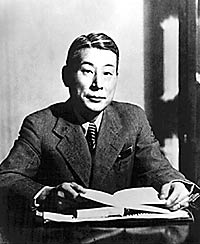
People in Tokyo were not united. I felt it silly to deal with them. So, I made up my mind not to wait for their reply. I knew that somebody would surely complain about me in the future. But, I myself thought this would be the right thing to do. There is nothing wrong in saving many people’s lives …. The spirit of humanity, philanthropy … neighborly friendship … with this spirit, I ventured to do what I did, confronting this most difficult situation —and because of this reason, I went ahead with redoubled courage. ”
When asked why he risked his career to save other people, he quoted an old samurai saying: “Even a hunter cannot kill a bird which flies to him for refuge.”
— more at Wikipedia
André Trocmé ( April 7, 1901 – June 5, 1971) and his wife Magda (née Grilli di Cortona, November 2, 1901, Florence, Italy – Oct. 10, 1996) are a couple of French Righteous Among the Nations. For 15 years, André served as a pastor in the town of Le Chambon-sur-Lignon on the Plateau Vivarais-Lignon in South-Central France. He had been sent to this rather remote parish because of his pacifist positions which were not well received by the French Protestant Church. In his preaching he spoke out against discrimination as the Nazis were gaining power in neighboring Germany and urged his Protestant Huguenot congregation to hide Jewish refugees from the Holocaust of the Second World War.

In 1938, André Trocmé and Reverend Edouard Theis founded the Collège Lycée International Cévenol in Le Chambon-sur-Lignon, France. Its initial purpose was to prepare local country youngsters to enter the university. When the refugees arrived, it also took in many Jewish young people wishing to continue their secondary education.
When France fell to Nazi Germany, the mission to resist the Nazis became increasingly important. Following the establishment of the Vichy France regime during the occupation, Trocmé and his church members helped their town develop ways of resisting the dominant evil they faced. Together they established first one, and then a number of “safe houses” where Jewish and other refugees seeking to escape the Nazis could hide. Many refugees were helped to escape to Switzerland following an underground railroad network. Between 1940 and 1944 when World War II ended in Europe, it is estimated that about 3500 Jewish refugees including many children were saved by the small village of Le Chambon and the communities on the surrounding plateau because the people refused to give in to what they considered to be the illegitimate legal, military, and police power of the Nazis.
— more at Wikipedia
I am thankful for Sawtucket, who has kept me up with my daily Lectionary readings for more than 22 years. I thank Sawtucket for today’s reading, reminding us that we are all of one blood, one humanity, no matter our skin color, our nationality, nor our religion. We are human beings, and our job is to watch over one another.
Bravo, Kuwait!

Bravo, Kuwait, for the first election in years, supplying Kuwait with what the New York Times describes as a “robust” collection of representatives.
As we know, democracy is messy. It is often compared to sausage making – you don’t want to know what goes into it. Having an autocratic leader, however, leads to increasing gaps between the very wealthy and privileged, and those who are at the bottom, working their bottoms off just to put a roof over their heads and food in the mouths of their children.
I look at the turbulence and polarization in my own country and thank God for a breath of fresh air, as this news of the election in Kuwait gives me hope. We are praying for a fair election in the United States.
Recent Comments
intlxpatr on Shampoo Ginger tigerbutterya0c5ff1d… on Shampoo Ginger intlxpatr on British Soldier Kidnapped, Esc… John on British Soldier Kidnapped, Esc… intlxpatr on British Soldier Kidnapped, Esc… Wikipedia Donate Button

Amazina


Early Voting in Florida


