Pecan – Date Pie (for Mrm)
This is for Mrm, who requested EASY recipes. My friends, good cooking CAN be easy, and with rare exception, all my recipes are EASY. The treasures are the recipes which are EASY and yummy, too. This one is so rich and so sweet that people can’t resist it – they go back for more, and they want the recipe. It was sent to me by one of my Southern friends – they always have the best recipes!
The hardest part of this recipe is getting the seeds out of the dates – but it only takes a half cup full of dates, and that isn’t much.
Pecan – Date Pie
1/2 cup whole pitted dates, chopped
1/2 cup chopped pecans
1 cup dark corn syrup
1/2 cup packed brown sugar
3 T. all purpose flour
1 teaspoon vanilla
4 large eggs
Sprinkle dates and pecans over crust. Combine corn syrup and next 5
ingredients in a bowl, beat with a mixer at medium speed until well
blended. Pour into prepared crust. Bake at 325 degrees F. (180 degrees C.)
for 55 minutes or until knife inserted comes out clean. Cool on a wire rack. Serve
with whipped cream.
“Pour into prepared crust” – Hohohohohoho – if you can find a prepared crust in Kuwait!
But you can find digestive biscuits/ graham crackers, so make this easy easy crust – crush about 1 cup of the crackers/biscuits, add 1/4 cup medium chopped walnuts or pecans, and 1/4 cup melted butter. Press into the bottom and a little up the sides of a BUTTER greased pie tin.
Travel Nerds
We are a bunch of travel and geography nerds in my family. Nothing makes us happier than jumping in a airplane, reaching an exotic location and driving, getting our feet on new ground, seeing new things, learning new ways. We all have cameras glued to our hands and laptops stuffed in backpacks.
All my married life, people have looked at me with pity and tole me how they can’t believe I live with such uncertainty, never knowing where I will be in the next year – even the next few months. What I tell them is this – the truth is, we ALL never know. We ALL never know when something will happen that will change our lives dramatically, forever. We live day to day, not thinking about all the things that can happen. If we think too much about them, we might go crazy.
I consider myself blessed. I was created with a restless spirit, a spirit for new experiences and new ways of thinking. I was given a life where all those things became my daily bread.
What is fun for me is watching the next generation of young adults discovering their own lives, who they are meant to be.
My nephew, at Google Earth took his love of geography to new heights. He works in a place he loves, doing work he loves. He wrote to me yesterday, to tell me about a new game being played, a grown-up version of the old “Where in the World is Carmen Sandiego.” (one of the earliest computer games for kids) He has published a really really hard one on the Google team LatLong blog (as he says, he has the home court advantage in this game!) and he refers us to another blog, Where on GoogleEarth? where there are a series of contests to see if you can identify landmarks, special places, from the sky.
Here, for example, is the photo from contest #22 – and people have to write in telling what it is. Can YOU tell what it is? 🙂

Bullying and 19 Minutes; Jodi Picoult
When my blogging friend Chirp makes a recommendation, I have learned to order the book and read it. She reads books that make you think! The latest book is Jodi Picoult’s 19 Minutes, a book about a kid who is sensitive and kind and funny, and plays by the rules – he is good at sharing, and listening and all the things we try to teach our children to be good at.
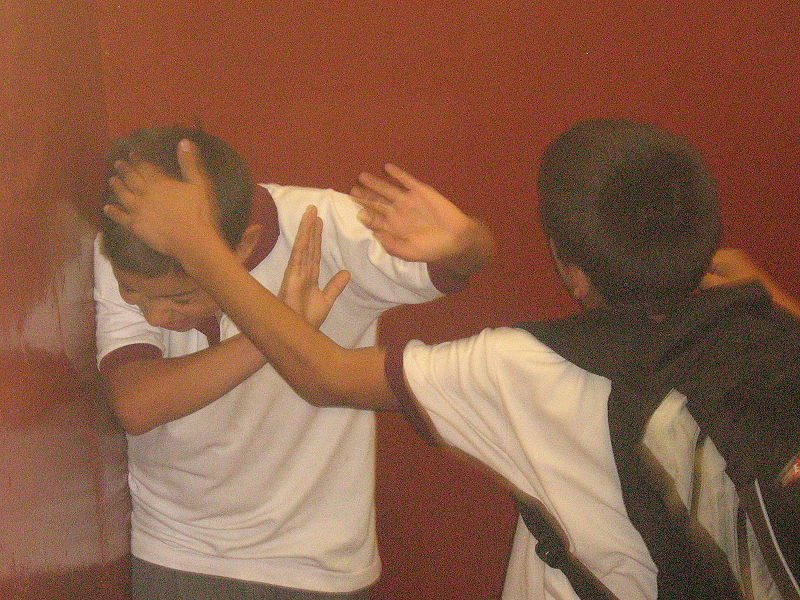
He gets bullied. From the time he starts school, he is bullied physically and mentally and emotionally. He does the right thing – he reports it. The schools do nothing, or so little that it only makes things worse for him. Pushed too far, one day snaps, he goes ballistic. He walks into the school and shoots 19 of his classmates.
One problem is access to weapons. Literally, physically teenagers have not yet developed the judgement areas of the brain. I am guessing in males it takes even longer, and I only guess that because of all the traffic fatalities and physical damage adolescent boys inflict upon themselves – and their victims. Maybe it is that fatal combination of poor judgement and testosterone that pushes them too far. Access to weapons – guns, knives, fast cars – makes them even more lethal.
Before I wrote this review, however, I had to do a lot of thinking. This book is about bullying, and even as adults we come across bullies. Our household helpers are terrified of the police – those who are here to protect us. The police use their position to try to bully phone numbers out of pretty Kuwaiti girls, and to exact sexual favors from the Asian domestics. Not all police are bullies, but if a person has that tendency, the position allows him/her to use that power wrongly.
And bullying doesn’t stop with graduation from high school. We are seeing the same kinds of behavior at universities – Virginia Tech – and in the workplace – “going postal” and GMAC just to name two. People who are bullied sometimes turn, they go out in a blaze of glory.
I’ve been bullied. People who are raised to have good manners are often victims of those who are willing to overstep the boundaries. We make excuses for them – we say they are oblivious. I am beginning to think that many a bully is NOT oblivious, but has learned to push to get his or her own way.
With men, the bullying is more physical, and it’s all about jockying for position – number one in the pecking order, the next promotion, the boss’s golf partner, etc. If you think women are gossips – you oughta hear the men! When I hear men “bantering” it’s all about who’s got the “biggest.” Or maybe, the devil whispers in my ear, it’s about who can make you THINK his is the biggest.
With women, in my experience, most of the bullies are physically bigger. They are women who – literally – throw their weight around. They are women who will interrupt anyone and override their suggestion with a loud voice. They are women who have temper tantrums, and hurt feelings, who go from person to person forming alliances that dissolve with the next disagreement. That’s the sad truth – a bully wants his or her own way – all the time. Once you go against them, you have to watch your back.
Picoult has done her homework. Bullies are often likeable enough people! A bully carries his/own burden, however – and that is a desperate need for popularity. You can see this in animal behavior; once a creature has achieved dominance, it takes enormous energy to maintain that position, so much energy that the rest of your life shrinks as your focus must be on maintaining dominance.
The UK, Canada, and the US all have websites about bullying, trying to put a stop to it in the schools. What do they define as bullying?
People calling you names
Making things up to get you into trouble
Hitting, pinching, biting, pushing and shoving
Taking things away from you
Damaging your belongings
Stealing your money
Taking your friends away from you
Posting insulting messages on the internet or by IM (cyberbullying)
Spreading rumours
Threats and intimidation
Making silent or abusive phone calls
Sending you offensive phone texts
Bullies can also frighten you so that you don’t want to go to school, so that you pretend to be ill to avoid them
What can people with manners do against a bully?
In general, the first thing to do is tell an adult – it doesn’t have to be your parents. Additonal suggestions suggest creating your own support network – create a wide network of friends. Join interest groups, in our out of school.
When our son was bullied in school, he worked hard and earned a black belt in karate, and then went on to earn further degrees, and to teach karate – while still in high school. Just knowing that he had a lethal skill made him walk differently, made the bullies afraid to target him. He went to a magnet school, where there was a high degree of chaos, and he sought out and made friends with the biggest people he could find. He used his head. He made it through. Of all his accomplishments, one of the things that made us most proud of him was his ability to stick it out and to prevail.
I worked in a high school. My office was a safe haven for many kids, kids who found high school dynamics pure hell. Most of them were emotionally years ahead of the crowds roaming the hallways, the cruel kids, for whom high school will probably be the highlight of their lives.
“You’re going to love being an adult,” I would tell them. “Hang in there. For them, this may be as good as it gets, but your life is going to get better and better.”
Geeks don’t always get a lot of respect. The two guys that graduated high school at the bottom of the class with my son already had a flourishing computer networking business going. If you haven’t noticed, most of the people who are making it big financially are people who have learned how to use their heads.
I have learned something else. You can beat a bully at his or her own game. Bullies usually rely on instilling fear in others, but rarely do they do their homework.
Choose your battles. Bullying hurts everyone. If you see someone being bullied and you can do something about it then and there, stand up for the person being bullied. All you have to do is say “that’s not funny, just stop.” Many times bullies are so shocked at being challenged, they will stop! If your judgement tells you it would be unsafe to say anything, quickly tell an adult, a supervisor, a manager, what you have seen.
If a bully is trying to push through something you believe is wrong, you can quietly discuss things one on one with others, and make a plan. You can call for a vote! You can quietly stand up to a bully. You can tell a bully “it’s my turn to talk” and they have to shut up! (When you do this, you have to be very careful to listen when the bully is speaking so that everyone knows it really IS your turn to talk.) You can use a little gentle humor – bullies usually only like humor when it is aimed at someone else. They haven’t a clue what to do when it is aimed at them!
If it is annoying, but not something worth fighting over, let the bully get his or her own way. They usually end up shooting themselves in the foot, self-destructing. The adult bully ends up driving people away, and then wondering why he/she has no friends?
Living your own life well is your best revenge!
Thank you, Chirp, for another book that really made me think!
No Whining!
The other day AdventureMan and I happened to be in the same room and the TV happened to be on and a woman on one of the morning shows (shown in the afternoon in Kuwait) was talking about how to make your kids stop whining.
“I don’t remember (our son) ever whining,” I said, “do you remember him whining?”
“When he was very little, sometimes he would get fussy,” AdventureMan replied.
“Yeh, but fussy is different, when you are little and overtired, or have an ear infection or are hungry – even we get fussy!” I laughed.
I do remember a few awful times when, after standing in a long line in the military commissary on a payday I finally got to the checkout stand just as my son was totally losing it, having to get a month’s worth of groceries paid for and packed while he was screaming bloody murder and the groceries are being packed and people are looking at me like I am a criminal because I can’t feed him there in front of everyone. As soon as I could get him to the car, I could nurse him, but meanwhile, I was hostage to his relentless desparate wailing. Is their any sound as compelling as a wailing baby?
But that is to be expected when you have a baby; babies sometimes have to wail.
But whining?
I was lucky, I was able to be a stay-at-home mom when my son was little. We spent a lot of time together. I could usually distract him, I could usually put him down for a nap if he was tired, I could usually schedule myself to be around to feed him when he needed feeding. I remember ear-infection fussing, and teething fussing, but I don’t remember any whining.
AdventureMan said I wouldn’t put up with whining, not from him, not from our son.
Our son had a lot of expectations on him. AdventureMan was an officer, and we had obligations. (What? You thought only Kuwaitis had expectations and obligations?) Sometimes, when our son would rather be playing, he had to attend an event, or an official function, and he had to behave, because he was his father’s son, and his behavior would reflect on his father. When he would rather be wearing a sweatsuit and trainers, he had to wear dress pants and a dress shirt and tie, and dress shoes. If he complained, I would say “you don’t have to like it, you just have to do it. I don’t like it either!”
I had two tools.
First, as soon as he could talk, I taught him to say “can we negotiate?”
Most of the time, we can find a way to make a bad situation better. Often, he had great suggestions, like “can we go to La Gondola and have a pizza afterwards, and can I invite Michael to go with us?” Whatever gets you through what you don’t want to do, I would think to myself, and agree. Occasionally, but not often, there were non-negotiables, like moves, and then, you just have to grit your teeth and get through it.
Second, I used incentives. Some people might call them bribes, but here is how it worked.
I knew it was in his best interest to get good grades, and that it was my responsibility to help him learn how to get those grades. On the first day of school, I would take him to the toy store and he could pick out what he wanted to work for. We would set goals for each class; we would write down those goals and post them on the refrigerator. At the end of the semester, when those goals were met, he got his prize. The hardest hardest part for me was NOT giving him a prize when the goal was not met, but encouraging him that I know he will get the prize next time. I think it was harder on me NOT giving in than on him, not getting the reward.
My Mother thought I was spoiling him because we would negociate. “You are the mother,” she would say. “You are the boss.”
“Yes, Mom,” I would respond, “but I NEED for him to cooperate. I need for him to feel like he has some choice.” It was just a generational difference.
Now I am getting to see a new generation having their babies. My niece taught her baby basic sign language, and continues to teach him more as time goes on. Even pre-verbal, he has ways of telling her he is hungry, thirsty, wants to be picked up, etc. What an amazing and wonderful idea, what control it gives a baby to be able to express these basic desires, to communicate needs and wants. I am in awe of these young mothers and the care with which they are raising their babies.

Kuwait is blessed to have a blog written by young mothers for other young mothers, full of great ideas. Many of the ideas I THINK are great, but because some are written in Arabic, and my vocabulary and grammar are not that strong, i can’t really read them. That blog is Organic Kuwait; they even have books published for children explaining Ramadan and Hajj in age-appropriate language. Makes me wish I were a young mother again! 🙂
Home Schooling Muslims in America
The New York Times has this fascinating article:
LODI, Calif. — Like dozens of other Pakistani-American girls here, Hajra Bibi stopped attending the local public school when she reached puberty, and began studying at home.
Her family wanted her to clean and cook for her male relatives, and had also worried that other American children would mock both her Muslim religion and her traditional clothes.
“Some men don’t like it when you wear American clothes — they don’t think it is a good thing for girls,” said Miss Bibi, 17, now studying at the 12th-grade level in this agricultural center some 70 miles east of San Francisco. “You have to be respectable.”
Across the United States, Muslims who find that a public school education clashes with their religious or cultural traditions have turned to home schooling. That choice is intended partly as a way to build a solid Muslim identity away from the prejudices that their children, boys and girls alike, can face in schoolyards. But in some cases, as in Ms. Bibi’s, the intent is also to isolate their adolescent and teenage daughters from the corrupting influences that they see in much of American life.
About 40 percent of the Pakistani and other Southeast Asian girls of high school age who are enrolled in the district here are home-schooled, though broader statistics on the number of Muslim children being home-schooled, and how well they do academically, are elusive. Even estimates on the number of all American children being taught at home swing broadly, from one million to two million.
No matter what the faith, parents who make the choice are often inspired by a belief that public schools are havens for social ills like drugs and that they can do better with their children at home.
“I don’t want the behavior,” said Aya Ismael, a Muslim mother home-schooling four children near San Jose. “Little girls are walking around dressing like hoochies, cursing and swearing and showing disrespect toward their elders. In Islam we believe in respect and dignity and honor.”
Still, the subject of home schooling is a contentious one in various Muslim communities, with opponents arguing that Muslim children are better off staying in the system and, if need be, fighting for their rights.
Robina Asghar, a Muslim who does social work in Stockton, Calif., says the fact that her son was repeatedly branded a “terrorist” in school hallways sharpened his interest in civil rights and inspired a dream to become a lawyer. He now attends a Catholic high school.
“My son had a hard time in school, but every time something happened it was a learning moment for him,” Mrs. Asghar said. “He learned how to cope. A lot of people were discriminated against in this country, but the only thing that brings change is education.”
Many parents, however, would rather their children learn in a less difficult environment, and opt to keep them home.
You can read the rest of the article HERE
Ahmadi Singers, Orchestra and Pirates of Penzance

Woooo Hooooooooo Al Ahmadi Singers and Orchestra! I love Gilbert and Sullivan so much, I might have to buy tickets for all three nights! The Gala includes a dinner, and the following two nights do not, but the singing will be great all three evenings, I have been promised.
The last time I saw Pirates of Penzance was at the Qatar Academy, and the Emir’s son was the hero. 😉 He did it with a lot of panache.
Pirates of Penzance! See you there!
A Case of Two Cities with Inspector Chen: Qiu Xiaolong
When my sister Sparkle recommends a book, I have learned to listen. I think I ordered this book about six months ago, but never cared enough to actually read it. After reading a recent Donna Leon (like dessert, I use it as a reward for reading something more challenging) I decided it was time to tackle Qiu Xiaolong.
I believe A Case of Two Cities is the first in the series; I tried very hard to make sure it was. When I first started reading it, it was difficult, but it didn’t take long to adjust. When you read a detective story written in a foreign culture, you have to park your old way of thinking, and quickly adapt to a new way of thinking. First, you have to learn what that new way of thinking is. They don’t just tell you at the beginning of the book “Here are the differences in values – you will notice . . .” no, but Qiu Xiaolong is courteous enough to take us by the hand and lead us gently into the Chinese way of thinking, the Chinese way of getting things done, and the technicalities of Chinese detective work.
As we meet Inspector Chen, a published poet, and a detective, ten pages into the book, a new anti-corruption campaign is starting in Shanghai, and Inspector Chen has been given a special assignment – a qinchai dacheng – as “Emperor’s Special Envoy with an Imperial Sword.” Even though imperial days are long gone, this warrant gives him emergency powers to search and arrest without reporting to anyone – and without a warrant. He is to seek and find Xing, a corrupt businessman who has caused huge loss to the national economy and is in danger of tarnishing the Chinese national image, and Xing’s associates.
Just as in the Donna Leon books about Commissario Guido Brunetti, and the Bowen books about Gabriel duPre, and James Lee Burke’s books about New Orleans, and Cara Black’s books about Aimee LeDuc, the detectives and investigators have to walk a fine line between going after the criminal and overstepping their warrant – stepping on the toes of those also engaged in corruption so entrenched that it has become a way of life. Each of these detectives has to maneuver that treacherously fine line – who determines when corruption has become too much? It usually puts their own lives in danger at some point, as those manipulating the system and making a fortune out of it do not want to be caught, do not want to be exposed, and will go to great lengths to protect their ill-gotten gains.
And just as in the above books, the book is more about the actual process than the crime itself. Inspector Chen must go about his task indirectly, having chats here and there, gathering threads of information with which he tries to weave a plausible tapestry of events.
As I was reading A Case of Two Cities, I kept making AdventureMan take me out for Chinese food! The meetings are often held over food, and the descriptions are mouth-watering.



Best of all, when you read these books, you get a tiny little glimpse into another way of thinking, another way of doing business. We are all human, we all have the same needs, and we differ in how we go about getting those needs met. We differ in the way we think. It helps to enter another way of living, another way of thinking, it helps to visit through these books so that we can increase our own understanding that our way of doing things is not the only way, maybe (gasp!) not even the “right” way! Maybe (crunching those brain cells really hard to output this thought) there is more than one “right” way?
Muslim Bioethics
I love Wired because it gives me science news in a language I can understand:
A Beginner’s Guide to Muslim Bioethics
By Brandon Keim March 04, 2008 | 1:26:15 PMCategories: Bioethics, Biotechnology, Religion
When Sunni and Shiite scholars disagreed over the ethics of cloning animals, I wondered whether there were other bioethical conflicts in the Muslim world.
Are Muslims split over stem cell research and genetically engineered crops? Generally speaking, do they approach biotechnologies in the same way — or variety of ways — as Western cultures?
I posed the question to a handful of Muslim bioethicists. The first to respond was Brown University anthropologist Sherine Hamdy. Wrote Hamdy,
I think it would be easy and reductionist to make this into yet another ‘Shiite vs. Sunni’ issue, but there has always been a wide space of interpretation and widely debate even within the Sunni Muslim world about various biotechnologies including cloning. Most religious sources say that if a given technology, e.g. cloning is for beneficial purposes and the good outweighs the negative (if there is potential for human cures, etc.) then it is permissible, others have cautioned about the potential danger of creating a ‘super race’ of people, animals….so most of the disagreement is actually about the understanding of the technology itself and what impact it might have.
Would it be a bit too easy and reductionist, I asked, to then say that Muslims are less inclined to take an absolutist position and instead base their judgments by weighing the risks and benefits of each case?
You can read the entire article, and related articles, HERE
Goat Grope
I love living in Kuwait. Just when you start to take everything for granted, you get a little jaded, you even start driving a little like a Kuwaiti, something happens that reminds me I’m really not in Kansas, and I get a big grin. The other day, on a back highway, we came across a whole herd of camels. We used to see these all the time in Qatar, but this is my first time seeing camels just out roaming in such large numbers in Kuwait. Just reminds me how amazing life is, this little girl from Alaska is out watching a camel herd in Kuwait. Just too amazing for me.
In the middle of the most opulent housing areas in town, you will hear roosters crowing. Sometimes, near the Eid festivals, you will hear sheep baaaaaahhhhhh-ing.
Leaving a local store recently, I heard a very very loud, desperate cry, like “NNNNNAAAAAAAAAAAAAAAAAAAAAAaaaaaaHHHHHHHHHHHHHHHHHHHHHHHHHHHHHHHHH” and I looked around and there was a woman, and her son, and a very reluctant, very large, totally freaked out goat. The little lady has one of those camel whips, and she is whipping the hell out of the goat, the son is pulling on the muzzle, the goat has his feet dug in and is rearing back and howling for dear life.
Goats really are not my favorite creatures. I find them very . . . hmmmm.. . . . goaty. They have these filthy beards that always have stuff caught in them, they have these weird cold eyes that sort of pop out of their heads, and there is nothing cute about them, but this goat’s screaming really got me. At the same time, watching these two grown-ups with this very very stubborn goat made me laugh. To get the goat across the road, the son had to pull with all his strength, and the little old woman had to get behind and push. I wish I could have taken that photo, but I was busy turning my car around to go back and get any shot I could get.
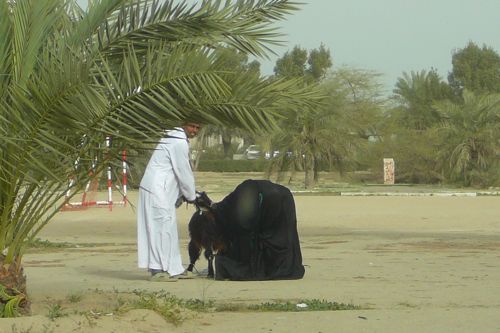
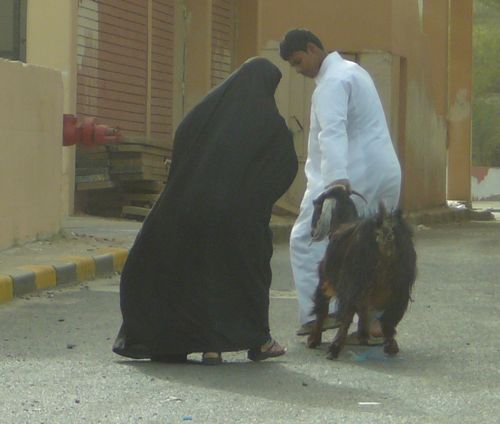
And THAT is why I tell you to always carry your cameras in your car!
Donna Leon: Suffer the Little Children
After reading Zanzibar Chest I decided it was time to give myself a break, and I allowed myself another Donna Leon book, this one Suffer the Little Children. I am currently reading another detective series, recommended by my sister, set in China. What they all seem to have in common is a very tired, sad, jaded view of corruption in society, and particularly among the poorly paid police. Sigh.

In this book, a Doctor and his wife are invaded in the middle of the night by the carabinieri, a kind of police in Venice. I am not sure how the two agencies differ, maybe it is like the difference between state police and local police in the US, but when the paper was faxed over coordinating with Brunetti’s office, it got lost somewhere, and the action was never coordinated, and Brunetti gets a call in the middle of the night.
The doctor and his wife have adopted a child illegally. They bought an unwanted child from an Albanian woman, paid for her pregnancy expenses, paid a huge fee to her, and then had the child taken from them. Here is the saddest part of the story – the child’s mother doesn’t want the child, the illegally adopting parents want him back desperately, but the child is sent to a state orphanage, because of the illegal adoption.
It is a very sad book.
Here is why I read Donna Leon – some of her paragraphs are just brilliant. Memorable. Unforgettable.
“Brunetti’s profession had made him a master of pauses: he could distinguish them in the way a concert-master could distinguish the tones of the various strings. There was the absolute, almost belligerent pause, after which nothing would come unless in response to questions or threats. There was the attentive pause, after which the speaker measured the effect on the listener of what had just been said. And there was the exhausted pause, after which the speaker needed to be left undistrubed until emotional control returned.
Judging that he was listening to the third, Brunetti remained silent, certain that she would eventually continue. A sound came down the corridor: a moan or the cry of a sleeping person. When it stoped, the silence seemed to expand to fill the place.”
When you read Donna Leon, you forget you live anywhere else. For one brief moment, you become Venetian, you live in Guido Brunetti’s shoes. The speak the Venetian dialect, you think like a Venetian. What an escape!
The paperback edition will be out in April for $7.99 at Amazon.com for $7.99 plus shipping.
Recent Comments
ExpatAlien on What Country am I Living … intlxpatr on Yellowstone: Old Faithful to C… Michelle on Yellowstone: Old Faithful to C… Cathy on No Grown-Ups in Charge intlxpatr on Waiting for Snow Wikipedia Donate Button

Amazina


Early Voting in Florida


 Here There and Everywhere