The Official Worst Drivers in America: Miami
Slate.com has figured out which city has the worst drivers in America: Miami, Fla.
Slate looked at years of data about traffic accidents, automotive fatalities, alcohol-related driving deaths and pedestrian strike rates as indicators of bad driving.
Three out of the five cities with the worst drivers are found in the Sunshine State, with Miami topping the list as the absolute worst. Miami is first in auto fatalities and pedestrian strikes and, according to Slate, first in “obscenity-lace tirades of their fellow driver”. Fellow Floridian cities Hialeah, which comes in at number three, and Tampa at number four also seem to host a populace with a passion for running down pedestrians and fatal car accidents.
Miami shows up on more than just Slate.com’s worst list. The Huffington Post reported that Miami also had the most hit-and-runs in Florida last year, an incredible 35 a day. Transportation for America also ranked the most dangerous cities in America to drive in, with the top four all in Florida. Maybe Floridians should look into buying heavy-duty trucks and steering clear of sidewalks.
From the original report at Slate.com where you can read the entire article:
Adjusting the Allstate rankings for mileage this way has significant effects. Washington, D.C. remains the worst driving city using the insurance claims data, but Philadelphia surges to second worst. Hialeah drops seven places, from fourth to 11th.
Next we consider additional indicators. Car crashes are bad, but some accidents are worse than others. In July 2012, the Centers for Disease Control and Prevention published automobile fatality data for major cities and metropolitan statistical areas from the year 2009. It’s useful for our purposes, but it comes with a couple of caveats. The researchers didn’t publish data for some of the smaller cities on our list. In those cases, we’ll use data from the larger metropolitan area. In addition, three cities (Boston, Newark, N.J., and Providence) had fewer than 20 fatalities, but the precise number is unpublished. We’ll assume that each of these cities had 10 fatalities, so we have a number to enter into the calculations.
Drunk drivers are bad drivers, and some cities have far more of them than others. Not all locales publish reliable data on drunk driving fatalities, so we’ll turn to the Century Council, an association of distillers organized to combat drunk driving. The group published the number of fatalities from alcohol-related car accidents in 2011. The data are, unfortunately, broken down by state rather than city. So, for our purposes, the sins of the state will be visited upon the cities. (New York City has reliable data, so we can use city-specific data in that instance.) We can’t adjust the statewide data for mileage, because our mileage numbers relate only to cities themselves. So DWI fatalities will have to be computed per capita, unadjusted for how many miles residents of a city drive.
Pedestrian strikes are another key metric. For this indicator we turn to the CDC’s WONDER, a searchable database of morbidity and mortality statistics. It’s a priceless epidemiological tool as well as a bottomless source of trivia. The most granular data on pedestrian injuries and deaths is by county.
You might object to the use of pedestrian injuries as a metric of driver incompetence, because some cities have far more pedestrians than others. That’s a fair point, but consider New York City. It is, by far, the most walked city in the United States. Two-thirds of New Yorkers either walk or use public transit to get to work. According to the website WalkScore.com, only 2 percent of New Yorkers live in neighborhoods where cars are necessary. While every pedestrian strike is a tragedy, there are fewer in New York than you might expect. Miami-Dade County, a significantly less walked city, had 20 percent more pedestrian strikes per mile driven between 2006 and 2010 than New York.
. . . . .
And now, America, on to the cities with your worst drivers.
No. 5: Baltimore. Baltimoreans just can’t keep from running into each other. They were outside the top 10 in fatalities, DWI deaths, and pedestrian strikes, but their rate of collision couldn’t keep them out of the top five overall.
No. 4: Tampa, Fla. Tampa doesn’t do any single thing terribly, but it is consistently poor: 18th worst in years between accidents, fifth in traffic fatalities, tied for 11th in DWI fatalities, and 10th in pedestrian strikes. If the city had managed to get outside the bottom half in any individual category, Tampa residents might have avoided this distinction.
No. 3: Hialeah. The drivers of Hialeah get into a middling number of accidents, ranking 11th among the 39 candidates. But when they hit someone, they really mean it. The city finished third for fatalities. They also have a terrifying tendency to hit pedestrians.
No. 2: Philadelphia. Drivers in the city of brotherly love enjoy a good love tap behind the wheel. Second-places finishes in collisions and pedestrian strikes overwhelm their semi-respectable 16th-place ranking in DWI deaths.
No. 1: Miami. And it’s not even close. First in automotive fatalities, first in pedestrian strikes, first in the obscenity-laced tirades of their fellow drivers.
A couple of other noteworthy findings: Californians did reasonably well. Although the Golden State had seven cities among our 39 candidates, only Glendale finished in the top half of the table. Louisiana’s two entries, Baton Rouge and New Orleans, finished 6th and 15th, owing to the state’s terrible record of drunk driving fatalities.
Washington, D.C., the whipping boy of the Allstate rankings, dropped to 16th, owing to low numbers of DWI fatalities. Boston drivers don’t deserve the torment they receive. They have few automotive fatalities and rarely kill people in alcohol-related accidents. It goes to show how flawed opinion polls can be.
Touched the Hem of His Garment
Today’s meditation from Forward Day by Day touches on one of my very favorite stories – and its opposite. It’s all about the power of belief. The woman, suffering from bleeding, would have lived a terrible life, considered unclean, untouchable, and trying everything to be cured without success. Just a touch – one touch – and her illness is gone. Jesus is astonished and tells her that her faith has made her well.
In contrast, the people in his own village are skeptical. How can good ole Jesus, son of Mary and that carpenter, how can he be anything special? In the face of such callous disbelief, Jesus can do little.
SATURDAY, July 27
Mark 6:1-13. And he could do no deed of power there, except that he laid his hands on a few sick people and cured them.
What a contrast, in just a few verses. Yesterday the bleeding woman merely touched Jesus’ garment, and Jesus’ power streamed into her. Today he is home, and those who watched him grow up ask, “Just who do you think you are?” and the Son of God is stopped in his tracks, like Superman when he is exposed to kryptonite.
My field education rector preached on this passage a year ago, and I was spellbound by his ending. He asked, “If Jesus came to All Saints, would he be able to do deeds of power?” Then the rector got even more personal, asking, “If Jesus came to you, would he be able to deeds of power?”
Oh, how I hope so. I’m not sure how to have the faith that allows Jesus to perform deeds of power, but I can see what kind of behavior does. It is hopeful, brave actions that seem to open the way for Jesus to work; and it is arrogant, fear-based behavior that seems to block the way.
Lord, teach us not to fear the change you bring. Teach us to reach out to touch your garment.
When my Mother was still living on her own, there was a revolving guest room, and my sister left a CD for me there, as she departed and I arrived, which contained the song above. I want it sung at my funeral. It is a succinct statement of faith; it is the song of the bleeding woman who believes and is cured, and nothing is ever the same.
Pakistan’s Swat Valley Women Fight Back with Jirga
I love this. Women are using technology – and the traditional system – to persist in seeking justice for women who are often little more than slaves to their husband.

Tahira
Women in Pakistan’s Swat valley are making history, and perhaps some powerful enemies, by convening an all-female jirga, a forum for resolving disputes usually reserved for men. Some readers may find details of this report by the BBC’s Orla Guerin disturbing.
Tahira was denied justice in life, but she continues to plead for it in death – thanks to a grainy recording on a mobile phone.
As she lay dying last year the young Pakistan wife and mother made a statement for use in court.
In the shaky amateur video, she named her tormentors, and said they should burn like she did.
Tahira was married off at the age of 12 and died last year following a suspected acid attack
Tahira’s flesh was singed on 35% of her body, following a suspected acid attack. Her speech was laboured and her voice was hoarse, but she was determined to give her account of the attack, even as her flesh was falling off her bones.
“I told her you must speak up and tell us what happened,” her mother Jan Bano said, dabbed her tears with her white headscarf. “And she was talking until her last breath.”
Tahira’s husband, mother-in-law, and father-in-law were acquitted this month of attacking her with acid. Her mother plans to appeal against that verdict, with help from a new ally – Pakistan’s first female jirga.
Under the traditional – and controversial – jirga system, elders gather to settle disputes. Until now this parallel justice system has been men-only, and rulings have often discriminated against women. The new all-women jirga, which has about 25 members, aims to deliver its own brand of justice.
It has been established in an unlikely setting – the scenic but conservative Swat valley, formerly under the control of the Pakistan Taliban. We sat in on one of its sessions in a sparsely furnished front room. Women crowded in, sitting in a circle on the floor, many with children at their feet. Most wore headscarves, and a few were concealed in burqas.
Probing injustice
For more than an hour they discussed a land dispute, problems with the water supply, unpaid salaries, and murder. The only man in the room was a local lawyer, Suhail Sultan. He was giving legal advice to jirga members including Jan Bano who he represents.
“In your case the police is the bad guy,” he told her. “They are the biggest enemy. ” He claims the police were bribed by the accused, and were reluctant to investigate the case properly.

The jirga tackled land disputes, water supplies, and murder
The jirga is making history, and perhaps making enemies. In Swat, as in many parts of Pakistan, men make the key decisions – like whether or not their daughters go to school, when they marry, and who they marry. And oppression starts early. Tahira was married off at just 12 years old, to a middle-aged man.
“Our society is a male-dominated society, and our men treat our women like slaves,” said the jirga founder, Tabassum Adnan. “They don’t give them their rights and they consider them their property. Our society doesn’t think we have the right to live our own lives.”
This chatty social activist, and mother of four, knows that challenging culture and tradition comes with risks. “Maybe I could be killed,” she said, “anything could happen. But I have to fight. I am not going to stop.”
They glued [my daughter’s] mouth and eyes closed. Just her face was left, the rest was flesh and broken bones”
Taj Mehal
As we spoke in a sun-baked courtyard Tabassum got a disturbing phone call. “I have just been told that the body of another girl has been found, ” she said. ” Her husband shot her.” She plans to investigate the case, and push the authorities to act.
“Before my jirga women have always been ignored by the police and by justice, but not now. My jirga has done a lot for women,” she said.
There was agreement from Taj Mehal, a bereaved mother with a careworn face, sitting across the courtyard on a woven bed.
Her beloved daughter Nurina was tortured to death in May.
“They broke her arm in three places, and they strangled her,” she told me, putting her hands to her own throat to mimic the action. “They broke her collarbone. They glued her mouth and eyes closed. Just her face was left, the rest was flesh and broken bones.”
She speaks of her daughter’s suffering with a steady voice, but grief is wrapped around her, like a heavy shawl.
“When I looked at her, it was like a piece was pulled out of my heart,” she said. “I was turned to stone. I see her face in front of my eyes. I miss her laughter.”
Women are a rare sight on the streets of Mingora
Nurina’s husband, and his parents, have now been charged with her murder, but her mother says that initially the courts took no interest.
“Whenever we brought applications to the judge he would tear them up and throw them away,” she said. “Now our voice is being heard, because of the jirga. Now we will get justice. Before the jirga husbands could do whatever they wanted to their wives.”
Women are little seen or heard on the bustling streets of Mingora, the biggest city in Swat. Rickshaw taxis dart past small shops selling medicines, and hardware supplies.
There are stalls weighed down with mangoes, and vendors dropping dough into boiling oil to make sugar-laden treats. Most of the shoppers are men.
‘No justice’ at jirgas
When we asked some of the local men their views on the women’s jirga, the results were surprising. Most backed the women.
“It’s a very good thing,” said one fruit seller, “women should know about their rights like men do, and they should be given their rights.”
Another said: “The jirga is good because now finally women have someone to champion their cause.”
The response from the local male jirga was less surprising. They were dismissive, saying the women have no power to enforce their decisions.
Most local men who spoke to the BBC expressed support for the women’s initiative
That view was echoed by the prominent Pakistani human rights activist Tahira Abdullah. “I don’t see it as more than a gimmick,” she said. “Who is going to listen to these women? The men with the Kalashnikovs? The Taliban who are anti-women? The patriarchal culture that we have?”
Ms Abdullah wants jirgas stopped whether male or female. “The jirga system is totally illegal, and has been declared illegal by the Supreme Court of Pakistan. It can never be just. There are several extremely notorious cases where we have noticed that women do not get justice from jirgas, neither do non-Muslims.”
One of those cases took place last year in a remote region of northern Pakistan where a jirga allegedly ordered the killing of five women – and two men – for defying local customs by singing and dancing together at a wedding.
And there are regular reports of jirgas decreeing that women and young girls be handed over from one family to another to settle disputes.
But for some, like Jan Bano, the women’s jirga is bringing hope. Every day she climbs a steep hill to visit Tahira’s grave, and pray for the daughter whose voice has still not her heard. Her video recording was not played in court.
You Are Not My Friend
I Have a pet peeve. I may have even ranted about this before, but it makes my blood boil.
From time to time, I will get a call from a person working at a financial institution. Or it may be a message on my machine, saying I need to call them about an account. They start out all collegial and friendly, then they want to give me financial advice.
Excuse me? You “noticed” we have money sitting in X account that could be working harder? Mind your own business! If you are going to take a percentage for rolling my money from X to Y, if you are going to take a fee for this service – then this is not friendly advice. Don’t pretend to be my friend.
AdventureMan laughed out loud once when I told the man to annotate our file NEVER to call with financial advice, that I still have all my marbles and I know what I am doing. Every now and then if he wants to make me laugh, he will fake this high voice and say “I still have all my marbles!” It never fails to crack me up; I don’t get angry often, but when I do, I say the most amazingly hilarious things.
I think what makes me outraged is that I still DO have my marbles, and AdventureMan and I have worked hard to make sound financial decisions. We decided long ago that no one cares about our money the way we do, and that we would make our own decisions. We ask for input – we get answers online, we read reviews and analyses, we ask questions of friends we respect. We make informed decisions. One of the secrets to growing investment money and holding on to it is to choose wisely and to minimize trading.
Most of these calls take advantage of people feeling inadequate when it comes to money management, especially the elderly and lonely. They make it seem like the target has a new and caring friend, a knowledgeable friend, who only wants to help. The new friend builds trust, until the target invests in the recommended product, and then . . . huh – they don’t hear from their new friend again, or not for a long while, when the friend has another idea for their money.
You are not my friend. I don’t want your great new ideas about where I should move my money; I understand that this is your job and that there is something in this for you. What you are talking about is an opportunity – it’s like cotton candy, all puffy and pretty but full of air. I know you wouldn’t be calling me if there were not something in this for you. Don’t call me. You are not my friend.
🙂 And I still have all my marbles 🙂
Yemeni Girl Escapes Child Marriage
This little girl is lucky; she has a sympathetic uncle who protected her when her own mother, twice, tried to sell her into marriage.
She is an amazingly articulate and resourceful little girl. I look forward to seeing the woman she grows into, safe under her uncle’s care. I love it that he convinced one prospective husband that she was not modest enough to be his bride 🙂
In a bone-chilling three minutes, a young girl who evaded child marriage tells the world that she would “rather die,” than be forced to undergo an arranged marriage.
After learning that her parents had plans to marry her off to a wealthy suitor, brave Nada al-Ahdal of Yemen risked her life and fled to the refuge of her uncle. The precocious little girl, who saw how her teenage aunt took her own life after being abused in an arranged marriage, shared in a harrowing translated video the cruelty of the child bride practice.
“I would have had no life, no education. Don’t they have any compassion?,” Nada asks. “I’m better off dead. I’d rather die [than be forced into a marriage].”
According to NOW News, Nada’s uncle, Abdel Salam al-Ahdal, a montage and graphics technician at a TV station, has protected his niece from being married off twice. Nada’s parents first accepted an offer from a wealthy expatriate, but al-Ahdel intervened and told the prospective groom that Nada was not nearly modest enough for him, in order to “scare him off.”
“When I heard about the groom, I panicked,” he told NOW. “Nada was not even 11 years old; she was exactly 10 years and 3 months. I could not allow her to be married off and have her future destroyed.”
When Nada’s mother tried once again to marry off her daughter against her will, Nada — despite threats that she could be killed — fled to her uncle’s once more, and filed a complaint with the police. She’ll now be living with al-Ahdal permanently.
But such forced marriages, like Nada’s, are on the rise across the globe.
According to a World Vision study released in March, more child brides are being led into arranged marriages due to an increase in global poverty and crises. Parents who live in fear of natural disasters, political instability and financial ruin look to arranged marriages as a way to save their struggling families.
Every day, 39,000 girls, younger than 18, will marry, according to the World Health Organization.
“Women have no rights to give an opinion in the family,” Humaiya, a 16-year-old from Bangladesh who managed to escape marriage, told The Huffington Post in March. “My father didn’t listen.”
Nada, whose video on YouTube has already garnered more than 2 million hits, hopes that the world will hear her message loud and clear.
“They have killed our dreams. They have killed everything inside us,” Nada said in the video. “This is no upbringing. This is criminal, simply criminal.”
Dubai’s Weight Loss Challenge: 1 Gram Gold Per Kilo Lost

Need some motivation to cut that flab? If you live in Dubai, you can win gold to do just that. A new campaign “You are Worth … Your Weight in Gold” is aimed at promoting a healthy lifestyle and achieving optimal body weight. The contest is open for public.
The winner will be the one who loses maximum weight during the program period of 30 days from its inception on Friday this week. The top three winners will get a gold coin equivalent to AED 20,000. Other participants will get a gram of gold for each kilo reduced from their body weight. However, the minimum weight to lose for the eligibility is two kilograms.
Addressing a press conference on Tuesday, Dubai Municipality officials said the winners will get two grams of gold if they could reduce at least two kilograms within one month.
Hussain Nasser Lootah, director-general of Dubai Municipality, said the initiative comes after the grand success of ‘Yallah Walk’ campaign launched in 2011.
“It is also aimed at introducing walking tracks in different parks in the city of Dubai. Walking is an easy and economic way to stay fit and healthy. The municipality has provided residents with safe and accessible walking tracks in urban and rural areas,’ Lootah said.
“Currently Dubai has a total of 91 places where one can practice sport activities. These include residential parks, public parks, jogging track and beaches. In addition to this, every year the civic body opens new parks in more areas and adds sports equipments and tools for the public to promote a healthy community, he said.
“Ramadan is the most appropriate season to launch such initiatives as it reminds us about many health benefits of reducing weight and encourages us to take strong steps to change our bad lifestyles,’ he added.
The weight of each participant will be measured during registration and at the end of program. Participants can register at the event sites any day during the period. Participants must have excess weight to reduce and stay away from unhealthy methods to lose weight.
The final weight will be measured after the Eid holidays on Aug. 16.
Ahmed bin Sulayem, executive chairman of Dubai Multi Commodities Center (DMCC), said the DMCC is proud to support this health awareness drive to encourage society to change their daily routines in return for a healthier lifestyle.
‘We would highly encourage everyone from all walks of life to take part in this great initiative and hope DMCC’s contribution of AED 100,000 worth of gold coins will help motivate individuals reach the final target of improving and sustaining a healthy lifestyle and consequently a better quality of life,’ he said.
“I am sure Dubai can be the role model and astonish the world by its innovative ideas and initiatives,” said Anil Dhanak, general manager of Dubai Gold & Jewelry Group.”
Asiana, You Have Bigger Problems Than the Pranked Pilot Names

Asiana, when four pilots cannot land a jet on an airstrip on a sunny day with clear visibility, you already have reputation problems. The prank didn’t harm your pilots’ reputations; crashing the plane harmed their reputations.
One commenter on the original post said they are sending their lawyer Mie Su Yu.
Name that Country: A Most Difficult Challenge
This morning, as I was praying for Panama – there is always a diocese listed in the daily lectionary to be prayed for somewhere in the world – I was thinking how I know where Panama is. When we are praying for Nigeria, there are names I haven’t heard of. I now Lagos, and Port Harcourt, but where is Abuja? Owerri? I go to GoogleEarth and look them up.
I struggle with how little the average American knows about geographical location. It’s just embarrassing. Through all the years I lived abroad, most of the time, unless it was Germany, people couldn’t quite place where I was living. Many had heard of Tunisia; we had troops there in World War II, and Saudi Arabia, because they had seen it often enough on the news, but the rest of the Arab Gulf, Jordan, Syria, North Africa – beyond them.
Then, on the first night of one of my grad classes, the professor handed us this map and gave us ten minutes to put in the appropriate country names. He did not, thanks be to God, ask us to put in capitals. Not a single one of us got them all, and this was a class full of nation-oriented people.
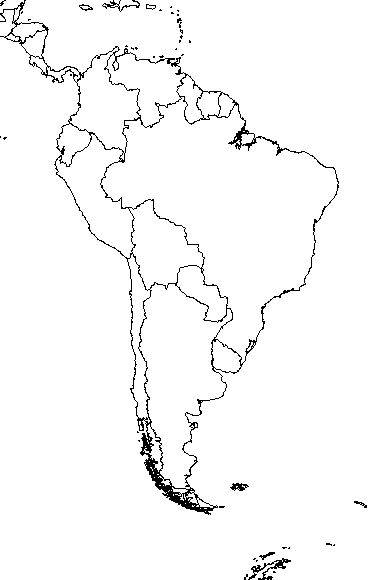
It was also on the final exam, three months later, and most of us got them all right – thanks to some fervent cramming and study groups.
Here are a couple more maps, in case you are feeling cocky. See if you can accurately fill in the name of each country:


Bonne chance!
Korean Air Pilots Mistakenly Identified in TV News Prank: Sum Ting Wong
Someone will lose their job, if it is ever discovered who pranked this totally politically incorrect news broadcast. This from Reuters via Huffington Post on AOL:
NTSB Intern Mistakenly Confirmed To KTVU Wrong Asiana Names, Statement Says
(Please note offensive language in paragraph 6)
July 12 (Reuters) – The National Transportation Safety Board apologized on Friday after an intern mistakenly confirmed to a local television station racially offensive fake names for the pilots of an Asiana flight that crashed in San Francisco.
“The National Transportation Safety Board apologizes for inaccurate and offensive names that were mistakenly confirmed as those of the pilots of Asiana flight 214, which crashed at San Francisco International Airport on July 6,” the NTSB said in a statement.
“Earlier today, in response to an inquiry from a media outlet, a summer intern acted outside the scope of his authority when he erroneously confirmed the names of the flight crew on the aircraft,” the NTSB said.
The crash of the Boeing 777 plane resulted in the deaths of three teenage girls in a group of students from eastern China who were visiting the United States for a summer camp, one of whom died on Friday in the hospital. Over 180 passengers and crew members were injured.
On Friday, an anchor for Oakland, California, station KTVU read a list of the supposed names of the pilots of the South Korean carrier on its noon broadcast after an employee apparently called the NTSB seeking to verify them.
The names appear to mock the events of the crash. The prank names were: Captain Sum Ting Wong, Wi Tu Lo, Ho Lee Fuk and Bang Ding Ow.
Recent Comments
intlxpatr on Shampoo Ginger tigerbutterya0c5ff1d… on Shampoo Ginger intlxpatr on British Soldier Kidnapped, Esc… John on British Soldier Kidnapped, Esc… intlxpatr on British Soldier Kidnapped, Esc… Wikipedia Donate Button

Amazina


Early Voting in Florida


