John of Damascus
This morning, as I read my Lectionary readings, I noticed I had skipped the Saint yesterday (I was trying to get a lot done) and it was John of Damascus. Checking the blog, I can see I printed this several years ago – 6 years! – but because it was new to me all over again, I am printing it again for you.
It is fascinating to me. John of Damascus defended the use of icons in worship. He distinguished between using an icon as an aide, and worshipping an icon. He was defended by his powerful position with a khalif, a Moslem who believes that images are forbidden. And we think WE live in interesting times . . . 🙂
JOHN OF DAMASCUS

(I love this photo because he is wearing a gutra 🙂 )
HYMN-WRITER, DEFENDER OF ICONS (4 DEC 750)
John is generally accounted “the last of the Fathers”. He was the son of a Christian official at the court of the moslem khalif Abdul Malek, and succeeded to his father’s office.
In his time there was a dispute among Christians between the Iconoclasts (image-breakers) and the Iconodules (image-venerators or image-respectors). The Emperor, Leo III, was a vigorous upholder of the Iconoclast position. John wrote in favor of the Iconodules with great effectiveness. Ironically, he was able to do this chiefly because he had the protection of the moslem khalif (ironic because the moslems have a strong prohibition against the religious use of pictures or images).
John is also known as a hymn-writer. Two of his hymns are sung in English at Easter (“Come ye faithful, raise the strain” and “The Day of Resurrection! Earth, tell it out abroad!”). Many more are sung in the Eastern Church.
His major writing is The Fount of Knowledge, of which the third part, The Orthodox Faith, is a summary of Christian doctrine as expounded by the Greek Fathers.
The dispute about icons was not a dispute between East and West as such. Both the Greek and the Latin churches accepted the final decision.
The Iconoclasts maintained that the use of religious images was a violation of the Second Commandment (“Thou shalt not make a graven image… thou shalt not bow down to them”).
The Iconodules replied that the coming of Christ had radically changed the situation, and that the commandment must now be understood in a new way, just as the commandment to “Remember the Sabbath Day” must be understood in a new way since the Resurrection of Jesus on the first day of the week.
Before the Incarnation, it had indeed been improper to portray the invisible God in visible form; but God, by taking fleshly form in the person of Jesus Christ, had blessed the whole realm of matter and made it a fit instrument for manifesting the Divine Splendor. He had reclaimed everything in heaven and earth for His service, and had made water and oil, bread and wine, means of conveying His grace to men. He had made painting and sculpture and music and the spoken word, and indeed all our daily tasks and pleasures, the common round of everyday life, a means whereby man might glorify God and be made aware of Him. (NOTE: I always use “man” in the gender-inclusive sense unless the context plainly indicates otherwise.)
Obviously, the use of images and pictures in a religious context is open to abuse, and in the sixteenth century abuses had become so prevalent that some (not all) of the early Protestants reacted by denouncing the use of images altogether. Many years ago, I heard a sermon in my home parish (All Saints’ Church, East Lansing, Michigan) on the Commandment, “Thou shalt not make a graven image, nor the likeness of anything in the heavens above, nor in the earth beneath, nor in the waters under the earth — thou shalt not bow down to them, nor worship them.” (Exodus 20:4-5 and Deuteronomy 5:8-9) The preacher (Gordon Jones) pointed out that, even if we refrain completely from the use of statues and paintings in representing God, we will certainly use mental or verbal images, will think of God in terms of concepts that the human mind can grasp, since the alternative is not to think of Him at all.
(Here I digress to note that, if we reject the images offered in Holy Scripture of God as Father, Shepherd, King, Judge, on the grounds that they are not literally accurate, we will end up substituting other images — an endless, silent sea, a dome of white radiance, an infinitely attenuated ether permeating all space, an electromagnetic force field, or whatever, which is no more literally true than the image it replaces, and which leaves out the truths that the Scriptural images convey. (One of the best books I know on this subject is Edwyn Bevan’s Symbolism and Belief, Beacon Press, originally a Gifford Lectures series.[note – now out of print])
C S Lewis repeats what a woman of his acquaintance told him: that as a child she was taught to think of God as an infinite “perfect substance,” with the result that for years she envisioned Him as a kind of enormous tapioca pudding. To make matters worse, she disliked tapioca. Back to the sermon.) The sin of idolatry consists of giving to the image the devotion that properly belongs to God. No educated man today is in danger of confusing God with a painting or statue, but we may give to a particular concept of God the unconditional allegiance that properly belongs to God Himself. This does not, of course, mean that one concept of God is as good as another, or that it may not be our duty to reject something said about God as simply false. Images, concepts, of God matter, because it matters how we think about God. The danger is one of intellectual pride, of forgetting that the Good News is, not that we know God, but that He knows us (1 Corinthians 8:3), not that we love Him, but that He loves us (1 John 4:10).
(Incidentally, it was customary in my parish in those days for the preacher to preach a short “Children’s Sermon,” after which the children were dismissed for Sunday School, and the regular sermon and the rest of the service followed. What I have described above was the Children’s Sermon. I remained for the regular sermon, but found it a bit over my head — a salutary correction to my intellectual snobbery.)
In the East Orthodox tradition, three-dimensional representations are seldom used. The standard icon is a painting, highly stylized, and thought of as a window through which the worshipper is looking into Heaven. (Hence, the background of the picture is almost always gold leaf.) In an Eastern church, an iconostasis (icon screen) flanks the altar on each side, with images of angels and saints (including Old Testament persons) as a sign that the whole church in Heaven and earth is one body in Christ, and unites in one voice of praise and thanksgiving in the Holy Liturgy.
At one point in the service, the minister takes a censer and goes to each icon in turn, bows and swings the censer at the icon. He then does the same thing to the congregation — ideally, if time permits, to each worshipper separately, as a sign that every Christian is an icon, made in the image and likeness of God, an organ in the body of Christ, a window through whom the splendor of Heaven shines forth.
My prayer for us all for today is that we may each be that window through which the splendor of Heaven shines forth.
Flannel Sheets: Not Just a Seattle Thing
In Seattle, which was not so much cold as grim and grey and rainy rainy rainy, there were flannel sheets everywhere. In the cold draftiness and the winter damp cold of Seattle, flannel sheets are definitely useful.
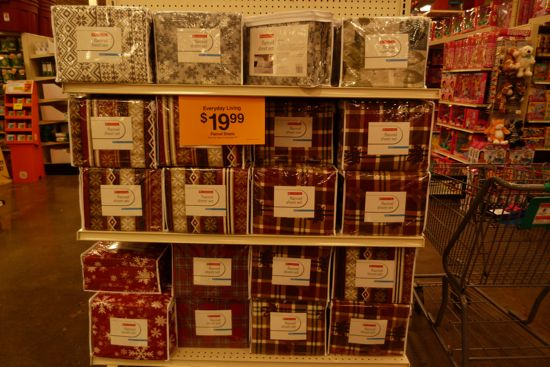
We thought we would retire in Seattle, and one trip in the middle of winter when I was back in Seattle, I stocked up on flannel sheets. Just months later, everything changed, a grandchild was coming, and suddenly, Pensacola sounded like just where we wanted to be.
The Qatari Cat is delighted we have those flannel sheets. He thinks Pensacola gets cold sometimes, compared to his birth country, Qatar (although the desert in Qatar can also be VERY cold in January) and he snuggles right down during a Pensacola cool spell.

Why Do the Nations . . . ?
It’s that wonderful time in the church year, the new year starting in Advent, and we begin back at the beginning of the psalms and read the forecasts of Isaiah. My very favorite time of the year, so full of expectation of the coming of the tiny baby who changes everything . . .
Psalm 2
1 Why do the nations conspire,
and the peoples plot in vain?
2 The kings of the earth set themselves,
and the rulers take counsel together,
against the Lord and his anointed, saying,
3 ‘Let us burst their bonds asunder,
and cast their cords from us.’
4 He who sits in the heavens laughs;
the Lord has them in derision.
5 Then he will speak to them in his wrath,
and terrify them in his fury, saying,
6 ‘I have set my king on Zion, my holy hill.’
7 I will tell of the decree of the Lord:
He said to me, ‘You are my son;
today I have begotten you.
8 Ask of me, and I will make the nations your heritage,
and the ends of the earth your possession.
9 You shall break them with a rod of iron,
and dash them in pieces like a potter’s vessel.’
10 Now therefore, O kings, be wise;
be warned, O rulers of the earth.
11 Serve the Lord with fear,
with trembling 12kiss his feet,*
or he will be angry, and you will perish in the way;
for his wrath is quickly kindled.
Happy are all who take refuge in him.
Isaiah 1:10-20
10 Hear the word of the Lord,
you rulers of Sodom!
Listen to the teaching of our God,
you people of Gomorrah!
11 What to me is the multitude of your sacrifices?
says the Lord;
I have had enough of burnt-offerings of rams
and the fat of fed beasts;
I do not delight in the blood of bulls,
or of lambs, or of goats.
12 When you come to appear before me,*
who asked this from your hand?
Trample my courts no more;
13 bringing offerings is futile;
incense is an abomination to me.
New moon and sabbath and calling of convocation—
I cannot endure solemn assemblies with iniquity.
14 Your new moons and your appointed festivals
my soul hates;
they have become a burden to me,
I am weary of bearing them.
15 When you stretch out your hands,
I will hide my eyes from you;
even though you make many prayers,
I will not listen;
your hands are full of blood.
16 Wash yourselves; make yourselves clean;
remove the evil of your doings
from before my eyes;
cease to do evil,
17 learn to do good;
seek justice,
rescue the oppressed,
defend the orphan,
plead for the widow.
18 Come now, let us argue it out,
says the Lord:
though your sins are like scarlet,
they shall be like snow;
though they are red like crimson,
they shall become like wool.
19 If you are willing and obedient,
you shall eat the good of the land;
20 but if you refuse and rebel,
you shall be devoured by the sword;
for the mouth of the Lord has spoken.
The Reciprocity Experiment
This is fascinating. I get these mailing labels every year from charities I’ve never heard of. I feel so GUILTY not sending them anything – they’ve spent their hard earned money sending me a gift! What to do? This man studied the phenomenon and discovered that we all find ourselves in this dilemma from time to time.
This is from National Public Radio, where I get the best news of things I might never hear about otherwise:
Give And Take: How The Rule Of Reciprocation Binds Us
by ALIX SPIEGEL
In 1974, Phillip Kunz and his family got a record number of Christmas cards. In the weeks before Christmas they came daily, sometimes by the dozen. Kunz still has them in his home, collected in an old photo album.
“Dear Phil, Joyce and family,” a typical card reads, “we received your holiday greeting with much joy and enthusiasm … Merry Christmas and Happy New Year’s. Love Lou, Bev and the children.”
The cards from that year came in all shapes and sizes, but the basic message was the same. The writers wanted Kunz to know that he and his family were cared for, and also they wanted to share their own news. They included pictures of family members and new homes and smiling graduates with freshly minted diplomas.
It all seems pretty normal, except for one thing: Kunz didn’t know any of them.
Kunz was a sociologist at Brigham Young University. Earlier that year he’d decided to do an experiment to see what would happen if he sent Christmas cards to total strangers.
And so he went out and collected directories for some nearby towns and picked out around 600 names. “I started out at a random number and then skipped so many and got to the next one,” he says.
To these 600 strangers, Kunz sent his Christmas greetings: handwritten notes or a card with a photo of him and his family. And then Kunz waited to see what would happen.

In 1974, Phillip Kunz, a sociologist at Brigham Young University, wanted to see what would happen if he sent Christmas cards to people he didn’t know.
Courtesy of the L. Tom Perry Special Collections at Brigham Young University
“It was just, you know, a shot in the dark,” he says. “I didn’t know what would happen.”
But about five days later, responses started filtering back — slowly at first and then more, until eventually they were coming 12, 15 at a time. Eventually Kunz got more than 200 replies. “I was really surprised by how many responses there were,” he says. “And I was surprised by the number of letters that were written, some of them three, four pages long.”
Why would someone send a three-page letter to a complete and total stranger?
Why did so many people write him back at all?
Following Rules
Robert Cialdini is an emeritus psychologist at Arizona State University who studies how our behavior is affected by social rules that we’re only vaguely aware of but which have incredible power over what we do. What happened to Kunz, he explains, is the direct result of one of the rules that most interest him: the rule of reciprocation. The rule, he says, is drilled into us as children.
“We are obligated to give back to others, the form of behavior that they have first given to us,” he says. “Essentially thou shall not take without giving in return.”
And so if someone passes you in the hall and says hello, you feel compelled to return their greeting. When you don’t, you notice it, it makes you uncomfortable, out of balance. That’s the rule of reciprocation.
“There’s not a single human culture that fails to train its members in this rule,” Cialdini says.
This is probably because there are some obvious benefits to the rule of reciprocation; it’s one of those rules that likely made it easier for us to survive as a species.
But what’s interesting about all this is how psychologists like Cialdini can actually measure the way the rule affects how we behave in all sorts of situations.
Exhibit A: those little pre-printed address labels that come to us in the mail this time of year along with letters asking for donations.
Those labels seem innocent enough, but they often trigger a small but very real dilemma. “I can’t send it back to them because it’s got my name on it,” Cialdini says. “But as soon as I’ve decided to keep that packet of labels, I’m in the jaws of the rule.”
The packet of labels costs roughly 9 cents, Cialdini says, but it dramatically increases the number of people who give to the charities that send them. “The hit rate goes from 18 to 35 percent,” he says. In other words, the number of people who donate almost doubles.
You can see the same thing when it comes to tipping.
If a server brings you a check and does not include a candy on the check tray, you will tip the server whatever it is that you feel the server deserves. “But if there’s a mint on the tray, tips go up 3.3 percent,” Cialdini says.
According to Cialdini, the researchers who did that study also discovered that if while delivering the tray with the mint the server paused, looked the customers in the eye, and then gave them a second mint while telling them the candy was specifically for them, “tips went through the roof.”
Servers who gave a second mint got a 20 percent increase over their normal tip.
Many decades ago Cialdini noticed a similar phenomenon when he studied Hare Krishnas in the U.S. He says that in the late 1960s the religion was really struggling financially; it seemed strange to many Americans, so it was hard for them to raise money.
But then they hit on a solution. In airports (and other public places), they would simply give the people passing by what they described as a gift: a flower, a book, a magazine. Then, after the person had the gift in his or her hand, they would ask for a small donation. Cialdini says he spent days in different airports observing these transactions, watching as recipients struggled to come up with the right solution.
“You would see many of them with frowns on their faces reach into a pocket or a purse, come up with a dollar or two, and then walk away angry at what had just occurred,” recalls Cialdini. But they would give, he believes, because of the rule of reciprocation. For years, he says, the Hare Krishna religion raised millions of dollars this way.
Reciprocating Influence
There are really dozens of ways that the rule of reciprocation affects us, some of them good, some of them bad. For example, politicians, like the rest of us, are subject to the rule of reciprocation. And so when organizations or interest groups give them money, though they might believe that money won’t influence their decisions, it’s sometimes hard for them, as it is for us, to be immune.
Cialdini believes you can also see the rule operate in the medical profession.
“You find doctors more willing to prescribe medication based on what gifts, favors and tips they have been given by one pharmaceutical company or another,” he says.
This doesn’t mean that the rule of reciprocation affects all of us all of the time. Cialdini says different situations trigger different people differently.
But it is powerful. One of those invisible powerful things that can subtly shape how we behave even years after someone has given us something.
Consider the case of Phillip Kunz, the sociologist who decided to send Christmas cards to random strangers.
For years his family got cards from the people he contacted in 1974.
“We got cards for maybe 15 years,” he says.
Lunch at Boss Oyster, Apalachicola


A quick drive down the road to our favorite place, Apalachicola, FL, home of some of the loveliest oysters in the world. There are other restaurants, good restaurants, but we gravitate toward Boss Oyster, where we can sit outside by the water. It is a brisk day, we sit outside, but I notice the pelicans are huddled down on their perch:

A little later he started to warm up and groomed a little:

As usual, we ordered too much food. We don’t mean to, we mean to be sensible, but the portions are bigger than we remembered. I love their seafood gumbo to start:
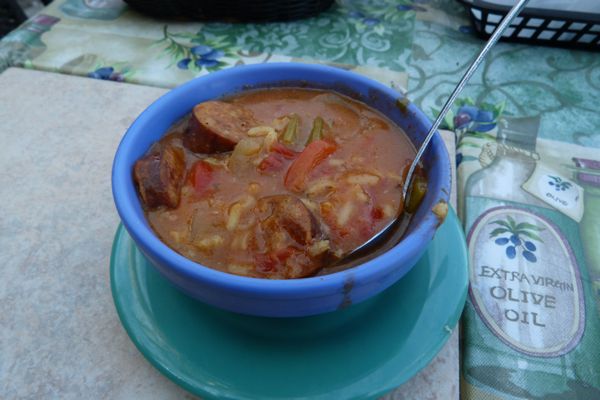
AdventureMan can’t resist a starter plate of the oysters for which Apalachicola is famous:

I didn’t know the Crab Cake basket would be so huge . . .
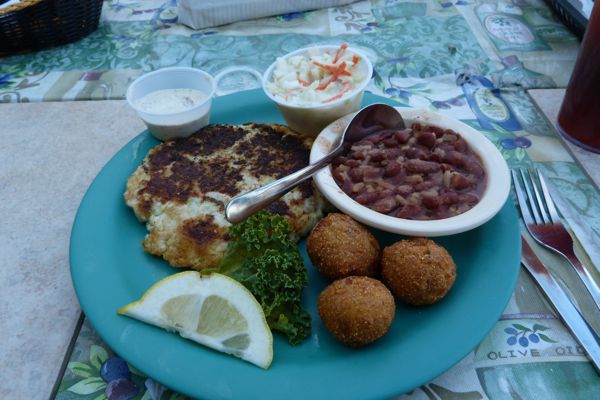
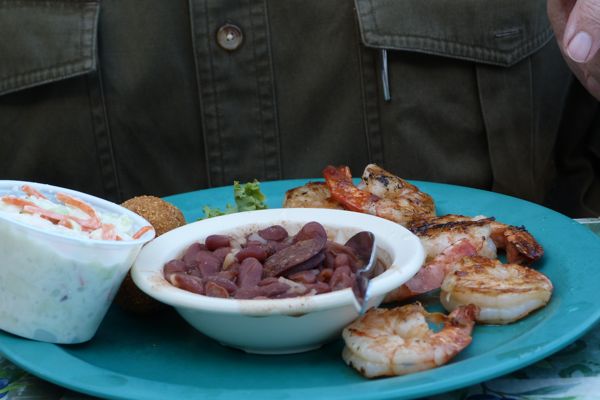
AdventureMan had the Shrimp Basket – it’s cool, now you can get baskets that aren’t fried (some might say ‘so why bother?’, but we are trying not to eat too much fried food):
Here is a little friend who offered to help me eat:

Here is one of the things we love the most about non-chain restaurants. . . this one has custom made high chairs from a local wood – how cool is that?

Or maybe, now that I look closer, those are extra bar stools, LOL!
Thanksgiving on the Bayou
The Thanksgiving venue changed this year. We all have families, families have struggles, and one of those struggles meant that the Thanksgiving celebration would shift to another home. Same cast of characters, same fabulous food, just a different location.
The organization is superb. Everyone has a part to play. Nieces and nephews arrive to assist in preparations, clearing the grounds, putting out tables and chairs, helping wherever they can. Cousins get to spend time together, catching up, as they work together. The aunts are all busy in the kitchens, cutting, chopping, baking, cooking, stewing, putting their best efforts into making the dishes everyone loves.
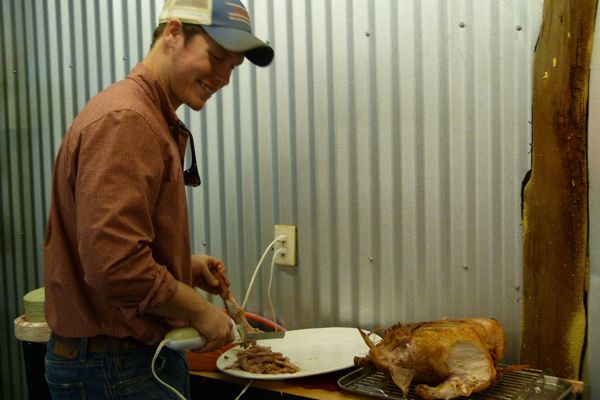


The guys do the turkeys. They may have help, but the turkeys seem to be the guys prerogatives. They also carry in the hams.
There are so many desserts that they won’t fit on one table. They won’t fit on two tables! When all the desserts are put on the tables, there are still back-up pies and cakes in the pie-safe behind the table!
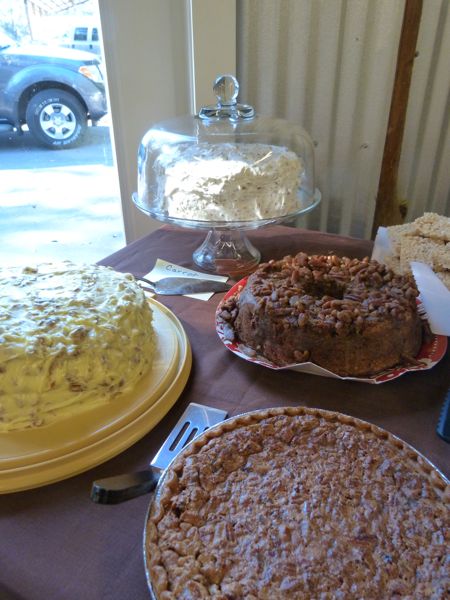
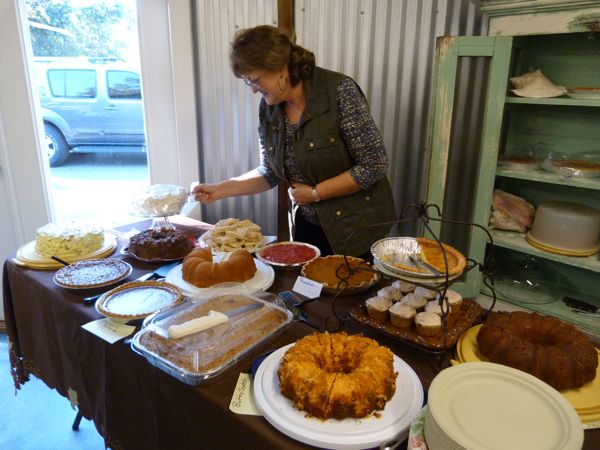
Cousins fill glasses with ice; guest can choose lemonade, sweet tea or “un”

The tables groan with turkeys, hams and side dishes – beans and peas from the garden, corn bread, sweet potato casseroles, and more, much, much more:

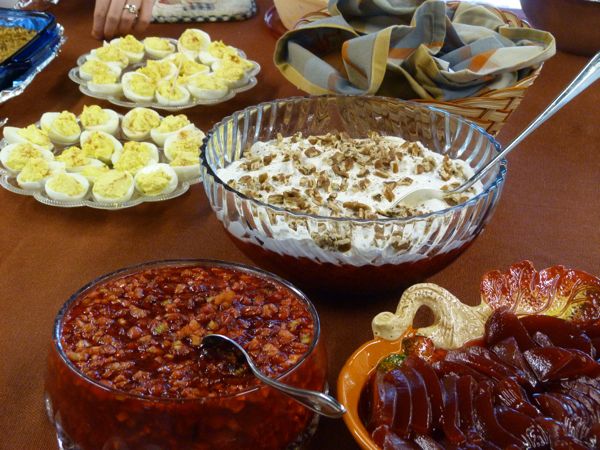

There is fun for everyone – kayak rides, tractor rides, and ring toss:



There’s always a special room where babies can nap – this is a very child friendly celebration. This family loves babies and little ones, and encourages all the cousins to stay close. It’s always a full day, Thanksgiving, with much for which to give thanks. 🙂 When the great meal is over, people play, visit, walk, chat . . . and then sneak back for another taste of their favorite dish!
Celebrating Diwali in Pensacola
A friend shared a flyer with us and said “I thought you might be interested in this.” He was right – it was a celebration of Diwali, and it would take place in a nearby Presbyterian church.
First, though, we had to buy tickets, which meant finding the Indian grocery store. This was a really good thing, as AdventureMan wanted some good hot chutneys, and I was hoping I could find some of the dark chana dal that I used to buy so inexpensively in Doha and Kuwait, but found myself ordering from Amazon.com because I couldn’t fine them in Pensacola. I knew it! I just wasn’t looking in the right place!
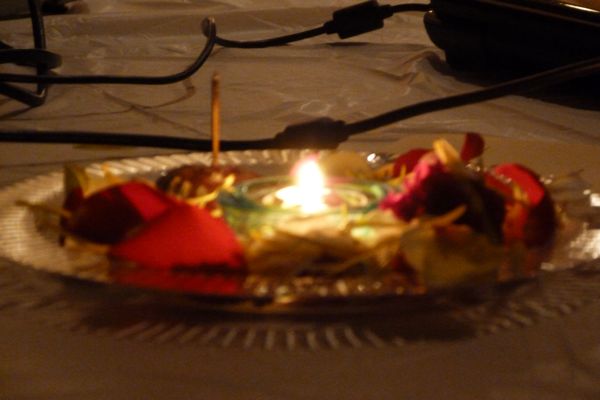
My first Diwali was magical. It was held on Al Fardan Gardens, in Doha, and all the Indian families strung thousands of white lights and lined the sidewalks with votives, so it was like a fairy land. By this late in the year, it can cool down enough to make the thought of walking inviting. To walk among the lights and to stop here and there for some truly divine cooking was delightful.
Diwali in Pensacola? Whoda thunk it?
As it turns out, Pensacola has a substantial Indian population, tightly woven together and cooperating in times of celebration and times of sorrow. Last night was a little of both – the Diwali celebration had been planned and organized for several months, but a sudden death of one of the long time members on the day of the Diwali celebration saddened the day somewhat.
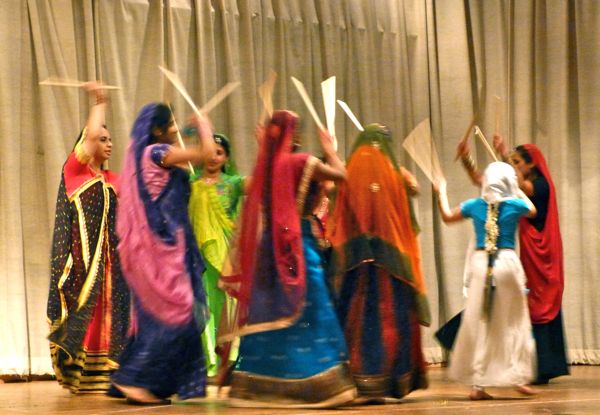
While all grieved, the show went on. Lots and lots of lively traditional dances, a few Bollywood numbers, and a wonderful sword dance that reminded us of similar sword dances we had seen in the Gulf, performed only by men, while these were performed by women.

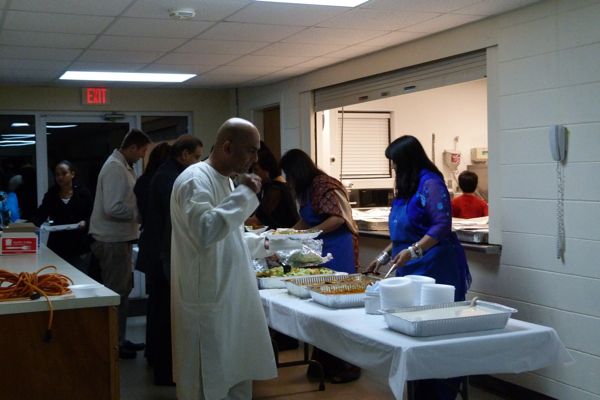
After all that energetic dancing, we were ready to eat. Butter Chicken, chicken korma, dal, rice, all kinds of good things provided by one of the newer Indian restaurants in town, the India Palace.
I never dreamed when we came to Pensacola that there would be an opportunity to celebrate Diwali. 🙂
Pantone Fashion Color Forecast for Spring 2013
LOL, not even Christmas and I want to know what Spring will bring. Lucky me! Emerald, my favorite color!

Election Day Fun
No more same old, same old. Today, Pensacola had a group of up-and-coming leaders from twelve African countries in town studying Grassroots Democracy and the US Elections. There is nothing like questions from non-US citizens to keep you on your toes and even give you a good laugh as you try to explain the eccentricities of our electoral system. This group, brought to Pensacola by the Gulf Coast Citizens Diplomacy Council, asked some great, probing questions.

Their questions were thoughtful and open-ended. At the end of the session, one delegate from Uganda summarized his observation that although we are deeply polarized in this election, we have confidence in our civil servants and the bureaucracy. While the leaders at the top may change, and while policies MIGHT change, they have to go through processes to change. It’s not like one leader or the other comes in and overnight, everything is changed, everything is done a different way.
AdventureMan says he loves that we live in a country where power is transferred peacefully – no coup. No revolution. We might have ugly elections, but they are peaceful, and when one triumphs, thousands of people supporting the losing side are not killed.
Had not thought about it that way. 🙂
These visitors are in Pensacola at just the right time for them to observe our biggest election. They have questions about everything, from the signs in our front yards to voter fraud and deceptive wording on proposed amendments. They talked today with the Supervisor of Elections, with elected officials, and with normal, everyday citizens. Tonight they will attend some of the parties around town, as the votes are counted. It is a very special experience for us, to see ourselves as others might see us, as we hold our elections.
Recent Comments
ExpatAlien on What Country am I Living … intlxpatr on Yellowstone: Old Faithful to C… Michelle on Yellowstone: Old Faithful to C… Cathy on No Grown-Ups in Charge intlxpatr on Waiting for Snow Wikipedia Donate Button

Amazina


Early Voting in Florida


 Here There and Everywhere