Ramadan For Non Muslims
This is becoming a tradition. I wrote the first Ramadan for Non Muslims post in 207, and repeated it last year. As Ramadan moves inexorably into the hottest months of the year, the sacrifice only increases. Ramadan is slated to start this year on August 22, but that will be determined by the moonsighting committee; those who watch for the very first glimmer of the thinnest crescent moon of the lunar month of Ramadan.
Already, stores are increasing their supplies of specialty foods, which includes, to my amusement, oatmeal, which I must eat, and I detest. There are also increased supplies of nuts and candied fruits, eggs and creams and fabulous desserts and exotic fruits. Little lambies are not long for this earth, and cows and grown sheep are not far behind. This is not the season for killing the fatted fig.
My first Ramadan ever, in Tunisia in 1979, I remember they had bananas – it was the only time all year we saw bananas, real Chiquita bananas, a boat brought them in. On the other hand, the night I had a dinner party, eggs totally disappeared, and cream, all bought up by what my friends call “the Ramadaners.”
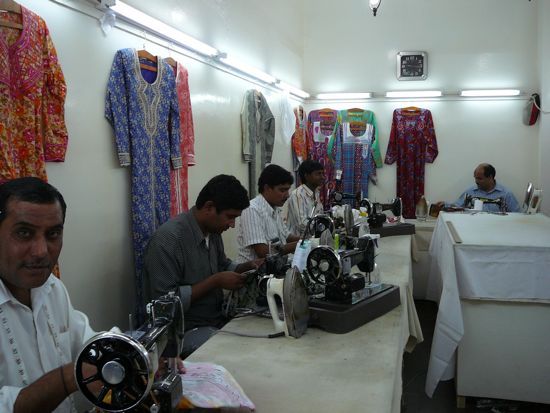
Imagine, if you can, an entire month of Advent and Christmas. Observant Moslems fast every day, from dawn to sunset, and gather with family and friends to celebrate and feast every night. Some women have a new dress for every day of Ramadan. The tailors are crazy; this and the Eid al Kebir provide them with guaranteed income and their busiest time of the year.
Most Westerners don’t understand Ramadan. I wrote the original article to try to explain Ramadan to them, that the season is as holy to them as our Lent and Easter are to us. Ramadan was the month when The Qur’an was transmitted to Mohammed by the angel Gabriel. Most Moslems try to read through the entire Qur’an at least one time during each Ramadan, and then many go to Mekka on the Hajj at the end of Ramadan. I have given you references to both of the original articles, because as is my great joy on this blog, my readers filled in a lot of blanks, and gave us a lot of information that I didn’t have. The comments at the end of the two articles are better than the original article, thanks to my readers.
Please, if you have anything to add, ahlen wa sahlen, you are welcome. It is a joy to learn from you.
First Ramadan for Non Muslims + comments
Second Ramadan for Non Muslims + comments
Ramadan started last night; it means that the very thinnest of crescent moons was sighted by official astronomers, and the lunar month of Ramadan might begin. You might think it odd that people wait, with eager anticipation, for a month of daytime fasting, but the Muslims do – they wait for it eagerly.
A friend explained to me that it is a time of purification, when your prayers and supplications are doubly powerful, and when God takes extra consideration of the good that you do and the intentions of your heart. It is also a time when the devil cannot be present, so if you are tempted, it is coming from your own heart, and you battle against the temptations of your own heart. Forgiveness flows in this month, and blessings, too.
We have similar beliefs – think about it. Our holy people fast when asking a particular boon of God. We try to keep ourselves particularly holy at certain times of the year.
In Muslim countries, the state supports Ramadan, so things are a little different. Schools start later. Offices are open fewer hours. The two most dangerous times of the day are the times when schools dismiss and parents are picking up kids, and just before sunset, as everyone rushes to be home for the breaking of the fast, which occurs as the sun goes down. In olden days, there was a cannon that everyone in the town could hear, that signalled the end of the fast. There may still be a cannon today – in Doha there was, and we could hear it, but if there is a cannon in Kuwait, we are too far away, and can’t hear it.
When the fast is broken, traditionally after the evening prayer, you take two or three dates, and water or special milk drink, a meal which helps restore normal blood sugar levels and takes the edge off the fast. Shortly, you will eat a larger meal, full of special dishes eaten only during Ramadan. Families visit one another, and you will see maids carrying covered dishes to sisters houses and friends houses – everyone makes a lot of food, and shares it with one another. When we lived in Tunisia, we would get a food delivery maybe once a week – it is a holy thing to share, especially with the poor and we always wondered if we were being shared with as neighbors, or shared with as poor people! I always tried to watch what they particularly liked when they would visit me, so I could sent plates to their houses during Ramadan.
Just before the sun comes up, there is another meal, Suhoor, and for that meal, people usually eat something that will stick to your ribs, and drink extra water, because you will not eat again until the sun goes down. People who can, usually go back to bed after the Suhoor meal and morning prayers. People who can, sleep a lot during the day, during Ramadan. Especially as Ramadan moves into the hotter months, the fasting, especially from water, becomes a heavier responsibility.
And because it is a Muslim state, and to avoid burdening our brothers and sisters who are fasting, even non-Muslims refrain from eating, drinking, touching someone of the opposite sex in public, even your own husband (not having sex in the daytime is also a part of fasting), smoking is forbidden, and if you are in a car accident and you might be at fault, the person might say “I am fasting, I am fasting” which means they cannot argue with you because they are trying to maintain a purity of soul. Even chewing gum is an offense. And these offenses are punishable by a heavy fine – nearly $400 – or a stay in the local jail.
Because I am not Muslim, there may be other things of which I am not aware, and my local readers are welcome to help fill in here. As for me, I find it not such a burden; I like that there is a whole month with a focus on God. You get used to NOT drinking or eating in public during the day, it’s not that difficult. The traffic just before (sunset) Ftoor can be deadly, but during Ftoor, traffic lightens dramatically (as all the Muslims are breaking their fast) and you can get places very quickly! Stores have special foods, restaurants have special offerings, and the feeling in the air is a lot like Christmas. People are joyful!
Hotel Suq al Waqif Ramadan Offering
Ramadan Kareem from Hotel Souq Waqif!
As the Muslim world celebrates the holy month of Ramadan, Almaharah Seafood Restaurant commemorate with the holy festivity.
Come and be our guest as Almaharah Seafood Restaurant offers a special and unique buffet meal that will surely make your visit memorable.
For inquiries you can call 441-5959 or see the attached for additional information.

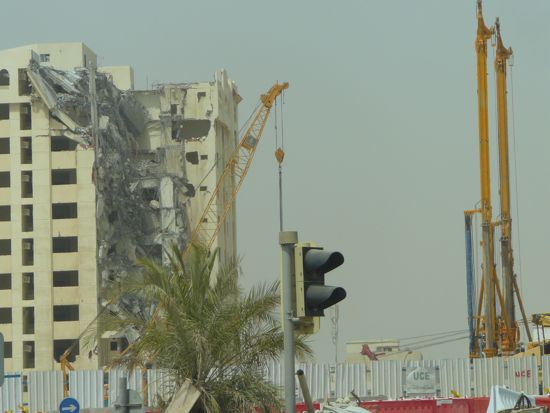
Apartment Building Coming Down
Expats have their own shorthand, we understand one another when we talk about Doha, although the locals would not have a clue what we are talking about. So I will tell you that this apartment building was newly built at-the-end-of-Indian-Crafts-Street, you know, where the Christmas shop is – and those expats who have lived in Doha for a while will know exactly where that is.
They never even put the glass windows and balcony doors in – at some point, they must have gotten word that all this will come down for the new Dohaland, or Heart of Doha – a revival of the historical district of Qatar.
I won’t complain. I love what they did for the Suq al Waqif, which has been reinvigorated by the new life injected with the restauraunts and cafes. The same shops line the interiors, only now they have more and varied customers.
it just seems like there might be more co-ordination. This apartment building should not have even been started. I hate waste.
Temperatures Coming Down
I gasped when I saw the temperature this morning on Weather Underground:
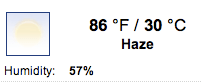
Not even 90°F! A cool 86°F! Wooo HOOO, the temperatures are seriously coming down.
Here is the expected high in Doha today – you cannot imagine, this is a seriously LOW temperature after a blistering summer:
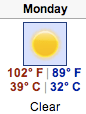
I’m not exactly breaking out the snowsuits, but lower temperatures will make the upcoming month of Ramadan more comfortable for those who are fasting.
Breakfast at the Beirut Restaurant, Suq al Waqif, Doha
“We want to take you for breakfast at the Beirut!” my friend said with enthusiasm, and I was shocked. She is totally covered. How could we eat at the Beirut? I remember her family loves the Beirut, and I remember lining up with all the other cars along Shar’aa al Karaba’a to buy felafel and foul and hummos, yes, oh yes, such good felafel. But it wasn’t really a place for ladies, especially covered ladies and their daughters.
As is usual with this friend, I never really have the complete picture. When my niece and I go to pick up my friend and her daughter, it is actually my friend and three daughters and we squeeze into my car and head – not to Karaba’a, but to the Suq al Waqif!
When I go to park in one of the new, tiny, narrow little parking spots, my friend laughs and says “You park like an American! I am going to show you how to park like us!” and she points to the one tree off in an unpaved area, and sure enough, there is one spot, not in the shade of the tree but in the shade of a large truck parked in the shade of the tree. “Now you are learning to park like we do!” she laughs, and I laugh too, I am always learning something from this friend.
We walk a short distance and she leads me into a restaurant which on the outside says Matam Beiroot, but it’s in Arabic. If you are walking from the upper parking lot, it is one of the very first buildings you come to, at the top of the street.
Inside, there are all kinds of tables and chairs, but my friend and her daughters lead us upstairs to the family section, where we sit off in the corner, so she and her daughters can sit with their backs to other customers while we eat. We are a strange group, two women covered head to toe, two younger girls in hijab, my blue-eyed-blonde niece and me, laughing and enjoying each other so much in the corner.
Since then, I have been back many times. The Beirut is a lot of fun for breakfast. They have wonderful felafel, and several different great hummos, and they have beans and the ubiquitous french fries, and tea. Grammy and I grabbed a quick bite there on our trip to the Suqs.
I really am so bad at remembering to take photos. This is where the felafel used to be, before we dipped them in the lemon juice and gobbled them all up:
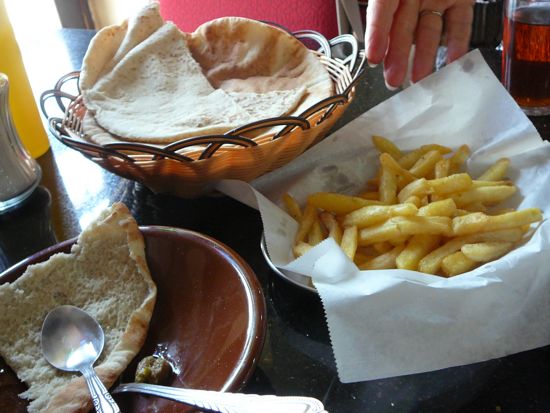
here is what is left of the hummos:
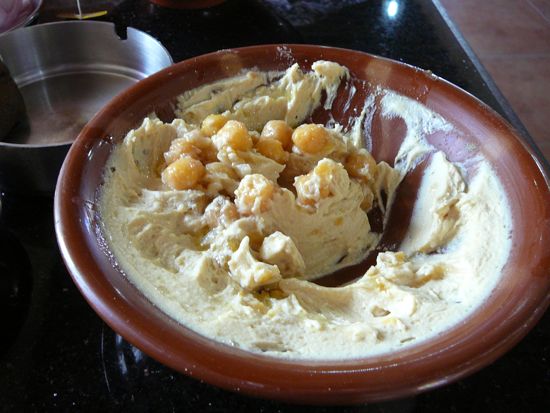
And here is the traditional style ceiling with traditional style light fixtures:

Doha Ramadan Frenzy
As my friend Grammy and I wandered through the back streets of Suq al Wa’ef 😉 yesterday, we came across this frenzied scene, all the machines humming, and new dresses for Ramadan being made. I asked if I could take a photo – I think it puzzles them that I would want to, but I loved watching them stitch away:
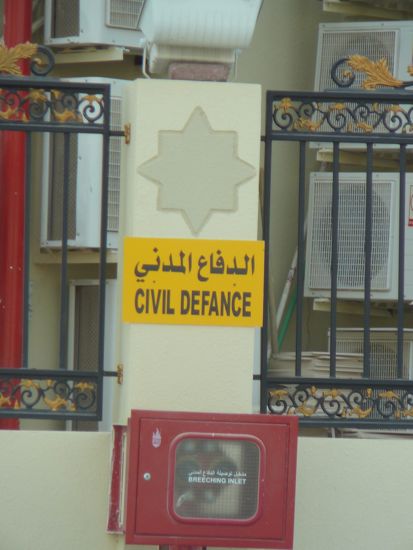
Civil Defiance
When I took the photo of this, I thought it was a lot funnier than it is. When I took the photo, I thought it said “Civil Defiance” and thought it was a great entry for the Fail Blog. Once I uploaded the photo and saw that it was just a mis-spelling, it was much less interesting.
Qatar Murals
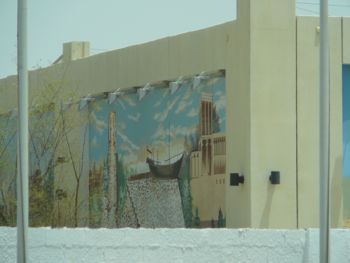
You know how I love public art. I especially loved, in Kuwait, how all the power stations had scenes of dhows, and majaalis, and lanterns – Kuwait things. In Doha, there is a long wall – I think it might be around a power station, but I am not sure.
Yesterday AdventureMan had to take a phone call and – probably because I was in the car – pulled over to take it. We were right across from the wall, which I have been dying to photograph but never could because we were always zipping right by and there was a lot of traffic.
Fridays are quiet. It was during Friday prayers, perfect. Here are some photos:
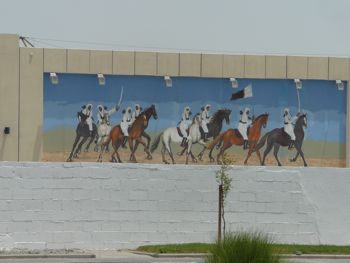
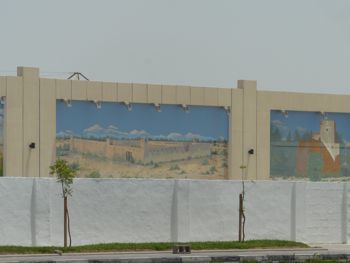


This one is my favorite. I know the boat is carrying gas, but don’t they look like huge, giant pearls? And then look to the left, to the reference to the giant oyster on the Corniche with the gigantic pearl:

We Look, But We Don’t See
It was a long phone conversation. As I sat there, I saw this house/compound straight ahead, right on this very busy road, but all walled off, with a big gate in front. I saw the lattice-work around the top – this is not the oldest stuff, but this, I would guess, is from the fifty’s or sixty’s, pre-gas wealth. There are villas like this all over poorer areas of town, now, many have been converted for commercial uses.
I lived in a villa a lot like this in Tunisia. It was long and low. Inside, the ceilings were high, I think it helped keep the place cool in the long hot summers. It was all white. All the bedrooms were off in one area, and the public areas off in another – a very handy way of living, I have found.

It also has that nice big tree growing inside, providing a shaded place for a picnic. I wonder if they also have some little gardens inside? It looks to me like maybe there are still people living here – there are a lot of vehicles parked in front.
Cops Find Motorists Beating Point System in Qatar
Motorists trading penalty points
Web posted at: 8/14/2009 7:42:18
Source ::: THE PENINSULA
DOHA: Some motorists have hit upon a novel idea to escape being penalised for traffic violations under the current points system, which many find deterring.
They look for people with a valid driver’s licence who are willing to get the points transferred to their name for a fee.
There is no dearth of those who are offering such services and they, obviously, are low-income foreign workers, reports Al Sharq. The going rate for a penal point transfer is around QR100.
Since traffic violations are recorded against the number plates of the vehicles, traffic officials ask the owners who was driving the vehicle when the violation took place. All an owner needs to do is provide the name of the “paid volunteer” with his driver’s licence.
“This is a new phenomenon which has come to light after the traffic authorities put stringent rules in place to check violations,” said the daily.
The points system was introduced after the authorities realised the rate of accidents was not coming down despite hefty penalties being slapped on violators. Cash-rich motorists were undeterred as they gladly paid heavy fines for violations.
But in the current points system, a motorist accumulating 14 points for traffic violations in a year can see his driver’s licence suspended for three months.
The next year, if he accumulates 12 points, his licence is suspended for two months, while in the third year it is suspended for a month if the points add up to 10. In the fourth year, a motorist needs to join a driving school and undergo tests afresh to seek a driver’s licence if he accumulates 10 points for violations as his existing licence is revoked.
According to Al Sharq, a number of people have been calling for doing away with the points system and reintroducing the old penalty system.
Jumping traffic lights attracts the maximum points at seven, while wrong parking of a car or breaching the speed limit can see some three points credited into the driver’s account. Minor violations attract fewer points.
Recent Comments
ExpatAlien on What Country am I Living … intlxpatr on Yellowstone: Old Faithful to C… Michelle on Yellowstone: Old Faithful to C… Cathy on No Grown-Ups in Charge intlxpatr on Waiting for Snow Wikipedia Donate Button

Amazina


Early Voting in Florida


 Here There and Everywhere