“You have to read this!” said my book friend, “You’re from Alaska! It’s about a woman who lives in some small town and writes obituaries!”
I grinned politely and put the book in my bag. Some books sound more interesting than other books – I’ve always loved adventures and mysteries and murders – add a little drama to the day-to-day-ness of everyday life. A woman who writes obituaries? Hmmm, not so much.
But spending my afternoons tending to my sweet little 3-month-old granddaughter means I often sit, anchored by the soundly sleeping baby who I don’t want to disturb, even by twitching. I have one hand free – and you can only play so much iPhone Sudoku.
An Alaskan friend had also recommended this book, so early this week I picked it up and started reading.
Oh. my. goodness. Yes, Haines is a small town, but oh the drama of writing obituaries. Oh, the things you learn about your neighbors and the surprises you get learning about their earlier lives. I love the way Heather Lende weaves the writing of the town obituaries with the current ongoing dramas in her own life and in the lives of her friends and makes it work.
It’s not unlike where I grew up, although my hometown had a hospital. We also had moose and bear and elk in our back yards, and learned to treat wildlife with respect, and that the best option was to back away slowly. There are the same senseless deaths from auto accidents, fishing boat accidents and unexpected changes in weather. There is the same feeling of wonder, almost every day of your life, knowing how very lucky you are to live in the midst of such awe-inspiring beauty. It’s hard for me to imagine being an unbeliever living in Alaska.
It’s also a great book to read before going to bed. Some of the books I read are too exciting or too disturbing to read before bed; books that infiltrate your dreams with images and situations that give you a restless night. While Lende deals with death and sadness and drama, there is an underlying message of hope in the neighborliness of your neighbors, the security of living in a town where everybody knows everybody else, in the civility even of people who strongly disagree with one another. If You Lived Here, I’d Know Your Name gives you peaceful sleep. She ties it all together with an ending that rips your heart out; you will never forget this book once you read it. After reading, you will feel like you have lived in Haines, Alaska.
The paperback version is available from Amazon.com for $9.73. No, I no longer own stock in Amazon.com.
Finding quality English books in Kuwait is a challenge as any book lover here knows. Local lawyer Fajer Ahmed, 26, recently took up the challenge when she acquired the small but well-loved bookshop, Q8 Books. She moved Q8 Books from downtown Kuwait City into a renovated space in Bayt Lothan, the non-profit arts and culture center located next to Marina Mall in Salmiya. Home to more than 15,000 titles of all genres including literature, general fiction, history, romance, thrillers and mysteries, westerns, classics, cook books, true crime, self help and motivation, family and lifestyle, business and philosophy and arts and crafts, Q8 Books has something to suit every reader’s taste.
By adding sofas, tables, chairs and beanbags, Q8 Books created a cozy, relaxed atmosphere along with free WiFi that invites customers to come and hang out. “We want to encourage reading, writing and communication in Kuwait, “Fajer explained. “As one example, we provide local writers with a place to display and sell their books free of charge, we also do all the administrative work for them.”
A community bookshop Q8 Books also holds a free weekly story time for children, offers 50% store credit for trade ins, encourages book clubs and other responsible community groups free space to hold meetings and has an outreach project to support a library in Gambia. “We thank Bayt Lothan for giving Q8 Books a home,” Fajer said. “Without them none of this would have been possible.” Q8 Books’ erudite former owner, Jacob, started the bookshop almost a decade ago with only a handful of books. During his travels, he would browse used bookstores and markets to find quality titles that would be appreciated by the book-loving community in Kuwait. Jacob continues to help out at Q8 Books along with a group of dedicated volunteers and support from the Kuwait Writing Club.
Fajer also organizes regular events in order to build Q8 Books as a community space. On the first of November, Q8 Books hosted a Spooky Book night for kids, which included a story telling by local street artist Monstariam dressed in a bunny costume, a crafts and arts table, coloring and glitter, a costume contest and a chance for parents to browse and chat.
Kid and family friendly “We really enjoyed Spooky Books night,” said Umm Sara, a mother of three children who attended the event all wearing ‘scary’ costumes. “The kids loved the story telling and we got several books. Much better than going to a mall and they got to draw and color and dress up.” The Kuwait Writing Club also took part, judging over 80 submissions for the writing competition. The winning submission will be published in Kuwait Times. “We also had a cover design competition for children to draw covers for the age appropriate horror story, Goosebumps, and every kid that took park received a free book of their choice,” Fajer explained.
Q8 Books will offer monthly events for children and parents with the goal of encouraging reading. “When kids come in playing games on electronic devices, we try to find books with the same characters and get them interested in reading,” Fajer noted. “Welovekuwait.com Children’s Bookshop has also donated coloring and reading books to give for free for every child that walks in.” Q8 Books encourages Kuwait’s community of readers to share their love of reading. They accept donations and offer store credit for traded in books. They also invite anyone to email ask@q8bookstore.com if they are interested in volunteering, donating or just want to talk to someone about suggestions for what to read.
Q8 Books is located in Bayt Lothan, next to Marina Mall. Store Hours: Weekdays 9am- 1pm and 5pm-9pm. Weekends 11am-9pm. Follow them on Instagram @q8bookstore
One of the great wonderful things that has happened with living in Pensacola is that I get to spend a lot of time with my two little grandchildren, one of whom is two months old and just loves to be held, and one of whom is three years old and loves to talk.
I adore them both, but the three year old is so much more interesting, as he can talk and express himself and I love the way a three year old thinks.
We talk a lot. The other day we were talking about breaking things like arms – he had just broken his arm in two places and got a 1 (needs improvement) on “uses playground equipment safely” LOL. I had just told him how my sister broke both of her arms, not at the same time, and how we had each broken a leg skiing.
“You know, Shisha, you’re a lot like a boy,” he said to me, and I knew it was a compliment but I couldn’t help laughing.
“Why do you say that?” I asked, and got some evasive answer – even a three year old has a sense of when a thought might be out of the ordinary.
This week, though, he really gave me a good laugh when he came running in and showed me his weekly sheet, with green happy faces (that is a very good thing) and a photo of himself as a baby.
“Another word for babies is ‘insects!'” he announced, and I couldn’t help it, I laughed.
“No! No! It’s ‘infants!'” I said, and made him watch my lips as I said it because it’s one of those words where we kind of cut off the t at the end, and he got it right. I laughed, knowing it must be “I” week at his school and how very cool is it that they are teaching three year olds such words as “infant” and “Insect” and so what if it takes a little while to get them all straight, just hearing them and seeing them applied is such a good thing.
Mr. Taliban, did you see Jon Stewarts interview with Malala? (See below) All she wants is an education. She wants an education for herself, but also for all children in Pakistan. Your children, too! She wants them to have that opportunity, that’s all. And she has paid the price for her courage speaking out, and she bravely continues to state the obvious – there is nothing in Islam against educating women.
MIRANSHAH, Pakistan: The Pakistani Taliban Thursday said teenage activist Malala Yousafzai had done “nothing” to deserve a prestigious EU rights award and vowed to try again to kill her.
The European Parliament awarded the Sakharov human rights prize to the 16-year-old, who has become a global ambassador for the right of all children to go to school since surviving a Taliban murder attempt.
Malala survived being shot in the head by a TTP gumnan on October 9 last year and is seen as a leading contender for the Nobel Peace prize, to be announced on Friday.
“She has done nothing. The enemies of Islam are awarding her because she has left Islam and has became secular,” Tehreek-e-Taliban Pakistan (TTP) spokesman Shahidullah Shahid told AFP by telephone from an undisclosed location.
“She is getting awards because she is working against Islam. Her struggle against Islam is the main reason of getting these awards.”
He repeated the TTP’s threat – made numerous times in recent months -try again to kill Malala, “even in America or the UK”.
Malala and moved to Britain in the wake of the shooting for treatment and to continue her education in safety.
Feted by world leaders and celebrities for her courage, Malala has addressed the UN, this week published an autobiography, and could become the youngest ever Nobel Peace Prize laureate on Friday.
Her autobiography “I am Malala”, written with journalist Christina Lamb, has gone on sale in Pakistan and Shahid warned the Taliban would target bookshops stocking it.
“Malala is the enemy of Islam and Taliban and she wrote this book against Islam and Taliban,” he said. (AFP)
Get ready for the Harvest Moon. Depending on where you live on the planet, it’s either Wednesday or Thursday of this week.
“In traditional skylore, the Harvest Moon is the full moon closest to the autumnal equinox,” EarthSky reports, “and depending on the year, [it] can come anywhere from two weeks before to two weeks after the autumnal equinox.” For 2013, that changing of the seasons happens on September 22 — just a few days from now.
Unlike the Blue Moon we covered back in August, the Harvest Moon behaves differently than a typical full moon. “Throughout the year, the moon rises, on average, about 50 minutes later each day,” according to NASA Science News. “But near the autumnal equinox … the day-to-day difference in the local time of moonrise is only 30 minutes.” Why does that matter? Simply put, agriculture.
“In the days before electric lights, farmers depended on bright moonlight to extend the workday beyond sunset,” wrote NASA’s Dr. Tony Phillips. “It was the only way they could gather their ripening crops in time for market. The full moon closest to the autumnal equinox became the Harvest Moon, and it was always a welcome sight.”
So my question is this – the Harvest Moon is what we call it, because it gave farmers extra time to bring in the harvest. What do other cultures call it?
Truly, some of the best moments in life are free. The smell of salt in the air near the sea, pine needles underfoot walking through a forest – and watching meteor showers in a light-free area – an isolated beach, a desert, or out on a boat 🙂
Written by
USA Today and staff reports
Get outside this weekend and check out the shooting stars of summer.
The year’s best celestial fireworks show is on tap in the wee hours of Sunday and Monday as the annual Perseid meteor shower takes center stage in the night sky.
Sky watchers may see as many as 50 to 100 meteors an hour as it peaks in the early morning hours before dawn. But if you don’t want to stay up so late, don’t fret. The reliable shower is known to produce some brilliant meteors between 10 p.m. and midnight, too.
Summer is a perfect time to watch meteors. Plunking down on a blanket or sitting in the dark in a reclining lawn chair works fine. Temperatures in the Pensacola area during the evening are forecast for the mid-70s and there is a chance of an occasional thunderstorm. All you have to do is lie flat on your back and enjoy the show.
The key to seeing meteors is finding a fairly dark sky unspoiled by artificial lighting. If heading to the country or finding a dark beach is not in the cards, the backyard will work fine as an observing platform as long as outside lights are kept off.
Perseids are known for fireballs, brilliant trails of light produced as tiny grains of comet dust slam into the upper atmosphere at nearly 134,000 mph. The shower’s cosmic dust grains — about one-fifth of an inch across — burn nicely as they zip overhead. Those dust grains come courtesy of Comet Swift-Tuttle, which circles the sun once every 133 years and leaves behind a debris trail. (Comets are basically dirty snowballs that develop tails when they approach the sun and start to melt.
“The Perseids are the good ones,” said meteorite expert Bill Cooke of NASA’s Marshall Space Flight Center in Huntsville, Ala.
The Perseids are named after the constellation Perseus, the hero of Greek mythology born from a shower of heavenly gold. As Perseus rises in the northeast sky after midnight, the meteors appear to emanate near the constellation.
You will have to stay up late to see the Perseids at their peak. The best viewing comes from midnight to dawn, particularly after the half-full moon sets both nights after midnight, said Astronomy magazine’s Michael Bakich.
“There will be a dozen ‘Ooh’ moments in that hour,” Bakich said. “Ones when everyone will say, ‘Did you see that?’ ”
Though the shooting stars seem to come from the constellation Perseus, don’t look there to see them, Bakich advises. Instead, look about one-third of the sky down and away from the constellation to spot meteors streaking across the sky.
From AOL Daily Finance Poverty damages children more than being born to a crack addicted mother. Poverty keeps children from attaining their full potention, and hurts us all as a society as a huge waste of potential resource:
In the 1980s, the crack baby epidemic was hard to ignore. Television show after television show, article after article proclaimed that children born to addicts of the increasingly prevalent “crack” cocaine were all-but-guaranteed to have birth defects, including extremely low IQs and severe emotional problems. This “lost generation,” commentators emphasized, would be incapable of forming relationships or reaching full emotional maturity. They would be, in the words of Washington Post columnist Charles Krauthammer, condemned to “a life of certain suffering, of probable deviance, of permanent inferiority.”
A little over 20 years later, Krauthammer’s predictions have proven almost embarrassingly inaccurate. Last week, the findings of a 24-year-long study of crack babies revealed that parental use of the drug had little or no direct effect on the children. In the process of investigating the babies, however, researchers discovered another environmental problem that did, in fact, lead to problems with depression, anxiety, cognitive functioning, and a host of other issues: poverty.
In 1989, Dr. Hallam Hurt, chair of the neonatology department at Philadelphia’s Albert Einstein Medical Center, began tracking 224 near-term or full-term children who were born to crack addicts. In the ensuing years, her longitudinal study followed the children, finding that, overall, their IQs were about the same as a control group of children of non-addicted mothers. Further, the children in Hurt’s study had comparable outcomes when it came to educational and emotional development.
That having been said, Hurt’s study found that children raised in poverty — regardless of whether or not their mothers were addicted to crack — tended to have lower IQs and lower school readiness than those who weren’t raised in poverty. A big part of the problem, she argues, is environmental: Of the children in her study, “81 percent of the children had seen someone arrested; 74 percent had heard gunshots; 35 percent had seen someone get shot; and 19 percent had seen a dead body outside.” The children themselves acknowledged the effect of these events: “Those children who reported a high exposure to violence were likelier to show signs of depression and anxiety and to have lower self-esteem.”
In other words, while prenatal crack abuse may not have a major effect on children, the societal conditions in crack-ravaged communities most certainly do. As Hurt emphasized, “Given what we learned, we are invested in better understanding the effects of poverty. How can early effects be detected? Which developing systems are affected? And most important, how can findings inform interventions for our children?” Or, to put it another way, now that we understand that poverty is more dangerous for children than crack, what can we do to protect our children from its effects?
In Florida, the worst schools are those serving the poor. Many fell a full grade point in the Florida evaluations and would have fallen further if there were not a law – I am not kidding – that says they can only fall one grade point in a year. We are failing in the two most important areas that can help children pull themselves out of poverty – good health care, and good education.
As I worked on my earlier map post, I needed to know if it is “capital city” or “capitol city.” Yes. It matters. Here is what I learned at About.com:
Capital has multiple meanings: (1) a city that serves as the seat of government; (2) wealth in the form of money or property; (3) an asset or advantage; (4) a capital letter (the type of letter used at the beginning of a sentence).
Capitol refers to the building in which a legislative assembly meets. (Remember that the o in capitol is like the o in the dome of a capitol building.)
Examples:
The dome of the United States Capitol may well be the most famous man-made landmark in America.
Juneau is the capital of Alaska.
“It is a capital mistake to theorize before one has data.” (Arthur Conan Doyle)
“Capital punishment would be more effective as a preventive measure if it were administered prior to the crime.” (Woody Allen)
Practice:
(a) The United States Capitol is the ______ building that serves as the location for the United States Congress.
(b) It is located in Washington, D.C., the ______ of the United States.
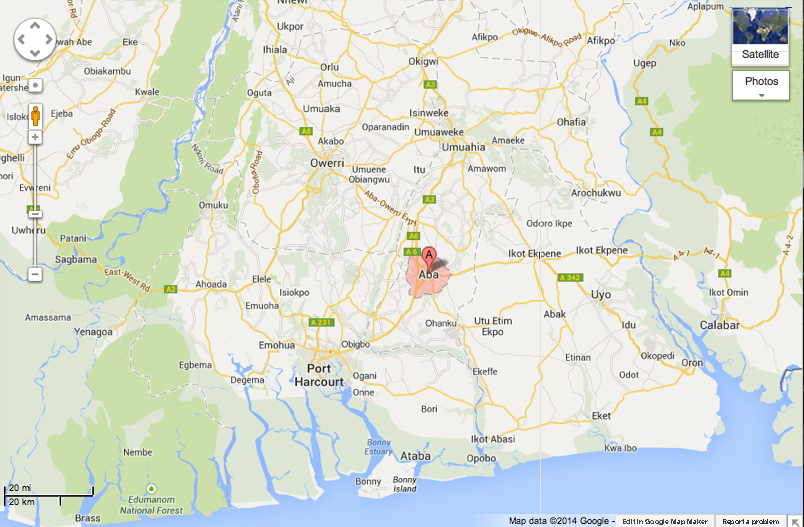
This morning, as I was praying for Panama – there is always a diocese listed in the daily lectionary to be prayed for somewhere in the world – I was thinking how I know where Panama is. When we are praying for Nigeria, there are names I haven’t heard of. I now Lagos, and Port Harcourt, but where is Abuja? Owerri? I go to GoogleEarth and look them up.
I struggle with how little the average American knows about geographical location. It’s just embarrassing. Through all the years I lived abroad, most of the time, unless it was Germany, people couldn’t quite place where I was living. Many had heard of Tunisia; we had troops there in World War II, and Saudi Arabia, because they had seen it often enough on the news, but the rest of the Arab Gulf, Jordan, Syria, North Africa – beyond them.
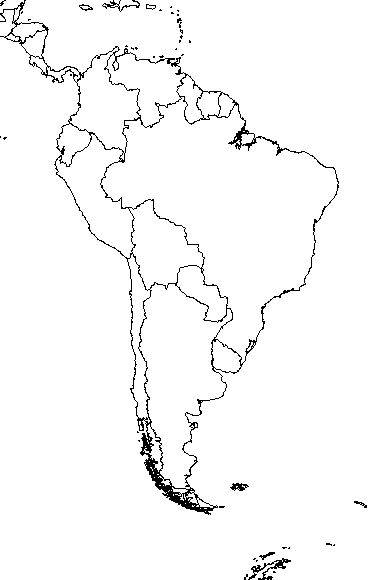
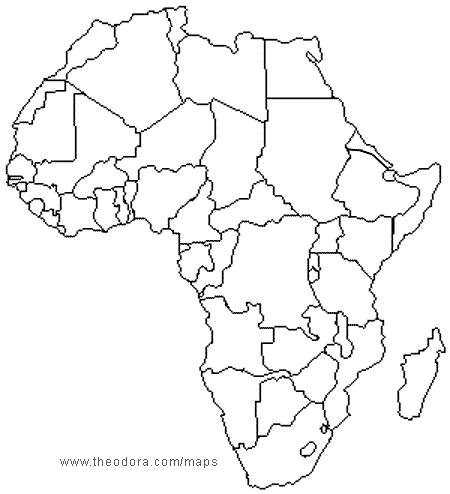
Then, on the first night of one of my grad classes, the professor handed us this map and gave us ten minutes to put in the appropriate country names. He did not, thanks be to God, ask us to put in capitals. Not a single one of us got them all, and this was a class full of nation-oriented people.
It was also on the final exam, three months later, and most of us got them all right – thanks to some fervent cramming and study groups.
Here are a couple more maps, in case you are feeling cocky. See if you can accurately fill in the name of each country:





 Here There and Everywhere