Beach Road 98 on a Torrential Fourth of July Weekend
A two and a half hour drive took us six hours. We also stopped for lunch, and we stopped to pick up the Qatari Cat. The rest of the time, we were stuck in bumper to bumper traffic most of the 100 something miles of the drive home; stuck in one lane even on four lane highways as the drains failed when there was so much rain and runoff that there was no where for it to go.
Leaving Panama City, the surf was high, and full of undertow.
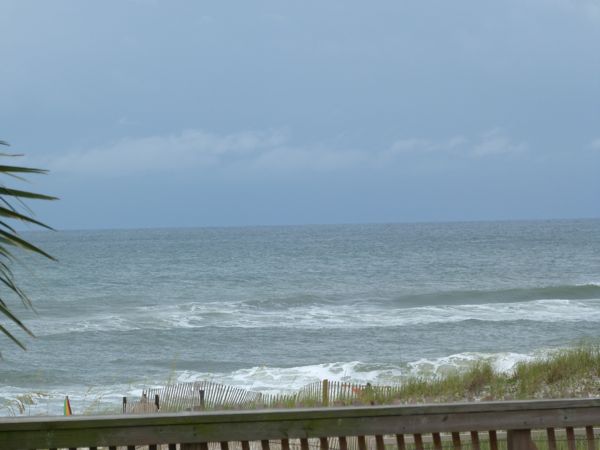
We were able to get through the Watercolors/Seaside area quickly, and then the deluge:
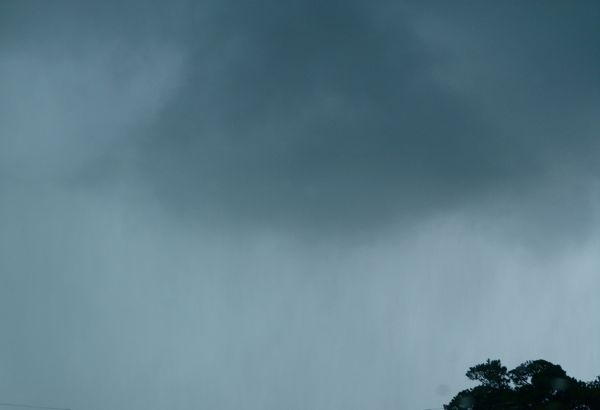
When we had to go single file, most of the time everyone cooperated, letting people in from gas stations and side roads, taking turns, etc. Then, there are always those @$$&*!>$ who think everyone is being too cautious and polite, who break the line, go thundering up through the lake, discover no, no they really can’t make it and barge back into the line. Karma catches up with the arrogant.

The worst part, the very worst, was going past the SanDestin outlet malls; when the skies break forth and there is no possible point to being on the beach, the tourists head for the malls and the restaurants. The malls were booming! Traffic crawled by. Even the poorest restaurant was also full; thank God we were still full from breakfast.
This is the bridge leaving Destin; on the right side of the road in front of that stalled truck is about a huge puddle a foot deep:

Outside Navarre, both rain and traffic began to lighten up. We stopped at a little roadside place I’d always wanted to try for something that might have been our late lunch or our early dinner – TC’s Front Porch, it’s across from the Navarre Butterfly House.

There was a small crowd inside, guys hanging out at the bar, looked like fishermen waiting for it to clear up enough to go back out and catch some fish, some tables with college kids down on the beaches for summer break, maybe lifeguards – swimming not allowed with the heavy surf and heavy rip tides running.
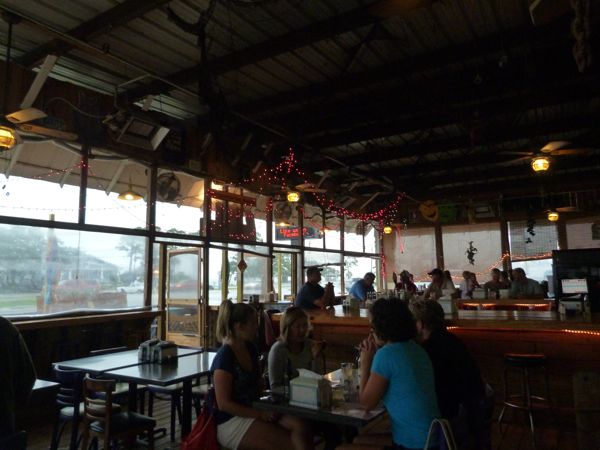
Everyone pretty much just waiting out the storm, tossing back a few brews, just hanging out. I had some pretty good crab cakes and AdventureMan had the chili. It was all OK. Beach food.


The Qatari Cat was delighted to see us, and slept as close as he could to me all night (not such a great thing; I appreciate that he thinks I am special, but he is hot, and I can’t turn over without disturbing him . . . aarrgh) This morning, however, he ran and hid under the bed when he saw us getting ready to go out; we think he was afraid we were taking him back to Wee Tuck’Em Inn, LOL.
Here’s the thing. For us, we were just inconvenienced, and it was just minor inconvenience. We had the time, we knew beach traffic would be heavy, it was a little adventure.
For people who earn a living from tourism, for some of these people, this weekend was probably a disaster. The hotels are packed for the Fourth of July weekend, and lots of fireworks displays are planned, big entertainment – it’s a big money making time of the year. With the four day storm, some people probably cancelled hotel reservations, and when the rain didn’t stop, others left. Many of the July Fourth fireworks displays were cancelled. Local fests were rained out. I am guessing most of the malls and restaurants did OK; not much else to do, but it rained SO much that there is a lot of flooding and a lot of damage. This, for many people, was not a good weekend.
Gulf Power and Customer Energy Use Monitoring
I love this! Yes, I am a nerd, yes, I get excited about geeky things, but after my first year in Pensacola, paying electrical bills in the $400’s because I like to be cool, I have learned a few tricks about spending less, like turning the a/c up when leaving the house, it really makes a difference.
And now, we monitor our energy use on a DAILY basis. I love it! When you log into your Gulf Power account, you can see your energy usage calculated against the daily temperatures, with a range of your estimated end-of-month bill. No more bad surprises!
I think I inherited a small bit of my father’s engineer mentality; I love being able to manage my energy use 🙂

Thank you, Gulf Power, for making it possible.
Round-Up Herbicide Tied to Serious Health Deterioration
Shocking news for everyone with grounds and gardens – we’ve all been using this, not knowing its long term impact on our environment – and on us.

Roundup, An Herbicide, Could Be Linked To Parkinson’s, Cancer And Other Health Issues, Study Shows

The peer-reviewed report, published last week in the scientific journal Entropy, said evidence indicates that residues of “glyphosate,” the chief ingredient in Roundup weed killer, which is sprayed over millions of acres of crops, has been found in food.
Those residues enhance the damaging effects of other food-borne chemical residues and toxins in the environment to disrupt normal body functions and induce disease, according to the report, authored by Stephanie Seneff, a research scientist at the Massachusetts Institute of Technology, and Anthony Samsel, a retired science consultant from Arthur D. Little, Inc. Samsel is a former private environmental government contractor as well as a member of the Union of Concerned Scientists.
“Negative impact on the body is insidious and manifests slowly over time as inflammation damages cellular systems throughout the body,” the study says.
We “have hit upon something very important that needs to be taken seriously and further investigated,” Seneff said.
Environmentalists, consumer groups and plant scientists from several countries have warned that heavy use of glyphosate is causing problems for plants, people and animals.
The EPA is conducting a standard registration review of glyphosate and has set a deadline of 2015 for determining if glyphosate use should be limited. The study is among many comments submitted to the agency.
Monsanto is the developer of both Roundup herbicide and a suite of crops that are genetically altered to withstand being sprayed with the Roundup weed killer.
These biotech crops, including corn, soybeans, canola and sugarbeets, are planted on millions of acres in the United States annually. Farmers like them because they can spray Roundup weed killer directly on the crops to kill weeds in the fields without harming the crops.
Roundup is also popularly used on lawns, gardens and golf courses.
Monsanto and other leading industry experts have said for years that glyphosate is proven safe, and has a less damaging impact on the environment than other commonly used chemicals.
Jerry Steiner, Monsanto’s executive vice president of sustainability, reiterated that in a recent interview when questioned about the study.
“We are very confident in the long track record that glyphosate has. It has been very, very extensively studied,” he said.
Of the more than two dozen top herbicides on the market, glyphosate is the most popular. In 2007, as much as 185 million pounds of glyphosate was used by U.S. farmers, double the amount used six years ago, according to Environmental Protection Agency (EPA) data.
Shams I; Huge Solar Plant in Abu Dhabi
Today – from WeatherUndergroundNews:

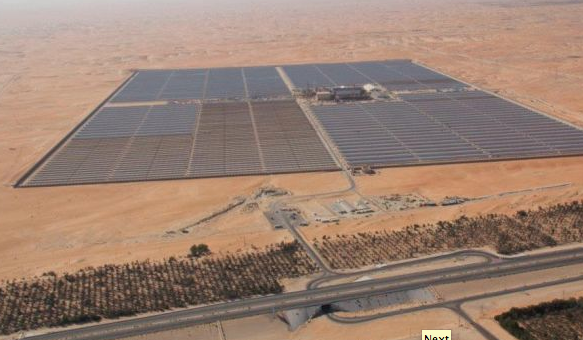
Behold — a way to capture a maximum amount of solar power in one of the sunniest regions on the planet.
Located in the oil-rich United Arab Emirates that cozy up to the Persian Gulf in the Middle East, Abu Dhabi announced the opening of the Shams 1 solar plant last month. Shams 1, which translates to “the Sun” in Arabic, according to the BBC, utilizes more than 250,000 mirrors to capture and harness the power of the sun.
Officials in Abu Dhabi hope the new plant will save 175,000 tons of carbon dioxide every year, reports an NPR blog. That’s the equivalent of removing 15,000 cars from the road, they say, and several more of these mega-plants are in the works.
The other reason for building the Shams 1? The country will be able to export more of their vast natural oil reserves instead of using it within the country. It will lead to even more profit for the UAE, says Bloomberg. The plant cost $750 million to build, but according to the report, it’s just the first step in a plan to generate one-third of the country’s energy from solar power by the year 2032.
Antarctic Ice Melting Faster Now than Last 1,000 Years
Found this morning on AOL News; this is not good news.
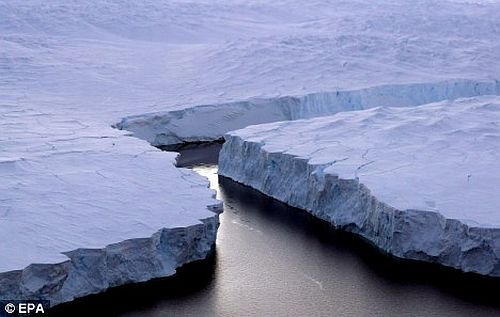
Summer Ice Melt In Antarctica Is At The Highest Point In 1,000 Years, Researchers Say
Reuters | Posted: 04/15/2013 2:39 am EDT | Updated: 04/15/2013 6:36 pm EDT
CANBERRA (Reuters) – The summer ice melt in parts of Antarctica is at its highest level in 1,000 years, Australian and British researchers reported on Monday, adding new evidence of the impact of global warming on sensitive Antarctic glaciers and ice shelves.
Researchers from the Australian National University and the British Antarctic Survey found data taken from an ice core also shows the summer ice melt has been 10 times more intense over the past 50 years compared with 600 years ago.
“It’s definitely evidence that the climate and the environment is changing in this part of Antarctica,” lead researcher Nerilie Abram said.
Abram and her team drilled a 364-metre (400-yard) deep ice core on James Ross Island, near the northern tip of the Antarctic Peninsula, to measure historical temperatures and compare them with summer ice melt levels in the area.
They found that, while the temperatures have gradually increased by 1.6 degrees Celsius (2.9 degrees Fahrenheit) over 600 years, the rate of ice melting has been most intense over the past 50 years.
That shows the ice melt can increase dramatically in climate terms once temperatures hit a tipping point.
“Once your climate is at that level where it is starting to go above zero degrees, the amount of melt that will happen is very sensitive to any further increase in temperature you may have,” Abram said.
Robert Mulvaney, from the British Antarctic Survey, said the stronger ice melts are likely responsible for faster glacier ice loss and some of the dramatic collapses from the Antarctic ice shelf over the past 50 years.
Their research was published in the Nature Geoscience journal.
(Reporting by James Grubel; Editing by Paul Tait)
Pierre Teilhard de Chardin
Today in our Lectionary, the church honors Pierre Tielhard do Chardin, a man who thought about God and the nature of the world and tried to figure out a logical explanation for the state of the world. He was condemned by the church for some of this thoughts, which were not in line with Catholic dogma. I’ve always thought that people who, like the Apostle Thomas, need to seek an explanation and need to see the evidence, are at pondering God and his ways, and in my mind, God must dance with joy – or with amusement – to be so pondered.
PRAYER
Eternal God, the whole cosmos sings of your glory, from the dividing of a single cell to the vast expanse of interstellar space: We bless you for your theologian and scientist Pierre Teilhard de Chardin, who perceived the divine in the evolving creation. Enable us to become faithful stewards of your divine works and heirs of your eternal kingdom; through Jesus Christ, the firstborn of all creation, who with you and the Holy Spirit lives and reigns, one God, for ever and ever. Amen.

PIERRE TEILHARD DE CHARDIN
SCIENTIST AND MILITARY CHAPLAIN, 1955
Pierre Teilhard de Chardin (May 1, 1881 – April 10, 1955) was a French philosopher and Jesuit priest who trained as a paleontologist and geologist and took part in the discovery of Peking Man. His theological and philosophical works came into conflict with the Catholic Church and several of his books were censured.
Pierre Teilhard de Chardin was born in Orcines, close to Clermont-Ferrand, in France on May 1, 1881. When he was 12, he went to the Jesuit college of Mongré, in Villefranche-sur-Saône, where he completed baccalaureates of philosophy and mathematics. Then, in 1899, he entered the Jesuit novitiate at Aix-en-Provence where he began a philosophical, theological and spiritual career. Teilhard studied theology in Hastings, in Sussex (UK), from 1908 to 1912. There he synthesized his scientific, philosophical and theological knowledge in the light of evolution. From 1912 to 1914, Teilhard worked in the paleontology laboratory of the Musée National d’Histoire Naturelle, in Paris, studying the mammals of the middle Tertiary period.
Mobilised in December 1914, Teilhard served in World War I as a stretcher-bearer in the 8th Moroccan Rifles. For his valour, he received several citations including the Médaille militaire and the Legion of Honour.
In 1923 he traveled to China with Father Emile Licent, who was in charge in Tianjin of a laboratory collaborating with the Natural History Museum in Paris. Licent carried out considerable basic work in connection with missionaries who accumulated observations of a scientific nature in their spare time. Teilhard would remain there more or less twenty years. From 1926 to 1935, Teilhard made five geological research expeditions in China. They enabled him to establish a first general geological map of China. He joined the ongoing excavations of the Peking Man Site at Zhoukoudian as an advisor in 1926 and continued in the role for the Cenozoic Research Laboratory of the Geological Survey of China following its founding in 1928. During this tima and after, he also made a great number of travels throughout the world, studying and lecturing.
Teilhard died on April 10, 1955 in New York City, where he was in residence at the Jesuit church of St Ignatius of Loyola. He is buried on what is now the grounds of the Culinary Institute of America, in Poughkeepsie, NY.
In 1925, Teilhard was ordered by the Jesuit Superior General Vladimir Ledochowski to leave his teaching position in France and to sign a statement withdrawing his controversial statements regarding the doctrine of original sin. Rather than leave the Jesuit order, Teilhard signed the statement and left for China. This was the first of a series of condemnations by certain ecclesiastical officials that would continue until long after Teilhard’s death. The climax of these condemnations was a 1962 monitum (reprimand) of the Holy Office denouncing his works. It states:
“The above-mentioned works abound in such ambiguities and indeed even serious errors, as to offend Catholic doctrine… For this reason, the most eminent and most revered Fathers of the Holy Office exhort all Ordinaries as well as the superiors of Religious institutes, rectors of seminaries and presidents of universities, effectively to protect the minds, particularly of the youth, against the dangers presented by the works of Fr. Teilhard de Chardin and of his followers.”.
Teilhard’s writings, though, continued to circulate — not publicly, as he and the Jesuits observed their commitments to obedience, but in mimeographs that were circulated only privately, within the Jesuits, among theologians and scholars for discussion, debate and criticism. As time passed, it seemed that the works of Teilhard were gradually becoming viewed more favourably within the Church. However, the 1962 statement remains official Church policy to this day.
In his posthumously published book, The Phenomenon of Man, Teilhard writes of the unfolding of the material cosmos, from primordial particles to the development of life, human beings and the noosphere, and finally to his vision of the Omega Point in the future, which is “pulling” all creation towards it. He was a leading proponent of orthogenesis, the idea that evolution occurs in a directional, goal driven way, argued in terms that today go under the banner of convergent evolution. Teilhard argued in Darwinian terms with respect to biology, and supported the synthetic model of evolution, but argued in Lamarckian terms for the development of culture, primarily through the vehicle of education.
Teilhard makes sense of the universe by its evolutionary process. He interprets complexity as the axis of evolution of matter into a geosphere, a biosphere, into consciousness (in man,) and then to supreme consciousness (the Omega Point.)
Teilhard himself claimed his work to be phenomenology. Teilhard studied what he called the rise of spirit, or evolution of consciousness, in the universe. He believed it to be observable and verifiable in a simple law he called the Law of Complexity / Consciousness. This law simply states that there is an inherent compulsion in matter to arrange itself in more complex groupings, exhibiting higher levels of consciousness. The more complex the matter, the more conscious it is. Teilhard proposed that this is a better way to describe the evolution of life on earth, rather than Herbert Spencer’s “survival of the fittest.” The universe, he argued, strives towards higher consciousness, and does so by arranging itself into more complex structures.
Teilhard here proposed another level of consciousness, to which human beings belong, because of their cognitive ability; i.e. their ability to ‘think’, and to set things to purpose. Human beings, Teilhard argued, represent the layer of consciousness which has “folded back in upon itself”, and has become self-conscious. So in addition to the geosphere and the biosphere, Teilhard posited another sphere, which is the realm of human beings, the realm of reflective thought: the noosphere. The noosphere has been compared to C. G. Jung’s theory of the collective unconscious.
Finally, the keystone to his phenomenology is that because Teilhard could not explain why the universe would move in the direction of more complex arrangements and higher consciousness, he postulated that there must exist ahead of the moving universe, and pulling it along, a higher pole of supreme consciousness, which he called Omega Point.
Teilhard re-interpreted many disciplines, including theology, sociology, metaphysics, around this understanding of the universe. A main focus of his was to re-assure the converging mass of humanity not to despair, but to trust the evolution of consciousness as it rises through them.
AdventureMan and the Box Turtle
“There’s a box turtle in our backyard!” AdventureMan exclaimed, coming in after making his early morning rounds to make sure all was well in the garden, and to bring us up to date on any new developments. I was eating breakfast with our house guests, getting ready to leave for water aerobics class. (If you come to visit, you get to come to water aerobics 🙂 too!)
The two guys went back out to consider the box turtle, but the box turtle had disappeared. Of course we kidded AdventureMan.
“Are you SURE you saw a turtle? How would it get in to the backyard?”
He was mystified, but certain he had seen a box turtle. They searched all the spots they could think of, but could not find any turtle.
This morning, I was up early feeding the Qatari Cat when I saw a movement in the yard, and there he was, the box turtle.
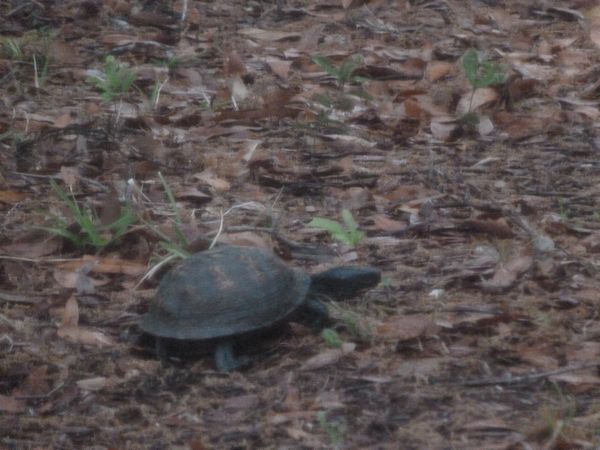

AdventureMan was still sleeping; so I ran and got my camera and took some photos. I think he was aware of me, but couldn’t figure out where I was (I was inside, he was outside). When he got up, AdventureMan was delighted to have his observation verified, and hurried outside to see if he could spot him. Nope! Turtle back in hiding.
Stranger in a Stranger Land
. . . . And the land I am talking about is utility bills, water and sewage bills to be specific.

This month we got a very low water-related utilities bill. I say this in relative terms, for about a year, we have been paying huge bills, bills which, to my perception, seemed out of proportion with the water we have been using. AdventureMan called the utilities company and they explained that the averages are measured in certain winter months, and then you are charged for that usage.
So this time, I called, because I didn’t understand the explanation. A very patient, very kind customer service representative explained it again to me. They send notices, she explained, saying they are about to monitor the water usage, and your sewage will be charged accordingly. “We can measure how much water you are receiving,” she explained, “but we don’t really know what is going down the pipes as sewage or waste water (laundry, etc) or going into the ground, which is not sewage. So we measure intake during three – four winter months when people are NOT watering, and guesstimate (my word, not hers, this is a sort of paraphrase, even with the quotes) what your sewage rate is.”
It’s still a little vague to me, but just clear enough for me to understand that just when we should have been NOT watering the year before, we installed a large new planted area and watered generously while the plants settled in. We watered generously during the exact time we were to be not watering at all and using water conservatively.
For a year, I have been calling in plumbers and asking them to look for a leak, fixing every kind of water problem I could find, not understanding how we were being charged so much.
We saw a program on 60 minutes, a follow up to the “Lost Boys” segment they did years ago on groups of Sudanese men who came to the US as the Janjaweed marauded through there villages, killing, raping, destroying everything in sight. It showed their disorientation as they learned how things are done here; I feel their pain. I can identify with their confusion. My next monster to tackle is COX cablevision; they keep raising my rates, it is all totally arbitrary, and I want to find an alternative. Our son – and many others – have explained different avenues, but until you actually do it, it seems complicated. I like to understand what I am doing, and I am not ready to just throw up my hands and give up; I insist on understanding! There must be some rationality (except for Cox’s mendacious billing) and we will prevail!
But for now, through no understanding on our part, we did not water during the measuring months this last year, and now have a very reasonable water bill. Ahhhhhhh. Life is sweet.
Monster Quake Predicted for US Pacific Northwest
You can read this entire threatening report of a recent study done by earthquake experts at Weather Underground News:
Northwest Earthquake: Experts Say Get Ready

By: Lauren Gambino
Published: March 15, 2013
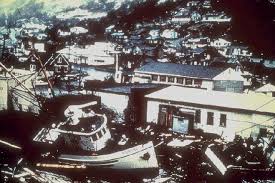
SALEM, Ore. — More than 10,000 people could die when – not if – a monster earthquake and tsunami occur just off the Pacific Northwest coast, researchers told Oregon legislators Thursday.
Coastal towns would be inundated. Schools, buildings and bridges would collapse, and economic damage could hit $32 billion.
These findings were published in a chilling new report by the Oregon Seismic Safety Policy Advisory Commission, a group of more than 150 volunteer experts.
In 2011, the Legislature authorized the study of what would happen if a quake and tsunami such as the one that devastated Japan hit the Pacific Northwest.
The Cascadia Subduction Zone, just off the regional coastline, produced a mega-quake in the year 1700. Seismic experts say another monster quake and tsunami are overdue.
“This earthquake will hit us again,” Kent Yu, an engineer and chairman of the commission, told lawmakers. “It’s just a matter of how soon.”
When it hits, the report says, there will be devastation and death from Northern California to British Columbia.
Many Oregon communities will be left without water, power, heat and telephone service. Gasoline supplies will be disrupted.
The 2011 Japan quake and tsunami were a wakeup call for the Pacific Northwest. Governments have been taking a closer look at whether the region is prepared for something similar and discovering it is not.
Oregon legislators requested the study so they could better inform themselves about what needs to be done to prepare and recover from such a giant natural disaster.
The report says that geologically, Oregon and Japan are mirror images. Despite the devastation in Japan, that country was more prepared than Oregon because it had spent billions on technology to reduce the damage, the report says.
When Camels Roamed the Arctic
So cool! I found this article this morning on Weather Underground. I’m shocked – camels originated in North America?

Giant Camels Once Roamed the Arctic
By: Tanya Lewis
Published: March 5, 2013
Camels are the poster animals for the desert, but researchers now have evidence that these shaggy beasts once lived in the Canadian High Arctic.
The fossil remains of a 3.5-million-year-old camel were found on Ellesmere Island in Canada’s northernmost territory, Nunavut. The camel was about 30 percent bigger than modern camels and was identified using a technique called collagen fingerprinting. The finding, detailed today (March 5) in the journal Nature Communications, suggests that modern camels stemmed from giant relatives that lived in a forested Arctic that was somewhat warmer than today.
“It’s the first evidence that camels were ever there,” lead study author and paleobiologist Natalia Rybczynski of the Canadian Museum of Nature in Ottawa told LiveScience.”It is surprising because usually we associate camels with arid and semi-arid habitats.”
Camels, which belong to the Camelus genus, originated in North America during the Eocene period about 45 million years ago, and later crossed to Eurasia over the Bering Isthmus, a landbridge between Alaska and Russia. Their closest relatives are llamas, alpacas, vicunas and guanacos.
The researchers found about 30 pieces of bone that were part of a camel’s tibia, or shinbone. The fossil’s location moves the known range of North American camels northward by about 745 miles.
The camel’s identity and age were determined via collagen fingerprinting, a technique that measures the amount of a bone protein called Type I collagen. Different mammals have characteristic amounts of this protein, which survives longer than many other biological molecules in the body.
The team dated the fossil to roughly 3.5 million years ago, a period known as the mid-Pliocene warm period. The global temperature was about 3.5 to 6 degrees Fahrenheit warmer than today, Rybczynski said, and about 33 degrees F warmer where the camel was found, with temperatures averaging around 30 degrees F. The Canadian High Arctic was forested then.
The fossil specimen closely resembles modern dromedary camels, based on the fingerprinting, but was about a third larger in size. It also bears similarity to the giant Yukon camels that lived about 1,240 miles away from the site where the ancient camel bones were discovered.
The researchers plan to continue searching for camel remains in the High Arctic. “We hope to find more,” Rybczynski said.
Recent Comments
ExpatAlien on What Country am I Living … intlxpatr on Yellowstone: Old Faithful to C… Michelle on Yellowstone: Old Faithful to C… Cathy on No Grown-Ups in Charge intlxpatr on Waiting for Snow Wikipedia Donate Button

Amazina


Early Voting in Florida


 Here There and Everywhere