Casper’s A Taste of the South
We had decided on one restaurant, an Italian restaurant we both like, and were on our way, when Mom thought of another restaurant we might like to try, but it was on the way, so we could look at it and decide whether we wanted to eat there or go on to the Italian one.
This is very normal for our family. Our son used to call it “bait and switch” because we would say “Hey! Do you want to go to Tortilla Gonzales?” and he would say “Yeah!” and we would all jump in the car and then on the causeway, AdventureMan would say “You know I really have a taste for Chinese . . . would anyone prefer Chinese?” and I would jump in and say “We’re really close to that sushi place we all love!” and then our son would have to rein us in “NO! You said we were going to Tortilla Gonzales!”
Once he went away to college, we switched all the time. Later, we learned that now he and his wife do the old switch-a-roo, too – family culture is a hard thing to shake.
So we are en route and Mom suddenly shouts “RIBS!” and I say “What??” and she said “We just passed a rib place!” We were at a stop light. “Mom,” I asked, “Do you want to go to that rib place?”
Silence.
Silence.
I pull into the U-turn lane and complain “You’ve got to start dealing with me directly; if you want to go to the rib place, you have to say so!” The complete irony being that I was already making the U-turn, which is what she wanted me to do. . . . Family culture being a hard thing to shake . . .
But as we pulled into the already crowded parking lot, the smell was absolutely divine. There was already a line. Good thing, too, it gave us time to read the menu and decide what we wanted.

We both ordered ribs. We are both forbidden to eat ribs. I eat ribs maybe one time each year, like once, at a buffet, I ate one small rib. It is so rare that I allow myself to eat a rib that I can remember even that one tiny rib. But this time, I ordered ribs, because my Mom did. She ordered Sweet Potato Fries and Cole Slaw and I ordered Hush Puppies and Cole Slaw.
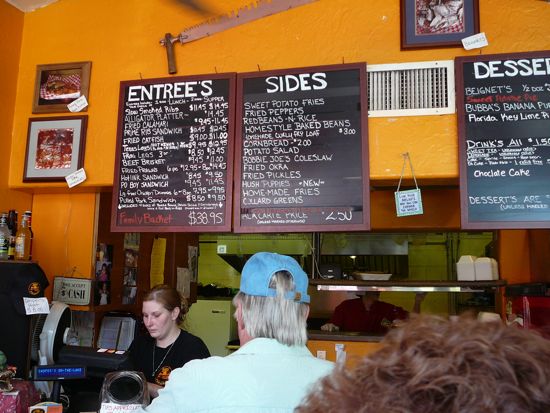
You are going to be so so proud of me. I took pictures before we ate the food this time, well, except for one tiny bite I took out of the hushpuppies, but that was to show you what they look like on the inside. (My Mom has NEVER had a hushpuppy in her life before having one of mine.)
We sat down in the large outside sitting place – I can’t help but wonder what they do in the winter time, because it can get really really cold and damp in Seattle, but I am guessing that they do a huge take-out business.

They have a map that they want people to put push-pins in to say where they are from:
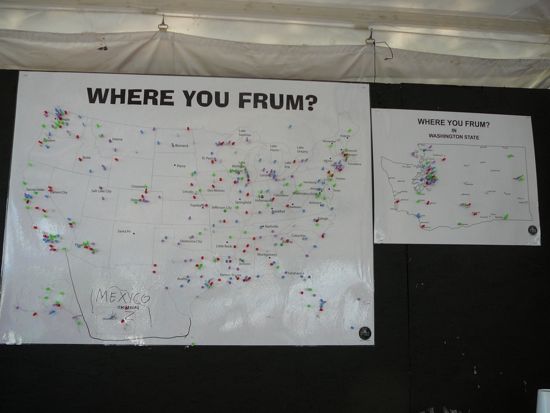
I made a little addition:

And, as I promised, here is the food. Actually, they gave Mom this HUGE portion, about double my portion, but since I got four ribs and only ate two, Mom took home a huge box of leftover ribs to package up and freeze and have a little at a time.

Did you know sweet potatoes are really really healthy for you?

(I think sweet potatoes are healthier for you when they have a lower surface/interior ratio and have absorbed less fat, but these are totally, incredibly delicious. That’s sugar on the sweet potato fries, not salt.) Mom took leftover sweet potato fries home, too.

I can’t even pretend that there is anything healthy about deep fried cornbread. I ate them all, except the one Mom ate. They . . . they were really really good. Yes, I am so ashamed, but I would do it again.
And no, I didn’t take a photo of the sweet potato pie, generously seasoned with fresh nutmeg, it was divine, or the key lime pie we couldn’t eat and Mom took that home, too.
Oh, this food was good. As we left, the line stretched way out to door and into the parking lot.
Casper’s Taste of the South
15030 Bothell Way
Lake Forest Park, WA
(206)268-0202
Their slogan is:
Put a Little South in Your Mouth. LLLOOOLLLL!
Guerilla Art at the Gas Works
Yesterday Mom pulled out a clipping from the Seattle Times about an unknown sculptor who had left a collection of fascinating sculptures – papier mache’ with golden highlights – of people emerging from their shells. They were delivered by stealth to the park by by the artist and friends, and left displayed to the wonderment of runners, joggers, walkers and picnicking families who discovered them at the Gasworks Park.
“Guerrilla-art in Seattle
In what was advertised as a gift to the citizens of Seattle, a gold-colored sculpture by an unknown artist turned up in Gas Works Park on Tuesday, August 25, 2009. “Anew is gifted to the citizens of Seattle in the spirit of awakening,” the artist wrote in a plaque attached to the sculpture.”
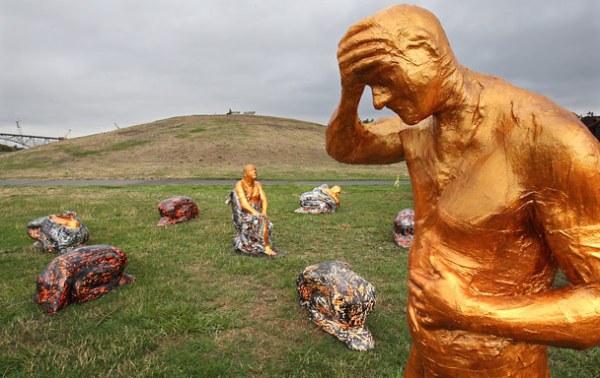
(This is not my photo; this photo is from the Seattle Times Photo Gallery and you can purchase a copy of it from them)
How cool is that? The park officials were all set to pick the art works up and dispose of them, but people started calling in, by the hundreds, “no! leave it there! It is wonderful!” And, amazement of amazements, the city listened, and left the sculptures there.
In today’s Seattle Times is a follow up:
Guerrilla artist goes public; golden man already taken
By Susan Gilmore
Seattle Times staff reporter (you can read the entire article by clicking on the blue type)
The artist who left a sculpture in Seattle’s Gas Works Park earlier this week says she was “amazed and overwhelmed” by the response to the art.
“I spent some time both in the afternoon and evening standing with the crowd, watching their reactions, and I am overflowing with joy,” said Cyra Hobson, 31, in an e-mail sent Wednesday night.
The Seattle Parks Department said Wednesday it will leave the multipiece sculpture in place until Labor Day rather than removing it today, as had been planned.
So Mom and I decided we wanted to take a look, which is a lot braver than you can imagine. Mom has always been active, but she is no longer able to walk as long as she wants to walk – at 86, she hates to accept any limitations, so off we go.
We get to the Gas Works Park and it is another gorgeous day, warm, without being hot, and we walk. And we walk. And we don’t see one single piece of sculpture. People have taken her at her word – they are all gone!
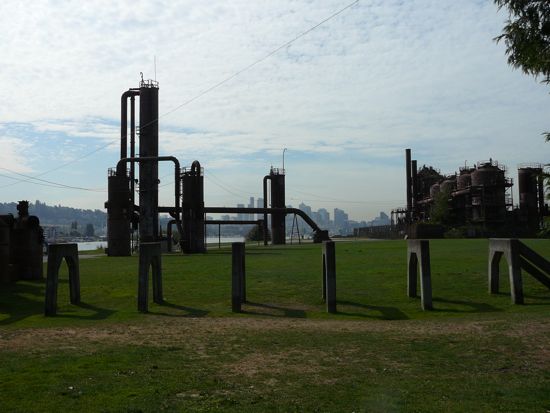
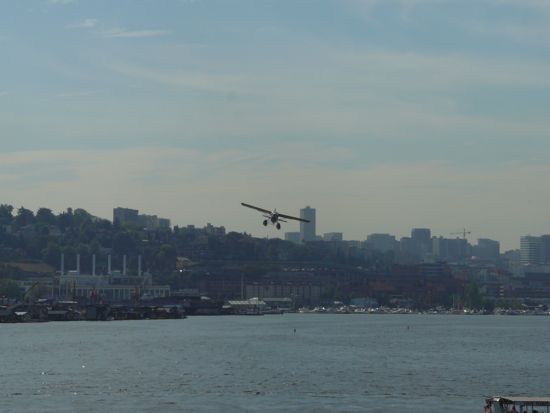
Oh well. We missed an ephemeral moment in time, a great happening, but we still had a great adventure. The view from the Gas Works park (which is – no kidding – on the site of a defunct Gas Works factory, so they turned it into a park for families, joggers, dog walkers, etc.) is phenomenal – at one time, there was a jet, a helicopter and a pontoon plane in the air, a car/boat, several kayaks and a fishing boat in the water, and dogs and children everywhere.
Of course I took some photos to share with you:


This is a “Duck.” Right now it is a boat, but it can also put down wheels and function as an open tour bus on land:

Ivar’s Seafood Bar and Lunch on the Waterfront
It’s another gorgeous day in Seattle, hitting around 87°F/29°C, blue skies, not a cloud in sight, a day everyone heads for the beach.
My Mom LOVES the beach.
“How about if I pick up lunch and we eat on the beach?” I ask her, and she agrees almost before I ask. “But I don’t need a big lunch,” she adds, “only two pieces of fish and no fries, I’ll just eat a couple of yours.”
I hardly ever order fish and chips. I almost never order fries. How could she know me for so long and not know that?
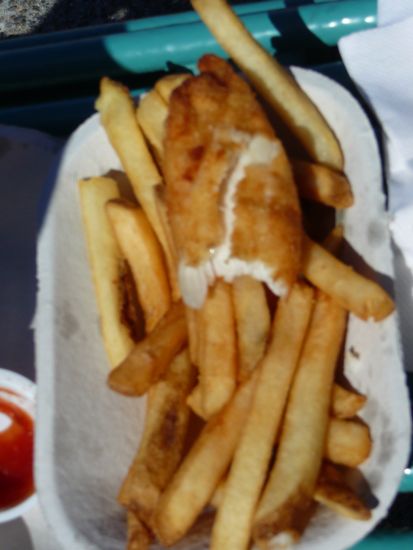
After running my errands, I hit the Ivar’s Seafood Bar and order – two orders of fish and chips.


The restrooms:
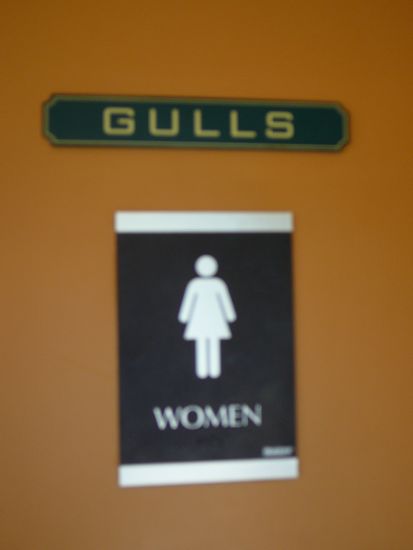
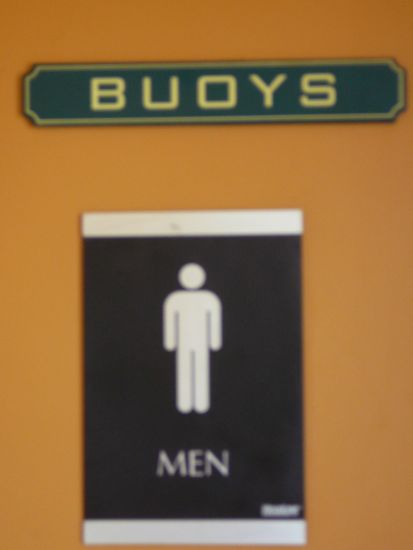
I remembered to take a photo of the fish and chips before the fish was entirely gone 🙂
I picked up Mom and we drove to the waterfront, scoring rock-star parking and a park bench with a view that went forever, right off the beach and watching the Edmonds ferry come in and out of the dock:
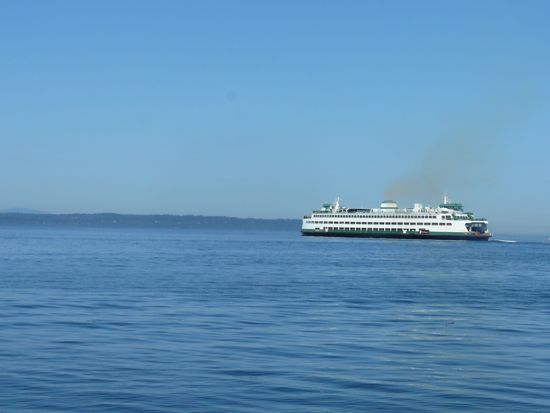

And then we went home and waited for Mom’s new red chair to be delivered, which it was, and it is beautiful!
Red Sky Sunrise in Seattle
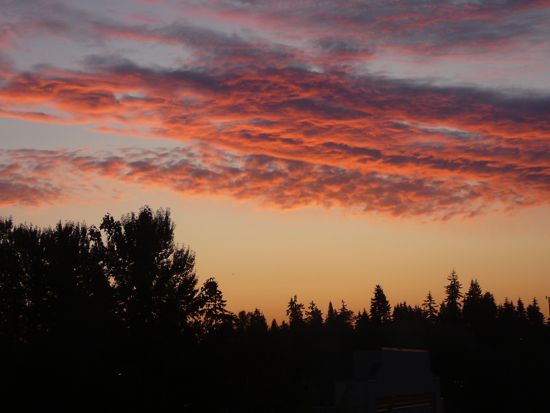
One of the things I don’t mind about jet lag is that it has me awake early in the morning, early enough to catch the sunrise. This morning’s sunrise was spectacular – but this is Friday – and “red sky at morning, sailor take warning . . . ”
Rain is expected tomorrow – Saturday. Why is it that we can have lovely weeks, and then rain on the weekend, LOL! In Seattle, this is the last weekend before school starts.
Stocking Up At Starbucks
I save space in my suitcases for special coffee blends I can’t get in Doha – like Gazebo blend. This Starbucks had TWO bags! As I was paying for all the coffee – after I had taken the photos – I still had my camera in my hand and the barista said “Oh! Starbucks has a strict no photo policy!”
I said “I did not know that!” and I did not take any more photos. No one has ever stopped me from taking photos in the Starbucks. Never! And no one has ever said anything!
Here is a blend from back when we used to go to the Starbucks – the only Starbucks – at the Pike Place Market. This was around the time the Seattle Champber of Commerce wanted to tear the market down to make way for downtown development. 😦 Thank God, that was roundly defeated – it is such a draw to downtown Seattle, now.
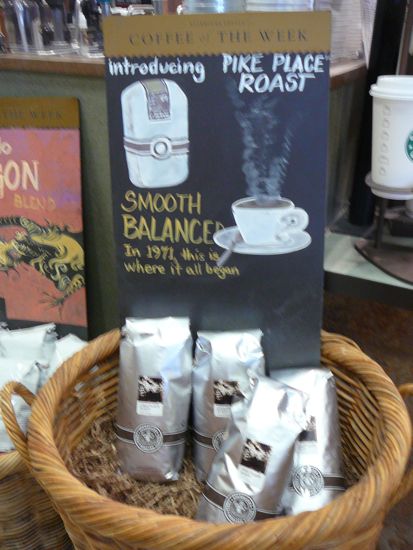
When you buy this coffee, a dollar of your purchase for each bag goes directly to African charities:
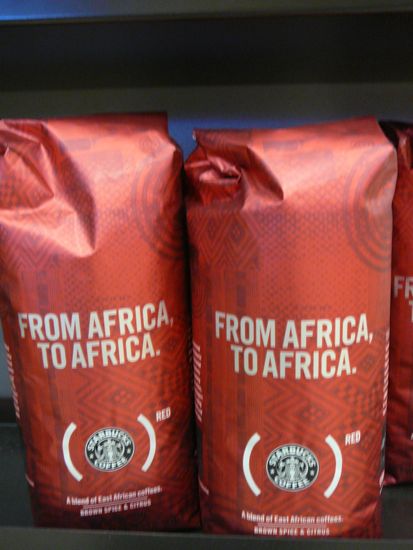
Some specialty coffee displays:

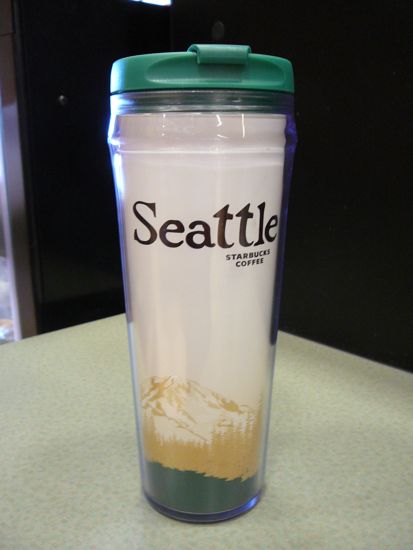
New Seattle travel cups:
And – coming soon – one of my very favorite Starbucks drinks, Pumpkin Spice coffee. 🙂

Whether you love Starbucks or hate Starbucks, you’ve got to admire their marketing genius.
Taqueria Guayamas
I have to admit it, I am repeating myself. When I find a really good place, I go back again and again. How can you miss, when you know a place is really really great?
I had to back to the Taqueria Guayamas, but this time I was determined NOT to order the same things I always order, but to make myself try something new.
Oh no! There were no customers in front of me, so as I am looking at the menu, trying to make myself not order the same things I have had before and the man is asking what I want and I don’t know, so I order the (something) verde, and he asks if I want the plate or the burrito so I say the burrito.
When the burrito comes, it is totally delicious:

(I think part of the green in the green sauce is avocado!)
One of the things I dream about while living in Kuwait or Qatar is the selection of home made salsas – I choose a fiery pepper sauce, and a smokey fiery pepper sauce:
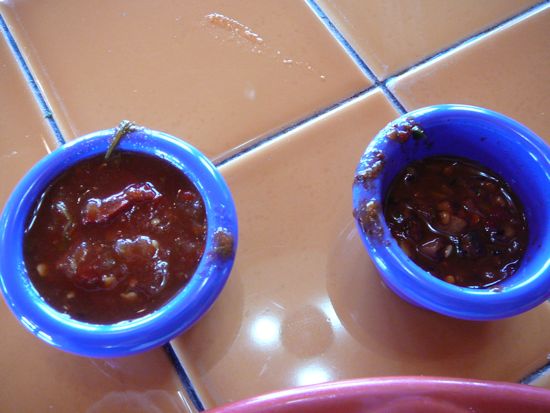
These salsas are both out of this world. If you are not a fiery salsa fan, not to worry, they have about eight to choose from, and some are very mild.
This is one side of the Taqueria Guayamas menu:
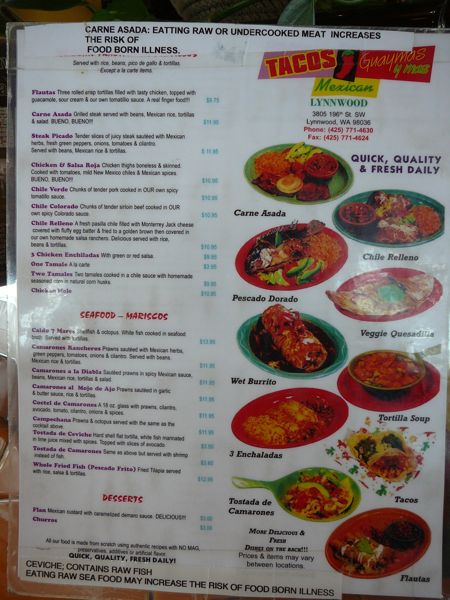
I really, really, REALLY need a Taqueria Guayamas in Doha!
Here There and Anywhere
It’s not like “Here, There and Everywhere” is something I made up and trademarked. No. It was an old Beatles song I liked a lot:
And when I started blogging, I couldn’t think of one area I wanted to specialize in, like news commenting, or recipes, and my life isn’t so fascinating that I can just spin tales and keep you dazzled, so Here There and Everywhere just sort of expressed the serendipity that I wanted, and gave me the space that I needed to tackle lots of subjects – and, more important, to me anyway, to get feedback and input from others who might know a whole lot more than I do about things. I was always ready for things to take a wild jag, and, to my utter delight, they sometimes do. 🙂
It’s worked for me. It keeps life interesting.
But I have to admit I sometimes get a twinge of proprietary feeling about the name. One time BitJockey sent me a reference to a blog – a Kuwait blog! and the author had a name so similar that if it was a coincidence, it was a very eerie coincidence. It sort of totally annoyed me, but I didn’t want to give the blog any attention or thought at all, and actually, so far ignoring it has pretty much worked for me, too.
But today, in my very own home town, I saw this big orange van:

“Oh!” I said! “Oh, Look at that van! It says ‘Here, There and Everywhere’ on it!” and my Mom said “Oh, that’s the Here and There and Anywhere Grill” and we order things from them all the time. They are only here on Wednesdays. After two or three weeks,” she added, “I get a little tired of the food and then stop for a while and start again later. They have really good food.”
I love it that Mom is stepping out, taking college seminars, ordering from the Here and There and Anywhere Grill, doing her physical therapy, keeping active.
“How can I help you, Mom?” I asked, and she had a good list ready. At the end was “Buy a new chair” so today we went searching for the perfect chair. In one store, we were the only customers so the saleslady suggested we push Mom around the huge, cavernous store in a dining room chair with wheels. Only problem is Mom has to hold her feet up off the floor, it’s not like a wheelchair with a base you can rest your feet on, but she was a really good sport, except for the one time maybe I was moving too fast and I hit an edge of carpet and almost dumped her by stopping too abruptly.
She found a totally great chair, one I don’t think my Dad would have approved of at all. I love it that she made the decision herself, and bought the chair and it is going to be delivered tomorrow – a gorgeous cherry RED leather chair. Wooo HOOOO on you, Mom! 😀

(You are going to have to imagine the cherry red part; the only photo I could find online is black.)
Dubai, then Doha Most Expensive
Doha second most expensive city in Mideast
Web posted at: 8/27/2009 2:45:52
Source ::: The Peninsula/ By HUDA N V
DOHA: Doha is the second most expensive city in the Arab world, according to a latest study. The USB, one of the world’s leading financial firms, recently released the 14th edition of its ‘Prices and Earnings’ review which has included Doha for the first time in the list of 73 international cities.
Placed in the 39th position in global ratings, Doha is the second most expensive city in the Middle East after Dubai and before Manama. The rating is based on 122 common goods and services. The study looks at the prices of goods and services, and wages and working hours for 14 professionals in 73 cities round the world.
The study reveals that Dubai has surpassed New York and London which were the biggest financial cities in the world. The finical crisis had lead to fluctuation in the rankings of many cities. London which was the second most expensive in the 2006 review plummeted nearly 20 places, landing in the middle of the Western European rankings. Doha is the most expensive city in the world when it comes to a low-class furnished four bedroom flat. With a monthly rent of $4,210, even posh cities like New York ($4,110) and Dubai ($3,950) come after Doha.
However, in high-class four-bedroom apartments, Dubai is one of the most expensive following New York, Hong Kong and Tokyo. In Dubai, such apartments cost $7,090, whereas in Doha they cost $5,580 and $ 3,400 in Manama.
The average rent in most local houses in Qatar is $1,650, $2,160 in Dubai and $890in Manama. With this Doha and Dubai rank among the top 10 most expensive cities in terms of average rents.
Expenditure on some of the 122 goods and services in Doha came to $2,006, while in Dubai it was $2,522 and in Manama $1,773.
One of the common features of ‘Prices and Earnings’ is the ‘Big Mac index’, which has been a trusty indicator of how long an average wage-earner has to work in order to afford that universal meal in each city. This type of comparison is ideal for products that can be purchased around the world in the same quality — products such as an iPod.
People in Doha had to work more as per this index. To earn a Big Mac, people here had to work 34 minutes, whereas in Dubai people could earn the snack with 18 minutes of work and in Manama with 25 minutes of work. To buy an 8 GB iPod nano, Doha residents would have to labour for 35 minutes, compared to 20 minutes and 23 minutes for those in Dubai and Manama, respectively.
While Zurich in Switzerland paid its employees the most (more than $22 an hour), Dubai paid an average of just $10.10, Doha $5.40 and Manama $6.30. The lowest pay was in Mumbai, where workers received an average of just $1.20 an hour.
Food prices are the highest in Japan, at $710, and Geneva ($660) based on 39 standard western food items. In Doha, food cost $379, in Dubai $426 and in Manama $341. Mumbai had the cheapest foods, costing $153.
Taxi prices were the cheapest in Doha at $3.69 for a five-kilometre ride. In Dubai, the same ride cost $4.27 and in Manama $10.61.
Meanwhile, an evening three-course-meal in a good restaurant in Doha cost $59, ranking it the fourth most expensive place, close behind Dubai where such a meal cost $60.
Also, for a short break, which includes an overnight stay in a first-class hotel and various other services, the city could be the second most expensive after Tokyo. A break in Doha and in London cost $1,000 each, following Tokyo, where it can cost $1,130.
The ultra-liberal economic policies of Qatar and Dubai have created an extremely favourable environment for foreign companies and workers here. However, employees in Middle East work more than their counterparts in other countries. Workers in Doha, Dubai and Manama racked up longer hours, averaging 2,210 per year, 308 more than the global average.
Tradition: Ivar’s in Mukilteo
I don’t know why I love going to this restaurant so much, but I do. The worst meal I have ever had there was mediocre, but considering we go there all the time, the majority of the meals have been between 90 – 100% absolutely wonderful. On this visit, my friend had clam chowder and the Fried Alaska Clams, and I had the crab bisque and the salmon on a bed of spinach. We were so busy talking, there are no food photos, I didn’t even remember photos until we were on your way out of the restaurant.
The Fried Alaska Clams, by the way, were so good that we ordered another order to go, and took them home to my Mother, who adores Fried Alaska Clams, and she said they were perfect!
The boat:

Looking toward the entry:
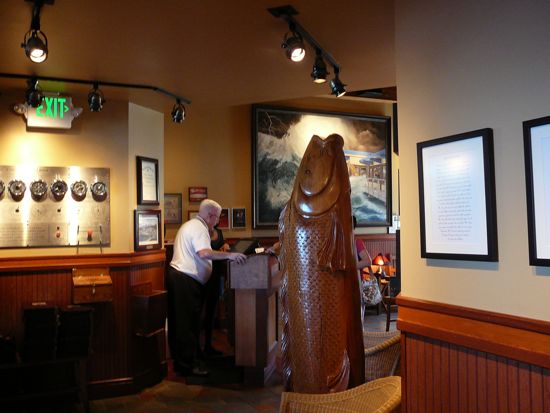
No signs of recession; the restaurant is full!

You can watch the Mukilteo Ferry come in and depart:
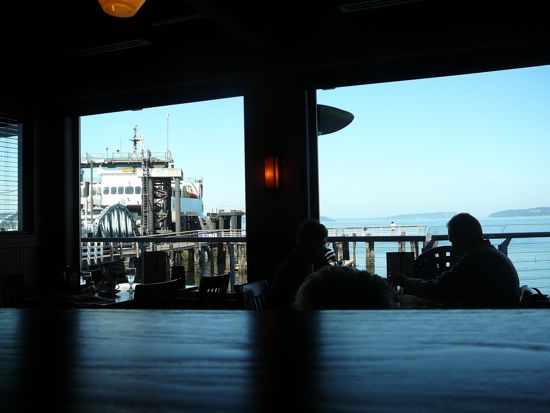
View of the pier on this gorgeous Pacific Northwest day, just outside Ivar’s.

The restaurant was full, but it seemed to me, at least on the lunch menu, that the prices are lower than they were six months ago. My friend said she thought so, too. A BIG bus full of Japanese tourists ate there, but the restaurant is so big, I don’t even know where they were eating.
And Purg, I feel so bad that there are no food photos from Ivar’s, that I took a food photo of the food in my refrigerator for you:
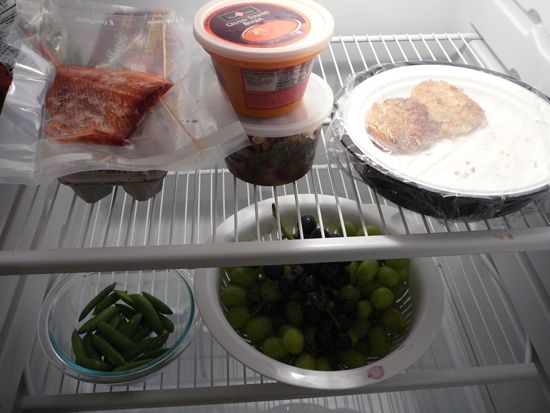
Irrelevant Clothing, Shoes and Scissors
It doesn’t matter how long I have been living in the Middle East, it doesn’t matter how many times I have made the trip back and forth, I never seem to get it quite right.
I knew it was going to be less hot in Seattle. I knew it. And still, I didn’t pack a single pair of closed toe shoes, a single pair of nylon stockings, and only a couple long sleeved things. It doesn’t matter that I have lived in Seattle, that I know Seattle, when I am in the middle of the heat and humidity of August in Doha, I lack the imagination to think clearly about the coolness of August in Seattle. I have a lot of lightweight cotton dresses . . . hmmm, so irrelevant in Seattle.
I keep a storage locker here. It started when we moved our parents from their big house to a 2 BR condo (with a water view 🙂 ) and Mom had separated out some of her treasures to divide among us movers. The problem was, I didn’t really want to take them with me (bulky and I would have to bring them back) and I have already imposed on the sister who lives here with a bunch of my stuff, so I finally decided to rent a storage locker. I discovered as a landlord, it actually comes off my taxes. I still have to pay for it, but it isn’t a total loss. I keep Seattle supplies in the locker, too.
When I went to the locker yesterday to pick up some more long sleeved stuff, and my Seattle hairdryer, and my Seattle make-up and living supplies (dishwashing soap, coffee filters, paper towels, laundry soap, etc.) yesterday, with my Mom in the car, nothing went right. My code didn’t work. I had to go inside, leaving my Mom sitting in the car, and it took them a while to work out what was wrong.
(“We don’t have seven number codes! . . . .Hmmm, , mmm, , , yeh, it says you have a seven number code all right, . . .. so here is your new code . . . )
And the new code didn’t work either.
They opened the gate for me, I went to my locker, and with my Mom sitting in the car, discovered my laundry soap had leaked during the time between visits, and with my Mom sitting in the car, I had to clean it all up AND dig out some relevant clothing, and some wrapping paper for gifts I need to send, and scotch tape and scissors (yes, I keep all the things that I frequently use in the locker so I don’t have to buy them again and again and again.) I also grabbed the bag of cosmetic items – like shampoo, toothpaste, my Seattle toothbrush, etc.)
My poor Mom! Remember her? She is still out there sitting in the car!
(The code didn’t work on the way out, either.)
So after all that sitting in the car, I treated Mom to a trip to Trader Joe’s, a place we both love. I picked up sugar snap peas; I just eat them like candy, instead of candy, they are SO good, and some sushi for later on, and Mom picked up things that were really bad, like triple gingersnaps and a wonderfully fragrant new Rosemary Tree.
On the way home, she said “you know you have some stuff in the guest bathroom” and I assured her that I did not, that it was all my middle sister’s stuff, and she said “No, Little Diamond looked at it while she was staying here and said it was yours, that it was stuff you use.” Hmmm. Little Diamond said that?
So when we got back to Mom’s house, I checked the cupboard, and there was one of those zipper bags like (ahem) I always use, and inside was . . . yep. Another hairbrush. Another Seattle toothbrush. Scotch tape. Scissors. My particular make-up back-ups. Shampoo. I brought it with me, and I had two almost identical zipper bags full of Seattle supplies. I can only imagine that sometimes when I get here after all those hours of traveling that my mind is just so addled I am not thinking.

It also makes me feel a little weird that Little Diamond knows me so well that she can identify MY things with just a glance at the contents of the plastic bag, LLOOLLLL! I am that predictable?
On my way over to my Mom’s, I had stopped at the local Fred Meyer’s, a Target-like local store I just love. Now that I am in Seattle, I see things differently. I see things I can hardly resist, like something in me feels like getting ready for the winter, but then, Thank God, my sterner self jerks me back just as I am reaching for:

Look at those socks! Look at those colors! I can barely resist, they are such a hoot! but then . . . where would I wear them? Even if I were abaya’d, people could see my bright polka-dot chartreused ankles and it would draw unwanted attention . . . . maybe just around the house . . .
But no . . . around the house – look at these!
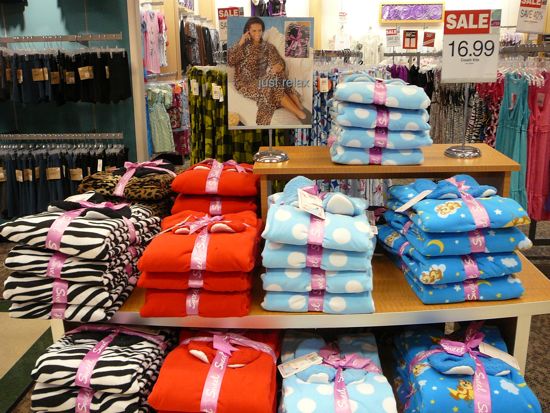
Thick, fuzzy sleepers, only $16.99, like we wore when we were kids, only these are for grownups, and oh! look at that zebra print! The cheetah! They are almost irresistable!
And so irrelevant in Doha!
Recent Comments
intlxpatr on Shampoo Ginger tigerbutterya0c5ff1d… on Shampoo Ginger intlxpatr on British Soldier Kidnapped, Esc… John on British Soldier Kidnapped, Esc… intlxpatr on British Soldier Kidnapped, Esc… Wikipedia Donate Button

Amazina


Early Voting in Florida


