Welcome Ramadan 2013!
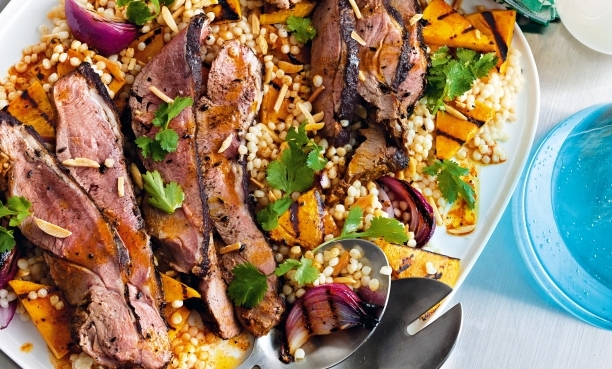
My first Ramadan was in Tunisia. It was summer, it was hot, and the days were long. The days dragged by, and then, in the evenings, our neighbors would send over huge platters of lamb and couscous, hot and spicy, to share with us. Our neighbors had ten children, all around our age, some older, some younger, and cars would arrive endlessly, bringing and taking people. They often included us in the family gatherings, out of the kindness and generosity of their hearts.
I didn’t understand how it all worked, Ramadan and fasting, and they would explain it to me. It’s a lot to take in. It took me a long time, many years, many Muslem countries, many Muslim friends. I still don’t think I understand all of it, but I understand enough of it to know this – it’s like a month of Christmas Eves.
A good Muslim won’t just fast from sunrise to sundown. A good Muslim circumcises his or her heart in this time. A good Muslim will read through the entire Quran at least once during Ramadan. The whole point of the sacrifice is to purify the soul.
I wish for my Muslim friends a joyful Ramadan, full of blessings. May God our Creator and Heavenly Father receive your sacrifice and bless your fasting. May your Mama prepare all your favorite foods for the breaking of the fast. 🙂
Where is Lokoja, Nigeria?
Today the church prays for the diocese of Lokoja, Nigeria. Don’t you just love technology? You can go right to Google Maps and within seconds, you know where Lokoja is, right on the banks of the Niger river, bisecting Nigeria.

St. John the Baptist and the Holy Spirit

This entry is a totally Here There and Everywhere moment; the impetus of which is today’s reading from Luke about the birth of John the Baptist, or as he is known in the Moslem world, the Prophet Yahya. We visited his tomb in Damascus; at our church in Kuwait on the Feast of the Nativity of St. John the Baptist, one of the readings was from the Quran. I love it when our worlds intersect and we can discover what we can learn from one another, to the advantage of all.
I also love it that each meditation from Forward Day by Day lists at the bottom the area of the world we are to include in our daily prayers. I love praying for Nigeria. I have old friends from my Kuwait church living there, and also a neighbor from Doha, a sweet book-club friend who lived across the street, who now lives in Lagos.
When I pray for Nigeria, I see the tiny flame of the holy spirit entering into each heart, and then I see God blowing lightly on each person, so that the flame grows. The flame helps them reach out and encourage one another, and others see, and are attracted, and thus the holy spirit spreads. I imagine it covering Nigeria, all believers, seeing one another as fellow believers, not as Ibo or Christian or village or . . . you get the drill. I pray that the light spreads through all Africa, and tiny embers spread out to join, and then further, so that sparks unite all over the world.
I pray, too, for Damascus, and for Syria, and all our friends there; I think of all the wonderful adventures and times we have shared in Syria, and I know and trust with all my heart that our good and loving God can bring good out of this horror. I pray for it to happen sooner rather than to allow this suffering to endure.
. . . And that was just ONE synapse connecting early on a Monday morning, LOL. Have a great day. 🙂
MONDAY, June 24 The Nativity of Saint John the Baptist
Luke 1:57-80.
On the eighth day they came to circumcise the child, and they were going to name him Zechariah after his father. But his mother said, “No; he is to be called John.”
Most of us don’t receive such pointed visions that show us the fork in the road—“this way, not that way”—but all of us are constantly cultivating either a disposition of “my will be done” or of “thy will be done” that will suddenly show up in those crossroads moments. It may appear like divine intervention, but it is long-term divine cultivation.
Living into a larger pattern is both exciting and terrifying, because it means letting go of convention and stepping into new territory. Like Elizabeth and Zechariah, we do not step forward blind but with a promise: God remembers, and God is gracious.
All God’s Children . . .
A friend recently sent me one of Richard Rohr’s meditations and I was hooked. I especially love today’s meditation, which I will share with you. It reminds me of a song I have been teaching my grandson since the day he was born;
Jesus loves the little children,
all the little children of the world,
red and yellow, black and white,
we are precious in his sight,
Jesus loves the little children of the world.
Seven Underlying Themes of Richard Rohr’s Teachings
Fourth Theme: Everything belongs and no one needs to be scapegoated or excluded. Evil and illusion only need to be named and exposed truthfully, and they die in exposure to the light (Ecumenism).
|
|||
|
If his very Franciscan meditations strike a chord with you, you can subscribe by clicking here.
The Widow’s Mite
Today’s meditation is on the Gospel reading from the Lectionary found in Forward Day by Day. I’ve always loved this image, this humble, poor woman who gives what little she has.

THURSDAY, June 20
Luke 20:41—21:4. Jesus looked up and saw rich people putting their gifts into the treasury; he also saw a poor widow put in two small copper coins. He said, “Truly I tell you, this poor widow has put in more than all of them; for all of them have contributed out of their abundance, but she out of her poverty has put in all she had to live on.”
There is something about generosity that is compelling. Jesus says that the poor widow has given out of her poverty, but in reality it is only she who has given out of her abundance—an inner abundance of the heart that allows her to behave almost recklessly, as if she had more than enough.
I was taught to save those pennies, to save them for a rainy day, and it can still keep me looking to the horizon for any sign of clouds. My spouse, admittedly, has a much better relationship to money: it’s not about having or not having, but about knowing the relative value of wealth; it is energy to be moved around, rather than bankable power or security. Above all, it is a potent way to extend and manifest generosity.
As we see in the widow’s mite, it’s not the amount, but the heart’s intention behind it that matters. That is where the real power lies.
The Festival of BERNARD MIZEKI
(Play the video of the Soweto Gospel Choir as you read this summary from today’s Lectionary Readings How I would love to be able to attend this festival!)
BERNARD MIZEKI
CATECHIST AND MARTYR IN AFRICA (18 JUNE 1896)
Bernard Mizeki was born in Portuguese East Africa (Mozambique) in about 1861. When he was twelve or a little older, he left his home and went to Capetown, South Africa, where for the next ten years he worked as a laborer, living in the slums of Capetown, but (perceiving the disastrous effects of drunkenness on many workers in the slums) firmly refusing to drink alcohol, and remaining largely uncorrupted by his surroundings. After his day’s work, he attended night classes at an Anglican school.
Under the influence of his teachers, from the Society of Saint John the Evangelist (SSJE, an Anglican religious order for men, popularly called the Cowley Fathers), he became a Christian and was baptized on 9 March 1886. Besides the fundamentals of European schooling, he mastered English, French, high Dutch, and at least eight local African languages. In time he would be an invaluable assistant when the Anglican church began translating its sacred texts into African languages.
After graduating from the school, he accompanied Bishop Knight-Bruce to Mashonaland, a tribal area in Southern Rhodesia (now Zimbabwe), to work there as a lay catechist. In 1891 the bishop assigned him to Nhowe, the village of paramount-chief Mangwende, and there he built a mission-complex. He prayed the Anglican hours each day, tended his subsistence garden, studied the local language (which he mastered better than any other foreigner in his day), and cultivated friendships with the villagers. He eventually opened a school, and won the hearts of many of the Mashona through his love for their children.
He moved his mission complex up onto a nearby plateau, next to a grove of trees sacred to the ancestral spirits of the Mashona. Although he had the chief’s permission, he angered the local religious leaders when he cut some of the trees down and carved crosses into others. Although he opposed some local traditional religious customs, Bernard was very attentive to the nuances of the Shona Spirit religion. He developed an approach that built on people’s already monotheistic faith in one God, Mwari, and on their sensitivity to spirit life, while at the same time he forthrightly proclaimed the Christ. Over the next five years (1891-1896), the mission at Nhowe produced an abundance of converts.
Many black African nationalists regarded all missionaries as working for the European colonial governments. During an uprising in 1896, Bernard was warned to flee. He refused, since he did not regard himself as working for anyone but Christ, and he would not desert his converts or his post.
On 18 June 1896, he was fatally speared outside his hut. His wife and a helper went to get food and blankets for him. They later reported that, from a distance, they saw a blinding light on the hillside where he had been lying, and heard a rushing sound, as though of many wings. When they returned to the spot his body had disappeared. The place of his death has become a focus of great devotion for Anglicans and other Christians, and one of the greatest of all Christian festivals in Africa takes place there every year around the feast day that marks the anniversary of his martyrdom, June 18.
Ramadan in Kuwait Starts July 9

Ramadan on July 9
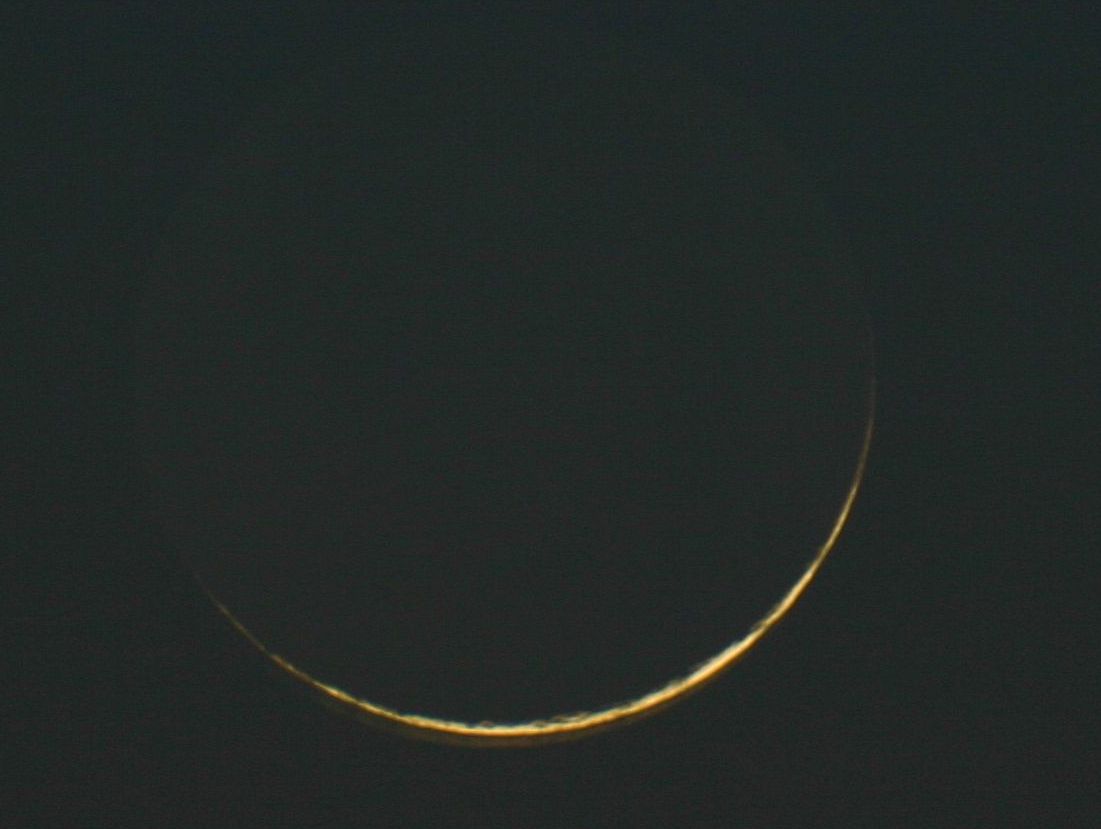
KUWAIT: The fasting month of Ramadan is forecast to begin on July 9 on the basis of astronomical calculations, said astronomer Adel Al-Saadoun yesterday. Saadoun told KUNA the crescent will be visible on July 8 at 10:14 am and disappear some four minutes after sunset.
He added the sighting of the crescent would not be possible at any spot throughout the Muslim world, but would be seen through telescope in southern America. However on July 9, it would be visible in some countries including Kuwait.
Ramadan is a yearly month of fasting observed by millions of Muslims throughout the world. Kuwaitis observe and celebrate its advent and Eid Al-Fitr marking its end. People fast from dawn to dusk, and public eating, drinking or smoking is punishable by law.
My very first year blogging, I wrote a post which has become one of my all time statistical highlights, Ramadan for Non-Muslims. It was a rich time for blogging in Kuwait, lots of interchange of ideas. If you want to know more about Ramadan, be sure to read the comments by clicking on ‘comments’ at the end of the article.
Character Becomes Your Destiny . . .
A friend recommended these daily meditations, which as it turns out, I love. He keeps it simple and understandable
Richard Rohr’s Daily Meditations
Seven Underlying Themes of Richard Rohr’s Teachings
Fourth Theme: Everything belongs and no one needs to be scapegoated or excluded. Evil and illusion only need to be named and exposed truthfully, and they die in exposure to the light (Ecumenism).
You Must Nip It in the Bud
Meditation 4 of 52
Remember, always remember, that the heartfelt desire to do the will of God is, in fact, the truest will of God. At that point, God has won, and the ego has lost, and your prayer has already been answered.
To sum up the importance of an alternative mind this message says it all:
Watch your thoughts; they become words.
Watch your words; they become actions.
Watch your actions; they become habits.
Watch your habits; they become character.
Watch your character; it becomes your destiny.
From Breathing Under Water: Spirituality and the Twelve Steps, p. 103
A Question of Time
I’ve always loved this section of Revelations, the beautiful woman crowned with the diadem of stars and the terrifying dragon, waiting for her to give birth so he can eat her child, but the child is snatched away and the dragon – Satan – and his angels are thrown to earth. “He knows his time is short” Revelations tells us, but no matter what HE thinks, to us, here on earth, when evil walks, each second seems an infinity.
If you read biblical commentary, the woman is convincingly described as many different things – some say Mary, some say clearly she is the church, there are as many ideas as their are commenters. I prefer to think of it as Hagia Sophia, Logos, the Word, the second person in the Holy Trinity, who gives birth to the son, who is of one substance with the Father. I love the imagery. It’s all metaphor, trying to explain something grand and inexplicable to us, the simple minded.

Revelation 12:1-12
12A great portent appeared in heaven: a woman clothed with the sun, with the moon under her feet, and on her head a crown of twelve stars. 2She was pregnant and was crying out in birth pangs, in the agony of giving birth. 3Then another portent appeared in heaven: a great red dragon, with seven heads and ten horns, and seven diadems on his heads. 4His tail swept down a third of the stars of heaven and threw them to the earth. Then the dragon stood before the woman who was about to bear a child, so that he might devour her child as soon as it was born. 5And she gave birth to a son, a male child, who is to rule* all the nations with a rod of iron. But her child was snatched away and taken to God and to his throne; 6and the woman fled into the wilderness, where she has a place prepared by God, so that there she can be nourished for one thousand two hundred and sixty days.
7 And war broke out in heaven; Michael and his angels fought against the dragon. The dragon and his angels fought back, 8but they were defeated, and there was no longer any place for them in heaven. 9The great dragon was thrown down, that ancient serpent, who is called the Devil and Satan, the deceiver of the whole world—he was thrown down to the earth, and his angels were thrown down with him.
10 Then I heard a loud voice in heaven, proclaiming,
‘Now have come the salvation and the power
and the kingdom of our God
and the authority of his Messiah,*
for the accuser of our comrades* has been thrown down,
who accuses them day and night before our God.
11 But they have conquered him by the blood of the Lamb
and by the word of their testimony,
for they did not cling to life even in the face of death.
12 Rejoice then, you heavens
and those who dwell in them!
But woe to the earth and the sea,
for the devil has come down to you
with great wrath,
because he knows that his time is short!’
It’s Why We’re Here: Lunch at Taco Rock
There is a graciousness in Pensacola that reminds me of life in the Middle East, although the local Pensacolians would be astounded to be compared with the Middle East. If you look closely, though, you can see the similarities.

There is politeness and civility toward others, even strangers. When workmen are in your home, you offer them ice water, or iced tea, and you ask about their families before they start work. It seems to us that when we call for help, we get the same service people coming to our house; I don’t think it is an accident.
People chat a little before they get down to business. I think many a Pensacolian would feel comfortable in the souks, sitting and drinking a little tea before they start to discuss the appropriate price level for the bauble they are considering. They ask about a person’s health, and they ask about your family. They take meals to those who are suffering or recovering.
People spend time with family. Families go to church together, families have meals together, families share child rearing. Multi-generations live near one another. People who went to school together more than fifty years ago form their own kind of family, sharing deeply, attending the funerals of one another’s kin. Funerals are well attended. Very Arab, if only they knew.
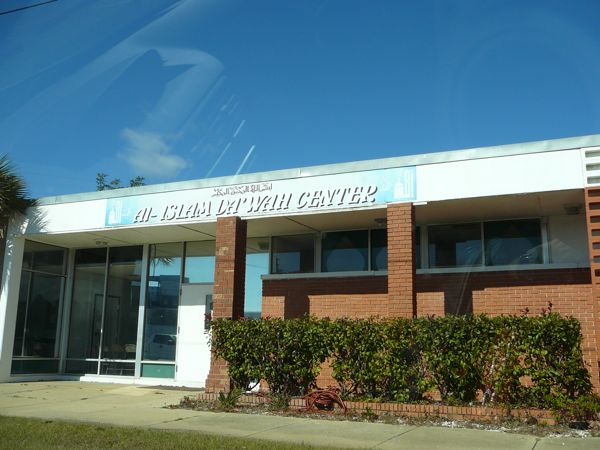
There are pockets in the United States where you find groups of Arab nationals; Pensacola has these groups, even a discreet mosque or two. There are stores selling international supplies, including zaat’r and sumak and harissa, chana dal, bulger, wuhammara . . . and restaurants billing themselves as ‘Mediterannean’ whose food would be recognizable to those in the Levant and the Gulf.
There is almost always a breeze off the Gulf to fight the heat and humidity and mosquitoes, and, by the grace of God, there is air conditioning and ice water coming out of the refrigerators. Life is sweet.
Life is all the sweeter because we can get together with our son and his family on the spur of the moment, and end up at a great family place like Taco Rock, where our little grandson can get down when he gets restless, and where there is plenty of time for us to chat, discuss Django Unchained, discuss new developments in entertainment technology, discuss upcoming vacations and arrangements – there is that great luxury of time together, and tasty food at reasonable prices. LOL, this is the Pensacola equivalent of a Michelin Red R, good local cuisine at reasonable prices. Hmmmm, Mexican is probably not qualified as good local food at reasonable prices, but close enough . . .

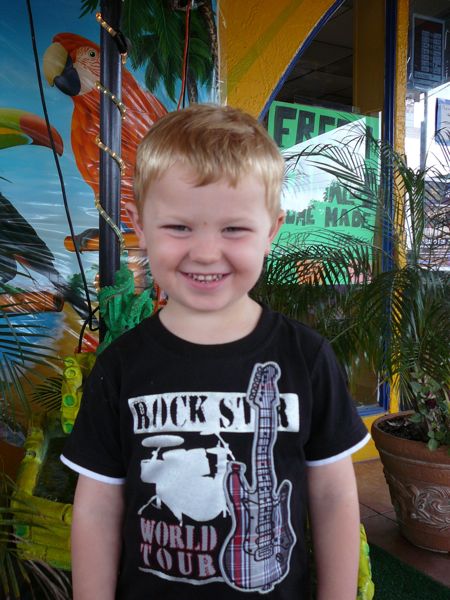
He is such a delight, our little grandson, who calls the coming baby “that little girl,” as in “when that little girl comes, I’m going to teach her how to float on her back!”
This week, there is another parade! Pensacola must be the parade capital of the world; so many parades! We’ll pick up our grandson, stand on the corner and wave our arms until they throw us some beads. Great fun and good exercise. 🙂


This post is really a great excuse to post some new photos of our grandson 🙂
Recent Comments
ExpatAlien on What Country am I Living … intlxpatr on Yellowstone: Old Faithful to C… Michelle on Yellowstone: Old Faithful to C… Cathy on No Grown-Ups in Charge intlxpatr on Waiting for Snow Wikipedia Donate Button

Amazina


Early Voting in Florida


 Here There and Everywhere