Harlan Coben: Long Lost

This totally light weight mystery was just right for a beach read. It was light on motivation, light on character description, light on substance – it was a very fluffy mystery.
Long lost love calls and says “come to Paris; I need you” and doltish hero heads off. Confusing plotting calls for some irrational police interaction, some unknown bogeymen, and a truly thin story line.
You can read it in about an hour, though, or stretched out between beach activities, it might be good for a weekend. Not only lightweight, but forgettable.
Weekend At the Beach
We didn’t go far – just out to the beach, Pensacola Beach, for a weekend. It was so much fun. It rained our entire drive to the beach, LOL all twenty minutes it took to get there:

But it started clearing, and with all the clouds, the sunset was spectacular:



We all have such a good time together. We took a drive out to Fort Pickens and I saw so many butterflies!

We had to watch THE game later in the day, which the Happy Baby calls “buttball,” LLOOLLL!
Here he is at breakfast with his BaBa:

It was a beautiful day, with another beautiful sunset:


AdventureMan asked me if I wanted a house overlooking the Gulf. I said ‘no, it would never be so interesting as Kuwait.’ In Florida, I think I would want a house up high over a bayou, where there are birds and wildlife. High enough to not flood when there is a hurricane or a storm surge. . . It still was a thrill to spend a couple days high above the beach, and watch the sun set. 🙂
It’s funny the things that make a marriage succeed. It’s the little things. We both wanted to go to Barnes and Nobles because the 2012 calendars are out and we like to have calendars we love to look out through the year. You can take a chance on waiting until New Year’s week, and sometimes you get a cool calendar at 50% off, but mostly the one you really wanted is already gone gone gone, woe woe woe.
Besides that, we always like to get what we want, then the other one hides it until Christmas. By then, we’ve forgotten what we picked out, so it is a really good surprise. 😉
I told AM that I was going to have to have a chocolate fix and he said he would have to have a chocolate fix, too. We decided we could share an Oreo cake:

It was a fun idea, but it didn’t taste as good as it looked. We didn’t even finish it, it just wasn’t that great.
Anne Enright: The Gathering
What is it with my problem with Man Booker Award winners? The last one I remember is White Tiger, which we read in our Kuwait book group, and I hated. Actually, it was the main character I hated . . . and possibly that is what is happening with me and The Gathering, now that I think about it.

We meet Veronica, Irish, from a large Irish family, as she learns of the death of her brother Liam. Through claiming the body, preparing for the funeral, the funeral and the aftermath, we are there with Veronica as she whines and complains, as she disparages her family members while ignoring her own husband and family, and she drinks too much. She gets up at noon, and stays up all night, avoiding her husband. Her language is frightful, and her sexual episodes are crude and explicit . . . offensive, but maybe it is the utter distraught nature of a woman in the throes of the deepest grief?
Slowly, slowly, the story unfolds. For me, I was never sure what was truth and what was imagination, in terms of the story. Were the children abused, molested, neglected? Or are these the creative imaginings of a troubled woman? There seems to be a thread of insanity in the family – can we trust that she is a reliable narrator?
As little as I liked the main character – hmmmm, that seems to be a problem I am having a lot right now, or at least I’ve had a run of main characters I don’t like very well – I finished this book. I’m glad I read it so that I can talk about it if it comes up in a discussion, but it did not inspire or elevate me in any way, and I didn’t even feel a lot of compassion for the narrator.
Emily Arsenault: In Search of the Rose Notes
I think I got this book because I saw some of my book-loving friends on Good Reads reading it. When I started reading it, I thought, “Hmmm, big print, short chapters and the main character is a pre-teen, hmmm, this has the feel of a teen-book,” but by then it was too late, I was already hooked, so I read the whole book and I am glad I did.
So the writing is not all that complex. I actually like teen books because teens and twenties deal so much with making moral choices. They are at that wonderful age when they think about things and decides what matters to them. There are many of those I would rather hang around than people my own age who want to talk about shopping or shoes or aches and pains.
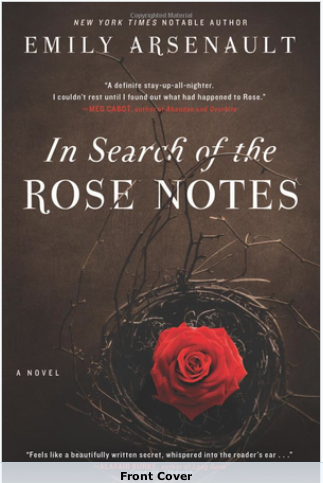
(You can find this book at Amazon.com)
Nora hangs out a lot with Charlotte, her best friend, while her single mother works full time. Charlotte is bossy, but never boring, as they explore the pre-teen world together. They have a babysitter, Rose, who watches over them and keeps them out of trouble. Until one day Rose disappears.
The book switches back and forth from these pre-teen experiences to a later time, maybe 15 years later, when Rose’s body is unearthed, and once again Nora experiences a lot of feelings she had buried. I loved the depiction of high school, where so many kids are suicidal, and life is cruel. High school just isn’t a kind place, even for those who look like they are having a great time.
At the same time, there were some good relationships, and you get to look back with Nora at people who were kind, but you were too absorbed in your own feelings to notice. It’s a complex world, and we get to go back and explore it once again through Nora’s eyes.
I’m glad I read it. This book did not change my life, but it is a great book for people who either are younger, or who like younger people, as I do.
Jennifer Egan: A Visit From the Goon Squad

Amazon.com kept telling me I needed to read this book, so finally, I ordered it and waited a couple months before I was ready. I just finished a major project AND I caught a miserable cold, so what better time?
I loved this book. It had a lot going against it; you know irrational factors like how you feel when you have a cold and your sinuses are all stuffed up and your chest is tight? A Visit From the Goon Squad took me out of my misery. While it appears random, it is tightly plotted, and I loved seeing how different strands intertwined. I also loved the effects of the goon squad (no, I am not going to tell you anything specific) and I loved how technology drove differences in how different generations thought and acted.
The last act takes place in a future where (this makes total sense) there is a high value placed on “pure”, no tattoos, no swearing – it is truly hilarious, the lengths to which we will go to NOT be our parents. Babies have their own hand-helds, which is already happening. My eyes have been opened, watching our own 18 month old grandson working an iPad and iPhone. It’s amazing to me the aps that are created to entertain, divert and teach our little ones.
This is not a straight line book, so there are times I had to go back and read a section again to remind myself where I met this character before, and how he tied into the plot earlier. It is a fascinating creation, this book, and I would love to sit down for coffee with this author, and her outside-the-box kind of thinking.
Bad Grandparents: Disaster Averted
“No! No!” he shouted, and pushed away the spoon full of rice and beans which he normally loves. No. He wanted BaBa to walk him around the restaurant some more, showing him serapes and sombreros and gaudily crowing roosters.
‘More. More,’ he signed.
“It’s dinner time, time to eat,” GaGa said calmly, signing for ‘eat.’
“No! No! Done!” He may not have a large vocabulary, but Happy Baby knows how to communicate pretty clearly. BaBa goes to pick him up, but I say no, it’s dinner time. Very calmly. The shrieks begin, the arched back, the tears. Baba looks at me accusingly; what to do? I know we need to hold our ground, but it is so hard when the piercing shrieks start.
And then, a miracle. The waiter shows up with a small plate of whipped cream with chocolate sauce over it.
What self-respecting grandparent would allow a child to feast on whipped cream??

Desperate grandparents. Grandparents who can’t bear to hear him shriek. We let him eat the whipped cream, but he had to eat it on his own, with the spoon. He’s not very efficient with the spoon yet, so he couldn’t really get much. And, between tiny spoon tastes of whipped cream, BaBa and I have discovered he will eat beans and rice after all. He ate all the beans and rice, and only got a little of the whipped cream, but he was happy. And so were we.
On some deep level I feel like we have shirked our responsibilities, but oh, those shrieks . . .
When we are at home, we can ignore the shrieks. One time he was shrieking, and when we ignored him, he stopped, came closer and then flopped down and started shrieking again. We couldn’t help it, we just laughed. It was so hilarious. When he saw us laughing, he gave up and got involved with something else. He is so much fun. 🙂
A Different Perspective
“It’s going to be a great weekend! We’re expecting sun and temperatures of 85°F!” my Mom enthused, from Seattle.
“We’re expecting a great weekend, too,” I enthused right back, “the temperature will be down to about 85°F and it’s going to RAIN!”
We laughed. It’s all a matter of perspective.
“We’re staying in this weekend,” said one of my co-mother-in-laws. “When it gets like this, we just hunker down.”
“We went out to the beach!” I crowed! I wanted to see the waves, and when the temperatures go down and it rains, I feel re-energied!”
We laughed. She’s married to a man from the Pacific Northwest, so this perspective is not new to her.

What was not funny was when I had just started a load of laundry, and the electricity went out. Electricity goes out all the time, or from time to time, with frequent thunder and lightning storms, but this time it went out and stayed out. Without the ceiling fans going, it wasn’t hot, but it got stuffy. We have a covered and protected area outside, so we went outside and sat and watched the gusting winds and the flying rain beating down our tomato plants. Mostly, the rain has been drizzling down, but for an hour or so, it really battered and flew about. It’s just a normal small storm, though, nothing like it could be, nothing like Hurricane Irene, which devastated the East Coast last weekend.
And it was a good thing. We have hurricane preparations, but . . . sometimes we rob the Hurricane supplies, or borrow them, and forget to put them back. While it was still daylight, I wanted to check on candles, matches, etc. and I discovered the matches had been MISPLACED. I finally found them. I gathered candles, and checked the weather station on my radio that you wind up during electrical outages (it worked fine) and started a list of additional things I want to gather to have on hand in case the electricity goes out for any length of time. It’s good to be prepared. 🙂
Electricity is back on now, adventure over.
HIV Epidemic Emerging in Middle East and North Africa
Recently published on National Public Radio is a study showing that governments are quietly gathering statistics on the rising tide of HIV infections in the Middle East and North Africa, but they don’t want those statistics published:

HIV epidemics are emerging among men who have sex with men in the Middle East and North Africa, researchers say. It’s a region where HIV/AIDS isn’t well understood, or studied.
More than 5 percent of men who have sex with men are infected by HIV in countries including Egypt, Iran, Lebanon, Morocco, Sudan and Tunisia, according to a recent study in PLoS Medicine. In one group of men in Pakistan, the rate of infection was about 28 percent. (For reference, in 2008, rates of HIV infection among men who have sex with men in the U.S. ranged from 16 percent among white men up to 28 percent of black men, according to the CDC.)
Risky behavior, low condom use, injectable drug use and male sex workers are some of the factors that could cause HIV rates to rise in the region, the researchers say. On average, the men who have sex with men group had between four and 14 sexual partners within the past six months, with consistent condom use falling below 25 percent.
Lack of HIV surveillance and low access to treatment and prevention are a concern for researchers, who believe the window of opportunity to prevent the epidemic from spreading across the region is growing smaller.
Shots had a chance to speak with one of the study’s authors, Dr. Laith Abu-Raddad, assistant professor of public health at the Weill Cornell Medical College in Qatar, to discuss the challenges of researching such a taboo topic.
What made you decide to pursue this study?
There are some political and community leaders who believe that our region is not affected by the epidemic. While others, such as HIV activists, believe that men having sex with men behavior is hidden, so HIV data must be hidden. They have called it the “HIV epidemic behind the veil.” It occurred to me that these are very contrasting views, and the truth must be out there somewhere.
I started this work eight years ago, to get every piece of evidence that we have on HIV. Turns out that there are more data than we think. The regions are not hiding the data, it’s just a sensitive issue. These issues aren’t discussed like in the western media. But it doesn’t mean that the government isn’t dealing with it. Governments do have programs such as active non-government organizations, NGOs, working with groups that are infected.
What surprised you about the findings?
Certain countries did surprise us with the work they’ve done. In Iran, they target the population of drug users. When Iran discovered HIV among drug users, they created programs that offered drug users access to treatment, and gave them free clean needles and syringes.
Many governments don’t want to provide HIV treatment or counseling directly. They support NGOs financially and logistically to help treat communities affected. It’s a way for them to protect people without raising sensitive issues of sexual and drug use behaviors that are often controversial.
What challenges did you face while gathering evidence?
There were some governments that gave us their data on the condition that we didn’t publish it. They want to deal with this issue, but they see no reason to raise it to the public. There were governments who did not want to release data. I can’t tell you which countries, since we have long-standing relationships with them. But we managed to convince some of them that the data would be used purely for scientific research and not used against them by the media.
What do you hope to accomplish from this study?
To raise awareness among policy makers. Hopefully, governments will make changes to policy. Surprisingly, the No. 1 barrier is poor research capacity in this region. If we don’t have the scientific data, we can’t have effective policy. We need to have an effective surveillance program, so we can help prevent further HIV transmission.
This part of the world is seen as not addressing the epidemic. Countries like Iran, Morocco and Egypt are developing programs and working with NGOs. But other countries haven’t yet improved their services to the public. But we hope they will.
Major Pettigrew’s Last Stand
 Major Pettigrew’s Last Stand by Helen Simonson
My rating: 5 of 5 stars
I loved this book. It follows all the themes I love – how convention blinds us, how our cultural assumptions make us unconsciously snobbish and leads us to hideous behavior, it is very cultural and also very cross-cultural. Major Pettrigrew is widowed, and his grief has made him old. At the beginning of the book, his life seems very dull and grey. It lightens as his friendship sparks with Mrs. Ali, a widow who runs a small convenience market in his small English village. They both love reading (of course I love that part!) and they talk books, and sparks of warmth kindle.
This book is also very uncomfortable for me, as Roger has a grown son who bullies his father. The book isn’t just cross-cultural, it’s cross-generational, and I see glimpses of myself in the boorish behavior of his son toward his father.
There are some amusing scenes, some wickedly insightful village-interaction scenes, some painfully introspective moments, and some truly grand moments when everything becomes clear and a person acts. For me, there was an added bonus in that as I read Mrs. Ali’s words, I could hear them so clearly, and she spoke in the voice of a dear friend. I could picture her, because I could see the sweet smiling face of a dear friend. It was like having a great visit.
<a href=
New Generation of Readers
Nothing could make me happier. The Happy Baby loves books! When he was born, one of my sisters sent a box, full of almost every classic book children love to read. Since then, AdventureMan and I have been supplementing with all our own favorites. Happy Baby loves to sit in a lap and read a book, and he is also happy reading on his own.
He LOVES trucks and buses and cars, LOL, he is all boy:
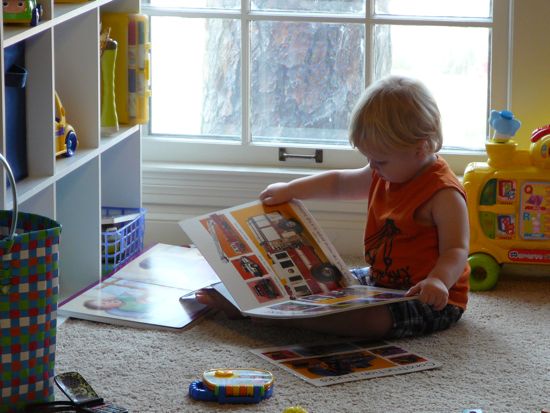
This weekend the Happy Baby discovered heaven-on-earth – the Pensacola National Aviation Museum. He loves the cockpits, with all those buttons and levers and wheels. He only screamed when it was time to move on to the next exhibit.
I was babysitting the other day and they left us with the iPad, which he also loves. I thought I knew how things worked, but I was wrong. I didn’t know anything about Angry Birds or Zombies in the Garden, and he showed me. 18 months old. I just had to laugh. Already, I am learning from him!
Recent Comments
intlxpatr on Shampoo Ginger tigerbutterya0c5ff1d… on Shampoo Ginger intlxpatr on British Soldier Kidnapped, Esc… John on British Soldier Kidnapped, Esc… intlxpatr on British Soldier Kidnapped, Esc… Wikipedia Donate Button

Amazina


Early Voting in Florida


