The YaYas
I see them everywhere. Small groups of women, usually three or four, sitting in church together, heads together over lunch, power walking down the boulevard, at coffee after their tennis matches. You can see the intimacy, the trust – these are women who have grown together over time. They share their secrets. They prop each other up in the bad times. They laugh over their faux-pas.
No, I don’t envy them, nor do I want to become a part of their group. I know my own YaYas will build, and I will have women I love sharing my life here. Meanwhile, I miss my old YaYa’s.
I’ve been here a year now. The one year point, for me, is usually when things start happening. The real friends come along. I start committing and getting involved in my new community. When I think of all the details we have overcome in one year, all the anxieties I had, all the details over which I agonized, I thank God for his mercy and for the peace of mind we have now. Truly, he answered every prayer, and brought us to a good and spacious place.
Lunch in Paris (A Love Story With Recipes) by Elizabeth Bond
I just finished this book, and I need to review it so that I can pass it along to my daughter-in-law, who sees France, as I do, through eyes of love. Americans either love France or hate it, for some reason France evokes strong emotions one way or the other.

This author is a New Yorker, and her experiences are not my experiences, because her culture is not my culture. New York is a culture all its own. On the other hand, her experiences as an expat are universal, and her insecurity with the language, the culture and the customs are magnified by her commitment to marrying a French man and living in France for the rest of her life.
For the record, I really loved this book.
Can you read a recipe and have a pretty good idea what it is going to look like and how it will taste? In my family, we read cook books for fun. The recipes Elizabeth Bond has included are great recipes, a great start on French cooking the simple and fresh way. Even someone who has never cooked French food can make most of the dishes she creates in this book. In my very favorite chapter, A New Year’s Feast, there are several recipes for North African dishes I have eaten and loved – and oh, I am eager to try these! Chicken Tajine with Two Kinds of Lemon! Tajine with Meatballs and Spiced Apricots! Oh, YUMMMM!
In one part of the book, the author talks about some very basic differences between how Americans approach life and how the French view life:
I watched the couples walking around the lake. “Maybe it’s the New Yorker in me. I’m too used to rushing around. But everyone here is so relaxed, it’s like they’re moving in slow motion.”
“Why should they rush? They’re not going to get anywhere.”
Sometimes I really have no idea what he is taling about.
“You will never understand. You come from a place where everything is possible.” We lay side by side on the grass, our eyes half closed.
“It’s Henry Miller that said, ‘In America, every man is potentially a president. Here, every man is potentially a zero.’ ”
And then he told me a story.
“When I was sixteen it was time to decide what kind of studies I would pursue. I was the best in the class in Math and Physics, but also the best in Literature. I went to the school library and the woman behind the desk gave me a book. It was called All the Jobs in the World. I looked through it. I found two things I liked: scientific researcher and film director. I brought the book to the front and showed her my choices. ‘Ah non,’ she said, ‘You forgot to look at the key.’ And she pointed to the top of the page. Next to each job were the dollar signs – three dollar signs if the job paid a lot of money, one dollar sign if it paid very little. Next to the dollar sign was a door. If the door was wide open it was very easy to tet this job, if the door was open just a little bit, it was very hard. ‘Regard,‘ she said, ‘You have picked only jobs with no dollar signs and a closed door. Tu n’y arriveras jamais. You will never get there.”
‘You should become an engineer,’ she said. My parents never met anyone who did these other things. We don’t come from that world. They had no friends they could call to get me a job. They were afraid I would fail and they couldn’t help me. They were afraid I would have no place in the society. And I didn’t have the force to do it myself. I didn’t want to disappoint them. So I became an engineer.”
“It’s just like that here. If you want to do something different, if you head sticks up just a little, they cut it off. It’s been like that since the Revolution. You know the saying, Liberte,’ Egalite,’ Fraternite,’ equality is right in the middle. Everyone has got to be the same.
Of all the stories Gwendal has told me, before or since, this one shocked me the most. Never in my life, not once, had anyone ever told me there was something I couldn’t do, couldn’t be.
Have you ever known an expat wife (a woman who has married a man of another culture and lived in his country)? Expat wives are some of the bravest women I have ever met. No matter how long you have been married to a man of another culture, you can still be surprised.
The expat wives I have known have been smart, gifted people, woman who have been blessed to see the world through the eyes of more than one culture, and it changes everything. Their children are amazing – most will speak – and think – in more than one language. They have a sort of international fluidity, as well as intercultural fluency. It isn’t everyone’s choice, but those who chose it often live lives you and I can only begin to imagine. Elizabeth Bond has opened the door a little, and shared some of those experiences with us.
The book I bought has Reader’s Groups questions in the back, and they are good questions. Read the questions first; it gives you food for thought as you read through her experiences.
Pensacola Visitors To Fort Pickens
You ask where I have been. We’ve just had two weeks and three weekends of house guests. Now, before you groan, I have to tell you that it was two different visits, with less than 24 hours in between, and both visits were old and dear friends. Our visitors are people we treasure and who are easy easy guests to have around. We’ve had two weeks of great visits and great conversations, and I apologize if you are feeling a little abandoned. I didn’t really abandon you; I checked the blog almost daily, but . . . I had a lot on my hands. I can only do a few things at a time, and do them well. I chose to focus on my guests. I hope you will forgive me. 🙂
So I am going to share with you some beautiful sights from nearby Fort Pickens. When we first went there, about a year ago, we discovered they have a Senior Lifetime Pass for only $20. There was only one Senior in the car at the time – me – so the pass is in my name, and gets us into every national park in the United States, me and up to eight people in the same car with me. How is that for a bargain? We’ve already used it four or five times worth the original payment of $20. What an amazing deal!
Fort Pickens is out along Pensacola Beach, and is a long narrow strip of land barely above sea-level. We could see it with our eyes, and when we measured it with our iPhones, it gave us a range from below sea level to 33 feet above sea level. (iPhones must be nearly out of fashion because all my friends have them and we are OLD! If we have them, there must be something out there newer and faster and better that all the trend-setting youngsters are buying . . . so what is it?)
Oops! I got distracted! What I want to do is share some photos of what a truly gorgeous place Fort Pickens is:
I think these are trilliiums:

Aren’t these pretty berries? I don’t know if they are edible – or poisonous!

Perfect weather for a walk, and this is the walking trail, .7 miles each direction:

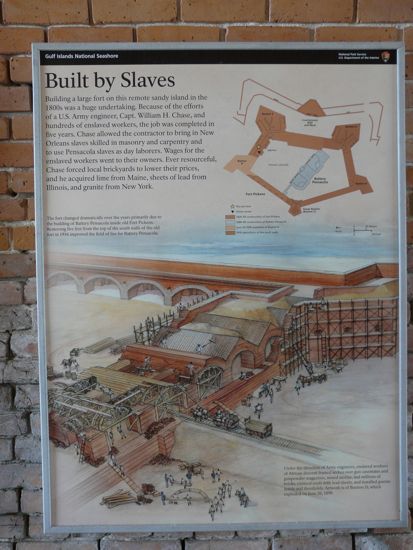
Fort Pickens was constructed to protect the shores from invaders, so this is one of the fortress walls”



A Heron along the nature trail:

A Turtle (we can’t agree on whether it is a Gopher Turtle or a Snapping Turtle):

We finished up with a walk along the beach, where our visitors talked with the fishermen along the shore. These are the lines they have out trying to catch some fish, but I really want you to see how clean and beautiful the beach, sand and water are looking 🙂 :


This week, I need to get some things done in the garden, before the weather starts getting too hot!
AdventureMan’s New Talents
This has been a great month for AdventureMan.
He knew what he wanted. He thought about it, planned it, sought out resources. He now has three photo shelves in his office, where he can display a changing round of photographs. He bought the lumber, tacked on the trim and mounted them on the wall, all by himself.

All these years he has worked so hard – he has never had the time for a fun project like this, and he just sits there and grins that something he was able to do himself can give him so much satisfaction and happiness. Retired, maybe, but still learning new skills, scaling new mountains.
Last night, he baked his first pork tenderloin, and then roasted up some asparagus with an olive vinaigrette sauce. Oh, yummmmm. Still growing, still developing new skills, it is so much fun.
Today, he is going out to explore what kind of kayak he wants to buy. 🙂
Cutting for Stone by Abraham Verghese

Someone in my book club in Qatar mentioned this book, Cutting for Stone, a while back, and I bought it, but it has sat for months on my to-read shelf (LOL, there are actually several, but one with the most important books, and another with the ‘guilty pleasures,’ the ones I am addicted to and save as a reward for good behavior, like vacuuming.)
When a good friend said she was reading it, and that it was good, I decided to move it up in priority, sort of like taking medicine, read a book that is good for you.
Oh WOW.
First, it is a great, absorbing story. Twin boys are born, totally unexpected, to an Indian Catholic nun and an English surgeon, working in Addis Ababa. How they were conceived is a mystery. The mother dies in childbirth, the father flees in horror, the children are born conjoined at the head and must be separated. The boys are adopted by an Indian couple, doctors at the hospital, and are raised with love and happiness.
That’s just the beginning!
I’ve always wanted to go to Ethiopia and Eritrea. I want to visit Lalibela, and some of the oldest Christian churches in the world. When my father was sick, he had a home health aid from Ethiopia, Esaiahs, who told me about the customs in his church, and how Ethiopian Christianity is very close to Judaism, with men and women separated in the church, and eating pork forbidden.

Reading this book, I felt like I had lived there, and I want to go back. The author captures the feelings, the smells, the visuals, the sounds, and if I awoke in a bungalow at the MIssing (Mission) Hospital, I would say “Ah yes! I remember this!”
I kept marking sections of this book that I loved. Here is one:
They parked at Ghosh’s bungalow and walked to the rear or Missing, where the bottlebrush was so laden with flowers that it looked as if it had caught fire. The property edge was marked by the acacias, their flat tops forming a jagged line against the sky. Missing’s far west corner was a promontory looking over a vast valley. That acreage as far as the eye could see belonged to a ras – a duke – who was relative of His Majesty, Haile Selassie.
A brook, hidden by boulders, burbled; sheep grazed under the eye of a boy who sat polishing his teeth with a twig, his staff near by. He squinted at Matron and Ghosh and then waved. Just like in the days of David, he carried a slingshot. It was a goatherd like him, centuries before, who had noticed how frisky his animals became after chewing a particuar red berry. From that serendipitous discovery, the coffee habit and trade spread to Yemen, Amsterdam, the Caribbean, South America, and the world, but it had all begun in Ethiopia, in a field like this.
We live inside the hearts and minds of doctors, some practicing under the worst possible conditions, and learn how they make their decisions and why. Verghese is a compassionate author; while his characters may be flawed, they are forgivable and forgiven.
Another section I loved, the man speaking is Ghosh, the man who adopted the twins with Hema, another doctor:
“My genius was to know long ago that money alone wouldn’t make me happy. Or maybe that’s my excuse for not leaving you a huge fortune! I certainly could have made more money if that had been my goal. But one thing I won’t have is regrets. My VIP patients often regret so many things on their deathbeds. They regret the bitterness they’ll leave in people’s hearts. They realize that no money, no church service, no eulogy, no funeral procession no matter how elaborate, can remove the legacy of a mean spirit.”
Things in Ethiopia get sticky, politically, and one of the twins is forced to flee, implicated in an airplane hijacking only because he was raised with a young woman involved. He is spirited into Eritrea, where he awaits his ride out to Kenya, and he helps the Eritrean rebels when large numbers of wounded are brought into his area. When the time comes to leave, his thoughts will strike a chord in anyone who has ever been an expat:
Two days later I took leave of Solomon. There were dark rings under his eyes and he looked ready to fall over. There was no questioning his purpose or dedication. Solomon said “Go and good luck to you. This isn’t your fight. I’d go if I were in your shoes. Tell the world about us.”
This isn’t your fight. I thought about that as I trekked to the border with two escorts. What did Solomon mean? Did he see me as being on the Ethiopian side, on the side of the occupiers? No, I think he saw me as an expatriate, someone without a stake in this war. Despite being born in the same compound as Genet, despite speaking Amharic like a native, and going to medical school with him, to Solomon I was a ferengi – a foreigner. Perhaps he was right, even though I was loath to admit it. If I were a patriotic Ethiopian, would I not have gone underground and joined the royalists, or others who were trying to topple Sergeant Mengistu? If I cared about my country, shouldn’t I have been willing to die for it?
The book has a lot of observations about coming to America; some of which made me laugh, some which made me groan. Coming back is always a shock to people who have lived abroad for a time, but it is a huge shock to those coming for the first time:
The black suited drivers led their passengers to sleek black cars, but myman led me to a big yellow taxi. In no time we were driving out of Kennedy Airport, heading to the Bronx. We merged at what I thought was a dangerous speed onto a freeway and into the slipstream of racing vehicles. “Marion, jet travel has damaged your eardrums,” I said to myself, because the silence was unreal. In Africa, cars ran not on petrol but on the squawk and blare of their horns. Not so here; the cars were near silent, like a school of fish. All I heard was the whish of rubber on concrete or asphalt.
As I neared the end, I read more slowly, unwilling for this book to end. It is one of the most vivid and moving books I have ever read. AdventureMan has gone online to find the nearest Ethiopian restaurant so we can have some injera and wot.
“You Seem Happy Here – Are You?”
The landscape designer and I met last year as she toured our garden and helped us identify the plants we have in our garden. She had great ideas, and gave us a lot of help caring for a mature garden. She suggested we live with our yard for a year, and then decide how we want to move forward.
It was the best advice. What looked like a wreck of a garden after last year’s very cold winter came back back with a vengeance. We had fabulous plants, plants the birds and bees and butterflies and hummingbirds all loved to visit. We had a chance to visit other gardens and to see what we like. This year, we have more of a plan, and this lovely lady who has been gardening in Pensacola all her life, helps us fine tune our plans.
We’ve been going around the yard, figuring out where to put a pomegranate tree, a lime tree, a couple hydrangea bushes.
“You seem happy here,” she starts, “Are you?”
“You sound surprised!” I laughed, thinking how many moves I’ve made, and how I really like living near our son, his wife and son. We’ve been here a year now. I make friends slowly, but I actually have a few now.
“I wasn’t sure you would be able to handle the heat,” she confided.
I laughed. “I can’t. There is this wonderful thing called air conditioning. When it gets too hot, I don’t spent much time outside. I’m doing fine.”
It’s been almost a year since we bought the house here. It seems like so much longer, so much has happened. Last night, AdventureMan made a fabulous Bermuda Fish Chowder. Our son’s wife and little Baby Q came by for dinner while our son waited in line at Best Buy for a new iPad2, wooo hooo. He came by as soon as finished the purchase. Life is sweet, and yes, I think I am happy.
The Dressmaker by Posie Graeme-Evans
When I wrote up this book for another site, I could not even remember the main character’s name. (Ellen Gowan) I found the book annoying, and most of the time, when a book annoys me, I don’t even tell you about it, I just don’t bother reviewing it at all.

I find the plot thin. I find the characters unmotivated. I find many of the choices of the characters unbelievable. We haven’t been given enough back-story to make the characters truly live.
Ellen has a real streak of bad luck. On her 13th birthday, a well-born young man gets fresh with her and in rural Victorian England, it becomes her problem – her reputation is damaged by a callow young man from a wealthy family. On the same day, an earthquake strikes her village, killing her father, and she and her mother subsequently lose their home.
They take up residence with Ellen’s aunt, her mother’s sister, and it is a happy time, all except for her aunt’s husband, a cruel man who isolates and beats his wife, who can do nothing about it. A wife is property. Her marriage was arranged; she has no where to go if she were to leave. She works hard at keeping her husband happy, so he won’t beat her or take it out on anyone she loves.
When you are dealing with an abusive manipulator, however, there is no pleasing, right? Ellen and her mother are thrown out, but also thrown a lifeline, and take up residence with a dressmaker, where Ellen hones and develops a talent for costume design (meaning evening dress, calling clothes, mourning clothes – wealthy Victorian women had huge wardrobes of ever-changing fashionable clothes.)
Ellen makes some really bad choices – in my opinion. I’m not going to tell you what those choices are, because I don’t want to give you too much of the story, in case you want to read it yourself.
Long story short, she ends up a very successful fashion designer/producer in London, only to face ruinous blackmail because of her past.
OK, here is what I really liked about the book. While I found the characters, descriptions, plotlines and dialogues pretty awful, I loved reading about the fashions, and I found reading about the social status of women – not all that long ago – where women in England had few choices and fewer opportunities – fascinating. I have friends in Kuwait and Qatar who face some of the same limitations. How soon we forget; it wasn’t that long ago that we faced the same challenges, the same limitations.
The freedom to live on our own. The freedom to earn and manage our own money. The rights to our children. All these issues are fresh in The Dressmaker, and too easily taken for granted in our own.
Comfort and Joy
I’ve been catching up with my bible study homework, and one of the questions had to do with ‘when has God’s comfort and compassion brought joy in your life?’ and I had an answer!
It was today!
Our son had been away on a trip; he came home early. We all got to go to church together. We all got to go to breakfast together, and Baby Q was as good as gold in the restaurant. We always figure with four adults, we can trade off if he gets bored or restless, but he is getting better and better at sitting and eating with the rest of us. He is also getting very adventurous in his eating habits; last night eating hot and sour soup, Thai curry, Thai fish, along with some mandarin oranges and lichis.
Today, it was breakfast food. AdventureMan ordered the Vegetable plattter (he got to choose the vegetables) and when it came, three of the four selections were NOT meat-free (he didn’t care).

Baby Q got to eat collard greens, red beans and rice and some of Mom’s omelette:
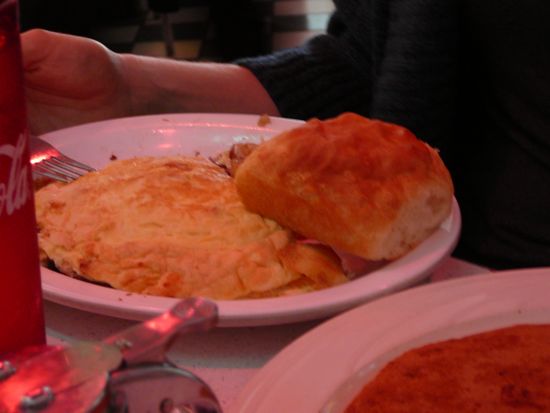
And a few bites of Dad’s short stack:

It is hilarious; Baby Q is feeding himself. He is very fussy; he doesn’t like anything that sticks to his hand, and after one bite, he knows what he likes and what he doesn’t. His Mom says the kids in his class at Baby School are starting to eat with a spoon, so Baby Q will be starting that, too.

We are off to the park to take some photos of Q and his parents. 🙂 My life is full of comfort and joy. 🙂 Thanks be to God; Alhamdallah!
Lord of Death by Eliot Pattison
I didn’t know that much about the Chinese obliteration of Tibetan culture in Tibet. I didn’t know about the systematic destruction of the monasteries, or at least not in detail. I didn’t know about the brutal re-education techniques for the Bhuddist monks. I didn’t know how strong and resistant the peoples of Tibet are to the Chinese incursion.
I’ve learned most of what I know reading Eliot Pattison’s series featuring Shan Tao Yun, a Chinese detective. Or he used to be. In the first book, The Skull Mantra, we meet Inspecter Shan Tao Yun in one of those re-education camps, where he has been tortured and mistreated almost to his physical limits, and the Bhuddist monks teach him new ways of thinking, and those ways help him to see things differently – and to survive.
The Tibetans hate the Chinese, but they make an exception for Inspector Shan Tao Yun, who earns the respect of both Tibetans and Chinese for his unwavering integrity, and his ability to solve the most intricate puzzles. As he does, we learn more about different aspects of life today in Tibet.
The Lord of Death introduces us to the evolving mountain climbing industry developing in Tibet, just across the border with Nepal. Western climbers will see themselves in a very new light reading this book, which involves the murder of the visiting Chinese Minister of Tourism, an American female climber, and former members of a clandestine CIA trained group of Tibetans during WWII.
In every volume, I learn something fascinating. In this book, I learned more about the early struggles of the Chinese Cultural revolution, the corruption of Chinese ideals, and more about Tibetan ways of thinking. I cannot wait for the next book to come out. You can visit his website here: Eliot Pattison.com
“Love Your Enemies and Pray for those who Persecute You”
Today’s reading in The Lectionary is the heart of the Christian faith. Jesus told us many things that turned the world upside down. If we as Christians, truly practiced the teachings of the Christ, what a different world this would be:
Matthew 5:38-48
38 ‘You have heard that it was said, “An eye for an eye and a tooth for a tooth.”
39 But I say to you, Do not resist an evildoer. But if anyone strikes you on the right cheek, turn the other also;
40 and if anyone wants to sue you and take your coat, give your cloak as well;
41 and if anyone forces you to go one mile, go also the second mile.
42 Give to everyone who begs from you, and do not refuse anyone who wants to borrow from you.
43 ‘You have heard that it was said, “You shall love your neighbour and hate your enemy.”
44 But I say to you, Love your enemies and pray for those who persecute you,
45 so that you may be children of your Father in heaven; for he makes his sun rise on the evil and on the good, and sends rain on the righteous and on the unrighteous.
46 For if you love those who love you, what reward do you have? Do not even the tax-collectors do the same?
47 And if you greet only your brothers and sisters,* what more are you doing than others? Do not even the Gentiles do the same?
48 Be perfect, therefore, as your heavenly Father is perfect.
If YOU were to pray for your enemies, who would you pray for?
I tried it one time, almost as a challenge to God, I didn’t believe it would change anything but I would do it because it was required – and it turned out well – for God. When you pray for your enemy, you open a door for change to happen, unexpected change, miraculous change, transformational change.
As a young woman, I studied power and it’s application, reading books from many cultures on strategies of winning. This gospel summarizes a totally unexpected and wildly successful use of the spiritual power in each one of us, the God-given power to turn evil to good, to bring friendship out of enmity.
So today I challenge you. Is there someone in your life whose very presence makes you miserable? Pray for that person. As often as that person comes to mind, send up a prayer. I challenge you to see what happens in your life.
Recent Comments
intlxpatr on Shampoo Ginger tigerbutterya0c5ff1d… on Shampoo Ginger intlxpatr on British Soldier Kidnapped, Esc… John on British Soldier Kidnapped, Esc… intlxpatr on British Soldier Kidnapped, Esc… Wikipedia Donate Button

Amazina


Early Voting in Florida


