Blog Action Day – October 15th
Last year, Kuwait bloggers were amazing in their support of Blog Action Day, which is October 15th. This year the theme is POVERTY. This is just a reminder, we still have time to think about our blog action day articles. Please go to their website (click on the blue type above) and sign up, indicating you will participate. So far, over 4,500 bloggers worldwide have committed to participate this year.
This is reprinted from their Blog Action Day 2008 page:
How to Make Blog Action Day 2008 Unforgettable
September 23rd, 2008 by Easton Ellsworth
1. Ponder.
Think about poverty.
Ponder the plight of the world’s poor and your place in the grand scheme of things.
Consider the things you have that others have not.
Let the numbers appall you. Let the images disturb your sleep. Let the complexities of the causes and solutions vex you.
Let the depth and emotion of this sensitive subject rock you to your core.
2. Believe.
Do you really think that you can make a difference in the global conversation this October 15 just by blogging about poverty and doing something about it?
We believe you can.
Do you?
3. Dream.
There is no such thing as a lack of opportunity – only a lack of vision.
This is not a pointless exercise. This is a chance to grab the world by the ears for one day.
You have the power to rally hundreds of people around you in your family, friends and community to do something on October 15 that calls attention to the issue of poverty.
There is no limit to what you can do – unless you think there is.
So dream up a brave, original way to make the world a little richer, even if only in knowledge, through your participation in Blog Action Day 2008.
4. Act.
Make Blog Action Day not just a day of blogging, but also a day of action.
Our worldwide impact will be great if we all talk about this issue, but far greater if we do something about it and talk about what we are doing.
5. Share.
Let the world know your true thoughts and opinions about poverty on October 15.
Use your blog, your social media accounts, and any other means you can to spread your ideas.
Join with other Blog Action Day participants to generate a collective noise far louder than any you could could muster on your own.
6. Change.
Decide to care a little more about poverty from now on. When it comes up in conversation, take it seriously. Changing the conversation is the first step toward changing the people in it.
Please join us in making Blog Action Day 2008 an unforgettable experience for thousands – maybe millions – of people across the world.
Your Turn
What other ideas do you have? How can Blog Action Day 2008 actually make a real difference to the world of tomorrow?
photo by Franco Folini
Compassion Fatigue
At the book club meeting, the topic turned to the feral cats and dogs. I saw one yesterday, a beautiful little dog, long haired. He still looked pretty good, but a little frantic, running along a busy road. I worried – and I couldn’t stop.
One member was telling us her experience with a local animal rescue group – “I called, and asked them to come get a group of cats. I’ve been feeding them for months. They asked if I could touch them and when I said ‘no’, they told me to taper off feeding them, that if they were going to survive, they needed to learn how to forage for themselves! Can you believe it? They are there to HELP the animals!”
Another, quieter member of the group chimed in “But they only have so many people, so many hours in the day, and so many resources. They can’t save them all.”
The group fell into a silence for a short while as we all thought about that.
I have worked most of my life with people who need help. It made a religious person out of me – I had to pray all the time against hardness of heart. When you work for a charitable organization, there are people who know your system even better that you do, who come in with all the right information and get help that they may – or may not – really need. There are people who will lie to your face without blinking an eye. To survive, you have to focus on the successes, not the failures.
To survive, charitable organizations have to define what they want to accomplish narrowly. For example finding homes for abandoned pets is a limited, manageable goal. It doesn’t help all the the starving feral cats and dogs, etc., but it helps a small segment of the animal population, those least able to care for themselves – animals who have been dependent on human beings. Tackling the larger problem really needs the resources of a nation, state or city – and a professional Animal Control Unit. When I hear of police trying to track down a lion escaped from a private citizen’s collection (and that really happened in Fintas!) I shudder in horror – how would YOU like to corner a lion in a dark cement basement somewhere? Do they have any training in animal behavior/ animal control?
I worked for a year with the homeless, as part of a transitional housing program. We coordinated with state and local agencies, got single mothers into school, found babysitting, gave them the tools to become employed and have a better life. You would be amazed at the women who wanted the freebies – the nice housing, the babysitting, etc – but didn’t want the skills that would enable them to provide for themselves, or, more heartbreakingly, for their children.
I worked for a foundation providing scholarships and educational benefits for needy children – many of whom had parents who sabotaged their success. We opened a door of opportunity, and some parents were jealous or resentful – and slammed it shut.
In every case, we had to focus on the successes, and there were many. The successes kept us going on dark days, when we lost a client we had hoped would make it.
But here is also what happens. When organizations exist to help with a problem or situation, then we call them and expect them to solve the problem. We complain about them when they explain their limitations. Sometimes, it may even be a big donor who wants a favor – a favor that just can’t be done. “After all I’ve done for you!” they exclaim, not understanding that there has to be a line, and that the boundary protects the organization from going under because they try to solve too many problems at once. They can’t come out to pick up the outdoor cat who has been in a fight – they ask YOU to care. They ask YOU to take that cat to the vet and pay for it’s repair. They are doing all that they can do already; your request is outside the limits of what they can do.
When you know people are in trouble – step up to the plate – don’t just say “someone ought to do something”, BE that someone.
Find your talent – packing up bags for Operation Hope – Kuwait, or finding donations of coats, socks, shoes, scarves to keep the poorest of the poor warm through winters that can be bone-chilling here in Kuwait. Organize meals from your local mosque – what better way to teach the goodness of God than by feeding the hungry?
Help organize a fundraiser for the blind, or the autistic, or the charity that pulls at your heartstrings. Work to have a bad law changed. Find one small way, like blogger 3baid’s PaperDump to reduce paper usage in Kuwait. Organize a beach clean-up. Set the example by throwing your trash in the trash bin. Organize a re-use program for eyeglasses. Walk a dog. Socialize a cat. Feed and clothe the poor. Trust me, it will do you at least as much good than it does the recipient.
Back to the problem of abandoned and unwanted pets in Kuwait. No one wants to see animals in pain, abused. No one wants to see suffering. You can help there, too.
There are two animal welfare organizations in Kuwait, PAWS and AWL. Both have passionate and committed supporters, and they could also use your help.
The organizations can’t do it alone. They need YOU. Next time you find yourself about to criticize an organization for not being helpful, please, ask yourself “how can I make a difference here?” Inconvenience yourself a little. Take that first step. You’ll be happy you did.
Photo of a very content rescued cat:

Kuwait Blocks YouTube?????
Kuwait blocks Youtube
Published Date: September 22, 2008
By Jamie Etheridge
KUWAIT: The Ministry of Communication has issued a memo to all internet service providers in Kuwait asking them to block YouTube access. The popular video website came under fire from the ministry due to content considered offensive to Muslims, a source within the industry told Kuwait Times. The Ministry pointed to content including a video of a man signing verses from the Holy Quran while playing the oud and another video showing caricatures of the Prophet Mohammad (PBUH).
A Fasttelco source confirmed receipt of the memo. “It’s supposed to be blocked right now. But due to technical preparations the blocking may take until tomorrow [Monday],” said the source. The site was still accessible yesterday evening. The Ministry of Communication regularly issues memos to ISPs asking them to block certain websites, including those containing pornographic photos or ones like Skype that can be used to make international phone calls over the Internet.
YouTube is widely used in Kuwait. A search of the word ‘Kuwait’ turned up 59,000 videos, including everything from videos of car crashes on Fahaheel Expressway and Jessica Simpson’s concert for US troops in Kuwait to protests in front of Abdullah Al-Salem hall in the run up to the 2006 parliamentary elections.
You can read the entire article at Kuwait Times.
Peter Bowen and Nails
Three men trundle a naked woman through the desert to a remote place, where she was placed in a container, 6 x 6 x 6 with only a candle, a cot, water and a holy book, until she could come to her senses and behave.
Four girls were strangled, one each day, for refusing the sexual advances of their father and his brother. The two youngest girls, their older sisters dead, complied.
Women with inconvenient views, women who start having thoughts of their own disappear. Many in this tribe are home-birthed and home-schooled, so there aren’t records of their existence, and when they disappear, no-one is the wiser.
Saudi Arabia, you ask? Pakistan? Afghanistan? Where on earth are women treated this vilely?

Peter Bowen, in Nails, gives vent to his frustration of minor fundamentalist Christian cults roaming the American West, many of them ending up in Montana where they believe they will have the privacy to practice their beliefs without interference, and where those who are well-funded can influence poverty-stricken school districts to toss out Science classes and incorporate Intelligent Design. Bowen has utter contempt for their studied ignorance, their need to be the sole authority on what the scriptures say, and their insistence on the utter submission of women.
His worst scorn is for their treatment of women – he attributes it to their fears about their own sexuality. Women are often the victims, Bowen states, when men worry about their size, worry about how to keep women faithful, tractable, and docile. (And let’s face it, who can successfully control a woman? 😉 )
This is the latest Gabriel du Pre novel, or at least the latest I have read. Gabriel du Pre is a retired brand inspector (he goes back every now and then when needed, when the brand inspector is overstretched, insuring that the cows sold are from the herds they are being sold from), Metis (French and Indian mix), a renowned fiddler, and a deputy sheriff when the sheriff – or the FBI – needs help solving a particularly tricky murder. It takes a while to get your ear used to his dialect, and he spends a lot of time in bars, but the man has a real knack for figuring things out.
Gabriel du Pre is everything a straight-living woman like myself shouldn’t like. He drinks, morning to night, keeps his flask of whisky under the driver’s seat in his car. He drives way over the speed limit. He doesn’t go to church, he goes to an ancient Indian spiritualist / medicine man when he needs guidance. He isn’t married to the wry, very smart woman with whom he lives. He breaks the rules, he goes outside the boundaries.
For all his flaws, du Pre has a deep down, rock solid core of decency, and a way of looking at life and situations that is practical and . . . forgiving. He is charitable toward his brothers and sisters. He detests cruelty, especially when the strong take advantage of the weak or the arrogant walk all over the humble. There is something about this flawed hero that keeps the reader coming back for more.
His Gabriel du Pre novels are not heavy reading. You can toss one off in about half a day, but they are not so simple as they appear. You find yourself thinking about the issues he raises, and you find yourself looking to see when the next Gabriel du Pre mystery will appear.
You can find this on Amazon.com for $16. new or from $3.07 used, plus shipping of course. (Yes, I own stock in Amazon.com.) 🙂
Sparkle and Talk Like a Pirate Day
In my e-mail this morning are two notes from my sister, Sparkle. Sparkle is a very special woman who, with her husband, Mariner Man, takes in damaged animals. Some have been abandoned or neglected, some have been physically hurt. They had a great big husky who had been lost or abandoned and hit by a car, one of the nicest dogs you could ever meet. They have a diabetic cat with a damaged leg, and several emotionally disturbed cats whom they nurse and teach to trust in goodness and kindness once again. Their newest dog keeps us in stitches – she is young and just learning about the larger world. Life is sweet when you are walking this dog!
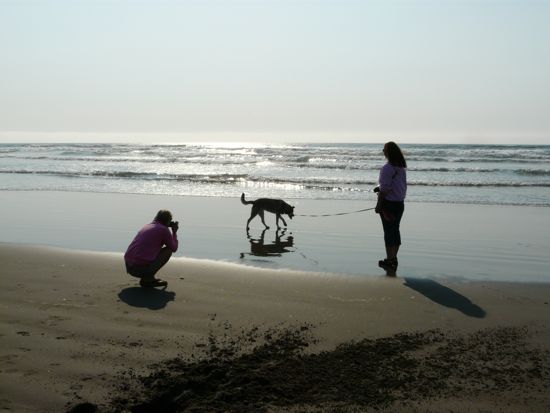
Sparkle is also very very funny. She wants me to know that Friday, tomorrow, is the annual Talk Like a Pirate Day. You can learn more about Talk Like a Pirate Day from this WordPress Blog.
Here is a very abbreviated list of words from the website, in case you want to Talk Like a Pirate:
Aaaarrrrgggghhhh! – exhortation of discontent or disgust
Ahoy! – Hello!
Ahoy, Matey – Hello, my friend!
Ahoy, me Hearties! – the same as saying “Hello, my friends!”
All hand hoay! – comparable to all hands on deck
Avast ye – stop and check this out or pay attention
Aye – yes
Batten down the hatches – put everything away on the ship and tie everything down because a storm is brewing
Bilge-sucking – insult
Blimey! – exhortation of surprise
Blow me down! – expression of shock of disbelief akin to “Holy Crap!”
Blow the man down – command to kill someone
Booty – treasure
Buccaneer – a pirate
Bucko – a buccaneer
Cat O’Nine Tails – a whip with nine strands
Corsair – pirates in the Mediterranean Sea
Crow’s nest – small platform atop the mast where the lookout stands

Girgian Surprise
The doorbell rang.
No one rings my doorbell. The doorman always calls to let me know if a visitor has arrived.
“Who’s there?” I called out.
“It’s GIRGIAN!” a chorus of voices rang out.
Girgian is a children’s holiday, a little like Hallowe’en, about half way through the month of Ramadan, when costumed children come and ring your bell and are given sweets, sometimes money. If you are really lucky, they sing a song. My understanding is that normally the children go around to their families, like aunts and uncles and cousins, and to close neighbors.
I had had a full day, and I had more to do. I had come home and showered because I was no hot, and then – I had gotten into my lightest nightie so I could continue working in comfort. What to do???
Thank God, there was an abaya hanging in my hallway, and I grabbed it and flung it on as I headed to the door. In come eight gorgeous little Kuwaitis, all English speaking, all dressed top to bottom in gorgeous finery, bright thobes and prayer caps, beautifully hand woven bisht with gilt trim, dresses with embroidery and lace and gilt skirts, golden headdresses – oh! They were gorgeous!
No one has ever come for Gergian before. I didn’t have anything prepared. Thank God AdventureMan has a sweet tooth, and thank God, they were polite and appeared delighted with handsfull of Oreo cookies and marshmallows, which were all I had.
Some days, you just never know when a blessing will appear. Those darling children made my day.
These are not the children who came to my house, but I found this on YouTube, posted, thanks be to God, by fellow Kuwait blogger Chikapappi! Thank you, Chicki!
This is what Girgian costumed children in Kuwait look like, and how cool, they are singing!
Rapists Arrested
From today’s Arab Times:
2 wanted Bedouns involved in ‘rape’ case held
Kuwait : Personnel from the Law Enforcement Department have arrested two Bedouns who had been sentenced in absentia for life imprisonment with hard labor for their involvement in kidnapping and raping an unidentified expatriate woman, reports Al-Anba daily.
The daily did not give more details.
I don’t know how the system works here, but it is a great step forward when rapists are arrested and jailed. These two have already been convicted, so we can hope they will be off the streets for a while.
“You Read the Policy?”
“You read the policy?” the insurance lady asked, and I could hear the laughter restrained in her voice.
“Yes, I did. It doesn’t cover much! With all the restriction, the flood insurance has to work together with the high wind insurance, and it seems to me I need to put the majority of my coverage there,” I replied.
“I’ve just never had a customer before who actually read through the policy,” she responded, her voice still bordering on laughter.
She and I get along great. She helped me out when a company refused to insure our Florida house, a year after all the insurance agencies had taken a major battering from an onslaught of hurricane losses.
I hate reading policies. Do you ever read through your credit card agreements before you sign them? Do you read through the restrictions on software before you download it? Do you know what your insurance REALLY covers?
Sometimes the cheapest policy isn’t always the best – it depends on how good they are when you need to make a claim. Even if you read the policies, it isn’t always what-you-see-is-what-you-get. You also need to check a company’s reputation for claims adjustments.
So far, we have been very lucky. We’ve never made a claim on our auto insurance; any accident – and there haven’t been many – have had only small damage, usually covered by the other person. The only accident I have had in the Middle East was when another American woman rear-ended me on the little road into our compound. The only claim we ever made on a house (we came home from a trip to discover a water pipe had broken) was wiped out by the deductible we had chosen, so we didn’t make the claim.

House insurance freaks me out. The power of almighty God is in a hurricane; a beautiful house can be nothing but shards and embers in no time at all. If you own a Florida house, you have to have separate policies for fire, for liability, for high wind (hurricane) and for flood. The total cost of all those insurances is about equal to one house payment. The fact that all my coverages come due during hurricane season works to my agent’s advantage.
You can track any hurricane/tripical storm in the world at Weather Underground.
Daddy’s Little Girl’s Car
When we saw this car, AdventureMan and I both just about died laughing. Look at that color! It is Barbie Doll pink! I don’t know if you can see, but it SPARKLES! Oh, look at those fabulous matching wheels!

Only two doors, but some carrying space in the back . . . only a Daddy or a doting Sugar Daddy would buy a car like this for his little girl!
Romance and Money Matters
I found this article in today’s New York Times Business. So here is my question to you – is it different in Kuwait than in the USA? I remember when we wanted a joint checking account here ( Adventures in Banking), one man looked at my husband in disbelief and said “Why? Just give her some money!” We never did get a joint account; it isn’t possible, but I was given a PAO on the account. It seemed bizarre to me, but it makes perfect sense if couples keep their moneys separately.
What do you think? Does this article apply to marriage in Kuwait?
The Key to Wedded Bliss? Money Matters
By TARA SIEGEL BERNARD
Published: September 10, 2008
IF you ask married people why their marriage works, they are probably not going to say it’s because they found their financial soul mate.
But if they are lucky, they have. Marrying a person who shares your attitudes about money might just be the smartest financial decision you will ever make. In fact, when it comes to finances, your marriage is likely to be your most valuable asset — or your largest liability.
Marrying for love is a relatively recent phenomenon. For centuries, marriages were arranged affairs, aligning families for economic or political purposes or simply pooling the resources of those scraping by.
Today, while most of us marry for romantic reasons, marriage at its core is still a financial union. So much of what we want — or don’t want — out of life boils down to dollars and cents, whether it’s how hard we choose to work, how much we consume or how much we save. For some people, it’s working 80-hour weeks to finance a third home and country club membership; for others, it means cutting back on office hours to spend more time with the family.
“A lot of the debates people have about money are code for how we want to live our lives,” said Betsey Stevenson, assistant professor of business and public policy at the University of Pennsylvania’s Wharton School, who researches the economics of marriage and divorce. “A lot of the choices we make in how we want to live our lives involve how we spend our money.”
Making those choices as a team is one of the most important ways to preserve your marital assets, and your union, experts say. But it’s that much easier when you already share similar outlooks on money matters — or when you can, at the very least, find some middle ground.
The economies achieved by pairing up are fairly obvious. However, the costs of divorce can be financially devastating, especially when children are involved. And, not surprisingly, money manages to force a wide wedge between many couples.
“Most people think people break up over sex issues and children issues — and those are issues — but money is a huge factor in breaking up marriages,” said Susan Reach Winters, a divorce lawyer in Short Hills, N.J.
Not everyone is married to a financial twin, and that’s not necessarily a problem. There are several ways that you and your significant other can become more compatible, and ultimately more prosperous, when it comes to money.
These guidelines are compiled from the successfully married and from experts on psychology, divorce and finance:
TALK AND SHARE GOALS Before walking down the aisle, couples should have a talk about their financial health and goals. They should ask each other tough questions: Do we want children? When? Who will care for them? Will they go to public or private school? What kind of life do we want? When will we retire?
This is a fascinating article – read the rest of it HERE.
Recent Comments
intlxpatr on Shampoo Ginger tigerbutterya0c5ff1d… on Shampoo Ginger intlxpatr on British Soldier Kidnapped, Esc… John on British Soldier Kidnapped, Esc… intlxpatr on British Soldier Kidnapped, Esc… Wikipedia Donate Button

Amazina


Early Voting in Florida


 Here There and Everywhere