“I miss the highs. . . ” my friend said – just before she went off her meds.
I totally understood what she was saying. We belonged to a quilting group, and when she was beginning a manic phase, she produced knock-out quilts, quilts combining colors in unusual ways, and she could stay up all night to finish one. She was a lot of fun to be around, totally up and enthusiastic and creative. As the phase progressed, however, she got thinner and thinner, fell in love with the wrong men, and I always knew when she was just about to crash because she looked fabulous – new clothes, lots of shoes, and she talked a mile a minute.
Then the crash. Her biggest fear was the credit card bills; when she was on a high, she felt like it didn’t matter. When she slid into depression, it was complicated by the fact that she had real things to be depressed about – STDs, huge bills, and concerns at her workplace and her security clearance.
As long as she was on her meds, she was fine, but the medications made her feel sluggish; she said even colors were less colorful on her meds. She said it was like spending your life underwater, where things were not so clear. She said it was dull.
It’s easy, when you are not bi-polar, to say “stay on your meds.” It’s really hard to do it when the meds can make you feel like you are living in a prison.
My friend recommended a book by Kay Redfield Jamison called An Unquiet Mind. It was one of the most helpful books I have ever read, helping me to understand just how hard it is to give up the mania in spite of the huge price you pay for it with the depressions.
I hope my friend is still alive.
This article is from AOL Health News:
4 Surprising Signs of Bipolar Disorder
Fewer than half of Americans with bipolar disorder are properly diagnosed and treated, recent research shows. Could you spot bipolar symptoms – in yourself or in someone close to you?
Many people with bipolar disorderdon’t even know they have it.
Fewer than half of people in the United States who show classic signs of bipolar disorder actually get diagnosed and treated, says a recent Archives of General Psychiatry report on a survey of more than 61,000 adults in 11 countries — the United States, Mexico, China, Japan, Brazil, Colombia, India, Lebanon, Bulgaria, Romania, and New Zealand. Bipolar patients in lower-income nations get even less treatment — in some cases, as few as 25 percent receive help.
Compared to the other 10 countries studied, the United States had the highest rate of bipolar disorder (4.4 percent of those surveyed fell somewhere on the bipolar spectrum). India had the lowest (0.1 percent). Overall, about 2.4 percent of those interviewed in the face-to-face survey could be classified as having bipolar disorder.
Bipolar Disorder’s Most Surprising Symptoms
It may be buzz-worthy these days, but many people don’t fully understand bipolar disorder and the symptoms that can lead to proper diagnosis and treatment. Bipolar, also sometimes called manic-depressive disorder, is characterized by shifts from extreme highs (known as mania) to emotional lows (depression), with “normal” moods in between.
It’s bipolar disorder’s manic phase that most sets it apart from other common mental health issues, such as depression and anxiety. While many people associate mania with high energy and exaggeratedly good moods, these other key symptoms are more subtle:
- Reckless spending. If a friend is blowing her paycheck on shopping sprees she can’t afford, watch out. A person in a manic phase of bipolar disorder is more likely to take big risks, including spending splurges that can lead to mountains of unmanageable debt.
- Super-charged sex drive. A sudden revving up of a person’s sex drive, obsessively thinking or talking about sex, or engaging in sexual encounters he otherwise wouldn’t (like a one-night stand or sex with someone he doesn’t know well) are all symptoms of hypersexuality, another less-obvious mania clue.
- Alcohol or drug abuse. These often go hand-in-hand with manic episodes: As many as 60 percent of people with bipolar disorder have abused alcohol or drugs at some point in their lives. Depressants such as alcohol or pain pills can send a person with mania straight into depression, while stimulants like cocaine can have the opposite effect.
- Skimping on shut-eye. Little need for sleep is another red flag that a person may be having a manic episode.
Keep in mind that bipolar disorder can vary greatly in severity, and not everyone experiences every symptom. In fact, some patients experience hypomania, a less mild form of mania. But even hypomania, if left untreated, could spin into depression or develop into full-blown mania.
One important takeaway from the Archives study is that across all countries, patients with bipolar disorder faced challenges in their daily lives and were at increased risk of such health problems as panic attacks, substance abuse, and suicide. Untreated bipolar disorder can also lead to troubled relationships with friends and family and problems at work. If you’re concerned about yourself or a friend or loved one, get more information here on the best treatments for bipolar disorder.
Last Updated: 08/08/2012
July 9, 2013
Posted by intlxpatr |
Arts & Handicrafts, Character, ExPat Life, Financial Issues, Germany, Health Issues, Relationships | bipolar disorder, manic-depression, Mental health issues |
3 Comments
When you read this article from the Kuwait Times, you will see that the requirements for obtaining a Kuwait driver’s license are not new, but enforcing the requirements – if it happens – will be new. It will make Kuwait more like Saudi Arabia for expat wives, where women cannot drive their own car to pick up the laundry or drop the kids off at school or go grocery shopping – unless, in the case of Kuwait, she has a university degree AND has lived in Kuwait for two years AND is employed earning 400KD. No mere expat wife will have a driver’s license under these guidelines.
But these are the same guidelines that were in effect when I arrived in Kuwait. When I was in Kuwait on a house hunting trip before moving there, I asked how this would work, with me not being able to have a license, according to the rules. I was asking Kuwaiti officials. They said that the rules did not apply to me. (This answer still stuns me.) So where is it written to whom the law applies? The office of the Interior Ministry for Traffic Affairs will have a great deal of leeway making their approvals – will they apply this law equally to all peoples of all nationalities?
No licenses without traffic chief’s nod
KUWAIT: The Interior Ministry’s Assistant Undersecretary for Traffic Affairs Maj Gen Abdulfattah Al-Ali issued a decision yesterday to stop the acceptance of applications for driving licenses from non-Kuwaitis (expatriates and bedoons) unless they are approved by his office. The decision number 61/2013 went into effect from July 1, 2013, and allows the undersecretary’s office to inspect every application forwarded by foreigners and stateless residents in order to verify whether they meet the conditions to apply for a driving license. Ali reportedly threatened traffic department officials with retribution if they fail to abide by the new instructions.
According to security sources who spoke to a local daily, the decision came after cases were discovered in which manipulations were found in some departments where licenses were issued to expatriates who do not meet the requirements. A foreign resident in Kuwait must have a university degree, a minimum monthly salary of KD 400 and have been residing in Kuwait for at least two years among other conditions to apply for a driving license.
The sources also argued that the new decision does not take away the authority of traffic departments around Kuwait. “The departments’ main role is to issue licenses to Kuwaitis, while issuing licenses to expatriates is the exception,” they said, adding the decision means transferring the exception to the assistant undersecretary’s office so that traffic department officials can focus on their jobs of serving citizens and putting more traffic police officers on the streets.
“Any decision – even if it’s for the safety and organization of traffic regulations in the country – issued suddenly without informing the public in advance will surely create hostility,” said attorney Labeed Abdal, a Kuwaiti columnist. “I advise the good undersecretary to hold a press conference to explain to the people why such a regulation is needed. In this way you send the message correctly to people who will not be angry or surprised,” he added. Abdal agreed that the decision is directed to ease traffic jams in the country blamed on reckless drivers. “I think the decision is good. Be informed that he (Ali) did not stop it completely – he said he will give a chance, under his ultimate mercy. He did this to avoid license forgery and wasta (influence),” he stressed.
Another Kuwaiti was not very happy about the new decision. “(A driving license) is the right of every human being…why can’t they understand this. This decision is short of saying ‘just terminate all the services of expatriates in Kuwait’. Why are expats here if you cannot provide the facilities they need. I ask the official (Ali) to try at least once to ride in a bus or even wait for a taxi. If he can stay for one minute under the scorching heat of the sun, then OK, cancel the licenses of expats. If not, forget about your decision – it’s inhuman and cannot be accepted,” he fumed.
I do not agree that a driving license is a right of every human being. I do believe that those under 18 should not be driving on the roads of Kuwait – I don’t mind them learning how to drive out in the desert, but save the testosterone driving for way out there where you can’t endanger the rest of us. I don’t believe people who don’t know the laws should have a license. I think there should be a test that every person can study for and must pass to have a driver’s license, otherwise you are simply saying that every human being has a right to a license to kill! I believe that every driver must be adequately insured to be licensed, and that the police must be impartial when determining fault in an accident. These are the rules that hold those responsible enough to drive the wild roads of Kuwait to be held accountable for their driving.
I applaud the sincerity with which Maj Gen Abdulfattah Al-Ali is striving to make the roads in Kuwait safer for all, and enforcing the law equally against all nationalities, even Kuwaitis. I hope he will remember transparency and accountability as he builds a truly modern and enforceable traffic system in Kuwait.
July 6, 2013
Posted by intlxpatr |
Cross Cultural, Cultural, Customer Service, ExPat Life, Family Issues, Financial Issues, Kuwait, Law and Order, Satire, Saudi Arabia, Social Issues, Transparency, Women's Issues, Work Related Issues | Driving in Kuwait, Maj Gen Abdulfattah Al-Ali |
Leave a comment

The first time I read anything by Jeannette Walls, I had not read her autobiographical best-seller, The Glass Castle. If I had, when I read the opening pages of one of my all-time-favorite books, Half Broke Horses , three young children out checking on the cows in America of the mid-1800’s, I would have said “Oh, yes, this is Jeannette Walls” instead of being so shocked that these three children were so far from home with a storm approaching. Not only does the storm approach – the oldest sister pushes her younger sister and brother up a tree and they are stuck there through a violent storm all night. No adult comes looking for them.
“Where is their mother?” in shock I thought, “a mother with three children out in the storm goes looking for them!”
Not if you are a Jeannette Walls mother. To ‘get’ Jeannette Walls, you really have to start with The Glass Castle, and learn about how she and her siblings are at the mercy of an alcoholic mother and father, both big liars, maybe with some attendant mental problems. Half Broke Horses is fiction, based on her own grandmother, who, at 15 rides 28 days across Indian territory to teach at a far-away school (What mother lets her 15 year old DAUGHTER ride for a month across dangerous country ALONE??)
I was on the send-as-soon-as-it’s-published list for Silver Star. And even once it arrived, I waited until I knew I might have a few free hours in the evening to read it – once you start Jeannette Walls, you can’t put it down. Her heroines in this novel are 15 year old Liz and 12 year old Bean (Jean) whose mother ran away from her hometown in Virginia to pursue a career in music. The mother has a small inheritance to sustain them; when life sours, as it often does for her, she packs the girls into her worn Dodge Dart and takes off. She isn’t always good about paying her bills. She talks to her girls about what a great team they are, and then takes off for a day or two, usually with some man, leaving them to eat chicken pot pies. Then, she abandons them with no sign of when she will be back.
The girls are pistols. They are survivors, much like Jeannette Walls grandmother in Half Broke Horses. When social services start coming around asking where their mother is, they take off headed for their Mom’s old home town, across the continent, in Virginia.
The heart of the story finds the girls living in the old family mansion, scouting for odd jobs, learning more about themselves and their heritage, and learning how a small community can smother, judge and support their community members in unexpected ways.
If you are a negligent, man-oriented, self-absorbed mother, you don’t want to have a writer for a daughter. Jeannette Walls is having a ball; her books are both sad and hilarious, and she has utter scorn for mothers who do not take the reins of motherhood and behave like grown-ups.
July 2, 2013
Posted by intlxpatr |
Books, Character, Community, Cultural, Family Issues, Fiction, Financial Issues, Humor, Living Conditions, Parenting, Relationships, Women's Issues |
Leave a comment
From Doha News:
Saudi Arabia’s King Abdullah has issued a royal decree to change the country’s weekend to Friday-Saturday, effective June 29, state news agency SPA reports.
The move, which puts KSA in line with the rest of the GCC countries, was made “for the sake of putting an end to the negative effects and the lost economic opportunities” due to the difference in workdays between the nation and the rest of the world, Riyadh Bureau reports.
It will apply to all government bodies and monetary agencies, including the central bank and stock exchange, SPA said. But schools and educational institutions will maintain the Thursday-Friday weekend until the beginning of the new academic year.
According to Riyadh Bureau:
The change will align banking and business days with most other countries in the region, as well as being closer to the workweek of international financial markets and businesses. Oman was the latest GCC country to shift its weekend to a Friday start last May.
KSA, Qatar’s giant neighbor the west, has been mulling a shift for more than five years, but didn’t move forward previously due to resistance from religious leaders.
Read more: http://dohanews.co/post/53674862889/saudi-joins-rest-of-gulf-with-shift-to-friday-saturday#ixzz2XGgRsogw
June 25, 2013
Posted by intlxpatr |
ExPat Life, Financial Issues, Living Conditions, Saudi Arabia, Social Issues |
Leave a comment
I love this! Yes, I am a nerd, yes, I get excited about geeky things, but after my first year in Pensacola, paying electrical bills in the $400’s because I like to be cool, I have learned a few tricks about spending less, like turning the a/c up when leaving the house, it really makes a difference.
And now, we monitor our energy use on a DAILY basis. I love it! When you log into your Gulf Power account, you can see your energy usage calculated against the daily temperatures, with a range of your estimated end-of-month bill. No more bad surprises!
I think I inherited a small bit of my father’s engineer mentality; I love being able to manage my energy use 🙂

Thank you, Gulf Power, for making it possible.
June 22, 2013
Posted by intlxpatr |
Bureaucracy, Communication, Community, Customer Service, Environment, Financial Issues, Living Conditions, Statistics, Technical Issue |
Leave a comment
Night before last, night a man was shot at the beach at 3:45 in the morning. According to the (very sketchy) details in the Pensacola News Journal, he had been having a fight with his girlfriend, had finished his fight and was then shot three times by a man he doesn’t know and who has no relationship to him. (This is what I understand from reading the paper; it doesn’t make sense to me, but it also says alcohol was involved.)
I only knew about the shooting because I saw a tiny little article about it on the AOL Local news section. When I went to look at it, it was gone.
In this morning’s paper, there is this sketchy description, and then – in several different sections – local are people quoted as saying “we’re moving on.”
OK I get it. We’re a beach community, and this is peak tourist season as folks pour in here from all the Southern states and other countries to enjoy our fabulous sugar-white sand beaches.
Before the tourists had hit the beach, the crime scene tape was down and a beach excavator had carted off the bloody sand.
I do get it. I really do. The season is short and we don’t want to be known as a beautiful beach where people can get shot. It’s a marketing problem.
There is something, however, that sticks in my craw about the swiftness of the moving on, and the barely there press coverage. A man was killed. Maybe he had been drinking. Maybe he had a fight with his girlfriend. Maybe he was at the beach very late (or very early) in the morning. None of these things seem to have anything to do with him having been shot, other than maybe being in the wrong place at the wrong time and the wrong person had a gun and shot him. It seems a little disrespectful, to me, to move on quite so swiftly. A man lost his life. We don’t know why. Maybe we could just take a little time to figure out what happened and to acknowledge his loss?
June 19, 2013
Posted by intlxpatr |
Circle of Life and Death, Community, Crime, Financial Issues, Leadership, Lies, Living Conditions, Marketing, Pensacola |
2 Comments
When I was working on my masters in national security affairs, we learned the concepts of capability vs. intent. How on earth can any country block those who are both technically savvy and strongly motivated? No matter what a country does to block the flow of communication, another route will be found, quickly, and information will flow . . .
This is just the latest vain effort to stop expats phoning home at cheaper rates. If the official international calling rates in Kuwait were not extortionate, people might even use the local system. As it is – just about every loyal Kuwaiti has some kind of long distance internet calling capability, or cell phone ap that makes it affordable. LOL, I am willing to bet that executives in the national telcom offices use internet phones or aps themselves.
Fight the battles you can win.
Kuwait weighs blocking Viber?
KUWAIT: Kuwait plans to study ways to control use of free calling and instant messaging services provided through smartphone applications, a local daily reported yesterday quoting Ministry of Communication insiders who said that such services could be banned if an agreement with developers could not be reached.
The news came days after Saudi Arabia announced blocking access to Viber after negotiations to allow government-monitoring for the service users in the kingdom broke down. “[The Ministry of Communications] is studying a proposal to form a technical committee whose job is to find ways by which the state can monitor audio and video calling services used through smartphone applications”, said the sources as quoted by Al-Anba yesterday. They spoke on the condition of anonymity because they did not have permission from the relevant authorities to speak about the subject.
The sources specifically named Viber, an application that allows users to exchange messages, photos and videos as well as make calls free of charge using online services. “Viber is surrounded with espionage accusations especially that part of the company’s developers are centered in Israel while the company’s founder is an American-Israeli entrepreneur”, the sources explained. The current plan is for the proposed committee to study whether using the applications meets local regulations as well as the mechanism ‘to keep them under control’. —Al-Anba
June 15, 2013
Posted by intlxpatr |
Bureaucracy, Communication, ExPat Life, Financial Issues, Kuwait, Leadership, Living Conditions, Middle East | IConnectHere, Skype, Viber, Vonage |
3 Comments
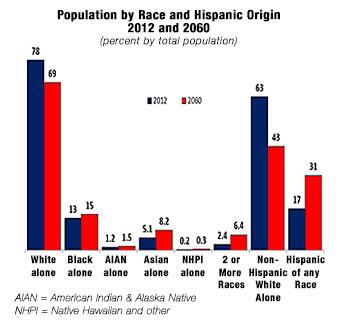
Don’t you love demographics? Demographics are a great forecasting tool, if you have the courage to use them. Demographics forced change on the United States military, forcing them to include women in more roles, recently increasing their job opportunities as the demographic pool dwindles. The same demographics are hurting the military budget now, as the huge bulge of baby-boomers retires, takes pensions and guaranteed free medical care, living a LONG time with more serious age-related illnesses, while the military struggles to allocate scarce resources.
Here is a fascinating factoid from The New York Times, a journal which notices small – but significant – changes, and gives us a little idea what the impact may be.
Census Benchmark for White Americans: More Deaths Than Births
By SAM ROBERTS
Published: June 13, 2013 232 Comments
Deaths exceeded births among non-Hispanic white Americans for the first time in at least a century, according to new census data, a benchmark that heralds profound demographic change.
The disparity was tiny — only about 12,000 — and was more than made up by a gain of 188,000 as a result of immigration from abroad. But the decrease for the year ending July 1, 2012, coupled with the fact that a majority of births in the United States are now to Hispanic, black and Asian mothers, is further evidence that white Americans will become a minority nationwide within about three decades.
Over all, the number of non-Hispanic white Americans is expected to begin declining by the end of this decade.
“These new census estimates are an early signal alerting us to the impending decline in the white population that will characterize most of the 21st century,” said William H. Frey, a demographer with the Brookings Institution.
The transition will mean that “today’s racial and ethnic minorities will no longer be dependent on older whites for their economic well-being,” Dr. Frey said. In fact, the situation may be reversed. “It makes more vivid than ever the fact that we will be reliant on younger minorities and immigrants for our future demographic and economic growth,” he said.
The viability of programs like Social Security and Medicare, Dr. Frey said, “will be reliant on the success of waves of young Hispanics, Asians and blacks who will become the bulwark of our labor force.” The issues of minorities, he added, “will hold greater sway than ever before.”
In 2010, according to the National Center for Health Statistics, more non-Hispanic whites died than were born in 11 states, including California, Florida and Pennsylvania. White deaths exceeded births in a majority of counties, including Los Angeles, the most populous.
The disparity between deaths and births in the year that ended last July surprised experts. They expected that the aging white population would eventually shrink, as it has done in many European countries, but not for another decade or so.
Nationally, said Kenneth M. Johnson, the senior demographer at the Carsey Institute, a research center based at the University of New Hampshire, “the onset of natural decrease between 2011 and 2012 was not anticipated.” He attributed the precipitous shift in part to the recession, adding that “the growing number of older non-Hispanic whites, which will accelerate rapidly as the baby boom ages, guarantees that non-Hispanic white natural decrease will be a significant part of the nation’s demographic future.”
Professor Johnson said there were 320,000 more births than deaths among non-Hispanic whites in the year beginning July 2006, just before the recession. From 2010 to 2011, the natural increase among non-Hispanic whites had shrunk to 29,000.
Census Bureau estimates indicate that there were 1.9 million non-Hispanic white births in the year ending July 1, 2012, compared with 2.3 million from July 2006 to 2007 during the economic boom, a 13.3 percent decline. Non-Hispanic white deaths increased only modestly during the same period, by 1.6 percent.
The census population estimates released Thursday also affirmed that Asians were the fastest-growing major ethnic or racial group. Their ranks grew by 2.9 percent, or 530,000, with immigration from overseas accounting for 60 percent of that growth.
The Hispanic population grew by 2.2 percent, or more than 1.1 million, the most of any group, with 76 percent resulting from natural increase.
The non-Hispanic white population expanded by only 175,000, or 0.09 percent, and blacks by 559,000, or 1.3 percent.
The median age rose to 37.5 from 37.3, but the median declined in Alaska, Hawaii, Kansas, North Dakota and Oklahoma. It ranged from 64.8 in Sumter, Fla., to 23 in Madison, Idaho.
The number of centenarians nationally neared 62,000.
June 13, 2013
Posted by intlxpatr |
Aging, Circle of Life and Death, Community, Cultural, Family Issues, Financial Issues, Generational, Living Conditions, Mating Behavior, Parenting, Political Issues, Social Issues, Women's Issues, Work Related Issues |
Leave a comment
It may not be dementia. It may be a reaction to a medication in the elderly that LOOKS like dementia.
My father was 87, and doing pretty well for a man 87. He still walked on his own, using a walker when he had to, and very rarely, a wheelchair if we were going a long ways. He went into the hospital for a minor surgery. The tube inserted in his hand for the anesthetic became infected. Dad was acting weird, he was having hallucinations, and my sister rightly identified that Dad had a reaction to the diuretic drug Lasix; when they switched him to an alternative, the raving and hallucinations stopped.
He was transferred to a rehabilitation unit, where for two days, they put him back on Lasix. Poor communication between hospital and the rehab facility, plus standardization of drug regimens – they switched him without telling him, or us. Once again, he went loony tunes, and at the same time, his right hand began to swell until it looked like a lobster claw. He kept saying it hurt, and it was big and red, and the rehab people kept saying it would get better.
Dad was rushed to another hospital, one the rehab clinic worked with, and the doctors told us he had a ‘cascade of problems’ and which were the primary three we wanted them to work with?
Get him off the Lasix, first thing, we all agreed, and find a way to have it annotated on any record that he is never to have Lasix. (It did no good; the next hospitalization, back at the first hospital, they gave him Lasix again, which made him crazy and masked all the other symptoms.)
Long story short, there were a cascade of hospital mistakes – not one hospital, two hospitals and the rehab clinic – where miscommunications, inattentions and shortage of trained personnel resulted in a cascade of issues that led to my father’s death later that year. The other lesson learned is that if you go into a hospital, make sure you have a good support system, someone with you who will bravely ask questions, and remind someone if an inappropriate medication is prescribed. You need a family member with you for protection against inattention, mistakes, miscommunications and personnel shortages.
It’s not like there’s anyone to bring a lawsuit against; they were all doing the best they could, but Dad was old. My bet is that he might have lived another couple years, at the very least, had he not gone in for that first non-essential minor surgery. To me, the moral of the story is if you want to live a long life, stay away from hospitals.

Anesthesia Linked to Increased Dementia Risk in Seniors
Exposure to anesthesia has been linked to a 35 percent increase of dementia in patients over age 65, according to a new study.
By Jeffrey Kopman, Everyday Health Staff Writer
FRIDAY, May 31, 2013 — Caregivers and seniors struggling with the dilemmas of elder care have another risk to weigh against potential rewards — senior patients exposed to general anesthesia face an increased risk of dementia, according to research presented at Euroanaesthesia, the annual congress of the European Society of Anaesthesiology (ESA).
Researchers reviewed the medical information of 9,294 French patients over the age of 65. The patients were interviewed several times over a ten year period to determine their cognitive status.
After two years, 33 percent of participants had been exposed to anesthesia. Most of the exposed patients (19 percent overall) were exposed to general anesthesia — a medically induced coma. The rest were exposed to local/locoregional — any technique to relieve pain in the body — anesthesia.
In total, 632 participants developed dementia eight years after the study began. A majority of these patients, 512, were diagnosed with probable or possible Alzheimer’s disease. The remainder had non-Alzheimer’s dementia.
The gap between dementia related to general anesthesia (22 percent) and non-dementia patients (19 percent) was associated with a 35 percent increased risk of developing dementia. This risk was linked to at least one general anesthesia.
“Elderly patients are at an increased risk for complications following anesthesia and surgery,” said Jeffrey H. Silverstein, MD, MS, and vice chair for research at the Department of Anesthesiology at Mount Sinai in New York City. “[They] are particularly prone to postoperative delirium, which is a loss of orientation and attention. Anesthesiologists have been evaluating higher cognitive functions (for example, memory and executive processing) and found that a substantial number have decreases in one or more of these areas after a surgical procedure.”
Researchers hope this study will lead to more awareness for surgeons.
“Recognition of postoperative cognitive dysfunction (POCD) is essential in the perioperative management of elderly patients,” said study author Dr. Francois Sztark, INSERM and University of Bordeaux, France, in a press release. “A long-term follow-up of these patients should be planned.”
Elderly Care: Risk vs. Reward
Senior citizens and their caregivers might be willing to accept an increased risk of dementia if it means getting necessary anesthesia for an important medical procedure. Dementia is a relatively common occurrence in old age: One in three seniors has Alzheimer’s disease or dementia by the time of their death.
But surgery at old age can also carry more severe, and less common, health risks. In fact, simply surviving surgery can be difficult for elderly patients, especially those over the age of 80.
While the numbers vary depending on procedure, researchers have found that mortality risk tied to elective major surgeries increases with age. The risk more than doubles for patients over 80 compared to patients ages 65 to 69.
But other surgery complications are even more common in seniors.
“The major risk for elderly patients following surgery is pneumonia,” said Dr. Silverstein. “Cardiac complications are next most common.”
However, Dr. Silverstein still feels that if surgery is deemed necessary, patients should not fear the risks.
“In theory, only necessary surgery is done,” he said. “Knowing how [patients] reacted to anesthesia and surgery in the past may give them some idea of their postoperative course.”
Last Updated: 05/31/2013
June 3, 2013
Posted by intlxpatr |
Aging, Biography, Bureaucracy, Circle of Life and Death, Community, Cultural, Customer Service, ExPat Life, Family Issues, Financial Issues, Health Issues, Living Conditions, Safety, Survival, Technical Issue, Values |
Leave a comment
When I start to fret about those in high places who oppress the poor and the workers, whose lives are so far from worrying about a roof over their head and food to eat that they will pass still laws further oppressing the poor and homeless, I take consolation in this psalm.

The Pensacola City Council is passing a draconian measure against the homeless. I’ve been so proud of Pensacola, and the citizen response to the homeless, the beds Pensacola provides, the meals the citizens, through a variety of church and social agencies, hand out. Their response is humane, and compassionate.
The homeless are attracted by the moderate climate; they are here in droves. They panhandle at the intersections, they approach you at downtown attractions. They often have dogs. For the most part, they greet people cheerfully or respectfully, and they aren’t aggressive.

They are, in truth, a kind of plague on Pensacola, but as a traveler, I have brushed my teeth in many a restroom, changed my clothes, even had to rise out a coffee stained outfit before my next flight once – these are things for which the homeless will be charged with an offense against the law. If I were without a place for the night, I might look for a safe public restroom in which to sleep, especially if I had a child with me, as so many women did when I worked with homeless women.
I understand the problem.
But I also understand the desperation of those who have little, and that very little – a public restroom, a safe place to sleep outdoors – are being taken away from them by this statute. It’s heartless, and if there is truly an accounting at the end of our lives, and an afterlife, I fear for those who put additional burdens on the poorest of the poor.
Psalm 37
Of David.
1 Do not fret because of the wicked;
do not be envious of wrongdoers,
2 for they will soon fade like the grass,
and wither like the green herb.
3 Trust in the Lord, and do good;
so you will live in the land, and enjoy security.
4 Take delight in the Lord,
and he will give you the desires of your heart.
5 Commit your way to the Lord;
trust in him, and he will act.
6 He will make your vindication shine like the light,
and the justice of your cause like the noonday.
7 Be still before the Lord, and wait patiently for him;
do not fret over those who prosper in their way,
over those who carry out evil devices.
8 Refrain from anger, and forsake wrath.
Do not fret—it leads only to evil.
9 For the wicked shall be cut off,
but those who wait for the Lord shall inherit the land.
10 Yet a little while, and the wicked will be no more;
though you look diligently for their place, they will not be there.
11 But the meek shall inherit the land,
and delight in abundant prosperity.
12 The wicked plot against the righteous,
and gnash their teeth at them;
13 but the Lord laughs at the wicked,
for he sees that their day is coming.
14 The wicked draw the sword and bend their bows
to bring down the poor and needy,
to kill those who walk uprightly;
15 their sword shall enter their own heart,
and their bows shall be broken.
16 Better is a little that the righteous person has
than the abundance of many wicked.
17 For the arms of the wicked shall be broken,
but the Lord upholds the righteous.
18 The Lord knows the days of the blameless,
and their heritage will abide for ever;
19 they are not put to shame in evil times,
in the days of famine they have abundance.
20 But the wicked perish,
and the enemies of the Lord are like the glory of the pastures;
they vanish—like smoke they vanish away.
21 The wicked borrow, and do not pay back,
but the righteous are generous and keep giving;
22 for those blessed by the Lord shall inherit the land,
but those cursed by him shall be cut off.
23 Our steps* are made firm by the Lord,
when he delights in our* way;
24 though we stumble,* we* shall not fall headlong,
for the Lord holds us* by the hand.
25 I have been young, and now am old,
yet I have not seen the righteous forsaken
or their children begging bread.
26 They are ever giving liberally and lending,
and their children become a blessing.
27 Depart from evil, and do good;
so you shall abide for ever.
28 For the Lord loves justice;
he will not forsake his faithful ones.
The righteous shall be kept safe for ever,
but the children of the wicked shall be cut off.
29 The righteous shall inherit the land,
and live in it for ever.
30 The mouths of the righteous utter wisdom,
and their tongues speak justice.
31 The law of their God is in their hearts;
their steps do not slip.
32 The wicked watch for the righteous,
and seek to kill them.
33 The Lord will not abandon them to their power,
or let them be condemned when they are brought to trial.
34 Wait for the Lord, and keep to his way,
and he will exalt you to inherit the land;
you will look on the destruction of the wicked.
35 I have seen the wicked oppressing,
and towering like a cedar of Lebanon.*
36 Again I* passed by, and they were no more;
though I sought them, they could not be found.
37 Mark the blameless, and behold the upright,
for there is posterity for the peaceable.
38 But transgressors shall be altogether destroyed;
the posterity of the wicked shall be cut off.
39 The salvation of the righteous is from the Lord;
he is their refuge in the time of trouble.
40 The Lord helps them and rescues them;
he rescues them from the wicked, and saves them,
because they take refuge in him.
May 30, 2013
Posted by intlxpatr |
Bureaucracy, Charity, Civility, Community, Crime, Cultural, ExPat Life, Faith, Financial Issues, Interconnected, Law and Order, Leadership, Living Conditions, Local Lore, Pensacola, Political Issues, Social Issues, Values | homeless |
Leave a comment






 Here There and Everywhere