A Thorny Sermon: The Prodigal Son
From today’s Lectionary reading, the Gospel:
GOSPEL: Luke 15: 1 – 3, 11b – 32 (RCL)
Luke 15: 1 – 3, 11 – 32 (Roman Catholic)
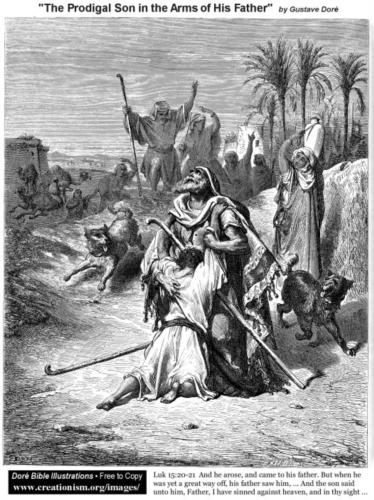
Gustave Dore: The Prodigal Son in the Arms of his Father
Luke 15:1 (NRSV) Now all the tax collectors and sinners were coming near to listen to him. 2 And the Phar’isees and the scribes were grumbling and saying, “This fellow welcomes sinners and eats with them.”
3 So he told them this parable:
11 Then Jesus said, “There was a man who had two sons. 12 The younger of them said to his father, “Father, give me the share of the property that will belong to me.’ So he divided his property between them. 13 A few days later the younger son gathered all he had and traveled to a distant country, and there he squandered his property in dissolute living.
14 When he had spent everything, a severe famine took place throughout that country, and he began to be in need. 15 So he went and hired himself out to one of the citizens of that country, who sent him to his fields to feed the pigs. 16 He would gladly have filled himself with the pods that the pigs were eating; and no one gave him anything.
17 But when he came to himself he said, “How many of my father’s hired hands have bread enough and to spare, but here I am dying of hunger! 18 I will get up and go to my father, and I will say to him, “Father, I have sinned against heaven and before you; 19 I am no longer worthy to be called your son; treat me like one of your hired hands.” ‘
20 So he set off and went to his father. But while he was still far off, his father saw him and was filled with compassion; he ran and put his arms around him and kissed him. 21 Then the son said to him, “Father, I have sinned against heaven and before you; I am no longer worthy to be called your son.’ 22 But the father said to his slaves, “Quickly, bring out a robe–the best one–and put it on him; put a ring on his finger and sandals on his feet. 23 And get the fatted calf and kill it, and let us eat and celebrate; 24 for this son of mine was dead and is alive again; he was lost and is found!’ And they began to celebrate.
25 “Now his elder son was in the field; and when he came and approached the house, he heard music and dancing. 26 He called one of the slaves and asked what was going on. 27 He replied, “Your brother has come, and your father has killed the fatted calf, because he has got him back safe and sound.’
28 Then he became angry and refused to go in. His father came out and began to plead with him. 29 But he answered his father, “Listen! For all these years I have been working like a slave for you, and I have never disobeyed your command; yet you have never given me even a young goat so that I might celebrate with my friends. 30 But when this son of yours came back, who has devoured your property with prostitutes, you killed the fatted calf for him!’
31 Then the father said to him, “Son, you are always with me, and all that is mine is yours. 32 But we had to celebrate and rejoice, because this brother of yours was dead and has come to life; he was lost and has been found.'”
Sometimes people will leave off the part about the elder son, and just concentrate on the return of the younger son, focusing on the father watching always, hoping for the return of the younger son, ready to forgive and welcome before the words can even get out of the younger son’s mouth.
It is wonderful, and reassuring, for those of us sinners.
Many, however – including me – can also identify with the oldest son who says “I’ve always done everything right and you’ve NEVER given me a tiny goat, much less a fatted calf, and you’re throwing this party for the son who blew his entire fortune on louche living???”
It doesn’t seem fair, does it? Isn’t that really the point of the story, that we can’t behave our way into heaven, it is sheer grace, the love of the heavenly creator, that allows us in? It’s not an easy concept to wrap my mind around, so today I struggle to take it in, and I give thanks for Father Neil who tackles the hard questions and doesn’t just sweep them under the carpet because they are inconvenient. (The sermon isn’t up yet, but when it is available, you will find it here)
Child Marriage Increases Due to Financial Crisis
I have mixed feelings about child marriage. On one hand, girls are so immature in their teen years, and their bodies are not fully formed for child bearing. On the other hand, they are physically mature, and the hormones are raging.
A good friend married off her daughter at fifteen. She was actually “married” by contract at fourteen, but the families waited for the official marriage until she was fifteen. I was heartsick, but the girl herself was delighted. She liked the man she was marrying. She had no fears, no concerns. She started having babies – and she continued going to school, through university. I know it can work; I have seen it.
On the other hand, selling off a thirteen year old to a man she has never met, especially an OLD man, fills me with disgust. It’s a whole different situation.
Neither is it such a good thing, in our own culture, to have fourteen year old girls raising their babies with no husband around to be a father to the child. We all have some problems to face working out mating.
This is an excerpt from an article I found on Huffpost for International Women’s Day. You can read the whole article here.

Child Marriage On Rise As Global Crises Increase, New Study Says
Jessica Prois
Jessica.Prois@huffingtonpost.com
Half of all girls living in the world’s 51 least-developed countries have been married before the age of 18, according to the U.N. The World Vision study, released to coincide with International Women’s Day on March 8, found that such marriages are on the rise due to an increase in global poverty and crises. Researchers highlighted that parents living in areas prone to political instability or natural disasters are more likely to marry off their daughters at a young age, largely due to fear from these crises. Children living in these areas, such as South Sudan or Somalia, are also more likely to be forced into child marriage, the study said.
Erica Hall, Child Rights Policy director at World Vision, explained that the root causes of child marriage — poverty and gender inequality — are being exacerbated.
“Worldwide, there are increases in security issues and increases in natural disasters linked to global warming,” Hall said. She cited the recent humanitarian crisis in the Sahel region of North Africa and Somalia due to drought and political unrest as an example in which many girls often quit school and are sent to work as domestic workers or are married, to reduce the burden on their families.
For Bangladeshi families such as Humaiya’s, drought and lack of food are the primary reasons to discharge a young girl from her home. One of the most unjust impacts of this is education inequality. World Vision’s research in Bangaldesh revealed that girls who were unable to attend school due to disruptions from natural disasters were more likely to marry early.
Humaiya speaks out about child rights issues such as early marriage and became an advocate through World Vision, which introduced Humaiya to HuffPost. She said she knows that her ongoing education in Bangladesh is rare. Some 66 percent of girls in Bangladesh are married before age 18, according to World Vision. Humaiya works to educate her peers in her village and speaks to government leaders, asking them to do more to stem child marriage and provide greater education opportunities.
But Humaiya told The Huffington Post that she has seen many of her friends married off, and described how disconnected she feels from the girls she has been friends with for five or more years.
“Now they are good cooks,” she said. “They are like my mother, even though we are the same age. I don’t know how to manage a family, but they know.”
She explained that her mother was 16 when she was forced to get married, and lost a son by the time she was 18 years old.
In Bangladesh, the law is that girls can’t marry until they’re 18 and boys can’t marry until they’re 21. But the rules are not implemented, Hall said.
“The law is not the problem,” she pointed out. “You have to have political will to do that and capacity and understanding among law enforcement. The goal is to get governments to enforce these things, and — this is such an NGO word — but it has to be a holistic approach.”
Hall pointed out that requiring marriage registration and working on a grassroots community level is key to creating systemic change. She cited examples such as the Grandmother’s Project in southern Senegal, a nonprofit partner of World Vision that focuses on reducing early marriage, female genital mutilation and early pregnancy by creating an intergenerational dialogue about how to shift the gender-role paradigm.
“That’s been successful — you know how grandmothers are — in getting an idea like that across that it doesn’t have to be part of the tradition,” Hall said.
World Vision also works with religious leaders to address the practice of child marriage.
“There is a strong foundation in religion that children should be protected and they don’t want girls dying in childbirth and these leaders say, ‘This is a tenet of our faith and this is why we are going to start speaking out against it,'” Hall explained.
The issue of child marriage has gained momentum outside of the NGO world as well. Former Secretary of State Hillary Clinton announced last October a public-private initiative that focuses on ending child marriage by increasing education opportunities, providing training among officials and tracking every country’s legal minimum age of marriage — in particular in Humaiya’s home country of Bangladesh.
Qatari Amir Buying up Greece
Ah . . . It’s great to be an Amir. And how wonderful, to buy your own wonderland, and help the locals while you are at it, LOL. No plans for development, just use by his wives and children . . . (Thank you again, John Mueller!)
http://www.guardian.co.uk/world/2013/mar/04/qatar-emir-buys-six-greek-islands
Qatari emir buys six Greek islands for a song
Helena Smith in Athens
The Guardian, Monday 4 March 2013 20.23 GMT
The Greek island of Oxia, was the Qatari emir’s first purchase, which cost €5m.
The suitor is one of the world’s wealthiest men; the location happens to be the eurozone’s poorest country. But in an unlikely coming together of economic circumstances, the emir of Qatar, Hamad bin Khalifa Al Thani, has opted to splash out €8.5m (£7.35m) on six idyllic isles in the Ionian sea.
Closure of the deal – the latest in a global shopping spree that has seen the sheikh’s property portfolio spread from London to Beijing – has been met with glee in Greece, the west’s most bankrupt state, and Doha, where the royal household experienced 18 months of excruciating drama to take possession of the outcrops.
“Greece is that kind of place,” said Ioannis Kassianos, Ithaca’s straight-talking Greek-American mayor. “Even when you buy an island, even if you are the emir of Qatar, it takes a year and a half for all the paperwork to go through.”
The isles, known as the Echinades, caught the oil-rich monarch’s fancy when he moored his super-yacht in the turquoise waters off Ithaca, took in the view and liked what he saw. That was four summers ago.
Qatar’s Emir and his wife. Photograph: Yves Herman/Reuters
When the royal eventually got off the yacht, he inquired about the pine-covered chain as he strolled about Ithaca in sandals and shorts. “They have a fund with a couple of hundred million in it,” enthused Kassianos, a former US economics professor who assumed the mayorship of Homer’s fabled isle three years ago. “And as far as I know they want to buy all 18 of the islands, the whole lot.”
The purchase, the biggest private investment in Greece, appears to have been a windfall for the emir, who drove a hard bargain in a market where investors are few and far between. The first island, Oxia, initially came with a price tag of €7m before its Greek-Australian owners agreed to let it go for just under €5m. Last week, Denis Grivas, whose family has owned the title deeds to the other five almost since the foundation of modern Greece, also settled on a price.
“The islands have been in my family for over 150 years but we are not rich enough to be able to keep such valuable properties any longer,” he said, ruing the soaring taxes the crisis-hit Greek state has slapped on real estate. “We are very, very happy to see them go. They have been on the market for nearly 40 years.”
With their pristine beaches, ancient olive orchards and natural coves, the uninhabited isles are “an ideal opportunity for a solid business investment with unlimited possibilities”, says the high-end “private island online” site, describing the properties as Mediterranean pearls. “The potential for development is very big … from developing tourist-style Club Meds or hotel facilities, to villas to sell or rent.”
But the Gulf royal does not appear in any mood to create tourist resorts on the retreats. Instead, said Kassianos, his aim is to build palaces for the exclusive pleasure of his 24 children and three wives. The architects have already moved in, drawing up plans to create a private idyll, although he has run into trouble with Greek law.
“There is a stupid law because in Greece we do everything upside down,” lamented Kassianos. “That law says that whatever the size of your land, your home can be no bigger than 250 sq m. The emir has reacted to this saying his WC is 250 sq m and his kitchen alone has to be 1,000 sq m, because otherwise how is he going to feed all his guests?”
To appease the locals, the Qatari, who is also being heavily courted by the government to invest in Greece, has promised to come bearing gifts. “His people said ‘what present can we give you?’ and I said the island needs water desperately,” said Kassianos. “A study to lay a pipeline from the mainland is already under way. That’s not bad when we’ve been trying to get a new port here for the past 40 years.”
The emir plans to moor his yacht off his new property this summer. Locals on Ithaca are getting ready. An honorary citizenship beckons along with a feast fit for a very modern Homeric hero.
“The next time he comes we hope to get him and his family off his yacht and into our restaurants,” said Ithaca’s mayor.
Emir’s Grecian passion
This is not the first time the 56-year-old emir of Qatar has shown interest in Greece. Three years ago, when the country’s economic crisis erupted, the Gulf kingdom pledged to invest as much as €5bn in real estate, tourism, transport and infrastructure, including habours and airports. But perennial delays and the perils of Greece’s Byzantine bureaucracy were such that Qatar pulled out of the projects.
Last month, following a visit to Doha by the Greek prime minister, Antonis Samaras, interest was rekindled when Qatar signed up to take part in an international tender to develop Athens’ former international airport at Elliniko, one of the most sought after slices of real estate in Europe. The Gulf state has also shown interest in purchasing the famous beachfront Astir Palace hotel, once a stomping ground for celebrities outside the capital.
The emir may be rich but he is business savvy. He had wanted to buy the Ionian isle of Skorpios, where Jackie Kennedy married Aris Onassis. The deal fell through when the late shipowner’s granddaughter, Athina Onassis, refused to come down in price. She is selling for €200m.
• This article was amended on 5 March 2013. The original referred to one of the most sort after, rather than sought after, slices of real estate in Europe. This has been corrected.
Wealth and Inequality in America
Horrifying
START with Sea of Poppies, by Amitav Ghosh

I recently wrote a book review on River of Smoke, by Amitav Ghosh, which held me spellbound, so riveting that I had to order Sea of Poppies, which is actually the first volume of the trilogy. I had heard a review of River of Smoke on NPR and although it was written as the second volume in a trilogy, it can be read as a stand-alond.
Yes. Yes, it can be read as a stand-alone, but it is so much easier, I can state with authority, if you read them in order. Once I started Sea of Poppies, I also discovered an extensive glossary in the back, several pages, a list of the words, annotated with suggested origins, and it adds so much color to an already brilliantly colored novel. Much of both novels uses words from many cultures, and words that have been formed by another culture’s understanding of the words (some hilarious). If you like Captain Jack Sparrow, you’re going to love the polyglot language spoken by ship’s crews from many nations trying to communicate with one another. It can be intimidating, but if you sort of say the words out loud the way they are written at the beginning, you begin to find the rhythm and the gist of the communication, just as if you were a new recruit to the sea-going vessels of the early 1800’s. I loved it because it captured the difficulties encountered trying to say the simplest things, and the clever ways people in all cultures manage to get around it, and make themselves understood.
Sea of Poppies starts in a small Indian village, with one of the very small poppy gardens, planted on an advance from an opium factory representative, thrust upon the small farmer, with the result that most small Indian farmers converted their entire allotment from subsistence foods to poppies. Ghosh walks us through an opium processing factory, which is a little like walking through the circles of hell. We meet many of the characters we will follow in River of Smoke, and learn how this diverse group bonded into one sort of super-family through their adventures – and misadventures – together.
It is an entirely engrossing work. Sea of Poppies was short listed for the Man Booker award, and was listed as a “Best Book of the Year” by the San Francisco Chronicle, Chicago Tribune, Washington Post and The Economist. The theme is the opium trade, leading to the Opium Wars, with China, and is a chilling indictment of how business interests manipulate a population’s perceptions of national interests to justify . . . well, just about anything, in the name of profit.
The theme is woven through human stories so interesting, so textured, so compelling, that you hardly realize you are reading history and learning about the trade, cultures, travel, clothing, traditions, religions, food, and motivations as you avidly turn the pages.
I can hardly wait for the third volume. Get started now, so you’ll be ready for it when it comes out!
New Virus in Middle East Kills 50% Victims
I found this on WeatherUnderground News this morning. What scares me is that there may be more victims, many more, shepherds who work with goats, laborers, people thought to have very bad colds, maybe even pneumonia, who don’t have the kind of money to fly to London to be diagnosed. If one man spread it to two family members, imagine how many people he had contact with on that airplane flying to London.
LONDON, Feb 27 (Reuters) – The emergence of a deadly virus previously unseen in humans that has already killed half those known to be infected requires speedy scientific detective work to figure out its potential.
Experts in virology and infectious diseases say that while they already have unprecedented detail about the genetics and capabilities of the novel coronavirus, or NCoV, what worries them more is what they don’t know.
The virus, which belongs to the same family as viruses that cause the common cold and the one that caused Severe Acute Respiratory Syndrome (SARS), emerged in the Middle East last year and has so far killed seven of the 13 people it is known to have infected worldwide.
Of those, six have been in Saudi Arabia, two in Jordan, and others in Britain and Germany linked to travel in the Middle East or to family clusters.
“What we know really concerns me, but what we don’t know really scares me,” said Michael Osterholm, director of the U.S.-based Center for Infectious Disease Research and Policy and a professor at the University of Minnesota.
Less than a week after identifying NCoV in September last year in a Qatari patient at a London hospital, scientists at Britain’s Health Protection Agency had sequenced part of its genome and mapped out a so-called “phylogenetic tree” – a kind of family tree – of its links.
Swiftly conducted scientific studies by teams in Switzerland, Germany and elsewhere have found that NCoV is well adapted to infecting humans and may be treatable medicines similar to the ones used for SARS, which emerged in China in 2002 and killed a tenth of the 8,000 people it infected.
“Partly because of the way the field has developed post-SARS, we’ve been able to get onto this virus very early,” said Mike Skinner, an expert on coronaviruses from Imperial College London. “We know what it looks like, we know what family it’s from and we have its complete gene sequence.”
Yet there are many unanswered questions.
Spotlight on Saudi Arabia, Jordan
“At the moment we just don’t know whether the virus might actually be quite widespread and it’s just a tiny proportion of people who get really sick, or whether it’s a brand new virus carrying a much greater virulence potential,” said Wendy Barclay, a flu virologist, also at Imperial College London.
To have any success in answering those questions, scientists and health officials in affected countries such as Saudi Arabia and Jordan need to conduct swift and robust epidemiological studies to find out whether the virus is circulating more widely in people but causing milder symptoms.
This would help establish whether the 13 cases seen so far are the most severe and represent “the tip the iceberg”, said Volker Thiel of the Institute of Immunobiology at Kantonal Hospital in Switzerland, who published research this month showing NCoV grows efficiently in human cells.
Scientists and health officials in the Middle East and Arab Peninsular also need to collaborate with colleagues in Europe, where some NCoV cases have been treated and where samples have gone to specialist labs, to try to pin down the virus’ source.
“One Big Virological Blender”
Initial scientific analysis by laboratory scientists at Britain’s Health Protection Agency (HPA) – which helped identify the virus in a Qatari patient in September last year – found that NCoV’s closest relatives are most probably bat viruses.
It is not unusual for viruses to jump from animals to humans and mutate in the process – high profile examples include the human immunodeficiency virus (HIV) that causes AIDS and the H1N1 swine flu which caused a pandemic in 2009 and 2010.
Yet further work by a research team at the Robert Koch Institute at Germany’s University of Bonn now suggests it may have come through an intermediary – possibly goats.
In a detailed case study of a patient from Qatar who was infected with NCoV and treated in Germany, researchers said the man reported owning a camel and a goat farm on which several goats had been ill with fevers before he himself got sick.
Osterholm noted this, saying he would “feel more comfortable if we could trace back all the cases to an animal source”.
If so, it would mean the infections are just occasional cross-overs from animals, he said – a little like the sporadic cases of bird flu that continue to pop up – and would suggest the virus has not yet established a reservoir in humans.
Yet recent evidence from a cluster of cases in a family in Britain strongly suggests NCoV can be passed from one person to another and may not always come from an animal source.
An infection in a British man who had recently travelled to Saudi Arabia and Pakistan, reported on Feb. 11, was swiftly followed by two more British cases in the same family in people who had no recent travel history in the Middle East.
The World Health Orgnisation says the new cases show the virus is “persistent” and HPA scientists said the cluster provided “strong evidence” that NCoV, which like other coronaviruses probably spreads in airborne droplets, can pass from one human to another “in at least some circumstances”.
Despite this, Ian Jones, a professor of virology at Britain’s University of Reading, said he believes “the most likely outcome for the current infections is a dead end” – with the virus petering out and becoming extinct.
Others say they fear that is unlikely.
“There’s nothing in the virology that tells us this thing is going to stop being transmitted,” said Osterholm. “Today the world is one big virological blender. And if it’s sustaining itself (in humans) in the Middle East then it will show up around the rest of the world. It’s just a matter of time.”
Auction Navajo First Phase Chief’s Wearing Blanket Game Changer
You’ve got to watch this video for the best thing that will happen to you all day. Just when you think you hit bottom, something wonderful can happen. It happened to this man, who had lost a lower leg in an accident, was living on $800 plus disability and wondering how he was going to survive. (Thank you, Hayfa, for sending this!)
Published on Jul 11, 2012
This stunning Navajo First Phase Chief’s Wearing Blanket made headlines when it sold for 1.8 million dollars at John Moran Auctioneers’ June 19th sale in Southern California, smashing the previous world record of $522,500 for a similar blanket. An example of the rarest type of the earliest phase of Navajo blankets, it emerged from obscurity when it was brought into Moran’s free appraisal clinic by a man whose family handed it down through the generations, casually using it around the house. The sale of this museum-quality treasure has dramatically changed his life, and made auction history.
Video from JohnMoranAuctions:
La Sur Consommation
Thank you, Hayfa, for sending this truly horrifying video about our food, and where it comes from . . .
La surconsommation from Lasurconsommation on Vimeo.
Catastrophic Vanishing Water in Middle East
I found this article in the Weather Underground News this morning:
DOHA, Qatar — An amount of freshwater almost the size of the Dead Sea has been lost in parts of the Middle East due to poor management, increased demands for groundwater and the effects of a 2007 drought, according to a NASA study.
The study, to be published Friday in Water Resources Research, a journal of the American Geophysical Union, examined data over seven years from 2003 from a pair of gravity-measuring satellites which is part of NASA’s Gravity Recovery and Climate Experiment or GRACE. Researchers found freshwater reserves in parts of Turkey, Syria, Iraq and Iran along the Tigris and Euphrates river basins had lost 117 million acre feet (144 cubic kilometers) of its total stored freshwater, the second fastest loss of groundwater storage loss after India.
About 60 percent of the loss resulted from pumping underground reservoirs for ground water, including 1,000 wells in Iraq, and another fifth was due to impacts of the drought including declining snow packs and soil drying up. Loss of surface water from lakes and reservoirs accounted for about another fifth of the decline, the study found.
“This rate of water loss is among the largest liquid freshwater losses on the continents,” the authors wrote in the study, noting the declines were most obvious after a drought.
The study is the latest evidence of a worsening water crisis in the Middle East, where demands from growing populations, war and the worsening effects of climate change are raising the prospect that some countries could face sever water shortages in the decades to come. Some like impoverished Yemen blame their water woes on the semi-arid conditions and the grinding poverty while the oil-rich Gulf faces water shortages mostly due to the economic boom that has created glistening cities out of the desert.
In a report released during the U.N. climate talks in Qatar, the World Bank concluded among the most critical problems in the Middle East and North Africa will be worsening water shortages. The region already has the lowest amount of freshwater in the world. With climate change, droughts in the region are expected to turn more extreme, water runoff is expected to decline 10 percent by 2050 while demand for water is expected to increase 60 percent by 2045.
One of the biggest challenges to improving water conservation is often competing demands which has worsened the problem in the Tigris and Euphrates river basins.
Turkey controls the Tigris and Euphrates headwaters, as well as the reservoirs and infrastructure of Turkey’s Greater Anatolia Project, which dictates how much water flows downstream into Syria and Iraq, the researchers said. With no coordinated water management between the three countries, tensions have intensified since the 2007 drought because Turkey continues to divert water to irrigate farmland.
“That decline in stream flow put a lot of pressure on northern Iraq,” Kate Voss, lead author of the study and a water policy fellow with the University of California’s Center for Hydrological Modeling in Irvine, said. “Both the UN and anecdotal reports from area residents note that once stream flow declined, this northern region of Iraq had to switch to groundwater. In an already fragile social, economic and political environment, this did not help the situation.”
Jay Famiglietti, principle investigator of the new study and a hydrologist and UC Irvine professor of Earth System Science, plans to visit the region later this month, along with Voss and two other UC Irvine colleagues, to discuss their findings and raise awareness of the problem and the need for a regional approach to solve the problem.
“They just do not have that much water to begin with, and they’re in a part of the world that will be experiencing less rainfall with climate change,” Famiglietti said. “Those dry areas are getting dryer. They and everyone else in the world’s arid regions need to manage their available water resources as best they can.”
The Orphanmaster by Jean Zimmerman
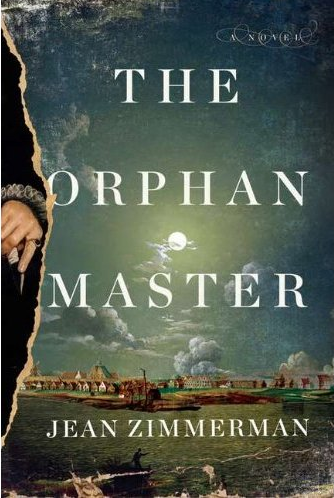
The Orphanmaster is another National Public Radio recommendation for people who like historical fiction, which I really do. I remember being a kid, and yawning my way through history, memorizing dates, it all seemed so irrelevant. Discovering historical fiction was like a light going on in a dark room for me – clever authors have found ways to illuminate events otherwise beyond my comprehension or worse – events I have a hard time making myself care about.
Suddenly, the times are right now and relevant when the right author handles it, and it isn’t always easy to get it right. I have a few very favorite authors – Philippa Gregory, Zoe Oldenberg, Sharon Kay Penman, Jean Plaidy, Edward Rutherford – authors who do a lot of research before they ever sit down to write a novel, and from whom you can learn a lot. They get the nature of the dialogue right, they get the customs, traditions and mind-sets right, and they get it right when a person is born ahead of his or her time in terms of the challenges they face.
I couldn’t put Orphanmaster down. It has to do with an era in American history which barely gets a paragraph in many history books, when the Dutch had a colony on what is now Manhattan Island, and trading posts up what is now the Hudson, into what is now New York. It was New Amsterdam, and many of the street names in modern day New York reflect their Dutch origins.
The Orphanmaster‘s main character is not the Orphanmaster. He is a supporting character to the main character to a girl orphaned at 15, daughter of a Dutch man and wife who were not rich, but who did all right. They had a business, they traded, Blandine learned many things before they died, leaving her an orphan. She was determined to be what would now be an “emancipated minor,” but until she turned 16, she was semi-legally under the responsibility of the Orphanmaster, who sort of kept hands off and sort of watched out for Blandine. She lives on her own and is a successful trader, in her early twenties. She is also a very clean housekeeper, and has plans to grow her trading business, and has a serious suitor she intends to marry.

Orphans start disappearing, and we discover a monster, a witiga, is on the loose. Blandine, and her new friend Drummond, are intrigued and disturbed by the disappearance of orphans, and the bloody, ritualistic mutilations of the orphans by the legendary Witiga.
It’s well written. You want to keep reading and keep reading because you want to know how it ends and how they are able to solve the problem.
It’s not one of the best books I’ve ever read for one reason – the author had the main characters talk as if they were modern people, using modern language, like ‘stuff.’ There was great openness between Blandine and her male friends. Blandine made all her own decisions, made her own arrangements and had full freedom, going where she wanted, doing what she wanted. The author explains it as part of the Dutch system, where some women had a lot of freedom, but I have a really hard time believing in a Dutch colony in the late 1600’s that any woman had the freedom Blandine had. There are parts of the novel where I am reading fast because I want to know what happens next and I get stopped up because Blandine says or does – or even THINKS – in a way that is very modern, and I just can’t buy it.
We are who we are. There are many smart women. Most women through the centuries have had to learn to maneuver in whatever societal constrictions they have been allowed. I suspect there were a lot of societal restrictions in New Amsterdam, and Blandine’s freedom to take off with only her male servant, to run off and live with a man not her husband (even though they are both escaping death sentences), to live an unescorted life . . . I just have a hard time buying it. I know how restricted women are even to day. Four hundred years ago, women were more restricted, and worse, we bought into it. We didn’t have a lot of choices.
So I like this book, and I think there is a lot of information that is true of the settlement of New Amsterdam, I loved the geography and the physical descriptions, I loved the maps included, I loved the descriptions of food and living conditions. I do not buy the heroine, not for one minute. I do not believe, in that historical context, she would have been possible.
Recent Comments
intlxpatr on Shampoo Ginger tigerbutterya0c5ff1d… on Shampoo Ginger intlxpatr on British Soldier Kidnapped, Esc… John on British Soldier Kidnapped, Esc… intlxpatr on British Soldier Kidnapped, Esc… Wikipedia Donate Button

Amazina


Early Voting in Florida


