Once-A-Year Burger at Red Robin’s
AdventureMan and I are not vegetarian; we eat a lot of fish and we try not to eat a lot of beef, pork or lamb. Lamb isn’t so much of a problem here in Pensacola – you don’t even see it on the menu that often. But pork – and beef – are everywhere.
Once a year I have a burger. Really. AdventureMan will order a burger more often, and I might take one bite here and there, but once a year, usually around the 4th of July, I will have my onec-a-year burger.
(Do you have any idea how many calories one burger has in a resturant? It’s all the extras, the bacons, the sauces, the fried onions, it can be two days worth of calories in ONE burger. It can seriously clog your veins in as little as two hours after you eat one. )
Because I only have one, it has to be a really really good one. I got hooked on Red Robin burgers back in university; then, Red Robin was really a college beer joint that served really good burgers. I ordered the A-1 Peppercorn Burger, but when it came, it came on some kind of a roll 😦 not the real hamburger bun.

It was everything I had hoped for – and more. The meat was cooked perfectly, not overdone; juicy and not greasy. The bacon (yes, yes, I did. It’s just once a year) was crisp. The sauce was peppery, just the way I like it. And yes, I ate the onion rings, too.
Now I’m good for another year 🙂
Kuwait has Highest BMI in the World
The countries which contain the heaviest and lightest citizens can be revealed today.
This extraordinary graphic shows the average body mass index values for adults around the globe – with some surprising results.
With its wealthy society and love of fast food outlets, many would place the U.S. at the top of the list.
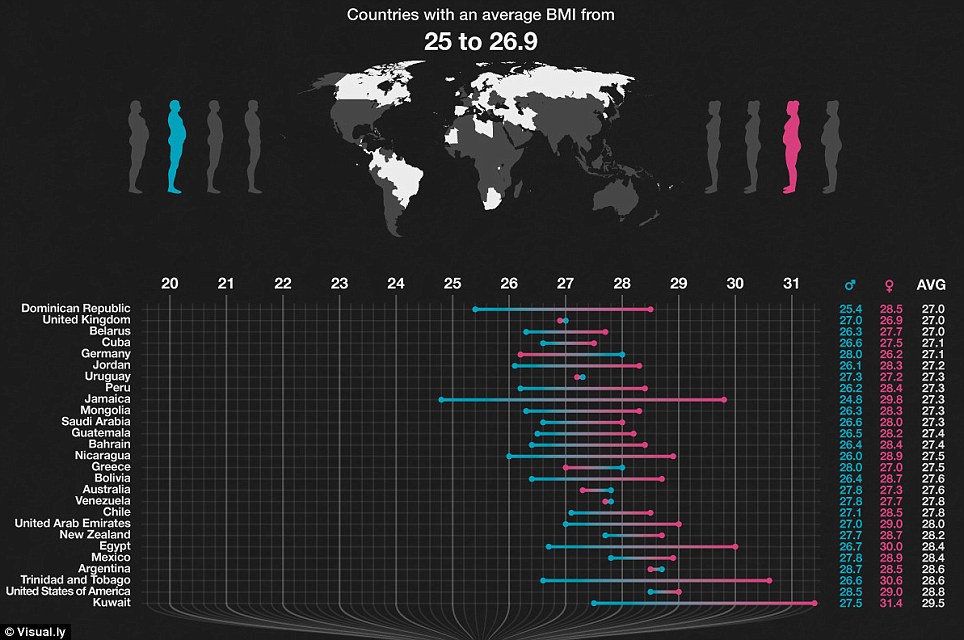
But it is pipped to first place in the body mass index chart by Kuwait. The Arab state has an average body mass index of 27.5 for men and 31.4 for women.
This beats America in second place which averages 26.5 for men and 29 for women.
From UPI:
Mexico is world fattest nation, United States No. 2
UNITED NATIONS, July 10 (UPI) — Officials at the U.N. Food and Agricultural Organization say Mexico with a 32.8 percent adult obesity rate is the most overweight of the industrialized nations.
Previously, the United States with an adult obesity rate of 31.8 percent was the world’s fattest nation. Last year, the percentage of U.S. adults overweight went down slightly.
A report by the FAO said Mexico’s widely available inexpensive junk food and penetration of U.S. fast-food chains combined with a more sedentary lifestyle all contributed to Mexico’s bulging waistline.
About 70 percent of Mexican adults are overweight, while childhood obesity tripled in a decade and about a third of teenagers are overweight as well, the Global Post said.
Weight-related diabetes claims 1-of-6 one of Mexican adults — or 70,000 people a year — suffering from the disease each year, the report said.
Ramadan Fasting and Diabetics
Technically, those who are ill are not required to fast, but my diabetic friends have said they can fast if they do it cautiously. I found this fascinating report on diabetics and fasting, particularly Ramadan fasting. You can reference the website Islam.ru.
Source:By: Fereidoun Azizi, MD, and Behnam Siahkolah, MD,/ Intl. Journal of Ramadan Fasting Research* / islamicity.com/October 31/2002 , res
Several of the world’s great religions recommend a period of fasting or abstinence from certain foods. Of these, the Islamic fast during the Muslim month of Ramadan is strictly observed every year. Islam specifically outlines one full month of intermittent fasting. The experience of fasting is intended to teach Muslims self-discipline and self-restraint and remind them of the plight of the impoverished. Muslims observing the fast are required to abstain not only from eating and drinking, but also from consuming oral medications and intravenous nutritional fluids.
The month of Ramadan contains 28 days to 30 days. The dates of observance differ each year because Ramadan is set to a lunar calendar. Fasting extends each day from dawn until sunset, a period which varies by geographical location and season. In summer months and northern latitudes, the fast can last up to 18 hours or more. Islam recommends that fasting Muslims eat a meal before dawn, called “sahur.” Individuals are exempt from Ramadan fasting if they are suffering from an illness that could be adversely affected by fasting. They are allowed to restrain from fasting for one day to all 30 days, depending on the condition of their illness. People diagnosed with diabetes fall into this category and are exempt from the fasting requirement, but they are often loathe to accept this concession. Physicians working in Muslims countries and communities commonly face the difficult task of advising diabetic patients whether it is safe to fast, as well as recommending the dietary and drug regimens diabetics should follow if they decide to fast. The lack of adequate literature on this subject makes it difficult to answer these questions. To judge correctly whether to grant medical permission to fast to a diabetic patient, it is essential physicians have an appreciation of the effect of Ramadan fasting on the pathophysiology of diabetes mellitus. In this article, we first review principles of carbohydrate metabolism and alterations of certain biochemical variables in diabetics observing Ramadan fasting. We then overview current medical recommendations that allow certain diabetic patients to fast and outline terms for diabetic patients, particularly IDDM patients, who should not fast but insist on fasting.
THE PHYSIOLOGICAL STATE OF DIABETICS DURING RAMADAN
Carbohydrate metabolism during Ramadan fasting in healthy persons
The effect of experimental short-term fasting on carbohydrate metabolism has been extensively studied (1,2). It has been uniformly found that a slight decrease in serum glucose to 3.3 mmol to 3.9 mmol (60 mg/dl to 70 mg/dl) occurs in normal adults a few hours after fasting has begun. However, the reduction in serum glucose ceases due to increased gluconeogenesis in the liver. That occurs because of a decrease in insulin concentration and a rise in glucagon and sympathetic activity (3). In children aged one years to nine years, fasting for a 24-hour period has caused a decrease in the blood glucose to half of the baseline figure for normal children of that age group. In 22% of these children, blood glucose has fallen below 40 mg/dl (4). Few studies have shown the effect of Ramadan fasting on serum glucose (5-9). One study has shown a slight decrease in serum glucose in the first days of Ramadan, followed by normalization by the twentieth day and a slight rise by the twenty-ninth day of Ramadan (6). The lowest serum glucose level in this study was 63 mg/dl. Others have shown a mild increase (7) or variation in serum glucose concentration (8,9), but all of them fell within physiological limits (6). From the foregoing studies, one may assume that the stores of glycogen, along with some degree of gluconeogenesis, maintain normal limits of serum glucose when a fast follows a large pre-dawn meal. However, slight changes in serum glucose may occur in individuals depending upon food habits and individual differences in metabolism and energy regulation.
Body weight during Ramadan fasting
(a) In normal subjects:
Weight losses of 1.7 kg. (10), 1.8 kg. (11), 2.0 kg. (12) and 3.8 kg (13) have been reported in normal weight individuals after they have fasted for the month of Ramadan. In one study that was over-represented by females, no change in body weight was seen (14). It has also been reported that overweight persons lose more weight than normal or underweight subjects (12).
(b) In diabetics:
A review of literature shows controversy about weight changes in diabetics during Ramadan.(6,15-24). In one group of studies, patients had an increase in their weight (17,21). In another group, there were no change (15,19,22,23) or a decrease (6,16,18,20,24) in body weight. While no food or drink is consumed between dawn and sunset during the month of Ramadan, there is no restriction on the amount or type of food consumed at night (23,25). Furthermore, most diabetics reduce their daily activities (15,23) during this period in fear of hypoglycemia. These factors may result in not only a lack of weight loss, but also a weight gain in such patients(26). (See later discussion about nutrition and physical activity.)
Blood glucose variations during Ramadan fasting in diabetics
Most patients show no significant change in their glucose control (3,23,24,27). In some patients, serum glucose concentration may fall or rise (28-30). This variation may be due to the amount or type of food consumption, regularity of taking medications, engorging after the fast is broken, or decreased physical activities. In most cases, no episode of acute complications (hypoglycemic or hyperglycemic types) occurs in patients under medical management(9,15,16,22), And only a few cases of biochemical hypoglycemia without clinical hazards have been reported (17,19,25).
Other parameters of diabetes control during Ramadan fasting
In general, HbAIC values show no change or even improvement during Ramadan (15-18,20,22,23,25,27,28,32). Only two studies have reported slight increases in glycated hemoglobin levels (19,31). However, one report has emphasized the same increase in non-fasting patients as fasting patients (31), and the other has shown a return to initial levels immediately after the month of Ramadan (19).
The amount of fructosamine (17,22,24,30,32), insulin, C-peptide (23,30) also has been reported to have no significant change before and during Ramadan fasting.
Energy intake and serum lipid variables during Ramadan fasting in diabetics
The amount of Energy (calorie) intake have been reported in some of the literature, indicating a decrease in energy intake (24,28).
Most patients with non-insulin dependent diabetes mellitus (NIDDM, diabetes type II) and insulin dependent diabetes mellitus (IDDM, diabetes type I) show no change or a slight decrease in concentrations of total cholesterol and triglyceride (15-19,27,28,32). Increase in total cholesterol levels during Ramadan seldom occurs (23). As in healthy persons (33-36), few studies have reported increases in high-density-lipoprotein (HDL) cholesterol in diabetics during Ramadan (18,19,27). One report indicates an increase in low-density-lipoprotein (LDL) cholesterol and a decrease in HDL-cholesterol (28). Until there is a standardization of diabetes Ramadan research in three fundamental factors — the Three D Triangle of drug regimens, diet control and daily activity — the benefits or hazards of Ramadan fasting on diabetics serum lipids is unclear.
Other biological parameters during Ramadan fasting in diabetics
Serum creatinine, uric acid, blood urea nitrogen, protein, albumin, alanine amino-transferase, aspartate amino-transferase values do not show significant changes during the fasting period(15,17,32). Slight non-significant increases in some biological parameters may be due to dehydration and metabolic adaptation and have no clinical presentation.
FASTING GUIDELINES TO DIABETICS
During the last two decades, a better understanding of pathophysiological changes during Ramadan fasting in diabetic patients has provided a few guidelines on how to advise diabetics who want to fast. Physicians working with Muslim diabetics should employ certain criteria to advise their patients regarding the safety of Ramadan fasting.
The following criteria should be helpful in making such a decision (20,37):
Forbid fasting in:
- All brittle type I diabetic patients;
- Poorly controlled type I or type II diabetic patients;
- Diabetic patients known to be incompliant in terms of following advice on diet drug regimens and daily activity;
- Diabetic patients with serious complications such as unstable angina or uncontrolled hypertension;
- Patients with a history of diabetic ketoacidosis;
- Pregnant diabetic patients;
- Diabetic patients will inter-current infections;
- Elderly patients with any degree of alertness problems;
- Two or more episodes of hypoglycemia and/or hyperglycemia during Ramadan.
Allow fasting in:
- Patients who do not have the aforementioned criteria;
- Patient who accept medical advisement.
Encourage fasting in:
-
All overweight NIDDM patients (except for pregnant or nursing mothers) whose diabetes is stable with weight levels 20% above the ideal weight or body mass index (body weight, kg/height, meters squared) greater than 28.
EDUCATION OF THE DIABETICS BEFORE RAMADAN
NIDDM patients and IDDM patients who insist on fasting should be given a few recommendations about fasting (16). They should be forbidden from skipping meals, taking medication irregularly or gorging after the fast is broken (26).
The principles of pre-Ramadan considerations are (37):
- assessment of physical well being;
- assessment of metabolic control;
- adjustment of the diet protocol for Ramadan fasting;
- adjustment of the drug regimen e.g. change long-acting hypoglycemic drugs to short-acting drugs to prevent hypoglycemia);
- encouragement of continued proper physical activity;
- recognition of warning symptoms of dehydration, hypoglycemia and other possible complications.
RECOMMENDATIONS DURING RAMADAN FASTING
I. Nutrition and Ramadan fasting:
Dietary indiscretion during the non-fasting period with excessive gorging, or compensatory eating, of carbohydrate and fatty foods contributes to the tendency towards hyperglycemia and weight gain (21,23). It has been emphasized that Ramadan fasting benefits appear only in patients who maintain their appropriate diets (24,38,39). Thus, in order to optimize control, diabetics must be reminded to abstain from the high-calorie and highly-refined foods prepared during this month (38).
II. Physical activity and Ramadan fasting:
Several studies indicate that light to moderate regular exercise during Ramadan fasting is harmless for NIDDM patients (15). It has been shown that fasting does not interfere with tolerance to exercise (40). It should be impressed upon diabetic patients that it is necessary to continue their usual physical activity especially during non-fasting periods (41)
III. Drug regimens for IDDM patients:
Some experienced physicians conclude Ramadan fasting is safe for IDDM patients with proper self-monitoring and close professional supervision (16). It is fundamental to adjust the insulin regimen for good IDDM control during Ramadan fasting. Two insulin therapy methods have been studied successfully:
-
Three-dose insulin regimen: two doses before meals (sunset and Dawn) of short-acting insulin and one dose in the late evening of intermediate-acting insulin (16).
-
Two-dose insulin regimen: Evening insulin combined with short-acting and medium-acting insulin equivalent to the previous morning dosage, and a pre-dawn insulin consisting only of a regular dosage of 0.1-0.2 unit/kg (25).
Home blood glucose monitoring should be performed just before the sunset meal and three hours afterwards. It should also be performed before the pre-dawn meal to adjust the insulin dose and prevent any hypoglycemia and post-prandial hyperglycemia following over-eating.
IV. Drug regimens for NIDDM patients:
Available reports indicate that there are no major problems encountered with NIDDM overweight patients who observe fasting in Ramadan (3). With proper changes in the dosage of hypoglycemic agents there will be low risk for hypoglycemia and hyperglycemia.
The authors of the largest series of patients treated with glibenclamide during Ramadan recommended that diabetics switch the morning dose (together with any mid-day dose) of this drug with the dosage taken at sunset (31).
V. Other health tips for reduction of complications:
-
Implementation of the 3D Triangle of Ramadan — drug regimen adjustment, diet control and daily activity — as the three pillars for more successful fasting during Ramadan.
-
Diabetic home management that consists of:
– Monitoring home blood glucose especially for IDDM patients, as described above;
– Checking urine for acetone (IDDM patients);
– Measuring daily weights and informing physicians of weight reduction (dehydration, low food intake, polyuria) or weight increase (excessive calorie intake) above two kilograms;
Recording daily diet intake (prevention of excessive and very low energy consumption).
-
Education about warning symptoms of dehydration, hypoglycemia and hyperglycemia.
-
Education about breaking fast as soon as any complication or new harmful condition occurs.
-
Immediate medical help for diabetics who need medical help quickly, rather than waiting for medial assistance the next day.
-
Further attention on fasting during the summer season and geographical areas with long fasting hours.
VI. IDDM children and Ramadan fasting:
We do not encourage fasting for IDDM children. However, a few studies demonstrate that fasting is safe among diabetic adolescents. Of these studies, one study concludes that Ramadan fasting is feasible in older children and children who have had diabetes for a long time, and it concludes fasting does not alter short-term metabolic control. Nevertheless, fasting should only be encouraged in children with good glycemic control and regular blood glucose monitoring at home (25).
POST-RAMADAN SUPERVISION OF FASTING DIABETICS
After the month of Ramadan ends, the patients therapeutic regimen should be changed back to its previous schedule. Patients should also be required to get an overall education about the impact of fasting on their physiology (37).
THE RESEARCH METHODOLOGY ON DIABETICS DURING RAMADAN
From a methodological point of view, few research papers on Ramadan fasting are relevant because of the absence of control periods before Ramadan and afterwards, the absence of measurements during each week of Ramadan, a lack of attention to dietary habits, food composition, food value, caloric control, weight changes and the importance of the schedule during circadian periods.
It is recommended that all these factors should be taken into consideration and that all intervening and confounding variables should be under control. It is clear that more work should be done on Ramadan fasting to evaluate physiological and pathological changes with proper research methods (42).
Fasting during the entire month of Ramadan is reserved usually for healthy Muslims. However, many diabetic patients are allowed to fast periodically during Ramadan. The magnitude of periodic total fasting effect on blood glucose and hepatic glucagon depends on the number of fasting days (43), and this should be considered in all Ramadan fasting research activities.
CONCLUSION
The bulk of literature indicates that fasting in Ramadan is safe for the majority of diabetics patients with proper education and diabetic management. Most NIDDM patients can fast safely during Ramadan. Occasional IDDM patients who insist on fasting during Ramadan can also fast if they are carefully managed. Strict attention to diet control, daily activity and drug regimen adjustment is essential for successful Ramadan fasting.
To shed more light on pathophysiological changes in Ramadan fasting, in particular in Muslims diabetics, it is recommended that a multicentric international controlled clinical trial be employed to assess the effect of differences in gender, races, physical activities, food habits, sleep patterns and other important variables on physiologic and pathologic conditions during Ramadan fasting.
Retrograde 4th of July
Alternate title: Every man needs a Kubota
As we were listening to the news and weather Tuesday night before going to bed, the weather woman was talking about a ‘retrograde’ storm system. She showed us on the map; normally our weather blows from west to east, but this storm was going to blow east to west, and then reverse and go west to east again. Going counter to the normal flow is ‘retrograde.’

Our entire holiday was retrograde. Which, for people like AdventureMan and I, is not too bad. It’s a good thing we married one another; we are not to good with same-same all the time, if things get too tame, we shake things up a little bit. It’s not good or bad, it’s just the way we are wired.
One of the first differences was that we weren’t leaving early in the morning to drive down Highway 98 along the beach road; we were picking up our adorable grandson, going to his house, and as soon as our daughter-in-law got off work we would hit the interstate.
It all went well; cloudy skies but light traffic, all was well until we left the highway headed south . . . and started hitting the “Roads Under Water” signs. We didn’t see any roads under water until the car in front of us hit what looked like a shiny spot on the road and went almost a foot deep. AdventureMan cooly slowed and drifted steadily through the lake in the road – and we thanked God to be in a vehicle a little higher off the ground than a sedan.
After the lake in the road, it started raining, a little sprinkling, and then a steady rain.
The temperatures dropped.
Here is what we had planned – dinner with family and friends, a day of fun and heading out for sun downers on the boat to watch the fireworks on the 4th. Heavy applications of insect repellant and sunscreen.
Here is what happened – the deluge.
Here is what was cool about the deluge – the temperatures were the coolest, 24 hours around the clock – that we’ve seen in a month. We could sit out on the screened porch looking at the bayou, listening to the rain fall – it was heavenly! No insect repellent needed. No sun screen needed.


Our hostess is a wonderful and creative cook; unafraid to try new recipes. Dinner after our rainy drive in: Red snapper, baked in a crust of crumbs with butter and parsley, so delicious. Green beans and mushrooms; so good I had them for breakfast another day 🙂 Holy smokes, desserts. The best pound cake ever, topped with peaches in their own juice and whipped cream, or chocolate red velvet brownies.
It was a fabulous lazy day. In the afternoon, our friend got an emergency call; friends whose husband was out of town were facing a flooding situation. Loading up his Kubota, he and AdventureMan went over and (manly manly) DUG A DITCH! getting all dirty and wet in the process, coming home with those grins that only activities like a good hunting trip, a successful fishing trip or digging a good ditch can create.
We had great plans that night to visit The Blue Fig (“They have mohammara!” my hostess said, knowing my weakness) but when we got there, it was closed . . . and, oddly every restaurant along that strip seemed to be closed. And side roads were flooded, more big lakes of water in the roads. It had rained so much and for so long that the runoff had no where to go.

Our little grandson fell asleep while we were searching for a restaurant that was open, and slept in my arms through dinner. I know this might be the last time; he is getting to be such a big boy, so I just treasured the time and listened to him breathe.
I know it may not seem like such a great holiday to you, but it was fun. We focused on conversations and laughed a lot. AdventureMan thinks every man might need a Kubota. We listened to the rain fall on the leaves, the roof, the bayou. We listened to the frogs celebrate the 4th of July. We really had a great time.
The Hot Spot BBQ in Pensacola
“Have we seen that place before?” AdventureMan asked as we headed down 9th Avenue en route to the beach.
“I think it’s new!” I responded.

The next day was his day to choose where we would go for lunch, and without hesitation, he said “that new place over on 9th.”
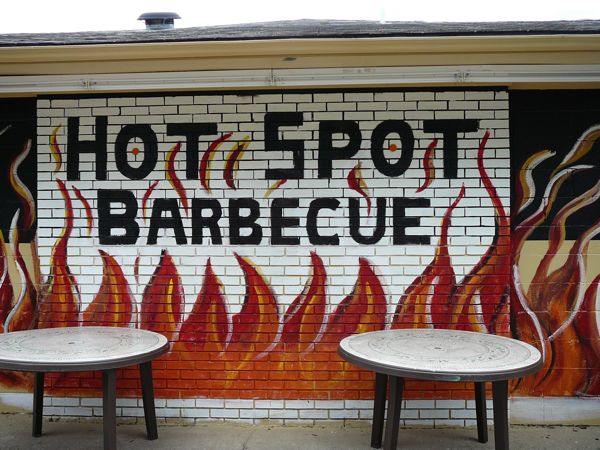

When we got there, we discovered that while the Hot Spot may be news to us, it was well discovered by others – we got the last table. It’s a family owned place, they make their own sauces, smoke their own meats – just the kind of place we like to find and support.
I had the chicken sandwich, AdventureMan had the pulled pork. We split a piece of that homemade lemon pie. The service was great, so attentive that I could not discretely take any photographs of the food. Prices are reasonable.
Get to the Hot Spot early if you want a table! They are at 901 East LaRua; you can go south on 9th off of Cervantes to get there easily.
Fait Maison – Home Made – Label to be Required in French Restaurants
I love this article – protecting the essential nature of French cooking by requiring a home-made label on food actually prepared in the restaurant, so people will know that if it doesn’t say home-made, it isn’t. We were shocked, one year, to discover that the ravioli we loved at a little Italian restaurant in Germany came from big huge bags of frozen ravioli . . . . and although it was not a conscious decision, we never ate there again.
In another Italian restaurant in Germany, in Landstuhl, I still remember the surprise of Pumpkin Ravioli, so savory, so delicious, such a delightful eye-opener! And of course, home made.
This is from BBC News:

France ‘home-made’ label to combat reheated dishes
French MPs have approved a bill forcing restaurants to label as “home-made” dishes which were prepared from raw ingredients in their kitchen. The “fait maison” label on menus is aimed at curbing the practice of buying in pre-cooked meals from outside, microwaving them and passing them off as freshly made.
Restaurants marking dishes as “fait maison” fraudulently will be fined. The Senate (upper house) still has to back the bill for it to become law. MPs from both the ruling Socialist Party and opposition centre-right UMP called for the measure to be obligatory, overruling Business and Tourism Minister Sylvia Pinel, who did not want it to go that far. “We’re making things more transparent and restoring our trade’s respectability,” said Didier Chenet, head of restaurant federation Synhorcat. “Clients will know what to expect. The problem right now is that you push the door of a restaurant and you don’t know if there’s actually a chef in the kitchen,” he told Reuters news agency.
The Hummus Wars
WARNING! This article is long, and will take some time to read! Found it in the AOL/Huffpost:
I wish they would start a Muhammara war; I love the stuff!
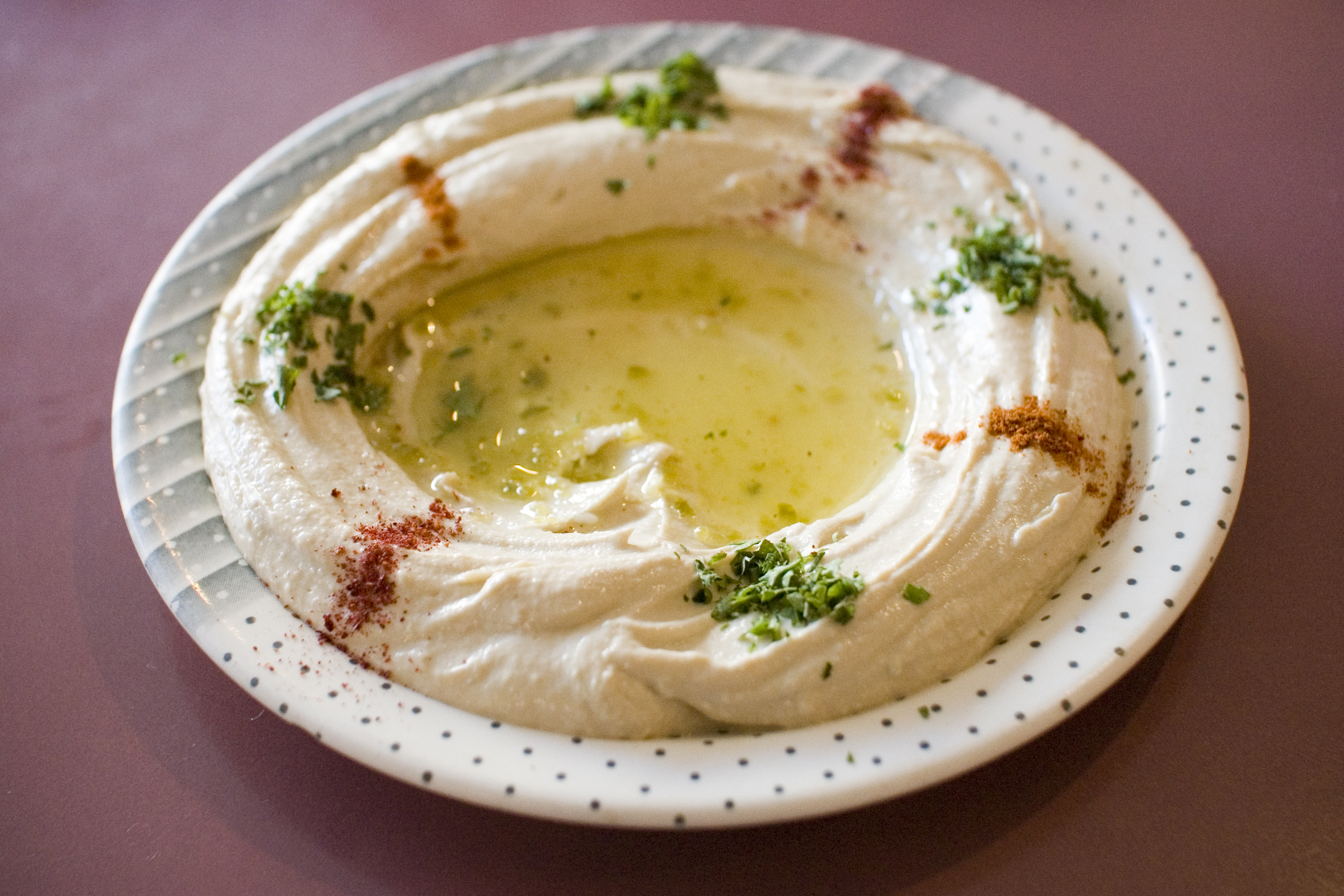

Sabra’s Quest To Push Hummus Mainstream Is About Much More Than Chickpeas
Posted: 06/10/2013 8:04 am EDT | Updated: 06/10/2013 5:01 pm EDT
Last winter, executives from the snack-food empire Frito-Lay invited Ronen Zohar, the Israeli head of America’s biggest hummus company, to watch the Super Bowl from a luxury suite at the Superdome in New Orleans.
For the snack-food industry, the Super Bowl amounts to something like Christmas and every kid’s birthday party wrapped into one, a day on which the average American consumes the caloric equivalent of 20 servings of Utz’s sour cream and onion dip. For Sabra, whose red-rimmed tubs of hummus are increasingly found inside American refrigerators, the stakes were particularly high.
“People are dipping in Super Bowl,” Zohar said. “They are looking for what to dip. Unfortunately they are dipping in the wrong product. But we try to change this. And we are doing okay.”
Around Sabra’s offices just outside New York City, employees are fond of saying that they hope to put their Middle Eastern chickpea dip “on every American table.” Though that mission is far from achieved, the company is off to an impressive start. In the last half-decade, overall sales of hummus have climbed sharply in the United States, with Sabra capturing about 60 percent of the market, according to the Chicago-based market research firm Information Resources, Inc. This spring, Sabra announced an $86 million dollar expansion of its Virginia factory, a move that the company says will create 140 jobs.
As the company’s leader during this stretch, Zohar has overseen a wide-ranging publicity effort aimed at simultaneously coaxing Americans to open their minds to a new taste of foreign origin while downplaying controversial aspects of the product’s provenance. In an age of significant spending by America’s pro-Israel lobby, even chickpeas have been swept into the debate over Israel’s occupation of Palestinian lands, its attitude toward its Arab neighbors and its reliance on American support.
Pro-Palestinian activists have in recent years organized boycotts of Sabra’s Israeli parent company, Strauss, for providing care packages to the Golani Brigade, a branch of the Israeli army that has allegedly committed human-rights abuses in the West Bank and Gaza. Groups in Lebanon have criticized Sabra for reaping the spoils of what they say is an intrinsically Lebanese dish. To quote a saying that has surfaced on the Internet, “First our land, then our hummus.”

Zohar, a blunt-spoken man of 52 who rose through the industry by persuading more Israelis to consume American corn products, dismisses both groups of critics as irrelevant. The Palestinian boycott amounts to mere “noise,” he says. As for the argument that hummus belongs to Lebanon: “I am very happy if Lebanon is going to fight about the hummus and not about anything else.”
Like any businessman, Zohar likes to talk about his product’s promising future. But hummus has a long history. And in the Middle East, history has a way of intruding upon the present, shaping questions about the legitimacy of what Sabra has been adding to the American table.
“The history of this food is that of the Middle East,” writes Claudia Roden, an Egyptian-Jewish cookbook author who has been credited with introducing Middle Eastern food to the West. “Dishes carry the triumphs and glories, the defeats, the loves and sorrows of the past.”
HUMMUS WARS
No one knows for sure how far back the history of hummus goes, but traces of chickpea, the key ingredient, have turned up in Middle Eastern archeological sitesdating to 7,500 B.C. In his bestselling book, Guns, Germs, And Steel, the anthropologist Jared Diamond identifies the chickpea as one of several hardy, nutrition-packed food crops that grew in the Fertile Crescent and enabled its people to develop agriculture and, in turn, cities, armies, systems of taxation and governments.
As civilization spread outward, chickpeas did, too, becoming garbanzos in Spain and chana in India. In the Middle East, they were boiled, mashed and mixed with the sesame paste known as tahini, becoming “hummus bi tahini,” more commonly known as hummus.
In recent years, the growing popularity of hummus has made the dip an object of controversy. Sabra instigated one of the fights at a publicity event in New York in 2007, where it served several hundred pounds of hummus on a plate the size of an above-ground swimming pool, prompting its executives to boast that they had produced the largest dish of hummus in the history of the world.
A year later, an Israeli competitor, Osem, responded by serving 881 pounds of hummus at an outdoor market in Jerusalem. The event took place on Israeli Independence day, or as Palestinians call it, Al Nachbar, The Disaster. A Guinness representative was there to document the victory.
Lebanon entered the fray about a year after that, doubling Osem’s record at a cook-off in Beirut. The chefs, who had been convened by a pair of Lebanese business associations, used spices to decorate what was now the world’s largest hummus plate with a picture of the Lebanese flag. While they were at it, they also broke Israel’s record for the largest bowl of of tabouli, a bulgur and parsley dish. According to The Daily Star of Lebanon, the groups that organized the event had a more grandiose goal than merely notching a volume record: They hoped to promote the idea that the Lebanese had invented both tabouli and hummus.
In the months after that feat, Lebanon and Israel traded shots, with Lebanon delivering what has so far proved the victorious blow, serving 23,042 pounds of chickpea dip at a weekend-long gathering in 2010. On the eve of the event, Ramzi Nadim Shwaryi, a Lebanese TV chef and one of the festival’s coordinators, told the Lebanese press that he and his allies were in it for Lebanon’s honor.
“We will stand together against this industrial and cultural violation and defend our economy, civilization and Lebanese heritage,” he said.
At about the same time the hummus wars were playing out in Lebanon, a group of Palestinian-sympathizers in the United States tried to call attention to Israel’s military activities in the West Bank and Gaza by pressing for boycotts of two Israeli-owned hummus companies — Sabra, and one of its larger competitors, Tribe.
The boycotters identified themselves as supporters of a broader movement called Boycott, Divest and Sanctions. Launched by Palestinian activists in 2005 following failed peace negotiations, the organization aimed to apply economic pressure on the Israeli government to end its 46-year occupation of Palestinian territories.
A YouTube video produced by protesters in Philadelphia who were part of the movement caught the attention of student activists at Princeton and DePaul universities in 2010. They tried to persuade their schools’ dining services to stop offering Sabra. Although they didn’t succeed, activists in the movement are still trying to garner support for their anti-Sabra efforts.
Still, Zohar does not seem particularly distressed by the potential implications for Sabra’s sales.
“The protesters make noise, but they make noise to themselves,” he said. “It doesn’t have any influence on our business.”
THE HUMMUS RELIGION
As the protests played out in the margins, Sabra aimed its product at the American mainstream. It deployed volunteers in trucks to hand out free samples of hummus in cities around the country, and expanded its product line to include more familiar dips, including guacamole and salsa.
It launched a national television ad campaign, exhorting people to “taste the Mediterranean,” and moved its staff in 2011 from an old industrial building across the street from a Queens cemetery to a sleek suburban office park, where the company heads plotted the conquest of the American marketplace in conference rooms named after touristy, exotic destinations like Madagascar and Morocco. (Perhaps unsurprisingly, none of the rooms were named after Lebanon or Israel.)
At the root of Sabra’s success was an influx of corporate money and resources. Strauss, an Israeli snack-food giant, bought half of Sabra in 2005, and Frito-Lay, the snack-food division of Pepsico, entered a joint-partnership agreement with Strauss in 2008. Zohar worked closely with the Frito-Lay people, who had scored a big victory for a foreign dip in the early ’90s, when Tostito’s salsa beat Heinz Ketchup to becomeAmerica’s best-selling condiment.
With Frito-Lay and Strauss’ investments, Sabra built its Virginia factory, where it developed flavors intended to appeal to the average American consumer: Spinach and Artichoke, Pesto, Buffalo Style. As Arabs and Israelis quarreled over the origins of hummus, Sabra was putting out a product that bore about as much resemblance to the authentic dish as a Domino’s BBQ Meat Lovers pie does to a genuine Italian pizza.
In Israel, meanwhile, yet another hummus debate was raging, and although it was the least overtly political of the controversies, it was no less capable of provoking feelings of hostility and anger. As the celebrated British-Israeli chef and food writer Yotam Ottolenghi and his Palestinian-born business partner and co-author Sami Tamimi wrote in the 2102 cookbook Jerusalem, “Jews in particular, and even more specifically Jewish men, never tire of arguments about the absolute, the only and only, the most fantastic hummusia.”
A hummusia is the Israeli equivalent of a New York pizza parlor, a cheap establishment that usually serves only hummus and a few other dishes. But the debates about hummusias are more intense than even the most impassioned pizza threads on Yelp.
“The hummusia fetish is so powerful that even the best of friends may easily turn against each other if they suddenly find themselves in opposite hummus camps,” Ottolenghi and Tamimi wrote. The arguments “can carry on for hours,” they noted, with the debaters delving into the minutia of whether hummus is better served warm or at room temperature, smooth or chunky, topped with fava beans or cumin and paprika, or nothing at all.
In a letter to The New York Times at the height of the hummus wars, Israeli food writer Janna Gur went even further, calling Israel’s fascination with hummus a “religion.” She noted that the most treasured restaurants are invariably owned by Arabs, a phenomenon she traced to the early Zionist settlers who arrived in the Holy Land determined to put the customs of the Diaspora behind them, while embracing a new identity in the Levant. They traded Yiddish for Hebrew, yeshivas for plowshares, and matzoh balls and tsimmis for falafel balls and hummus. “This love affair, that has been going on for decades, shows no signs of dying,” Gur wrote.
Last summer, while traveling in Israel, I visited as many of the hummusias as I could, hoping to come to my own conclusions about the craze. I was joined in this mission by my father, who moved from Israel to New York in the early 1970s and has griped about the quality of America’s hummus offerings ever since. Like many Israelis, he looks down not just on corporate hummus brands like Sabra and Tribe, but also on local shops that package their own hummus in take-out containers. As far as he is concerned, the religion of hummus forbids packaging of any kind.
In the Middle East, hummus is served fresh from the pot, on a big communal plate dripped with olive oil and sprinkled with paprika and cumin. The plate has to be big enough and flat enough so that you can comfortably wipe up the hummus with a pita, an activity that my father refers to as “swiping.” He insists that hummus should have a subtle, earthy flavor, and disdains spicy hummus, lemony hummus, hummus with chipotles, hummus with artichoke, hummus with basil, sun-dried tomato or spinach, and most of all, the dip referred to as “black bean hummus.”
As he has pointed out many times, hummus is the Arabic word for chickpea; by definition, hummus made of black beans isn’t hummus.
In Israel, my father and I ate at Abu Hassan, a bare-tabled hummus den in the seaside town of Jaffa, where the staff starts serving early in the morning and shuts down the shop after the pot runs out, often in the early afternoon. We wandered the narrow streets of Jerusalem’s Old City, past the pilgrims crowding into the Church of the Holy Sepulcher, until we reached a tiny hummus shrine adorned with black-and-white pictures of people sharing a meal at the shop sometime in the 1930s.
One day we drove to a city in Palestine’s West Bank known for its tahina factories and uprisings. By law, Israelis are forbidden from entering the Palestinian territories, except to travel to the Jewish settlements, but we felt that no hummus pilgrimage would be complete without a trip to Nablus.
At the checkpoint, an Arab cab driver pulled over and said he hoped, for our own sake, that we wouldn’t enter the city in our Israeli rental car. We thanked him and drove past the Israeli guards, through the rounded hills studded with olive trees. My father grew quiet. When he’d first traveled those hills, in 1967, he was in a tank, pushing forward toward the Jordan River as thousands of Palestinian refugees streamed down the sides of the road. The Six-Day War had broken out and the Israeli army had conquered the Palestinian villages.
After a while we reached the outskirts of Nablus, parked and made our way through the maze-like casbah, to a dim, windowless hummus restaurant with electrical wires hanging from the ceiling. A teenage boy strolled into the room with an unmarked bottle of olive oil, tipping it onto people’s plates. After a few minutes of “swiping,” my father announced that this was the best hummus he’d tasted on the trip — though he also remarked that the excitement of entering forbidden territory had enhanced the flavor. By that point I knew that my hummus palate wasn’t refined enough to discern the subtle differences between the various hummusia offerings, but I liked them all better than any hummus I’d ever had in America.
Toward the end of our stay, we traveled to the fertile hills of the Galilee region, where an Arab chef named Husam Abbas had been garnering praise for his gourmet take on Arab food, defying a number of Israeli assumptions about Palestinian culture.
Abbas, who has been described as a leading figure of Israel’s Slow Food movement, broke ground at his chain of high-end restaurants by showing Israelis that Arab cuisine isn’t just hummus and kebab. His specialties include a spicy watermelon salad with diced mustard stems and stuffed summer squash in a tomato bisque, and he uses produce grown in fields that his family has tended, by his account, for 1,700 years.
Abbas met us by the side of the road in his pickup truck and led us into his fields. A gruff man with a leathery face, he tramped down the leafy aisles with a cigarette lodged in his mouth, stooping to gather purple-tipped string beans, young cantaloupes that looked more like cucumbers, several kinds of summer squash, and beautifully misshapen heirloom tomatoes.
Later, in the dining room of one of his restaurants, he explained that when the growing season ends, he and his children go into the hills to gather wild herbs with names like “olesh” and “aqab” and “hobeza.” The herbs grow only locally and only in the winter.
“But because hummus is dry, it can be used throughout the year,” he said.
When I asked how he accounted for the dip’s popularity, he kept his answer short: “Low cost, high calorie.” He seemed a little annoyed at the need to deliver this dictum.
FLAVOR HOUSE
As Sabra strives to make its chickpea dip as popular as bagels, burritos and other foreign-born fixtures of the American diet, it is employing a flavor palette that would test the limits of acceptability in the Middle East.
One recent day, Mary Dawn Wright, Sabra’s executive chef, stood before an array of hummus containers at the company’s Virginia factory, discussing these techniques. She popped open a tub labeled Asian Fusion.
“Israelis would never ever think it’s considered to be hummus,” she admitted.
A glistening spoonful of some brightly colored carrot and ginger mixture distinguished the dip from anything you’d find in a hummusia. Sabra collaborates with outside “flavor houses,” whose scientists also help develop classic American products like Doritos, she explained.
Asian Fusion is just one of more than a dozen flavors that Sabra has invented in its effort to convert more Americans to hummus, and Wright was almost certainly correct in her frank assessment of what Israelis might think of them. Even Zohar didn’t bother to feign enthusiasm for Sabra’s Buffalo Style flavor. “I detest it,” he said.
But for Zohar, and presumably for the rest of Sabra’s executives, personal feelings about the flavors are as irrelevant as hummus’ place of origin. What matters are the cravings of the average American consumer, and Zohar seems to think that no American is beyond the company’s reach.
At the Superbowl, he noticed that many of the tailgaters were eating Louisiana fare — “all kinds of crabs and shrimps, whatever it is.”
He didn’t see any hummus containers amid the jambalaya and gumbo.
“Maybe in New Orleans they are eating hummus not as much as people in New York are eating hummus,” he said recently. “But give us two years. They are trying it, and when they try it they become a lover.”
Island Kitchen in Pensacola
“I think this is what MaMa might fix for us if we lived in Jamaica,” I said to AdventureMan as our meals were delivered at the Island Kitchen. We’ve passed Island Kitchen a hundred times, and many of those times AdventureMan has said one of these days he’d like to give it a try. This was the day.
There were other Islanders eating there – one eating oxtail and another eating goat curry. It looks like a lively place on the weekends, when expats come to eat food from home and listen to Island music.

I ordered the Jamaican Tea; it was delicious. I thought it was ginger, but the server said no, it was an herbal tea.
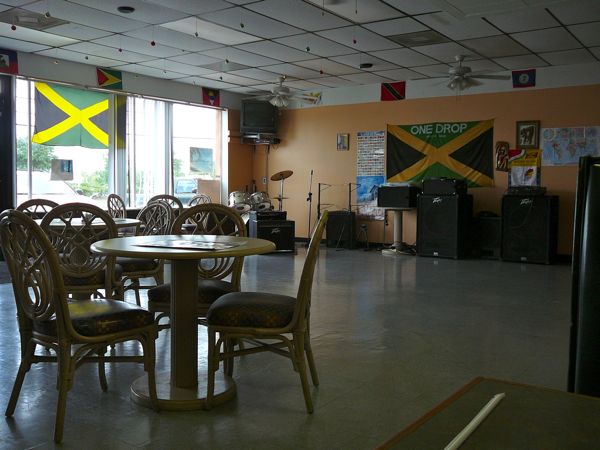
We ordered at the counter – so many options, and a set of choices unlike any other restaurant in Pensacola. Our orders were the special-of-the-day, AdventureMan ordered the Chicken With Brown Sauce and I ordered the Chicken Curry.


It was down-home chow. It was food like Grandmama would serve, if Grandmama were Caribbean. There are other options – Oxtail. Goat Curry. Beef Pasties. Everything looked well prepared, wholesome, and copious.


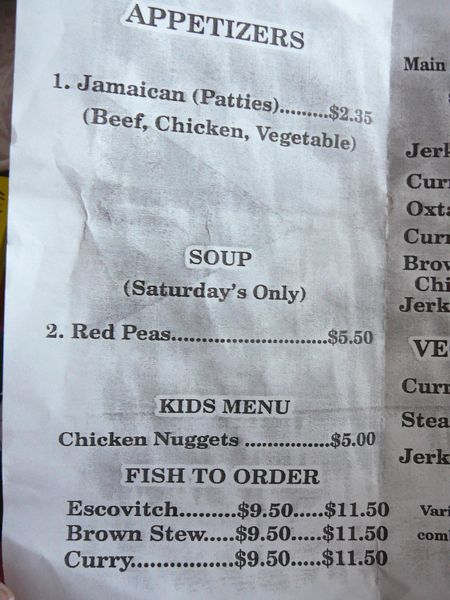


Still hoping for an Ethiopian restaurant in Pensacola . . . 🙂
Western Diet Killer:
From the UK Daily Mail Online:
The Western diet really IS a killer: People who eat white bread, butter and red meat are most likely to die young
- Those who ate fried and unhealthy food had doubled risk of early death
- Key culprits include red meat, white bread, butter, cream and sweet foods
- Findings ‘help explain’ why heart disease is still the UK’s biggest killer
PUBLISHED: 13:20 EST, 16 April 2013 | UPDATED: 02:08 EST, 17 April 2013
The typical Western diet, high in fat and sugar, really does lead to an early grave, new research suggests.
A study of more than 5,000 civil servants found those who ate the most fried and sweet food, processed and red meat, white bread and butter and cream doubled their risk of premature death or ill health in old age.
It adds to evidence that ‘Western style food’ is the reason why heart disease claims about 94,000 lives a year in the UK – more than any other illness.
The findings published in The American Journal of Medicine are based on a survey of British adults and suggest adherence to the diet increases the risk of premature death and disability later in life.
 People who ate the most fried and sweet food, processed and red meat, white bread, butter and cream doubled their risk of premature death or ill health in old age
Lead researcher, Dr Tasnime Akbaraly, of the National Institute of Health and Medical Research in France, said: ‘The impact of diet on specific age-related diseases has been studied extensively, but few investigations have adopted a more holistic approach to determine the association of diet with overall health at older ages.’
She examined whether diet, assessed in midlife, using dietary patterns and adherence to the Alternative Healthy Eating Index (AHEI), is associated with physical ageing 16 years later.
The AHEI is an index of diet quality, originally designed to provide dietary guidelines with the specific intention to combat major chronic conditions such as heart disease and diabetes.
More…
Dr Akbaraly added: ‘We showed that following specific dietary recommendations such as the one provided by the AHEI may be useful in reducing the risk of unhealthy ageing, while avoidance of the “Western-type foods” might actually improve the possibility of achieving older ages free of chronic diseases.’
The researchers analysed data from the British Whitehall II cohort study and found following the AHEI can double the odds of reversing metabolic syndrome, a range of disorders known to cause heart disease and mortality.
 The research adds to evidence that Western style food is the reason why heart disease claims about 94,000 lives a year in the UK – more than any other illness
They followed 3,775 men and 1,575 women from 1985-2009 with a mean age of 51 years.
Using a combination of hospital data, results of screenings conducted every five years, and registry data, investigators identified death rates and chronic diseases among participants.
At the follow up stage, just four per cent had achieved ‘ideal ageing’ – classed as being free of chronic conditions and having high performance in physical, mental and mental agility tests.
About 12 per cent had suffered a non-fatal cardiovascular event such as a stroke or heart attack, while almost three per cent had died from cardiovascular disease.
About three quarters were categorised as going through ‘normal ageing’.
The researchers said participants who hadn’t really stuck to the AHEI increased their risk of death, either from heart disease or another cause.
Those who followed a ‘Western-type diet’ consisting of fried and sweet food, processed food and red meat, refined grains, and high-fat dairy products, lowered their chances for ideal ageing.
“You’re Not Southern – You’re Arab!”
My mind works in quirky ways, and yesterday as I was setting up for the hands-on Heirloom Feathers workshop with Cindy Needham, one of the good local Pensacola quilters was telling her how you can tell a Southerner from a Northerner.
“If you go to a Southerner’s house, they’ll ask you first thing if you’d like a drink of water, or iced tea or something, but if you go into a Northerner’s house, you can sit there for five hours and they won’t offer you ANYTHING!”
I grinned to myself, no, I have learned to censor these thoughts. But I couldn’t help it.
“You’re not a Southerner,” I am thinking, “You’re ARAB!”
I thought about a long ago trip through Morocco, we have a rental car and on our way from Ouazazarte to Marrakesh, on an isolated stretch of the road, we see a car in trouble. We stop and ask if we can help, if the man would like a lift to the next town. He tells us no, he wants to stay with the car, but asks if we would go to such and such service station and tell his uncle he needs help, and where he is.
Of course.

We drive into town, find the service station, and find the young man’s uncle, who is the owner. He sends help.
Did I mention it was Ramadan? No eating or drinking in public from dawn to dusk?
The owner insisted we come into his house, and seated us in his diwaniyya, and sent in mint tea and luscious almond-filled dates to refresh us. We said “No! No! It’s Ramadan!” but he told us it was his honor. He sat while we drank and ate.
Such enormous hospitality. Such grace. We only stayed a very short time; we still had a long drive, but I’ve never forgotten his hospitality.
Then again, it was Southern Morocco. 🙂 Maybe he was Southern.
Recent Comments
ExpatAlien on What Country am I Living … intlxpatr on Yellowstone: Old Faithful to C… Michelle on Yellowstone: Old Faithful to C… Cathy on No Grown-Ups in Charge intlxpatr on Waiting for Snow Wikipedia Donate Button

Amazina


Early Voting in Florida


 Here There and Everywhere