AdventureMan Does Lobster
I don’t know if you remember, but when AdventureMan retired, it didn’t stick. He retired in April 2010, went back to work on contract to the same company in June – August 2010, retired, went back from October 2010 – February 2011. Finally, I think he has really retired. He hasn’t worked in a year. I think the last stint was ENOUGH! Thanks be to God.
I wasn’t sure how life would evolve, once he really really committed to retirement. And it definitely has been an evolution, starting with the day he told me he was going to re-organize my spice drawers (No! No! No, you’re not!) to yesterday, when he told me he had a yearning to broil some lobster for dinner.
You know those Red Lobster ads, like for a whole month they show these mouth-watering dinners featuring lobster, but if you actually go to Red Lobster, they are overcooked and pretty tasteless, sometimes even covered in cheese? We always say ‘never again.’
AdventureMan is a GREAT cook. Who knew? We had hints, back when our baby was born, and had colic, and AdventureMan took lessons in Chinese cooking on Saturday mornings and would cook Chinese food while I walked the squalling baby, but once the baby no longer had colic, we reverted to more traditional ways of doing things. (Pity, I still love his Chinese food!)
He started with simple things, and has become more and more daring. Lobster is expensive, but his lobster were PERFECT. He basted them with a mix of olive oil, a little sea salt and herbes de Provence. And he also fixed green beans, which were perfectly cooked, still just a little crisp, perfect.

Wooo HOOOO on you, AdventureMan!
Rainy Saturday at 5 Sisters in Pensacola
It’s been rainy and dark the entire day, and I know what I need – I need to go to Five Sisters. We had planned to go to the huge Pensacola Mardi Gras Parade, but as the rain came down, my spirits were also dampened. There was a time – and I could see in AdventureMan’s eyes, he was hoping this wasn’t one of those times – when I would have said “We HAVE to go, even if it is raining!”
He has a little cold and I drift in and out of allergies, and standing a couple hours out in the rain and hollering and catching beads is probably not what mature people like us should be doing. (A part of me is greatly depressed at being so ‘mature’.)
But I know just the thing. Five Sisters. As we drive up, a parking space becomes available, always a good omen, and as we walk to the door, we are greeted with divine fragrances of smoke and grilling meat and we are starting to feel better already.
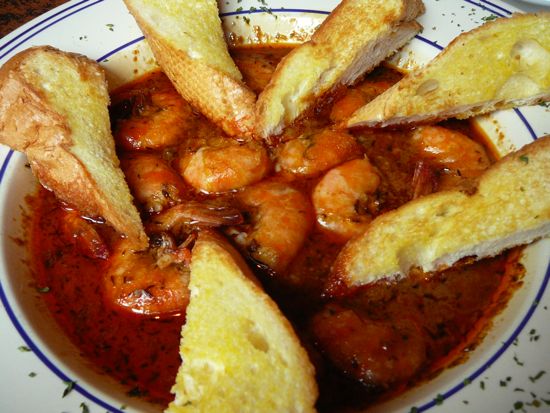
On the menu board, one of the specials of the day is BBQ Shrimp. Ummmm, ummmmmm, doesn’t that sound good on a rainy day. I order the BBQ Shrimp with cheese grits and a salad, AdventureMan orders the Seafood Platter. Bluesy music, some old hits from the 60’s and 70’s, and our food comes.
My BBQ Shrimp was AWESOME. Today it was tangy, vinegar-y and Tabasco sauce, the essence of Louisiana. It came sizzling hot, but the shrimp still had the shells on, which AdventureMan tells me is the way it comes when it is BBQ Shrimp in the South. Oh well, it is a good thing that the shells are on and I have to work to get them off before I can eat each one, if I didn’t have to get those tails and shells off I would probably gobble them down in no time at all! As it was, I was able to bring about half of the shrimp home to savor later. 🙂
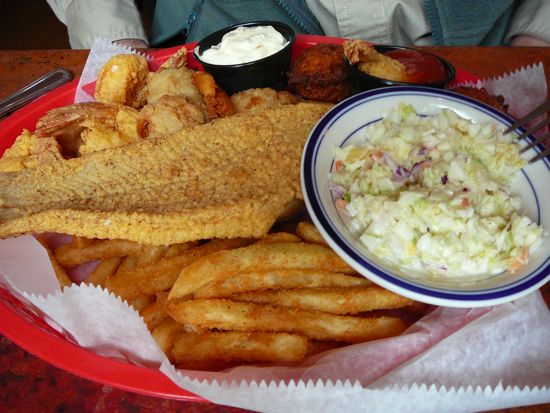
AdventureMan said on the way home “Oysters sure are rich, aren’t they?” I just laughed, I like oysters cooked, but mostly I like them steamed, and even then, they are so rich I can’t eat many of them. If you deep fry them, you just add rich on rich. His dish was fish, shrimp and oysters, deep fried, and some of 5 Sisters fabulous fries, which he didn’t eat, and didn’t need because there was so much seafood on the Seafood Platter:
As we left, it was still raining, one of those days that went from dark to dark grey to not-quite-so-dark grey to a couple moments of light grey and then back to dark grey and now it is almost dark once again. We don’t often have a day with no sunshine in Pensacola, and it is very very sad when that one day is the day of the Pensacola Mardi Gras Parade and it pours down rain just as the parade is starting. Sometimes life just isn’t fair. But Five Sisters puts a smile back on our faces every time.
Lunch at Bangkok Garden in Pensacola
“Have you tried Bangkok Garden?” our friends asked. “They used to be down on Navy Boulevard, but got blown out by one of the Hurricanes and weren’t around for a while, then one day we saw them open again over on Fairchild.”
No, we hadn’t noticed, or if we had, we hadn’t thought it might be a really good place. The next day it was my turn to choose where we would go for lunch, and AdventureMan pretended to be enthusiastic, but Thai food isn’t his favorite. He doesn’t not like it, he just doesn’t like it the way I do. Or at least he didn’t, until we had lunch at Bangkok Garden. 🙂

I wish I had thought to take a photo of the lunch menu. They had a very good selection to choose from, and the prices were $5.95 – $7.95 for a small soup, Thai spring roll, and main dish with rice.
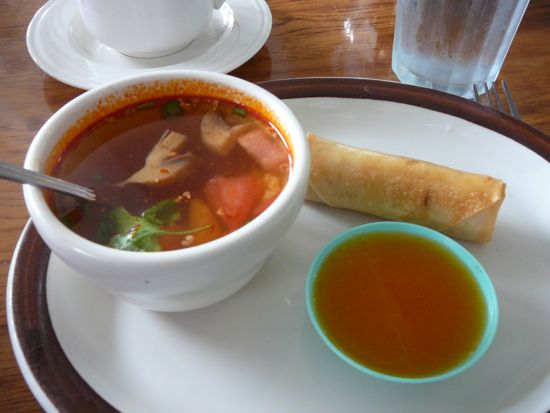
It is family run, and they work hard. Bangkok Garden was full of working people at lunch, from delivery men to attorneys and officials. The food was served hot and fresh, and it was delicious.
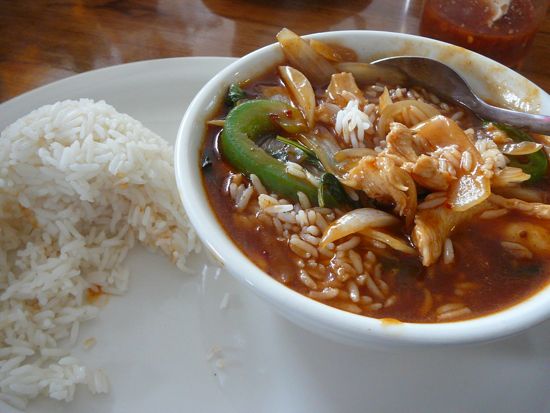
I had the Basil Chicken, which was the way I like it, very Basil-y:
AdventureMan had the Cashew Chicken, which had lots of cashews, not peanuts. We had thought we would share, but the serving dishes are not really conducive to sharing a lot.
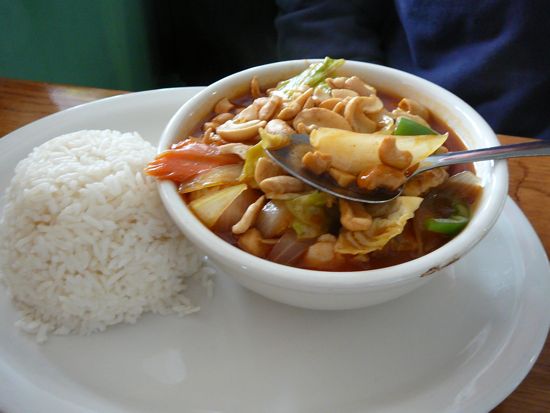
We agreed – we will go back soon. Even AdventureMan was happy. It is a real deal, delicious fresh Thai food at a reasonable price.
The Best Foods You can Eat
I wish I could publish this exactly as sent by my friend, Hayfa. It is a beautiful article!
The 40 Best Age-Erasing Superfoods
By: The editors of Men’s Health
The latest science on the musclebuilding,
brain-enhancing, wrinkleerasing,
heart-strengthening,
bone-protecting, immunityboosting,
and inflammationfighting
foods you should be
eating every day.
1. Almonds
These energy-rich snacks lower bad
cholesterol, thanks to plant sterols, and
benefit diabetics by lowering blood sugar.
They’re also rich in amino acids, which
bolster testosterone levels and muscle
growth. Almonds are also stuffed with
vitamin E, which helps defend against sun
damage. In a study, volunteers who
consumed 14 milligrams of the vitamin
(about 20 almonds) per day and then were
exposed to UV light burned less than those
who took none. And because vitamin E is
an antioxidant, it also works to keep your
arteries free of dangerous free radicals.
Low levels of vitamin E are also associated
with poor memory performance and cognitive decline, says dietitian Sari Greaves of New York
Presbyterian Hospital–Cornell.
2. Flaxseeds
Rich in protein and fiber, these little
seeds offer a payload of omega-3 fatty
acids, which erase spots and iron out
fine lines in the skin. The British Journal
of Nutrition reported that participants in
one study who downed about half a
teaspoon of omega-3s daily in 6 weeks
experienced significantly less irritation
and redness, along with better-hydrated skin. A recent study of people with high cholesterol
(greater than 240 mg/dL) compared statin treatment with eating 20 grams of flaxseed a day. After
60 days, those eating flaxseed did just as well as those on statins. Try sprinkling ground flaxseed
on oatmeal, yogurt, and salads.
Page | 2
3. Tomatoes
There are two things you need to know
about tomatoes: red are the best,
because they’re packed with more of
the antioxidant lycopene; and
processed tomatoes are just as potent
as fresh ones, because it’s easier for
the body to absorb the lycopene.
Studies show that a diet rich in
lycopene can decrease your risk of
bladder, lung, prostate, skin, and stomach cancers, as well as reduce the risk of coronary artery
disease, and help eliminate skin-aging free radicals caused by ultraviolet rays. “Cooked tomatoes
and tomato paste work best,” says celebrity trainer Gunnar Petersen.
4. Sweet Potatoes
Often confused with yams, these
tubers are one of the healthiest foods
on the planet. In addition to
countering the effects of secondhand
smoke and preventing diabetes,
sweet potatoes contain glutathione,
an antioxidant that can enhance
nutrient metabolism and immunesystem
health, as well as protect
against Alzheimer’s, Parkinson’s, liver
disease, cystic fibrosis, HIV, cancer, heart attack, and stroke. What’s more, they’re also loaded
with vitamin C, which smoothes out wrinkles by stimulating the production of collagen. A recent
study in the American Journal of Clinical Nutrition found that volunteers who consumed 4
milligrams of C (about half a small sweet potato) daily for 3 years decreased the appearance of
wrinkles by 11 percent.
5. Spinach
It may be green and leafy, but spinach—a
renowned muscle builder—is also the ultimate
man food. The heart-health equivalent of a firstballot
Hall of Famer, spinach is replete with the
essential minerals potassium and magnesium,
and it’s one of the top sources of lutein, an
antioxidant that may help prevent clogged
arteries. Plus its vitamins and nutrients can
bolster bone-mineral density, attack prostate
cancer cells, reduce the risk of skin tumors, fight
colon cancer, and, last but not least, increase
blood flow to the penis. “Popeye was on to
something,” says Susan Bowerman, assistant director of the Center for Human Nutrition at the
University of California at Los Angeles.
Page | 3
6. Rosemary
The carnosic acid found in this spice has
been shown to reduce stroke risk in mice
by 40 percent, according to a study
published in the Journal of
Neurochemistry. Carnosic acid appears to
set off a process that shields brain cells
from free-radical damage, which can
worsen the effects of a stroke. It can also
protect against degenerative diseases like
Alzheimer’s and the general effects of
aging.
7. Wild Salmon
A 4-ounce serving of salmon has
approximately 2,000 milligrams of
docosahexaenoic acid (DHA) and
eicosapentaenoic acid (EPA),
omega-3 fatty acids that serve as
oil for the brain’s hardware by
helping nerve cells communicate
with one another. Thirty-five percent
of your brain consists of fatty acids
like these, but they can decline as
the years stack up. A 2008 University of Cincinnati study, for instance, found that the brain tissue
of 65- to 80-year-olds contained 22 percent less DHA than the brain tissue of 29- to 35-year-olds.
“If you want to keep your wits about you as you age, start consuming omega-3s now,” says
William Harris, Ph.D., a nutrition researcher at the University of South Dakota. Why is wild so
important? Because farmed fish, which are fattened with soy, can be as high in inflammatory
omega-6 fats as a cheeseburger. If in doubt, opt for sockeye salmon, which can’t be farmed and
is always wild. Aim for at least two servings a week, says dietitian Joan Salge Blake, author of
Nutrition and You.
8. Blueberries
“This potent little fruit can help prevent
a range of diseases from cancer to
heart disease,” says Ryan Andrews,
the director of research at Precision
Nutrition, in Toronto, Canada. Think of
blueberries as anti-rust for your gray
matter, too. Besides being rich in fiber
and vitamins A and C, they’re also
packed with antioxidants—only açai,
an Amazonian berry, contains more—
that neutralize the free radicals that cause neuronal misfires. Eat a cup a day, and opt for wild
blueberries whenever possible, as they contain 26 percent more antioxidants than cultivated
varieties.
Page | 4
9. Green Tea
Green tea releases catechin, an antioxidant with proven anti-inflammatory and anticancer
properties. Research found that drinking 2 to 6 cups a day not only helps prevent skin cancer but
might also reverse the effects of sun damage by neutralizing the changes that appear in sunexposed
skin. Other studies show that green tea—infused with another antioxidant called
epigallocatechin gallate (EGCG)—can boost
your cardiovascular health and reduce the risk
of most types of cancer.
10. Dark Chocolate
Flavonoids, a natural nutrient in cocoa, improve
blood flow in the brain, which helps boost
cognitive function. Plus dark chocolate contains
a tannin called procyanidin, which is also found
in red wine, that can keep your arteries flexible
and your blood pressure low. It helps on the outside, too. In a study from the Journal of Nutrition,
women who drank cocoa fortified with a chocolate bar’s worth of flavonols had better skin texture
and stronger resistance to UV rays than those who drank significantly fewer flavonols. Indulge in
1 ounce a day to get all the benefits, says dietitian Sari Greaves of New York Presbyterian
Hospital–Cornell.
11. Tuna
Your favorite deli sandwich has a little secret:
Selenium. This nutrient helps preserve elastin, a
protein that keeps your skin smooth and tight. The
antioxidant is also believed to buffer against the sun
(it stops free radicals created by UV exposure from
damaging cells). Tuna is also a great source of
protein, contains no trans fat, and a 3-ounce serving
of chunk light contains 11 mg of heart-healthy niacin, which has been shown to help lower
cholesterol and help your body process fat. University of Rochester researchers determined that
niacin raises HDL cholesterol (the good kind) and lowers triglycerides more than most statins
alone.
12. Carrots
Think of carrots as orange wonder wands—
good for the eyeballs, and good for clearing up
breakouts. No magic here, though, just plenty of
vitamin A, which prevents overproduction of
cells in the skin’s outer layer. That means fewer
dead cells to combine with sebum and clog
pores. They’re also spiked with carotenoids—
fat-soluble compounds that are associated with a reduction in a wide range of cancers, as well as
a reduced risk and severity of inflammatory conditions such as asthma and rheumatoid arthritis.
Page | 5
13. Dried Plums
Also known as prunes, these dark shrivelers
are rich in copper and boron, both of which
can help prevent osteoporosis. “They also
contain a fiber called inulin, which, when
broken down by intestinal bacteria, makes
for a more acidic environment in the
digestive tract,” says Bowerman. “That, in
turn, facilitates calcium absorption.”
14. Whole Grains
Whole grains—oatmeal, wheat flour, barley,
brown rice—are high in fiber, which calms
inflamed tissues while keeping the heart
strong, the colon healthy, and the brain fueled.
Whole grains can be loaded with carbs, but
the release of those sugars is slowed by the
fiber, and because they can pack as much as
10 grams of protein per 1/2-cup serving, they
also deliver steady muscle-building energy.
But not all breads and crackers advertised as “whole grain” are the real deal. “Read the label,”
says Lynn Grieger, an online health, food, and fitness coach. “Those that aren’t whole grain can
be high in fat, which increases inflammation.”
15. Red Wine
Swimming in resveratrol—a natural compound that
lowers LDL, raises HDL, and prevents blood clots—red
wine can truly be a lifesaver. A recent review in
Alcoholism: Clinical and Experimental Research, for
instance, suggests that resveratrol may prevent or delay
the onset of chronic disease. But limit your intake to two
drinks a day. According to a study of 6,000 patients in the
Journal of the American Medical Association, you’re 97
percent more likely to reach your 85th birthday if you
keep your daily alcohol consumption to fewer than three
drinks. Vin rouge is also a rich source of flavonoids, antioxidants that help protect the lining of
blood vessels in your heart, and may make you less likely to die of cardiovascular disease,
according to Japanese researchers.
16. Yogurt
Various cultures claim yogurt as their own
creation, but the 2,000-year-old food’s health
benefits are not disputed: Fermentation spawns
hundreds of millions of probiotic organisms that
serve as reinforcements to the battalions of
Page | 6
beneficial bacteria in your body, which keep your digestive tract healthy and your immune system
in top form, and provide protection against cancer. Not all yogurts are probiotic, though, so make
sure the label says “live and active cultures.”
17. Avocado
Chock full of monounsaturated fat, avocados
deliver a double-barreled blast to LDL
cholesterol (the bad kind). They are also rich in
folate, a water-soluble B vitamin that helps
lower the levels of homocysteine, an amino
acid that can hinder the flow of blood through
blood vessels. Eat a 1/4 cup twice a week,
says Greaves.
18. Walnuts
Richer in heart-healthy omega-3s than salmon,
loaded with more anti-inflammatory polyphenols
than red wine, and packing half as much musclebuilding
protein as chicken, the walnut sounds like
a Frankenfood, but it grows on trees. Other nuts
combine only one or two of these features, not all
three. A serving of walnuts—about 1 ounce, or
seven nuts—is good anytime, but especially as a postworkout recovery snack.
19. Turmeric
Curcumin, the polyphenol that gives turmeric
its tang and yellow hue, has anticancer
properties, anti-inflammatory effects, and
tumor-fighting activities known in nutritionspeak
as anti-angiogenesis. Researchers at
UCLA have also found that it helps deter the
accumulation of amyloid plaques in the
brain, tiny blockages that may cause
Alzheimer’s disease. Turmeric’s prevalence
in India, the researchers suggest, may help explain why so few of the country’s senior citizens
have the disease, whereas the statistic is close to 13 percent in the United States, according to
the Alzheimer’s Association. One tip: Pair it with pepper in curries. “Adding black pepper to
turmeric or turmeric-spiced food enhances curcumin’s bioavailability by 1,000 times, due to black
pepper’s hot property called piperine,” says nutritionist Stacy Kennedy of the Dana Farber
Cancer Institute.
20. Black Beans
Page | 7
People who eat one 3-ounce serving of black beans a day decrease their risk of heart attack by
38 percent, according to a study in the Journal of Nutrition. And while other beans are also good
for your heart, none can boost your brainpower like black beans. That’s because they’re full of
anthocyanins, antioxidant compounds that have been shown to improve brain function. They’re
also packed with superstar nutrients, including protein, healthy fats, folate, magnesium, B
vitamins, potassium, and fiber.
21. Apples
An apple a day reduces swelling of all kinds, thanks to quercetin, a flavonoid also found in the
skin of red onions. Quercetin reduces the risk of allergies, heart attack, Alzheimer’s, Parkinson’s,
and prostate and lung cancers. If given the choice, opt
for Red Delicious. They contain the most inflammationfighting
antioxidants.
22. Alaskan King Crab
High in protein
and low in fat,
the sweet flesh of the king crab is spiked with zinc—a
whopping 7 milligrams per 3.5-ounce serving. “Zinc is
an antioxidant, but more important, it helps support
healthy bone mass and immune function,” says
Bowerman.
23. Pomegranates
The juice from the biblical fruit of many seeds
can reduce your risk of most cancers, thanks to
polyphenols called ellagitannins, which give the
fruit its color. In fact, a recent study at UCLA
found that pomegranate juice slows the growth
of prostate cancer cells by a factor of six.
24. Pak Choy
This crunchy cruciferous vegetable is more than the
filler that goes with shrimp in brown sauce. “Bok
choy is rich in bone-building calcium, as well as
vitamins A and C, folic acid, iron, beta-carotene,
and potassium,” says celebrity trainer Teddy Bass.
Potassium keeps your muscles and nerves in check
while lowering your blood pressure, and research
suggests that beta-carotene can reduce the risk of both lung and bladder cancers, as well as
macular degeneration.
Page | 8
25. Oysters
Shellfish, in general, is an excellent source of zinc, calcium,
copper, iodine, iron, potassium, and selenium. “But the creamy
flesh of oysters stands apart for its ability to elevate testosterone
levels and protect against prostate cancer,” says Bass.
26. Broccoli
One cup of
broccoli contains a hearty dose of calcium, as
well as manganese, potassium, phosphorus,
magnesium, and iron. And that’s in addition to
its high concentration of vitamins—including A,
C, and K—and the phytonutrient sulforaphane,
which studies at Johns Hopkins University
suggest has powerful anticancer properties.
27. Kiwis
Like bananas, this fuzzy fruit is high in bone-protecting
potassium. “They’re also rich in vitamin C and lutein, a
carotenoid that can help reduce the risk of heart disease,” says
Bowerman. “I try to eat at least one or two a week after
exercising.” Freeze them for a refreshing energy kick, but don’t
peel the skin: It’s edible and packed with nutrients.
28. Olive Oil
The extra-virgin variety is rich in beneficial monounsaturated
fats. “Its fatty acids and polyphenols reduce inflammation in
cells and joints,” says Grieger. A study in the journal Nature
found that it’s as effective as Advil at reducing inflammation.
“Have 2 tablespoons a day,” says Bowerman.
29. Leeks
“Leeks can support sexual functioning and reduce
the risk of prostate cancer,” says Michael
Dansinger, M.D., an assistant professor of
medicine and an obesity researcher at Tufts–New
England Medical Center, in Boston. “Chop the
green part of a medium leek into thin ribbons and
add it to soups, sautés, and salads as often as
possible.” These scallionlike cousins of garlic and onions are also packed with bone-bolstering
thiamine, riboflavin, calcium, and potassium, and they’re also rich in folic acid, a B vitamin that
studies have shown to lower levels of the artery-damaging amino acid homocystein in the blood.
Page | 9
30. Artichokes
Lauded for centuries as an aphrodisiac, this fiber-rich
plant contains more bone-building magnesium and
potassium than any other vegetable. Its leaves are
also rich in flavonoids and polyphenols—antioxidants
that can cut the risk of stroke—and vitamin C, which
helps maintain the immune system. “Eat them as often
as you can,” says Bowerman. Ripe ones feel heavy
for their size and squeak when squeezed.
31.
Chili
Peppers
“Chilis stimulate the metabolism, act as a natural
blood thinner, and help release endorphins,” says
Petersen. Plus, they’re a great way to add flavor
to food without increasing fat or calorie content.
Chilis are also rich in beta-carotene, which turns
into vitamin A in the blood and fights infections,
as well as capsaicin, which inhibits neuropeptides (chemicals that cause inflammation). A recent
study in the journal Cancer Research found that hot peppers even have anti-prostate-cancer
properties. All this from half a chili pepper (or 1 tablespoon of chili flakes) every day.
32. Ginger
Contrary to popular belief, ginger—a piquant addition to so
many Asian dishes—isn’t a root, it’s a stem, which means it
contains living compounds that improve your health. Chief
among them is gingerol, a cancer suppressor that studies
have shown to be particularly effective against that of the
colon. Chop ginger or grind it fresh and add it to soymarinated
fish or chicken as often as you can. The more
you can handle, the better.
33. Cinnamon
Known for making desserts sweet and Indian food complex,
cinnamon is rich in antioxidants that inhibit blood clotting and
bacterial growth (including the bad-breath variety). “Studies
also suggest that it may help stabilize blood sugar, reducing
the risk of type 2 diabetes,” says dietitian Nancy Clark, author
of Nancy Clark’s Sports Nutrition Guidebook. “What’s more, it
may help reduce bad cholesterol. Try half a teaspoon a day in
yogurt or oatmeal.”
Page | 10
34. Eggs
Those who have eggs for
breakfast lose 65 percent more
weight than those who down a
bagel breakfast with the same
number of calories, according
to a study in the International
Journal of Obesity. Eat the
yolk, too. Recent studies have proved that the fat in the yellow part is important to keep you
satiated, and the benefits of its minerals and nutrients outweigh its cholesterol effect.
35. Figs
Packed with potassium, manganese, and antioxidants, this
fruit also helps support proper pH levels in the body, making
it more difficult for pathogens to invade, says Petersen.
Plus, the fiber in figs can lower insulin and blood-sugar
levels, reducing the risk of diabetes and metabolic
syndrome. Select figs with dark skins (they contain more
nutrients) and eat them alone or add them to trail mix.
36. Grass-Fed Beef
Nothing beats pure protein when it comes to building
muscle. The problem with most store-bought beef, however,
is that the
majority of
cattle are
grain fed, which gives their meat a relatively high
ratio of omega-6 to omega-3 fatty acids. That, in
turn, contributes to inflammation. The fatty acids
in grass-fed beef, on the other hand, are skewed
toward the omega-3 variety. Such beef also
contains conjugated linoleic acid (CLA), which
studies have shown help reduce belly fat and
build lean muscle.
37. Mushrooms
Delicious when added to brown rice, reiki, shiitake, and
maitake mushrooms are rich in the antioxidant ergothioneine,
which protects cells from abnormal growth and replication. “In
short, they reduce the risk of cancer,” says Bowerman, who
recommends half a cup once or twice a week. “Cooking them
in red wine, which contains resveratrol, magnifies their
immunity-boosting power.”
Page | 11
38. Pineapples
With its potent mix of vitamins, antioxidants,
and enzymes—in particular, bromelain—
pineapple is an all-body anti-inflammation
cocktail. It also protects against colon cancer,
arthritis, and macular degeneration, says
Grieger. (If only the “colada” part of the
equation were as healthy.) Have half a cup,
two or three times a week.
39. Fruit or Vegetable Juice
Raise a glass of the good stuff. In a 2006
University of South Florida study, people who
drank three or more 4-ounce glasses of fruit or
vegetable juice each week were 76 percent less likely
to develop Alzheimer’s disease than those who drank
less. The high levels of polyphenols—antioxidants
found in fruits and vegetables—may protect brain
cells from the damage that may be caused by the
disease, says study author Amy Borenstein, Ph.D.
40. Bing Cherries
Research by the U.S. Department of
Agriculture shows that eating about 35 bing
cherries a day can lower the risk of tendinitis,
bursitis, arthritis, and gout, says Bowerman.
Studies also suggest that they reduce the risk
of chronic diseases and metabolic syndrome.
Slow Moving Severe Weather
The last of my Doha friends left yesterday, not without moments of hilarity. We had a great time together, and all my concerns about visiting Pensacola in the coldest month of the year were for naught. The weather, every single day, was in the 70’s, and one of the days it almost hit 80. One friend was flying straight into severe weather, and I wonder how it affected her day – if she even got home.
We had one lovely evening when our son and his wife and little happy toddler came over, laughing and talking, and our sweet daughter in law introduced all my friends to a Pensacola specialty, Sin in a Tin. Our last stop on their last day was the market where they could stock up on it to take back with them!
I am keeping my own eye on this ‘slow moving weather front’ because it is headed our way. If you’ve seen the devastation in Dallas, you’ll know – hurricane level destruction, 90 mph winds – high winds and lots of rain, and flooding.
When I checked Weather Underground this morning, this is what it looks like heading towards Pensacola:

Scary looking, hmmm?
Open Faced Crab Sandwiches
Remember Qwon Chi Rolls? No self respecting Alaska girl would eat a roll make with “Crab with a K” which we all know is really Alaskan pollack re-textured to remotely resemble real crab. My friends, don’t eat that pretend stuff. Look for real crab. It’s out there.
When I was a little girl, my parents would go out, and sometimes they would come back, bring their friends, and my mother would make open faced crab sandwiches. To me, they are still special; I get hungry just thinking about them.
They are fun, and easy to make.
You get Crab – the real thing. I like claw meat, but any crab you prefer, as long as it is REAL crab, will do. You put crab meat in a bowl. You add just a little horseradish, just a little fresh ground pepper and a little fresh ground salt. You add some of the green from green onions, not a lot, just a little, and then you add just a little mayonnaise.
Toast English muffins, and spread crab generously on the muffins.

Top the crab with grated cheddar cheese, and broil in the oven until the cheese is melted.
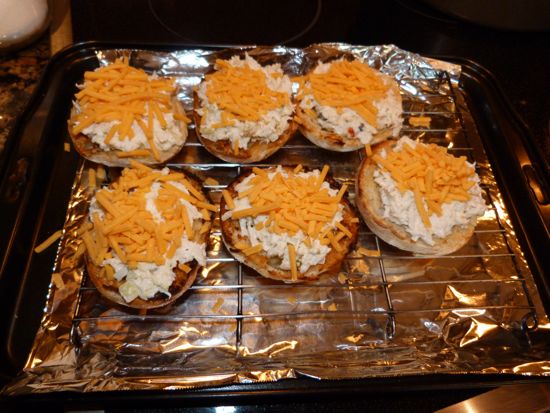

Now, they are ready to eat!

I think I had better go eat dinner . . . . I’m HUNGRY!
Good For You! Nuts!
From today’s Bottom Line Daily Health News:
If you’ve relegated nuts to the “occasional snack” category, it’s time to get more creative. Substitute nuts for some or all of the meat in a stir-fry entrée… sprinkle sliced or chopped nuts over vegetables, rice, soup or cereal… add ground nuts to a smoothie or yogurt… dress salads with nut oils… spread nut butter on celery sticks or apple slices. Why am I pushing nuts? Because from all corners of the nutrition world, I am hearing from wellness professionals who are amazed by nuts’ health benefits. Recent research shows that eating a moderate amount of nuts on a regular basis may help…
Control weight. According to Richard D. Mattes, PhD, MPH, RD, a professor of foods and nutrition at Purdue University who has done extensive research on the topic, nut consumption increases your resting energy expenditure, which means that you burn more calories just sitting still than you otherwise would. Also, about 5% to 15% of the calories in nuts are excreted without being absorbed. And nuts’ unique combination of protein, fiber, fatty acids and other characteristics quells hunger quickly and for prolonged periods.
Prevent heart disease. Most of the fats in nuts are heart-healthy monounsaturated fats and omega-3 fatty acids that help lower LDL (bad) cholesterol and triglycerides… increase HDL (good) cholesterol… and prevent abnormal heart rhythms. Nuts also contain vitamin E, which inhibits arterial plaque buildup… and L-arginine, an amino acid that makes arteries more flexible and less vulnerable to clots.
Fight inflammation. The soluble fiber in nuts appears to increase production of the anti-inflammatory protein interleukin-4. Antioxidant vitamin E also eases inflammation.
Reduce diabetes risk. A Harvard study found that women who ate five or more ounces of nuts weekly were almost 30% less likely to get type 2 diabetes than women who rarely or never ate nuts. Also: Spanish researchers found that nuts were even more effective than olive oil in combating metabolic syndrome, a condition that puts you at risk for diabetes and heart disease.
Combat cancer. Some nuts (including Brazil nuts and walnuts) are high in selenium, a mineral associated with a decreased risk for colorectal, skin and lung cancers. In animal studies, walnuts appeared to inhibit breast tumors — perhaps due to their disease-fighting omega-3s and antioxidants.
Support brain function. Evidence suggests that nuts’ omega-3s may ease depression and boost thinking and memory by improving neurotransmitter function. Nuts also provide folate — and low levels of this B-vitamin are linked to depression and poor cognition.
NUT TYPES TO TRY
Per ounce, nuts typically have 160 to 200 calories and 13 to 22 grams of fat. Eating 1.5 ounces of nuts per day (a small handful) is enough to provide health-promoting benefits. Nuts naturally contain only a trace of sodium, so they won’t wreak havoc with blood pressure, especially if you choose brands with no added salt.
“All types of nuts are good for you, so there’s no such thing as a ’best’ type of nut,” Dr. Mattes emphasized. Still, each type does contain a different mix of nutrients — so for the widest range of benefits, eat a variety. Below are some excellent options and the nutrients that each is especially rich in. Consider…
Almonds for bone-building calcium… and inflammation-fighting vitamin E.
Brazil nuts for cancer-fighting selenium.
Cashews for magnesium, which is linked to prevention of heart attacks and hypertension.
Hazelnuts for potassium, which helps normalize blood pressure.
Peanuts for folate, which lowers levels of the artery-damaging amino acid homocysteine.
Pecans for beta-sitosterol, a plant compound that combats cholesterol.
Pistachios for gamma-tocopherol, a form of vitamin E that may reduce lung cancer risk.
Walnuts for the heart- and brain-enhancing omega-3 alpha-linolenic acid.
Source(s):
Richard D. Mattes, PhD, MPH, RD, professor of foods and nutrition at Purdue University in West Lafayette, Indiana. He has published numerous studies on nuts and appetite.
Dinner at the Happy Pig
We were all meeting up at the Happy Pig; the mood was meat, specifically BBQ meat, and as it is a family gathering, all tastes had to be considered. Happy Pig is centrally located, great food and, a big plus with the Happy Toddler, family oriented.
Happy Toddler is so much more verbal these days, which is a joy, and gives us many moments of hilarity, but also can be a pain. He believes that “please” means he will be given what he wants when he wants it. He believes that “all done” means he is free not to eat meals when the rest of us are eating. Ah well – he isn’t quite two and has time to learn all these distinctions. Meanwhile, we have to hide our laughter when he exerts his will so unselfconsciously.
What we loved are the Christmas lights:
This is the angel on the top of the Happy Pig Christmas Tree

Outside lights – Christmas gifts

This is a giraffe

This is a hippo – have you ever seen a hippopotamus in Christmas lights before?

Another Happy Pig pig

A Happy Pig Polar Bear

We are having a particularly good Christmas this year; AdventureMan and I are on the same continent, in the same country, in the same time zone, in the same city, and thanks be to God, in the same house celebrating Christmas. We are so thankful. We are so thankful to be near our son and his wife, and our amazing and darling little Happy Toddler.
He loves the train gifts he got, but, again, this is where almost-two can be hilarious – he got a table and chairs he loves. What he loves is to move those chairs all over the house and to line them up in different ways, often as – a train, LOL. He is so serious, as he is creating, and so focused. You can almost catch a glimpse of him as the adult he will one day be.
Cioppino at Franco’s in Pensacola
I didn’t even know this restaurant existed until I went for a group meeting there a while back. It has the feeling of having been a long-time favorite for many Pensacolians, so when we ordered the Cioppino, we were astonished at how good it tasted.
Often, in restaurants, we will hear someone ask the waiter “Is it spicy?” The waiter will reply something like “There is a little bit of horseradish in the cocktail sauce, but you don’t have to use it.” And, of course, there is a bottle of hot sauce on every table, down here, ubiquitous as salt.
We both has the Cioppino; it was delicious. It had bite! As we washed our hands, we could hear loud chatter – in Italian – coming from the kitchen, always a good sign in an Italian restaurant.


Service is friendly, knowledgeable and efficient.


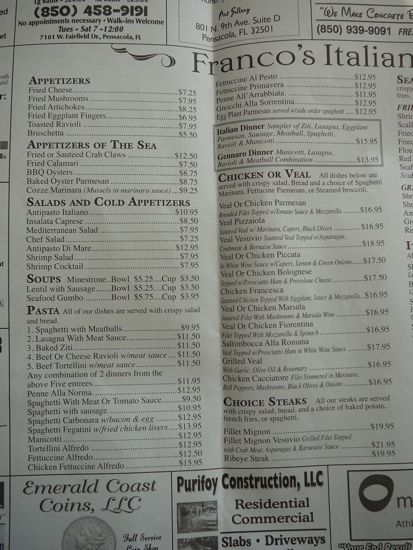

We look forward to going back, but we wonder if we will ever be able to order anything but the Cioppino – you know how you look over everything and then say “oh, I know it all looks so good, but I LOVE their Cioppino!”
Boss Oyster in Apalachicola
Many years ago, Boss Oyster was our favorite place to go in Apalachicola. One time we went there and just ate oysters. Oyster stew, a whole variety of raw and steamed oysters, then some fried oysters. That was lunch. When dinner came, we didn’t even want any dinner, oysters are so rich.
This time, we didn’t pig out. 🙂 And we still love Boss Oyster 🙂

I don’t know any word to describe it but funky. It isn’t all modern and it is not pristine. It’s funky. It has character. It has charm. Some people would hate it, some would turn up their noses at it. Not us. We love Boss Oyster.
This is our table:

And here is what I ordered this time: Gouda Gouda Oysters. Oh Yummm.

I barely remembered to take a picture of the oysters. I totally forgot to photograph anything else. Sorry! We just got carried away having a good time!
Recent Comments
ExpatAlien on What Country am I Living … intlxpatr on Yellowstone: Old Faithful to C… Michelle on Yellowstone: Old Faithful to C… Cathy on No Grown-Ups in Charge intlxpatr on Waiting for Snow Wikipedia Donate Button

Amazina


Early Voting in Florida


 Here There and Everywhere