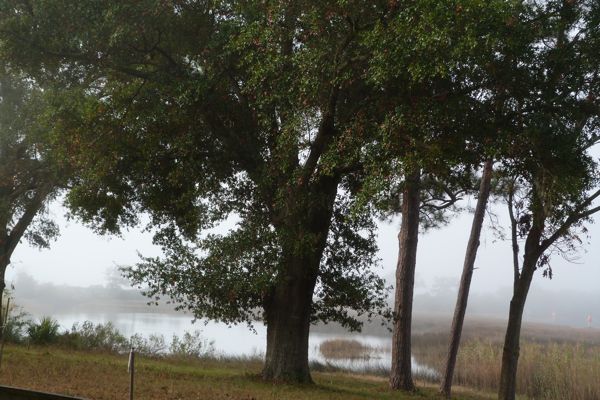
Tant de Brouillard – Foggy Morn in Pensacola
I learned a new word today, le brouillard, from a blogger who liked my Pensacola parade post. I always take a look to see, and this time, it was like taking a brief vacation to a place I love – the villages of France, and the morning market, or marche. His blog is My French Heaven, and he writes in French and English, good exercise for those of us who need to polish up our language skills. Warning: the photos on his blog are EXPLICIT. You will want to eat those oysters, vegetables and sweets right off the page.
He was waiting, this morning, for ‘le brouillard se dissipe’ and I smiled because on my way home from the early service this morning, I had to stop and take some photos of foggy Pensacola and the foggy bayou:

If, in the midst of this crazy time of the year, you can give yourself a small gift and a short virtual vacation, take a moment to have a cup of green tea and visit my friend Stephane at My French Heaven.
Hemingway and A Movable Feast

After reading The Paris Wife, I had to read Hemingway’s A Movable Feast. I wanted to see how he saw his Paris years, and how his version integrated with the fiction version of Hadley’s. I was prepared to not like the book.
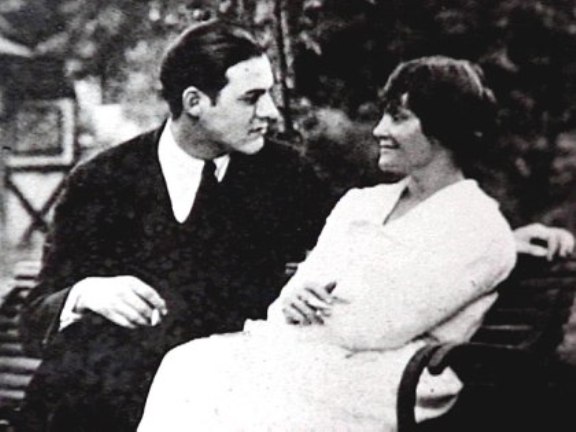
I was not prepared to like it as much as I did. Hemingway writes of the years when he was young, newly married and wildly happy, living a stimulating and lively life with lively friends. They were poor, but he was following his dream. They had a lot of fun.
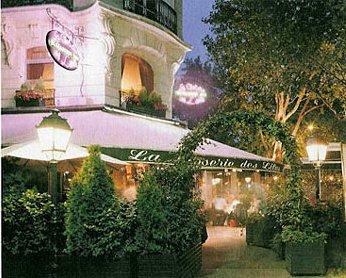
Hemingway wrote this book, full of stories of their Paris life, full of names you know – Ezra Pound, Scott and Zelda Fitzgerald, Picasso, Closerie des Lilas, Les Deux Magots, Brasserie Lipp, the Louvre . . . and as you read it, you are there. He writes in the moment; you are right there experiencing it along with him. He writes of people he likes, and people he doesn’t like. He writes about his own vices – an addiction to horse racing, for example – and he writes with enormous sadness about how he came to be distracted from his marriage and lost the most wonderful relationship that ever happened to him. He blames it on the careless rich. He takes some responsibility.
He also writes very frankly and openly about people he doesn’t like and why. I couldn’t help but think it is a heady thing, being an acclaimed author, where you can take revenge by putting people you dislike in your books. Hemingway uses real names and real people and often portrays them in a distinctly unflattering light. It made me wonder if he was planning to commit suicide all along; that or he just didn’t care what people think, and it seems he might have been the kind just not to care.
Just after finishing this book, and talking one last time with his first wife, Hadly, Hemingway committed suicide. It leaves me wondering if he was driven to suicide by regret, or by fears that his bigger-than-life life of adventure, travel, high life and travel was over, or if he had serious bouts of depression all his life, and this was just another, deeper depression?
It is a great read, especially paired with Paula McLain’s book, The Paris Wife. I thought it might be “he said – she said,” but Hemingway and the fictional Hadley in The Paris Wife both agree that they had a love and marriage that was very special, that Paris was a wonderful stimulating, alive environment, and that it was a great tragedy when the marriage ended. A Movable Feast seems to say that destroying his marriage to Hadley was one of a cocktail of self-destructive behaviors over which he tried to ride herd (gambling on the horse races, drinking, drugs, a coterie of star-struck sex partners outside of marriage, inability to focus on his work, a curmudgeonly nature . . .)

It’s also an easy read. I particularly enjoyed reading it on the iPad because you can do that swirly-finger-thing and find out what words mean or see the street locations as he walks Paris, see whether a cafe or restaurant in Paris still exist. It would be a good airline read – keeps your attention and finishes quickly.
As little as I like Woody Allen, it was fun to see Midnight in Paris, and to have some visuals of this go-go inter-war era.
Two things that stuck out for me: Hemingway loved walking in Paris, as do I. He also talks here and there about the benefits of being hungry. There were times when money was tight; they wore old shabby clothes, and there were times they didn’t have much food. He talks about hunger sharpening your other senses. On the other hand, very quickly when he has money, he has a great meal and a drink – or two – or three.
Bottom line, I’m glad I read this book. It’s given me a lot to think about.
PATRICIA WELLS AT HOME IN PROVENCE: Recipes Inspired By Her Farmhouse In France
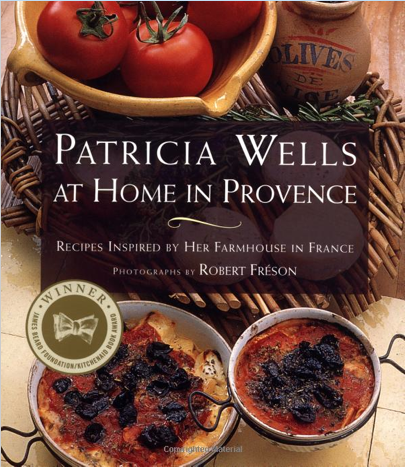
Ahhhhh. . . . . this is a gift for Father’s Day to AdventureMan, a gift that just keeps on giving.
The first night, he read it in bed, enthusiastically reading aloud ingredients for various recipes; they all sounded so delicious we were HUNGRY! Today we headed for the grocery store to find the crucial ingredients, which, because this book is very homey, are not hard to find. AdventureMan is making a pasta with sweet red peppers, and tonight, because we trust Patricia Wells, he is even going to add the Parmesan cheese which he sometimes hates. He has discovered that if it is really really good Parmesan cheese, it’s not so bad. (I don’t think he will ever like the stinky, salty Pecorino that I adore.)
I can hear him whistling in the kitchen as he prepares the onions and red peppers. My tummy is grumbling; I know this is going to be good!
We are Patricia Wells addicts. When we lived our many years in Germany, we had her books The Food Lovers Guide to France, and the Food Lovers Guide to Paris, and they were our major resources to go see things we might never otherwise have even known. She introduced us to Monsieur Fallot’s magnificent moutardes, and to La Duree’s hot chocolate and macaroons. We found kitchen shops and bakeries and charcuteries, and while she often led us into temptation, she never led us astray.
The recipes in this book are doable. She requires GOOD olive oil and fresh ingredients, we can do that. There is nothing very complicated or difficult – it’s home cooking, as only the French can do it. God bless you, Patricia Wells. 🙂
And now . . . to dinner 🙂
The 700 Years Tour at Mesa Verde
Early early in the morning we are up and ready to grab a bite of breakfast at the Far View Lodge and to take the 700 years tour. When we called for reservations at the Far View Lodge, the desk clerk asked if we would like to sign up for the 700 Years of Culture tour, and since Sparkle had told us that the tours fill up early, we signed up.
The light in Mesa Verde is beautiful at eight in the morning, and we were shocked when thirty-something people around our age (I guess we are all out exploring America!) got on the bus. Somehow, for $45, I had thought it would be a tour of five to seven people. I didn’t think so many people would pay so much for a tour!
The guide, Dave, and the bus driver, Leiter, were both local men, living in Cortez, men who double as guides a couple days a week to liven up their retirement. Dave’s depth of knowledge and investigative spirit was impressive; clearly he has a passion for the Ancestral Puebloans, and reads everything he can get his hands on. He has read all the latest studies and speculation, and as a farming man, he had some of his own down-to-earth speculations which he shared with us. It was all good stuff.
First, we went to look at early pit dwellings:
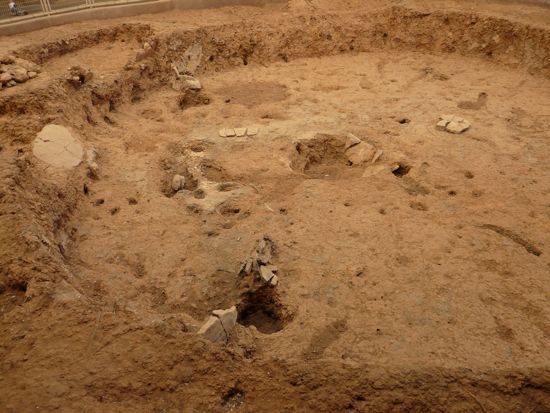
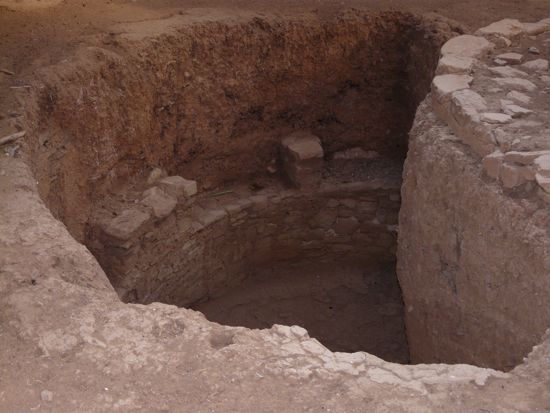
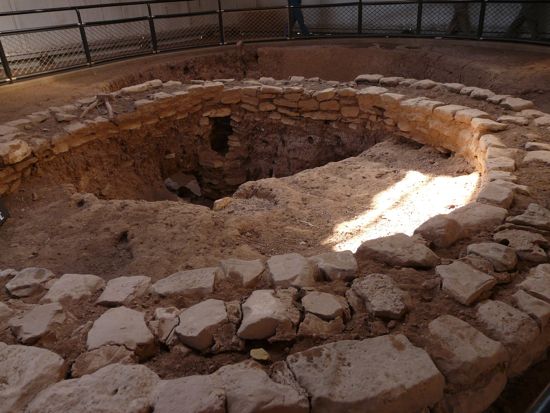
And then we headed off to visit some of the more and less famous cliff dwellings:

Does this remind you of anything? (Hint: see previous post)

Look at the terrain – so similar to other places where similar dwellings have evolved . . . (Hint Hint: Les Eyzies de Tayak) There are cliff dwellings in almost every conceivable concavity.
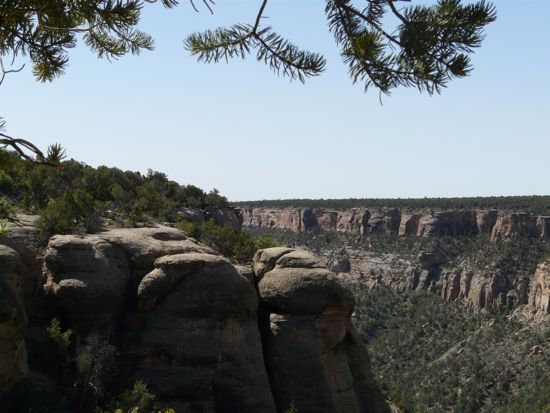
From pit dwellings to small family dwellings, to multiple family dwellings, small villages . . .
This is the Cliff Palace, a multiple family dwelling:



And then, the old legend goes, they just disappeared . . . or did they? Dave, the guide, tells us that the Apaches and Navajos won’t come any where near the Mesa, that the mesa is full of old spirits, not their spirits. The Hopi, however, a little further South, have no fear; the customs and dwellings of the Ancient Puebloans are familiar to them.
It’s kind of like conspiracy theories. We all love a good scary story.
“And then, they all just disappeared!”
But Dave thinks they didn’t disappear, that maybe they just moved on. Maybe too many years of drought, or maybe the soil they were farming gave out. Maybe they heard life was easier a few miles down the road and just picked up and moved a little on down the road . . . which seems to me to be a more logical, if less romantic, possibility.
Anyway, one of the things I really liked was that these ancient peoples, whoever they were, built their dwellings in locations and styles similar to the pre-France people of . . .umm . . . err. . . France.
I need to add a footnote here. This doesn’t happen to everybody, but it happened to me. Once I got to Grand Canyon, activities that I normally do without batting an eye began to be harder. I am a walker and a hiker, but any time I had to hike uphill in the Grand Canyon, I was huffing and puffing like a geezer. “Oh no! Oh no!” I was thinking to myself, “I must have some terrible respiratory condition! I’m suddenly getting old!”
Not so. As it turns out, I am just sensitive to high altitude. I should have known. I drove through Colorado once, and my eyes turned bright red, tiny little capillaries in my eyes burst.
At 8000 feet, in Mesa Verde, I could function, but sometimes found myself huffing and puffing. As soon as we descended a couple thousand feet, I was fine. Leiter, the bus driver, told me that many athletic teams train at high altitude so that when they perform, at a lower altitude, they will exceed themselves. It is such a relief to be able to move fast now, and not puff. I always took it for granted before. Not now.
Petroglyphs in the Petrified Forest
So here we segue back to the Petrified Forest, and it may not seem logical in a linear, chronological sense, like time-as-pearls-strung-together-on-a-string sort of thing, but in terms of like things, the next chronological entry is going to be on 700 years of culture, the Ancestral Puebloans who used to be called the Anasazi, but before I go there, I want to show you some petroglyphs.
(I’m putting in a lot of links in case you are as big a petroglyph nerd as I am, and want to read more)
I always imagine the problems with being early man. Imagine they are smart, and spend a lot of their days figuring things out, most important being 1. What are we going to eat? 2. How are we going to keep dry/warm? 3. How do we protect ourselves from our enemies? They have the same problems we have, only on a much more basic level, and with fewer resources.
Have you ever thought about how easy it is to get information now? (The hard part being sifting through so you get the most reliable, most relevant information). Imagine a world where you have to figure it out for yourself, every day.
Early civilizations fascinate me. I am always interested in little tiny things that can be very important, like how did they fasten skins together to keep themselves warm? How do you poke a hole in a sharp bone so you can use it as a needle? How do you make a button, or make strips that can be used to tie clothing together?
How do you fasten a spear head onto a spear, or an arrowhead onto an arrow?
Early man was a problem solver, and I am fascinated by petroglyphs, which are either early attempts at documentation, or early attempts at communication, or maybe both? The first petroglyphs and cave paintings I ever visited were the Font de Gaume Caves near Les Eyzies-de-Tayac-Sireuil, and they took my breath away. I didn’t even hesitate because it was a cave, I wanted to see them so badly.
I want you to look at this photo of a fairly early dwelling in Les Eyzies de Tayac-Sireuil and hold it in your mind before we move on:

Later, living in Saudi Arabia, one of the most fun day trips ever was to a rock formation called Graffiti Rock, which had no protection, so very old petroglyphs mingled with modern carvings, but some of the older carvings were so interesting, so intriguing.
Coming across petroglyphs in the Petrified Forest was a delight.
Here is part of what the national parks website has to say about petroglyphs found in the Petrified Forest:
In 1977 a spiral petroglyph at Chaco Canyon National Monument was discovered which displayed a precise interaction with sunlight at the time of summer solstice by means of a narrow shaft of sunlight that moved down a shadowed rock face to bisect the center of a large spiral petroglyph. Subsequent observations found that on winter solstice and equinoxes there were intriguing interactions of sunlit shafts with the large spiral and a smaller spiral nearby. No other example of a sunlight interaction with prehistoric or historic petroglyphs was known at this time. However, there was a tradition of Pueblo sun watching in historic times, particularly of the varying sunrise and sunset positions throughout the year, to set the dates for ceremonies.
As a result of the Chaco Canyon find, Bob Preston initiated a research project to determine whether other petroglyph sites in the Southwest functioned as solar “observatories.” Over the last 16 years he has identified about 120 examples of similar solstice events at more than 50 petroglyph sites in Arizona, New Mexico and southern Utah. Evidence indicates that the phenomenon may have been spread over as much as a 1000-km region. These findings show clearly that certain petroglyphs were used by early pueblo cultures to function as calendrical markers for the winter and summer solstices. Petrified Forest National Park contains the greatest known concentration of solar calendars, with 16 of the sites being in or immediately adjacent to the park, and has been key to understanding their nature.
Shadows and sunlit images are found to move across petroglyphs due to other rocks being in the path of the sun’s rays. As the sun’s path across the sky changes throughout the year, the positions of the shadows and sunlit images change on the petroglyph panels. In many cases the petroglyphs have been placed on the rock faces in just the right position so that specific interactions occur on the solstices. The most common types of petroglyphs on which solsitial interactions have been identified are spirals and circles. The key to determining that these were intended and not by chance is that interactions are seen from site to site, and occur on the solstices more frequently than on other days of the year. These consistent interactions may involve a point of sunlight or shadow piercing the center or tracing the edge of a spiral or circular petroglyph; or shadow lines may suddenly appear or disappear at the center or edges of the petroglyph; or they may move up to the center or edge and then retreat. It is not uncommon for a single petroglyph to display multiple interactions of this type, either on the same solstice or on each of the solstices. In fact, at one site, there are five circular and spiral petroglyphs that show 15 interactions on the both solstices.
An intriguing question is whether types of petroglyph images were involved with specific dates. In several cases similar sunlight and shadow interactions occur on spiral and circular petroglyphs on the equinox, and distinctive interactions occur with other petroglyphs on the solstices and other dates. Clearly much of the puzzle remains to be unraveled.
There was a WEALTH of petroglyphs. I’m just going to show you a few of those we found:
This one makes me laugh; it looks so much like our modern day stork-who-brings-babies (LOL, where did that legend/story start anyway??)

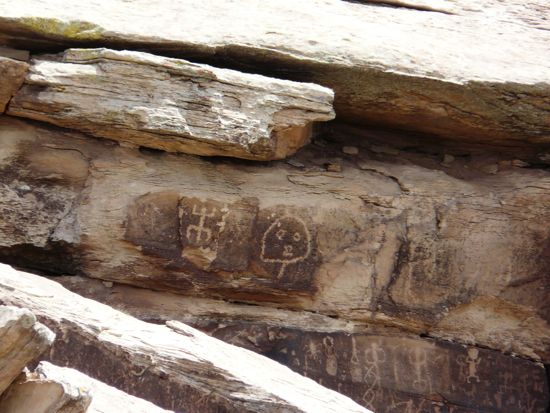
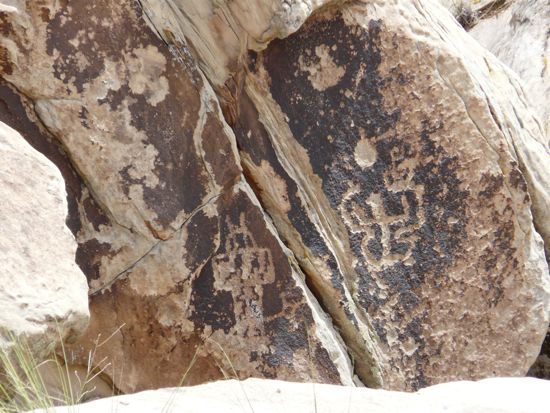

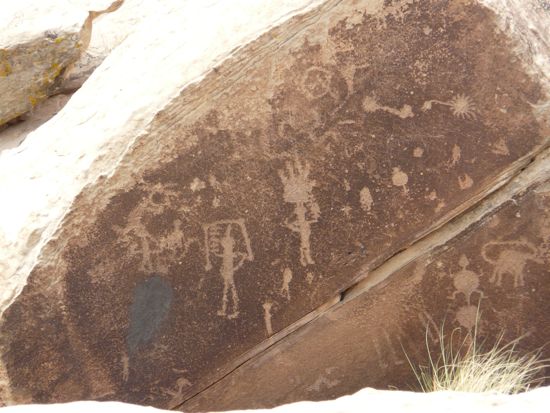
LOL, these feet are larger than life, or else they were made by giants!


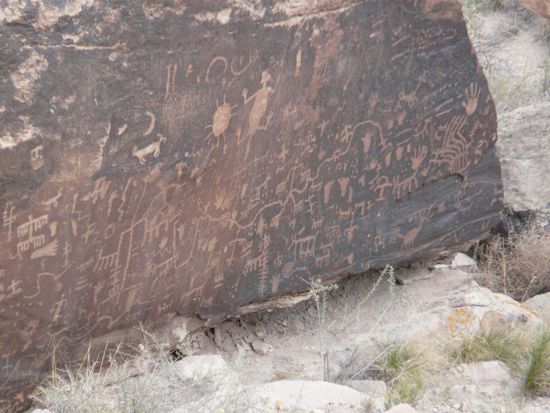
Early people in widely separated parts of the world carved and painted on rock, probably for a number of reasons, maybe keeping track of solar activity and seasons, maybe magical/religious thinking for a good hunt or nostalgia for a good hunt, maybe just someone who, like today’s blogger, just has to document in some way . . . 😉
My Life in France by Julia Child with Alex Prud’homme
I wish I had more self-discipline, and read more heavy weight books, but what I find is that when I read heavy non-fiction these days, it falls over when I fall asleep. Mostly, I read the New Yorker, or catch up with my news online, while listening to NPR.

I don’t know how I got My Life in France, if I ordered it or if I bought it in B&N. I’ve had it for a while. We’ve always loved Julia Child; her programs were a hoot, and she was an accomplished woman who never took herself too seriously. I will never forget one time I saw her on a Martha Stewart Christmas Special; they were doing a tall Croquembouche, and at one point, Julia was not throwing on the caramelized sugar strings the way Martha wanted her to and she grabbed the little thrower-thing out of Julia’s hand to show her how. I gasped! That is like grabbing a spoon from the Queen of England, no! No! You can’t grab a spoon from Julia Childs! You can’t show Julia Childs how to do it, Martha, you BOW to Julia Childs!
Julia Childs, classy woman that she was, just watched Martha with fascination and never showed an ounce of annoyance.
The book is hilarious. While alive, she worked with her grandson, Alex Prud-homme, gathering correspondence – she was a copious letter writer, and people in those days kept their snail mail to refer back to, the way we keep e-mails. They sat in her sunny garden, and he would ask her a few questions, and off she would go, regaling him with stories of people, places, occasions, parties, and especially FOODS.
Julia Childs worked for the OSS in World War II, the forerunner to the CIA. Stationed in India, she met her husband, and after the war ended, they married. Stifled in her California life, and and Paul jumped at a chance to live overseas. Imagine – Paris! She had to adapt to a totally different way of life, totally different living space, a totally different way of shopping for food, and she had to learn to cook. Since she was in Paris, and because she is the woman she is, she signed up for cooking classes at the Cordon Bleu, where she worked hard to master the techniques to successfully produce the sauces and delicate flavors which makes French cuisine so delicious.
She also moves to Marseilles, to post-war Germany, and to Norway, and manages to produce two books, each of which took, literally, years to finalize, because of her attention to detail, and wanting to make sure that women using her books could understand exactly what to do, and when to do it.
This is a really fun book. I would have loved to know this adventurous, courageous woman, who meticulously tested every recipe for Mastering the Art of French Cooking and changed the lives of serious cooks in America. No, I have never cooked from her book. No, I don’t have her book. I have a Larousse Gastronomique, from which she worked to get the ‘true’ Frenchness of French cooking, but I don’t have any cook books by Julia. I have put out a hint, though, and I am hoping to get one for Christmas. 🙂 Not just for me – AdventureMan is making serious inroads into adventurous cooking. He has mastered blackened fish tacos, and seared tuna, woo hoooo! He is working on the ultimate cornbread. Just wait until I get him started on the quintessential French Onion Soup, or even – maybe – French bread!
Lunch in Paris (A Love Story With Recipes) by Elizabeth Bond
I just finished this book, and I need to review it so that I can pass it along to my daughter-in-law, who sees France, as I do, through eyes of love. Americans either love France or hate it, for some reason France evokes strong emotions one way or the other.

This author is a New Yorker, and her experiences are not my experiences, because her culture is not my culture. New York is a culture all its own. On the other hand, her experiences as an expat are universal, and her insecurity with the language, the culture and the customs are magnified by her commitment to marrying a French man and living in France for the rest of her life.
For the record, I really loved this book.
Can you read a recipe and have a pretty good idea what it is going to look like and how it will taste? In my family, we read cook books for fun. The recipes Elizabeth Bond has included are great recipes, a great start on French cooking the simple and fresh way. Even someone who has never cooked French food can make most of the dishes she creates in this book. In my very favorite chapter, A New Year’s Feast, there are several recipes for North African dishes I have eaten and loved – and oh, I am eager to try these! Chicken Tajine with Two Kinds of Lemon! Tajine with Meatballs and Spiced Apricots! Oh, YUMMMM!
In one part of the book, the author talks about some very basic differences between how Americans approach life and how the French view life:
I watched the couples walking around the lake. “Maybe it’s the New Yorker in me. I’m too used to rushing around. But everyone here is so relaxed, it’s like they’re moving in slow motion.”
“Why should they rush? They’re not going to get anywhere.”
Sometimes I really have no idea what he is taling about.
“You will never understand. You come from a place where everything is possible.” We lay side by side on the grass, our eyes half closed.
“It’s Henry Miller that said, ‘In America, every man is potentially a president. Here, every man is potentially a zero.’ ”
And then he told me a story.
“When I was sixteen it was time to decide what kind of studies I would pursue. I was the best in the class in Math and Physics, but also the best in Literature. I went to the school library and the woman behind the desk gave me a book. It was called All the Jobs in the World. I looked through it. I found two things I liked: scientific researcher and film director. I brought the book to the front and showed her my choices. ‘Ah non,’ she said, ‘You forgot to look at the key.’ And she pointed to the top of the page. Next to each job were the dollar signs – three dollar signs if the job paid a lot of money, one dollar sign if it paid very little. Next to the dollar sign was a door. If the door was wide open it was very easy to tet this job, if the door was open just a little bit, it was very hard. ‘Regard,‘ she said, ‘You have picked only jobs with no dollar signs and a closed door. Tu n’y arriveras jamais. You will never get there.”
‘You should become an engineer,’ she said. My parents never met anyone who did these other things. We don’t come from that world. They had no friends they could call to get me a job. They were afraid I would fail and they couldn’t help me. They were afraid I would have no place in the society. And I didn’t have the force to do it myself. I didn’t want to disappoint them. So I became an engineer.”
“It’s just like that here. If you want to do something different, if you head sticks up just a little, they cut it off. It’s been like that since the Revolution. You know the saying, Liberte,’ Egalite,’ Fraternite,’ equality is right in the middle. Everyone has got to be the same.
Of all the stories Gwendal has told me, before or since, this one shocked me the most. Never in my life, not once, had anyone ever told me there was something I couldn’t do, couldn’t be.
Have you ever known an expat wife (a woman who has married a man of another culture and lived in his country)? Expat wives are some of the bravest women I have ever met. No matter how long you have been married to a man of another culture, you can still be surprised.
The expat wives I have known have been smart, gifted people, woman who have been blessed to see the world through the eyes of more than one culture, and it changes everything. Their children are amazing – most will speak – and think – in more than one language. They have a sort of international fluidity, as well as intercultural fluency. It isn’t everyone’s choice, but those who chose it often live lives you and I can only begin to imagine. Elizabeth Bond has opened the door a little, and shared some of those experiences with us.
The book I bought has Reader’s Groups questions in the back, and they are good questions. Read the questions first; it gives you food for thought as you read through her experiences.
Shopping Styles: Predatory, Social or Desperation?
As AdventureMan once said, I am not entirely sure I agree with what I am about to say. Feel free to jump in.
Today I was mopping the floors, washing the floors and vacuuming the carpets. This is not – way not – something I like to do, but something I do because long ago somewhere in my tiny little brain, a seed was planted that a dirty floor was a shameful thing. I remember once thinking “people could eat off my floor; there must be a whole meal here!” when I left it unwashed for a few days. In my last three incarnations, in Kuwait and in Qatar, I was blessed with wonderful women who came in and took care of my floors for me, also the dusting, and the laundry, and the windows, and all the things I now do. It takes a surprising chunk of time out of my day. 😦
Oh! Yes. The shopping.
I just wanted you to know that I am not cleaning my house willingly or joyfully, but dutifully. I have discovered, however, that mindless physical activity frees the mind, and you never know where a free mind will go.
I have a friend coming to visit, and this friend and I have had so much fun together, through the years, exchanging books, going out on double dates with our husbands to wonderful places in France and Germany, and . . . shopping.
Finding a person who shops the way you do is a real blessing. I say I am not much of a shopper, but we all have to shop sometimes. Mostly, I shop alone, I am a predator. I am looking for specific game, and I want the juiciest prey at the best price. Most of my friends are like me – we don’t hunt in packs, because when you shop in packs a group mentality surfaces, and you get home with things you never would have bought.
I do shop with other solitary predators from time to time; this is how you know them. You don’t shop together. You shop the same stores, sometimes just the same mall, meeting up to compare items and to go on to the next stop. Most of my predatory shoppers friends know their own style, know their own preferences, and few ask me what I think, nor do I ask them. We do exclaim gleefully over our purchases.
In the military, in Germay, there would be shopping tours to take you to places. Sometimes I took them, most times I didn’t. It depended on whether or not you had to stay together. I saw people buy some truly appalling things because it had a particular name or a particularly low price. The fact that it was obviously inferior did not even seem to strike their consciousness, once the herd shopping mentality kicked in. If the tour were going to a village, and people were on their own and then met up, I would do that. I went to Paris on such a trip; leaving
Germany at midnight, leaving the tour at six in the morning for croissants and coffee at La Duree at its original location on Rue Royale arranging to meet up with them later.
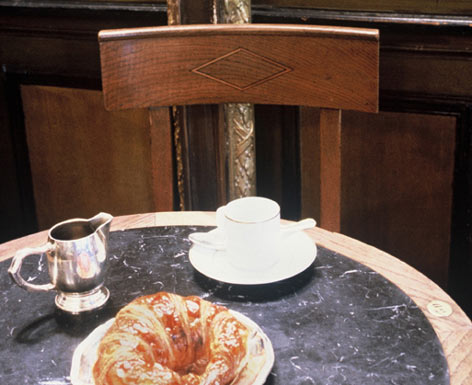
The Musee D’Orsay had just opened, and I was dying to see the exhibit. I spent the morning there, leaving as the hoardes started arriving, had a little lunch of Vietnamese salad rolls on the Left Bank, and strolled over the bridge to the shopping areas around Rue Royale. I found three great outfits at Galleries Lafayette, grabbed a salad from their gorgeous food court, and met up with my group at six to depart. I was home by midnight. 🙂 I would have liked a friend, but I didn’t know anyone, once again I was new, and Paris is so easy that just 12 hours there was a piece of cake.
Social shoppers find us solitary predators very strange. They live in a different world than we do. They consult. Their shopping goals are not so much the goods as the experience. They enjoy the company, and they like having someone to help them make their purchasing decisions. They often meet up for shopping and lunch, and some even shop to kill time. (What luxury! In my whole life, I have never had time to kill; I always have projects, and lists of things that need doing!)
I have been one other kind of shopper, though, and that is a desperation shopper. It was when I was a young mother. Shopping was for survival. I never knew when the baby would start to cry, need to be nursed, or need a change. When I had a babysitter, I was always aware of how little time I had and how much I had to get done. Once a month, I would go to the commissary, about twenty miles away, to buy a month’s worth of diapers, meat (we ate more meat then), canned goods and paper goods.
I see the same desperation in the elderly here in Florida; shopping takes energy and you never know when your energy will desert you. As you can see, I am still thinking about my experience at the Navy Commissary, and I now I can empathize. I might be grumpy and aggressive, too, when I reach a stage where I remember having energy, and now I don’t know where it has gone. I may even scowl at cheerful, energetic people because I wish I still were . . .
We’re all wired so differently. There may be some shopping styles to which I am oblivious. Can you think of any?
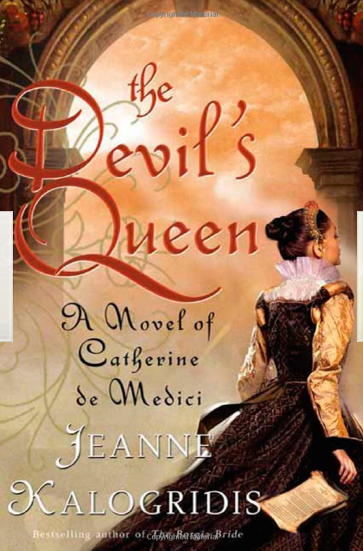
The Devil’s Queen by Jeanne Kalogridis
“I need an ESCAPE!” I shouted to AdventureMan, at the end of my rope. So many things going on in my life that are out of my control, I just don’t want to deal with it any more, and I just want to run away and hide. “I’m going out to buy a BOOK!”
I found just the book, The Devil’s Queen by Jeanne Kalogridis.
I don’t know much about the late 1500’s in Europe, do you? At first, reading about this rich, spoiled little girl growing up in Florence, I felt a little impatient with her. All around her people are starving, and she hasn’t a clue. The plague strikes, and people are dying, but she survives. She starves, she suffers cold and fleas and is tossed by fate like a little cork on the water – all before she is 12 years old. Catherine de Medici learns early in life that she has no control over the forces of history and society swirling around her, over who she will love and who she will marry, even over whether she lives or dies. Surviving an attack on her family compound, held prisoner – alone – in nunneries until she is 12 years old – this girl’s life makes mine look peaceable!
I’m feeling better already.
Kalogridis is no Phillipa Gregory, but she has done her research, and draws us in. By the time Pope Clement betrothes Catherine to Henri of France, we are totally hooked. Thirteen years old, and off to live in a strange country as the bride of a man she has never met. She studies French as quickly as possible, but then again – this is a very bright young woman, who has been trained – by life and by education – to survive.
One of the paragraphs made me laugh out loud – as Catherine enters France, she is aware that her very fashionable Italian clothing is very unfashionable in France. She also notes that all the French women are painfully thin, thin to the point of gauntness, and are whispering behind their hands at her more normal size.
Lack of thinness is the least of her problems. She marries Henri, who is also 14, scared, and not in love with her, and they are expected to consummate their marriage under the eye of the King. Oh aargh! Catherine is on a steep learning curve, mastering French culture, diplomacy, the art of war, court politics and fighting the threat of repudiation the only way she can – with utter humility.
What I like the most about this book is that I feel like I was there with her. She is very human, and also very royal. People who are royal have different ideas than the rest of us, and are entitled in ways we can never imagine. They have obligations we can’t imagine. She makes choices I would never make, and yet the author convinced me that given her circumstances, she does the best she can with the resources at hand.
I also like it that Catherine of Medici was a brilliant and educated woman who held her own in a world where the balance was definitely in favor of being a man, and women were greatly at a disadvantage. While she made some horrifying choices, she had her reasons. This is not a book for the faint hearted; it is very earthy and it feels like an accurate portrayal of the times.
As I read these books, I think, too, how little we appreciate how free women are these days, and how recent that freedom is. Being able to choose our own mates – this is very recent. Being able to inherit and to manage our own money – this is very recent. As I talk with my friends who live in the Arabian Gulf, where marriages can still be based on family alliances, maintaining wealth and power, and where divorce can still equal personal disaster, it no longer seems so alien to me – we have this in our own history. We used to marry by contract, and our husbands had full use of our wealth. We used to be judged by whether we could bear children, how many, how many were sons, and how well we managed our households. We used to die in childbirth, and many of our children didn’t survive their infancy.
If you are looking for a good escape, this is a book that will take you there. It will make your own troubles look small in comparison. This book will keep you engrossed, horrified, and entertained, and, in the end, you might learn something, as I did.
You can find The Devil’s Queen at Amazon.com for a mere $10.40 plus shipping, and yes, I own stock in Amazon.com. LOL, we invest in that which we believe to lasting and important, and books play a large role in our lives. 🙂
Change of Plans
When we were planning this trip, it all sounded so simple . . . greet the grandbaby, buy a house, quick, fly to Seattle, fly back to Pensacola, kiss the grandbaby and fly to Doha to pack.
Not quite the way it turned out. When we got here, the grandbaby was 11 days overdue. We got to be here for the birth. While our son and his wife labored, we went out with the world’s most wonderful real estate lady and actually, we did find a house.
Three years ago, we found a house. When I talked with the mortgage people, I said “We just finished paying off a mortgage with you; isn’t there some kind of short-cut you could do with me?” and they did something called “fast track” with me, and it was so easy I can’t even remember the paperwork; I think I filled it out on my computer – online – and that was it. My son handled the closing. It was so easy.
Things have really changed. This will be our third mortgage with the same company, but you would think we are potential deadbeats. We have high credit scores, an impeccable payment record – I would think they would want to have us as customers! It’s like pulling teeth. Papers don’t get to us. Additional verifications are required. Appraisers actually enter the house and verify square footage.
Between chasing paper and soothing the newborn, my life has been very full. It doesn’t sound very exciting, when I tell you about it, but here is the truth – I know I am exactly where I am supposed to be right now. It’s an amazing feeling.
Today, I spent a lot of time with the baby. At some point, I realized I wasn’t going to make it to Seattle this trip, and it’s OK. I can go to Seattle later. For right now, I have enough on my plate.
I had forgotten, too, how chaotic life with a newborn can be. His needs take precedence, and sometimes we all run around trying to guess what those needs might be, simple as they are . . . clean diaper? swaddling / soothing to sleep? Mother’s milk? Today was a really good day, where he took the diaper changes with grace, dropped right off to sleep after every meal, and was keenly alert for maybe a half hour after feeding before napping. He loves patterns and fabrics. I am having SO MUCH FUN!
A part of our life is ending, the nomadic part. AdventureMan and I have had a lot of fun, once our son got through college and law school, we were on our own again, living in Europe, living in Saudi Arabia, Kuwait and Qatar – we have had a great adventure. We travelled to Botswana, Namibia, Zambia (several times), South Africa, Kenya, Tanzania and spent a wonderful week on Mnemba Island off the coast of Zanzibar. We have wonderful friends, mostly from churches and interest groups. I would think, knowing us, that we would be sad leaving all this, but instead, we are racing toward our new future, being more settled, being near our son and his family, and his wife’s great big family. 🙂
For one thing, the world has changed. With e-mail and VOIP phones and people who jump on a plane at the drop of a hat, we expect to stay in touch with those we love and treasure. We expect they will come see us. It’s kind of fun settling in a place with white sandy beaches that everyone wants to come visit. 🙂 Cooler than Kuwait and Qatar in the summer time, too! Nice warm winters, well, not this winter, brrrrrrrrrrrr!
Thought you might want to see a photo of my little darling grandson:

Recent Comments
ExpatAlien on What Country am I Living … intlxpatr on Yellowstone: Old Faithful to C… Michelle on Yellowstone: Old Faithful to C… Cathy on No Grown-Ups in Charge intlxpatr on Waiting for Snow Wikipedia Donate Button

Amazina


Early Voting in Florida


 Here There and Everywhere