Spoiler
We were having a big film fest in Pensacola, and five minutes into The Prestige my son asked me if I knew how it was going to end.
This started a long time ago. They think I am amazing. Most of the time, I get it right. Sometimes, with Law and Order, or CSI, there is a twist I hadn’t thought of. I read a lot of mysteries and . . . there is a secret.
Don’t go any further if you like NOT knowing how a show is going to end.
Here is the secret. A movie or a TV show only has a limited amount of time to tell the story. You can figure that most of the information they give you is significant. Like in Law and Order, a lot of times it’s one of the people they originally interview, even if they came off well in the interview. (Those guys have gotten more and more tricky, though, and it gets harder to figure out all the time.) Listen for something that could be a lie.
The Prestige suffered a little from it’s own arrogance. They TELL us right at the beginning what the story will be, what the twist is, and how it will be accomplished, if you are watching closely and thinking “why might this be important?”
My son had already seen it. I told him “this, this and this” and he didn’t say anything, just said I had to see if I was right. Hee Hee heee . . . I was. And he was so poker faced I didn’t know how blown away he was that I had figured it out.
You can, too.
And if you haven’t seen The Prestige, it is a very good movie. It appears to be coming to Super Movies sometime soon.
Competitive Family Values
Even within national cultures, there are family cultures. You don’t really think about it when you are a kid, you think all families are like your family. It isn’t until you get older that you understand just how unique – even quirky – your own family is.
In our family, we were bred to be competitive. We started early, with simple card games and board games. We swam on swimming teams, we competed for grades. Doing well, doing our best was expected of us.
And then, we turned around and did it to our own children!
We used to have big family reunions in a small town along the Oregon beach. We stayed in an old complex, where there were two large units that shared a deck, and then several small cabins. The very social parts of the family shared the two large units – my mom and dad, and her brother and his wife – and the rest of us had the cabins, one to each family, althought the kids roamed from cabin to cabin – our children have always had the freedom of belonging to one great tribe!
Daytimes would be full of adventures – not everyone doing the same thing, but smaller groups having dodge-boat competitions, groups going on shopping expeditions to nearby towns, hiking in the parks, having some beach time – jumping the amazingly high waves in the amazingly cold Pacific ocean.
Around 5, people would start to gather on the big deck in preparation for dinner. Dinner might come out of the kitchens, or we might order food in, but once dinner was out of the way, the BIG competitions would begin.
Every year there was a huge hearts tournament, and a Liar’s Dice tournement. The family took these very seriously, from oldest to youngest, everyone entered, everyone competed. We took it so seriously that we had trophies that would be engraved with the winner’s names and passed along from year to year. We took it so seriously that sometimes there would be injured feelings when someone lost. Everyone wanted to be the winner, and in a family full of people used to winning, feelings ran high.
Giving up needing to win all the time has been seriously hard. There are still times when I am in a situation where I feel the adrenelin start pumping and I have to stop myself and say “Do you want to win this battle or do you want to win the war?” i.e., like chess, sometimes you have to sacrifice a pawn to achieve a greater victory down the road. Do I need to win every arguement at the cost of losing a friend? Do I need to win at the cost of my community?
I also think needing to win takes its toll in one’s health – when I allow myself NOT to need to win all the time, I feel calmer, more serene, and happier. I can’t help but think that being calm, serene and happy are probably good things to be in terms of health. Competition gets your heart beating faster, pumping through the veins, but can also take it’s toll in bad eating, bad sleeping and bad exercise habits.
My parents did a good thing encouraging us to be our best, to seek personal excellence and to strive for personal achievements; I honor them for that. When it comes to winning, however, I want to stop and count the cost before I proceed full steam ahead.
What does your family value? What attributes did they encourage you to develop?
The Great American Library
Today there is an article in the news about a small library in Vermont that actually sits on the border and is used by both Americans and Canadians. The US government is considering changing that, as they think the unguarded entry to the US is being used by bad people.
Maybe. I don’t know. Post 9/11, the Department of Homeland Security can say or do just about anything in the name of National Security, limit or modify our consititutional rights, behave in ways contrary to everything we believe in, and no one seems to be able to stop them.
And that is not the point. The point is that at one time in our history, an industrialist, Andrew Carnegie, donated money to build libraries throughout the United States, Canada and even Scotland, over 2,000 libraries in all.
In almost every town in America, you will find a library, where you can borrow, free of charge, books on any subject.
When I was a little girl, where I lived was so safe that my mother would put me on the bus with my basket family library books and send me to the library, call the librarian to tell her I was coming, and I could spend hours there, and no-one had to worry about my safety. My Dad would pick me up on his way home from work, and I would have a basket of fresh books – the librarian would pick out books for my Mom.
One day, the desk person was sick, and the librarian let me sit at the desk, checking books ou to library patrons. I must have been six or seven years old, and could barely get on the high chair behind the library desk.
Here is what was so cool. I could read at a very early age, and my nine or ten had worked my way through most of the children’s section, and started choosing books from the adult section. The first time, the librarian called my Mom and asked if it was OK, and my Mom said “if she thinks she can read it, check it out to her.” My library card was annotated to inform all the desk people that I could read whatever I wanted, even from the adult section. Woooo Hoooooooo!
My husband has similar stories, growing up in his home town. He loved the library as I did, and one day, rode his bike to the library and then fell asleep there, hidden from view. The librarian closed the library and he woke up alone and very scared. These were pre mobil phones – I know, I know, it’s hard to believe. His family came looking for him and found his bike, called the librarian, who lived nearby, and she let him out.
We still love libraries. It’s an amazing thing, to be able to walk into a treasury of books, pick up a couple hundred dollars worth, and walk out with just your signature as pledge. The newest books on every subject are available, either in the library itself or through their inter-library loan system. Now, too, most of the libraries have a computer section, where you can check your e-mail or do research online – totally free.
Libraries are staffed mainly by females, I don’t know why, it seems to be seen as a female job. But what power these women have! They are the guardians of so much knowledge! Children and adults come to them and ask all kinds of questions, and they know where to look for the answers!
Isn’t learning how to access knowledge one of the true great secrets in life? So these librarians, the guardians of knowledge, are like Superman, holding the front lines against ignorance, promoting access to new ideas and new ways of doing things, combating the forces of darkness and superstition.
Librarians were a powerful force in my life, and in my husband’s. Has there been a powerful figure in your life who made a difference in how you saw the world, in choices you have made?
Creepy Leading Men
Eeeeeeewwwwww! I just half watched an Academy Award special on BBC. What caught my attention was interviews with Peter O’Toole and Clint Eastwood. Can’t remember a word they said – and both these guys did some amazing and memorable movies – but I watched in horrified fascination because they look so awful. Their faces have been lifted a time or two too often, and their faces don’t move when they talk. Clint Eastwood, in his 70’s, has no lines at all around his eyes, just this smooth white skin that makes him look like he has a mask on.
I remember seeing a movie with Michael Douglas a couple years ago, with some hot flash-in-the-pan, and he was wearing MAKE-UP. It was so bad you could SEE the make up.
It’s like Aerosmith performing in Dubai – isn’t he like 60 or 70 years old? Great that he has the energy, but isn’t it time to move on? Keith Richards looks like the portrait of Dorian Gray . . .
and then there is Robert Redford, who just let age happen, and looks natural and graceful.
Is it just me? I like the natural look on men. I think grey hair is handsome. I love those little crinkles around the eyes (on men, not on ME!! Yep, totally hypocritical.) Men with facelifts, men with bronzer, blusher, mascara and eyeliner give me the creeps.
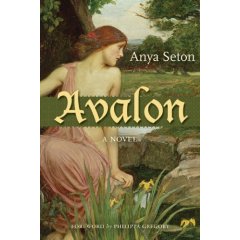
Anya Seaton and Avalon
Avalon, by Anya Seaton, is an amazing book, a book I almost didn’t read, but once I picked it up, I could hardly stop reading until I had reached the end. It took me to a whole new world.
It opens in England, around the turn of the first millenium, when people had names like Aethelred and Aelfrhryth which is enough to make me NOT want to read the book. But I read another book by Anya Seaton, Katherine, and I really liked it. It, too, took place in very early English history, and had such an authentic feel. It wasn’t like you pick up the book and all the lords and ladies are in gorgeous clothes, Seaton captures the primitive life many lived in “castles”, freezing cold most of the winter, no plumbing – many of the poorest laborers in Kuwait live better, in terms of food, a roof over their head, toilet facilities – that these early nobles. And the life of villagers was even more basic, a true scrabble for survival, and under filthy conditions, not a lot of time of opportunity for bathing, so people had quite an odor most of the time.
Avalon begins with a chance meeting of a young man and a young woman, a tragedy, and a journey. Their story, as first one love and the other doesn’t, then the other does and misses the opportunity – takes us from the southernmost part of England to Iceland, to Ireland, to Greenland and to the new world, all in the space of these two intertwined lives. They never marry, and yet the book, and their relationship, is a romance.
As you can see, once I got into the book, I couldn’t put it down until the last page. These people are so real, so genuine and so human – and Seaton makes you care about them. She manages to throw in enough detail that I could almost swear I visited these places – a thousand years ago. I have spun wool to buy necessities for our sod house in Iceland, I have embroidered tapestries in the Bower of my husband’s castle, I have sent my son off to settle with his Irish bride in the new world – yes, I think I have done.
The political situation in England at this time is chaotic, with Vikings raiding their coastal cities, and deep up the rivers into the interior, feuding over who will wear the crown, and problems with the capabilities of rulers to rule. There is a constant friction between the church and state, for land, for power, for wealth. The majority of the novel takes place during the reign of – I am not kidding – Ethelred the Unready.
At the very end, I found to my astonishment, that this book also concerned the ramifications of a big lie, just as my previous book reviewed. This is a total co-incidence, something that surprised me, and this book ends in a totally different way, as the main character comes to grips with her deception, owns up to it, willing to suffer the consequences.
Is this what I want? Merwyn thought, and at once came the answer. Yes, it is. There would be boring days ahead, but never again the depressions and miseries of before . . . She felt cleansed, peaceful, and there was much gratitude. . .
That totally cracked me up, but this is a romance of a different nature, a very real romance, with the real kinds of choices that real-life romances entail, and the real life consequences. The hand of God is a major player here, and the beliefs of the characters shape events in a way consistent with the times. Dreams are taken very seriously, and the power of curses, and sorceries, which I never give two thoughts in my daily life in the 21st century.
The main characters have their own nobility, based on their choices, their growth, and their coming to terms with their lives and situations. I learned a lot reading Avalon, and I also had a great time while learning.
All in all, a fascinating read.
The Memory Keeper’s Daughter
Rember the post Lying Hurts The Liar? In The Memory Keeper’s Daughter, the whole plot revolves around a huge lie, and the toll that protecting that lie takes on the lives of everyone it touches.
in the middle of a huge snowstorm, Dr. David Henry’s wife goes into premature labor and he is forced to deliver her in his nearby clinic because he can’t get to the hospital in the snowstorm. To his surprise, he delivers twins. The boy is fine and healthy, the baby girl clearly has Down’s Syndrome. It is the 1960’s.
He hands the baby to the nurse, and tells her to take the baby to a home for Down’s syndrome children and adults. When his wife, Norah, regains consciousness, he tells her she had twins, but that the girl was born dead.
Meanwhile, Caroline, the spinster nurse, takes the baby to the home, but when she sees the lack of caring in the “care” of the patients, she makes an instant decision to walk away. She keeps the baby. She never goes back to the clinic. She drives away and creates a new life for herself and the baby, a joyful life, the life she was waiting for.
To protect his secret, Dr. Henry maintains a distance between himself and his grieving wife. Norah never gets over the loss of her daughter, and she never gets over the change in her relationship with her husband. She knows something is not right, and no matter what she does, she can’t fix it. For a while she drinks. Later she pulls herself together, gets a job, ends up taking over the business (a travel agency) because she has thrown herself into her work.
The son, the healthy baby, grows up in a family where things are not right. His mother loves him, but is distracted by her grief. His father loves him, but is distracted by the energy it takes to protect his terrible secret. It is a family, but a family whose connections to one another are damaged by the tragic secret.
The discarded daughter, meanwhile, grows up surrounded by love and a family who makes a life out of creating opportunities for Down’s Syndrome children.
Late in the book, there is both some resolution and redemption. Things work out, but I find myself thinking of all the wasted years, years of unhappiness and loss, years of happiness sacrificed, brought about by one great big lie. When you read the book, you understand his reasons, and you know how easily, given the times, you and I might have made the same decision.
I think the doctor would have been happier had he risked telling his wife. He often wanted to. He didn’t.
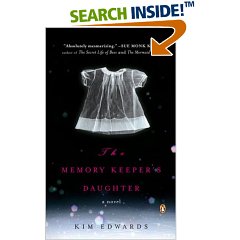
Available for $8.40 + shipping at amazon.com
Big Girl Pants
I got an email this morning from a friend who learned I have taken on a leadership challenge.
“I could never do that. . .” she said.
She gave me a good laugh. We organized a group together, starting from scratch, in a previous life, and she was one of the very first to step up to the plate, to volunteer for a job I considered burdensome, but she has done it well for over three years now.
I grew up around the military. There were always these older women around, really together women, women who organized things, women who managed, women who were leaders. They were also totally intimidating women, and behind their backs we called them the “tough old birds,” not without admiration.
The turning point came for me in my early thirties, when I saw a job that needed doing, and I knew I could do it at least as well as it was being done, and probably better. I knew I had a lot of resources available to help me do the job, just needed some organizing. I took the project, did the job, and it all worked out great. I was not yet a tough old bird, but I knew I was now playing with the big girls.
The phrase I keep coming across now is “put on your big girl panties,” some add “and deal with it.” I’ve seen it in a couple ads, and in more than a couple blogs . . . it seems to be a phrase of the day. (Google it – you’ll see what I mean.) It means dealing with an situation that needs to be handled, even if unpleasant, even if you don’t want to. It means taking responsibility. It can mean you’ve taken a hit and have to keep going. Most of all, it means you’re at a higher level of performance than before, and you need to meet a new standard. I think it’s a hoot.
(It originates in toilet training, when a toddler goes from diapers to cloth pants, called “big-boy pants/ big-girl panties” and it means literally, you are now expected not to have any accidents, but to use the facilities just as big boys and big girls do.)
The elastic on my big girl panties is giving out. I’ve been wearing them for a while now. I have probably now reached the age when women are calling me tough old bird behind my back. When did that happen?
To all my faithful friends out there, friends who have been my friends for years and tens of years (you know who you are) I am proud of you, and more thankful for you that I can express. Aren’t there days when we wish we weren’t big girls? Aren’t there days when we just want to run and hide, and not take those responsibilities? Aren’t there times when you want to say “no! I can’t do that!”? You’ve helped me through all those days.
Thanks to your love and support, putting on big-girl panties hasn’t been so bad. And we’ve had a lot of laughs along the way. Thanks for being along for the ride.
Dark, Disturbing Road
Do you remember the happy books you read? Those that are light and breezy? Those with happy-ever-after endings? Most of the time, my bet would be you don’t. You read them, and they’re gone.
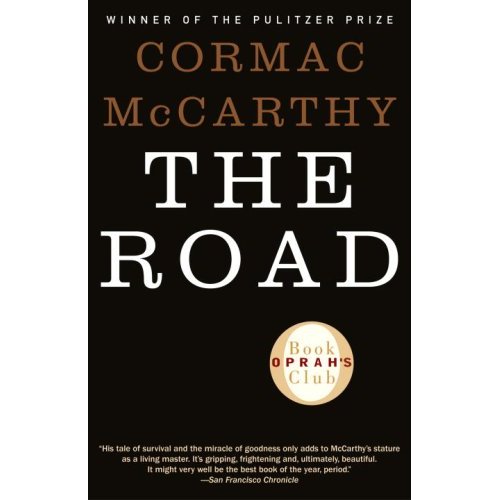
Not this book, The Road, by Cormac McCarthy. I found myself hesitating to even review this book, it is so disturbing to me. The prose is simple, even stark. The atmosphere is relentlessly bleak. The main character, whose name we never know, spends most of the book foraging and scavenging to feed himself and his starving son. The cover says it takes place in America, but it could be anywhere.
It is post-apocalyptic literature at it’s bleakest. All we know is that there were huge balls of light and then everything burned, and kept burning. It is still burning, in some places, during the time span of this novel. It rains or snows most of the time, and the rain is grey and the snow is grey. It is bone-chilling cold, and gathering wood for a fire to keep warm is a constant task.There is never a clear sunny day, only lighter or darker shades of grey. The nights are dark, no moon, no stars, just blackness.
It’s another one of those books I grabbed on the way to the airport without looking too carefully. I saw this was an Oprah Book Club choice and didn’t even read the cover. These books I just grabbed have grabbed me in return – I have read five in a row, books I have to talk over with my husband while I am reading them, they are so full of ideas I need to explore, unsettling settings, shaking to insecurity all that we take for granted.
This one, though, is seriously dark. I read until past midnight last night, adrenaline pumping through my system, as the man and his son evade marauders, thieves, and cannibals. I needed the human warmth of my husband’s body next to mine to drive away the alienation of this book. Even safe in my own bed, though, my sleep is troubled and I wake feeling scared and depressed. As you read The Road, you realize how very thin the veneer of civilization is that holds us together in community, and how that veneer rips when there is no longer law holding back the more powerful, those with weapons, those with more resources. When food becomes scarce, when people become very hungry . . . the rules break down, in serious and unthinkable ways.
If one book can have such an impact on my emotions and feelings of security, I can’t help but think how the trauma of the Iraqi invasion must still be resonating, invisible, below the surface, but an uninvited guest in the daily lives of those who experienced those horrors and trauma in Kuwait. You wonder if you will ever trust in “normal” again?
When your world suddenly shifts in a heartbeat, when your wealth disappears, when you suddenly have only your wits to survive on, how will YOU do?
As the Father and Son travel The Road seeking a warmer climate, and “the good guys”, goodness is remarked by its absence. Our protagonist refuses to help a lost child, a cellar full of people being kept as a food supply, and a couple of men along the road whose situation is even worse than their own. His son, born just after the event which forever changes the world, begs his Dad to share, but the Dad, knowing how spare the food supply is, refuses.
Beyond a crossroads in that wilderness they began to come upon the possessions of travelers abandoned in the road years ago. Boxes and Bags. Everything melted and black. Old suitcases curled shapeless in the heat. Here and there the imprint of things wrested out of the tar by scavengers. A mile on and they began to come upon the dead. Figures half mired in the blacktop, clutching themselves, mouths howling. He put his hand across the boy’s shoulder. Take my hand, he said. I don’t think you should see this.
Yes.
It’s OK Papa.
It’s OK?
They’re already there.
I don’t want you to look.
They’ll still be there.
He stopped and leaned on the cart. He looked down at the road and he looked at the boy. So strangely untroubled.
Why don’t we just go on, the boy said.
Yes. Okay.
They were trying to get away, weren’t they Papa?
Yes. They were.
Why didn’t they leave the road?
They couldn’t. Everything was on fire.
I dropped other things I really needed to do so that I could finish The Road. I can’t spend another night wondering how I would survive in this dog-eat-dog world. I need to move on with my life. I need to shift my focus.
And yet . . . I recommend McCarthy’s The Road to you. It is dark, it is brutal, it is relentlessly bleak, but still there is a thin golden thread of the father and son relationship weaving through the tapestry of despair, which redeems the book. You can’t help but admire the determination to persist, when the signs are all around you that nothing is going to get better. Somehow, in spite of all the despair, there is redemption, and even hope.
Recent Comments
ExpatAlien on What Country am I Living … intlxpatr on Yellowstone: Old Faithful to C… Michelle on Yellowstone: Old Faithful to C… Cathy on No Grown-Ups in Charge intlxpatr on Waiting for Snow Wikipedia Donate Button

Amazina


Early Voting in Florida


 Here There and Everywhere