Payback is a Bummer
People all around Pensacola are dropping like flies; the weather fluctuates between hot and humid and cold and dry, with thunderstorms marking the boundaries, and there are colds and flu popping up everywhere. I’ve flown serenely through the season without much problem, just a little four day cold around Christmas, feeling thankful for my strong immune system. I may have been a little smug.
And then, WHAM, it hit. One minute I was in a meeting, and the next, as I headed home, I was sniffing and reaching for a tissue. It quickly got worse. It was one of those nights where you can’t sleep because you are drowning in your own mucus. I know, I know, too much information, too graphic. Trust me, the reality has been worse. I stayed in bed most of Friday, and Saturday, when I was feeling better, we discovered our water heater has sprung a leak. All that mopping up was probably good exercise; once we got all the water up we were OK. Yesterday, my sniffles had turned into aching, irritated sinuses, so I spent the day putting warmth on my face.
This morning, we have the plumbers coming in with a new water heater, I feel marginally better, and I know I will feel a LOT better once I can get a hot shower 🙂
There was a huge blessing in all this. Our calendars for January and February are full, winter is the active season in Pensacola. We have events, we have commitments, and we have house guests coming. In the entire period, I only had five dates with no obligations, and that was this weekend. It’s a strange thing to be thankful for, but I thank God to be sick during a time when I can stay home and take care of myself, and I don’t have to call anyone and renege on an obligation.
It’s also wonderful that if the water heater was going to go (and it is ten years old) it burst while we were here, and we were able to stop the flow and mop up the water before it caused a lot of damage. We had a water heater go out several homes ago, while we were out of town, and oh, what a mess we came back to, and it took forever to get all the carpeting dried out and replaced. It’s wonderful that we could take care of this BEFORE our house guests start arriving.

We’ve been exploring tankless heaters; our heater is smack in the center of the house, a terrible location, where, if it goes, it can cause a lot of damage. We’ll go ahead with a regular old-fashioned heater this time, but suddenly, we have some urgency to trying to install tankless – maybe in the next couple of years. We had tankless heaters in Germany, and in the Middle East; we are used to them and comfortable with the idea. I like the idea of not keeping water warm when we are not using it, and heating it only when we do. I also like the idea of not having gallons and gallons of water spilling into my kitchen, dining room, living room and family room when the tank goes 😦
I miss my energy . . . I no longer feel smug, no longer assured of my good health. I’d forgotten how wonderful it is to be normal, without sinus pain, without this thick-headed draggy feeling. I think I’m on the mend; the last three days I couldn’t even begin to think about writing a blog entry . . .
New Mexico Bill Would Criminalize Abortions After Rape As ‘Tampering With Evidence’
And Republicans wonder why they have problems getting elected, why they are accused of war on women. This proposed law is not a whole lot different than Morocco’s law that the rapist can escape prosecution by marrying the rape victim. Like let’s just go back a couple centuries where women have no rights, and a rape victim is considered damaged property. So a rape victim who has an abortion is prosecuted for destroying evidence???’
New Mexico is an interesting state, historically Republican but trending Democrat. No wonder . . .
New Mexico Bill Would Criminalize Abortions After Rape As ‘Tampering With Evidence’
Laura Bassett
lbassett@huffingtonpost.com
A Republican lawmaker in New Mexico introduced a bill on Wednesday that would legally require victims of rape to carry their pregnancies to term in order to use the fetus as evidence for a sexual assault trial.
House Bill 206, introduced by state Rep. Cathrynn Brown (R), would charge a rape victim who ended her pregnancy with a third-degree felony for “tampering with evidence.”
“Tampering with evidence shall include procuring or facilitating an abortion, or compelling or coercing another to obtain an abortion, of a fetus that is the result of criminal sexual penetration or incest with the intent to destroy evidence of the crime,” the bill says.
Third-degree felonies in New Mexico carry a sentence of up to three years in prison.
Pat Davis of ProgressNow New Mexico, a progressive nonprofit opposing the bill, called it “blatantly unconstitutional” on Thursday.
“The bill turns victims of rape and incest into felons and forces them to become incubators of evidence for the state,” he said. “According to Republican philosophy, victims who are ‘legitimately raped’ will now have to carry the fetus to term in order to prove their case.“
The bill is unlikely to pass, as Democrats have a majority in both chambers of New Mexico’s state legislature.
UPDATE: 12:25 p.m. — Brown said in a statement Thursday that she introduced the bill with the goal of punishing the person who commits incest or rape and then procures or facilitates an abortion to destroy the evidence of the crime.
“New Mexico needs to strengthen its laws to deter sex offenders,” said Brown. “By adding this law in New Mexico, we can help to protect women across our state.”
Indian Gang Rape Case Goes to Trial
From today’s Huffpost

India Gang Rape Trial Begins In New Delhi
By ASHOK SHARMA
NEW DELHI — The trial of five men charged with the gang rape and murder of a 23-year-old student on a New Delhi bus began in a closed courtroom Thursday with opening arguments by the prosecution lawyers in a special fast-track court set up just weeks ago to handle sexual assault cases.
The brutal attack last month set off protests across India and opened a national debate about the epidemic of violence against women. A government committee established in the wake of the attack has called for a complete overhaul of the way the criminal justice system deals with rape, sexual assaults and crimes against women in general.
The five men on trial – who face a maximum sentence of death by hanging if convicted – covered their faces with woolen caps as they walked into the courtroom Thursday surrounded by a phalanx of armed police. Two hours later, after proceedings were over, they were whisked away by the police.
Details of the day’s proceedings were not available. The courtroom was closed to the public and the media – a routine move in Indian rape cases – even though defense lawyers had argued that since the victim is dead, the proceedings should be opened. There was also a gag order on the lawyers to not reveal what happened inside the court.
Judge Yogesh Khanna turned down requests by journalists Thursday that they be briefed on the day’s proceedings and said the gag order would remain.
Since Friday is a public holiday in India, the next hearing in the case was set for Monday, when the defense will present its opening arguments.
A sixth suspect in the case has claimed he is a juvenile and is expected to be tried in a juvenile court.
On Thursday, a magistrate separately rejected a petition by Subramanian Swamy, a prominent politician, that no leniency be shown toward the accused who claims to be a juvenile because of the brutal nature of the crime, said Jagdish Shetty, an aide to Swamy.
Documents presented by prosecution last week to the Juvenile Justice Board indicated that the defendant was a juvenile at the time of the attack, which would make him ineligible for the death penalty.
Magistrate Geetanjali Goel is expected to rule on the suspect’s age on Jan.28.
The suspect, who is not being identified by The Associated Press because he says he is 17, would face three years in a reform facility if convicted as a juvenile.
After the fast-track court hearing, M.L. Sharma, a defense lawyer for Mukesh Singh, one of the accused, said he had withdrawn from the case. V.K. Anand, who represents Mukesh’s brother Ram Singh, will now defend both brothers. The two lawyers had been arguing over who was Mukesh Singh’s real lawyer.
Sharma said he left the case to save his client from being tortured to fire him. He has long maintained that the other defense lawyers were planted by the police to ensure guilty verdicts.
Dozens of police were outside the sprawling court complex in south New Delhi where the trial is taking place. Inside the court, about 30 policemen blocked access to the room where Khanna heard the prosecution’s case.
Outside the courtroom scores of journalists and curious onlookers crowded the hallway.
Prosecutor Dayan Krishnan warned defense lawyers that if they spoke to journalists he would slap contempt of court notices on them, said V.K. Anand, a defense lawyer.
Police say the victim and a male friend were attacked after boarding a bus Dec. 16 as they tried to return home after an evening showing of the movie “Life of Pi.” The six men, the only occupants of the private bus, allegedly beat the man with a metal bar and raped the woman with it, inflicting massive internal injuries to her, police said. The victims were dumped naked on the roadside, and the woman died two weeks later in a Singapore hospital.
Abhilasha Kumari, a New Delhi-based sociologist, said the attack could end up having a large impact on the country.
`’This case has brought the violence against women center stage and it has, out of sheer public pressure, forced the government to sensitize itself to crimes against women,” she said.
The trial began a day after a government panel recommended India strictly enforce sexual assault laws, commit to holding speedy rape trials and change the antiquated penal code to protect women.
The panel appointed to examine the criminal justice system’s handling of violence against women, received a staggering 80,000 suggestions from women’s groups and thousands of ordinary citizens.
Among the panel’s suggestions were a ban on a traumatic vaginal exam of rape victims and an end to political interference in sex crime cases. It has also suggested the appointment of more judges to help speed up India’s sluggish judicial process and clear millions of pending cases.
Law Minister Ashwani Kumar said the government would take the recommendations to the Cabinet and Parliament.
“Procedural inadequacies that lead to inordinate delays need to be addressed,” he told reporters.
Although I have marked this with “Women’s Issues,” it is only a women’s issue when violence is directed against women and women have a limited access to justice in the system. Rape is a crime of power, inflicting unwanted and uninvited invasion of the very most personal nature. It happens to men, too. Men are far less likely to come forward. They live with the shame; many commit suicide or turn to drugs and alcohol to escape the pain. One day, with women leading the way, men, too, will be able to come forward and claim justice against those who violate them.
US Sex Trafficking Ring Raided
From BBC News; this is not a “victimless” crime:
Twelve arrested in US raid on Latin sex-trafficking ring
Mr Morton said the case should be a ‘wake-up call’
Another 44 people have been detained. Eleven women from Central America and Mexico, most in their 20s, were freed.
The women were reportedly forced to have sex with up to 30 men a day, charging $30 (£19) for each act.
The gang is thought to have been smuggling women since 2008, moving them to different cities every week in the south-eastern US.
The US authorities have indicted eight men and four women. Most of the other detainees are said to be clients.
The sex-trafficking ring served mostly ethnic Latino immigrants in larger cities and rural communities of Florida, Georgia and the Carolinas, the authorities said.
One of the indicted, a Mexican citizen, is accused of having threatened to send one woman back to Mexico if she did not have sex with at least 25 men a day.
Immigration and Customs Enforcement Director John Morton said 967 arrests in connection with people trafficking and sex tourism were made last year alone.
“To those who would believe that sex trafficking doesn’t happen in America, reflect on this case and think again,” Mr Morton said at a news briefing.
Most of the 44 detainees were reportedly non-Americans and would face court action. Those who were illegal in the country would be deported, said Mr Morton.
The scale of human trafficking in the US is hard to gauge, but the National Human Trafficking Resource Center hotline, operated by Polaris Project since December 2007, has received more than 57,000 calls from every state in the union.
Incidences of sex and labour trafficking have been reported in all 50 states in the US, and the District of Columbia, in the two years leading up to 2012.
WOW! New YMCA For Pensacola in Maritime Park?
Fresh from the Pensacola News Journal Page:
Wow. Wow. Wow.
A $5 million pledge by Quint and Rishy Studer has kick-started a drive to build a new downtown Pensacola YMCA on a waterfront site at Community Maritime Park.
Studer said this afternoon he is interested in seeing a new YMCA downtown because of the positive impact it can have on children and adults, on community health and on residential development in the downtown area.
Studer said his pledge is contingent on the YMCA being located on a waterfront site at the southwest corner of the park, and that the project move forward at a rapid pace.
“We told them (the YMCA board) if they are serious, this has to move quickly,” Studer said. “Emotionally, Rishy and I can’t take another long, drawn-out things like with the stadium. We can’t take getting beat up again.”
Studer said the YMCA project, tentatively estimated at about $10 million, would be an excellent fit for the Maritime Park.
“There is a vacant piece of property there and either there’s going to be nothing on it, or a private developer will build something, or there can be a YMCA there.”
Brian Hooper, chair of Mayor Ashton Hayward’s Urban Development Advisory Committee, said a new YMCA in the downtown area was a key recommendation of the report released last month.
“One of the most common suggestions we heard from the public was the strong desire to see a family-oriented community center downtown,” Hooper said. “As our final report recommended, a new YMCA in downtown Pensacola would provide those who live and work in the community with a centrally-located hub for recreation, wellness, learning, and community. And I’m excited to see that many of our recommendations — such as this one — are already being acted upon.”
In addition to Studer’s pledge, community benefactor Terri Levin said she is co-chairing the YMCA fundraising committee.
Levin also said she will be making a dollar pledge to the project but has not yet decided the amount.
Pensacola developer Eric Nickelsen and real estate developer Joe Buehler are co-chairing the steering committee.
Nickelsen said the 10-person, all-volunteer YMCA steering committee, which includes former Mayor Mike Wiggins and former Pensacola City Councilman Ron Townsend, is meeting later this month to recommend a site to the Y’s board of directors. It’s
expected the recommended site will be the CMPA’s waterfront parcel.
Nickelsen said the YMCA project is in the early stages of development, but has considerable momentum.
“Apparently there is good feeling among our committee members that we can be successful in our fund raising campaign,” Nickelsen said.
Six Arrested in Second Indian Gang Rape Case
This was on AOL News / Huffpost this morning. The author makes an interesting point, not only are societal mores at fault, blaming the victim and implying the rape was her fault, but also the problem is exacerbated by the growing imbalance between males and females in the population. Where are potential mates for the excess of men?
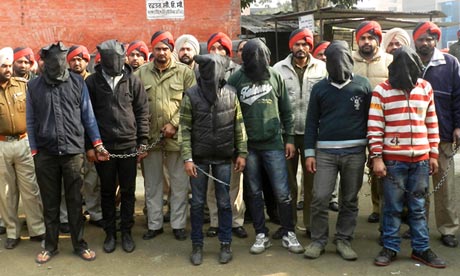
India Gang Rape: Woman Assaulted By Bus Driver, Conducter
By ASHOK SHARMA 01/13/13 07:49 AM ET EST
NEW DELHI — Police said Sunday they have arrested six suspects in another gang rape of a bus passenger in India, four weeks after a brutal attack on a student on a moving bus in the capital outraged Indians and led to calls for tougher rape laws.
Police officer Raj Jeet Singh said a 29-year-old woman was the only passenger on a bus as she was traveling to her village in northern Punjab state on Friday night. The driver refused to stop at her village despite her repeated pleas and drove her to a desolate location, he said.
There, the driver and the conductor took her to a building where they were joined by five friends and took turns raping her throughout the night, Singh said.
The driver dropped the woman off at her village early Saturday, he said.
Singh said police arrested six suspects on Saturday and were searching for another.
Gurmej Singh, deputy superintendent of police, said all six admitted involvement in the rape. He said the victim was recovering at home.
Also on Saturday, police arrested a 32-year-old man for allegedly raping and killing a 9-year-old girl two weeks ago in Ahmednagar district in western India, the Press Trust of India news agency reported. Her decomposed body was found Friday.
Police officer Sunita Thakare said the suspect committed the crime seven months after his release from prison after serving nine years for raping and murdering a girl in 2003, PTI reported Sunday.
The deadly rape of a 23-year-old student on a New Delhi bus in December led to the woman’s death and set off an impassioned debate about what India needs to do to prevent such tragedies. Protesters and politicians have called for tougher rape laws, police reforms and a transformation in the way the country treats women.
“It’s a very deep malaise. This aspect of gender justice hasn’t been dealt with in our nation-building task,” Seema Mustafa, a writer on social issues who heads the Center for Policy Analysis think tank, said Sunday.
“Police haven’t dealt with the issue severely in the past. The message that goes out is that the punishment doesn’t match the crime. Criminals think they can get away it,” she said.
In her first published comments, the mother of the deceased student in the New Delhi attack said Sunday that all six suspects in that case, including one believed to be a juvenile, deserve to die.
She was quoted by The Times of India newspaper as saying that her daughter, who died from massive internal injuries two weeks after the attack, told her that the youngest suspect had participated in the most brutal aspects of the rape.
Five men have been charged with the physiotherapy student’s rape and murder and face a possible death penalty if convicted. The sixth suspect, who says he is 17 years old, is likely to be tried in a juvenile court if medical tests confirm he is a minor. His maximum sentence would be three years in a reform facility.
“Now the only thing that will satisfy us is to see them punished. For what they did to her, they deserve to die,” the newspaper quoted the mother as saying.
Some activists have demanded a change in Indian laws so that juveniles committing heinous crimes can face the death penalty.
The names of the victim of the Dec. 16 attack and her family have not been released.
What is also troubling in these two cases is that the women were on public transportation, and the rapes were arranged and carried out by the bus drivers and bus personnel, people who should have been there to keep her safe. They treated the victims like pieces of meat; it seems excessively hostile and brutal – you have to wonder what is driving them.
You can read more on this in an article from The Guardian, from where I found the photo above of the perpetrators.
Savannah’s in Wakulla Springs for Breakfast
Sometimes I can be too exclusive, literally, for my own good. The first time I saw this place, I said to myself “no no no no no.” The sign says it all. Not my kind of place. Full of things that are bad for me. Bad! Bad! Bad!

And yet, when The Black Bean was not open, and we were on our way to St. Mark’s National Wildlife Refuge, one of the coolest places on earth, we needed breakfast. I needed coffee. You need a little fuel to run the engines, you know? So, sighing, we pull into Savannah’s.

As soon as we walk in, I realize I might have made a big mistake, meaning, if we hadn’t come here, we never would have known how cool this place is. Sometimes snobbery can get in the way of having a good time, you know?
It’s exactly the kind of small town breakfast place – and restaurant – that I grew up with in Alaska, and my husband grew up with in his small southern town. The furniture is all locally made. The place is full of town folk, local people who all know one another, and a few birders on their way to St. Marks. There is a large menu of choices; yes, I don’t see any healthy choices, and at some point, it just becomes irrelevant. This is a great experience.

AdventureMan orders the Biscuits and Gravy, a sort of quintessential Southern breakfast dish and I order a biscuit breakfast sandwich. It takes a long time – they are baking fresh biscuits. 🙂 The coffee is good, not fancy, but well brewed and fresh.
When the breakfast comes, it is delicious. The biscuits are crumbly and flakey. The sausage is tasty. Yep, Pork Fat is Where it’s At.


Savannah’s Breakfast Buffet gives you an astonishing breakfast at very reasonable cost, great service. The atmosphere is warm and welcoming, and you can learn a lot about the community by listening to the local discussions. Here’s how you find Savannah’s:

Study Suggests Women Wait to Have Children
Found this today in AOL News/Huffington Post:
Those bright eyes and chubby cheeks may be hard to resist, but researchers from the Fred Hutchinson Cancer Research Center in Seattle have good reason to believe you should.
In a study published online in Breast Cancer Research and Treatment, researchers found that the interval between starting menstruation and first giving birth is inversely associated with the risk of triple-negative breast cancer (TNBC), a subtype of the disease that does not depend on hormones such as estrogen to grow and spread, and therefore does not respond to hormone-blocking drugs such as Tamoxifen. To put it plainly, women who wait at least 15 years after their first menstrual period to give birth to their first child may reduce their risk of the aggressive form of breast cancer by up to 60 percent, the report states.
It’s a finding that researchers say African-American women want to consider especially, since they experience disproportionately high rates of triple-negative disease.
In fact, study author Christopher I. Li, M.D. says that his findings may actually explain why black women tend to develop triple-negative breast cancer more often than other groups. African-American women are more likely to start having children at a younger age and are less likely to breast-feed, Li said, pointing to several previous studies that have suggested that breast-feeding provides a protective effect against triple-negative disease.
Previous studies have also countered Li’s latest claim, however, showing that waiting to have children may actually increase your breast cancer risk. But, like Li, researchers note that the type of breast cancer key.
The risk of the most common subtype of breast cancer, ER positive, for example, has proven to be lower among women who’ve had a full-term pregnancy and have breast-fed. The reason, researchers believe, is that the hormones associated with pregnancy induce certain changes in the cellular structure of the breast that make the tissue less susceptible to this type of cancer.
And while prevention trumps having to fight off triple negative disease, researchers honed in on two successful ways to do it this year. In October, scientists pinpointed a new compound created from a rich source in vegetables, including broccoli and brussel sprouts, to combat TNBC, while researchers at Memorial Sloan-Kettering Cancer Center in New York discovered that a certain form of smallpox vaccine was able to kill 90 percent of cancer cells in four days of treatment.
Vitamin D Fights Auto-Immune Diseases
When we were living in Qatar, there was a study published in the Qatar Gulf Times about the increasing problem of Vitamin D deficiency among women who are covered. It suggested that just ten minutes a day, uncovered, in full sunshine, could help relieve this common deficiency.
Part of the problem may be a lack of private area where a covered woman will feel comfortable being outside, uncovered, free from prying eyes. Another problem is cultural, where whiter skin is valued more highly than darker skin, or freckled skin.
What cost beauty? There are long term ramifications of Vitamin D deficiency, and the consequences can be dire. The cure is so easy . . .
By Diana Rodriguez
Medically reviewed by Lindsey Marcellin, MD, MPH
Your body needs a wide range of nutrients so that each cell performs the way it’s supposed to and all your body functions run smoothly. One important source that’s been getting a lot of buzz? Vitamin D — this essential vitamin helps build strong bones and much more.
Now researchers are discovering that vitamin D may be a powerful tool in understanding, and perhaps even preventing, certain health problems, including a group of conditions that currently has no cure — autoimmune diseases.
Autoimmune diseases occur when your immune system turns against your own body instead of fighting harmful invaders like bacteria and viruses. Autoimmune diseases affect different areas of the body. For instance, psoriasis is an autoimmune disease that affects the skin, while Graves’ disease is an autoimmune disease that affects the thyroid gland.
Little is known about how and why autoimmune diseases occur, what can be done to prevent them, and how to reduce your autoimmune disease risk. But that could be about to change.
The Scoop on Vitamin D’s Benefits
One recent study discovered that people who are deficient in vitamin D, which comes from both food sources and sunlight, have an increased autoimmune disease risk. The study also found that vitamin D can affect how your genes function by binding to them in particular spots. These binding locations may help researchers better understand genes that trigger diseases related to vitamin D.
We know that vitamin D plays a role in protecting the immune system. And researchers found that not getting enough vitamin D increases your risk for rheumatoid arthritis, multiple sclerosis, and type 1 diabetes, among other autoimmune diseases. Unfortunately, researchers can’t yet pinpoint exactly how and why this is the case, or how getting enough vitamin D may help to ward off the onset of autoimmune disease symptoms.
5 Ways to Up Your Daily Dose of D
It’s clear that much more research needs to be done to better understand both autoimmune diseases and the impact of vitamin D on reducing autoimmune disease risk. But we already know that not getting enough vitamin D can be devastating to bones, leading to osteoporosis and fractures.
For overall good health, it’s essential to meet vitamin D requirements, up to 600 international units, or IU, each day. If your doctor tests your blood vitamin D level and finds a low level, you may be advised to get higher amounts. Where can you find this bone-building, immune-boosting vitamin? Here are some simple ways to get the recommended daily intake of vitamin D:
Feed on fish. Specifically, canned pink salmon, mackerel, and sardines offer the highest amounts of vitamin D.
Choose fortified beverages. Both soy and cow’s milk are available fortified with vitamin D. Some brands of orange juice also come with an added dose of D.
Eat egg yolks. Though they’re sometimes a concern because of cholesterol, egg yolks are a good source of vitamin D.
Start your day with cereal. Dry cereals and instant oatmeal that have been fortified with vitamin D are a great way to start your day.
Keep it simple with a supplement. Vitamin D supplements can make it easy to get all you need each day — just take one pill.
Exposure to the sun also helps your body to produce vitamin D. Relaxing in the sun for a brief period of time (just 5 to 10 minutes) a few days per week without sunscreen can help your body create enough vitamin D to ward off a deficiency. Just remember to guard against the potential damage of the sun — keep your exposure limited to reap the vitamin D benefits without harming your skin.
Take the Test :-) Simple Sitting Test Predicts Long Life
Do you remember doing this as a child? I remember doing it, maybe for some Red Cross Swimming class. We could all do it. . . So after I watched the video, I had to try it again. I can get down with no problem – 5 points. Getting up, I needed to use my knee: 4 points. I’m happy with that score, and happy I can still get up and down off the floor 🙂
So my question is this – many people who can’t do it the first time, can do it if they practice. So if you practice, and get good at it, have you lengthened your life? Have your improved your probability of living longer?
Simple Sit Test Predicts Long Life
By Crystal Phend, Senior Staff Writer, MedPage Today
Published: December 13, 2012
Reviewed by Zalman S. Agus, MD; Emeritus Professor, Perelman School of Medicine at the University of Pennsylvania and Dorothy Caputo, MA, BSN, RN, Nurse Planner
Action Points
This study evaluated the association between the ability to sit and rise from the floor with and without support and all-cause mortality in adults age 51 to 80.
There was a significant association between the use of more support to sit and rise from the floor and increasing all-cause mortality.
How well middle-age and older adults can get up off the floor may predict their chances of long-term survival.
Each additional support needed to get to and rise from a sitting position on the floor — knee, hands, etc. — was associated with a 21% lower chance of survival over about 6 years of follow-up in a trial online in the European Journal of Preventive Cardiology.
The survival odds differed by 5.44-fold between the highest and lowest scorers on the sit-rise test after adjustment for age, sex, and body mass index, Claudio Gil Soares de Araújo, PhD, of Gama Filho University and Clinimex in Rio de Janeiro, and colleagues reported.
Ability to rise from the floor reflects muscle strength, coordination, balance, and flexibility needed for getting up out of a chair, bending over to pick up an item, and various other daily activities and is also tied to risk of falls, they explained.
“Application of a simple and safe assessment tool such as sit-rise test…in general health examinations could add relevant information regarding functional capabilities and outcomes in non-hospitalized adults,” the group wrote.
Other functional tests are commonly used, such as chair-to-stand and gait speed, but the floor-to stand test has the advantage of requiring no equipment and minimal space and time, they pointed out.
The retrospective study included all 2,002 individuals ages 51 to 80 evaluated with the test at a single center from 1997 through 2011, excluding competitive athletes and those with relevant musculoskeletal problems.
The test was administered on a nonslip surface, with individuals instructed to try to sit on the floor and then get back up without worrying about speed and using the least support they felt necessary.
A maximum of 10 points was possible, 5 for sitting and 5 for rising without any supports. Each support (hand, forearm, knee, side of leg, or hand on the knee) used took away 1 point; and participants could lose an additional 0.5 points for an unsteady performance.
Over the median 6.3 years of follow-up for mortality in state vital status registries, nearly 8% of the cohort died.
Sit-rise test scores tended to be poorer at older ages, but the association between all-cause mortality and score persisted with adjustment for age as well as sex and body mass index.
The hazard ratios compared with the highest-scoring, 8-to 10-point group were (all statistically significant):
5.44 for lowest scores (0 to 3 points)
3.44 for scores of 3.5 to 5.5
1.84 for scores of 6 to 7.5
That translated to a 3-year shorter life expectancy for the lowest versus highest scoring groups.
The researchers noted that no adverse events, such as injury from slips or falls, have occurred during the test over a 14-year experience at the center.
They cautioned that the study didn’t control for physical activity patterns, subclinical degeneration, or recent unreported injuries.
Other limitations were the predominantly white, high socioeconomic status population studied, which may limit generalizability, and the single center design.
Recent Comments
ExpatAlien on What Country am I Living … intlxpatr on Yellowstone: Old Faithful to C… Michelle on Yellowstone: Old Faithful to C… Cathy on No Grown-Ups in Charge intlxpatr on Waiting for Snow Wikipedia Donate Button

Amazina


Early Voting in Florida


 Here There and Everywhere