RealAge Test

Have you taken the RealAge Test?
I took it five years ago, when one of the Kuwait bloggers published the link and we all tried it to see how we measured up. I was shocked to learn that because I was not exercising enough, nor seeing a doctor regularly, I was actually OLDER than my age. It shocked me enough to see a doctor and take her advice.
Today I took it, and now, with regular exercise, I came out eight years younger than my age, and younger than I was the first time I took the test, Woooo HOOOOO!
The test has changed, but only updated by the newest findings. It now measures social factors, like how many people you are close to, how many you help, etc. You learn a lot about what is important just by taking the test.
I challenge you. Take the test, and tell me how you did.
Qatar, the Magical Kingdom
I just finished watching the 13 minute segment 60 minutes showed this last weekend on Qatar:
Oh, to be in the Souk al Wakif in January / February. My Doha buddies and I are getting together next weekend; if only we could have breakfast once again together at the Beirut. We truly enjoyed our years in Qatar.

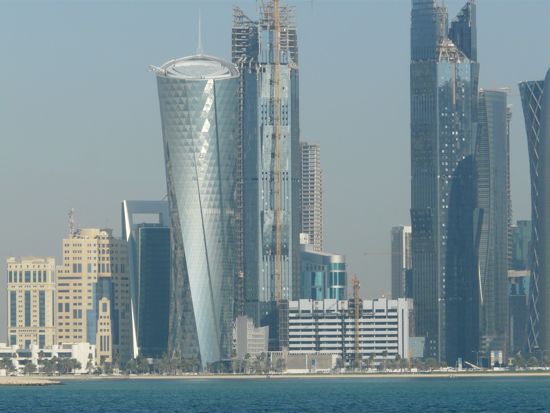
It was fun seeing the shiny sparkly skyline, only five or six of those buildings were there when we arrived in January of 2003. When my husband used to travel to Doha in the ’80’s, it was called “sleepy little Doha” or even “Doh-ha-ha-ha” but no one is laughing at Doha any more, and sleepy little Doha has gone uptown in a big way.

The Emir used to carry a lot more weight – literally. He looks good, he looks healthier and more fit, and consequently younger, and more vital. I’m betting he has the Sheikha Moza to thank for that; don’t we all nag our husbands a little to encourage them to take care of themselves? We want them to live a long, healthy life.

Not a single mention of the Sheikha Moza in the entire segment, nor of her influence in the creation of the Qatar foundation, bringing reputable American and Canadian universities to Qatar, the creation of the Islamic Museum of Art, the face-lift to the Souk al Waqif, the creation of the symphony. Not a mention of her influence on the schools, the health system, the modern face of Qatar.

Only a passing reference to the appalling conditions under which the laborers work in Qatar, treated like animals, worked to the bone. Not a mention that many of those glorious buildings don’t meet any codes, that proper building standards have not been enforced, and that the standards for safety are noticeable in their absence. Not a mention of the malls where the laborers are not allowed on Fridays, their only day off, or the beatings they get if they wander into the Souk al Waqif. The miracle of this richest city on earth is built on the back of the Indians, Philipinos, and Nepalese who sacrifice health, family and comfort to be able to send something back in hopes that their children will be educated and live better lives.

Not a mention of the concerns among the conservatives that Qatar has modernized too fast, that traditional standards are not being respected, that English is the language spoken in all the stores, not Arabic. Not a mention that this ‘richest nation on earth’ is now also the fattest nation on earth, that the Qatari children are suffering obesity, and are greatly raised by the household help. Not a mention of the crisis of intermarriage, and the tragic health problems the children suffer from inbreeding. The 6 minute segment showed a Qatar that was all shine and glitter, and none of the dark underbelly.

Helping Others, Help Yourself
I found this article this morning in an e-mail from Bottom Line, and it rings true to me. When AdventureMan was in the military, there were social events I was obligated to attend. I often felt so much reluctance I just wanted to go to bed; just the thought of the events made me tired. Then I discovered a secret – when I got there, to look for someone shy, and to go over and talk with them. There was always someone, and it made all the difference – to me!
It feels good to be a Good Samaritan, of course. But there’s more to the story—because science reveals that being of service to others brings numerous health benefits. Maria E. Pagano, PhD, an associate professor of psychiatry at Case Western Reserve University School of Medicine in Cleveland, has investigated the helper therapy principle (HTP), which is based on the concept that when people help others, they are also helping themselves—particularly when the helper and the recipient of that help share a common malady. Alcoholism Treatment Quarterly published her recent review article on the topic. Among the evidence cited were studies showing that…
- People with chronic pain who counseled other pain patients reported a significant decrease in their own symptoms of pain and depression.
- Multiple sclerosis (MS) patients who were trained to have monthly 15-minute supportive phone conversations with other MS sufferers showed improvement in self-confidence and self-esteem as well as reduced depression.
- Alcoholics who helped other alcoholics were almost twice as likely to stay sober in the year following treatment…had lowered levels of depression in the three months after they started helping other alcoholics…and had significantly improved self-image. Dr. Pagano explained, “Helping others with a desire to live sober transforms the helper’s dark past and pain to greater good and enables him or her to be uniquely helpful to a fellow sufferer.”
While service to fellow sufferers is a cornerstone of 12-step programs of recovery, such as Alcoholics Anonymous, Dr. Pagano noted that it is not necessary to share a common health problem in order to benefit from doing good. For instance, helping others in general has been linked with longer life, less depression, higher self-esteem and greater life satisfaction.
Bottom line: For a “helper’s high” and a significant health boost, lend a helping hand to someone in need.
Maria E. Pagano, PhD, is a psychologist and an associate professor of psychiatry at Case Western Reserve University School of Medicine in Cleveland. She also is a recipient of a career development award funded by the National Institute on Alcohol Abuse and Alcoholism. www.HelpingOthersLiveSober.org
Good For You! Nuts!
From today’s Bottom Line Daily Health News:
If you’ve relegated nuts to the “occasional snack” category, it’s time to get more creative. Substitute nuts for some or all of the meat in a stir-fry entrée… sprinkle sliced or chopped nuts over vegetables, rice, soup or cereal… add ground nuts to a smoothie or yogurt… dress salads with nut oils… spread nut butter on celery sticks or apple slices. Why am I pushing nuts? Because from all corners of the nutrition world, I am hearing from wellness professionals who are amazed by nuts’ health benefits. Recent research shows that eating a moderate amount of nuts on a regular basis may help…
Control weight. According to Richard D. Mattes, PhD, MPH, RD, a professor of foods and nutrition at Purdue University who has done extensive research on the topic, nut consumption increases your resting energy expenditure, which means that you burn more calories just sitting still than you otherwise would. Also, about 5% to 15% of the calories in nuts are excreted without being absorbed. And nuts’ unique combination of protein, fiber, fatty acids and other characteristics quells hunger quickly and for prolonged periods.
Prevent heart disease. Most of the fats in nuts are heart-healthy monounsaturated fats and omega-3 fatty acids that help lower LDL (bad) cholesterol and triglycerides… increase HDL (good) cholesterol… and prevent abnormal heart rhythms. Nuts also contain vitamin E, which inhibits arterial plaque buildup… and L-arginine, an amino acid that makes arteries more flexible and less vulnerable to clots.
Fight inflammation. The soluble fiber in nuts appears to increase production of the anti-inflammatory protein interleukin-4. Antioxidant vitamin E also eases inflammation.
Reduce diabetes risk. A Harvard study found that women who ate five or more ounces of nuts weekly were almost 30% less likely to get type 2 diabetes than women who rarely or never ate nuts. Also: Spanish researchers found that nuts were even more effective than olive oil in combating metabolic syndrome, a condition that puts you at risk for diabetes and heart disease.
Combat cancer. Some nuts (including Brazil nuts and walnuts) are high in selenium, a mineral associated with a decreased risk for colorectal, skin and lung cancers. In animal studies, walnuts appeared to inhibit breast tumors — perhaps due to their disease-fighting omega-3s and antioxidants.
Support brain function. Evidence suggests that nuts’ omega-3s may ease depression and boost thinking and memory by improving neurotransmitter function. Nuts also provide folate — and low levels of this B-vitamin are linked to depression and poor cognition.
NUT TYPES TO TRY
Per ounce, nuts typically have 160 to 200 calories and 13 to 22 grams of fat. Eating 1.5 ounces of nuts per day (a small handful) is enough to provide health-promoting benefits. Nuts naturally contain only a trace of sodium, so they won’t wreak havoc with blood pressure, especially if you choose brands with no added salt.
“All types of nuts are good for you, so there’s no such thing as a ’best’ type of nut,” Dr. Mattes emphasized. Still, each type does contain a different mix of nutrients — so for the widest range of benefits, eat a variety. Below are some excellent options and the nutrients that each is especially rich in. Consider…
Almonds for bone-building calcium… and inflammation-fighting vitamin E.
Brazil nuts for cancer-fighting selenium.
Cashews for magnesium, which is linked to prevention of heart attacks and hypertension.
Hazelnuts for potassium, which helps normalize blood pressure.
Peanuts for folate, which lowers levels of the artery-damaging amino acid homocysteine.
Pecans for beta-sitosterol, a plant compound that combats cholesterol.
Pistachios for gamma-tocopherol, a form of vitamin E that may reduce lung cancer risk.
Walnuts for the heart- and brain-enhancing omega-3 alpha-linolenic acid.
Source(s):
Richard D. Mattes, PhD, MPH, RD, professor of foods and nutrition at Purdue University in West Lafayette, Indiana. He has published numerous studies on nuts and appetite.
The Travellers’ Dilemma
The restaurants were full this Saturday in Pensacola, all the nice restaurants; there is a Beth Moore conference in town and all the ladies are out to lunch. We were lucky, we walked in just before the crowd and snagged a table at one of our favorite Pensacola restaurants, The Fish House. Great meal, great service, great conversation, and we were out in under an hour. Wooo HOOO.
Have you noticed many of the good restaurants don’t take reservations these days, not unless you are a large group, like six or more? Maybe as the economy starts to lift again, that will change. It’s just odd.
Meanwhile, I have a couple flights tomorrow, and now that I am not flying overnight, or half the world, and now that we are retired, I am flying sardine class. And the airlines don’t serve food. If you buy food in the airport, your choices are limited, and expensive, and it can be messy.
So I’ve been thinking about what to take. I need something nutritious. I need something that tastes good. I need something that can be eaten sort of subtly; now that there is not a real meal time, you might be eating with people who don’t have anything. So you also need something you can share.
It can’t have an offensive smell. We love those Japanese crackers, but in a confined space, all of a sudden you notice how FISHY they smell. Ditto sushi, LOL. Can’t eat Wasabi peas, either, because they are also odor causing, in their own way. No garlic; some people cannot abide garlic or onions.
It can’t be something that might leak in my carry on. It can’t be something that needs a utensil. It can’t be too salty, or carry too many calories. It can’t be loudly crunchy, like carrots or celery.
Do you see the problem?
AdventureMan says “You worry about things like that?” He is genuinely puzzled. But yeh, I think about these things, and try to anticipate a problem so that there ISN’T a problem.
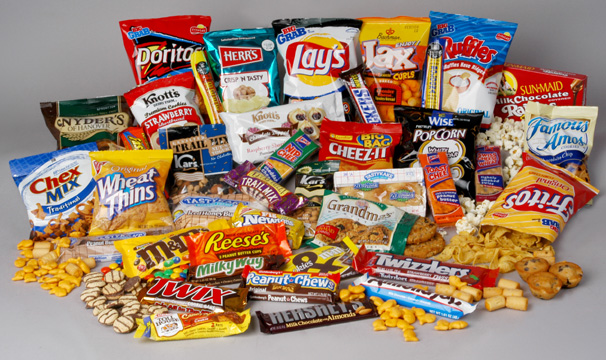
I finally decided on some Chex Mix, and some trail mix (nuts and fruits). You can eat a little at a time, you can share.
I figure I can pick up some coffee at the airport where I change flights. I love the seasonal Peppermint Mochas, Gingerbread Lattes, etc. It’s a most wonderful time of the year 🙂

What do you take on a long flight when you will not be provided a meal?
Eating after 8 PM? Higher BMI
I found this today on AOL Healthy Living; bad news for my friends in the Middle East who rise late, dine late and sleep late. You can read the entire article for yourself by clicking on the blue type above.
It seems to me that there needs to be more testing; the group studied was very small.
Sleeping Late, Eating Late Leads to Gaining Weight
A message to night owls: There’s news that your bedtime — and those late-night snacks — may be preventing you from dropping those stubborn extra pounds. A recent study took on an important, and under-examined, aspect of the sleep-weight loss connection: how the timing of sleeping — and of eating — can affect weight. Researchers at Northwestern University examined the effects of sleep timing on diet and body-mass index (BMI), and found that late bedtimes and late mealtimes can lead to less healthful diets and to weight gain.
A group of 52 adults — 25 women and 27 men — spent seven days keeping food logs and having their sleep and waking activity measured by a wrist sensor. The researchers divided participants into two categories of sleepers:
“Normal sleepers” reached the midpoint of their night’s sleep before 5:30 a.m. These sleepers were asleep by shortly after midnight, and woke around 8 a.m. Among the study group, 56 percent were normal sleepers.
“Late sleepers” reached the midpoint of their nightly sleep after 5:30 a.m. They went to sleep in the middle of the night, well after midnight, and woke in the mid-to-late morning. Among the study group, 44 percent were late sleepers.
Researchers tracked the eating habits of these two types of sleepers through the information provided to them from the participants’ food logs. Not surprisingly, “normal sleepers” and “late sleepers” were on very different schedules, in terms of when they ate throughout the day:
Normal sleepers ate breakfast by 9 a.m., lunch at 1 p.m. and dinner at 7 p.m., on average. These sleepers reported being finished with eating for the day by 8:30 p.m.
Late sleepers reported eating their first meal of the day at about noon. They ate again in the middle of the afternoon, and did not eat dinner until after 8 p.m. Late sleepers did not finish their eating for the day until 10 p.m., on average.
What were the consequences for sleeping later and eating later? Researchers found that late sleepers suffered across the board, in terms of the quality and quantity of both their daily sleep and eating:
Late sleepers slept less overall than normal sleepers — an average of more than an hour less per night.
Late sleepers consumed more calories at dinnertime than normal sleepers. They also consumed significantly more calories after 8 p.m.
Late sleepers had poorer quality diets than normal sleepers — they ate more fast food, drank more sugar-laden soda, and ate fewer vegetables.
These habits of late sleepers — sleeping less, going to sleep later in the night, and eating more after 8 p.m. — were all found to be associated with a higher body mass index. Among these habits, eating after 8 p.m. was the strongest predictor of a higher BMI. What does this mean? It’s not just what you eat, but when you eat, that can affect your ability to lose weight. And your sleep habits can have a significant influence on the timing of your eating, as well as on how much you eat.
Qatar: The Richest Fattest Nation on Earth
Thank you, reader John, for passing along this fascinating article from The Atlantic:
Qatar is a tiny country with a big problem.
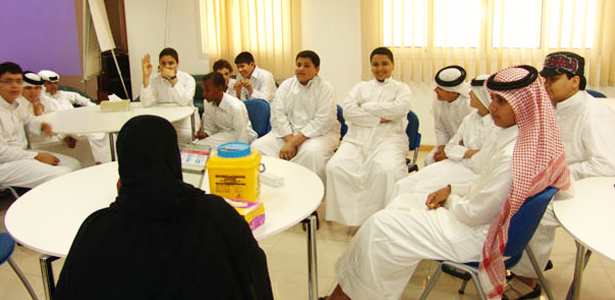
This Connecticut-sized nation, sticking out like a loose tooth in the Persian Gulf, is one of the most obese nations in the world, with residents fatter, on average, than even those of the United States, which often takes the cake in such competitions.
According to recent studies, roughly half of adults and a third of children in Qatar are obese, and almost 17 percent of the native population suffers from diabetes. By comparison, about a third of Americans are obese, and eight percent are diabetic. Qatar also has very high rates of birth defects and genetic disorders — problems that, along with the prevalence of obesity (PDF) and diabetes, have worsened in recent decades, according to local and international health experts.
So what’s going wrong in little Qatar?
Qatar also has very high rates of birth defects and genetic disorders — problems that have worsened in recent decades.
To misappropriate a well-worn phrase: It’s the economy, stupid. In September, Qatar officially became the richest nation in the world, as measured by per capita gross domestic product. It also recently became the world’s biggest exporter of natural gas, and earned the title of fastest growing economy in the world. By international development standards, all this growth has happened virtually overnight, making Qataris’ lifestyles much more unhealthy, and at the same time leading many to hang on resolutely to what’s left of their fleeting tribal traditions — practices that include inter-marriage between close family members and cousins.
“They’re concentrating the gene pool, and at the same time, they’re facing rapid affluence,” said Sharoud Al-Jundi Matthis, the program manager at the Qatar Diabetes Association, a government funded health center in Doha, the capital. As a result of these factors, Qataris are becoming obese, passing on genetic disorders at an alarming rate, and getting diabetes much more often than others around the world. They’re also getting diabetes a decade younger than the average age of onset, which is pushing up rates of related illnesses and complications, like hypertension, blindness, partial paralysis, heart disease, and loss of productivity. “It’s a very, very serious problem facing the future of Qatar,” Matthis said.
It’s a fascinating read, not too long, little more than double what you have already read. You can read the entire article by clicking HERE: The Atlantic
Thank you, John, for the recomendation.
I Wish I’d Hugged Her
The phone rang, late for most of my friends. We rarely talk after nine. It was one of my quilting sisters, calling to tell me one of our members had collapsed and died.
I sat down. Why would my friend say such a thing? On the other hand, when I saw her – just three days ago – she wasn’t looking too good, had one of those allergies or things we all get during this time when the temperatures may be in the 40’s or in the high 70’s. But she did make it to the meeting, and we all have bad days, don’t we?
My friend said she would let me know as soon as she knew the arrangements. I think I was a little dazed, a little in shock. I remember when I got the call my Dad had died, it’s like I can’t integrate things all at once, it takes me a while for things to sink in.
I wish I’d hugged her. She’s a lady I really like, talented, wry, funny. We talked, briefly at the meeting, but then the meeting went into full swing and I didn’t really talk with her again. I wish I’d hugged her.
Shoulder Ouch!
I have a new muscle I didn’t know I had. It relates to my left shoulder, but it is in my back.
Monday we did a strenuous routine in aqua aerobics. Mostly, I can sail through the routines, but this was stepped up a little, and we used the weights a lot. I must have gotten carried away. I woke up this morning, and ouch! It was a bad surprise.
I know there is no cure. For me, normally, it takes heat and going easy for a while. I know it will pass, but oh, in the meantime, I am moving gingerly. You don’t know how much you use a muscle until it betrays you.
Hilarious French Video / Ad
Thank you, Hayfa!
Recent Comments
ExpatAlien on What Country am I Living … intlxpatr on Yellowstone: Old Faithful to C… Michelle on Yellowstone: Old Faithful to C… Cathy on No Grown-Ups in Charge intlxpatr on Waiting for Snow Wikipedia Donate Button

Amazina


Early Voting in Florida


 Here There and Everywhere