Laugh and Live Longer?
Found this fascinating article today in AOL News/HuffPost.
Do those who laugh the most live the longest?
Possibly so, according to a new study in the journal Aging.
Researchers from Albert Einstein College of Medicine and Yeshiva University found that people who possess certain personality traits based in genetics may live longer lives — particularly those who are optimistic, laugh a lot and are easygoing.
The study was based on an analysis of 243 people with an average age of 97.6. These people were part of a bigger study, called the Longevity Genes Project at Albert Einstein College of Medicine, which examines 500 Ashkenazi Jews ages 95 and older (Ashkenazi Jews are genetically homogenous, researchers said), as well as 700 of their offspring.
“When I started working with centenarians, I thought we’d find that they survived so long in part because they were mean and ornery,” study researcher Dr. Nir Barzilai, M.D., director of Einstein’s Institute for Aging Research, said in a statement.
“But when we assessed the personalities of these 243 centenarians, we found qualities that clearly reflect a positive attitude towards life,” he said. “Most were outgoing, optimistic and easygoing. They considered laughter an important part of life and had a large social network. They expressed emotions openly rather than bottling them up.”
The researchers also found that the study participants scored lower on tests for neurotic personality and scored higher on tests for conscientiousness, compared with comparable scores for the U.S. population.
Last year, a study in the journal Proceedings of the National Academy of Sciences showed that older people who are happy have a 35 percent lower risk of dying over a five-year period than unhappy people. That study included 3,853 people ages 52 to 79.
“The happiness could be a marker of some other aspect of people’s lives which is particularly important for health,” study researcher Andrew Steptoe, a professor at University College, London, told The Telegraph. “For example, happiness is quite strongly linked to good social relationships, and maybe it is things like that that are accounting for the link between happiness and health.”
Kuwait Mode On a Hot Day in Pensacola

“On any given day in Kuwait, this would not have even registered on our ‘so-what’ scale” AdventureMan responded when I commented on the particularly bad driving we had experienced on our way back from the commissary. People were weaving, people were taking right-of-way-not-their-own and people were taking stupid chances.
What is it about heat that makes people crazy?
I wonder if any one has done a study to find out which crimes go up in very hot temperatures, if any?
I’m in my Kuwait mode these days; if there is anything I need to do outside the house, I do it early in the morning (occasionally, early morning is even pleasant) or after the sun has gone down. The rest of the day, I stay out of the sun and in the air conditioning as best I can. I always have projects, quilts to sew 🙂 and books to read, not to mention a floor to scrub and a dishwasher to unload, plenty to keep me busy inside.
My heart goes out to those in the eastern USA, hit by storms, hit by electrical outages and hit by the extreme heat. At least in Pensacola we have a sea breeze which keeps things bearable most of the time.
The Cheesecake Factory in Alpharetta, GA
“You’ve never been to a Cheesecake Factory?” my Kuwait friend would ask me (more than once) in astonishment. She loved the Cheesecake factory. She could describe the dishes on the menu at length, fondly, nostalgically, and all the desserts, how delicious each was, how big they all are, how she would love one right now! In all these years, I just haven’t been in the same area as a Cheesecake Factory restaurant, which I understand is a chain.
We were visiting Alpharetta, GA, visiting old friends from our time living in Qatar, and they invited us to dinner at the Cheesecake Factory. Wooo HOOO! Now’s my time to find out what it’s all about, but before I go, I go online and check the menu, and wooo HOOO again, now they have a Skinnylicious menu. I had dreaded that everything on the menu was huge portions and like three days worth of caloric count and a week’s worth of glycemic index count, but no, now they have a Skinnylicious menu!
We had a wonderful time. First, you know, anyplace is special when you are with people and the conversation flows fast and furious. These were people you could talk about the important things with, like how we live our lives, what we want, what place compassion plays in our lives – you know, the important stuff. It’s all good when you are together with people that share your vision.
Now – the restaurant. It is clearly THE place to dine in Alpharetta, GA. They don’t take reservations, and we waited about 45 minutes to get in. When we left, around 9:30 pm, there was still a waiting line, maybe 30 minutes instead of 45, but the place was teeming with customers.
When we got seated, AdventureMan was up at one end with his friend, talking business, and I was at the other, and I think we had more fun 🙂 My end of the table was Skinnylicious!
Even though my Chinese Chicken Salad was Skinnylicious, I couldn’t eat it all, there was so much, so I took it home and had the rest the next day.

Skinnylicious Grilled Salmon:

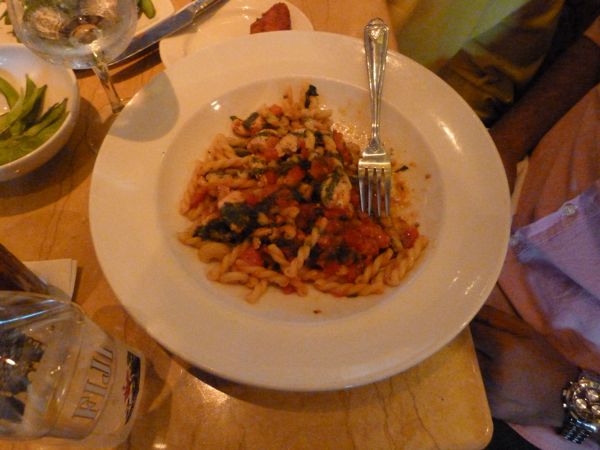
Skinnylicious Pasta:
Club Sandwich:

Sirloin Steak
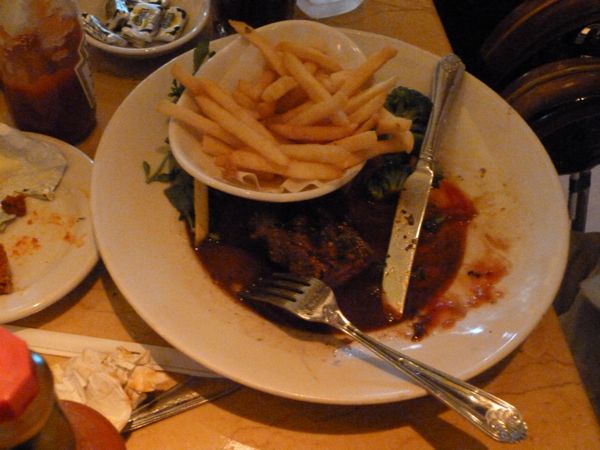
The Skinnylicious End of the table all carried food home, LOL!
We had carrot cake for dessert, two pieces and 6 forks, but we still couldn’t eat it all, and I am sorry, it was so good and I didn’t even take a photo. They have a lot of really really good desserts. They also do take-out cheesecakes.
Good friends, good conversations, good food! It was a very fun evening with people we like.
Wooo HOOO, Saudi Arabia Allowing Female Olympic Athletes
It hasn’t been so long in our own country since Title IX made it possible for more and more women to participate in athletic events, making funding possible, giving women in the United States an opportunity to participate in healthy athletic activities.
RIYADH, June 25 (Reuters) – Saudi Arabia will allow its women athletes to compete in the Olympic Games for the first time ever in London this summer, the Islamic kingdom’s London embassy said on its website.
Human rights groups had called on the International Olympic Committee to bar Saudi Arabia from competing in London, citing its failure ever to send a woman athlete to the Olympics and its ban on sports in girls’ state schools.
Powerful Muslim clerics in the ultra-conservative state have repeatedly spoken out against the participation of girls and women in sports.
“I think this is a victory for Saudi sportswomen and hopefully it will promote sports and women’s health awareness for the Saudi society,” said Lina al-Maeena, co-founder of Jeddah United Sports Company, a rare women’s exercise club that runs a female basketball team.
In Saudi Arabia women have a lower legal status than men, are banned from driving and need a male guardian’s permission to work, travel or open a bank account.
Under King Abdullah, however, the government has pushed for them to have better education and work opportunities and will allow them to vote in future municipal elections, the only public polls held in the kingdom.
Saudi women will be able to compete in the London Olympics only if they reach the qualifying standard for their event, and the Games opens in just over one month, on July 27.
“The kingdom of Saudi Arabia is looking forward to its complete participation in the London 2012 Olympic Games through the Saudi Arabian Olympic Committee, which will oversee the participation of women athletes who can qualify for the Games,” said a statement published on the embassy website.
The woman most likely to compete under the Saudi flag in London, show jumper Dalma Malhas, was ruled out on Monday when the World Equestrian Federation (FEI) said the 20-year-old’s mare Caramell KS had been sidelined by injury for a month during the qualifying period and had missed a June 17 deadline.
“Regretfully the Saudi Arabian rider Dalma Rushdi Malhas has not attained the minimum eligibility standards and … will not be competing” at the London Olympics, FEI secretary general Ingmar De Vos told the FEI website (www.fei.org).
Malhas won individual bronze at the junior Olympics in Singapore in 2010, but without official support or recognition.
In April the head of the General Presidency of Youth Welfare, which regulates sport in Saudi Arabia, said it would not prevent women from competing but they would not have official government endorsement.
The government’s role would be limited to ensuring that Saudi women’s participation “is in the proper framework and in conformity with sharia”, he said.
The IOC said on Monday that talks with the Saudis were “ongoing” and that “we are working to ensure the participation of Saudi women at the Games in London”.
The head of the kingdom’s Olympic mission, Khalid al-Dakheel, told Reuters on Sunday that he was unaware of any developments allowing women to participate.
Top Saudi clerics, who hold government positions and have always constituted an important support base for the ruling al-Saud royal family, have spoken against female participation in sports.
In 2009 a senior cleric said girls risked losing their virginity by tearing their hymen if they took part in energetic sport.
Physical education is banned in girls’ state schools in the kingdom, but Saudi Arabia’s only female deputy minister, Noura al-Fayez, has written to Human Rights Watch saying there is a plan to introduce it. (Reporting by Angus McDowall and Asma Alsharif; editing by Tim Pearce)
Want a Long Life? Cook and Eat at Home
Home Cooking Increases Longevity, Cambridge Study Shows
(from AOL News/ Huffpost Healthy Living)
For those of you who use your stove for shoe storage, nota bene: all that wasted time with an inactive kitchen could be shortening your lifespan. In fact, a new study found that people who cook up to five times a week were 47 percent more likely to still be alive after 10 years.
“It has become clear that cooking is a healthy behavior,” said lead author Professor Mark Wahlqvist in a statement. “It deserves a place in life-long education, public health policy, urban planning and household economics.”
The research team, made up of Taiwanese and Australian researchers, published their work in Public Health Nutrition, a Cambridge University journal after looking at a group of 1,888 men and women over age 65 who lived in Taiwan. At the start of the study, they interviewed each participant about several lifestyle factors, including cooking habits, household circumstances, shopping habits, diet, education, transportation and smoking.
During the initial survey, researchers found that 43 percent of participants never cooked, while 17 percent cooked one to two times per week, 9 percent cooked three to five times in a week and 31 percent cooked five or more times a week.
After 10 years, they followed up to see how many of the participants had died. They then matched lifestyle answers to the 1,193 participants who remained alive. The researchers discovered that frequent cooking was associated with survival. Also associated? Grocery shopping, taking public transportation, not smoking, and being a woman. Frequent cooking — and survival — was more common among women and most profoundly among unmarried women, though also among women with families.
There were limitations to the study: women generally live longer than men and, for cultural reasons, women were more practiced at cooking than men. Additionally, those who remained healthy were more able to perform errands related to cooking, like shopping for food, walking and taking public transportation. The truly ailing wouldn’t be able to cook because of their health — not the other way around.
But even after researchers controlled for these other factors, they found an association between frequent home cooking and longevity. “The pathways to health that food provides are not limited to its nutrients or components, but extend to each step in the food chain, from its production, to purchase, preparation and eating, especially with others,” added Wahlqvist.
Mesa Verde, Colorado and the Far View Lodge
Google Maps is pretty good; I use it on my computer, on my iPad and most of all, on my iPhone. I love that when I tell it to get me from Grand Canyon Village to Mesa Verde, Colorado, it gives me a variety of routes, with the exact mileage and estimated travel time for each. It is very accurate, and also gets us through small towns where you might have to change roads a time or two. You just make sure the pulsing blue ball is following the bright blue road. Piece of cake!

Most of the drive today is through the very large northwestern part of Arizona that is the Navajo Nation, and where they actually ARE on daylight savings time, so your phones change time when you cross into the Navajo Nation territory.
We make a stop at a place I’ve always wanted to visit – Four Corners. There, people can have their photo taken in four states – Utah, Colorado, New Mexico and Arizona – all at once.

There is actually a line.
Just about every time we cross a state line, we go to the Welcome Center, and almost every state still has them, thanks be to God. We think it is a great luxury, while states are struggling to build and repair infrastructure, and give people decent healthcare, struggling to meet their budgets, they still find a way to welcome the stranger. We always get good local maps there, and, even better, good local insights and information. We stop in Cortez and pick up some invaluable literature on the Ancestral Puebloans (used to be called the Anasazi) to read up on before our tour the next morning.

The drive up to Mesa Verde is long and it just goes up and up. I am fit, but I had a little trouble with the altitude in Grand Canyon, and Mesa Verde is even higher, 8,000 feet. I can do fine with normal things, but any incline and I find myself huffing and puffing like a pack-a-day person.

Far View Lodge is lovely.
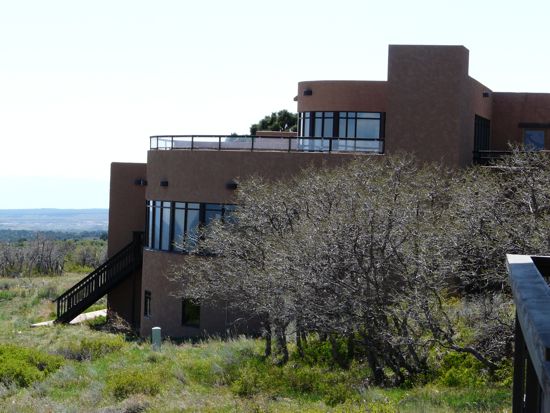
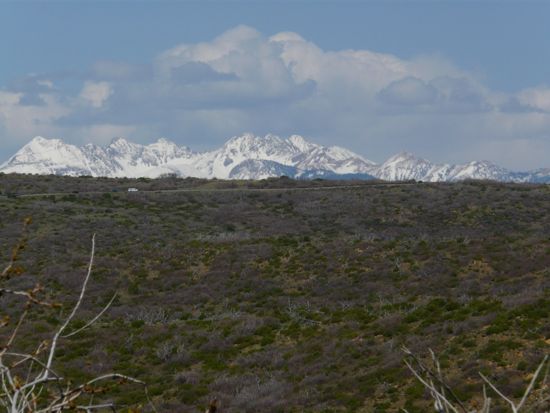
And from our room, we have the most expansive view ever. We can see for miles. We can see mountains, and in front, we have deer grazing. AdventureMan spots a gorgeous bluebird, one of the prettiest I have ever seen.


I don’t know what happened to my photos of dinner at Metate Restaurant; dinner was spectacular. AdventureMan had the sweet-hot chili port tenderloin, and I had the wild platter, with a tiny elk steak, a quail and a piece of boar sausage. It was a fabulous dinner, and I was sure I had photographed it, but . . . no photos! Hmmm . . . . maybe a couple of glasses of wine addled my memory . . . ?
The lodge is lovely, but old. Although renovated, sound carried amazingly, and during the night, I can hear the gentleman next door struggling to breathe. He is gasping for breath, at this altitude. He is up often during the night, trying to breathe. How often do you hear the person next door breathing at night?
Fredericksburg, TX; an Unexpected Pleasure
We are headed west, and our friends suggest we take a route which will take us through Fredericksburg, TX. From the time we get on the road, we are surprised – good fast roads, even the backroads, wildflowers along the highway, and, soon, a wonderful store where we found Mayhew Jelly:


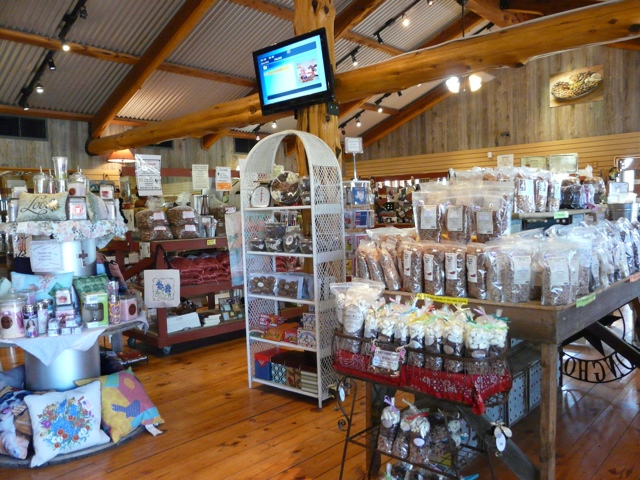
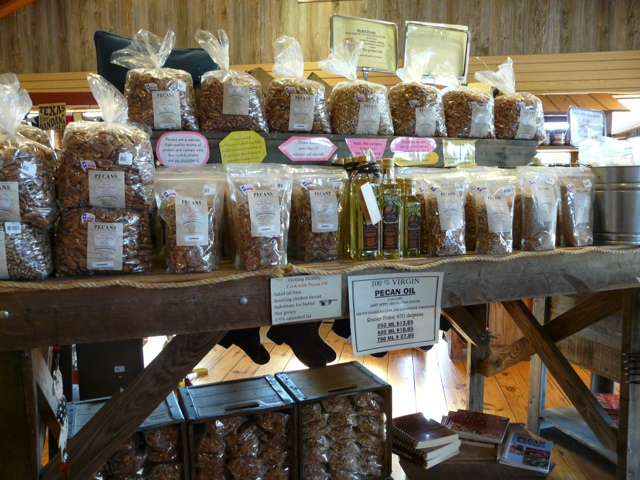
Continuing on, we arrive in Fredericksburg just about noon, after driving past countless tempting wineries and farms, all with great old German names. We find a place to park and look for a place to eat, finding the Lindenbaum and oh – they have Zigeunerschnitzle, schnitzel Gypsy style, which we love. Actually, when we lived in Germany, we sort of stopped eating schnitzle because it is meat and then deep friend meat, with fattening sauces, but it’s been years, and we couldn’t resist.


Oh! It was so good!
We decided we need to stay the night in Fredericksburg; there is the Nimitz Museum which is calling my husband’s name, and there are little shops calling mine. As we are eating lunch, we find a place in a Fredericksburg Magazine, The Austin Street Retreat, but to book there, you have to go to a place called the Gastehaus where they have a bunch of B & B’s and you get the reservation through them and then go to the place, which is a really good thing because some of them are a little hard to find.

We book Annie’s cottage – and when we get there, we are delighted. It is very French, a cottage all to ourselves, quiet, private, a great retreat:



And then AdventureMan heads off is his direction, and I in mine, both of us finishing up about the same time and heading back to the cottage to rest and plan our next day’s travels.
Dinner was at Mamacita’s, a very popular place with both local people and tourists, and reminded me of Chevy’s Fresh Mex – they made their own chips, and our server was very polished and attentive; we really liked the way Jason took care of us:




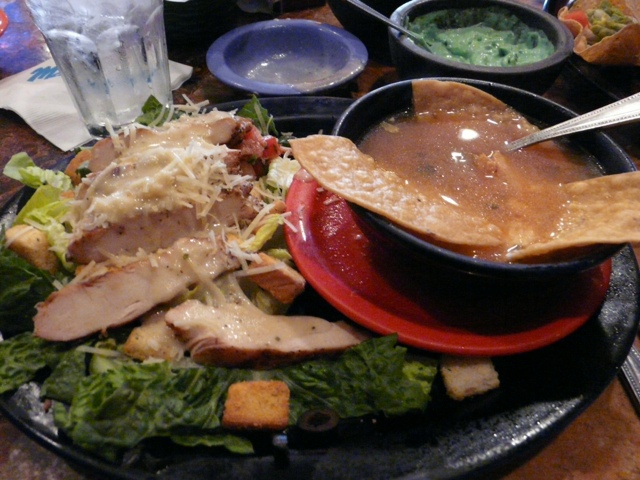


This is the schnitzle from Lindenbaum, but I can’t figure out how to get it in the right place.

Blood Sugar Solution
When I read the hype for these two books, I bought them – again. I bought them the first time when we were still in Kuwait, but gave them away in one of the moves. This time I actually read them. I stopped, however, when I came to the part where you give up caffein. Nope.

Phthalates Risk Factor for Diabetes
A Swedish study, posted on AOL Everyday Health News, indicates we heighten our risk of diabetes with repeated exposures to phthalates common in items we use every day of our lives . . .
HealthDay News
Common Plastics Chemical Might Boost Diabetes Risk
Phthalates, found in soaps, lotions and food packaging, may disrupt insulin production, researchers say.
By Steven Reinberg, HealthDay News
THURSDAY, April 12, 2012 (HealthDay News) — High blood levels of chemicals called phthalates, which are found in soaps, lotions, plastics and toys, may double the risk for type 2 diabetes among older adults, Swedish researchers say.
“Our study supports the hypothesis that certain environmental chemicals can contribute to the development of diabetes,” said lead researcher Monica Lind, an associate professor of environmental medicine in the section for occupational and environmental medicine at Uppsala University.
“Most people come into daily contact with phthalates as they are used as softening agents in everyday plastics and as carriers of perfumes in cosmetics and self-care products,” she added.
The study’s implications “must be to cut down on plastics and choose self-care products without perfumes,” Lind said.
But the research does not prove cause and effect. To find out whether phthalates (pronounced THAL ates) truly are risk factors for diabetes, further studies are needed that show similar associations, she said.
“Experimental studies are also needed regarding what biological mechanisms might underlie these connections,” Lind stressed.
The report was published online April 12 and in the June print edition of Diabetes Care.
For the study, Lind’s team collected data on more than 1,000 Swedish men and women, age 70, who took part in the Prospective Investigation of the Vasculature in Uppsala Seniors Study.
The researchers measured the participants’ blood sugar, insulin levels and levels of toxins from the breakdown of phthalates.
As expected, they found diabetes was more common among those who were overweight and had high cholesterol.
And they also found an association between blood levels of some phthalates and diabetes. That association remained even after taking into account obesity, cholesterol, smoking and exercise.
For people with high phthalate levels, the risk of developing diabetes was about double compared to those with lower levels, the investigators found.
Some phthalates were also linked to disrupted insulin production, the researchers said. Insulin is a hormone that helps deliver blood sugar into the body’s cells for energy. Without insulin, or with too little of the hormone, too much sugar stays in the blood, setting the stage for diabetes.
“Even at relatively low levels of phthalate in the blood, the risk of getting diabetes begins to rise,” Lind added.
Other studies have linked these chemicals with breast growth in boys and reproductive problems in men, possibly caused by estrogen disruption.
Phthalates are used in hundreds of products, such as toys, vinyl flooring and wall coverings, detergents, lubricating oils, food packaging, pharmaceuticals, blood bags and tubing, according to information from the U.S. Food and Drug Administration. Personal care products, such as nail polish, hair sprays and shampoos, also contain phthalates.
At present, “the FDA does not have compelling evidence that phthalates, as used in cosmetics, pose a safety risk,” according to the FDA website.
In the United States, companies are not required to test the long-term health effects of chemicals before using them in consumer products. Lind said this means the dangers of hazardous chemicals aren’t known until they are already widely used.
Lind said the health effects of chemicals should be tested before they reach the consumer market similar to the way drugs get tested before being approved.
“We are looking at a tip of an iceberg,” she said in terms of a possible health crisis. “We are just scratching the very top of the iceberg.”
The way the system is designed, if phthalates were banned, they would be replaced by other chemicals about which even less is known, Lind said.
According to the Environmental Working Group, a group trying to rid hazardous chemicals from consumer products, there is no practical way to choose phthalate-free products. Sometimes the print on ingredient labels is too small to read, and different names are often used for the same plasticizing chemicals. And some products lack ingredient labels even though they’re required by federal regulations.
That said, some of the names to look for in cosmetics, self-care products, solid air fresheners, and scented candles are: mono-methyl phthalate (MMP), mono-ethyl phthalate (MEP) and mono-isobutyl phthalate (MiBP), which are types of the chemicals dimethylphthalate (DMP), diethyl phthalate (DEP) and di-isobutyl phthalate (DiBP). DMP is also used in ink and as a softening agent in plastics.
Perfect in Pensacola
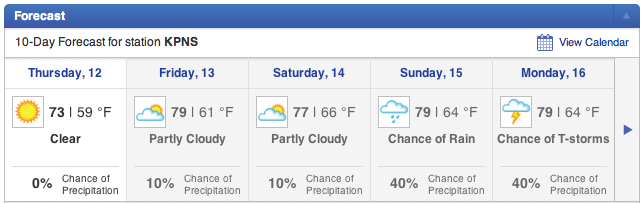

In spite of the constant pollen levels, and yes, I am still weeping and atch-oo’ing, the weather here couldn’t be much prettier. It’s the kind of weather where you never have to think about a coat, it’s balmy. The humidity is relatively low, low for Pensacola, and the nights have been down in the 50’s, so the A/C doesn’t kick on at all. You wake up refreshed, you can take a cup of coffee out on the back patio and sit and watch the birds come to the feeder, the bees sample the guara and the aloe, and fertilize the blueberries.
Our pomegranates have blossoms! One of the best things we ever did was to put in the pomegranate tree; this year we will add a Meyer’s lemon tree and a Satsuma, two trees which do well in Pensacola. We have a sheltered part of the yard where our yard coach/advisor/ landscaper thinks they will do well over the years. Even with my allergies, I can’t resist a daily walk around the yard to see how things are doing, what AdventureMan is up to now. His Purple Hyacinth is thriving, and we hope to cover a good section of the back wall with it.

(Our purple hyacinth is still just beginning; this is what we want it to look like)
All in all, life is sweet when the temperatures are mild, the humidity low, and the family nearby.
When we were down at the Pensacola Pier, where the children have a special fountain to play in, who should show up but Batman:

Batman doesn’t drive a Batmobile, he drives a big black truck. It’s kind of cute, some grown man pretending to be a superhero, but in the light of the recent Zimmerman / Trayvon Martin shooting, self-appointed super heros are a little scary. Knowing that in Florida, so many people are carrying guns in scary. No, I don’t feel better protected. My friends all say “but all the criminals have guns, we just want to protect ourselves.” Statistics show that you are more likely to be killed by a weapon when you are carrying a weapon.
If you read the newspapers, whether you are in Kuwait, or Kenya, or Florida, or anywhere in between, the criminals seem to shoot themselves in the foot. They take a stupid chance and get caught. Their own arrogance catches them up. They feel unstoppable, and they take risks they think they can get away with. Most criminals get caught, eventually, tripped up by their own pride. So to me, when you go up against a person who is not that rational, you can’t count on a weapon. A weapon can just get you into trouble. You need to use guile; live to fight another day. I trust that a criminal will get caught eventually. I don’t want to die going up against one.
Recent Comments
Kitchen on Isiais: Winding Down intlxpatr on Shampoo Ginger tigerbutterya0c5ff1d… on Shampoo Ginger intlxpatr on British Soldier Kidnapped, Esc… John on British Soldier Kidnapped, Esc… Wikipedia Donate Button

Amazina


Early Voting in Florida


