As Bad as the Rest of Us
I laughed out loud while listening to my NPR station, WUWF in Pensacola. The interview was on Talk of the Nation, Science Friday, and if you click on the blue type, it will take you to the 12 minute interview. I laughed because he starts out telling us that we’re all pretty much the same, and that people who live longer have some tiny genetic differences.
I think of how hard we work to live long and prosper, how we try to control our fat foods, our salt, how we try to exercise more and to live faith-filled lives, all of which have been shown to correlate with longer lives. Only 7% of the long-lived people studied claimed a spiritual foundation. One 95 year old woman continued to be a heavy smoker. A good portion of the long-lived women did not have children. Men who survived to a ripe old age, they tell us, tend to be in much better shape than the women.
My grandmother lived to 105, and I have always wondered if I would be one of those who also lived long. Author Nir Barzilai discusses his study of people who live long lives and tells us that counter to popular wisdom, most of them had the same bad habits the rest of us had – many smoked, right up into their old age, drank, and ate sugary and fatty foods.
“We humans age at different rates,” the author states, and those who live long have good genetics – particularly a high HDL, the good cholesterol.
Now they are studying the particulars of the genes to further unlock the secrets to longevity.
AdventureMan and I love these Toyota commercials about older people and social networking 🙂
Garlic and Onions for Your Good Health
I found this article on the health benefits of garlic and onion on AOL Health News / Huffington Post, where you can also find references to articles and studies that support the article:
What Makes Onions and Garlic Special?
Some scientists believe the components in onions and garlic called allyl sulfides and bioflavonoids may be key to the research observations of generally lower incidence of cancer and heart disease in people who consume large amounts of garlic and onions, compared with those who eat less.
Nutritional Support for Cancer Prevention
A study from the National Cancer Institute found that eating 10 grams (approximately two teaspoons) or more of garlic, onions or scallions a day was associated with a statistically significantly lower risk of prostate cancer for the participants in the study.
A study conducted at Case Western Reserve University indicated that garlic may help reduce the occurrence rate of pre-cancerous tumors (polyps) in the large intestine.
Garlic and Onions for Detoxification
Many cancers are thought to be caused by damage to DNA, often induced by environmental toxins. A study conducted at the Fred Hutchinson Cancer Research Center in Seattle found that eating a teaspoon of fresh garlic and a half cup of onions per day increases the levels of a key enzyme for removing toxins in the blood cells of healthy women. The authors of this study believed that men would require a higher dose on average for the same effect, because of their larger body size.
Read Why You Need to Detoxify 24 Hours a Day
Another study, conducted in Scotland, found that eating sautéed onions increases the resistance of the blood cells to DNA damage.
Garlic and Cholesterol
While a highly publicized clinical trial at Stanford University found that garlic did not lower cholesterol levels in healthy people with moderately elevated cholesterol, previous studies have indicated that garlic is more likely to produce beneficial effects on cholesterol in women than in men, and in patients with diabetes or heart disease than in healthy individuals.
News reports of this negative trial failed to recognize that the cholesterol-lowering effects of garlic are not the same for all people and that any trial containing a large percentage of healthy men could miss an effect that might be found if the people studied were patients with diabetes or heart disease.
In addition, while there is so much focus on the connection between cholesterol and heart disease, the benefits of garlic in preventing heart disease are probably due to factors other than changes in cholesterol.
In particular, clinical experiments have shown that regular consumption of garlic decreased calcium deposits and the size of arterial plaque in coronary arteries, prevented unhealthy blood clotting and improved the circulation of the subjects who were studied.
How to Add Garlic and Onions Your Day
The minimum effective amount is generally two teaspoons a day of garlic or two tablespoons of onions or scallions, chopped or crushed.
When shopping, look for the freshest bulbs. Onions should be very firm with an intact outer layer. For garlic, look for a bulb with tightly packed cloves. Pick scallions that are bright green and skip any that are wilted.
In the kitchen, chopped onions or garlic are the starting point for many cooked dishes. They also add robust flavor to main courses, soups and omelets. A sprinkle of chopped scallions or chives makes a perfect garnish to add flavor to dips, sandwiches, salads and grilled dishes. Cooking does not diminish the protective effects of garlic, onions or other alliums.
An Old Dented Bucket
THIS IS NOT MY STORY. 🙂 This is from my long time friend Kit Kat who passed it along to me and I loved it so much I want to share it with you:
THE OLD DENTED BUCKET
Our house was directly across the street from the clinic entrance of
Johns Hopkins Hospital in Baltimore . We lived downstairs and rented
the upstairs rooms to out-patients at the clinic.
One summer evening as I was fixing supper, there was a knock at the
door. I opened it to see a truly awful looking man. “Why, he’s hardly
taller than my 8-year-old,” I thought as I stared at the stooped,
shriveled body. But the appalling thing was his face, lopsided from
swelling, red and raw.
Yet his voice was pleasant as he said, “Good evening. I’ve come to
see if you’ve a room for just one night. I came for a treatment this
morning from the eastern shore, and there’s no bus ’til morning.”
He told me he’d been hunting for a room since noon but with no
success, no one seemed to have a room. “I guess it’s my face …. I
know it looks terrible, but my doctor says with a few more treatments
..”
For a moment I hesitated, but his next words convinced me: “I could
sleep in this rocking chair on the porch. My bus leaves early in the
morning.”
I told him we would find him a bed, but to rest on the porch.. I went
inside and finished getting supper. When we were ready, I asked the old
man if he would join us. “No, thank you. I have plenty.” And he held
up a brown paper bag.
When I had finished the dishes, I went out on the porch to talk with
him a few minutes. It didn’t take a long time to see that this old man
had an oversized heart crowded into that tiny body. He told me he
fished for a living to support his daughter, her 5 children, and her
husband, who was hopelessly crippled from a back injury.
He didn’t tell it by way of complaint; in fact, every other sentence
was preface with a thanks to God for a blessing. He was grateful that
no pain accompanied his disease, which was apparently a form of skin
cancer. He thanked God for giving him the strength to keep going…
At bedtime, we put a camp cot in the children’s room for him. When I
got up in the morning, the bed linens were neatly folded and the little
man was out on the porch.
He refused breakfast, but just before he left for his bus, haltingly,
as if asking a great favor, he said, “Could I please come back and stay
the next time I have a treatment? I won’t put you out a bit. I can
sleep fine in a chair.” He paused a moment and then added, “Your
children made me feel at home. Grownups are bothered by my face, but
children don’t seem to mind.”
I told him he was welcome to come again.
And, on his next trip, he arrived a little after 7 in the morning. As a
gift, he brought a big fish and a quart of the largest oysters I had
ever seen! He said he had shucked them that morning before he left so
that they’d be nice and fresh. I knew his bus left at 4:00 a.m. And I
wondered what time he had to get up in order to do this for us.
In the years he came to stay overnight with us, there was never a time
that he did not bring us fish or oysters or vegetables from his garden.
Other times we received packages in the mail, always by special
delivery; fish and oysters packed in a box of fresh young spinach or
kale, every leaf carefully washed. Knowing that he must walk 3 miles to
mail these, and knowing how little money he had made the gifts doubly
precious.
When I received these little remembrances, I often thought of a
comment our next-door neighbor made after he left that first morning.
“Did you keep that awful looking man last night? I turned him away!
You can lose roomers by putting up such people!”
Maybe we did lose roomers once or twice. But, oh!, if only they could
have known him, perhaps their illnesses would have been easier to bear.
I know our family always will be grateful to have known him; from him
we learned what it was to accept the bad without complaint and the good
with gratitude to God.
Recently I was visiting a friend, who has a greenhouse, as she showed
me her flowers, we came to the most beautiful one of all, a golden
chrysanthemum, bursting with blooms. But to my great surprise, it was
growing in an old dented, rusty bucket. I thought to myself, “If this
were my plant, I’d put it in the loveliest container I had!”
My friend changed my mind. “I ran short of pots,” she explained, “and
knowing how beautiful this one would be, I thought it wouldn’t mind
starting out in this old pail. It’s just for a little while, till I can
put it out in the garden.”
She must have wondered why I laughed so delightedly, but I was
imagining just such a scene in heaven.
“Here’s an especially beautiful one,” God might have said when he came
to the soul of the sweet old fisherman. “He won’t mind starting in this
small body.”
All this happened long ago – and now, in God’s garden, how tall this
lovely soul must stand.
The LORD does not look at the things man looks at. Man looks at the
outward appearance, but the LORD looks at the heart.” (1 Samuel 16:7b)
Closer to Finding a Cause for Autism
We subscribe to Kiplinger’s Bottom Line, and they send us a Daily Health News bulletin. This was in the bulletin today:
AUTISM: CLOSER TO FINDING A CAUSE
It wasn’t so long ago that psychologists theorized that autism was caused by mothers who were unable to show affection toward their children. It’s hard to believe, but these moms were actually referred to as “refrigerator mothers.” Talk about heaping on the guilt! Well, we’ve made huge strides in terms of understanding that autism is not a result of something a parent does to a child. The condition remains a heartbreaker, however.
These days the term “autism” is applied to a range of brain disorders characterized by poor communication and interaction with others. According to the most current statistics from the Centers for Disease Control and Prevention, autism now affects one out of every 110 American children between ages three and eight. (That is when the condition is typically diagnosed.) And while we still don’t know for sure what the cause is, I’m happy to report that researchers are making some impressive strides toward solving the mystery.
I recently spoke with Irva Hertz-Picciotto, PhD, MPH, a professor at the School of Medicine at the University of California in Davis (UC Davis), to hear more about the work she’s doing. She is one of the authors of two new studies on autism, both reported in the July 2011 issue of Epidemiology. One study shows that children conceived during winter months (December through March) have an increased chance of being autistic. The other shows that women who take prenatal vitamin supplements in the three months prior to conception and the first month after conception are less likely to bear autistic children.
“The studies present us with more evidence that autism isn’t caused by a single factor,” Dr. Hertz-Picciotto said. In fact, she said there’s mounting evidence that autism is caused by a combination of genetic and environmental factors… which aren’t necessarily the same in each case.
In one of the studies, researchers at UC Davis looked at approximately 6.6 million birth records in California recorded from 1990 through 2002, correlating the rates of autism for children conceived in December through March with those conceived in July. The results were surprising: Children conceived in December had an 8% greater chance of being autistic than those conceived in July… and the percentage of increase over the July rate kept rising for subsequent winter months, reaching a high of 16% in March.
“We don’t believe the calendar month itself is a cause of autism, but it’s a marker for other potential causes that may vary with the season,” said Dr. Hertz-Picciotto, who is also affiliated with the UC Davis MIND Institute, a research center for the study of autism and other neurodevelopmental disorders. She said these other seasonal factors may include viruses that are more common in winter months or the change in the amount of daylight, which affects, among other things, the body’s production of vitamin D.
VITAMINS MAY HAVE A CRITICAL ROLE
In the second study, researchers collected data from some 700 California families who had children with autism. Results of the study, Dr. Hertz-Picciotto said, showed a reduction of about 40% in autism rates in cases in which the mother had taken prenatal vitamin supplements during the three months before conception through the first month after conception. In other words, a buildup of vitamins before the crucial first month of embryonic development seems to be key to healthy neural growth. Prenatal supplements typically contain vitamin A, niacin (vitamin B-3), folic acid (vitamin B-9), vitamin B-12, vitamin C, vitamin D, vitamin E, calcium, iron, pyridoxine, riboflavin, thiamine and zinc.
Folic acid may be the critical component, said Dr. Hertz-Picciotto, because the vitamin is known to protect against defects in the embryo’s neural tube, which develops into the brain and spinal cord. With so many factors still unknown, Dr. Hertz-Picciotto said, more studies are expected to be conducted in the near future, especially research into B and D vitamins as well as fevers, infections and exposure to pesticides during pregnancy.
In the meantime, given the vitamin study’s finding of a 40% reduction in autism rates, it’s certainly wise to take prenatal vitamin supplements three months before potential conception through the first month after conception.
Source(s):
Irva Hertz-Picciotto, PhD, MPH, chief, division of environmental and occupational medicine, professor, School of Medicine, University of California, Davis. She is also affiliated with the UC Davis MIND (Medical Investigation of Neurodevelopmental Disorders) Institute in Sacramento, an interdisciplinary research center for the study and treatment of autism and other neurodevelopmental disorders.
Rebecca J. Schmidt, PhD, assistant professor, department of public health sciences, School of Medicine, University of California Davis.
Clean Produce with Vinegar; Fight ADHD
For those with children – or grandchildren 🙂 – who are concerned about the connection between pesticides and ADHD, here is a simple solution to washing your produce effectively – vinegar! I found this on EveryDay Health.
For years, researchers have noticed a gradual increase in diagnoses of ADHD. In fact, about 4.5 million kids now struggle with the condition, a 3% increase in the last 10 years.
So what’s causing this increase? A study, recently released by the University of Montreal and Harvard University, highlights a possible link from our produce. While the findings don’t yet determine a cause, the study defines an association between the disorder and pesticides. After testing and analyzing 1,139 children for one year, researchers found those who had highest exposure to organophosphates were twice as likely to have ADHD.
Organophosphates are man-made pesticides that are sprayed onto fruits and vegetables to keep insects away. While once thought harmless, some now argue children are sensitive to these pesticides. At a young age, the brain is rapidly developing, and kids possibly consume more due to their smaller body weight and size.
Frozen blueberries were found to have the highest organophosphate residue at 28%, with strawberries coming in at a close second at 25%. Celery had a 19% contamination rate.
How do we protect ourselves from pesticide contamination? Here are some helpful hints. If possible, buy local and organic. Even if you do, make sure to still peal your fruit when you have the option. For fruits and vegetables that can’t be peeled (like strawberries and celery), make sure you wash them thoroughly. Most people think running fruit under water for a few seconds gets the job done – wrong. The best cleaning method is to wash produce with a diluted vinegar solution. Here’s how to do it.
Cleaning Produce with Vinegar
Reuse an old spray bottle. For every cup of white vinegar, add three cups of water. Shake well and spray your fruits and vegetables with the solution. You should spray enough to cover their entire surface. After, wash them with cold tap water so your fruits and veggies don’t taste and smell like vinegar (I’ll pass on the vinegar-flavored strawberries, thank you).
Tests prove that the vinegar solution removes 98% of all bacteria or pesticides, compared to 80% when washing with a water and brush.
Do you have any tips to help fight pesticide contamination?
The Passage by Justin Cronin
I subscribe to GoodReads.com, and I buy books through Amazon.com, so I am not sure which one of those recommended this book for me. I held it a couple months before I read it, just wasn’t sure it was something I cared about. Once I started, however, I was hooked.
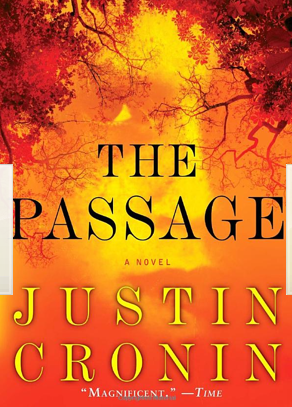
Don’t you just love summertime reading, the kind where you might even be able to grab a couple hours in a row? When you can focus like that, it’s like you are living two lives; you are in your normal existence, but a part of you is somewhere else, if the book is good enough.
Sometimes that somewhere else isn’t that great, and in The Passage, you are in a post-apocalyptic America where those military scientists have lost control of one of their experiments and life has changed forever as a result. Sorry to sound so cynical, but I started reading Sci-Fi when I was still in middle-school, so I am a little jaded about post-apocalyptic literature, but this one managed to suck me in. Also, even though you know it’s fiction, it is compelling enough to feel very real.
So before I go getting all critical about the little things, I need to tell you that when I had to put the book down, I could hardly wait to get back to it, and I probably need to look after my laundry and my floors and wash up some dishes now that I’ve finished; the book compelled my interest.
I think the author does a great job setting up the world. In order for young people to come into their own, to head out on their quest, you have to get parents out of the way, so all the young people out to solve the problems have parents who have died, or committed suicide (the living situation is a little bleak) and that kind of bugs me, even though I can see the literary usefulness of having this happen.
The survivors, 100 years after the societal meltdown, live a bleak and limited existence, mostly focused on not getting killed. (One of the very scary things is just how fast a society can melt down when faced with an overwhelming threat.)
This is a vampire-novel, but a vampire novel with a total twist, there is nothing attractive about these vampires, called virals. They are demented, and they want blood. They tear into flesh. You don’t want to be out in the open after dark, you don’t want to run into a viral. Justin Cronin makes it very very real. I’m glad my husband wasn’t traveling. I know vampires are not real, and I know there are no virals, and you know sometimes rational doesn’t matter when you hear sounds at night? These bad-guys are very very lethal and very very bad.
And here is what I like. Cronin takes you from utter fear to some compassion for the virals. I imagine this will play into the next book.
I also like his inclusion of children, and they way children perceive and the way children feel, and how those perceptions and feelings grow with the child, and, if you are very lucky or very persistent, how you can gain insights into those perceptions and understand them differently as you reach adulthood. It reminds me of another Sci-Fi author I used to read, Zenna Henderson, who wrote books about specially talented children.
Here is what I don’t like, what I find really frustrating: this is just the first volume. I am satisfied enough with this book, and I know I will have to read the next one, but I think I can see where he is going with it all. I find it frustrating; I am holding my breath for the next Game of Thrones/Fire and Ice volume to come out, and now this Passage follow up won’t be out until 2012, on AAARRGH.
It’s a dark book, but it kept me glued. The things that annoyed me didn’t annoy me enough to discourage me from reading. 🙂 It is a great summer read.
Red Robin – YUMMMMM
“I think I need a hamburger,” I said to AdventureMan as we were tucking in to bed. I can’t even remember the last time I had a hamburger, but I think it was in April, 2010, at the Red Robin in Pensacola.
Red Robin . . . YUMMM. One of the best ad campaigns in history, in my mind. Pure repetition, a little humor to re-inforce the memory, all positive. Anywhere you go in America, you can say “Red Robin” and someone will say “Yummm.”
I have a personal relationship with Red Robin. When I was a student at the University of Washington, long, long ago, the Red Robin was very near the university, near enough we could walk, even, and even though it was a bar, they weren’t very strict about carding people, and oh, they had the best burgers. It was pure comfort food. They also had a wonderful deck, so on the rare and beautiful spring days when final exams were coming and we just needed to blow off some steam, the Red Robin was one of the places we headed.
It wasn’t like the Red Robin chain. It was the original, and it was a little seedy. Here is what the original Red Robin looked like:

Yep. . . a little stoned.
Here is what he looks like now, he cleaned up good, LOL!

There were old wood floors, not the shiny kind of good wood floor, but the old fashioned cheap kind, sort of spongy when you walked on them, and usually covered with stuff that had been spilled. No, not exactly your family kind of place, it was a college student kind of place.
So for my once-in-more-than-a-year hamburger, we went to Red Robin.


Compare that to the original:

And here was my peppercorn burger:

It was YUMMMMM. Now, I won’t need another burger until September 2012 or so. 🙂
Sadly, as I was looking for some photos of the original Red Robin, I learned that they closed down the original on March 21, 2010. So sad, but I suspect it just didn’t suit the image of the new, family oriented Red Robins, more than 400 of them around the USA. But they still serve a good burger.
Freedom Greater Factor than Wealth in Happiness
Fascinating study, I found it today on AOL Health News
Freedom More Important to Happiness Than Wealth, Study Finds
Personal independence, autonomy trump money in data from more than 60 countries.
SUNDAY, June 19 (HealthDay News) — Personal independence and freedom are more important to people’s well-being than wealth, a new study concludes.
Researchers at the Victoria University of Wellington in New Zealand analyzed the findings of three studies that included a total of more than 420,000 people from 63 countries and spanned nearly 40 years.
Their key finding: “Money leads to autonomy, but it does not add to well-being or happiness.”
The studies looked at data from three different psychological tests familiar to therapists:
The General Health Questionnaire, which measures distress in terms of anxiety and insomnia, social problems, severe depression and physical symptoms of mental distress, such as unexplained headaches and stomach aches.
The Spielberger anxiety inventory, which evaluates how anxious respondents feel at a particular moment.
The Maslach Burnout Inventory, which screens for emotional exhaustion, depersonalization and lack of personal accomplishment.
The analysis revealed “a very consistent and robust finding that societal values of [freedom and autonomy] were the best predictors of well-being,” wrote psychologists Ronald Fischer and Diana Boer in an American Psychological Association release.
“Furthermore, if wealth was a significant predictor alone, this effect disappeared when individualism was entered,” they added.
“Our findings provide insight into well-being at the societal level,” the researchers concluded.
The study appears in the Journal of Personality and Social Psychology.
Dancing and Drinks
Yesterday was our 38 year wedding anniversary, and it was a great day. Last night, we went for dancing and drinks.
LOL.
Our dance class at the YMCA . . . and this month we started the waltz, which we already know how to do, but now we are learning some extras, like turns. It is barely air conditioned in the gym, if at all, so dancing is EXERCISE in the heat we are experiencing – record highs – this year.
And drinks – don’t McDonald’s smoothies count? I totally love the Wild Berry, and I try to tell myself it might even be healthy, it might even have berries, and I try not to think about the sugar. It is only now and then I have one, AdventureMan too, so our anniversary was celebrated in style. Our style, LOL, not exactly the high life, but it works for us.
Meds
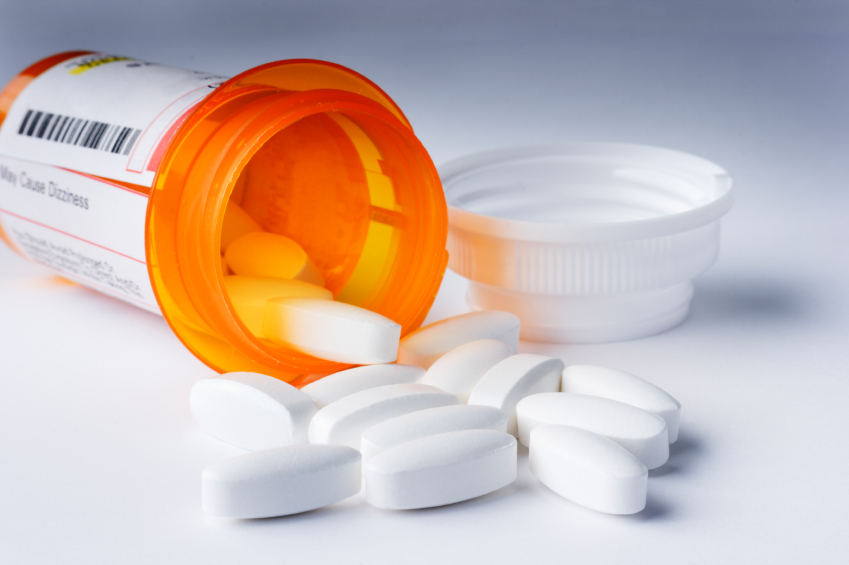
I’m going to be one of those cantankerous people who gripe about their medications. I have one friend, God bless her, who when I was feeling depressed because I was going to have to take a daily medication said “You’ve managed to put it off this long??” She always knows just what to say. Somehow, I guess I had hoped for a miracle, I was going to be a person who never had to take anything. It hurt my pride more than anything else to be told that I might live as long, but the quality of my life could be dramatically effected. That made an impression on me.
As retired military, we can get some medications for ‘free.’ So last week, when my prescription had about five pills left, I called in for a refill. It was all automated, so there was no one I could talk with, and the automated voice told me my refill would be ready for pick-up today. Meanwhile, I had five pills, and seven nights to get through.
The next day I went to the Navy Hospital, where the clerk told me that they gave me seven days worth of my medication to get me through to when I could pick up.
This morning, we got there early, 8:30, and it wasn’t open until nine, so we did some commissary shopping, then went back – only forty minutes later, but the line was 19 people long, people older than me, standing in line outside in temperatures in the 90’s (F) and steamy. Almost every other person had a problem. “Sir, we don’t even see your name in the system” they say to one. “Sir, your medication just came in; there was a shortage and we won’t have it ready for you for another couple hours.” “Sir, that medication isn’t available, can you come back in two weeks?”
When my turn came, they told me my prescription had already been refilled, and I could not get another refill until the end of the month. Indeed, when I looked at the bottle the hospital had given me, it was a full refill, but I didn’t know that.
To get this free medication is a lot of work. For only a small amount more, we can have it mailed to our home address. I am thinking that might work better for me.
Recent Comments
ExpatAlien on What Country am I Living … intlxpatr on Yellowstone: Old Faithful to C… Michelle on Yellowstone: Old Faithful to C… Cathy on No Grown-Ups in Charge intlxpatr on Waiting for Snow Wikipedia Donate Button

Amazina


Early Voting in Florida


 Here There and Everywhere