Mouth Guard
Last summer, my dentist told me I needed a mouth guard to wear at night to keep me from clenching or grinding my teeth.
I’m a little cynical about what I think of as “dental fundraising”. There always seems to be something beyond teeth cleaning now that my teeth no longer develop cavities. Whitening? Special electric toothbrush? Gum treatments? Hey, lets dig out all those old fillings and replace them with gold? And then let’s replace the gold with porcelain? He is always pushing for something new.
And I think my husband would have said something if I were grinding or clenching my teeth.
But on my way down seventh ring the other day, as one guy whooshed by me doing 40 km/hr over the speed limit and the guy on my right zipped right through the RED light as if it weren’t there, and the Gucci sunglassed dame got right on my bumper even though the passing lane was clear as could be and I had a cement truck on my right, I noticed I was clenching my teeth.
For one thing, although I have not succeeded in my Lenten goal of not saying ANY swear words on the road, I am down to only about one per long trip. For example, I hardly ever swear on the way to go grocery shopping, just a short trip to the co-op.
It is only on the ring roads or the speedways that sometimes a bad word pops out before I can stop it. The exercise in NOT swearing has been good for me in that now I am very aware, even alone in the car, when a word just popped out or almost pops out. And down to one per trip and holding back the others – hey! – all this is good. The goal is still zero-defects. But I have to applaud my progress.
So I am thinking I should probably wear my mouth guard while I am driving, because that is where I am clenching my teeth. But I wish they also made one that would guard my mouth from those very bad words that want to come out.
Fat scan shows up ‘true’ obesity
From BBC Health News.
Given that obesity is becoming a world wide epidemic, and kills more people than the bird flu, this can be a helpful tool.
Scientists say they have developed a 3D scanner that can accurately determine if a person is truly obese.
Currently, doctors gauge fatness with a calculation of body mass index (BMI). But BMI is flawed – people with lots of muscle are considered overweight.
Instead of relying on weight and height measurements, as BMI does, the scan takes into account body shape and how much fat a person carries.
Birmingham’s Heartlands Hospital has been testing this Body Volume Index.
Muscle or fat?
One human guinea pig who has tested the BVI scanner is 19-year-old rower Ashley Granger.
He is 6ft 2ins (1.88m) tall and according to his BMI of 28 is at the top end of the overweight category, borderline obese.
Muscle weighs more than fat does. And you can hide away fat but be quite thin looking
Fitness trainer Matt Roberts
His BVI scan correctly showed that he carries very little fat and that his weight is largely down to muscle.
Fitness trainer Matt Roberts said: “Muscle weighs more than fat does. And you can hide away fat but be quite thin looking.
“So it’s important that we don’t just use BMI alone.”
Dr Asad Rahim, a consultant in the obesity and endocrinology department at Heartlands Hospital, explained the work they had done with the BVI scanner over the last two years.
“We have completed the patient evaluation stage and are currently assessing the results.
“The scanner has certainly helped motivate some patients to manage their weight more effectively but there are also patients who were not scanned who lost weight.”
The next phase of testing has now been launched – the plan is to scan at least 20,000 people over the next two years as part of the Body Benchmark Study.
Select Research, the company which makes the scanners, said it hoped to make them available to GP surgeries at an “affordable” cost.
Irish Coffee Joke
Fresh from my e-mail, an Irish joke. Heard it before, but didn’t see this coming!
An Irish woman of advanced age visited her physician to ask his help in
reviving her husband’s libido ..
“What about trying Viagra? asks the doctor .
“Not a chance”, she said . “He won’t even take an aspirin” ..
“Not a problem”, replied the doctor . “Give him! an “Irish Viagra” . It’s
when you drop the Viagra tablet into his coffee . He won’t even taste it . Give it a try and call me in a week to let me know how things went.”
It wasn’t a week later that she called the doctor, who directly inquired as
to progress . The poor dear
exclaimed, “Oh, faith, bejaysus and begorrah! T’was horrid! Just terrible,
doctor!”
“Really? What happened?” asked the doctor
“Well, I did as you advised and slipped it in his coffee and the effect was
almost immediate . He jumped straight up, with a twinkle in his eye, and with his pants a-bulging fiercely! With one swoop of his arm, he sent the cups and tablecloth flying, ripped me clothes to tatters and took me then and there, took me passionately on the tabletop! It was a nightmare, I tell you, an absolute nightmare!”
“Why so terrible?” asked the doctor, “Do you mean the sex your husband
provided wasn’t good”?
“Twas the best sex I’ve had in 25 years! But sure as I’m sittin’ here, I’ll
never be able to show me face in that Starbucks again!”
The Many Uses of Vinegar
When I wrote yesterday about being a mosquito magnet, Walzing Australiaquoted a recommendation about drinking vinegar every day to keep the mossies away. It tickled a brain cell, and I googled Vinegar and Health this morning and found pages and pages of information. Vinegar is amazing, even if it is HALF as good as all these articles claim.
From How Stuff Works: The Healing Power of Vinegar
Health Benefits of Vinegar Overview
Vinegar has been valued for its healing properties for thousands of years, and during that time, it has found its way from the apothecary’s shelf to the cook’s pot. Today, it can continue to play that dual role, taking the place of less healthful dietary ingredients and helping to regulate blood sugar levels while entertaining our taste buds with its tart flavor.
There seems hardly an ailment that vinegar has not been touted to cure at some point in history. And while science has yet to prove the effectiveness of many of these folk cures, scores of people still praise and value vinegar as a healthful and healing food. So let’s take a look at the history of vinegar, the healing claims made for it, and what science does and doesn’t have to say about those claims. Along the way, we’ll discover why vinegar deserves a place in every healthy kitchen.
The Healing History of Vinegar
For centuries, people from Asia and Europe have used different types of vinegar to add flavor and zest to their food. Read about how this tangy condiment was first discovered and then developed into a must-have for kitchens around the world. Learn the key ingredient that gives vingear its special sour taste and the basic chemical process used to create it.
Misconceptions About Vinegar’s Health Benefits
Although some people believe vinegar is a miracle cure, it can’t fix everything. Marketers have asserted that vinegar cures diseases such as diabetes, osteoperosis, cancer, and many other disorders. Some even claim that it halts the aging process. Obviously, these claims are exaggerated. Find out what’s being said, and learn the truth about the real nutritional value of vinegar.
How Vinegar Affects Digestion
Although vinegar can’t cure cancer, it can help improve your general health in many ways. Vinegar benefits the digestive system, improving the absorbtion and utilization of several essential nutrients. Learn about the different organ systems that are affected by simply adding vinegar to your diet, and find out how you can improve your health and the taste of your vegetables at the same time.
If you go to the above website, there are additional articles that elaborate on the uses of vinegar. There are so many websites about the positive powers of vinegar!
There are hundreds of articles about the health benefits of vinegar. One of the most comprehensive was at Vinegarbook: Vinegar tips for health where there are topics you can click on to get to the full article, such as Treat Dandruff with Vinegar, Itchy Skin Soothed with Vinegar, Urinary Tract Infections and Vinegar, Soothing Aching Feet with Vinegar and several articles about fighting off colds and sore throats with vinegar. Vinegar has some known anti-fungal properties, and also anti-microbial and antiseptic properties. Fascinating, all from a cheap little bottle of vinegar found on any grocery shelf.
Mosquito Magnet
I am a mosquito magnet. Adventure Man and I go to Africa almost yearly, on safari, sometimes walking, and we love it. But oh, the price I pay! Two or three times a day, I have to tend my wounds – putting antihistimine creams on my bites, which swell and throb and itch until it nearly drives me crazy.
In Tanzania last year, I had no sooner put some serious DEET on when a TseTse fly landed on me and bit me – right where I had just sprayed the repellent!
So every step scientists take to develop a repellent which will truly repel, I applaud.
Mosquitoes Target Exhaled Breath
The mechanism mosquitoes use to zero in on their targets has been discovered by scientists in New York. It is already known that the insects are very sensitive to carbon dioxide in exhaled breath.
Now a team led by Rockefeller University has found that they sense the gas using protein receptors in the structure extending from their jaws.
Writing in Nature, they say the discovery could aid the fight against insect-born diseases, such as malaria.
Read the rest of the article at BBC Health News.
I’m not ready to stop breathing! But maybe they could develop a gum I could chew that would mask the carbon dioxide I exhale?
Oops – Hershey Sponsored the Study?
If you will remember, one of my key themes is “Who sponsors the study?” I love studies, and I also love going behind the scenes to find out where the funding is coming from (ok, ok, grammar-nazis, from where the funding is coming.)
So, checking around for the credentials on my previous story about chocolate being good for your heart, I found the below, which I excerpted from The International Herald Tribune. Let the chocolate buyer beware!
During a talk with analysts in October, the Hershey chief executive, Richard Lenny, called the dark-chocolate category a “major growth platform.” He told of a new Yale study sponsored by Hershey’s, and yet to be put through peer reviews, that found that eating Hershey’s Extra Dark chocolate improved blood pressure and blood flow because of the candy’s level of natural flavanol antioxidants.
In the study, 45 people were fed 2.6 ounces, or two servings, of Extra Dark, which also contained 26 grams of fat.
“These results enable us to better communicate with consumers the positive aspects of antioxidants and dark chocolate,” Lenny said.
Such claims are troubling to Mars’s chief scientist, Harold Schmitz, a driving force behind the development of CocoaVia. He said competitors were potentially misleading consumers by talking about antioxidants in chocolate when it was the level of flavanols that really made a difference.
Bonnie Liebman, nutrition director at the Center for Science in the Public Interest, said that when it came to flavanols, “the marketing is getting ahead of the science.” She noted that two recent studies, including one from Harvard, had found no link between flavanols and any reduced risk of breast cancer or heart disease.
A spokeswoman for Hershey, Stephanie Moritz, denied that the company was exploiting the excitement over flavanols and said that a range of studies had linked dark chocolate to health benefits for the heart.
Bottom line: Sponsored by Hershey’s.
Chocolate: The Newest Truth
I heard this tidbit on today’s Good Morning America – Good news for chocolate lovers!
And Now Some Good News from the AAAS: Chocolate in Medicine, Tractors in Space
By John Tierney From the New York Times blogs.
I just spent five days at the Woodstock of science, the annual meeting of the American Association for the Advancement of Science. The theme at this year’s meeting, in San Francisco, was “sustainability” — not the most sprightly topic. But in between the lectures on environmental degradation, there were some cheerier discussions. A couple of my favorites:
The healing power of chocolate. The researchers weren’t quite ready to call chocolate a health food — they cruelly reminded the audience of its fatty content — but they did have good news about the flavanols found in cocoa (particularly some dark chocolates).
Norman Hollenberg of Harvard Medical School has documented that central American Indians who consume large quantities of cocoa have low rates of hypertension and of vascular dementia (caused by restriction of blood flow in the brain). At the AAAS meeting, he reported on a experiment showing people given flavanol-rich cocoa enjoyed a “a significant increase” in cerebral blood flow. “We hope,” he noted, “to explore the potential of flavanol-rich cocoa in preventing or ameliorating the vascular dementias.”
Another researcher, Ian Macdonald of the University of Nottingham, scanned the brains of women who’d been given flavanol-rich cocoa. He found it increased “cerebral blood flow to gray matter.” He and Dr. Hollenberg didn’t urge listeners to go out and gorge on chocolate, but they did raise the possibility of flavanols being used to help aging brains, perhaps being administered in the form of vitamins. Let’s hope these vitamins are the chewable variety.
Heart Attacks in Women
I got this in an e-mail this morning. It was particularly interesting to me that we should not be drinking cold water during or after a meal (we drink iced tea) because it solidifies fats and makes them more harmful. I remember there used to be a syndrome called Fondue Belly in Switzerland, because people would eat cheese fondue (lots of fat there) and drink chilled white wine, and then get terrible stomach aches. As it turns out, a stomach ache is the least of the problems . . .
Here is an article on Heart Attacks “for women”; written by one who had one.
I’ve meant to send this to my women friends to warn them that it’s true that women rarely have the same dramatic symptoms that men have when experiencing a heart attack…you know, the sudden stabbing pain in the chest, the cold sweat, grabbing the chest & dropping to the floor [that we see in the movies]’
Having had a completely unexpected heart attack about 10:30 p.m. with NO prior exertion, NO prior emotional trauma which one would suspect might’ve brought it on, it was this past April,’06, about 1-1/2 hours after I’d spent a pleasant 2 hrs. rehearsing with the Note-a-Belles.
I was sitting all snuggly & warm on a cold evening, with my purring cat in my lap, reading an interesting story my friend had sent me, and actually thinking, “Ah-Ah-Ah; this is the life …. all cozy and warm in my soft, cushy Lazy Boy with my feet propped up.” [Now pay attention to these symptoms]: A moment later, I felt that awful sensation of indigestion, like when you’ve been in a hurry and grabbed a bite of sandwich and washed it down with a dash of water; that hurried bite seems to feel like you’ve swallowed a golf ball going down the esophagus in slow motion, and it is really awful and so most uncomfortable. You realize you shouldn’t have gulped it down so fast; needed to chew it more thoroughly, and this time drink a glass of water to hasten its progress down to the stomach ….. which doesn’t do much good because your esophagus and throat muscles are in spasms, and it hurts like h _ _ _ to swallow.
This was my initial sensation — the only trouble was that I hadn’t taken a bite of anything since about 5:00 p.m. After that, it had seemed to subside, and the next sensation was like little squeezing motions that seemed to be racing up my SPINE(hind-sight: it was probably my aorta spasming), and gaining speed as they continued racing up and under my sternum (breast bone, where one presses rhythmically when administering CPR). This fascinating process continued on into my throat and branched out into both jaws!
* * * * * * * * * * * * * * * * * * * * * * *
AHA!! NOW I stopped feeling being puzzled about what was happening. We all have read and/or heard about**pain in the jaws being “one of the signals” of a heart attack happening, haven’t we??
I said aloud to myself and the cat, “Dear God, I think I’m having a heart attack!” I lowered the footrest, dumping the cat from my lap, and started to take a step but fell on the floor instead. I thought to myself, “If this is a heart attack, I shouldn’t be walking ……… into the next room where the phone is, or anywhere else ……. but, on the other hand, if I don’t, nobody will know that I need help. And if I wait any longer, I may not be able to get up in moment, or at all.”
I pulled myself up with the arms of the chair, walked slowly into the next room, and dialed the paramedics. [ I guess when one reaches them, your address automatically flashes on a screen], and the operator verified my address immediately and asked my symptoms.
I told her I thought I was having a heart attack due to the **pressure building under the sternum and radiating into my jaws. I didn’t feel hysterical or afraid; just stating the facts, She said she was sending the paramedics over immediately; asked if the front door was near to me, and if so, to unbolt the door and then lie down on the floor where they could see me when they came in. No, I didn’t take an aspirin, as I’m allergic to it, but I did take a [important] 100 mg “magnesium oxide” capsule … which bottle I keep handily in reach on the kitchen counter … which is a small detour on my way to the front door…with about a 3/4 glass of water to get it dissolving ASAP into my bloodstream.
[Important info] ~”Magnesium” relaxes blood vessels, and it dissolves to get them expanded to let blood get through the constriction of the vessels~. I then laid down on the floor as instructed and lost consciousness. I don’t remember the medics coming in…their examination…lifting me onto a gurney or getting me into their ambulance…or hearing the call they made to St. Jude ER on the way. But I did briefly awaken when we arrived, and saw that the Cardiologist was already there in his surgical blues and cap, helping the medics pull my stretcher out of the ambulance.
He was bending over me asking questions (probably something like “Have you taken any medications?”) but I couldn’t make my mind interpret what he was saying, or form an answer, and just nodded off again…not waking up until the Cardiologist and partner had already threaded the teeny angiogram balloon up my femoral artery into the aorta and into my heart where they installed two side-by-side stints to hold open my right coronary artery; and now was being taken into the CCU, and looking up at the three anxious faces of my children, Karen, Mark, and Wendy. Since I’d been a patient at St. Jude in 2002 for my TIA treatment, they had my emergency info in their system and had called my kids. I spent two days in CCU, and two in General Ward, and then was discharged.
I know it sounds like all my thinking and actions at home must have taken at least 20-30 minutes before calling the paramedics, but actually it took perhaps 4-5 minutes before the call, and both the fire station and St. Jude are only minutes away from my home, and my Cardiologist was all ready to go to the OR in his scrubs and was getting going on restarting my heart (which had stopped somewhere between my arrival and the procedure) and was installing the stints
Why have I written all of this to you with so much detail? Because I want all of you who are so important in my life to know what I learned firsthand, as a Certified Medical Back-Office Assistant in Internal Medicine Clinics, and as one who has lived through a heart attack due to:
*1. Being aware that something very different was happening in my body …not the usual men’s symptoms,… but inexplicable things happening (until my sternum and jaws got into the act ). It is said that many more women than men die of their first (and last!) MI because they “didn’t know they were having one, and commonly mistaking it as indigestion”… take some Maalox or other anti-“heartburn” preparation…and go to bed…hoping they’ll feel better in the morning when they wake up….which doesn’t happen.
My female friends, your symptoms might not be exactly like mine, so I advise you to: *call the paramedics if ANYTHING is unpleasantly happening that you’ve not felt before. It is better to have a “false-alarm” visitation than to risk your life guessing what it might be!
*2. Note that I said **”Call the Paramedics,” Ladies. *TIME IS OF THE ESSENCE! **Do NOT try to drive yourself to the ER. You’re a hazard to others on the road, and so is your panicked husband/friend who will be speeding and looking anxiously at what’s happening with you instead of the road, and so are your kids or friends a hazard as well. As sure as I sit here, they will get the attention of a cop who will pull you over for speeding — more wasted time.
*Do NOT call your doctor — he doesn’t know where you live and if it’s at night you won’t reach him anyway, and if it’s daytime, his assistants (or answering service) will tell you to call the Paramedics. [He doesn’t carry the equipment that you need to be saved in his car! ] The Paramedics have what you NEED — principally “OXYGEN” …… that you need ASAP. Your Dr. will be notified later.
*3. Don’t assume that it couldn’t be a heart attack because you have a normal cholesterol count — I did, and do, too. Research has discovered that a cholesterol elevated reading is rarely the cause of an MI (unless it’s unbelievably high, and/or accompanied by high blood pressure.) MI’s are usually caused by long-term stress and inflammation in the body, which dumps all sorts of deadly hormones into your system to sludge things up in there (and, of course, family genetics can be a factor). I qualify for the latter, and the years 2005 and 2006 have been the most stressful of my life since Jack died in 1981.
4. Read on for the e-mail I received today that prompted my above lecture to you:
SUBJECT: Drinking ice water at mealtime (which I’ve always done until now.)
Noting that neither Urban Legends nor Snopes has anything to say about this one, it could be true.
For those who like to drink cold water, this article is applicable to you. It is nice to have a cup of cold drink after a meal. However, the cold water will solidify the oily stuff that you have just consumed. It will slow down the digestion. Once this “sludge” reacts with the stomach’s hydrochloric acid, it will break down and be absorbed by the intestine faster than the solid food. It will line the intestine. Very soon, this will turn into fats and lead to cancer. It is best to drink hot soup or warm water after a meal. (Make it green tea–a great antioxidant!)
A serious note about heart attacks: Women should know that “not every” heart attack symptom is going to be the left arm hurting.
*Be aware of intense pain in the “jaw line”, or even pressure there …… and under the sternum, or “indigestion” symptoms, especially if you haven’t eaten in several hours.
**You may never have the first chest pain during the course of a heart attack, but heaviness /pressure under the sternum is common.
*Nausea and intense sweating are also common symptoms, but not necessarily in the women. 60% of people who have heart attacks while they are asleep do not wake up.
*Pain in the jaw can wake you from a sound sleep. Let’s be careful and be aware. The more we know, the better chance we could survive.
Ultrametabolism and Kuwait Diet
I used to be thin. Really thin. Actually, I have been really thin several times in my life, but, *sigh* no longer.
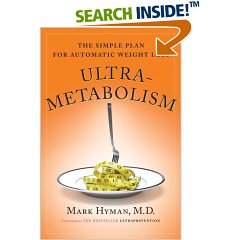
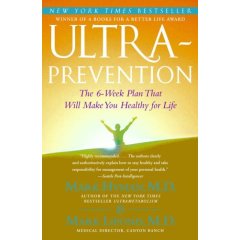
This morning as I was picking up my e-mail, this review on AOL caught my eye. Dr. Mark Hymon is one of the AOL Wellness Coaches, and he has written two books, one called Ultrametabolism, about using your built in genetic strengths to lose weight and maintain the weight loss naturally, and one called Ultraprevention about foods to eat (and not to eat) to contribute to overall wellness and good health.
If you’ve been reading me for a while, you will know that I can be a little cynical.
What I like about Dr. Hymon’s approach is that it makes sense.
Diets that totally eliminate foods you love just aren’t going to work. Give up pasta for the rest of your life? I don’t think so. But what Dr. Hymon asks us to do is to eat mostly non-processed, or minimally processed foods. He says that the processed foods have components that the body doesn’t even recognize as food, and that’s why after eating things like Twinkies, Mars bars, packaged crackers, etc. we still feel hungry – our bodies don’t recognize what we have eaten as food.
Here is what Dr. Hymon suggests (this is from the AOL Health and Fitness section):
How to use what you eat to tell your DNA how to slim you down and live a healthier life.
Day 1. Clean out your cabinets, refrigerator and freezer. Get rid of packaged items filled with processed fats and sugars. Check the lable – if it says “hydrogenated oil” or “high fructose corn syrum” get rid of it.
Day 2. Go shopping for whole foods. Find a farmer’s market in your area for fresh produce and schedule visits in your calendar weekly or biweekly over the next few months. At the grocery, choose items from the “perishable perimeter” of the store, instead of items in the center aisles where processed foods lurk.
Day 3. Change your oil! Throw out old oils, which can become rancid quickly. Replace vegetable oils like safflower and canola with extra-virgin olive oil and make it your primary oil for cooking and salad dressings.
Day 4. Visit a health food sotre. Leave there with 10 new items you’ve never tried before. Bulk-purchase whole grains, legumes and nuts. Look for new whole grain cereals, breads and snacks without processed additives, fats, sugars or preservatives. And remember: just because it’s in a health food store, doesn’t mean it’s good for you. Read the labels of any packaged foods you buy.
Day 5. Choose Eggs! Choose organic eggs farmed with omega-3 fats. Make yourself a spinach omelet for breakfast. Eggs are a good source of protein. You can enjoy as many as eight a week.
Day 6. Become wild about fish. Find a local fishmonger or educate yourself by talking to your local grocer. Or learn more about which fish are best to eat by visiting www. ultrametabolism.com. Print out a primer to bring with you when you shop.
Day 7. Prepare some healthy snacks for when you’re on-the-go. Pack a small zipper bag with a few servings of almonds or walnuts. One handful equals a serving.
Day 8. Don’t go thirsty. By now, you’ve tossed the sodas. Bring out the blender and learn to make high protein, no sugar smoothies. Experiment with crushed ice and fresh fruits. You can even make frozen nut cubes by soaking nuts overnight, blending them and then freezing them with a bit of water or milk in ice cube trays. Your smoothie will be creamy and full of good fats and proteins.
As I did his online mini-seminar, I found myself thinking “everything this Dr. Hymon is recommending is the way Kuwaitis USED TO eat.” And I also found myself thinking what a wealth of opportunity we are living amidst, here in Kuwait, where we can go to any market and buy FRESH fish, really fresh, right off the boats, in the local fish markets. We can buy fresh meats, and fresh vegetables, lots of them grown right here in Kuwait. We can buy fresh eggs. even fresh chicken when not under threat of Avian Flu. Kuwait is a paradise for exactly this kind of diet.
Not only do we have access to fresh, locally grown foods, but the cost is so much less than processed foods on the shelves. He is talking about lentils and grains commonly available here in those big sacks, down in the Souk Mubarakiyya, as well as in the co-ops and the Sultan Centers.
This isn’t anything new, eating low on the food chain, eating fresh, but it does strike me as a diet that particularly works in Kuwait, and a kind of diet that you can live with for the rest of your life, because it doesn’t make changes in your life that you can’t live with. Like he does tell us to give up soda, one of the main contributors to obesity in the world today. As you get older, carbonated beverages aren’t that hard to give up because they also give you heartburn, so just another reason to steer clear of all those unwanted calories the body can’t identify as food.
He didn’t say anything about chocolate . . . but I have ordered both books from Amazon.com hoping that the dark, semi-sweet, barely processed chocolate that I love will also be “just what the doctor ordered.” Meanwhile . . . I hear a spinach omelet calling my name!
Bacteria Helpful, Not Harmful
You might think I am obsessed with bacteria, but I am not. I think we are overly fearful, and overly protective of ourselves. Washing hands frequently is proven to help prevent frequent colds, but disinfecting our work place, etc. on a daily basis is probably not so productive. This article says, essentially, that we can disinfect all we want; we carry the stuff with us.
Bacteria on our skin natural, so stop obsessing with the hygiene
March 17, 2007
FEAR of common bacteria stoked by incessant advertising of antimicrobial soaps and cleaners may be misplaced. Researchers say that while they have discovered nearly 200 different species of bacteria living on human skin, many of these have evolved along with us for so long that they should be considered part of us – and many are helpful rather than harmful.
Some of 182 species identified on the skin appeared to be permanently in residence, while others were temporary visitors, according to the researchers from New York University School of Medicine.
In research published recently in the Proceedings of the National Academy of Sciences, Dr Martin Blaser and his colleagues took swabs from the forearms of six healthy people to study the bacterial populations in human skin – our largest organ.
“We identify about 182 species,” Blaser said in an interview. “And based on those numbers, we estimate there are probably at least 250 species in the skin.
“In comparison, a good zoo might have 100 species or 200 species. So we already know that there are as many different species in our skin, just on the forearm, as there are in a good zoo.”
Bacteria are single-celled micro-organisms believed to have been the first living things on Earth.
While some cause disease, bacteria also reside normally in our bodies, for example in the digestive tract, performing useful chores.
“Without good bacteria, the body could not survive,” added Dr Zhan Gao, a scientist in Blaser’s lab involved in the study.
The researchers noted that microbes in the body actually outnumber human cells 10-to-1.
“Our microbes are actually, in essence, a part of our body,” Blaser said. “We think that many of the normal organisms are protecting the skin. So that’s why I don’t think it’s a great idea to keep washing all the time because we’re basically washing off one of our defence layers,” Blaser added.
It has long been known that bacteria reside in the skin, but Blaser and his colleagues used a sophisticated molecular technique based on DNA to conduct a rigorous census.
The inhabitants proved to be more diverse than had been thought, with about 8 per cent of the species previously unknown, the researchers found.
Some bacteria seemed to be permanent residents of the skin, with four genera – Staphylococcus, Streptococcus, Propionibacteria and Corynebacteria – accounting for a bit more than half the population. Others were more transient.
In each person, the population of bacteria changed over time although a core set existed for each.
The volunteers included three men and three women, and the findings suggested the two sexes may differ in the bacteria they tote along.
The researchers previously had studied bacteria in the stomach and esophagus. With this research, they found that the insides of the body and the skin had major differences in bacterial populations.
“Microbes have been living in animals probably for a billion years. And the microbes that we have in our body are not accidental. They have evolved with us,” Blaser said.
Reuters
This article is from The Australian: Health and I found it on Google News.
Recent Comments
ExpatAlien on What Country am I Living … intlxpatr on Yellowstone: Old Faithful to C… Michelle on Yellowstone: Old Faithful to C… Cathy on No Grown-Ups in Charge intlxpatr on Waiting for Snow Wikipedia Donate Button

Amazina


Early Voting in Florida


 Here There and Everywhere