Storm Rolling In
This is what a storm looks like rolling into Kuwait. The normal day is on the right, the storm rolling in is on the left. Nothing has been enhanced; this is the way it really looks:

You really can’t imagine what an orange sky looks like:

Cat Meat Rumors Refuted (Ho ho ho ho ho)
Front page of todays Kuwait Times is this article:
KUWAIT: A ministry of Commerce official denied rumors that a local restaurant has been closed for selling cat meat. According to Ali Baghli, assistant undersecretary for commercial supervision affairs at the Ministry of Commerce, no violation has been registered against the Arabic restaurant in the Jahra governate as of yet. . . .
My comment – So here is what we know for sure:
A ministry official says the restaurant has not been closed for selling cat meat.
He says no violations has been registered AS YET.
He does not say the restaurant was not selling cat meat; he is saying the restaurant was not closed for selling cat meat.
What was interesting, is that both the Kuwait Times and Arab Times, when they reported this cat meat restaurant closing, said that because of connections in the government, this restaurant was unlikely to stay closed.
It is not unlike Make This Case Go Away where two youths are caught with a maid they have abducted and raped, they fight the arresting officer and bite him on the hand, they confess to what they have done . . . and no violation is registered, because the police officer is pressured by his superiors to drop the case.
It’s not like your next schwarma is guaranteed not to contain fresh cat meat. It’s only guaranteed not prosecuted.
If I sound angry, I am. Police and law enforcement officials are supposed to protect the public – that’s you and me. When the system is broken so badly that laws are not enforced against the transgressors, and worse, when courageous policement are punished for doing their job, it is a very very sorry state of affairs.
And I am convinced that God has a very special place in hell for those who abuse the trust the public places in them.
I sure wouldn’t eat any schwarma in Jahra.
Who’s Checking Kuwait’s Toothpaste?
US checks toothpaste for toxins
Toothpaste is the latest Chinese export to raise safety concerns
Health officials in the United States say they are checking all shipments of toothpaste imported from China for contamination with toxic chemicals.
Panama and the Dominican Republic have reported finding diethylene glycol, a chemical used in engine coolants, in toothpaste from China.
The toothpaste scare is the latest involving products from China.
Earlier this year, contaminated pet food ingredients killed a number of cats and dogs in North America.
The toxic chemical, melamine, was found in wheat gluten exports from China for use in pet food, prompting a recall of at least 100 pet food brands.
The tainted wheat gluten was even thought to have made its way into livestock feed.
Low-cost substitute
Cough syrup containing containing diethylene glycol originating from China killed more than 50 people in Panama last year.
The New York Times said a Chinese chemical maker had sold the industrial-grade chemical as glycerine, which is often used as a moistener in products from toothpaste to soap and cosmetics.
CHINESE FOOD SCARES
May 2007 China probes reports that contaminated toothpaste was sent to Central America
March 2007 Melamine is found in wheat gluten exports from China for use in pet food, prompting a recall of at least 100 pet food brands
Nov 2006 A dye farmers fed to ducks to make their eggs look fresher is found to contain cancer-causing properties and 5,000 ducks are culled
August 2006 About 40 people in Beijing contract meningitis after eating partially cooked snails at a chain of restaurants
Diethylene glycol is sometimes used as a low-cost substitute for glycerine and Chinese toothpaste makers have said small amounts of the chemical are harmless in toothpaste.
“We are going to be sampling and testing all shipments of toothpaste that come from China,” said Doug Arbesfeld, a spokesman for the US Food and Drug Administration.
The FDA says China is the second-largest exporter of toothpaste to the US after Canada.
Food safety investigators in Panama said two brands of toothpaste were imported illegally from China through a free-trade zone.
Chinese officials say they are investigating the claims.
The Dominican Republic and Panama have pulled thousands of tubes of Chinese toothpaste brands Excel and Mr Cool from store shelves.
Beijing recently pledged to clean up its tainted food and drug industry after the series of safety scares. The subject was raised by the US in bilateral trade talks this week.
The former head of China’s State Food and Drug Administration is facing trial, accused of taking large bribes to approve untested medicines.
From today’s BBC News.
Artichoke Treat
“Where did you find ARTICHOKES?” I asked the man, and I could see him wondering if he needed to back away from this wild-eyed woman who was staring at the big bag in his basket.
Well, they weren’t really very nice artichokes, kind of scrawny, kind of past-the-sell-date look to them, but . . . artichokes. I adore artichokes.
When my husband was invited to the family house for the first time, to have dinner, my mother served artichokes. My husband, to this day, thinks it was a test to see if he knew how to eat them. I just laugh . . . I don’t THINK it was a test. We ate artichokes all the time.
Here is how you fix artichokes:
With a sharp knife you cut off about an inch of the top, which will include a lot of leaves, and the long stem at the bottom. With kitchen scissors, you cut off the sharp points on the remaining leaves.
You fill a pot with water, put the artichokes in, bottom down, and pour a little bit of olive oil right into the center of all their leaves. Add a little salt to the water, bring it to a full boil and then turn down the heat and let them simmer for 45 – 60 minutes. The artichoke is done when you can reach in and pull a leaf off fairly easily.
(Some people say to cook them less, but I hate a tough artichoke).
You can serve the artichoke either as an hors d’oeuvre, where everyone grabs a leaf and dips into something (be sure to provide a bowl for the leaves) or as a first course, where everyone has his/her own artichoke. You can put a variety of dips in the center of the table (melted butter is classic, oil and vinegar dressing is great, and mayonnaise is also classic.)
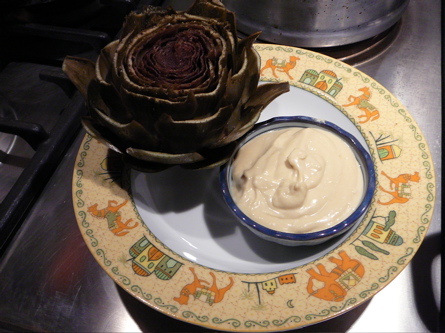
Eating the artichoke:
You pluck a leaf off the artichoke, holding the tip of the leaf in your hand, and dip it into something delicious, then scrape the “meat” off the base of the artichoke leaf with your teeth.
When the leaves start getting thin and insubstantial, you get a sharp little knife, take all the remaining leaves off, and LIGHTLY scrape off the “choke” at the center of the leaf. I emphasize LIGHTLY because the great bonus of the artichoke is the heart, which is underneath those chokes. Once the chokes and tiny leaves are gone, you can cut the heart into small pieces and dip each one . . . sheer bliss.
For me, an artichoke is an excuse to make up a batch of aioli. Start to finish, last night with the blender it took me ten minutes – and that was spending two or three minutes gathering the ingredients. Here you can find the instructions for making Mayonnaise, Aioli and Rouille using the best olive oil and knowing exactly what healthy ingredients are in it, no preservatives, and it keeps in the refrigerator. It also makes great gifts.
So yummy, so healthy and SO so easy!
Anya Seaton and Avalon
Avalon, by Anya Seaton, is an amazing book, a book I almost didn’t read, but once I picked it up, I could hardly stop reading until I had reached the end. It took me to a whole new world.

It opens in England, around the turn of the first millenium, when people had names like Aethelred and Aelfrhryth which is enough to make me NOT want to read the book. But I read another book by Anya Seaton, Katherine, and I really liked it. It, too, took place in very early English history, and had such an authentic feel. It wasn’t like you pick up the book and all the lords and ladies are in gorgeous clothes, Seaton captures the primitive life many lived in “castles”, freezing cold most of the winter, no plumbing – many of the poorest laborers in Kuwait live better, in terms of food, a roof over their head, toilet facilities – that these early nobles. And the life of villagers was even more basic, a true scrabble for survival, and under filthy conditions, not a lot of time of opportunity for bathing, so people had quite an odor most of the time.
Avalon begins with a chance meeting of a young man and a young woman, a tragedy, and a journey. Their story, as first one love and the other doesn’t, then the other does and misses the opportunity – takes us from the southernmost part of England to Iceland, to Ireland, to Greenland and to the new world, all in the space of these two intertwined lives. They never marry, and yet the book, and their relationship, is a romance.
As you can see, once I got into the book, I couldn’t put it down until the last page. These people are so real, so genuine and so human – and Seaton makes you care about them. She manages to throw in enough detail that I could almost swear I visited these places – a thousand years ago. I have spun wool to buy necessities for our sod house in Iceland, I have embroidered tapestries in the Bower of my husband’s castle, I have sent my son off to settle with his Irish bride in the new world – yes, I think I have done.
The political situation in England at this time is chaotic, with Vikings raiding their coastal cities, and deep up the rivers into the interior, feuding over who will wear the crown, and problems with the capabilities of rulers to rule. There is a constant friction between the church and state, for land, for power, for wealth. The majority of the novel takes place during the reign of – I am not kidding – Ethelred the Unready.
At the very end, I found to my astonishment, that this book also concerned the ramifications of a big lie, just as my previous book reviewed. This is a total co-incidence, something that surprised me, and this book ends in a totally different way, as the main character comes to grips with her deception, owns up to it, willing to suffer the consequences.
Is this what I want? Merwyn thought, and at once came the answer. Yes, it is. There would be boring days ahead, but never again the depressions and miseries of before . . . She felt cleansed, peaceful, and there was much gratitude. . .
That totally cracked me up, but this is a romance of a different nature, a very real romance, with the real kinds of choices that real-life romances entail, and the real life consequences. The hand of God is a major player here, and the beliefs of the characters shape events in a way consistent with the times. Dreams are taken very seriously, and the power of curses, and sorceries, which I never give two thoughts in my daily life in the 21st century.
The main characters have their own nobility, based on their choices, their growth, and their coming to terms with their lives and situations. I learned a lot reading Avalon, and I also had a great time while learning.
All in all, a fascinating read.
Life Unfair? Also bad for you
If you think life is unfair to you, just the perception could mean you are at higher risk of heart disease and stroke.
Unfairness ‘increases heart risk’
Unfair treatment outside the office could increase risks of heart disease
People who feel they are treated unfairly, including in the home and community, may have a higher risk of developing heart disease, a study says.
University College London researchers studied 8,000 people, says the Journal of Epidemiology and Community Health.
They found those with a profound sense of injustice had a 55% higher chance of suffering serious heart disease.
Experts believe a sense of unfairness engenders negative emotions which may prompt biochemical changes in the body.
This is from BBC Health News, yesterday, and you can read the rest by clicking here.
“Who Am I?”
As DNA testing becomes more and more common, surprises are popping up everywhere. This article from BBC is about two Englishwomen who discover they have Native American blood when they send their DNA in for testing.
It’s fascinating to think that migration and trade has left it’s traces generations later. I love the work that is being done with bloodlines these days.
Native American DNA found in UK
DNA testing has uncovered British descendents of Native Americans brought to the UK centuries ago as slaves, translators or tribal representatives.
Genetic analysis turned up two white British women with a DNA signature characteristic of American Indians.
An Oxford scientist said it was extremely unusual to find these DNA lineages in Britons with no previous knowledge of Native American ancestry.
Indigenous Americans were brought over to the UK as early as the 1500s.
It rocked me completely. It made think: who am I?
Doreen Isherwood
Many were brought over as curiosities; but others travelled here in delegations during the 18th Century to petition the British imperial government over trade or protection from other tribes.
Experts say it is probable that some stayed in Britain and married into local communities.
Doreen Isherwood, 64, from Putney, and Anne Hall, 53, of Huddersfield, only found out about their New World heritage after paying for commercial DNA ancestry tests.
Mrs Isherwood told BBC News: “I was expecting the results to say I belonged to one of the common European tribes, but when I got them back, my first thought was that they were a mistake.
“It rocked me completely. It made think: who am I?”
You can read the rest of the article at BBC Science/Nature News, here.
Adult Sudden Death Syndrome
This is from the Tuesday, May 1, Kuwait Times.
Beijing: A Chinese judge charged with corruption died in his cell from “adult sudden death syndrome”, Xinhua news agency said yesterday. Investigators said Li Chaoyang, 38, had been uncooperative while in detention in Xing’an county . . . “Cuts on his face and other injuries” had been caused by a fall during an escape attempt,” they said. . . .
Shi Shaosen, head of the Guilin municipal law enforcement supervisory section and chief investigator int he case, said the prisoner had not been maltreated.
“Li Shaoyang’s sudden death conforms with adult sudden death syndrome, said Shi, citing a forensic report. Li’s relatives had claimed there were wounds on his body, a gash across his lip and one of this front teeth was missing.
They had questioned the cause of his death and wrote about it on a blog. . . .”he was naked, and bruises could ber clearly seen on his face, neck and back. My brother was just 38 years old, he had been in perfect health and hardly ever fell ill” said Ki Xiuqing. “I suspect the visible bruises on his body were caused by torture.”
You can read the rest of the report at the Kuwait Times.
There really is a Sudden Adult Death Syndrome. You can get more information about it HERE. Note the “normally non-traumatic, non-violent” part. This is part of the information they give:
What is SADS?
In a medical context the term SADS is most often used in reference to Sudden Arrhythmia Death Syndrome. However in recent times the phrase Sudden Adult Death Syndrome or SADS has been adopted by the media for referring to the more general notion of a sudden death of an apparently fit and healthy young person. To avoid confusion it is important to understand all definitions of SADS when discussing different conditions or syndromes.
The use of the word ‘adult’ enables the distinction between different forms of Sudden Death Syndrome, making the distinction between Sudden Infant Death Syndrome – SIDS and Sudden Adult Death Syndrome – SADS.
Sudden Adult Death Syndrome events are defined as non-traumatic, non-violent, unexpected occurrences resulting from cardiac arrest within as little as six hours of previously witnessed normal health.
“We Think We Are SO Hot”
The scene: Gulf Road, night, and these two “hotties” are weaving in and out, going through the red lights and busy looking everywhere but where they are going, checking to see if everyone can see how very cool they are. Oh – under the left arm of the guy in back is his helmet. The guy in front has his between his legs. How cool is that?
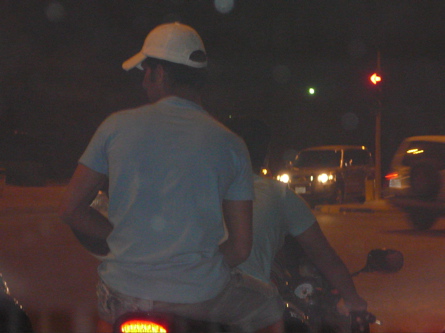
The tires on this very tired motorbike have no tread left. These two young men have no protective clothing on. They are hopped up on adreneline and eager to see and be seen.
Sukkar Mat-hoon
I love it. Thanks to Kinan, I even know how to pronounce it, Suk-kar Mat-hoon. I love it.
And it worked great in the very chocolate chocolate frosting. Here is what it looks like. If it had looked like this, I wouldn’t have had any problem.
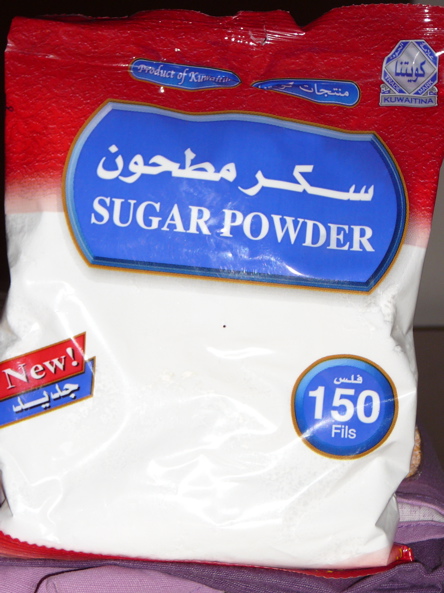
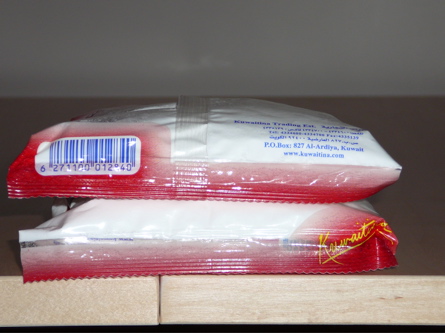
And here is what it looked like on the shelf.
Recent Comments
Kitchen on Isiais: Winding Down intlxpatr on Shampoo Ginger tigerbutterya0c5ff1d… on Shampoo Ginger intlxpatr on British Soldier Kidnapped, Esc… John on British Soldier Kidnapped, Esc… Wikipedia Donate Button

Amazina


Early Voting in Florida


