A Message of Hope
God had been angry with his people. All the prophets we’ve been reading have warned us of the consequences of our behaviors. And now, a breath of hope, in today’s reading from Zephaniah:
Zephaniah 3:14-20
14 Sing aloud, O daughter Zion;
shout, O Israel!
Rejoice and exult with all your heart,
O daughter Jerusalem!
15 The Lord has taken away the judgements against you,
he has turned away your enemies.
The king of Israel, the Lord, is in your midst;
you shall fear disaster no more.
16 On that day it shall be said to Jerusalem:
Do not fear, O Zion;
do not let your hands grow weak.
17 The Lord, your God, is in your midst,
a warrior who gives victory;
he will rejoice over you with gladness,
he will renew you* in his love;
he will exult over you with loud singing
18 as on a day of festival.*
I will remove disaster from you,*
so that you will not bear reproach for it.
19 I will deal with all your oppressors
at that time.
And I will save the lame
and gather the outcast,
and I will change their shame into praise
and renown in all the earth.
20 At that time I will bring you home,
at the time when I gather you;
for I will make you renowned and praised
among all the peoples of the earth,
when I restore your fortunes
before your eyes, says the Lord.
Where is the Diocese of Yei, Central Equatoria, Sudán do Sur – South Sudan?
We don’t always see the timeliness of our prayers, but as we pray for Yei, in the South Sudan, we pray with increased vigor, as the country faces unrest and internal turbulence.

We pray for our friend David, and all the people of South Sudan who have suffered so much for so long. The Lord has blessed them with oil, let them use their resources wisely, for the greater good, and may they enjoy the wealth of their nation in peace with one another.
Jesus Discloses Signs of the End of Times
Because we are also reading Revelations at this time of the Lectionary readings, I thought at first that is what I was reading, but no, these are the words of Jesus, talking about the signs leading to the end of times – wars and rumors of wars, lawlessness, famine, nations rising against nations, oh yikes. Sounds a whole lot like today.

(I love that this image has Jesus and his disciples looking like people of the Middle East 🙂 You find the most amazing things on the internet, and I found this on an Egyptian Coptic website, where you can also hear all kinds of Coptic Christian music and chants. St. Takla.org )
Matthew 24:1-14
3 When he was sitting on the Mount of Olives, the disciples came to him privately, saying, ‘Tell us, when will this be, and what will be the sign of your coming and of the end of the age?’ 4Jesus answered them, ‘Beware that no one leads you astray. 5For many will come in my name, saying, “I am the Messiah!”* and they will lead many astray. 6And you will hear of wars and rumours of wars; see that you are not alarmed; for this must take place, but the end is not yet. 7For nation will rise against nation, and kingdom against kingdom, and there will be famines* and earthquakes in various places: 8all this is but the beginning of the birth pangs.
9 ‘Then they will hand you over to be tortured and will put you to death, and you will be hated by all nations because of my name. 10Then many will fall away,* and they will betray one another and hate one another.11And many false prophets will arise and lead many astray. 12And because of the increase of lawlessness, the love of many will grow cold.13But anyone who endures to the end will be saved. 14And this good news* of the kingdom will be proclaimed throughout the world, as a testimony to all the nations; and then the end will come.
Most MERS Cases Undetected, report shows
Interesting, Qatar announced today their fourth case – this article says they have had eight confirmed cases and one Tunisian who visited Qatar and came down with MERS. From the Gulf Times:
Most Mers cases going undetected, study says
Researchers estimate that for each case that has been found, five to 10 may have been missed
- Gulf News Report
- Published: 21:32 November 16, 2013

- Image Credit: Reuters
- The Mers coronavirus typically causes severe respiratory problems.
Dubai: A new analysis of Mers case data suggests a large number of infections are going undetected, with the researchers estimating that for each case that has been found, five to 10 may have been missed.
The scientific paper, from European researchers, further suggests that transmission of the Mers virus is occurring at a rate close to the threshold where it would be considered able to pass from person to person in a sustained manner. In fact, the authors say based on the available evidence they cannot rule out the possibility that person-to-person spread is the main mode of transmission of the virus at this point. The other option, they say, is that the virus is spreading via a combination of animal-to-person and then person-to-person transfer.
“We conclude that a slow growing epidemic is underway, but current epidemiological data do not allow us to determine whether transmission is self-sustaining in man,” they write in the article, published in the journal Lancet Infectious Diseases.
The scientists are from Imperial College London, the University of Edinburgh and the Institut Pasteur in Paris. The work was done with funding from Britain’s Medical Research Council, the Bill and Melinda Gates Foundation and other agencies.
To date there have been roughly 155 confirmed MERS cases and at least 65 of those infections have ended in death. All the cases trace back to infections in a handful of countries on the Arabian Peninsula: Jordan, Saudi Arabia, Qatar, the United Arab Emirates and Oman.
On Wednesday, Kuwait reported its second case Mers coronavirus for a man who just returned from abroad, the health ministry said.
In a statement cited by the official KUNA agency, the ministry said the new case was for a 52-year-old Kuwaiti national who was in a stable condition. Media reports said the patient had just returned from a visit to neighbouring Saudi Arabia.
The announcement came hours after Kuwait reported its first case of the Mers virus for a 47-year-old Kuwaiti man who was in critical condition.
Last weekend, Omani officials widened health checks following the country’s first death blamed on Mers. Officials looked for any sign of the virus in people who came in contact with a dead 68-year-old man.
Neil Ferguson, from Imperial College’s MRC Centre for Outbreak Analysis and Modelling, said that while publicly available data are spotty, calculations based on what is known support the argument that only a small proportion of cases are coming to light.
“At the very least there probably have been double that number of infections,” Ferguson said in an interview.
“But it’s considerably more likely in my view that we’ve had maybe five to 10 times more human infections than that. And symptomatic human infections, I would say.”
He stressed that he and his co-authors are not suggesting that the Mers-affected countries are hiding cases, just that the way they are looking for them is not capturing the full scope of the outbreak.
Experts have previously expressed concern that surveillance systems that look only for Mers among people who seek hospital care will only catch the sickest of cases. And in at least one affected country, Saudi Arabia, the criteria for who gets tested for Mers may be less inclusive still.
Dr. Anthony Mounts, the World Health Organisation’s leading expert on Mers, said the agency has been told Saudi health officials are focusing their testing on people with Mers-like symptoms who are gravely ill.
“I know that their surveillance strategy is focused on intensive care patients,” Mounts said in an interview. “That’s the focus of their surveillance strategy.”
Mounts agrees that many Mers cases are probably being missed. But he noted that some other affected countries are taking a different testing approach. For instance, Qatar has tested over 3,000 specimens over the past six months, looking for Mers in people who seek medical help for influenza-like illness, and all people diagnosed with pneumonia.
“They really are testing a lot of people and they’re not seeing this,” he said.
Eight Qataris have been diagnosed with MERS since the virus hit the global public health radar in September 2012. As well a man from Tunisia who contracted the virus is believed to have been infected on a visit to Qatar.
Because of the scarcity of publicly available data, Ferguson and his colleagues used some different approaches to try to estimate the state of the outbreak. He acknowledged that their calculations are estimates, and said of the analysis “it’s not definitive … but I still think it’s informative at least.”
“I would say we’re doing the best we can with the data available to try and address a couple of key questions,” he said. “We would certainly be in a better position if there was fuller [case] reporting.”
A commentary by Canadian epidemiologists lauded the team for the techniques they used to reach their conclusions. Dr. David Fisman and Ashleigh Tuite, who are with the University of Toronto’s Dalla Lana Faculty of Public Health, also hinted that the often-seen instinct to withhold information during infectious disease outbreaks may be futile in the era of computational biology.
“The ability to draw inferences about diseases from non-traditional data sources will hopefully both provide alternate means of characterising epidemics and diminish the temptation towards non-transparency in traditional public health authorities,” they wrote.
One of the questions Ferguson and his co-authors tried to answer relates to whether the virus is spreading person to person at this point or whether what is being seen are infections from an animal source that is igniting limited spread in people.
To do that, they tried to calculate what is known as the virus’s reproductive number — the number of people, on average, an infected person would pass the virus on to. For a virus to sustain itself in people, each person needs to infect at least one other person, a reproductive number of 1.0 or greater.
They could not come to a definitive conclusion, saying with what is known, either scenario is possible. But they said the evidence suggests the reproductive number is near 1.0.
— with inputs from agencies
“Death Knell for OPEC?”
From AOL News – although this is not really news, announcements have been out there for a while.
Massive Oil Discovery Is Deathblow For Saudis
It’s the biggest find in 50 years and the media is completely ignoring it…
It is 6 times larger than the Bakken, 17 times the size of the Marcellus formation, and 80 times larger than the Eagle Ford shale.
All told the recent discovery outside a sleepy Australian town contains more black gold than in all of Iran, Iraq, Canada, or Venezuela.
The current estimates of 233 billion barrels are just 30 billion barrels shy of the estimated reserves in all of Saudi Arabia.
Now, one renowned international energy expert predicts the proven reserves will be much bigger.
“The find may land at 300 or 400 billion barrels, making it one of the greatest unconventional oil discoveries any of us will see in our lifetimes,” says Dr. Kent Moors and advisor to six of the top 10 oil producers and active consultant to 20 world governments.
“It represents a bona-fide redrawing of the global energy map as we know it,” Moors says, “and the mainstream media is completely ignoring it.”
Editor’s Note: Experts value this find at over $20 trillion. To see the one stock that will deliver a record payday, go here.
Where the Hell is Coober Pedy?
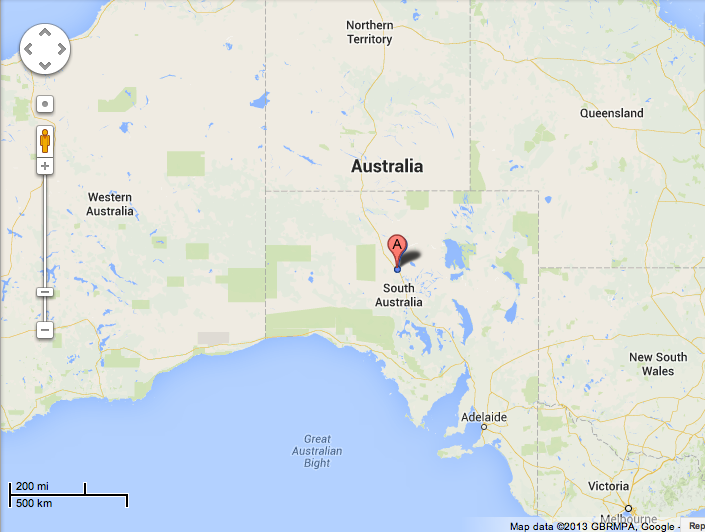
To the people who call this place home, the oncoming oil boom means nothing will ever be the same ($20 trillion worth of oil can do that to a town).
The boom is centered around a place called Coober Pedy, an inhospitable speck on the map in Southern Australia.
The big draw is the riches found in the region’s vast geological structure, the Arckaringa basin.
Encompassing an area in excess of 30,000 square miles, what’s buried within the basin is enough black gold to completely change the global oil landscape-not to mention the lives of early investors.
Analysts believe this is equivalent to investing in Saudi Arabia in the early 1950’s.
And according to this inner circle briefing by Dr. Moors, one little company controls the whole thing.
Editor’s Note: This is the biggest find in 50 years and it will create unheard of fortunes for investors who act now. Watch this unbelievable video to learn more.

The Death Knell for OPEC
This massive find has been likened to the Bakken and Eagle Ford shale oil projects in the U.S., which have created legitimate boom times in Texas and North Dakota.
Even at the lowest estimate, Coober Pedy is set to make Australia a net oil exporter; at the higher estimate, Australia would become one of the world’s biggest oil exporters.
“What we’re seeing up there is a very, very big deposit,” says South Australia’s mining minister, Tom Koutsantonis, “This is a key part to securing Australia’s energy security now and into the future.”
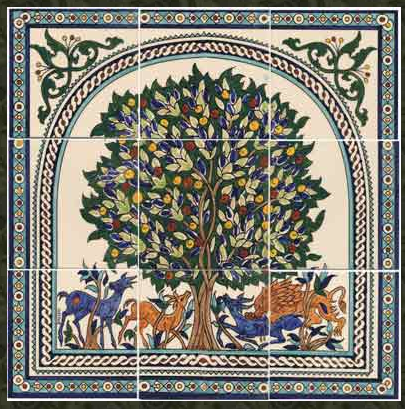
The Tree of Life
Some days, any excuse will do 🙂 Today’s readings from The Lectionary include this wonderful image of a glorious tree that bears 12 different fruits, the Tree of Life.
The Tree of Life is one of my favorite images. We saw it often in every country of the Middle East, primarily in carpets, occasionally in a mosaic or mural. I found such a wonderful variety of images online that I had to narrow down what I would include here.
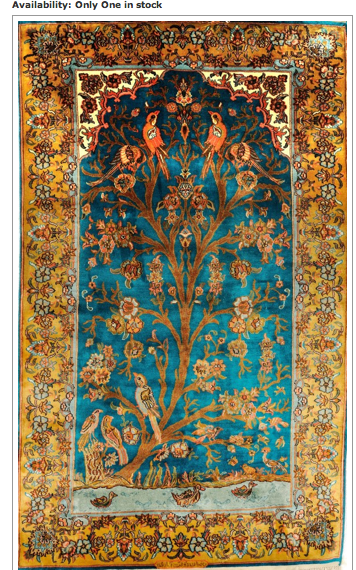
Revelation 21:22-22:5
22 I saw no temple in the city, for its temple is the Lord God the Almighty and the Lamb. 23 And the city has no need of sun or moon to shine on it, for the glory of God is its light, and its lamp is the Lamb. 24 The nations will walk by its light, and the kings of the earth will bring their glory into it. 25 Its gates will never be shut by day—and there will be no night there.
26 People will bring into it the glory and the honour of the nations. 27 But nothing unclean will enter it, nor anyone who practises abomination or falsehood, but only those who are written in the Lamb’s book of life.
22 Then the angel* showed me the river of the water of life, bright as crystal, flowing from the throne of God and of the Lamb 2 through the middle of the street of the city.
On either side of the river is the tree of life* with its twelve kinds of fruit, producing its fruit each month; and the leaves of the tree are for the healing of the nations. 3 Nothing accursed will be found there any more. But the throne of God and of the Lamb will be in it, and his servants* will worship him; 4 they will see his face, and his name will be on their foreheads. 5And there will be no more night; they need no light of lamp or sun, for the Lord God will be their light, and they will reign for ever and ever.
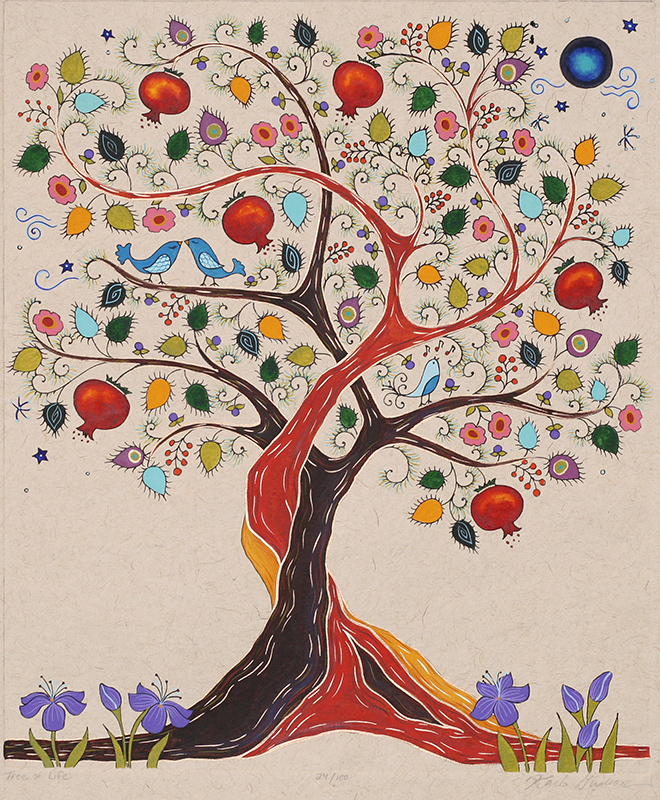
Karla Gudeon, artist
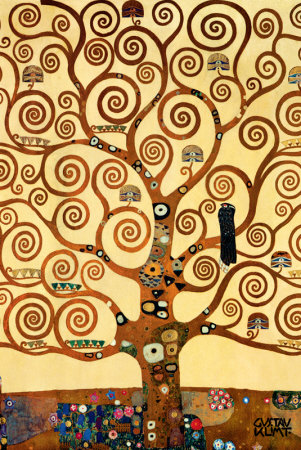
Gustav Klimt
Armenian Ceramics

Irina Charny – artist

“How Have You Managed . . . ?”
“What do you mean?” I asked the elegant grinning lady who was asking me the question. Three former military wives, one Army, one Air Force and one Navy, and we had been talking about our world-wide lives and adventures.
“How are you doing? You haven’t been here long. Are you managing to settle in?” asked with enormous sympathy.
She caught me off guard.
Yes, I am happy. I’ve settled in. I have friends. I’m connected.
But her question caught me off guard, and all of a sudden I couldn’t answer.
“I’m doing OK” I managed to start. “But it’s like this church. I love this church, and at the same time, there are times I walk in and oh, how I miss our churches in the Middle East, where I would walk in and think ‘this is what heaven must look like’ especially at Christmas, with all the Indian families in their saris and finery, and the Africans in their brocades and elaborate head-dresses, and the people from all over the world. The music was simpler, and at the Christmas Eve service, we sang ‘Silent Night’ in every language in the church . . . I miss that.”
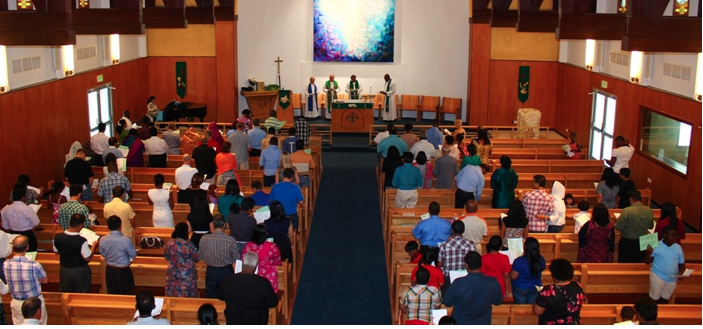
There are times the memories catch me unaware, and leave me breathless.
AdventueMan and I went grocery shopping today and when the cashier told me the total, AdventureMan almost gasped. I just laughed and told him that’s why I never took him grocery shopping with me in Kuwait – the sticker shock would have killed him.
Life here is definitely easier.
On the other hand, we have had to revise our ideas about Kuwait drivers. At first, we just thought there were a lot of Kuwaitis living in Pensacola; now we have realized that there are people who just drive as they please. Some of them are stoned out of their minds. I witnessed an accident last week where when I checked the driver of the car that was hit, she grinned at me loopily – and then disappeared. It was bizarre, and I wonder how many people are on the roads as impaired as she was. She went right through a stop sign as if it weren’t even there, and if the car had hit 6 inches more forward, she would have been dead. She didn’t have a scratch. And she was not at all concerned, just that loopy grin. “Elegantly wasted” said the driver of the car who hit her.
We both have a lot going on. With connection comes commitment and obligation. We try to coordinate our schedules at the beginning of the week so we can help one another out. The highlight is that each afternoon I am taking care of our new little granddaughter. AdventureMan/Baba often comes by and naps in the peaceful environment just to be with us. She is a sweet, laughing little baby, never very fussy. He offers me a day off, which occasionally I take, or he takes a time when I have a meeting or an appointment. We have both discovered how very much we like the ‘work’ of grandparenting. 🙂
We’re managing. 🙂
“if You Can’t Prevent Rape, You Enjoy It”: Ranjit Sinha
The Chief of India’s Central Bureau of Investigation said this! Was he snorting cocaine in a drunken stupor? Of course he is apologizing, but his careless remark demonstrates the sentiments buried deep in his culture’s heart – it’s only women. Not worth much, not like us men. Outrageous.
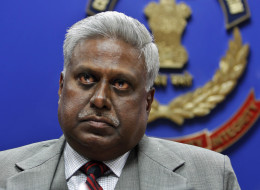
NEW DELHI (AP) — India’s top police official apologized Wednesday for saying, “If you can’t prevent rape, you enjoy it,” a remark that has outraged women across the country.
Central Bureau of Investigation chief Ranjit Sinha made the remark Tuesday during a conference about illegal sports betting and the need to legalize gambling. The CBI, the country’s premier investigative agency, is India’s equivalent of the FBI.
Sinha said at the conference that if the state could not stop gambling, it could at least make some revenue by legalizing it.
“If you cannot enforce the ban on betting, it is like saying, ‘If you can’t prevent rape, you enjoy it,'” he said.
The remarks have caused outrage across India, which in the past year has been roiled by widespread protests following the fatal gang rape of a 23-year-old woman on a bus in New Delhi.
On Wednesday, Sinha said that his comments had been taken out of context and misinterpreted, and that he was sorry if he had caused hurt.
Angry activists, however, called for his resignation.
Communist Party of India (Marxist) leader Brinda Karat said Sinha’s comments were offensive to women everywhere.
“It is sickening that a man who is in charge of several rape investigations should use such an analogy,” Karat told reporters. “He should be prosecuted for degrading and insulting women.”
The New Delhi attack on the young woman last December caused nationwide outrage and forced the government to change rape laws and create fast-track courts for rape cases. New laws introduced after the attack make stalking, voyeurism and sexual harassment a crime. They also provide for the death penalty for repeat offenders or for rape attacks that lead to the victim’s death.
Where is Umzimvubu, South Africa?
Today we pray for the Diocese of Umzimvubu, in South Africa:

Matthew 5: 44-46
|
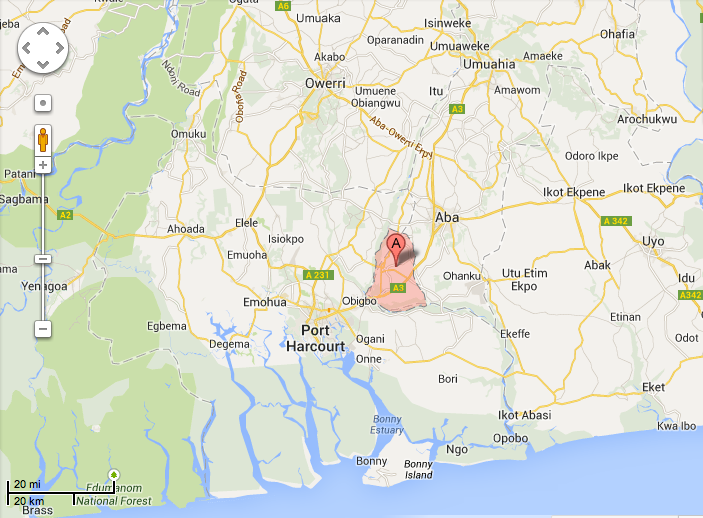
Where Are Dioceses of Ukwa and Umuahia (Aba, Nigeria)?
Every day our church prays for a different part of the world. Today it is Ukwa and Umuahia in Aba, Nigeria. I had to look it up:
Recent Comments
intlxpatr on Shampoo Ginger tigerbutterya0c5ff1d… on Shampoo Ginger intlxpatr on British Soldier Kidnapped, Esc… John on British Soldier Kidnapped, Esc… intlxpatr on British Soldier Kidnapped, Esc… Wikipedia Donate Button

Amazina


Early Voting in Florida


