Freedom Greater Factor than Wealth in Happiness
Fascinating study, I found it today on AOL Health News
Freedom More Important to Happiness Than Wealth, Study Finds
Personal independence, autonomy trump money in data from more than 60 countries.
SUNDAY, June 19 (HealthDay News) — Personal independence and freedom are more important to people’s well-being than wealth, a new study concludes.
Researchers at the Victoria University of Wellington in New Zealand analyzed the findings of three studies that included a total of more than 420,000 people from 63 countries and spanned nearly 40 years.
Their key finding: “Money leads to autonomy, but it does not add to well-being or happiness.”
The studies looked at data from three different psychological tests familiar to therapists:
The General Health Questionnaire, which measures distress in terms of anxiety and insomnia, social problems, severe depression and physical symptoms of mental distress, such as unexplained headaches and stomach aches.
The Spielberger anxiety inventory, which evaluates how anxious respondents feel at a particular moment.
The Maslach Burnout Inventory, which screens for emotional exhaustion, depersonalization and lack of personal accomplishment.
The analysis revealed “a very consistent and robust finding that societal values of [freedom and autonomy] were the best predictors of well-being,” wrote psychologists Ronald Fischer and Diana Boer in an American Psychological Association release.
“Furthermore, if wealth was a significant predictor alone, this effect disappeared when individualism was entered,” they added.
“Our findings provide insight into well-being at the societal level,” the researchers concluded.
The study appears in the Journal of Personality and Social Psychology.
Doha Debates and Where Are You From?
The Baked Salmon Dijon for last night’s dinner took a little longer to cook because Joe Patti’s cuts the salmon steaks so thick (we cook two, split one and freeze the other for another night), so while I was waiting, I flipped around and found WSRE’s Doha Debate coverage.
Who knew?
I didn’t know I could still watch the debates in Pensacola! This one was about whether or not Egypt should postpone elections in the interest of forming a more representative democracy. The vote was 84% in favor; the two young supporters carried the house. 🙂 This was the March debate and you can hear the entire 48 minutes by clicking here.

The winning female debater used a slogan I had not heard, but I love, because it is graphic and memorable – “we do not want a fast-food democracy that brings only indigestion.” The younger debaters want to scrap the entire constitution and re-write it, claiming the current structure needs to be thoroughly revised in order for democracy to have a chance of success.
I love it that these issues have a forum for debate in Doha.
Following the debate was a cringe-worthy video about asking people where they are from. His point was that when he is asked where he is from, and he answers ‘The Bronx,’ people say “No, where are you REALLY from?’ and the implication is racist. He says it is the same as saying that his color is darker, therefore he is not like us, so he must not be from around here.
I’ve asked that question. Never meant it to be insulting, but I will stop now. Or I will only ask those with a slight accent, maybe. Wherever we have lived, we have been asked that question – but then, in Kuwait and Qatar, most of the work force is not Qattari or Kuwaiti. Even in Germany, however, where we might look a lot like them, we are asked where we are from. It used to be a courteous way of showing interest, or initiating a conversation.
One time in Doha, a local man asked me about my breeding, LOL. I told him I was a product of the American melting pot, and from the earliest settlers to the latest, my family includes just about a little of everything. We were at the veterinarian’s office, and I knew the purity of his dog’s blood lines mattered, and probably his own, but I also felt a little insulted, and I haven’t forgotten it. Doesn’t science teach us that diversity in blood lines is a good thing?
We are in the middle of a heat spell in Pensacola, early this year, and because we haven’t gotten anywhere near the normal rainfall, there are also wildfires. The firefighters are struggling to put out the fires, and also fighting heat exhaustion. AdventureMan is out watering all our new plantings, and our tomatoes, every morning, God bless him, because when the temperatures go high, I just want to stay inside.
The Mainstay in Saxonburg (Pennsylvania) B&B
Part of the sheer exhilaration of our recent trip was the three day stay at The Mainstay, In Saxonburg. It didn’t hurt that all the rooms were taken for the same wedding party, and that we all got along so well. Three of the four couples were friends who had gotten to know one another when we all lived in Doha, Qatar, together, and the fourth couple had visited in Doha, so we all had that in common, as well as our friendship with the wedding family.

We got there early, and thought we would just find out what time we could check-in, but the house manager, James Stanek, welcomed us right in. We has reserved the Safari room, mostly because I really wanted AdventureMan to be happy about being on this trip, and the room was really a lot of fun.
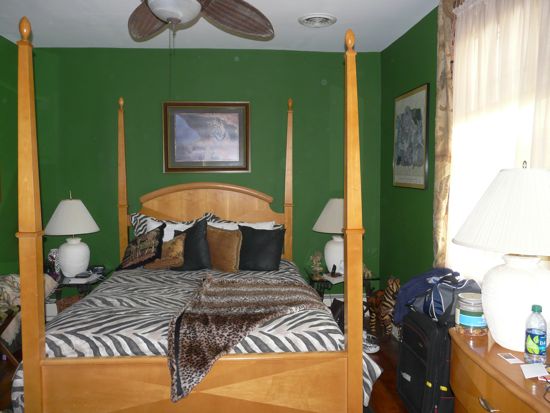

Even the bathroom had lions and giraffe, carried out the Safari theme. The rooms were immaculately clean, always a good thing, and the beds were comfy with really good sheets. We all slept great.
The best part about the Mainstay was that it was a very welcoming B&B. While it is elegantly and tastefully decorated, you don’t get the feeling “don’t touch!” “don’t sit here!”, quite the opposite. We often gathered in the library; watched the news, all us nerdy geeks and our computers keeping up with the world first thing in the morning, coffee cups in hand. One day it rained, and the library was a great place to just hang out while we figured out how to spend the day. AdventureMan spent some time reading in the gathering room, close enough to join in if there was a lively conversation; far enough away to be able to read without breaking concentration.


For me, one of the best parts, too, was the house dog, Buddy. I’m an early riser, and I like to get my exercise early in the day so I can slack off the rest of the day. (Actually, exercise tends to help me not slack off; it gives me more energy.) Buddy was always polite, never pushy, but when he heard the word “walk” he was right there for me, eager to keep me company. There is just something wonderful about having an eager dog to walk, as he checks out all the fascinating smells in the neighborhood.
The Mainstay in Saxonburg is a short drive north of Pittsburgh, Pennsylvania, and minutes away from Armstrong Farms, a party site for weddings, family reunions and gatherings of all kinds.
Perfect Pensacola Evening
After weeks of early and sultry heat, Pensacola has had a spell of cooler weather, nights down into the 50’s and even high 40’s, and days in the mid 70’s – and not humid. Great weather for working in the garden or going to a park, weather that just makes you want to be outside.
Last night we went to a meeting of the Gulf Coast Diplomatic Council at a beautiful home out in Gulf Breeze, with a view of the water that goes forever. As you walk in, you can smell wood – or at least I can. I grew up with houses that used a lot of wood, and I love the smell. The heart of the house was a kitchen – dining room – sitting area with that forever view.
It was a lively group. The group only gets together a couple times a year, but what a fun group – all people who are willing to host foreign visitors when they come to Pensacola. I am guessing one of the reasons that Pensacola gets so many groups (besides those glorious sugar-white sand beaches, and the multicolors of the Gulf, and all the seafood and palms and balmy weather) is that the GCDC has developed a sterling reputation with visitors, and the Department of State is happy to send them to a place where they will get such a warm reception.
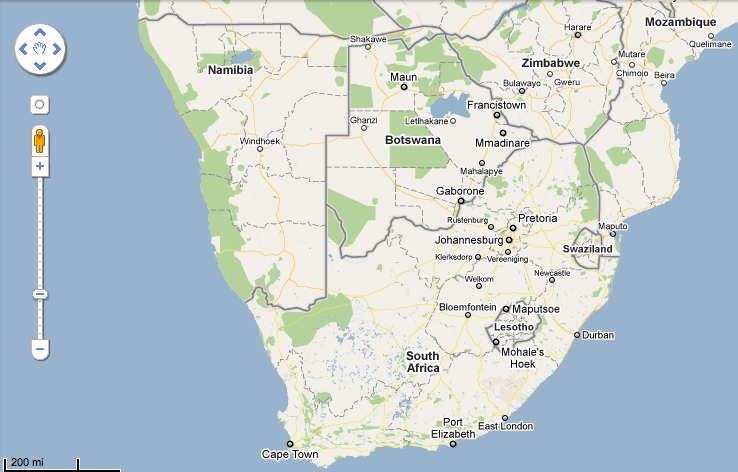
Attending also were some delegates from other countries. We spent some time with a Namibian farmer, who wants to find market outlets for poor rural women in Namibia. We spent two weeks in Namibia – it seems a lifetime ago – and loved our time there. We made a circuit of the country, from the farms in the east to the great Etosha game park, to the Demaraland, and down the Skeleton coast to Sossossvlei, where we climbed the mountainous sand dunes. It was a great adventure for us, and we have such happy memories of Namibia, and our delegate was so happy to meet people who had spent time in her country, We had a great visit with her and a great time altogether.
There were mountains of food available, but you know how awkward it is to be talking with people and they ask you a question just as you have taken a bite of something that needs to be chewed and swallowed before you can answer? We passed on the food so we could focus on the conversations. In the back of our minds, too, we knew we were close to one of our favorite places, Flounders, so we popped over there for a bowl of chowder, grilled grouper po’ boy (AdventureMan) and grilled shrimp Ceasar (me). The evening was perfect – no humidity, temperature perfect, slight breeze but not too hot or too cold – perfect.
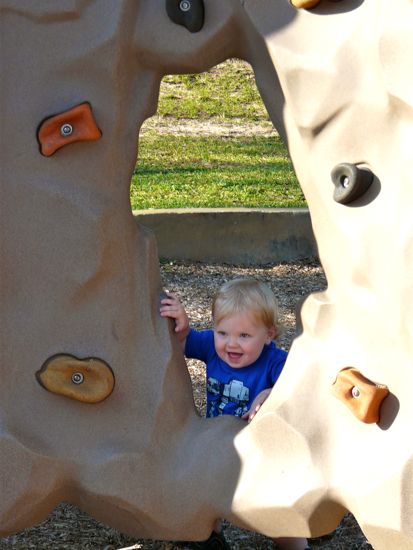
This weekend we are taking care of Happy Baby while our son and his wife head off to a family wedding. Happy Baby is fifteen months old, and a live wire. So much energy and no inhibitions! You have to watch him every minute. He loves climbing, but he has no sense of danger. It takes both of us to keep up with him! He is so much fun to be around, that although it will be exhausting, it will also be a lot of fun.
The Minority Prayer

I listen to National Public Radio in my car and in my project room. I finally figured out how to stream WUWF, my local station. Until today, unless I wanted to use my wind-up radio, I had to stream KUOW in Seattle, or NPR which I like because it has so much BBC.
I am really delighted to figure out how to stream WUWF, because it has a lot of local news and events I might miss streaming one of the other stations, and I also like hearing who the sponsors are, so I can tell them how much I enjoy National Public Radio.
So today I am listening to Talk of the Nations, a segment on Pakistani-Americans, and this particularly articulate young lawyer mentions ‘the Minority Prayer.
Do you know what that is? I didn’t. But I laughed when he explained it, because we have prayed it so often living overseas . . .
He was talking about when attending a Muslim-American Lawyers National meeting, and how the buzz spread that Osama Bin Laden had been killed, and how they all sent up a quick minority prayer – “Please, Lord, don’t let it be Pakistan where he was found” – and of course, it was Pakistan. He was very wry, and I enjoyed listening to what he had to say. At the same time, I was grinning. I cannot count the number of times we have heard rumors – in Germany, in Kuwait, in Qatar, in Tunisia, in Jordan – and prayed . . . “Please Lord, don’t let it be the USA who did this . . . ”
It’s very much an expat’s prayer.
If you want to listen to the interview yourself, you can find it here.
Dancing on Graves?
I trust that it all happened exactly as it should. Don’t we all believe God is in control?
Friends and family are asking me why I have been silent about the raid, capture and execution of Osama Bin Laden.
9/11 and the celebrations televised around the world were equally horrifying to me. Pointless killing. Pointless celebration.
We don’t celebrate the deaths, not even of those who have caused us harm. It’s not who we are, and it only invites retribution, and keeps the pointless violence, the pointless arguments going.
Jesus told us that it is easy to pray for our friends and family, but that we are to pray for our enemies as well. It’s really really hard. And it is one of the few gates that will open the door to true change, which has to come from the heart.
There is no guarantee that an operation will succeed, no matter how talented, trained and intelligent the operators are. Well done, Navy SEALS. Well done, those who gathered the information, who confirmed the information, and who chose to execute surgically, rather than a bomb which would kill without positive identification. Well done, gathering all the computers and flash drives, hopefully full of information which will give insight into future plans which can be thwarted.
Osama’s death doesn’t bring back the thousands killed in the 9/11 attacks. It does send a message that attackers will be hounded until they pay for their actions. That’s not a pass for dancing; it’s a grim tally in the world of hard-ball politics.
Your Words Make all the Difference
Thank you, Kimberly, for sending me this great message:
Scamese
This was in my newest New Yorker magazine, originally given me by Little Diamond, now I can’t live without my subscription. 🙂 There is the kind of news you get on television, like what they have pictures of, maybe not the most important stuff but visual. Then there is National Public Radio news, and the New York Times, and The New Yorker. The New Yorker also has some of the greatest, funniest covers ever, and great cartoons. This one, as you might imagine, is near and dear to my heart:

Two Saints of the Church
Here is the prayer given for today in the Lectionary:
PRAYER (traditional language)
Loving God, we offer thanks for the ministries of Edward Thomas Demby and Henry Beard Delany, bishops of thy Church who, though limited by segregation, served faithfully to thy honor and glory. Assist us, we pray, to break through the limitations of our own time, that we may minister in obedience to Jesus Christ; who with thee and the Holy Spirit livest and reignest, one God, now and for ever. Amen.
BISHOPS, 1928, 1957
Delany, Henry Beard [Feb. 5, 1858-April 14, 1928] was the second African American bishop in the Episcopal Church, being elected Suffragan Bishop of North Carolina in 1918. He is probably better known as the father of Sadie and Bessy Delany, authors of the popular book, Having Our Say, which chronicled their lives.
Edward Thomas Demby [Feb. 13, 1869-Oct. 14, 1957] was the first African American bishop in the Episcopal Church. He served his first parish in Mason, Tenn. He became “Suffragan Bishop for Colored Work in Arkansas and the Province of the Southwest” in 1918. His career has been covered in a book, Black Bishop.
As we begin to transition from the Lenten season to the great feast of Easter, my heart takes hope from the courage of those who stood in the face of prejudice and exclusion, and focused on doing their jobs and doing them with grace. I think of how hate blinds us. I think of how Catholics and Protestants slaughtered one another, how Mormons were driven West, how Sunnis and Shiites are clashing in Iraq, how Christians and Moslems are battling to the death, and when I am near to losing hope, I try to focus on how earlier conflicts have almost totally disappeared. We are all believers. We believe in the one true God. We squabble like children over his inheritance.
US Highway Deaths Lowest Since 1949
The major reason? 84% US drivers use seat belts. You can read the entire article at AOL News
WASHINGTON — Highway deaths have plummeted to their lowest levels in more than 60 years, helped by more people wearing seat belts, better safety equipment in cars and efforts to curb drunken driving.
The Transportation Department estimated Friday that 32,788 people were killed on U.S. roads in 2010, a decrease of about 3 percent from 2009. It’s the fewest number of deaths since 1949 — during the presidency of Harry Truman — when more than 30,000 people were killed.
The Pacific Northwest region, which includes Washington state, Oregon, Idaho, Montana and Alaska, saw fatalities fall 12 percent. Western states including Arizona, California and Hawaii also posted large declines.
Government officials said the number of deaths was still significant but credited efforts on multiple fronts to make roadways safer.
“Too many of our friends and neighbors are killed in preventable roadway tragedies every day,” said Transportation Secretary Ray LaHood. “We will continue doing everything possible to make cars safer, increase seat belt use, put a stop to drunk driving and distracted driving and encourage drivers to put safety first.”
Recent Comments
ExpatAlien on What Country am I Living … intlxpatr on Yellowstone: Old Faithful to C… Michelle on Yellowstone: Old Faithful to C… Cathy on No Grown-Ups in Charge intlxpatr on Waiting for Snow Wikipedia Donate Button

Amazina


Early Voting in Florida


 Here There and Everywhere