Amer Al Hilal on Kuwait’s Ban on DSLR Cameras
Woooooo Hooooo Amer Al-Hilal, a man I am proud to call my friend. It takes such great courage to speak out when something is going terribly wrong, and Amer knows how to do it articulately, rationally, and as the gentleman he is.
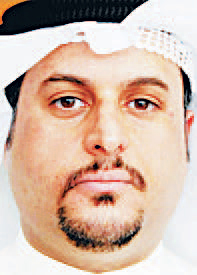
From his article in the Arab Times:
Camera ban regressive idea
‘Don’t stifle home-grown talent’
For a country that possesses a Constitution which safeguards civil liberties and freedom of speech, Kuwait sporadically sure likes toying with those liberties such as tentatively banning the Blackberry service, shutting down You Tube, impeding public gatherings and marches, banning and censoring books, literature, films and magazines which are available elsewhere in the Gulf.
This week according to media reports, and highlighted extensively in local Weblogs and Twitter, a palpable growing outcry is directed at the tentative plans by The Ministry of Information, Ministry of Social Affairs and Ministry of Finance to outlaw public photography and relegate it to journalism purposes only. This has allegedly resulted in the ban of Digital Single Lens Reflex Cameras (DSLRs) in public places. If this charade is true, then it bodes ill for this country, another regressive move into the annals of ignorance.
During the 1980s video cameras and photographic equipment were also shunned by the authorities. I remember visiting Failaka in 1985 and being confronted by a military officer who demanded I hand in my bulky video camera until I left the island. These types of infringements in the name of security were insignificant — we still had an attempt on HH the Amir, explosions at Foreign Embassies in Kuwait and an actual invasion.
Why does this country always attempt to stifle home-grown talent? Banning cameras in public places is demoralizing to all the passionate, talented young Kuwait men and women who have excelled in this field and love their hobby, not to mention visitors who attempt to document their travels here. Moreover, banning DSLR cameras is irrational and counterproductive if you think about it; in this day and age of iPhones, Blackberries, 5 MP plus camera phones, Google Earth and the like, anyone can take photograph of anything, quietly, without fanfare, which makes the potential DSLR ban even more preposterous.
I have just returned from a trip to Dubai where I witnessed dozens of tourists proudly using their cameras to document Burg Khalifa and the other picturesque locations. No one stopped them, impeded them or asked them what they were doing and you know why, because they respect people’s rights and are intent on making their country more appealing. UAE is able to manage security matters confidently because they have proper security and ID processes in place: eye scanners at airports and entry points, proper electronic government, high fines for breaking the law, a brilliant CCTV system in place in every street corner (not the shoddy black and white choppy, streaming-like quality of the limited equipment we have here) — they truly invest in their infrastructure, maintain it and upgrade it.
If Kuwait is serious about its security then it should invest in the same caliber of CCTV and not the bargain basement tenders that usually go towards ineffective systems (i.e. Highway signs with the useless ‘no mobile’ plasma screen) belonging to members of the matching ministry who want a ‘piece of the action’. The sad reality is the government sector here would rather ban something than actually strive to improve it through sheer hard work and effective processes. It’s just easier to ban; a question of laziness and neglect.
Needless to say, Kuwait seems unfazed when foreign jets infiltrate our airspace and take aerial shots of our oil refineries and military installations, or when agents and their local conspirators are found to possess blueprints and photographs of said installations, but no, lets go after the ‘little guy’, the amateur photographer or tourist on the street taking pictures. It’s a hypocritical, spineless action by the authorities.
Moreover, I suspect the issue is not just relegated to security, a myriad of reasons could have led to the support of this ban, fundamentalists who felt cameras and pictures are a ‘Tool of the Devil,’ government officials and ministries disgraced at seeing shots of Kuwait’s dilapidated infrastructure, environment and mismanagement on weblogs, internet forums and magazines. You cannot conceal the squalid side of Kuwait; it is there for everyone to see.
Furthermore, this law against public photography will not be enforced, just as seatbelt, no mobile while driving, no litter, no smoking areas, and other ‘laws’ cannot be enforced in this Land of Confusion.
Amer Al-Hilal is webmaster of http://www.hilaliya.com and can be reached at amer@hilaliya.com.
Kuwait Ministries Ban Photography?
I am in total shock.
Thank you, Bit Jockey, for sending this to me, an article from the Kuwait Times.
We had so much fun! We had photo challenges, Kuwait sunsets, National Day Celebration photos, so much fun. And now, you can get arrested for taking photos? Not of military or political or sensitive buildings, not for reasons of national security, but . . . just because?

Most photographers in Kuwait are careful not to photograph women, or any citizens without their permission. Why on earth was this ban created?
How on earth will they enforce it? What are the penalties?
KUWAIT: After the ban three ministries placed on photography, most Kuwaiti youth are a bit confused about what to do with their cameras if they can’t use them in public and why such laws were implemented in the first place. The Ministry of Information, Ministry of Social Affairs and Ministry of Finance recently came to the conclusion that photography should be used for journalism purposes only. This has resulted in the ban of Digital Single Lens Reflex Cameras (DSLRs) in public, on the streets and in malls
.
What most Kuwaiti photographers have come to wonder is how such a decision could be reached by authorities, especially considering that digital cameras and cell phone cameras have the same abilities. What most people think of photography as a hobby has become a bit misguided due to the fact that the country has so little exposure to art. While using a DSLR, passersby may wonder if the camera is being used for the wrong reasons.
Mohammed Al-Eisa, who picked up photography as a hobby more than 10 years ago, said that he has decided to take photos of animals or still life due to the fact that these subjects don’t mind having their picture taken and don’t make a scene. “I started facing problems the very first day I bought my camera,” Mohammed added.
What often happens is that a big black camera tends to worry people. Taking a picture of a stranger would seem like much less of an issue if you were using a more discreet camera or even a cell phone. Mariam Al-Fodiry said that she has faced similar problems with her hobby and that being a girl doesn’t help at all. She said that in some cases it makes the problem even worse. “Switching to abstract and landscape photography was one the options I considered after getting into enough trouble,” Mariam said.
Majed Al-Saqer said that sometimes people stop him while he is in his car with his camera, as if he were planning to kill someone with it. He said that he isn’t sure what the real problem is, whether it is people taking photos of each other or the size of the camera.
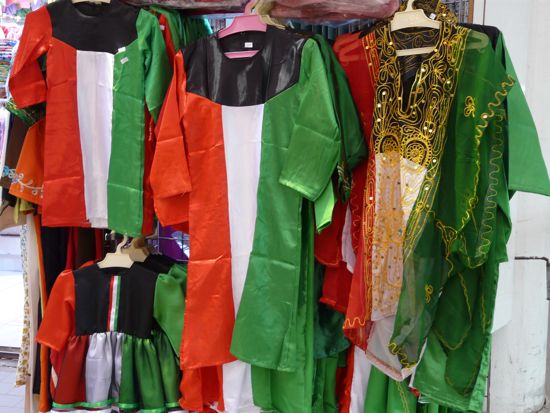
Gulf Coast Citizen Diplomacy Council
I have a friend from church; she is a woman I admire greatly. Older than I am, though not much, she participates in the Spartacus Program at the “Y”, she is good at running things, she is good at making phone calls and even sounds like she enjoys them, she enjoys social life and she sparkles.
She is always thinking.
“I think I know just the group for you!” she exclaimed as we were working on a project. “Have you heard about the Gulf Coast Citizen Diplomacy Council?”
No, no, I hadn’t heard about that. Having lived here six months now, there is a lot I don’t know.
She told me all about it and she was right. It is right up my alley. The Gulf Coast Citizen Diplomacy Council greets foreign visitors and performs a variety of services, escorting them to appointments, showing them the area, even taking them shopping or inviting them for a dinner in your private home, all in the name of hospitality and showing the best side of this beautiful part of the United States.
The Gulf Coast Citizen Diplomacy Council is a non-partisan, non-profit organization whose mission is to create and encourage collaboration between like-minded community stakeholders who value sharing the Central Gulf Coast with the rest of the world by:
° Facilitating professional and personal interaction for international leaders during official visits to the Central Gulf Coast
° Enhancing respect and communication through international exchanges and alliances
Forging cultural, educational, and business relationships with the global community through citizen diplomacy
° Promoting greater understanding of global affairs in our community through a balance of public events, educational activities, and the International Visitor Leadership Program
° Promoting the Central Gulf Coast as an important center of commerce, culture, and tourism
How cool is that? Even AdventureMan is excited about joining this club; we are so grateful for all the wonderful hospitality shown us through many years of adventures abroad. We feel grateful for an opportunity to be hosts in turn.
In this club I am not so alien. The club members are people who have a broad world view. I met other people who have lived or visited in Qatar or Kuwait, and other parts of the world where I have never been. Oh, what fun.
Many of the members are former military, and I found myself listening to a discussion of an upcoming meeting. As this is a community that parties hearty during Mardi Gras, I assumed it must be the name of a Krewe, a Mardi Gras social club, all these high-testosterone men were discussing camellias, must be a code word for some secret society, right?
Wrong. As it turns out, many people here, men and women, are passionate about gardening, and there is a club devoted to turning out perfect camellias, and they are having a show coming up in December. I learn new things ever day. 🙂
The Gulf Coast Citizen Diplomacy Council was only founded a short couple years ago, and has already won awards for its programs and hospitality. A truly impressive group. 🙂
Tabbouli Dance (Thank You, Daggero)
I’m in my office trying to write a blog entry and AdventureMan is next door, and it’s been a long time since I have heard him laugh so hard. He is laughing and Holy Smokes, he is almost dying laughing, and it’s all Daggero’s fault, my friend Daggero, my mysterious friend who has commented for so many years now on my blog that I think of him like a brother, although none of us have ever met.
Here is what was making him laugh so hard. Once I started watching, I was laughing, too. It is a total hoot, not just the song but all the fun they had making this, and the utter decorum with which he ‘shakes his booty,’ LLLLOOOOOOLLLLLL!
Notice also, his home has some very nice art pieces. 🙂
When Bureaucracies Function Well
This week AdventureMan and I explored something new in our lives – Early Voting. We had heard about it from our friends. It’s not like absentee voting, where you are mailed a ballot and you mail it back in after you have filled in your votes. With early voting, you can actually go to a voting place and vote.

We went after lunch, and we didn’t know where it was, but once we got near, we started seeing signs. Great signage.
When we entered the door, there was a lady there to tell us where to go – and more signs, too.
When we got to the right floor, there were signs with arrows and “Vote Here” on them.
When we got to the voting office, there were lots of people to help us get our ballot. When I messed up my first ballot (I hadn’t read an amendment carefully), they quickly did all the necessary paperwork and got me voting again. The second time, the machine accepted my ballot. 🙂
All in all, a fabulous experience. And – they gave me a sticker! We were so impressed with the careful attention to detail that had gone into getting us to the right place and getting our vote accomplished.
Later in the week, I had a mammogram. Being new, I am not in the system, so I have to go through admitting procedures every time I go to a new doctor or a new institution. At the West Florida Hospital, as soon as I got to the right room, I could see a sign telling me where to wait my turn. The receptionist was welcoming AND efficient. There were a lot of people waiting, and one by one we were taken in to have our paperwork done. No need for a pen; you sign on a machine, like you do for credit card purchases in many stores. Then you sit in a small hallway until someone calls your name and you become a human train as a guide leads you to your stop. That part was half hilarious and half annoying. If I knew where it was, I might have gotten there faster on my own, but . . . I didn’t know where it was. As far as systems go – it worked. It kept people orderly. It got a lot of people in and out efficiently, and fairly. No one can break into the lines, claiming to be more important. I am guessing if there is a patient whose malady is serious enough to take precedence, they have procedures they can follow separate from the normal intake procedures.
I have to stop and admire when bureaucracies function as intended, to help us more efficiently accomplish our business. It is when they become a stomping ground for nepotism and inefficiency that they earn my ire.
When I arrived in Qatar, my bank had a Women’s branch which was convenient for me and I loved going there. I was often the only customer, and the women taking care of me were always charming, helpful and friendly. When the same bank broke into another section and became an Islamic bank, instead of a normal bank working with Islamic customs, I was no longer able to use the women’s bank, but I’ve always remembered their personal customer service.
On the other hand, banking in Qatar could be totally tortuous, if you had to use the normal bank where Mr. Important would walk right in front of you as if you didn’t exist, or certainly, as if you were far less important than he was. In Kuwait, at my bank branch, you took a number, and it appeared to me that most of the time the number system was honored, unless it was a personal friend, LOL. Personal friends, or friends of the family, or a friend of a friend of the family always get to go first.
I suspect there are similar exceptions in Pensacola, but less transparent. Mr. Important has his own banker he can go to without waiting, probably in a private office, and it is invisible to the rest of us. Ms. Important, on the other hand, probably has to wait in the waiting room with the rest of us for her mammogram.
Food Shortages?
My friends in Kuwait are complaining about the price of tomatoes. The price of tomatoes in Kuwait?? Can a Kuwaiti cook without tomatoes?? 😉
I remember when suddenly, rice, a reliable cheap staple, suddenly went through the roof, and then, disappeared from the shelves when India announced a shortage and refused to export Indian rice. Kuwait, and other Gulf countries, announced they were buying unused farmland in other countries to insure their food supplies. But tomatoes? I thought everyone in Kuwait grew tomatoes, at least in winter.
And then, today, I saw this article on creeping food shortages:
Another lackluster monthly jobs report took center stage Friday. Stocks rallied, and government bond yields remained at rock-bottom levels as investors anticipate more action soon by the Federal Reserve to drive down interest rates even further.
Reports about how much slack the U.S. economy still needs to work through — like unemployment — understandably get the spotlight. But investors may be overlooking an even bigger story as the developing world stages a sharp rebound: Shortages of items like food and commodities are once again becoming a major concern.
Prices for agricultural commodities spiked so much on Oct. 8 that they triggered daily movement limits on the Chicago exchange. Options markets saw prices for commodities like corn soar more than 13% during the day following reports of supply shortages around the world.
Commodity-oriented exchange-traded funds like the PowerShares DB Agriculture (DBA) leaped as well. The ETF surged almost 10% over the previous week, with more than 6% of the gains registered on Friday alone.
Supply and Demand Discrepancies
A sharp shortfall in the U.S. Department of Agriculture’s corn production forecast, due to poor weather patterns, also helped set prices soaring around the world. U.S. corn crop yields would come in 4% short of prior estimates and drop to their lowest levels in 14 years, the Agriculture Department said.
Fears of commodity shortages in the face of surging global demand are leading to export-slashing. Ukraine announced a sharp cutback in the amount of commodities like wheat and barley it would allow to be shipped out of the country. The likelihood of a major discrepancy between supply and demand have led to surging prices worldwide. European wheat prices rallied 10%, with other commodities, such as soybeans and cotton, climbing as well.
Still, investors should be cautious because commodity prices are known to be extremely volatile and difficult to put a price on.
Fundamental Forces
Nevertheless, rising prices are creating alarm about humanitarian concerns. Morgan Stanley (MS) and the U.N. have warned about the prospects of a rerun of the 2007 food crisis that slammed the developing world.
See full article from DailyFinance: http://www.dailyfinance.com/story/poor-crops-soaring-demand-currency-wars-a-recipe-for-food-sho/19667693/?icid=sphere_copyright
As we drove across the United States this summer, we saw acres and acres of US farmland, unworked, for sale. Farming is a tough life, and fewer and fewer families are still farming. It’s scary and sad.
New Territory: Pensacola Medicine
It’s payback time. Since AdventureMan and I retired, we have been trying to catch up with all the things we have left undone as we lived overseas. One of those things is catching up on medical work, you know, the preventive stuff.
One of the things I avoided in Qatar and Kuwait were any kind of procedures where something alien entered your body. There are good hospitals, and there are good doctors, but you have to know someone who can recommend them, and they they have to accept you as patients. My strategy was simply to stay well. I had a constant concern, about the cleanliness of the hospitals, about the conscientiousness of the people sterilizing medical equipment, about patient care, about credentials of those putting in IV’s – little things like that.
When I came to Pensacola, LOL, I had the same concerns. We have this illusion that everything is better in the USA, but we are only as good as our rules, and the enforcement of the rules, and when budgets are being cut, code enforcement can suffer. Who is checking on the cleanliness of the facility, etc. can be an issue here, too.
We ran into a couple of breaks. We have friends here, and we also have good advisory people. While our advisory people are not allowed to give specific recommendations, we had a long and lively chat with one and we asked, at the end, “if your Mom or Dad needed a good overall internist, who would you send them to?” and she paused and gave us a name.
The name was also on our short list of doctors we had looked up online. There are all kinds of places that comment on doctors, and this doctor has all A’s.
My visit with the doctor got me started on a lot of other appointments. The first visit, however, had a very funny moment. We were talking, generally, I thought, about weight, and he said “what do you think would be a good weight for you at this age” and I thought and said a number and HE WROTE IT DOWN. “Oh no!” I said. “Are you writing it down?”
“Yes.” he responded. “I agree, I think that is a good goal for you.”
GOAL??? I talk a lot about exercise and trying to lose weight, but now I am expected to meet a goal??? Oh, aaaarrrggghh. Me and my big mouth, why did I pick that number???
My Pensacola medical experience grew this week as I had a dreaded colonoscopy, something older people have to do as part of preventive maintenance. I totally hate colonoscopy preparation, and I also know that the same problems that happen in Qatar and Kuwait can happen here in Pensacola, so I was anxious the day of the procedure.
As I was pushed into the operating room by a young guy, I asked “who are you?” and he said he was the doctor. I interviewed him, asking about his certification, etc. and his record. He could see I was anxious.
Finally, I asked, in desperation, “are you Christian?” and he said “yes,” and then added “Would you like us to pray together before we start?” I was shocked. I paused, trying to deal with this new information – you are allowed to pray in the operating room?
“Yes,” I said, “please.”
They put hands on me and prayed for guidance during the procedure, and safety and a positive outcome. That is the last I remember, I felt so secure, and then I woke up and it was over. The outcome was positive.
There is no such thing as not allowing prayer in the schools or public places. People can pray wherever they want. The only thing forbidden is prayers where everyone is forced to pray together, the same words, words that may not express the same faith. We don’t all share the same beliefs, we don’t all pray in the same vocabularies. But we are free to pray, no one can stop the prayers of the heart.
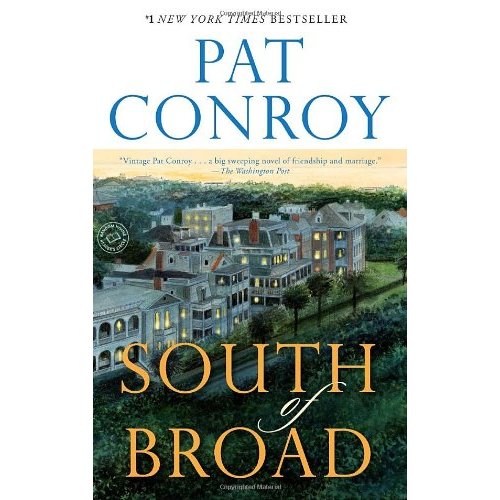
Pat Conroy and South of Broad
I don’t know where to start, telling you how much I like this book. I couldn’t wait for reading time to read it. It never flagged, every page kept me glued. I want you to read it, I want to be able to talk about it with you, but there is so much in this book that I don’t want to spoil it for you.
There are huge themes. There are some very bad people. There are some very good people. Sometimes the very good people can do very bad things, and sometimes the bad people can have some redeeming moments.
We meet the main character as he is about to begin his senior year in college. On the day we meet him, his life changes. Several new people come into his life. Two orphans. A beautiful sister and equally beautiful brother. A black football coach and his son. Three rich kids kicked out of the best private school in town for doing dope.
There are two ‘characters’ who are not people. One is the city of Charleston, SC, and there are entire paragraphs in this book which will make you fall in love, through Pat Conroy’s eyes, with this complicated, beautiful city. Another is Hurricane Hugo, which is as destructive as Charleston is beautiful.
South of Broad covers a time of tumult and change, and you see it through the eyes of of Conroy’s endearing characters. Times changes, society changes and change comes hard for those who stand to lose the most. Conroy deals with segregation, integration, child abuse, suicide, gay sex, economic discrimination, and psychiatric illness, a psycopathic criminal, who happens to be the father of two of this friends, and a hurricane.
For me, what was most engrossing was the complicated question of who is righteous? It’s what I want to talk about with you. Who is most like Jesus? (LOL, give examples) Which characters would you expect think themselves closest to God? Do you think they are? (Be prepared to defend your opinion.) What is a good parent? In this book, who do you think was the best parent?
If you decide to buy this book, please buy a copy with the Reader’s Guide in the back – an interview with Pat Conroy and questions that help you think about the book. I’d like to share with you a segment of the interview which I found so brightly illuminating:
. . . . I found the Parisians rarified, vigilant, hypercritical and fabulous. They had made themselves worthy of the great city they lived in. They oozed style and they ate like kings. . . . The Parisians seem special to both the world and themselves. Then it hit me: My God, they are like Charlestonians.
As I see it, you can take out Charlestonians and substitute Kuwaitis. Or New Yorkers. Or Romans. In fact, just about every society I have visited have their elite, who consider themselves rarified and special, and fight to keep themselves so.
So not only is the book dealing with spiritual righteousness, but also with themes of entitlement and deprivation, bullies and the bullied, parenting, self-fulfillment, and the very real and over-arching theme of friendship and the power of a close circle of friends.
I don’t want to tell you too much. I loved this book. I’m still thinking about it. I hope you’ll read it and think about it, too, and then come back and tell me what you’re thinking. 🙂
Four Years Old :-) Birthday Cake and Adult Beverages!

Come on by for a celebration and a visit. 🙂 Sit and chat a while.
When I started blogging, in Kuwait, in 2006, I had no idea where it was going to take me. I felt scared, and I felt vulnerable. I felt exposed. Slowly, I developed virtual relationships, some of which even turned into real friendships. I had no idea I would grow to care so much about my readers, some of whom I have never even met.
In the background, I have had meetings, and I have had correspondences. We’ve shared joys and laughter and tears and anguish. There are times now, now that my life is so much less interesting than when I was living in exotic locations, when I think about stopping. Sometimes, even in Kuwait and Qatar, it was a struggle. There are always days when my life just doesn’t seem that interesting.
I don’t want to bore you. On the other hand, I have grown to enjoy our time together. So, here is my blogging pledge – I will keep blogging as long as it keeps working for you as well as for me. If I am boring myself to tears, I will stop. Meanwhile, it helps me to hear from you, and to have great discussions on these pages. There have been some good ones!
Day One, Osceola, Arkansas
We start the day sadly, rushing around with last minute things and the Qatari Cat KNOWS what is going on and RUNS when I try to pick him up! He never does that. He is always such a good kitty, but when I caught him, he said “eh eh eh eh eh eh eh” to me; he told me clearly he does not want to go to the Kitty Hotel. When we got there, his suite was waiting, we put his special towel and his baby in the sleeping area and filled his dish with his food. Fresh water was already waiting. He was OK, a little miffed at us, but OK. The people at We Tuck ‘Em Inn were wonderful, and we know he will be spoiled rotten by the time we return.

Just as we hit Mobile, Alabama, Mobile was also hit with a huge rainstorm. Off to the right, we watched a truck on the freeway entry ramp skid and spin around, out of control. Just a minute later, we saw police and a wrecker trying to get another truck out of a deep ravine at the side of the freeway. It was a fearsome storm, and we were glad we were out of it.
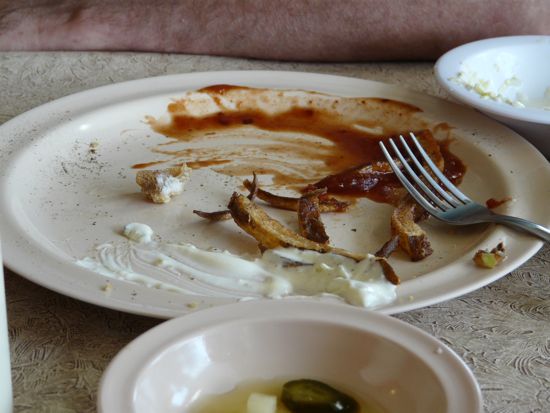
We toodled up through Mississippi, in fact it felt like we spent most of our day in Mississippi, because we did. We were on a not-quite-freeway that cuts catty-corner across the state to Jackson. Most of the way it was two lanes in each direction, fairly fast, but every now and then would be an intersection with stoplights. Around noon we stopped . . . somewhere . . . to have a healthy meal, but my healthy boiled shrimp was surrounded with deep fried french fries, hush puppies and a mayonnais-y cole slaw, and AdventureMan had fried catfish. It may be fish, but it was fried, along with fries and hushpuppies. You can see a remnant of my meal, but AdventureMan at ALL of his!


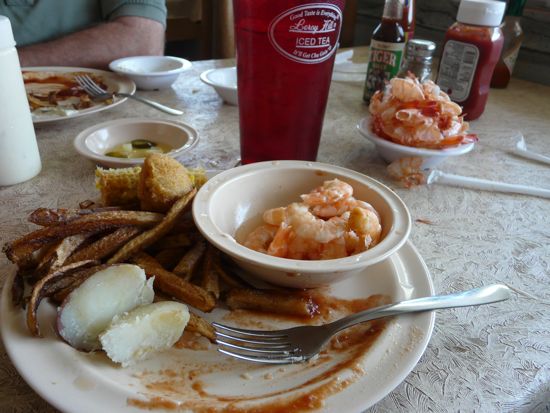
This road was fascinating. Lots of big black Tundras and Denalis and pick-ups of all kinds, lots of farm equipment, a lamb in someone’s back yard and a truck full of cattle . . . I told AdventureMan that Mississippi is a lot like Kuwait:

Just out of Jackson, Mississippi, we stopped for gas:


Driving toward Memphis, we spot a good German town – Gluckstadt means lucky city:
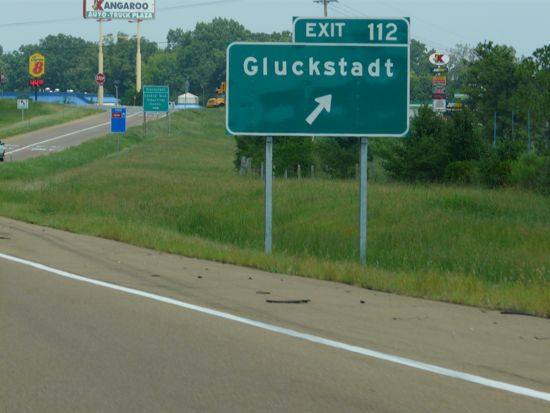
We get through Memphis without a hitch, way faster than we expected, and we settle in Osceola, Arkansas, where the entire downtown ‘historical Osceola’ is full of empty stores with broken windows, falling down houses, even a large stone church – or library? where pigeons are now living. We did find some spots of beauty down near the river:
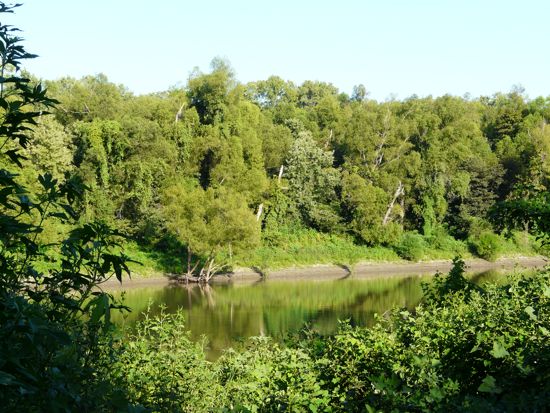
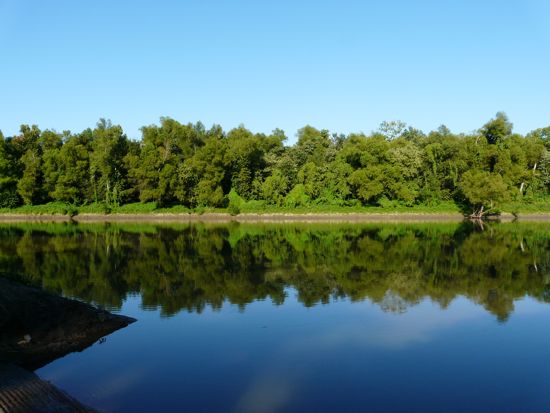
“Don’t open your door after dark!” our Indian hotel manager warned us and our eyes are big wondering if this is some kind of Stephen King thing and the harvest-corn-king roams around killing unwary tourists, but she followed it with “we have lots of mosquitos in these parts.” Indeed. I have several bites already to prove it.
Recent Comments
intlxpatr on When Homeland Security, ICE an… intlxpatr on When Homeland Security, ICE an… Andrea Koller on When Homeland Security, ICE an… Kitchen on Isiais: Winding Down intlxpatr on Shampoo Ginger Wikipedia Donate Button

Amazina


Early Voting in Florida


