Words Strung Together in New Ways
I have a wonderful friend – she speaks English fluently, but it is her second language. Every now and then, she will say something that gives me a grin. It’s not because what she say is funny, but because I truly love language and words, and she strings words together in new ways, and when you put words together in new ways, you think new thoughts.
The first was Christmas “wrath”. She caught me totally by surprise. I knew what she meant, Christmas wreath, but the image of Christmas wrath totally caught my imagination. Holidays are volatile. Christmas wrath happens. I imagine Ramadan wrath happens, and Eid wrath. I think I laughed, not because I would ever make fun of her – I wouldn’t. After all, we are speaking English, not French, and I know how amusing the French find it when I speak French. This woman is way ahead of me.
Yesterday, she mentioned having a “pitch” in her stomach. I couldn’t help it. I grinned. She knew immediately, and asked, so I told her that we say “pit” but the truth is – when things are out of control and your stomach registers fear, it is as likely to pitch as it is to have a pit. I love the imagery.
Forgive me if I grin when you (very rarely) use the wrong word. I am not mocking you. I am smiling in delight at the new way you have put words together, that give me images I would not otherwise have had. And I look forward to all the future occasions when you will delight me with new concepts, new words strung together. 🙂
Valentine’s Day Word Play
Happy Valentine’s Day!
What did the caveman give his wife on Valentine’s Day?
Ughs and kisses!
What did the boy sheep say to the girl sheep on Valentine’s Day?
I Love Ewe!
What did the stamp say to the envelope on Valentine’s Day?
I’m stuck on you!
Knock knock!
Who’e there?
Frank
Frank who?
Frank you for being my friend!
Knock knock!
Who’s there?
Howard
Howard who?
Howard you like a big kiss?
What did the boy owl say to the girl owl on Valentine’s Day?
Owl be yours!
What kind of flowers do you never give on Valentine’s Day?
Cauliflowers!
What do you call a very small Valentine?
A Valentiny!
What did the boy squirrel say to the girl squirrel on Valentine’s Day?
I’m nuts about you!
What did the girl squirrel say to the boy squirrel on Valentine’s Day?
You’re nuts so bad yourself!
Knock knock!
Who’s there?
Sherwood
Sherwood who?
Sherwood like to be your valentine!
Knock, knock
Who’s there?
Pooch
Pooch who?
Pooch your arms around me, baby!
Thank you, KitKat!
Language Shift in Recession
Within the last two days, I have seen two stories on signs to watch for the end of the recession. We all knew the mortgage bankers had made those bad loans. The situation was never as dire as it was made out to be. What happened was a cascading roll of consequences for bad loans, and a crisis of confidence amount consumers, coupled with a huge tightening up of credit.
Most of this is based on perception. It seems to me we are seeing the beginning of the next perceptual shift, just in time for spring, always a time of new beginnings and new hope.
You can read it for yourself: it is one of the featured stories today on AOL News “Companies that will Pull Us out of Recession
Will things go back to the way they were before? Not exactly. These financial events shake things up, people lose jobs, people find new jobs – sometimes – it can even be for the better. It’s always interesting watching for the the signals that change is about to take place. Smarter people than me know how to take advantage of the signals and take advantage of them. I’m happy just to ride the wave and watch for signals. I have an idea that language shifts forecast shifts in perception. Am I making any sense at all here?
These British comedians are hilarious, and all the more so because it if pretty much true!
Grins for the Day – for you AdventureMan!
I was always taught that puns were the lowest form of humor – and then I married AdventureMan. He is BAD. You will love these, AdventureMan!
“CREATIVE PUNS FOR “EDUCATED MINDS”
1. The roundest knight at King Arthur’s round table was Sir Cumference. He acquired his size from too much pi.
2. I thought I saw an eye doctor on an Alaskan island, but it turned out to be an “optical Aleutian”.
3. She was only a whiskey maker, but he loved her still.
4. A rubber band pistol was confiscated from algebra class because it was a weapon of “math disruption”.
5. The butcher backed into the meat grinder and got a little behind in his work.
6. No matter how much you push the envelope, it’ll still be stationery.
7. A dog gave birth to puppies near the road and was cited for littering.
8. A grenade thrown into a kitchen in France would result in Linoleum Blownapart.
9. Two silk worms had a race. They ended up in a tie.
10. Time flies like an arrow. Fruit flies like a banana.
11. A hole has been found in the nudist camp wall. The police are looking into it.
12. Atheism is a “non-prophet” organization.
13. Two hats were hanging on a hat rack in the hallway. One hat said to the other, ‘You stay here; I’ll go on a head.’
14. I wondered why the baseball kept getting bigger. “Then it hit me”.
15. A sign on the lawn at a drug rehab center said: ‘Keep off the Grass.’
16. A small boy swallowed some coins and was taken to a hospital. When his grandmother telephoned to ask how he was, a nurse said, ‘No change yet.’
17. A chicken crossing the road is poultry in motion.
19. The short fortune-teller who escaped from prison was a small medium at large.
20. The man who survived mustard gas and pepper spray is now a ”seasoned veteran”.
21. A backward poet writes inverse.
22. In democracy it’s your vote that counts In feudalism it’s your count that votes.
23. When cannibals ate a missionary, they got “a taste of religion”.
24. Don’t join dangerous cults: Practice “safe sects”!
Obama’s Inaugural Address (Complete)
The New York Times published a complete transcription of Obama’s Inaugural address. He wrote most of it himself. Did you notice, he delivered it without looking at his notes? You can watch him give the speech by clicking on the blue type above. It isn’t too long.
Barack Obama’s Inaugural Address
Published: January 20, 2009
Following is the transcript of President Barack Obama’s Inaugural Address, as transcribed by CQ Transcriptions:
PRESIDENT BARACK Thank you. Thank you.
CROWD: Obama! Obama! Obama! Obama!
My fellow citizens: I stand here today humbled by the task before us, grateful for the trust you have bestowed, mindful of the sacrifices borne by our ancestors.
I thank President Bush for his service to our nation…
(APPLAUSE)
… as well as the generosity and cooperation he has shown throughout this transition.
Forty-four Americans have now taken the presidential oath.
The words have been spoken during rising tides of prosperity and the still waters of peace. Yet, every so often the oath is taken amidst gathering clouds and raging storms. At these moments, America has carried on not simply because of the skill or vision of those in high office, but because We the People have remained faithful to the ideals of our forbearers, and true to our founding documents.
So it has been. So it must be with this generation of Americans.
That we are in the midst of crisis is now well understood. Our nation is at war against a far-reaching network of violence and hatred. Our economy is badly weakened, a consequence of greed and irresponsibility on the part of some but also our collective failure to make hard choices and prepare the nation for a new age.
Homes have been lost, jobs shed, businesses shuttered. Our health care is too costly, our schools fail too many, and each day brings further evidence that the ways we use energy strengthen our adversaries and threaten our planet.
These are the indicators of crisis, subject to data and statistics. Less measurable, but no less profound, is a sapping of confidence across our land; a nagging fear that America’s decline is inevitable, that the next generation must lower its sights.
Today I say to you that the challenges we face are real, they are serious and they are many. They will not be met easily or in a short span of time. But know this America: They will be met.
(APPLAUSE)
On this day, we gather because we have chosen hope over fear, unity of purpose over conflict and discord.
On this day, we come to proclaim an end to the petty grievances and false promises, the recriminations and worn-out dogmas that for far too long have strangled our politics.
We remain a young nation, but in the words of Scripture, the time has come to set aside childish things. The time has come to reaffirm our enduring spirit; to choose our better history; to carry forward that precious gift, that noble idea, passed on from generation to generation: the God-given promise that all are equal, all are free, and all deserve a chance to pursue their full measure of happiness.
(APPLAUSE)
In reaffirming the greatness of our nation, we understand that greatness is never a given. It must be earned. Our journey has never been one of shortcuts or settling for less.
It has not been the path for the faint-hearted, for those who prefer leisure over work, or seek only the pleasures of riches and fame.
Rather, it has been the risk-takers, the doers, the makers of things — some celebrated, but more often men and women obscure in their labor — who have carried us up the long, rugged path towards prosperity and freedom.
For us, they packed up their few worldly possessions and traveled across oceans in search of a new life. For us, they toiled in sweatshops and settled the West, endured the lash of the whip and plowed the hard earth.
For us, they fought and died in places Concord and Gettysburg; Normandy and Khe Sahn.
Time and again these men and women struggled and sacrificed and worked till their hands were raw so that we might live a better life. They saw America as bigger than the sum of our individual ambitions; greater than all the differences of birth or wealth or faction.
This is the journey we continue today. We remain the most prosperous, powerful nation on Earth. Our workers are no less productive than when this crisis began. Our minds are no less inventive, our goods and services no less needed than they were last week or last month or last year. Our capacity remains undiminished. But our time of standing pat, of protecting narrow interests and putting off unpleasant decisions — that time has surely passed.
Starting today, we must pick ourselves up, dust ourselves off, and begin again the work of remaking America.
(APPLAUSE)
For everywhere we look, there is work to be done.
The state of our economy calls for action: bold and swift. And we will act not only to create new jobs but to lay a new foundation for growth.
We will build the roads and bridges, the electric grids and digital lines that feed our commerce and bind us together.
We will restore science to its rightful place and wield technology’s wonders to raise health care’s quality…
(APPLAUSE)
… and lower its costs.
We will harness the sun and the winds and the soil to fuel our cars and run our factories. And we will transform our schools and colleges and universities to meet the demands of a new age.
All this we can do. All this we will do.
Now, there are some who question the scale of our ambitions, who suggest that our system cannot tolerate too many big plans. Their memories are short, for they have forgotten what this country has already done, what free men and women can achieve when imagination is joined to common purpose and necessity to courage.
What the cynics fail to understand is that the ground has shifted beneath them, that the stale political arguments that have consumed us for so long, no longer apply.
The question we ask today is not whether our government is too big or too small, but whether it works, whether it helps families find jobs at a decent wage, care they can afford, a retirement that is dignified.
Where the answer is yes, we intend to move forward. Where the answer is no, programs will end.
And those of us who manage the public’s dollars will be held to account, to spend wisely, reform bad habits, and do our business in the light of day, because only then can we restore the vital trust between a people and their government.
Nor is the question before us whether the market is a force for good or ill. Its power to generate wealth and expand freedom is unmatched.
But this crisis has reminded us that without a watchful eye, the market can spin out of control. The nation cannot prosper long when it favors only the prosperous.
The success of our economy has always depended not just on the size of our gross domestic product, but on the reach of our prosperity; on the ability to extend opportunity to every willing heart — not out of charity, but because it is the surest route to our common good.
(APPLAUSE)
As for our common defense, we reject as false the choice between our safety and our ideals.
Our founding fathers faced with perils that we can scarcely imagine, drafted a charter to assure the rule of law and the rights of man, a charter expanded by the blood of generations.
Those ideals still light the world, and we will not give them up for expedience’s sake.
And so, to all other peoples and governments who are watching today, from the grandest capitals to the small village where my father was born: know that America is a friend of each nation and every man, woman and child who seeks a future of peace and dignity, and we are ready to lead once more.
(APPLAUSE)
Recall that earlier generations faced down fascism and communism not just with missiles and tanks, but with the sturdy alliances and enduring convictions.
They understood that our power alone cannot protect us, nor does it entitle us to do as we please. Instead, they knew that our power grows through its prudent use. Our security emanates from the justness of our cause; the force of our example; the tempering qualities of humility and restraint.
We are the keepers of this legacy, guided by these principles once more, we can meet those new threats that demand even greater effort, even greater cooperation and understanding between nations. We’ll begin to responsibly leave Iraq to its people and forge a hard- earned peace in Afghanistan.
With old friends and former foes, we’ll work tirelessly to lessen the nuclear threat and roll back the specter of a warming planet.
We will not apologize for our way of life nor will we waver in its defense.
And for those who seek to advance their aims by inducing terror and slaughtering innocents, we say to you now that, “Our spirit is stronger and cannot be broken. You cannot outlast us, and we will defeat you.”
(APPLAUSE)
For we know that our patchwork heritage is a strength, not a weakness.
We are a nation of Christians and Muslims, Jews and Hindus, and nonbelievers. We are shaped by every language and culture, drawn from every end of this Earth.
And because we have tasted the bitter swill of civil war and segregation and emerged from that dark chapter stronger and more united, we cannot help but believe that the old hatreds shall someday pass; that the lines of tribe shall soon dissolve; that as the world grows smaller, our common humanity shall reveal itself; and that America must play its role in ushering in a new era of peace.
To the Muslim world, we seek a new way forward, based on mutual interest and mutual respect.
To those leaders around the globe who seek to sow conflict or blame their society’s ills on the West, know that your people will judge you on what you can build, not what you destroy.
To those…
(APPLAUSE)
To those who cling to power through corruption and deceit and the silencing of dissent, know that you are on the wrong side of history, but that we will extend a hand if you are willing to unclench your fist.
(APPLAUSE)
To the people of poor nations, we pledge to work alongside you to make your farms flourish and let clean waters flow; to nourish starved bodies and feed hungry minds.
And to those nations like ours that enjoy relative plenty, we say we can no longer afford indifference to the suffering outside our borders, nor can we consume the world’s resources without regard to effect. For the world has changed, and we must change with it.
As we consider the road that unfolds before us, we remember with humble gratitude those brave Americans who, at this very hour, patrol far-off deserts and distant mountains. They have something to tell us, just as the fallen heroes who lie in Arlington whisper through the ages.
We honor them not only because they are guardians of our liberty, but because they embody the spirit of service: a willingness to find meaning in something greater than themselves.
And yet, at this moment, a moment that will define a generation, it is precisely this spirit that must inhabit us all.
For as much as government can do and must do, it is ultimately the faith and determination of the American people upon which this nation relies.
It is the kindness to take in a stranger when the levees break; the selflessness of workers who would rather cut their hours than see a friend lose their job which sees us through our darkest hours.
It is the firefighter’s courage to storm a stairway filled with smoke, but also a parent’s willingness to nurture a child, that finally decides our fate.
Our challenges may be new, the instruments with which we meet them may be new, but those values upon which our success depends, honesty and hard work, courage and fair play, tolerance and curiosity, loyalty and patriotism — these things are old.
These things are true. They have been the quiet force of progress throughout our history.
What is demanded then is a return to these truths. What is required of us now is a new era of responsibility — a recognition, on the part of every American, that we have duties to ourselves, our nation and the world, duties that we do not grudgingly accept but rather seize gladly, firm in the knowledge that there is nothing so satisfying to the spirit, so defining of our character than giving our all to a difficult task.
This is the price and the promise of citizenship.
This is the source of our confidence: the knowledge that God calls on us to shape an uncertain destiny.
This is the meaning of our liberty and our creed, why men and women and children of every race and every faith can join in celebration across this magnificent mall. And why a man whose father less than 60 years ago might not have been served at a local restaurant can now stand before you to take a most sacred oath.
(APPLAUSE)
So let us mark this day in remembrance of who we are and how far we have traveled.
In the year of America’s birth, in the coldest of months, a small band of patriots huddled by nine campfires on the shores of an icy river.
The capital was abandoned. The enemy was advancing. The snow was stained with blood.
At a moment when the outcome of our revolution was most in doubt, the father of our nation ordered these words be read to the people:
“Let it be told to the future world that in the depth of winter, when nothing but hope and virtue could survive, that the city and the country, alarmed at one common danger, came forth to meet it.”
America, in the face of our common dangers, in this winter of our hardship, let us remember these timeless words; with hope and virtue, let us brave once more the icy currents, and endure what storms may come; let it be said by our children’s children that when we were tested we refused to let this journey end, that we did not turn back nor did we falter; and with eyes fixed on the horizon and God’s grace upon us, we carried forth that great gift of freedom and delivered it safely to future generations.
Thank you. God bless you.
(APPLAUSE)
And God bless the United States of America.
(APPLAUSE)
Why I Love A-Word-A-Day
This is today’s entry from Anu Garg’s A Word A Day.
Wordsmith.org The Magic of Words
This week’s theme
Words from Obama
This week’s words
cohere
with Anu Garg
Tomorrow Barack Obama will become president of the US, and not a moment too soon. This week we’ll feature words from Obama, words from his books, speeches, and interviews.
Unlike most politicians, who hire ghostwriters, Obama writes his own books. He’s a gifted writer. Reading his words you can see his thought process. He’s not one who sees the globe in black and white. He has lived outside the US and has been exposed to other cultures. He realizes that just because someone has a different set of beliefs, just because someone looks different, doesn’t mean he’s wrong — sometimes there can be two ways to do something and both can be right.
Obama is to be commended for his accomplishments. We’ve come a long way in this country. But we still have far to go before we can call ourselves truly unbiased. Real progress will be when any capable person can have a fair chance at winning the highest office, even someone who happens to be, say, a black gay vegan atheist woman.
Anything is possible… but don’t hold your breath.
cohere
PRONUNCIATION:
(ko-HEER)
MEANING:
verb intr.: To be united; to work or hold together.
ETYMOLOGY:
From Latin cohaerere, from co- (together) + haerere (to stick).
USAGE:
“I learned to slip back and forth between my black and white worlds, understanding that each possessed its own language and customs and structures of meaning, convinced that with a bit of translation on my part the two worlds would eventually cohere.”
Barack Obama; Dreams From My Father; Times Books; 1995.
A THOUGHT FOR TODAY:
I have a dream that my four little children will one day live in a nation where they will not be judged by the color of their skin but by the content of their character. -Martin Luther King, Jr., civil-rights leader (1929-1968)
Here is what Anu Garg isn’t saying, and my guess is he hasn’t thought twice about it. He is an American. He was not born in America, he immigrated to America – as most of us did, meaning our forefathers and mothers came from Europe, from Africa, from Asia and from India and the Middle East and – and – and. As an immigrant, as an American, he is free to say what he wants. Free to be happy Obama is president, and at the same time free to say that the system is not yet free enough.
I also totally love it that his quote for today is from Martin Luther King, who we are celebrating in America, on this national holiday.
We don’t have to agree. I love it that he is passionate about his beliefs, and that he provides A-Word-A-Day as a public service, entirely free, every day sending a new word, defined and used in context, to subscribers in every nation in the world. I admire people like him, like the Rajab family here in Kuwait, like Andrew Carnegie who started most of the small town libraries in the United States, people who use what they have been given to give back to the world-at-large.
You can see A Word A Day leads my blogroll. You can subscribe by clicking on the blue type above. 🙂
If I Were . . .
I’m talking here about two subjects, a grammar issue and an emotional issue.
My friends think I am even-tempered and happy all the time. Here is the truth – no one is even-tempered and happy all the time. I am even-tempered and happy MOST of the time – but like everyone else, I have moods.
I have noticed that sometimes drinking too much coffee can set me spinning with anxiety, worrying about things for which there is honestly no substantial reason on earth for me to worry. Sometimes I can feel paranoid, and think maybe my phone isn’t ringing because all my friends are out having fun without me. Sometimes I can be tired, or hungry, or jet lagging, or hormonal. . . there are a million factors that have little to do with facts and reality, and everything to do with emotion.
When I catch myself having persistent, irrational, troublesome thoughts, I do a couple things. You know me, you can guess the first. I pray.
The second thing I do is to play a game with myself – “If I Were. . . ”
If I were normal and serene, how would I behave? What would I be thinking? Sometimes just by acting “as if”, I can break the mood. Putting on Christmas music or old Beatles or Rolling Stones is just about sure-fire. Reading a light-weight mystery can take me away. A hot bath with great smelling bubbles – something like Cinnamon Orange (Occitaine used to make it) or Lavender or even something lemony can cheer me up. Acting as if I were serene can bring me to serenity.
(Here is the second part – does anyone use the subjunctive tense any more? I was taught that if you are talking about something that is not-for-certain true, or doubtful, you use the subjunctive. I hear people saying “If I was” all the time and I think maybe it has become acceptable by common usage.
For example, above, I talk about “If I were serene . . .” meaning, I am NOT feeling serene, but can speculate as to how I would behave if I were serene. Is this tense, the subjunctive, still taught in English classes?)
Discreetly, Little Diamond!
We all have things that grate on our ears – my pet peeve is people saying they are “anxious” when they are really “eager.” I was typing away today, and remembered one of my niece Little Diamond’s pet peeves – Discrete vs. Discreet. I am sorry to say, once again, I had to look it up:

I drank my coffee discreetly, Little Diamond, while counting 20 discrete fishing boats on the horizon.
Sparkle and Talk Like a Pirate Day
In my e-mail this morning are two notes from my sister, Sparkle. Sparkle is a very special woman who, with her husband, Mariner Man, takes in damaged animals. Some have been abandoned or neglected, some have been physically hurt. They had a great big husky who had been lost or abandoned and hit by a car, one of the nicest dogs you could ever meet. They have a diabetic cat with a damaged leg, and several emotionally disturbed cats whom they nurse and teach to trust in goodness and kindness once again. Their newest dog keeps us in stitches – she is young and just learning about the larger world. Life is sweet when you are walking this dog!
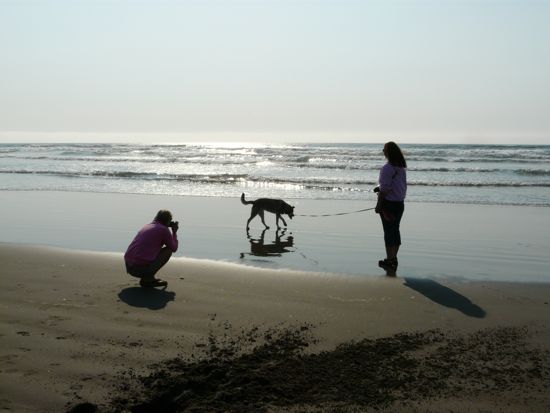
Sparkle is also very very funny. She wants me to know that Friday, tomorrow, is the annual Talk Like a Pirate Day. You can learn more about Talk Like a Pirate Day from this WordPress Blog.
Here is a very abbreviated list of words from the website, in case you want to Talk Like a Pirate:
Aaaarrrrgggghhhh! – exhortation of discontent or disgust
Ahoy! – Hello!
Ahoy, Matey – Hello, my friend!
Ahoy, me Hearties! – the same as saying “Hello, my friends!”
All hand hoay! – comparable to all hands on deck
Avast ye – stop and check this out or pay attention
Aye – yes
Batten down the hatches – put everything away on the ship and tie everything down because a storm is brewing
Bilge-sucking – insult
Blimey! – exhortation of surprise
Blow me down! – expression of shock of disbelief akin to “Holy Crap!”
Blow the man down – command to kill someone
Booty – treasure
Buccaneer – a pirate
Bucko – a buccaneer
Cat O’Nine Tails – a whip with nine strands
Corsair – pirates in the Mediterranean Sea
Crow’s nest – small platform atop the mast where the lookout stands

Grammar Gripes from BBC
Found this morning on BBC News Magazine:
Grammar just ain’t what it used to be, it seems. When we explained the difference between “fewer” and “less than”, following Tesco’s policy shift on this matter, readers told us what grammar rules they see being flouted or find confusing. The list was a long one. Here are the best.
1. The one that really annoys me is how people suddenly seem to confuse “have” and “of”, as in: “I could of learnt how to write properly.” There’s no excuse for it!
Pete, Sheffield
2. The phrase “for free” is becoming commonplace and is used often on television and it’s wrong. It should be “for nothing”.
Mary, Basingstoke
3. That guardian of our language, the BBC, is full of solecisms these days; just one example: 12 pm. There is no such time; “meridiem” as in am (“ante meridiem” means “before noon”) and pm (“post meridiem” means “after noon”) means midday. The 12th hour is neither before nor after midday. So please, BBC use either midday or noon with midnight the correct term for the other end of the day. This is not being pedantic; in these days of 24-hour days, it is often not readily apparent what time 12 pm might be.
Mervyn, Usk, Monmouthshire
4. If you do something to change a situation, then you “effect” a change. If your circumstances are changed by an action, then the change has caused an “effect”. You cannot “affect” a change in something, nor can you be “effected” by one.
Rob, Lyme Regis
5. I get annoyed at the reckless use of apostrophes, for example, the plural of CD can’t be CD’s.
Shahed Alam, London
6. Many people, including public speakers, incorrectly use “I” instead of “me”. For instance, they would say “She said some very kind things about George and I”, thinking that they are being polite or grammatically correct. An easy way to remember which to use is: if you would say him or her on its own, use me; if you would say he or she on its own, use I. For example, “She said some very kind things about him”.
Lorraine, Aylesbury
7. Incorrect use of reflexives make my blood boil. I think that for someone to say “yourself” and “myself” when they just mean “you” or “me” is possibly out of a false sense of politeness, or maybe the insidious effect of TV soaps, or both. Those who use it correctly can give “themselves” a pat on the back.
John Self, Wisset, Suffolk
8. How about “none of them is” and “none of them are”? Most people would use the latter whereas the former is correct. “None” is short for “not one” therefore “not one (none) of them is” would be used. Most newsreaders still get it right though – on the BBC anyway!
Emily, Bristol
NOTE: Fowler’s Modern English Usage says that “none” is not short for “not one” and although using a singular verb is more common, using a plural verb has also been an acceptable option since the reign of King Alfred.
9. Similar TO, different FROM, compared WITH. Not “to” used for all of them!
Susan, Brisbane, Australia
NOTE: Fowler’s Modern English Usage says: “The commonly expressed view that ‘different’ should only be followed by ‘from’ and never by ‘to’ or ‘than’ is not supportable in the face of past and present evidence or of logic.” It adds that “compare to” is to liken and “compare with” or “compare to” is used to point out similarities and differences. The BBC News website style guide differs with Fowler’s on this last point. It says that when pointing out differences, “compare with” should always be used.
10. Here’s one they often get wrong on BBC news! BBC reporter: “Then they opened fire on us”. This is incorrect. In military terms there are two methods of shooting at an enemy, controlled-fire and open-fire. I.E. you are not opening anything so using the past tense of open is incorrect. The correct expression should be “Then they open-fired on us”
JWTH, Belfast
11. I find the increasing, incorrect use of “literally” annoying…. “I literally went blue with anger!!” “Really?” I ask.
Ned, Wallingford
12. The proper use of “its” and “it’s” seems to confound many people, with “its” being a possessive and “it’s” being a contraction of “it is”. I’ve seen this mistake made even in some rather lofty publications…
Eric, Berlin
13. It annoys me when people use “due to” when they mean “owing to”. But then I’m a pedant.
Guy, London
NOTE: The BBC News website style guide says “due to” means “caused by” and needs a noun, but “owing to” means “because of” and relates to a verb. Hence, “the visit was cancelled [cancelled is the verb] owing to flooding” is correct. So too is “the flooding [flooding is the noun] was due to weeks of heavy rain”.
14. As a secondary teacher, I’m beginning to despair when it comes to “they’re”, “there” and “their”; not to mention “to”, “two” and “too”. Why are we so afraid to correct these simple mistakes which make all the difference at a later stage?
Alexandra, London
15. There is also confusion over lend and borrow. I keep hearing school children asking “to lend your pencil” when what they actually mean is to “borrow” the pencil.
Ian Walton, Bedford
16. I cringe when I hear BBC reporters say “amount of people” when it should be “number of people”!
Jill Thistlethwaite, Leyburn, UK
NOTE: Fowler’s says “amount” is used with nouns that are not countable, such as “amount of forgiveness” and “amount of glue” – but “number” is used with countable nouns, such as “number of boys” and “number of houses”
.
17. I don’t like it when people say: I can go there “by foot” instead of “on foot”….the right preposition to use is ON.
Daniela, Urbana, IL
18. The usage that I find particularly irritating is that of a single noun with a plural verb, for example: “the team are happy with their victory”, or “management have congratulated the workforce on the recent increase in productivity”. Team is a singular noun so it should read “the team IS happy…” or “the team members ARE happy”, the same applies “management HAS congratulated…” Also, what has happened to the word “versus”, abbreviated “vs”? Now all we see is “v”; it is even read like that in sports announcements.
Lucia, Horndean, UK
NOTE: The BBC News website’s style is that sports teams and pop/rock bands are always plural.
19. A classic confusing rule is the one that states that one is supposed never to end a sentence with a preposition. While this is easy and appropriate to follow in most cases, for example by saying “Yesterday I visited the town to which she has just moved” instead of “…the town she has just moved to”, it becomes troublesome when the verb structure includes a preposition that cannot be removed from it, as in “At work I am using a new computer with which my manager recently set me up”, which cannot correctly be changed to “…I am using a new computer up with which my manager recently set me”.
Philip Graves, Stockholm, Sweden
20. Stadiums, as a plural of stadium, rather than stadia.
C. Matthews, Birmingham, UK
NOTE: Fowler’s says that when dealing with modern sports grounds, rather than ones from the classical world, the plural is “stadiums”.
My own pet peeve is a very small thing; people say anxious when they really mean eager. Anxious, as in “I am anxious to take my vacation” really meaning “I am eager to take my vacation”. Anxious implies an element of worry, eager is take-the-brakes-off-ready-to-go!
Recent Comments
ExpatAlien on What Country am I Living … intlxpatr on Yellowstone: Old Faithful to C… Michelle on Yellowstone: Old Faithful to C… Cathy on No Grown-Ups in Charge intlxpatr on Waiting for Snow Wikipedia Donate Button

Amazina


Early Voting in Florida


 Here There and Everywhere