Driving While Incapacitated
Today we had one of those adrenalin experiences I haven’t had since leaving Kuwait. As we turned left onto a major thoroughfare, we were almost side-swiped on the left by a car turning left and driving the wrong way down the lane into which we were turning.
Fortunately, AdventureMan saw him in plenty of time, and made room. So we were behind this guy. Normally we just assume people are inattentive, or arrogant. For us, it’s not that important; just let ’em go their way.
Today, our eyes were as wide as saucers. This same driver kept driving over into the left hand lane. At first, I thought he was going to turn, but he made no turn. AdventureMan honked, to alert him to the fact that he was in the lane where cars were coming his way, headed right into him, we thought maybe he was texting.
Then he shifted all the way over headed into the parking lane, then wove back into the oncoming traffic. Fortunately, all the traffic – and this driver – were all going relatively slowly and the oncoming traffic pulled over. Everyone could see something was not normal.

AdventureMan spotted a police car, just behind us, and pulled over so that the police car would be directly behind this driver. The police car put on the flashers and this driver was oblivious, just continued weaving from the oncoming traffic to the parking lane, until after a very long 30 – 45 seconds, the siren sounded. It was as if the driver woke up – and maybe he did. He pulled over.
AdventureMan and I had one of those conversations where we look for the right word. This driver was more than impaired. Truly, this driver was totally incapacitated in some way. Maybe he had just come from the hospital where he had been up for several nights with his terminally ill wife, in which case he was driving-while-sleep-deprived, a condition that happens more than you would like to think. Maybe he had the flu, and his medication had knocked him for a loop? Maybe he was falling down drunk? Maybe he was on some kind of drug? Maybe he was just driving-while-oblivious, texting?
We will never know. A couple hours later, we passed along the same stretch of road and watched a tow truck haul the car away as the police watched. We hope that whoever the driver was has been hospitalized, or taken somewhere he cannot harm himself. We are also very thankful that we were behind this driver, not in front of him or coming from the other direction. It was one of life’s little adventures.
Florida Crazy: Killed for Texting in a Movie Theatre
The man who killed the texting man was a retired police captain. I suspect he had a permit to carry a weapon. Lord have mercy.
WESLEY CHAPEL, Fla. (AP) — An argument over texting in a Florida movie theater ended with a retired Tampa police captain fatally shooting a man sitting in front of him, authorities said.
The former police captain, Curtis Reeves, 71, has been charged with second-degree murder. It’s not immediately clear whether he has retained an attorney.
“Somebody throws popcorn. I’m not sure who threw the popcorn,” said Charles Cummings, who, as a birthday treat, was about to watch the movie “Lone Survivor” at The Grove 16 Theater on Monday.
“And then bang, he was shot.”
Pasco County Sheriff’s officials said the shooting happened when Reeves asked 43-year-old Chad Oulson to stop texting at the theater in Wesley Chapel, a suburb about a half hour north of downtown Tampa.
Reeves and his wife were sitting behind Oulson and his wife. Oulson told Reeves he was texting with his 3-year-old daughter, Cummings said.
“It ended almost as quickly as it started,” said sheriff’s spokesman Doug Tobin. The sheriff’s office says an off-duty Sumter County deputy detained Reeves until police arrived.
Cummings and his son Alex – who both had blood on their clothes as they walked out of the theater – told a group of reporters Monday afternoon the show was still in previews when the two couples started arguing.
Cummings said the man in the back row – later identified as Reeves – got up and left the auditorium, presumably to get a manager. But he came back after a few minutes, without a manager and appearing upset. Moments later, the argument between the two men resumed, and the man in the front row stood up.
Officials said Oulson asked Reeves if he reported him to management for using his phone.
Cummings said the men started raising their voices and popcorn was thrown. Authorities said Reeves took out a gun, and Oulson’s wife put her hand over her husband, and that’s when Reeves fired his weapon, striking Nichole Oulson in the hand and her husband in the chest.
“I can’t believe people would bring a pistol, a gun, to a movie,” Cummings said. “I can’t believe they would argue and fight and shoot one another over popcorn. Over a cellphone.”
Cummings, who said he was a combat Marine in Vietnam, said Oulson fell onto him and his son.
“Blood started coming out of his mouth,” said Alex Cummings. “It was just a very bad scene.”
Charles Cummings said his son went to call 911, while Cummings and another patron who claimed to a nurse began performing CPR on the victim.
A man sitting next to the shooter grabbed the gun out of his hand, and the suspect did not attempt to get away, Cummings said.
Oulson and his wife were taken by ambulance to a Tampa-area hospital, where the Chad Oulson died, Tobin said. His wife’s injuries were not considered life-threatening.
Tampa Police spokeswoman Laura McElroy said in a news release that Reeves was a captain when he retired from the department in 1993. She added that he was instrumental in establishing the agency’s first tactical response team. After he retired, Reeves worked security for the Busch Gardens theme park and was on the board of a neighboring county’s Crime Stoppers organization. Reeves’ son also is a Tampa officer, police said.


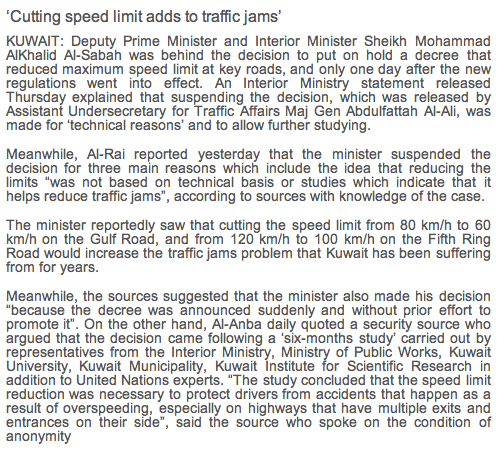
David, and Where is Yambio, South Sudan?
A year ago, we had an extraordinary experience. We often entertain delegates visiting from other countries, and this time we had three African journalists, and, strictly by chance, they all turned out to be Christian. Most of our gatherings are strictly ecumenical, but these were joyful, praying Christians, and the evening took a turn we never anticipated.
“So how did you find Jesus?” one woman asked David, from the newest country in the world, South Sudan. Inside, I was shocked, and when I am shocked, my tendency is to laugh, I don’t know why, it is just the way I am wired. Every culture is so different. In the South, people might ask that of one another, particularly if you worship in a fundamental sect, but our sect is more formal, and to inquire into another’s spiritual life can be perceived as intrusive.
David, however, was not taken aback. “It’s a long story,” he said, and we all settled into comfortable chairs to listen better. It was Christmas, the decorations were up, the lights all twinkling and we had eaten. A good time for a story.
It was a long story. It started with a little boy in a happy family, who one day was told to run! Run! Run into the forest and hide! The riders were coming! His family grabbed a very few things and ran.
His family ran for years. His family ran into forests, across borders, into dry arid spaces. Sometimes some of the children would get separated from their parents for a while, but they would keep asking, and eventually meet up again, only to face separation again. Their whole lives were running, from the Janjaween, from border police, from robbers.
At one point, he and a brother stayed in a church, and a priest taught them about Jesus. Simple stories, simple songs, and he drew letters and numbers in the dirt – that was his early schooling. It was a haven of peace for him.
Many years later, the family was reunited in their village in the new country of South Sudan. Miraculously, every member of his family survived, indeed, most of his village survived. They had maintained lines of communication through all those years of running and separation, and were so thankful. Most of all, now, they were thankful – they had a church in their village. David had learned to love learning, and had completed his education and had found a wonderful job.
“I don’t know the book like you do,” he told us, “I only know it like a little child sitting at the feet of that priest, but I am learning.”
I can’t help but think that David knows more than he thinks. David holds his belief in Jesus like a child, simple and direct. His testimony is powerful and unforgettable. I am in awe, even a year later, of his story and testimony.
Today the church prays for the diocese of Yambio, in the South Sudan:
Qatar Fields Huge New Traffic Force
This is from ILoveQatar.net, reprinted from Gulf News. I think I loveQatar.net is a very cool website, and I am thankful they continue to send me updates: 🙂
A BIG Wooo HOOOOO on Qatar for training and implementing a PROFESSIONAL traffic force. Woooo HOOOOO! I can only hope the laws they will enforce include children in the back seats in car seats and seat belts for every passenger. I pray that part of the training included instructions that traffic rules are to be applied equally and fairly against all nationalities, including citizens.
A new highway patrol police force that will augment the efforts of the Ministry of Interior (MoI) in improving road safety will start work in 2014, it was announced at the graduation of the first batch of the force.
Consisting of 50 officers and cadets, the graduation ceremony of the first batch was held at the headquarters of the Traffic Department. The training programme was implemented by the Northwestern University, Chicago.
The team has received specialised training in enforcing traffic laws and booking common violations like tailgating, use of mobile phones, exceeding speed limits and not wearing seat belts.
The officers also acquired advanced skills in investigation of accidents, modern methods to interrogate drivers, preservation of evidence and making specialised reports on accidents.
According to Traffic Department officials, the new force will use both radar and lidar, a device used to monitor speed using laser.
The officers were also trained on skills needed to manually control traffic flow and its mechanisms in addition to the use of tools and methods for data collection.
The initiative was organised in collaboration between the Ministry of Interior and RasGas in the context of the priority given by the MoI and the National Committee for Traffic Safety (NCTS) to ensure responsible and safe driving.
The graduation ceremony was attended by Traffic Department director Brig Mohamed Saad al-Kharji, NCTS secretary Brig Mohamed Abdullah al-Maliki, traffic safety adviser at MoI Ademola Ilori and Brett Doherty, safety, health, environment & quality chief officer, RasGas.
Speaking on the occasion, al-Kharji said that the new force would support the MoI’s efforts in road safety.
“The new force will monitor and enforce road safety measures on highways. It includes monitoring speed limit, keeping space between vehicles and handling accidents and emergency situations.”
He added that the trainees got theoretical and practical lessons on controlling traffic movement on highways, safe parking and stopping of vehicles on highways as well as training on dealing with the public.
Speaking on the sidelines, al-Kharji said that there was a plan to equip traffic police vehicles with speed radars so they could catch violators while on the move.
He thanked RasGas for its collaboration with the MoI in this initiative and said the move would play a proactive role in reducing traffic accidents.
Al-Maliki said that the initiative came as part of NCTS and thanked RasGas and Northwestern University for their support for the initiative.
He awarded trainees with certificates and exchanged mementos with RasGas and Northwestern University. Gifts and appreciation certificates were awarded for lecturers and translators.
Others present on the occasion were RasGas public affairs manager Abdulla Hashim, Security & Emergency services manager Faisal al-Hajiri, road safety adviser John Cling, safety systems head Jive Price, road safety training head at Northwestern University, Antony Patila.
Kuwait to Limit Auto Ownership to Solve Traffic Gridlock?
Limit Kuwaitis to two cars per citizen?
Limiting expats to one car will also limit the people willing to take contracts in Kuwait, and family willing to accompany them . . .
Or is this another of those unenforceable laws to put on the books?
Restrictions on automobile ownership in the offing – Bid to solve traffic problems
KUWAIT: According to a report published yesterday in a local Arab daily, the government is planning to limit the number of vehicles a person is allowed to own at two for citizens and one for expats. This proposal may be announced at the beginning of the next year. The proposal also calls to stop renewing registrations of old vehicles without specifying the period, which could be between 8 to 12 years.
The Ministry of Interior hasn’t received any official instructions to take action in this matter. “We are an executive department that applies the law and executes decisions. It’s possible that there are committees at the ministry studying this proposal, but we are not aware of it yet,” Maj Naser Buslaib, Head of the Media Department at the Ministry of Interior told Kuwait Times. Economic analyst Hajaj Bukhadour thinks such a proposal is not realistic and doesn’t believe it may be applied. “Such rules do not exist in any country, even the poor ones or those suffering from traffic woes. Through such unreal proposals, the officials in charge are trying to shirk the problem.
The officials pin the blame and responsibility on expats as they are not qualified and creative enough to find a solution for the traffic problem in Kuwait,” he pointed out. Development and improvement in administration is important to solve major problems. “We should improve the performance of the officials who are in charge of issuing decisions.
There are mistakes in any institution, but we need to improve and this is a great part of solving the problem. Such a proposal proves that officials in charge at the Ministry of Public Works, Ministry of Interior and other institutions didn’t study the problem correctly,” stressed Bukhadour. There are various solutions according to him.
“Different public institutions should cooperate to organize the movement of people in streets through different timings of public employees, schools and others. Also, the government should provide modern and clean public transportation such as a metro or new modern buses that will respect the time and have stops near residential areas that are shaded to suit the hot weather when passengers are waiting for the bus,” he explained.
He mentioned additional solutions. “Developing roads and the infrastructure is very important in solving the traffic problem. Also, the development of the Traffic Department will help in this matter. I think that such suggestions may bring better results in solving the traffic problem rather that coming up with unreal proposals,” concluded Bukhadour.
By Nawara Fattahova
“if You Can’t Prevent Rape, You Enjoy It”: Ranjit Sinha
The Chief of India’s Central Bureau of Investigation said this! Was he snorting cocaine in a drunken stupor? Of course he is apologizing, but his careless remark demonstrates the sentiments buried deep in his culture’s heart – it’s only women. Not worth much, not like us men. Outrageous.
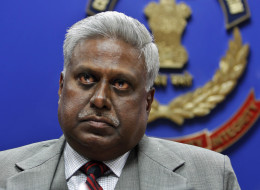
NEW DELHI (AP) — India’s top police official apologized Wednesday for saying, “If you can’t prevent rape, you enjoy it,” a remark that has outraged women across the country.
Central Bureau of Investigation chief Ranjit Sinha made the remark Tuesday during a conference about illegal sports betting and the need to legalize gambling. The CBI, the country’s premier investigative agency, is India’s equivalent of the FBI.
Sinha said at the conference that if the state could not stop gambling, it could at least make some revenue by legalizing it.
“If you cannot enforce the ban on betting, it is like saying, ‘If you can’t prevent rape, you enjoy it,'” he said.
The remarks have caused outrage across India, which in the past year has been roiled by widespread protests following the fatal gang rape of a 23-year-old woman on a bus in New Delhi.
On Wednesday, Sinha said that his comments had been taken out of context and misinterpreted, and that he was sorry if he had caused hurt.
Angry activists, however, called for his resignation.
Communist Party of India (Marxist) leader Brinda Karat said Sinha’s comments were offensive to women everywhere.
“It is sickening that a man who is in charge of several rape investigations should use such an analogy,” Karat told reporters. “He should be prosecuted for degrading and insulting women.”
The New Delhi attack on the young woman last December caused nationwide outrage and forced the government to change rape laws and create fast-track courts for rape cases. New laws introduced after the attack make stalking, voyeurism and sexual harassment a crime. They also provide for the death penalty for repeat offenders or for rape attacks that lead to the victim’s death.
Expat Teacher Murdered In Qatar After Night of Clubbing?
Qatar expats shocked after UK teacher’s suspected murder
 By Yolande KnellBBC News, Doha, Qatar
 Lauren Patterson had gone to a nightclub with a friend before she went missing
The suspected murder of a young primary school teacher from south-east London has deeply upset British expatriates living in the Gulf state of Qatar.
However, two weeks after Lauren Patterson disappeared following a night out in the capital, Doha, officials have given few details about her disappearance.
DNA tests have been carried out on the remains of a body found in a remote area of desert but the results have not yet been released.
At the Newton British School, where Ms Patterson worked, one mother paid tribute to a talented teacher who she said had been a favourite of her little son.
However, staff refused to comment, saying they had been advised not to.
“We’re a small, close-knit community and we’re all in deep shock,” explained headteacher Katherine Dixon. “We are dealing with small children here.”
Security camerasWhen 24-year-old Ms Patterson went out on 11 October she had just returned from a trip home to the UK for her grandmother’s funeral.
She and a female friend decided to go to Club 7 on the seventh floor of the luxury La Cigale Hotel.
It is a popular venue where all nationalities mingle on the dance floor as DJs play ambient house music.
Groups sip cocktails around low tables decorated with colourful, illuminated ice buckets.
Everyone entering the club has their ID checked and they are watched by burly bouncers and security cameras.
It is believed that in the early hours of the morning, the two women left with two local men they knew who had offered to drive them home.
Ms Patterson’s companion was dropped off safely but she went missing.
The alarm was raised by her friend who called the police the next day.
Arrests
Reports say a falconer found a badly burnt corpse shortly afterwards. Two suspects were detained although no details about them have been confirmed.
 Public prosecutor Mohammed Rashed al-Binali says violent crime is “very rare” in Qatar
The case has been referred to the attorney general.
“Violent crime is very rare in Qatar,” public prosecutor, Mohammed Rashed al-Binali told me in his smart office surrounded by shining skyscrapers in central Doha.
“We are continuing to investigate the case. We cannot give more details at the moment but the Ministry of Interior did arrest the suspects within 24 hours.”
Alison Patterson has flown to Doha and is awaiting further news about her daughter.
She told the BBC she would only make a statement “when I feel the time is right and I have received all the information concerning Lauren”.
Meanwhile, the British Foreign Office says it is providing the family with consular assistance.
Qatar, which will host the 2022 World Cup, is generally considered one of the safest places in the Middle East for Westerners.
The tiny, but very wealthy Gulf state, which is the biggest exporter of natural gas in the world, relies heavily on its growing foreign workforce.
It now has some 17,500 British residents. Most are attracted by the high living standards and high tax-free salaries.
Yet work permits can be easily revoked and this makes employees from overseas very wary of upsetting the authorities.
While Qatar has recently supported opposition movements pushing for greater freedom across the Arab world, the nation itself remains very conservative and tightly controlled.
Saudi Arabia Inching Toward Allowing Women to Drive
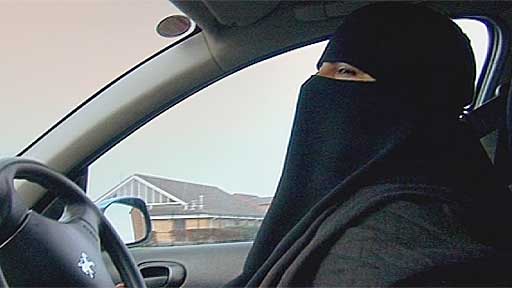
Saudi Arabia is the only country in the world where women are not allowed to drive. There is an irony – there is no law banning women from driving. They do not issue driver’s licenses to women, they arrest women seen driving, and they do not – officially – teach women to drive. Thank God for good fathers and brothers and husbands, who take their daughters, sisters and wives to isolated places and teach them, often for the good of the family in case of an emergency.
Saudi women drive in Europe, in the USA – they drive everywhere except in their own country. The government shows signs of wanting to allow women to drive (officially) but they seem hesitate to stir the wrath of the religious police who believe – based on nothing – that God forbids women to drive. Recently, the head of the Saudi religious police said there is nothing in Islam that forbids a woman to drive. What’s the hold-up guys?
This article is from AOL Auto News, where you can also see a video of a woman driving in Saudi Arabia with cars passing her and waving encouragement:
Saudi Arabian Women To Protest Driving Ban On Oct. 26
Saudi society is slowly inching toward more equality, but driving is still disallowed for women

When Farha was a young girl, about seven years old, her mother told her something that rocked her world: She said women could drive.
For Farha, a 24-year-old writer who has spent her entire life in Saudi Arabia, this was akin to a Western child learning the truth about Santa Claus. She’d only ever seen men behind the wheel in her country, where women are not permitted to drive. The revelation was slightly scandalous, a little bit funny, and totally paradigm-shifting.
It took another two years for Farha (who didn’t want to be identified with her last name due to the sensitivity of the issue in her home country) to decide she would, one day, learn how to drive a car. And, for good measure, she’d learn how to ride a bike. Two modes of transportation that have been banned to women and girls for most of Farha’s lifetime.
On Oct. 26, women in Saudi Arabia will engage in the third protest against the female driving ban by getting behind the wheel anyway. The protest won’t be widely attended, because the vast majority of women in Saudi Arabia don’t know how to drive. There are no driving schools in the Kingdom that cater to females, and state agencies will not issue a driver’s license to a woman.
“Since there is no justification for the Saudi government to prohibit adult women citizens who are capable of driving cars from doing so, we urge the state to provide appropriate means for women seeking insurance of permits and licenses to apply and obtain them,” a petition at the protestor’s web site reads. The web site has been blocked within Saudi Arabia, yet there are still a thousand or so names on the petition. The few women who are adept behind the wheel learned while living overseas, often in the U.S., Canada, or nearby Bahrain or Dubai.
In urban areas, women are chauffeured around by male relatives or paid drivers, or they pay for taxis. In rural areas, the driving ban generally isn’t enforced, and more women drive out of necessity. One woman who was recently videotaped disobeying the ban got support from her fellow (male) drivers, who passed by and gave her the thumbs up, a sign that society may be more willing to accept an eventual change.
Learning to drive
Farha tackled the task of learning to drive first by reading about the process. She edited a story on how to drive for her high school newspaper, and from that she felt she learned quite a bit. Then her father spent some time talking to her about how cars work, and the theoretical aspects of driving. He took her out for a few hours over the course of a few days, letting her drive around their neighborhood in the coastal city of Jeddah. But she never ventured onto the main roads.
She also learned the basics of riding a bicycle, but doesn’t consider herself adept at either skill. When the ban is lifted, she said she’ll sign up for classes at a real driving school.
“I always thought this ban would go away when I was 18,” she told AOL Autos. We connected with her through a publication where Farha wrote, under a pseudonym, about the driving ban. “And I’m still hoping it will be lifted when I am 26.”
“I always thought this ban would go away when I was 18,” Farha said. “And I’m still hoping it will be lifted when I am 26.”
Not driving makes life’s everyday movements difficult. Sidewalks aren’t available, so walking isn’t realistic. Farha’s father has mostly been responsible for driving her and her mother around, but five months ago he got into a car accident and broke his leg. He is currently unable to drive. Farha feels the burden of her father’s injury. If she could drive, she said, she could bring him to doctor’s appointments and help him get out of the house. Instead, the family is home-bound unless they pay someone to bring them places.
Farha has hired a part-time driver to take her to and from work. It costs about 2,000 to 3,000 Saudi riyals (or around $530 to $800) a month for a driver. That’s about the same amount that women make earning minimum wage in Saudi Arabia, prompting many women to just stay home.
“A lot of women don’t feel the incentive to work and hire a driver,” she said. “It doesn’t make any economic sense.”
Some women opt for the public bus system, but that makes women from conservative families feel nervous because it exposes them to strange men – the exact problem the country is trying to avoid by banning women drivers. Taxis run the same problem, putting females into cars with strange men. “It doesn’t make sense,” Farha said.
Farha is considering signing up for a karate class, but she’ll have to pay her driver for more hours or take a taxi to the classes. On top of the class fees, the price of getting to and from karate starts to seem like a silly amount of money, she said.
And she worries she’s spending too much money on herself. She could spend 30 riyals on a taxi each way, or she could donate that money to a family in need. Or spend that money sending school supplies to girls in other countries.
“It’s a difficult decision to make every time,” she said.
One unintended consequence of the rule strikes Farha as incredibly unsafe: Women often let their 13-year-old sons drive them around when they are out of other options. Farha’s observation was backed up by a U.S. intelligence research note made public by Wikileaks, which noted that these young drivers sometimes get into very serious accidents.
Weird, long history
Oddly enough, there isn’t any actual law in Saudi Arabia banning women from driving. In 1991, the late Grand Mufti of Saudi Arabia, Sheik Abdulaziz bin Baz issued a fatwa prohibiting women from driving. A fatwa is different from a government law, in that only followers of the religious leader who issues the fatwa are obliged to follow that law. But given the intertwined nature of Saudi Arabia’s government and its religious leaders, the fatwa took hold. The government agency in charge of issuing driver’s licenses will not issue one to a woman. Saudi Arabia’s court system relies heavily on fatwas from the Grand Mufti.
So, in essence, the religious order became a rule that everyone follows, even though it’s not enforced by the Saudi government. The government just makes it impossible for women to get drivers licenses, and if they catch women driving, they make them sign a pledge promising they won’t do it again.
Abdulaziz bin Baz said at the time that the ban would protect women, because allowing women to drive would put them out in society alone, leaving them to mix with men. If women were stranded by the side of the road due to a flat tire or car problem, they could end up being assaulted or raped by a man who came to help them, argue critics who still uphold the ban.
A reporter for the Christian Science Monitor recalled a 2012 conversation with a man in Saudi Arabia about what would happen if the ban was lifted. “What would happen if a woman got in a car accident, he asked? Then she would be forced to deal with the male driver of the other car, a stranger, with no oversight – a problematic situation in a country where male guardianship of women is deeply entrenched.”
Just last week, a Saudi cleric came under fire for claiming women were damaging their pelvises and causing birth defects by driving. Sheikh Saleh bin Saad al-Lohaidan argued women should put reason ahead of their hearts, because it “could have negative physiological impacts as functional and physiological medical studies show that it automatically affects the ovaries and pushes the pelvis upward.”
Saudi society is slowly inching toward more equality for women. Just this week, four women became attorneys. Earlier this year, women were allowed to work in retail establishments that sell underwear and bras, taking away the embarrassment for women who’d previously had to purchase these items from male salespeople.
Since around 2006, the Saudi government has been indicating it would consider lifting the driving ban if society deems it acceptable for women to drive. Diplomatic cables released by Wikileaks showed the U.S. government has been paying attention to this issue, and putting some pressure on the Saudis to change their ways.
Will of the people?
But it’s clear the Saudi government won’t make any controversial moves: “This has to do with the will of Saudi society,” said Saudi Justice Minister Muhammad Al-Issa in a TV interview in April, according to a translation by the non-profit group MEMRI. “If Saudi society, given its culture, wants women to drive, it’s fine. But if society has any reservation for whatever reason, that’s fine too.”
Farha said she’s holding out hope that the rules will change, as soon as possible. But the change will depend greatly on men’s attitudes.
“More men certainly support it now, but … they have their concerns,” she said. And “some are outright hostile to the idea.”
When she does get her license, Farha said she’d like to try driving a sports car. It doesn’t matter what kind, she just would like to try driving something fun. But she’d rather be able to walk or bike to work, even if she could drive.
“Cars feel suffocating inside,” she said. “But the whole idea is to lift this difficulty for women. I hope it happens soon.”
In sharing this story, and others, with our readers we hope you are inspired to Raise Your Hand for girls’ education, helping us spread the word on this crucial effort.
Recent Comments
ExpatAlien on What Country am I Living … intlxpatr on Yellowstone: Old Faithful to C… Michelle on Yellowstone: Old Faithful to C… Cathy on No Grown-Ups in Charge intlxpatr on Waiting for Snow Wikipedia Donate Button

Amazina


Early Voting in Florida


 Here There and Everywhere