Jungle Bell Rock in Kuwait :-)

If you remember, the Qatari Cat is a former street cat, a rescue cat. I wish I could be there to support this wonderful event and the good work that K’s Path in Kuwait is doing. They have some illustrious sponsors, and a host of great volunteers supporting their efforts.
The Passage by Justin Cronin
I subscribe to GoodReads.com, and I buy books through Amazon.com, so I am not sure which one of those recommended this book for me. I held it a couple months before I read it, just wasn’t sure it was something I cared about. Once I started, however, I was hooked.
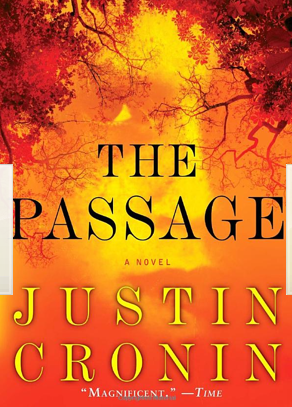
Don’t you just love summertime reading, the kind where you might even be able to grab a couple hours in a row? When you can focus like that, it’s like you are living two lives; you are in your normal existence, but a part of you is somewhere else, if the book is good enough.
Sometimes that somewhere else isn’t that great, and in The Passage, you are in a post-apocalyptic America where those military scientists have lost control of one of their experiments and life has changed forever as a result. Sorry to sound so cynical, but I started reading Sci-Fi when I was still in middle-school, so I am a little jaded about post-apocalyptic literature, but this one managed to suck me in. Also, even though you know it’s fiction, it is compelling enough to feel very real.
So before I go getting all critical about the little things, I need to tell you that when I had to put the book down, I could hardly wait to get back to it, and I probably need to look after my laundry and my floors and wash up some dishes now that I’ve finished; the book compelled my interest.
I think the author does a great job setting up the world. In order for young people to come into their own, to head out on their quest, you have to get parents out of the way, so all the young people out to solve the problems have parents who have died, or committed suicide (the living situation is a little bleak) and that kind of bugs me, even though I can see the literary usefulness of having this happen.
The survivors, 100 years after the societal meltdown, live a bleak and limited existence, mostly focused on not getting killed. (One of the very scary things is just how fast a society can melt down when faced with an overwhelming threat.)
This is a vampire-novel, but a vampire novel with a total twist, there is nothing attractive about these vampires, called virals. They are demented, and they want blood. They tear into flesh. You don’t want to be out in the open after dark, you don’t want to run into a viral. Justin Cronin makes it very very real. I’m glad my husband wasn’t traveling. I know vampires are not real, and I know there are no virals, and you know sometimes rational doesn’t matter when you hear sounds at night? These bad-guys are very very lethal and very very bad.
And here is what I like. Cronin takes you from utter fear to some compassion for the virals. I imagine this will play into the next book.
I also like his inclusion of children, and they way children perceive and the way children feel, and how those perceptions and feelings grow with the child, and, if you are very lucky or very persistent, how you can gain insights into those perceptions and understand them differently as you reach adulthood. It reminds me of another Sci-Fi author I used to read, Zenna Henderson, who wrote books about specially talented children.
Here is what I don’t like, what I find really frustrating: this is just the first volume. I am satisfied enough with this book, and I know I will have to read the next one, but I think I can see where he is going with it all. I find it frustrating; I am holding my breath for the next Game of Thrones/Fire and Ice volume to come out, and now this Passage follow up won’t be out until 2012, on AAARRGH.
It’s a dark book, but it kept me glued. The things that annoyed me didn’t annoy me enough to discourage me from reading. 🙂 It is a great summer read.
Chimamanda Ngozi Adichie: Purple Hibiscus
A couple of years ago, when we had a great book club in Kuwait, I read Half of a Yellow Sun, by this author, and I was blown away. Some books you just read for entertainment, and some books have such a strong, compelling voice that it comes back to you, again and again, and you think about it for a long time.

So when Amazon.com recommended Purple Hibiscus, I bought it, along with The Thing Around Your Neck. Purple Hibiscus is the author’s first book, and The Thing Around Your Neck is her most recent. In 2009, I found an interview with her online; you can watch it by clicking here: An Interview with Chimamanda Ngozi Adichie. She is an enormously talented author.
When I read Half of a Yellow Sun, I became Igbo, growing up in Nigeria. While that story was told through many eyes, I was able to be a boy from the bush brought to the college campus to be a houseboy, I got to be a wife, her sister, her professor husband. We experienced the Biafran succession, the insanity of several regime changes in Nigeria, the total fog and waste of war, through the eyes of the Biafrans.
Reading Purple Hibiscus was a little different; the story is told through the eyes of a girl, Kambili, who lives in a very controlled environment. We know from the very beginning that things are not right in her wealthy, beautiful world. Her father and mother love her, take good care of her, feed her, clothe her – and that is just a part of a bigger picture. Her father has an idea of the way things should be; he attained his position and wealth through his education by the Catholic priests and he has a rigid idea of how everything must be done. Vary from his strictures, and you get beaten, or scalded, or you little finger is broken and disfigured.
Part of what makes this book so compelling is that while the environment is Nigeria, and, to us, exotic, the climate of abuse is the same everywhere. It’s a dirty little secret, even in the wealthiest of families, you keep your mouth shut to stay alive, and to protect your family’s image. Abuse is no stranger to rich or poor families, and can only stay alive because people stay silent.
Kambili, fifteen when we meet her, lives a tiny, small, scared life, following the weekly schedules her father prints out for her and her brother and posts over her desk. She hears her mother beaten over the smallest failure, imagined or real. Her mother miscarries twice due to these beatings, and her father tenderly cares for the mother whose miscarriage his beatings caused. It is crazy-world. Kambeli and her brother are expected to take first in every class; if they do not, they, too, pay a severe penalty.
Just as the political climate in Nigeria starts to tremble and fall apart, so, too, does Kambili’s life, and in the falling apart, comes new ways of doing things, new perspectives, new risks and even learning to run, to laugh, to be ‘normal’ as other children are. She is blessed to have an aunt at the university, no where near so wealthy as her family but able to cajole her father into letting the children visit with her. The aunt, Ifeoma, laughs, and encourages her children to challenge other’s opinions respectfully, and who grows the very rare Purple Hibiscus. Her heart aches for Kambili and her brother, and she tries to give them space to figure things out for themselves, and to chose what they want for themselves.
It is a scary time in Nigeria, a time when men can come to the door and take someone away, and you don’t know if you will ever see them again, or how damaged they will be if they return. Kambili’s own life is full of a similar terror, but the terror is inflicted by someone who she loves, and who loves her.
I love the soul of an author who can write a book like this, a book that makes me feel like in another life I was a Nigerian. I can’t begin to think I know much about Nigeria now, but having read three books by Chimamanda Ngozi Adichie, I have the broad outlines of the divisions which traumatize and fracture Nigeria to this day. Even better, I understand how very different the cultural expectations are from our own, and how very similar we are as human beings.
This is a great read. It is inspirational. You might even learn something. You can find it on Amazon.com.
Doha Debates and Where Are You From?
The Baked Salmon Dijon for last night’s dinner took a little longer to cook because Joe Patti’s cuts the salmon steaks so thick (we cook two, split one and freeze the other for another night), so while I was waiting, I flipped around and found WSRE’s Doha Debate coverage.
Who knew?
I didn’t know I could still watch the debates in Pensacola! This one was about whether or not Egypt should postpone elections in the interest of forming a more representative democracy. The vote was 84% in favor; the two young supporters carried the house. 🙂 This was the March debate and you can hear the entire 48 minutes by clicking here.

The winning female debater used a slogan I had not heard, but I love, because it is graphic and memorable – “we do not want a fast-food democracy that brings only indigestion.” The younger debaters want to scrap the entire constitution and re-write it, claiming the current structure needs to be thoroughly revised in order for democracy to have a chance of success.
I love it that these issues have a forum for debate in Doha.
Following the debate was a cringe-worthy video about asking people where they are from. His point was that when he is asked where he is from, and he answers ‘The Bronx,’ people say “No, where are you REALLY from?’ and the implication is racist. He says it is the same as saying that his color is darker, therefore he is not like us, so he must not be from around here.
I’ve asked that question. Never meant it to be insulting, but I will stop now. Or I will only ask those with a slight accent, maybe. Wherever we have lived, we have been asked that question – but then, in Kuwait and Qatar, most of the work force is not Qattari or Kuwaiti. Even in Germany, however, where we might look a lot like them, we are asked where we are from. It used to be a courteous way of showing interest, or initiating a conversation.
One time in Doha, a local man asked me about my breeding, LOL. I told him I was a product of the American melting pot, and from the earliest settlers to the latest, my family includes just about a little of everything. We were at the veterinarian’s office, and I knew the purity of his dog’s blood lines mattered, and probably his own, but I also felt a little insulted, and I haven’t forgotten it. Doesn’t science teach us that diversity in blood lines is a good thing?
We are in the middle of a heat spell in Pensacola, early this year, and because we haven’t gotten anywhere near the normal rainfall, there are also wildfires. The firefighters are struggling to put out the fires, and also fighting heat exhaustion. AdventureMan is out watering all our new plantings, and our tomatoes, every morning, God bless him, because when the temperatures go high, I just want to stay inside.
A God of Infinite Mercy
This morning, Father Neal Goldsborough of Christ Church Pensacola gave a sermon that held us all totally spellbound. It had to do with the fundamentalist preacher who – once again – forecast the coming rapture, which he says was scheduled for yesterday. (I wonder what he has to say today? He was wrong once before, in 1994. Or maybe people were raptured yesterday, but all the folk I know are, like me, sinners who didn’t make the cut.)

Father Neal talked about his service in the chaplain corp overseas, and faiths which exclude based on narrow rules, specific rules, churches and religions who say ‘this is the only way and all the rest of you are damned to everlasting fire” whether they use those words or paraphrases. He pointed to Jesus, who broke the rules of his time and flagrantly spent time with sinners, and the unclean, and showed them by his love and by his actions what the infinite love and mercy and forgiveness of Almighty God looks like.
It couldn’t have come at a better time for me.
Soon, I will be meeting up with three women who are particularly dear to me, friends for many years in Qatar, friends who worshipped at the Church of the Epiphany in Doha, Qatar. The new Anglican Church of the Epiphany is being built on land dedicated to church use by His Highness Sheikh Hamad bin Khalifa Al-Thani, the Emir of Qatar, and will be used by many denominations.
My friends and I all returned to the USA within months of one another, and have been sending e-mails with “reply to all” as we struggle with our re-entry into our old church communities. We struggle with the hatreds and prejudices and ignorance about our Moslem brothers and sisters, and we struggle with the narrow strictures imposed by our churches and study groups. I thank God to have these wonderful women among whom we can share our dismay and our hurting hearts, and re-inforce the lessons we learned living in a very exotic, and sometimes alien culture, but which had so many wonderful and mighty lessons to teach us. I often joke that in my life, God kept sending me back to the Middle East (Tunisia, Jordan, Saudi Arabia, Qatar and Kuwait) until he saw that I finally got it. My sisters-in-faith were quicker studies than I was. 🙂
It was a breath of the Holy Spirit I felt this morning, as Father Neal spoke about God’s mercy, his plan to redeem ALL of his creation, God’s desire for our love and our service. I couldn’t help it, it made me weep with relief to know my church is a church that serves God by including, rather than excluding, and which mercifully welcomes sinners like me.
Here is the really cool part. Christ Church Pensacola has recently begun putting the sermons online. If there is one thing Christ Church has, it is great sermons – and if you want to hear Father Neal’s sermon, you can click HERE, in a few days and you can hear his sermon for yourself. 🙂 Look for the May 22 sermon by Father Neal Goldsborough.
Dancing on Graves?
I trust that it all happened exactly as it should. Don’t we all believe God is in control?
Friends and family are asking me why I have been silent about the raid, capture and execution of Osama Bin Laden.
9/11 and the celebrations televised around the world were equally horrifying to me. Pointless killing. Pointless celebration.
We don’t celebrate the deaths, not even of those who have caused us harm. It’s not who we are, and it only invites retribution, and keeps the pointless violence, the pointless arguments going.
Jesus told us that it is easy to pray for our friends and family, but that we are to pray for our enemies as well. It’s really really hard. And it is one of the few gates that will open the door to true change, which has to come from the heart.
There is no guarantee that an operation will succeed, no matter how talented, trained and intelligent the operators are. Well done, Navy SEALS. Well done, those who gathered the information, who confirmed the information, and who chose to execute surgically, rather than a bomb which would kill without positive identification. Well done, gathering all the computers and flash drives, hopefully full of information which will give insight into future plans which can be thwarted.
Osama’s death doesn’t bring back the thousands killed in the 9/11 attacks. It does send a message that attackers will be hounded until they pay for their actions. That’s not a pass for dancing; it’s a grim tally in the world of hard-ball politics.
Cutting for Stone by Abraham Verghese

Someone in my book club in Qatar mentioned this book, Cutting for Stone, a while back, and I bought it, but it has sat for months on my to-read shelf (LOL, there are actually several, but one with the most important books, and another with the ‘guilty pleasures,’ the ones I am addicted to and save as a reward for good behavior, like vacuuming.)
When a good friend said she was reading it, and that it was good, I decided to move it up in priority, sort of like taking medicine, read a book that is good for you.
Oh WOW.
First, it is a great, absorbing story. Twin boys are born, totally unexpected, to an Indian Catholic nun and an English surgeon, working in Addis Ababa. How they were conceived is a mystery. The mother dies in childbirth, the father flees in horror, the children are born conjoined at the head and must be separated. The boys are adopted by an Indian couple, doctors at the hospital, and are raised with love and happiness.
That’s just the beginning!
I’ve always wanted to go to Ethiopia and Eritrea. I want to visit Lalibela, and some of the oldest Christian churches in the world. When my father was sick, he had a home health aid from Ethiopia, Esaiahs, who told me about the customs in his church, and how Ethiopian Christianity is very close to Judaism, with men and women separated in the church, and eating pork forbidden.
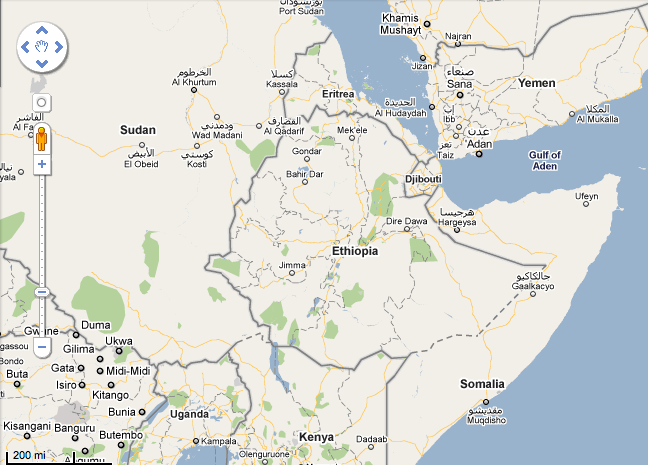
Reading this book, I felt like I had lived there, and I want to go back. The author captures the feelings, the smells, the visuals, the sounds, and if I awoke in a bungalow at the MIssing (Mission) Hospital, I would say “Ah yes! I remember this!”
I kept marking sections of this book that I loved. Here is one:
They parked at Ghosh’s bungalow and walked to the rear or Missing, where the bottlebrush was so laden with flowers that it looked as if it had caught fire. The property edge was marked by the acacias, their flat tops forming a jagged line against the sky. Missing’s far west corner was a promontory looking over a vast valley. That acreage as far as the eye could see belonged to a ras – a duke – who was relative of His Majesty, Haile Selassie.
A brook, hidden by boulders, burbled; sheep grazed under the eye of a boy who sat polishing his teeth with a twig, his staff near by. He squinted at Matron and Ghosh and then waved. Just like in the days of David, he carried a slingshot. It was a goatherd like him, centuries before, who had noticed how frisky his animals became after chewing a particuar red berry. From that serendipitous discovery, the coffee habit and trade spread to Yemen, Amsterdam, the Caribbean, South America, and the world, but it had all begun in Ethiopia, in a field like this.
We live inside the hearts and minds of doctors, some practicing under the worst possible conditions, and learn how they make their decisions and why. Verghese is a compassionate author; while his characters may be flawed, they are forgivable and forgiven.
Another section I loved, the man speaking is Ghosh, the man who adopted the twins with Hema, another doctor:
“My genius was to know long ago that money alone wouldn’t make me happy. Or maybe that’s my excuse for not leaving you a huge fortune! I certainly could have made more money if that had been my goal. But one thing I won’t have is regrets. My VIP patients often regret so many things on their deathbeds. They regret the bitterness they’ll leave in people’s hearts. They realize that no money, no church service, no eulogy, no funeral procession no matter how elaborate, can remove the legacy of a mean spirit.”
Things in Ethiopia get sticky, politically, and one of the twins is forced to flee, implicated in an airplane hijacking only because he was raised with a young woman involved. He is spirited into Eritrea, where he awaits his ride out to Kenya, and he helps the Eritrean rebels when large numbers of wounded are brought into his area. When the time comes to leave, his thoughts will strike a chord in anyone who has ever been an expat:
Two days later I took leave of Solomon. There were dark rings under his eyes and he looked ready to fall over. There was no questioning his purpose or dedication. Solomon said “Go and good luck to you. This isn’t your fight. I’d go if I were in your shoes. Tell the world about us.”
This isn’t your fight. I thought about that as I trekked to the border with two escorts. What did Solomon mean? Did he see me as being on the Ethiopian side, on the side of the occupiers? No, I think he saw me as an expatriate, someone without a stake in this war. Despite being born in the same compound as Genet, despite speaking Amharic like a native, and going to medical school with him, to Solomon I was a ferengi – a foreigner. Perhaps he was right, even though I was loath to admit it. If I were a patriotic Ethiopian, would I not have gone underground and joined the royalists, or others who were trying to topple Sergeant Mengistu? If I cared about my country, shouldn’t I have been willing to die for it?
The book has a lot of observations about coming to America; some of which made me laugh, some which made me groan. Coming back is always a shock to people who have lived abroad for a time, but it is a huge shock to those coming for the first time:
The black suited drivers led their passengers to sleek black cars, but myman led me to a big yellow taxi. In no time we were driving out of Kennedy Airport, heading to the Bronx. We merged at what I thought was a dangerous speed onto a freeway and into the slipstream of racing vehicles. “Marion, jet travel has damaged your eardrums,” I said to myself, because the silence was unreal. In Africa, cars ran not on petrol but on the squawk and blare of their horns. Not so here; the cars were near silent, like a school of fish. All I heard was the whish of rubber on concrete or asphalt.
As I neared the end, I read more slowly, unwilling for this book to end. It is one of the most vivid and moving books I have ever read. AdventureMan has gone online to find the nearest Ethiopian restaurant so we can have some injera and wot.
King Abdulla Returns to Saudi Arabia, Announces Benefits
Sometimes, there is little to say, the news says it all. Ghadaffi calling his own Libyans “rats” “cockroaches” “cowards” “traitors”, aging, long term leaders announcing increased benefits for citizens . . . These are interesting times. The winds of change are blowing, and no one can tell where those changes will take us . . .
From todays BBC World News:
Saudi King offers benefits as he returns from treatment
The king was greeted by hundreds of well-wishers on his arrival at Riyadh airport
Continue reading the main story
Saudi Arabia’s King Abdullah has announced increased benefits for his citizens, as he returned after months abroad getting medical treatment.
There will be extra funds for housing, studying abroad and social security, according to state television.
King Abdullah has been away from the country for three months, during which time mass protests have changed the political landscape of the Middle East.
There have been few demonstrations in Saudi Arabia.
You can read more at BBC World News/Middle East
The Book Thief by Markus Zusak
Until I sat down to write these reviews (so I can pass these along to friends in Kuwait who I know will read and discuss them 🙂 ) I didn’t realize that the books had so much in common. They both take place in the WWII time frame, and both are told from the point of view of children coming of age in this time. Both are love stories, romantic, parental, community – they have many of the same elements. They both have bullies, and children who steal. They both have wise adult conspirators, mentors and guides.

In The Book Thief, right off you get a chill. One of the main characters in a personification of Death, a tired, weary, cynical Death, but a Death who is fascinated by his humans. When the opening pages are written by Death, you get a feeling that this can’t be good.
And, in the beginning, it is not good. Liesel is on her way . . . somewhere, we don’t know where, on a long train ride, during which her brother dies. They are forced off the train, and her brother is buried in some small village where they are unknown; the grave will probably never be visited. Shortly after, they re-board another train, and when they arrive, Liesel is turned over to a government foster family agency, and she is placed with a rough, uneducated couple in a small village on the outskirts of Germany.
Not far from Dachau.
So many similar elements . . . people at the mercy of their government, and the madness of the politicians and mass hysteria. Bullies, but not just in the schoolyards, here there is also a nationally encouraged group of bullies, the Nazis, and people in every village are encouraged to join the party. The kids join Hitler Youth and practice to become good Nazis.
Except inside each one of us resides a spirit of humanity, and if you let that spirit dominate, you can come into conflict with the party, even if you appear to comply most of the time. Liesel’s foster parents turn out to be a very humane sort. They feel compassion for the Jews marched through their village on the way to the camps, and attempt to give them a little bread, for although they have little to share, they can see that these Jews are starving.
And then, a stranger arrives on the doorstep, the son of a man who saved Liesel’s Papa’s life in the first world war. He is Jewish. He needs a place to be hidden. Liesel’s foster parents take him in and hide him in the basement.
Only after I read the book and read the afterword did I discover this is a book written for young adults, and that makes me laugh, because I am not a young adult, and I enjoyed the book so much. I love books about the triumph of the human spirit, the triumph of good over evil, and the triumph of hope and life over hopelessness. Even Death has a heart, in this book.
I know that there will be one copy of this book in Kuwait; I am leaving it with a friend I know will read it, and I know she will pass it along, because this is a book worth discussing. I hope you are friends with my friend, and that you will get a chance to read it, too!
Another Gorgeous Day in Kuwait
Oh my friends, I am having such a good time. I have been getting together with my friends, one on one, and we have talked so much – or maybe it is the particulate content of the Kuwait air – that I have lost my voice, LOL.
Last night, I slept the entire night. I was able to get up early and have breakfast with my poor hard-working AdventureMan before he rushed off to another day of high level decision-making and problem solving. Me? Another play day in the great land of Kuwait. 🙂
Here is what life looks like at seven in the morning:
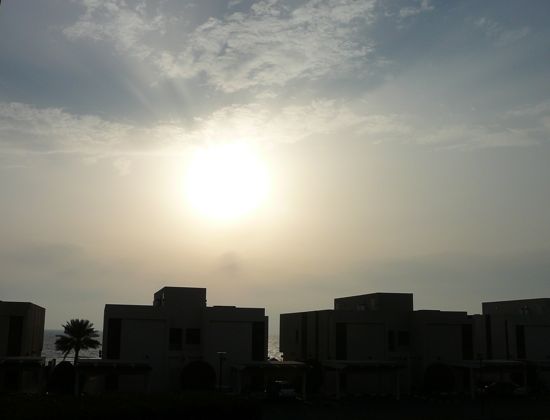
It is another great day in Kuwait.
When I checked Weather Underground for the Kuwait weather forecast, I found an ad for Wataniya’s Give Kuwait.com where people are submitting their own videos to celebrate Kuwait’s upcoming celebration, a four day holiday, February 24 – 28, celebrating 50 years of Independence, 20 years since liberation and 5 years under the rule of the current Amir. There are some really fun videos, some with old photos (you know how I love the historical photos!)
Recent Comments
ExpatAlien on What Country am I Living … intlxpatr on Yellowstone: Old Faithful to C… Michelle on Yellowstone: Old Faithful to C… Cathy on No Grown-Ups in Charge intlxpatr on Waiting for Snow Wikipedia Donate Button

Amazina


Early Voting in Florida


 Here There and Everywhere