The Law of the Harvest
A small group was huddled, talking about volunteer work, and how people are afraid to commit, when the duties are actually very light, and easily accomplished, then we drifted into giving generously . . .
“It’s called The Law of the Harvest” one of my favorite women popped in as I was trying to explain that when you give, open-handedly, give with your heart, it all comes back to you multiplied.
We all turned to her. “Remember the seeds? You sow the seeds and then it is multiplied?”
Of course! It’s so simple! Why didn’t I think of that?
Community Police Graduate
Community policing is necessary when we neglect to police ourselves. . . if, for example, we find ourselves throwing a tissue out of our car window as we drive along, littering the pristine streets of Doha. If we bully someone because we want that parking spot he is driving into, if we disrupt the peace and quality of life of others by our behavior.
I notice, in this story from the Gulf Times, that women are a part of this program, and that they are wearing uniforms, and hijab, and that those uniforms are very modest and also that they are wearing pants. Please see the previous article.
I commend Qatar for this visionary program, helping the community police itself, and for including women from the very first class.
46 take part in community policing basic course
Graduates with officials at the convocation ceremony
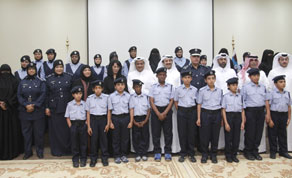
The Police Training Institute (PTI) recently held a ceremony to mark the graduation of participants in the first batch of the Community Policing Basic Course, under the auspices of Minister of State for Interior Affairs HE Sheikh Abdullah bin Nasser bin Khalifa al-Thani.
Some 46 students from various security departments took part in the course, which lasted seven weeks, said a spokesperson.
The ceremony was attended by the chairman on the Central Municipal Council, HE Nasser al-Kaabi; director of the PTI, Brigadier Mohamed Hassan Youssef al-Saei as well as other ministry officials.
Brigadier al-Saei explained that the course has been conducted to “enhance the role and mechanisms of community policing,” as well as helping to create partnerships with various social institutions to help with national security.
The PTI director added that the graduates of this course will be able to translate the Ministry of Interior’s aims and strategies to encourage understanding between various communities and to help the police to be able to prevent crimes before they are committed.
Brigadier Rashid Shaheen al-Atheeque, chairman of the steering committee of community policing, said: “The graduation of the first course of community policing is one of the stages of qualifying the national cadres at the Ministry of Interior to work in the national project.”
“Qatar is currently witnessing progress in all aspects of development in economic and social fields – this increases the role of all sectors in the country to face all kinds of challenges brought with this development,” he said, adding: “These factors require the improvement of capabilities to keep pace with development.”
Brigadier al-Atheeq explained that the ministry had pursued the initiative of community policing to help reduce crime throughout all institutions, and said that they had pursued the objective with the co-operation of the Supreme Council for Family Affairs as well as other ministries and companies, working towards the National Vision 2030.
He explained that the concept will initially be employed in the North Security Department from April 2010, with plans to apply it across the board from 2011.
Representing the director of the Ummul Qura Independent School for Boys, teacher Areezah al-Yami described the noticeable benefits of introducing the community policing programme in the school over the past year.
It’s Good To Be The Amir :-)
One of the first things visitors say when I take them around Doha is “It’s so clean!” said in a voice of total wonder. Doha IS clean, noticeably clean. Along the Corniche, everything is clean – and manicured. Doha is beautiful. The roads are beautiful, and getting beautifuller – er . . . more beautiful.
Qatar is not a democracy. It has a monarch, the Amir. The Amir has huge resources, and he channels much of his resources into infrastructure – highways, water treatment, electricity, parks (along the Corniche, wireless internet is provided to the community, totally FREE, miles of free internet), education – and serious work is being done to raise the level of education and educational possibilities continually – planning for future food and water, trying to insure that if and when the gas runs out, Qatar will have a sustainable economy.
It’s not a job I would want. It’s a lot of hard work, and who do you trust to share your vision and help you get the job done? Every day must have its frustrations, and the triumphs take a lot of work and perseverance. Building a country’s infrastructure is not for the faint-hearted.
But the job has its perks, and one of them is that you can create your own viewing stand for the 0800 Friday morning military review parade. This reviewing stand makes me grin. This Amir has some Events people with a flair for the dramatic and a tip of the hat to the traditional at the same time. While some complain that the new souks are like Disney Does Doha, anyone who used to go there and goes there now will tell you that there is new life in the souks. They are clean and safe and light and well cared for.
Anyway, I digress.
Here is where the Amir gets to sit to review his military at the parade tomorrow morning at 0800:
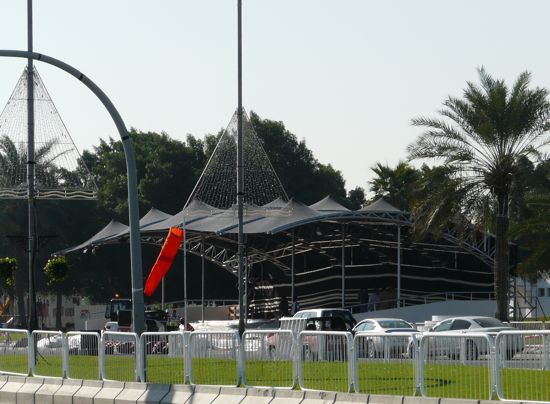
I was afraid to go any closer, as people were practicing for the parade, security might not like me taking photos, but how cool is this? They used original beit as-shar (house of hair, i.e. wool) fabric for the inner lining of the review tent. I totally love it. This fabric was originally made mostly from goat hair, but also stripes of sheep and camel hair. I have some. It’s tough and strong, and in panels, woven by the women. I don’t think they make tent bodies like this any more.
Doha unscathed by downturn: PM
He’s the prime minister. I guess I am wrong. I thought I saw a lot of constructions at a stand still. It looked to me like the population of laborers has dropped. People are slipping away, expat management level workers, being let go, heading home. There are some empty units on our highly-sought after compound. Few people at Villagio are carrying shopping bags; most of the bags leaving City Center appear to be Carrefour groceries or Home Center: on sale. Rents are dropping.
It looks to me like something is dragging on the Qatar economy, it looks to me like there may be some empty seats on flights in and out. But I must be wrong.
You can read the entire article by clicking on the blue type below, which will take you to the article in The Peninsula.
Doha unscathed by downturn: PM
Web posted at: 12/8/2009 2:8:12
Source ::: The Peninsula
By Nasser al Harthy
DOHA: The global economic downturn has not affected any of Qatar’s projects, Prime Minister and Foreign Minister, H E Sheikh Hamad bin Jassem bin Jabor Al Thani, said here yesterday.
Addressing the opening of the fourth edition of the International Petroleum Technology Conference (IPTC), Sheikh Hamad Bin Jassem said: “We, in Qatar have overcome the consequences of the crisis with minimum damages and that the crisis has not affected any of our projects being implemented, whether in the oil sector, gas sector or development and infrastructure projects undertaken by other state sectors.”
“We are moving forward with full determination to implement all our ambitious plans which focus on sustainable development in which oil, gas and industry play a basic role and constitute one of its strong pillars,” he added.
The Prime Minister noted that the world economy passed through a difficult period of recession last year leading to a sharp drop in oil and gas consumption in world markets and energy prices in general.
Qatar Population on Monday is 1,580,050
This gave me a grin – as of a certain date, Qatar has a number, not an approximate number, a fairly fixed number – for its population.
You know what? I believe it. I have seen the way the computers here operate; they seem to have some inter-operability, and quick ways of accessing information back and forth between departments. I can believe they are tallying people leaving, people coming, people being born, people dying, as fast as the data can be entered.
I wouldn’t have believed it six years ago. I believe they have this capability now. They must have made a significant investment in this infrastructure, and it’s continuous upgrade.
From today’s Peninsula
Doha: The population of Qatar till Monday is 1,580,050, according to statistics released by Qatar Statistics Authority (QSA) yesterday. These data represent the number of individuals of all ages (Qataris and non-Qataris) within the state on Monday, excluding Qataris and residents who were outside the borders of the State at the time of the statement monitoring. The total number of males according to these data, is 1, 225,487 compared to 354,563 females.
These figures indicate a decline in population within the state with 86,803 people compared to last October, which recorded the highest rise in population during the year. It is noteworthy that QSA started presenting data on its website showing total population at the end of each month since October last year.
Qatar Train Map
I found the paper with the map! How cool is this?

When I look at this, I think if the money ever runs out in Qatar, they will still have invested in a superior infrastructure – education, transportation, roads, parks, attractive public areas, effective policing and traffic control – way more important than luxury malls.
The Tribal in all of us – Prayers for Rain
I know it is about that time of the year . . . clouds are gathering, you can almost smell rain coming. And yet it holds off. Every year, in Qatar, and also in Kuwait, the national leader gathers with his people and prays for rain.
What country doesn’t need rain? Even in the Pacific Northwest, where jokes are made about the abundance of rain, when the rains fail to fall, people pray for rain.
I remember living in Monterey, California during a drought; it didn’t rain for a couple YEARS. When it rained, people danced in the streets for joy.
There is no sweeter smell on earth, I think, that the smell of the first rain hitting the dusty earth.
From today’s Gulf Times
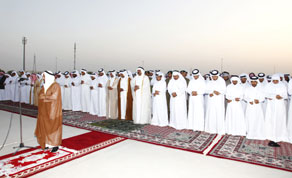
Prayer for rains
HH the Emir Sheikh Hamad bin Khalifa al-Thani joining the worshippers to perform the Istisqa (rain-seeking prayer) at the Al Wajbah prayer ground yesterday morning. The prayer is in line with the Sunnah (sayings and deeds) of the Prophet Muhammad (Peace Be Upon Him), who performed Istisqa prayers when there was a delay in rainfall.
“It Was a Mistake!” The Fall of the Wall
BBC News reports today that while the ease in travel restrictions was planned, the way it happened – was a mistake!
When the Berlin Wall opened on 9 November 1989 Brian Hanrahan was the BBC News reporter on the ground. This year he’s been back to talk to some of those whose decisions made this key moment in 20th Century history possible.
From the safe distance of 20 years, the opening of the Berlin Wall can be seen as inevitable – the natural consequence of changes that were reshaping Europe. But for most of 1989 it was unthinkable.
And the decision itself was an accident – intended neither to happen the way it did nor to spark off the tumultuous changes that followed.
I heard the inside story of what started this extraordinary rush of events from one of those who made the decision in the East German Politburo – the communist party’s ruling body.
With hindsight, it’s the border guards we must thank
Politburo reformer Hans Modrow
Hans Modrow was a communist reformer in the Gorbachev mould. He had only just been given a place on the Politburo as East Germany’s leaders tried to head off the demands for change that were sweeping the country. But as a new boy his opinions counted for little.
He remembers an agitated discussion about the travel restrictions – the laws which banned most East Germans from leaving the country and which had sparked off the popular discontent.
At the end of it the party leader, Egon Krenz, suddenly produced a new set of regulations. From now on it would be much easier for East Germans to travel.
What annoyed Mr Modrow was the autocratic way in which the Communist Party still did business. “We couldn’t change anything, he says, We sat there like stupid little boys. We just had to do what we were told.”
‘Blurted out’
But now came a blunder that would bring down the Berlin Wall and the East German state with it.
The intention was to announce the changes overnight and phase in the new rules the next morning. Instead one of the Politburo members, Guenter Schabowski, blurted out the plans during a televised press conference – and compounded his error by adding the new rules would come into force “immediately”.
Live press conferences were a novelty in communist days, and Mr Schabowski was becoming something of a celebrity through his appearances. Mr Modrow is still scathing about Mr Schabowski’s preening in front of the media.
The Politburo announce the decision to allow people to cross the border
“The order wasn’t to be published until 0400 in the morning. But Mr Schabowski didn’t notice. He went into an international press conference. And he was so arrogant and full of himself. We had no idea this was happening.”
Mr Schabowski’s announcement was complicated and bureaucratic, and like many others that evening I puzzled over it before concluding that it signalled free travel. If this was true it would mean the end of the Berlin Wall because the whole fearsome structure with its watchtowers, barbed wire and guard dogs had become redundant.
East Berliners were rather quicker off the mark. Tens of thousands of them started turning up at the border demanding to be let across.
But the guards hadn’t been told anything – their standing orders were to stop anyone crossing. Until recently they’d been instructed to shoot to kill anyone who tried.
This night they tried to turn people back – but after a generation being pushed about Berliners turned belligerent and refused to go.
Stunned guards
The standoff between the armed guards and the angry crowds soon grew tense and dangerous.
The guards asked their headquarters for orders but the government ministries in charge of security told them nothing. Mr Modrow and the other Politburo members had gone home unaware of what was going on.
With radio and TV reports bringing more people on to the streets, Mr Modrow says it was the border guards themselves who decided what to do.
“With hindsight it’s the border guards we must thank, not any of us in the Politburo. The guards on the ground – at the time – made the critical decision. They ignored their standing orders. They said, ‘Open the border.'”
I arrived at the main border post just in time to see the barriers swing open as the guards gave up any attempt to regulate the crossing. They looked stunned at the mass of people streaming past them. Their whole world was collapsing about them.
But if East Germany’s leaders were ignorant of what was happening, the rest of the world was already watching on television.
In Washington, James Baker was at lunch with the President of the Philippines, Cory Aquino, when he was told the news. A short while later, hearing that people were taking sledgehammers to the wall, he abandoned the table and hastened over to the White House.
Changed world
There he and President Bush were taken aback at what they saw. They’d had no warning. “It was happening before our eyes. Maybe the Soviet leadership saw it coming but I don’t think anyone in allied capitals anticipated it happening with that speed.”
And Mr Baker admitted candidly that he was daunted by the scale of the task ahead in reshaping world alliances. As the West’s chief diplomat he would have to do most of it. “The world as I had known it all my adult life changed that day, and it changed fundamentally. I had grown up with the Cold War. Everyone in my generation had.”
In the Kremlin the man most responsible for the change slept through it. The Soviet leader had been tipped off a few days earlier about the way the East Germans were thinking.
Mr Gorbachev chuckled as he remembered the rush to tell him what had happened. “They reported to me quite early in the morning. They were in a hurry to let me know. We had been expecting it to happen. It could have happened at any time.”
And he was matter-of-fact about the consequences. “I took note of the report. It moved us on to a new phase. Not that I was enthusiastic about it, but I accepted it as something that had to happen. We understood that the time was coming for the German problem to be addressed.”
In London Douglas Hurd had been foreign secretary for just 15 days. He noted the news from Berlin in his diary. “The regime and now the wall are crumbling fast,” he wrote. But he was already wondering how he could persuade the Prime Minister, Margaret Thatcher, to consider the idea of a united Germany.
Berliners were only just opening the bottles of sparkling Sekt at the beginning of a street party that would last for days. Many were still uncertain what exactly was happening.
But in a few short hours they had changed the contours of world politics and there could be no going back. The inevitable, unthinkable accident had happened.
Changes in Qatar Rent Laws
From today’s Gulf Times Qatar
New rent law seen a victory for tenants
By Sarmad Qazi
In a major victory for tenants, rent disputes can now be taken up with the Rental Dispute Resolving Committee (RDRC) regardless of whether the contract was registered or not, a senior official said yesterday.
This follows amendments in the rental law.
Law number 20 of 2009 sees changes to some provisions of the previous law number 4 of 2008 issued by HH the Emir Sheikh Hamad bin Khalifa al-Thani on October 25, the official said adding it further protected the rights of tenants in Qatar.
“There are two things in the new rule: you can come here, whether or not your contract is registered and speak to a judge, and secondly the landlord must now give at least six months notice of eviction,” the official said.
The law number 4 of 2008 was aimed at regulating the market by making registration of rental contracts mandatory and by establishing the RDRC with its own jurisdiction to take up grievances at a time of near-record inflation in the country.
“But we know the law missed out on rental contracts made prior to the 2008 law or based on goodwill and word only. In these cases we weren’t able to address any complaint,” the official at the RDRC’s headquarters in Muntazah (now Rawdat al-Khail) said.
“This amendment changes all that,” he added.
However, according to him, with the rents showing declining trends, the number of disputes is also falling; currently only 15 new cases are being filed at the RDRC every day.
The nature of cases varies from landlords wanting to hike the rent despite a two-year freeze since 2008, to non-payment claims and eviction notices.
A year ago the RDRC was registering 1,500 cases a month.
The official also dismissed questions about the effectiveness of RDRC saying so far this year its five committees have addressed and closed 1,205 cases. Only “600 or so are ongoing,” he said.
The committees have three members and one judge each.
“Yes it is true that 50% of RDRC decisions are later challenged in the appeal court (in Dafna), but 90% of the time the judge there upholds the rulings,” the official said.
Veteran lawyer Ala’a Hamad, a partner at the Arab Law Forum, yesterday said every new law requires takes time to prove its effectiveness.
“This was a new law and the more it’s practiced, it will prove its effectiveness.
“The tweaking is an ongoing process just as with foreign investment and other laws,” Hamad said.
Recent Comments
ExpatAlien on What Country am I Living … intlxpatr on Yellowstone: Old Faithful to C… Michelle on Yellowstone: Old Faithful to C… Cathy on No Grown-Ups in Charge intlxpatr on Waiting for Snow Wikipedia Donate Button

Amazina


Early Voting in Florida


 Here There and Everywhere