Vincent of Saragossa, by the Grace of God, Invincible
Not to make light of the suffering of the Saints, but while other kids grew up on tales of the bogeyman, the man with a hook on his hand, babayaga, etc., the kids at my bus-stop told stories of the saint and their tortures. There is enough in all these stories to thoroughly terrify the heart of a young child. Today the church remembers Vincent of Sargossa (Zaragosa) who survived and prevailed some of the very worst treatement available in those times, by the Grace of God.
The Liturgical Calendar: The Church Remembers
Today the church remembers Vincent, Deacon of Saragossa, and Martyr, 304.
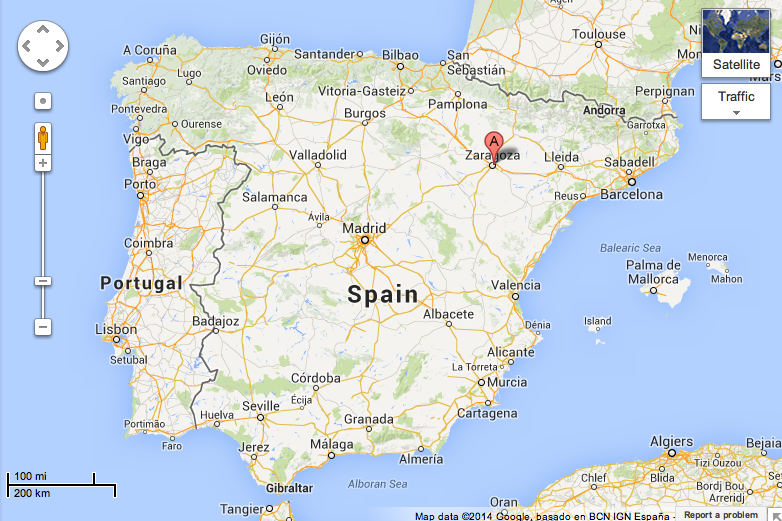
Vincent was a deacon in an early Christian church in Saragossa, Spain. He was a trusted friend and assistant of the bishop, Valerius. He was a very effective leader and therefore a prize catch for the Spanish governor, Dacian, who was implementing the Emperor Diocletian’s policy of persecution. Dacian’s agents used every means known to them to brainwash Vincent, since, if he gave up Christianity, it would surely result in the defection of others.
Vincent was submitted to intensive argumentation, interrupted by excruciating tortures. He was beaten, chained, stretched on the rack, cooked on a gridiron, and the floor of his bare cell was covered with broken glass on which he had to walk and recline. Vincent did not renounce Christ or acknowledge the Roman deities.
Finally the exhausted and mutilated saint was released, perhaps as an example to other Christians of what they might have to suffer. He died shortly after his release. But his steadfastness, far from discouraging other Christians, strengthened them in their determination to remain faithful to the Lord.
Even as your holy Deacon and Martyr Vincent triumphed over suffering and despised death: Grant that we may endure hardness and wax valiant in the fight. Amen.
Almighty God, your deacon Vincent, upheld by you, was not terrified by threats nor overcome by torments: Strengthen us to endure all adversity with invincible and steadfast faith; through Jesus Christ our Lord, who lives and reigns with you and the Holy Spirit, one God, for ever and ever. Amen.
Pockets of Silence
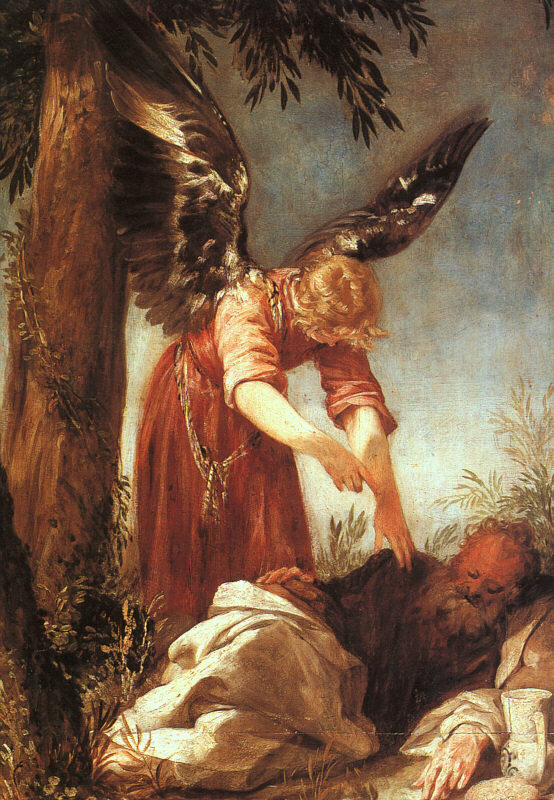
On Christmas Eve Day, when I attended church, I prayed for ‘pockets of silence.’ I am an introvert. I love my family and our gatherings, and I also find all that interaction exhausting. When you pray for a need, you often get the answer to your prayer; I shared this with AdventureMan and now I am kidded about needing my pockets of silence. It’s OK, I’ll take the kidding, as long as I get my pockets 🙂
I’ve always loved this scripture; I think of the huge desert storms, full of power and fierce winds, I think of the roar of an earthquake, and how it jars you to the bones, and I smile as I think of the Lord’s voice in the ‘pocket of silence.’
1 Kings 19:9-18
9At that place he came to a cave, and spent the night there.
Then the word of the Lord came to him, saying, ‘What are you doing here, Elijah?’ 10He answered, ‘I have been very zealous for the Lord, the God of hosts; for the Israelites have forsaken your covenant, thrown down your altars, and killed your prophets with the sword. I alone am left, and they are seeking my life, to take it away.’
11 He said, ‘Go out and stand on the mountain before the Lord, for the Lord is about to pass by.’ Now there was a great wind, so strong that it was splitting mountains and breaking rocks in pieces before the Lord, but the Lord was not in the wind; and after the wind an earthquake, but the Lord was not in the earthquake; 12and after the earthquake a fire, but the Lord was not in the fire; and after the fire a sound of sheer silence.
13When Elijah heard it, he wrapped his face in his mantle and went out and stood at the entrance of the cave. Then there came a voice to him that said, ‘What are you doing here, Elijah?’ 14He answered, ‘I have been very zealous for the Lord, the God of hosts; for the Israelites have forsaken your covenant, thrown down your altars, and killed your prophets with the sword. I alone am left, and they are seeking my life, to take it away.’
15Then the Lord said to him, ‘Go, return on your way to the wilderness of Damascus; when you arrive, you shall anoint Hazael as king over Aram. 16Also you shall anoint Jehu son of Nimshi as king over Israel; and you shall anoint Elisha son of Shaphat of Abel-meholah as prophet in your place. 17Whoever escapes from the sword of Hazael, Jehu shall kill; and whoever escapes from the sword of Jehu, Elisha shall kill. 18Yet I will leave seven thousand in Israel, all the knees that have not bowed to Baal, and every mouth that has not kissed him.’
A Message of Hope
God had been angry with his people. All the prophets we’ve been reading have warned us of the consequences of our behaviors. And now, a breath of hope, in today’s reading from Zephaniah:
Zephaniah 3:14-20
14 Sing aloud, O daughter Zion;
shout, O Israel!
Rejoice and exult with all your heart,
O daughter Jerusalem!
15 The Lord has taken away the judgements against you,
he has turned away your enemies.
The king of Israel, the Lord, is in your midst;
you shall fear disaster no more.
16 On that day it shall be said to Jerusalem:
Do not fear, O Zion;
do not let your hands grow weak.
17 The Lord, your God, is in your midst,
a warrior who gives victory;
he will rejoice over you with gladness,
he will renew you* in his love;
he will exult over you with loud singing
18 as on a day of festival.*
I will remove disaster from you,*
so that you will not bear reproach for it.
19 I will deal with all your oppressors
at that time.
And I will save the lame
and gather the outcast,
and I will change their shame into praise
and renown in all the earth.
20 At that time I will bring you home,
at the time when I gather you;
for I will make you renowned and praised
among all the peoples of the earth,
when I restore your fortunes
before your eyes, says the Lord.
Doubt and Faith
I have fellow students who consider doubt “double-mindedness” and yet today, we have the Feast Day of Saint Thomas, the Apostle who doubted that Jesus had risen until he could touch his wound. His reaction – “My Lord and My God!” is the reaction of a searcher.
Doubt doesn’t imply lack of belief; doubt is hope that looks for evidence. A doubter is a person who is seeking; my greater concern is those who treat their beliefs with complacency – lacking self-examination – or the worst, indifference.
Jesus chose those who will follow him specifically. He chose St. Thomas for a reason, knowing how deeply skepticism runs in our hearts, and knowing there is no belief so deep as that of one who has sought and found.
SATURDAY, December 21 Saint Thomas the Apostle Ember Day
John 20:28. Thomas answered him, “My Lord and my God!”
Today the church remembers Saint Thomas, often called Doubting Thomas. It seems to me he has gotten a bad reputation for doing something that I actually admire. Thomas had questions—and he dared to ask them. If I were creating his nickname, I’d call him “Good Question Thomas.” Doubt is the companion of faith, and it’s time for doubt to come out from under the carpet.
You see, I think every thoughtful Christian has moments of wondering about faith or God’s place in our lives. Alas, we too often keep quiet about our uncertainties, suffering with them alone. But there is great value to sharing our questions and our struggles. When that happens, a community can share them together and inspire one another. Every time I have shared a doubt or question with another, it has been a blessing.
When we raise our questions with sincerity, we are opening ourselves for God to enter our minds. Like Thomas, we might move past doubt to a place of confident faith. “My Lord and my God!”
Today the church prays for the diocese of Yirol, in the South Sudan:

Jesus Discloses Signs of the End of Times
Because we are also reading Revelations at this time of the Lectionary readings, I thought at first that is what I was reading, but no, these are the words of Jesus, talking about the signs leading to the end of times – wars and rumors of wars, lawlessness, famine, nations rising against nations, oh yikes. Sounds a whole lot like today.
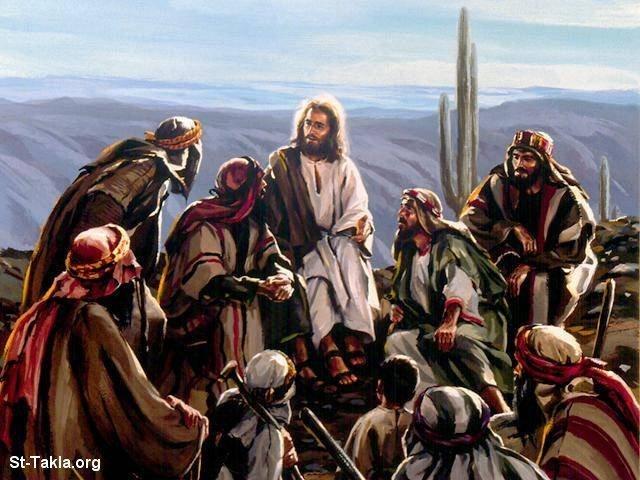
(I love that this image has Jesus and his disciples looking like people of the Middle East 🙂 You find the most amazing things on the internet, and I found this on an Egyptian Coptic website, where you can also hear all kinds of Coptic Christian music and chants. St. Takla.org )
Matthew 24:1-14
3 When he was sitting on the Mount of Olives, the disciples came to him privately, saying, ‘Tell us, when will this be, and what will be the sign of your coming and of the end of the age?’ 4Jesus answered them, ‘Beware that no one leads you astray. 5For many will come in my name, saying, “I am the Messiah!”* and they will lead many astray. 6And you will hear of wars and rumours of wars; see that you are not alarmed; for this must take place, but the end is not yet. 7For nation will rise against nation, and kingdom against kingdom, and there will be famines* and earthquakes in various places: 8all this is but the beginning of the birth pangs.
9 ‘Then they will hand you over to be tortured and will put you to death, and you will be hated by all nations because of my name. 10Then many will fall away,* and they will betray one another and hate one another.11And many false prophets will arise and lead many astray. 12And because of the increase of lawlessness, the love of many will grow cold.13But anyone who endures to the end will be saved. 14And this good news* of the kingdom will be proclaimed throughout the world, as a testimony to all the nations; and then the end will come.
Jesus Gets Tough With Believers

Today’s readings in the Lectionary readings is from Matthew are some of the hardest for believers. We all like to think we are excelling in doing good, we focus on the outward appearances, and he outlines where we fail – and where we need him, desperately, if we want to enter the Kingdom:
Matthew 23:13-26
13 ‘But woe to you, scribes and Pharisees, hypocrites! For you lock people out of the kingdom of heaven. For you do not go in yourselves, and when others are going in, you stop them.*
15Woe to you, scribes and Pharisees, hypocrites! For you cross sea and land to make a single convert, and you make the new convert twice as much a child of hell* as yourselves.
16 ‘Woe to you, blind guides, who say, “Whoever swears by the sanctuary is bound by nothing, but whoever swears by the gold of the sanctuary is bound by the oath.” 17You blind fools! For which is greater, the gold or the sanctuary that has made the gold sacred? 18And you say, “Whoever swears by the altar is bound by nothing, but whoever swears by the gift that is on the altar is bound by the oath.” 19How blind you are! For which is greater, the gift or the altar that makes the gift sacred?20So whoever swears by the altar, swears by it and by everything on it;21and whoever swears by the sanctuary, swears by it and by the one who dwells in it; 22and whoever swears by heaven, swears by the throne of God and by the one who is seated upon it.
23 ‘Woe to you, scribes and Pharisees, hypocrites! For you tithe mint, dill, and cummin, and have neglected the weightier matters of the law: justice and mercy and faith. It is these you ought to have practised without neglecting the others. 24You blind guides! You strain out a gnat but swallow a camel!
25 ‘Woe to you, scribes and Pharisees, hypocrites! For you clean the outside of the cup and of the plate, but inside they are full of greed and self-indulgence. 26You blind Pharisee! First clean the inside of the cup,*so that the outside also may become clean.
The Toughest Commandment
It should be so simple, shouldn’t it? Love God and put him first, love your neighbor as yourself? And then you run into the one who is hard-t0-love . . . A challenging meditation for the day from Forward Day by Day:
Matthew 22:39. You shall love your neighbor as yourself.
I wish we could keep the two Great Commandments—to love God and our neighbor—at the forefront of our minds. Too often, I fear that we have equated loving our neighbor with being nice to those around us. Even a cursory glance at the gospels reminds us that it’s much harder than that, although the commandment is simplicity itself.
The massive wealth imbalance in the United States belies our adherence to this simple yet difficult commandment. If we really loved our neighbors, would we support a society in which a few people control so much wealth while millions go without enough food? Would we permit some of us to enjoy the best health care on the planet while millions more have no regular health care?
If I have read the gospels right, there is no way of saying their problems are not my problems. Rather, we are obligated to share of our abundance with those who have less. Jesus tells us to care for the last, the lost, and the least. Token gifts are a mockery of the Great Commandment. We are called to care for those around us with reckless abandon. Love is not sentimental here; it is hard work.
The Church Remembers John of Damascus
Today the church remembers John of Damascus, our good friend who once was the American Consul in Damascus is visiting with us, and we mourn the loss of peace and security in Damascus, and Syria, and the heartless loss of so many lives, the destruction of beautiful Homs, and so many other villages, named and unnamed, and the use of nerve gas on Syrian people.
I love it that he is most often shown wearing a keffiye

The Liturgical Calendar: The Church Remembers
Today the church remembers John of Damascus, Priest, c. 760.
The son of an important official in the court of the Muslim Caliph of Damascus, John had an easy rapport with the Muslims among whom he was reared, and readily succeeded to his father’s office in the Caliph’s court. Later, he abandoned the wealth and comfort of the fashionable life of Damascus and joined a religious community in Palestine.
As he lived the rigorous life of a monk in the stark wilderness near the Dead Sea, his own strong personality began to emerge. He soon distinguished himself as a theologian and scholar. His chief published work extant is The Fount of Knowledge. He is recognized as a “Doctor of the Universal Church.”
However, John of Damascus is most widely remembered for his contributions to Christian worship. He wrote many fine hymns, including two Easter ones that are still popular today: “Come ye faithful raise the strain…” and “The Day of Resurrection, earth tell it out abroad!” He effectively defended the doctrine of the Real Presence in the Eucharist, the veneration of the Lord’s Mother, and use of icons. He became involved in an international religio-political struggle called the “Icononclastic Controversy” which reached violent proportions and shook the Byzantine world. His life was saved in this controversy by his powerful Muslim friends.
We give thanks for John and for all those who have upheld the truth of our faith and the glory of our worship. Amen.
The Tree of Life
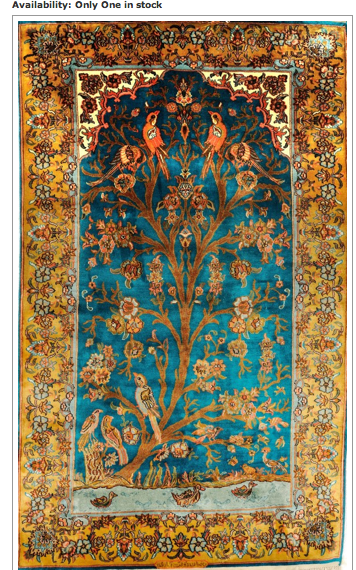
Some days, any excuse will do 🙂 Today’s readings from The Lectionary include this wonderful image of a glorious tree that bears 12 different fruits, the Tree of Life.
The Tree of Life is one of my favorite images. We saw it often in every country of the Middle East, primarily in carpets, occasionally in a mosaic or mural. I found such a wonderful variety of images online that I had to narrow down what I would include here.
Revelation 21:22-22:5
22 I saw no temple in the city, for its temple is the Lord God the Almighty and the Lamb. 23 And the city has no need of sun or moon to shine on it, for the glory of God is its light, and its lamp is the Lamb. 24 The nations will walk by its light, and the kings of the earth will bring their glory into it. 25 Its gates will never be shut by day—and there will be no night there.
26 People will bring into it the glory and the honour of the nations. 27 But nothing unclean will enter it, nor anyone who practises abomination or falsehood, but only those who are written in the Lamb’s book of life.
22 Then the angel* showed me the river of the water of life, bright as crystal, flowing from the throne of God and of the Lamb 2 through the middle of the street of the city.
On either side of the river is the tree of life* with its twelve kinds of fruit, producing its fruit each month; and the leaves of the tree are for the healing of the nations. 3 Nothing accursed will be found there any more. But the throne of God and of the Lamb will be in it, and his servants* will worship him; 4 they will see his face, and his name will be on their foreheads. 5And there will be no more night; they need no light of lamp or sun, for the Lord God will be their light, and they will reign for ever and ever.
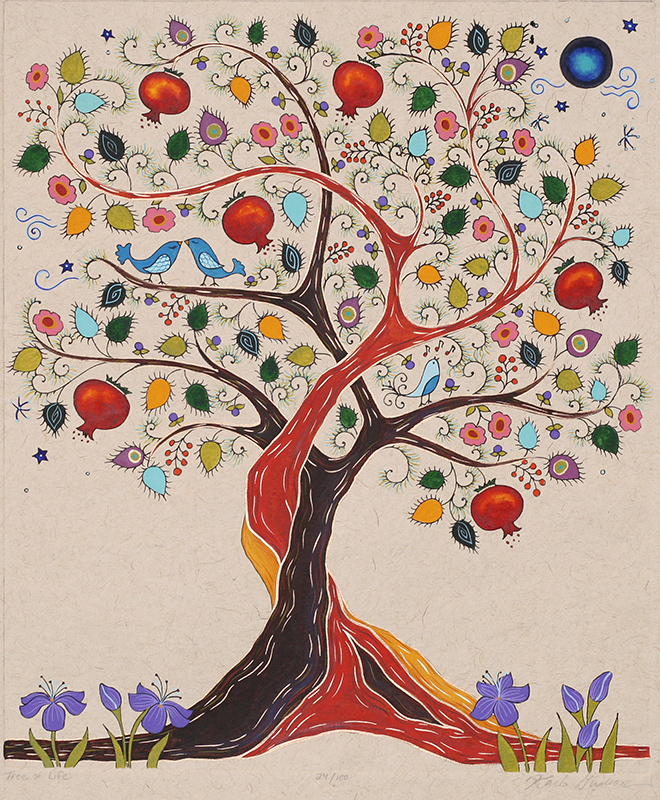
Karla Gudeon, artist
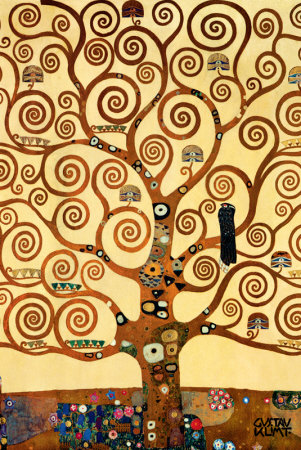
Gustav Klimt
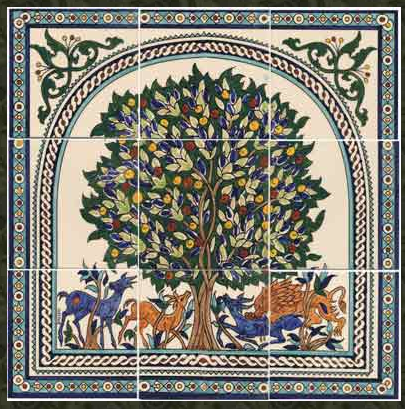
Armenian Ceramics
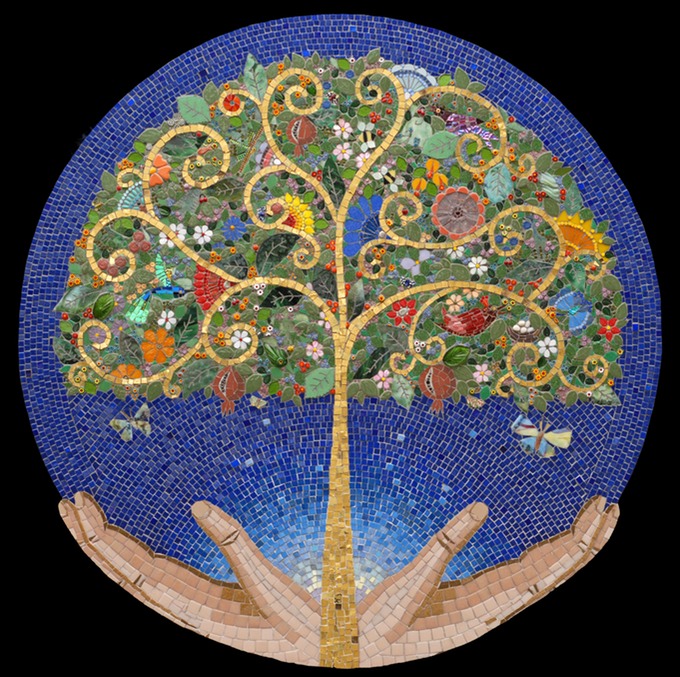
Irina Charny – artist

Recent Comments
ExpatAlien on What Country am I Living … intlxpatr on Yellowstone: Old Faithful to C… Michelle on Yellowstone: Old Faithful to C… Cathy on No Grown-Ups in Charge intlxpatr on Waiting for Snow Wikipedia Donate Button

Amazina


Early Voting in Florida


 Here There and Everywhere