Our Large Donation Scam
I don’t know if you have noticed, but I don’t even bother posting most of these scam letters any more, because they all get to look alike. This one is a little different, and LOL, they mention the “only $153. fee” right up front for my $500,000 very large charitable sum that they want to send to me . . .
Peace Be Unto you
This is a personal email directed to you, Let me formally introduce myself
to you, my name is (Mr. Allen Large). I and my dear wife Violet won a
Jackpot Lottery of $11.3 million in July 2010 and have voluntarily
decided
to donate the sum of $500,000.00 USD to you as part of our own charity
project to improve the lives of some individuals all over the world.
Kindly send your below details to Federal Express Ltd to
enable them effect the delivery of your valid Bank Draft of $500,000.00
USD to you immediately. The draft was deposited with Nigeria FedEx office
last week during my charity mission to Africa as i do not know when i return
to Canada as i am currently in Africa.
We have paid for the necessary delivery fee except that of the
Administrationand Handling charges which is $153 only. And this was
because we don’t know how soon you will be contacting FedEx.
CONTACT FEDEX NOW WITH THE BELOW INFO:
=====================================
Federal Express Ltd.
8201 Wuse Gariki Benin City, Nigeria NIGERIA
Dispatch Officer: Dr Peter Odigie
Direct E-mail: deliverydept867@gmail.com
Customer Service/Inquiries: custcare@fedex.com
Phone: +2348051118515
=====================================
*Your Full Names:
*Your Mobile Number:
*Your Delivery Address:
verify this by visiting the web pages below.
http://news.sky.com/home/world-news/article/15795402
God bless you.
Kind Regards,
Mr/Mrs. Allen Violet Large.
Personal number: +1-425-409-0730
Canada.
How Monsanto Tricked California Voters
What I love about this article is that although the proposition did not pass this time, journalists are writing about the lies and misrepresentations made, and the issue will come up again and again until it passes. Big money calls the tune in a lot of places, but idealists can be pesky and persistent, and in the long run, persistence can outplay big money.
As for me, I follow the great advice “shop the perimeter,” looking for the least processed food. We also have a wonderful store in Pensacola, Everman’s, where you can buy local and organic foods. It is a treasure.
Did Monsanto Trick California Voters?
Ocean Robbins
Author, speaker, http://www.foodrevolution.org
The “No on 37” campaign spent $46 million burying the state’s voters in an avalanche of misleading ads and outright falsehoods. Their efforts defeated the proposition, 53 percent to 47 percent.
But Monsanto and their peeps didn’t just spend $46 million promoting their opinion. They also lied and got away with it. Check out these examples:
1) They illegally included the FDA logo in a “No on 37” mailing to state residents, and made up a quote from the FDA, which the FDA refuted. The FDA did not and cannot express an opinion on ballot initiatives.
2) They used the Stanford logo in TV ads and mailers, when the University also did not take a stand on the issue. And they said that Henry I. Miller, their hired gun, is a professor at Stanford when in reality, he works for the Hoover Institution — which rents office space on the campus.
3) They paid a PR firm with expertise in fighting recycling legislation (on behalf of the soda pop industry) to generate a misleading “study” that was designed to show the proposition raising food prices by hundreds of dollars per state resident per year. This despite independent economic analysis concluding that it would not raise prices in any meaningful way, and that in Europe, mandated labeling was not linked to an increase in food prices. (Do you really believe the pesticide and junk food companies would spend $46 million trying to save you money?)
4) They said there have never been any documented ill-effects from GMO consumption. But many allege that 37 direct human deaths and 1,500 disabilities linked to a toxic batch of the supplement Tryptophanwere caused by a genetically engineered strain of bacteria used in production. And there are numerous reports of livestock that have died as a result of grazing on GMO cotton. There could be far more widespread ill-effects, but without labeling, it’s nearly impossible to find out conclusively.
5) They said Prop 37 was full of exemptions for special interests. But in reality, the exemptions were modeled after those adopted throughout the European Union and every other country that calls for labeling. For instance, livestock that are fed GMO grains don’t have to be labeled genetically engineered unless the animal, itself, is genetically engineered. That’s not a special interest exemption — it’s basic science.
What’s Next For The Food Movement?
In the last decade, the movement for healthy, sustainable food has been growing exponentially, with consumption of organic foods growing from $8 billion in 2000 to $31 billion in 2011. We’ve seen an equally dramatic rise in the number of farmer’s markets and CSAs. Still, it’s a big jump to move from 4 percent market share, to changing national food policy. Tobacco was found to be harmful to health in 1950, and it took nearly half a century to meaningfully change laws.
The food movement is growing fast, but as a political force, it’s still in its infancy. Big agribusiness still controls the purse strings in Congress, and runs the show at the FDA. At least for now.
An ABC News poll found that 93 percent of Americans want to know if their food is genetically engineered. Even after a narrow loss against a heavily financed and deeply entrenched food industry, the rapidly growing food movement may be just getting started.
“The arc of history is long,” Dr. Martin Luther King Jr. told us, “but it bends towards justice.” As we’ve seen time and time again, when enough people demand it, eventually, change does come.
Ocean Robbins is founder and co-host (with best-selling author John Robbins) of the 60,000 member Food Revolution Network, an initiative to help you heal your body, and your world… with food.
FBI Sending Me a LOT of Money! Or Arresting Me?
Would the real FBI blind-copy me on something of this nature? Would they have sent it from an e-mail address that looks like this:
Fb.Info FbteamC@carrot.ocn.ne.jp
LLLLOOOOLLLLLLLLL! I needed a good laugh for today.
Special Agent in Charge
Federal Bureau of Investigation
Intelligence Field Unit
El Paso Federal Justice Center
660 South Mesa Hills Drive
El Paso, TX 79912 USA
URGENT ATTENTION
I am special agent Mark A. Morgan, from the Intelligence Unit of the Federal Bureau of Investigation (FBI). We just intercepted/confiscated one (1) Trunk Box at the Dallas/Fort Worth International Airport Texas. We are on the verge of moving this consignment to the bureau headquarters. However, we scanned the said box and found out that it contained a total of USD$10.5M. Investigation carried out on the Diplomat who accompanied this box into the United States, revealed that he was to make the delivery of the fund to your residence, as these fund are entitled to you, been Contract/Inheritance over due payments. The funds were from the office of the Dr. (Mrs.) Ngozi Okonjo-Iweala Minister of Finance, Federal Republic of Nigeria.
Furthermore, after cross checking all the information we found in the box backing you up as the beneficiary of the funds, it became known to us that one of the documents is missing. This document is very important and until we get the document, the box will be temporarily confiscated pending when you will provide it. The much needed document is the Diplomatic Immunity Seal of Delivery Certificate (DISDC). This document will protect you from going against the US Patriot Act Section 314a and Section 314b. This delivery will be tagged A Diplomatic Transit Payment (D.T.P) once you get the document.
You are therefore required to get back to me on this email (officefdagnt@gmail.com) within 72 hours so that I will guide you on how to get the much needed document. Failure to comply with this directive may lead to the permanent confiscation of the funds and possible arrest. We may also get the Financial Action Task Force on Money Laundering (FATF) involved if do not follow our instructions. You are also advised not to get in contact with any Bank in Africa, Europe or any other institution, as your fund are here now in the United States of America.
Agent Mark A. Morgan
Special Agent in Charge
Federal Bureau of Investigation
Intelligence Field Unit
El Paso Federal Justice Center
660 South Mesa Hills Drive
El Paso, TX 79912 USA
Email:officefdagnt@gmail.com
Confidentiality Notice: This communication and its attachments may contain non-public, confidential or legally privileged information. The unlawful interception, use or disclosure of such information is prohibited. If you are not the intended recipient, or have received this communication in error, please notify the sender immediately by reply email and delete all copies of this communication and attachments without reading or saving them.
Deepwater Horizon Spill and Hazards
On the front page of today’s Pensacola News Journal is a report by the Associated Press saying:
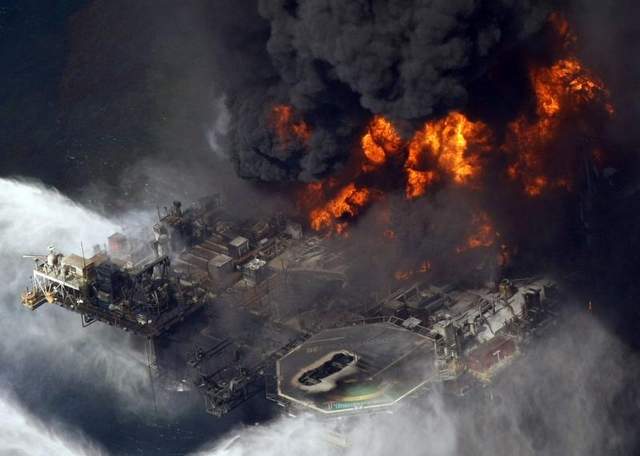
BP Missed Big Hazards, report says: Focus on worker safety obscured other problems.
HOUSTON – BP and the drilling contractor that operated the ill-fated Deepwater Horizon were so focused on worker safety they didn’t do enough to prevent major hazards, such as the 2010 rig explosion in the Gulf of Mexico that killed 11 people, federal investigators said yesterday.
Excuse me? Does that make sense to anyone?? So concerned with safety that 11 people got killed because they overlooked SAFETY problems?? I thought I must be crazy, but the report goes on to say the following:
The panel listed a litany of problems large and small they had already uncovered even though it has not received all of the records from Transocean, the drilling contractor that has challenged the board’s right to investigate the offshore incident.
Among the panel’s findings:
• BP and Transocean’s “bridging document,” designed to align safety procedures between the companies, was generic and addressed only six safety issues, but none of them dealt with major issues.
• The companies didn’t have key process limits or controls for safe drilling.
• There were no written instructions for how to conduct a crucial test at the end of the cementing process, one that ultimately was misinterpreted by the crew after it was conducted several times, each time differently.
• Similar concerns about too narrow a focus on personal safety were raised after an explosion in 2005 at BP’s Texas City refinery that killed 15 people, but few of the panel’s recommendations were implemented on the offshore rig.
“It’s always puzzled me why a company like BP … that has major resources available … is involved with two of the biggest accidents,” said John Bresland, a member of the board who is wrapping up his second five-year term and was involved in both investigations.
The drilling company doesn’t want to cooperate, and doesn’t think the federal government has the right to investigate? The company so focused on worker safety had an agreement with the drilling company that only focused on minor issues? NO key processes or controls?
What is wrong with this story? From this story, it is clear that worker safety was never a focus of BP. BP had another blowup with 15 deaths at a Texas refinery resulting from safety processes that were too narrowly focused, and now they are saying they are too focused on worker safety, and that is why they have so many worker deaths?
I guess, following the same reasoning, that the Deepwater Horizon blowup, which killed sealife, is still blackening beaches, which has created a tar carpet along the ocean floor, created birth defects among birds and mammals, and will create havok for a lifetime to come, all that resulted from BP’s excessive concern for the Environment?
Is this craziness? That kind of communication just makes me crazy.
I don’t care how much they end up paying to universities, groups promoting tourism, people who lost work, wildlife organizations, etc. as a result of the Deepwater Horizon explosion. You have to see that whatever they are paying is to buy silence, to buy complicity, to keep us from complaining too much when problems associated with the explosion continue to – literally – surface. Their money is to co-opt us. No matter what they are paying, it is too little.
Survey Shows Teens Hide True Internet Usage From Parents
This from a REUTERS news story posted on AOL News / Huffpost
It’s a parent’s worst nightmare.
By Gianna Palmer
NEW YORK (Reuters) – More and more teenagers are hiding their online activity from their parents, according to a U.S. survey of teen internet behavior released on Monday.
The survey, sponsored by the online security company McAfee, found that 70 percent of teens had hidden their online behavior from their parents in 2012, up from 45 percent of teens in 2010, when McAfee conducted the same survey.
“There’s a lot more to do on the Internet today, which ultimately means there’s a lot more to hide,” said McAfee spokesman Robert Siciliano.
Siciliano cited the explosion of social media and the wider availability of ad-supported pornography as two factors that have led teens to hide their online habits. The increased popularity of phones with Internet capabilities also means that teens have more opportunities to hide their online habits, he said.
“They have full Internet access wherever they are at this point,” Siciliano said.
The survey found that 43 percent of teens have accessed simulated violence online, 36 percent have read about sex online, and 32 percent went online to see nude photos or pornography.
The survey reported that teens use a variety of tactics to avoid being monitored by their parents. Over half of teens surveyed said that they had cleared their browser history, while 46 percent had closed or minimized browser windows when a parent walked into the room. Other strategies for keeping online habits from parents included hiding or deleting instant messages or videos and using a computer they knew their parents wouldn’t check.
Meanwhile, the survey found that 73.5 percent of parents trust their teens not to access age-inappropriate content online. Nearly one quarter of the surveyed parents (23 percent) reported that they are not monitoring their children’s online behaviors because they are overwhelmed by technology.
Siciliano said that is no excuse.
“Parents can put their foot down and they can get educated,” he said.
“They can learn about the technology at hand. They can learn about their children’s lives,” Siciliano said.
Many of the parents surveyed were already doing just that, with 49 percent of parents using parental controls and 44 percent obtaining their children’s email and social network passwords. Additionally, three in four parents said they’ve had a conversation about online safety with their kids.
The results were drawn from a nationwide online survey completed by 1,004 teens aged 13-17 and 1,013 parents, conducted May 4-29 by TRU of Chicago, a youth research company. Its margin of error was plus or minus 3 percent.
(Editing by Barbara Goldberg and Eric Walsh)
Another Friend in Need
My friends ask my why I get so many of these. I don’t know why. 🙂
Hello My Dearest,
My Name is Miss Roselyn Kipkalya Kones, 24 Years Old Female and never married, I am writing this mail with tears and sorrow from my heart asking for your help at this time, I got your contact while searching for a trustworthy someone who will understand my present condition and come to my rescue here in the Mission Refuge Camp here in Burkina Faso. I have passed through pains and sorrowful moments since the death of my father.
My father was the Former Minister Kenyan road. And Assistant I Minister of Home Affairs Lorna Lobos had been on board the Cessna 210, Which Was headed to Kericho and crashed in a remote area Kalongs called, in East Kenya. The plane crashed on the Tuesday 10th, June, 2008. You can read more about the crash-through the website below
Site: http://edition.cnn.com/2008/WORLD/africa/06/10/kenya.crash/index.html
After the burial of my father, my stepmother and uncle conspire and Sold my father’s property to an Italian Expert rate the shared Which Themselves Among the money and live nothing for me. One Faithful morning, I Open My father’s briefcase and found out the documents Which I Have huge amount of money deposited in one bank in Burkina Faso with my name As the next of kin. I Travelled to Burkina Faso with the documents to Withdraw the money for a Better Life So That I Can take care of myself and start a new life, on my arrival, the Bank Director Whom I met in person Told me that my father’s instruction to the bank Is That the money would only be release to me when I am married or present a trustee/Foreigner Who will help me and invest the money overseas. I am in search of honest and reliable person who will help me and stand as my trustee so That I will present him to the Bank for transfer of the money to His/her bank account overseas. I have chosen to contact you after my Prayers and I believe That You Will Not Betray my trust. I put my hope and my trust in you.
Though you may wonder why I am so soon Revealing myself to you Without Knowing You, well I will say That my mind convinces me that you May be the true person to help me. More so, I will like to disclose much to you if You Can helps me to relocate to your country because my stepmother Have assonate Threaten to kill me but God did not allow her to achieve her plans. The amount Deposited with my name is ($4.5 Million United State Dollars) and I Have Confirmed from the bank in Burkina Faso on my arrival,
You will also help me to place the money in a more profitable business venture in your Country. However, you will help by recommending a nice University in your country so That I can complete my studies. It is my intention to compensate you with 30% of the total money for your services and the balance shall be my capital in your establishment. As soon as I Receive Showing your positive response I will put your Interest Things into Action Immediately. In the light of the above, I will appreciate an Urgent message Indicating Your Ability and Willingness to handle this transaction sincerely with me.
Awaiting your Urgent response. Please do keep this only to your Self for now until the bank will transfer the Fund. I beg you Not to Disclose it till i come over because I am afraid of my wicked stepmother Who Threatened to kill me and Have the money alone, thank God Today That I am out from my country (KENYA) But now In (Burkina Faso ) These Where my father deposited money with my name as the next of Kin. I have the documents for the claims. Please find a place in your heart to read and understand my condition. Thanks and God bless.please reply through this email address (roselynkk@sify.com)
Sincerely Yours,
Miss Roselyn Kipkalya.
A Sucker Born Every Minute . . . Best Buy $1000 Win
While I was on vacation, I got a message on my iPhone from Best Buy telling me I had won their monthly drawing for $1000. Since I had made a purchase from Best Buy and filled out a survey, it was possible.
So, first thing on getting home, AdventureMan and I hit BestBuy to find out if I was indeed a winner. I will confess, I believed I was. I wanted to give the $1000 to AdventureMan to buy a new laptop.
“Oh! You got the message that you had won a thousand dollars?” the Customer Service representative laughed! “It’s a SCAM! If you go to the website, it looks like Best Buy, but it’s not. They ask you to enter all kinds of information so they can send you your gift card, but they use that information to establish a credit card for someone who is not you!”
I am glad I did not go to that website. I wish I had won a thousand dollars. 😦
It was also a good lesson. I really wanted to believe I was a winner, and that disposed me to believe that the message was true. It was only that inner cynic, deep within, that warned me to check it out with Best Buy first.
Snockered
“Think you can move on?” AdventureMan asks me, and no, no, I am not ready to move on. I am still mad. So I am going to tell you about it so it will not happen to YOU, and then I will move on.
Outside of Carlsbad, I used my handy-dandy iPhone to find out if there were any Marriott Hotels in Carlsbad, and there was a Fairfield Inn and Suites, one of the Marriott Brands. We like Marriotts. We like their culture of CLEAN and SERVICE.
So I googled “Fairfield Inn and Suites in Carlsbad, NM” and wow, there was a phone number! I called the number, but when the lady answered, it was all sort of scratchy, maybe we had bad reception . . . or something. Anyway, I told her I was a Marriott Rewards customer and we wanted a room at the Fairfield Inn and we would be there in about an hour. She said “Oh so sorry, there are no more rooms at the Fairfield Inn. We can find you a room somewhere else, in fact, it is the last room in town, everything else has been snapped up.”
This has happened to us before, when we were heading into Louisiana, and every Marriott we walked into was fully sold out because of “the convention” or some such, and once before when the area had been hit by a tornado and the hotels were full with people living there.
So we said “Oh! What is the room?” and she told us about a nice room at a hotel we had never heard of and it was the last room left, did we want it? So we said ‘yes’ and gave her our credit card number to reserve it. When we got to the hotel, the desk clerk gave us a receipt for forty dollars less than the person I had called had said it would cost, so I asked about it, and was told I had gone through a booking agent who charged $40. I was livid. I checked again on the iPhone, and sure enough, the small print was some website – NOT the Marriott, even though the header was Fairfield Inn – Carlsbad, NM. Oh arrgh.
Here is what makes me so mad. I think they deliberately deceived me. I kept telling them how we loved Marriotts, thinking I was talking with Marriott people, and assuming they were helping me out because they were full, finding me this other booking. OK, OK, my bad, yes, probably the reason I am partly angry is that I am angry at myself for being so easily taken, but I was. Totally taken.
The room was nice enough, but I am willing to bet there would have been a room at the Fairfield Inn. I think this booking lady lied to me about the Fairfield Inn being full, and I know she lied about this being the last room in town – we could have gotten a room just about anywhere, and a lot cheaper.
Yes. I am embarrassed. That’s why I am writing this, so it won’t happen to you. Check whether the web site is the chain you are calling or a booking agency.
I don’t have any problems with a booking agency when I know it is a booking agency – like in Fredericksburg, the agency that handled all the B&B’s. That’s all aboveboard. It’s when you think you are calling a certain hotel or chain and they let you keep thinking that, oh, it makes me so mad.
OK, now I am moving on.
Saudi Disinformation on Qatar Coup
Thank you, John Mueller, for contributing this fascinating piece on the reported – and then unreported – ‘coup attempt in Qatar’. We were there when this happened the last time. It was bizarre – there was nothing. No increased military or police presence, just the same quiet and relaxed day-by-day. It was all a lie, created to stir the pot, and to create a perception – based on nothing.
BREAKING; Qatar Military Coup “Rumours” Stir Bad Blood With House of Saud
by Finian Cunningham, April 17, 2012
The rumour mill is churning in the Persian Gulf with unconfirmed reports of a failed military coup against the Qatari ruler.
There were even media reports that American military helicopters had whisked the Emir and his wife to a safe unknown destination in the aftermath of the failed putsch, said to be have been attempted by high-ranking officers.
Saudi news channel Al Arabiya reported earlier today a coup bid against Qatari Emir Hamad Bin Khalifa Al Thani. However, by midday, the story appeared to have been removed from Al Arabiya’s English-language website.
Iranian news channel Press TV toned down its early headlines of a coup and later speculated that Saudi-owned Al Arabiya may have been engaging in disinformation to undermine the Qatari regime, indicating a power struggle between the Houses of Saud and Thani.
The FARS semi-official Iranian news channel, however, insisted that sources within the Qatari royal entourage had confirmed earlier this week that there was a foiled coup in Doha.
Not surprisingly, Qatari-owned Al Jazeera news site ran no information on the alleged plot.
Whether the reports of this week’s failed coup turn out to be rumour or something more sinister, there is nevertheless no disguising the fact of underlying bad blood in the Gulf Arab enclave, both between and within the Gulf monarchies.
That may at first seem at odds with the “thick as thieves” appearance of the six states that form the Gulf Co-operation Council: Saudi Arabia, Kuwait, Bahrain, Qatar, United Arab Emirates and Oman. All are Sunni monarchies that have aligned with the US-led NATO powers’ aggressive policy of isolating Shia Iran.
Saudi Arabia and Qatar have emerged in particular as militant allies of US/NATO geopolitics across the Middle East. They played instrumental roles in paving the way for NATO’s aerial bombardment and regime change in Libya; and they have been most strident in denouncing the Syrian government of Bashar Al Assad, calling for his overthrow and arming mercenary forces that are accused of committing atrocities and sabotage.
But herein lies the potential for rivalry and enmity. Saudi Arabia, the world’s largest oil exporter, and Qatar, the number one exporter of liquefied natural gas, are bankrolling mercenaries and jihadis from Iraq, Libya, Lebanon and elsewhere in a bid to be top dog in a fissile region. The region is being inflamed with sectarian tensions precisely because of self-serving Saudi and Qatari power politicking.
The Gulf monarchs have also been funding election campaigns of Islamist parties in Egypt and Tunisia, aligned to the conservative Muslim Brotherhood, in line with Western powers using these same parties to shunt and blunt popular calls for greater democracy.
The rapid growth of Saudi-backed satellite TV channels broadcasting across the region – several of them spouting Saudi theocratic rhetoric – is indicative of a rivalry for influence with Qatar, which originally pioneered the Arab medium with the Al Jazeera station.
While on the surface, Riyadh and Doha may appear joined at the hip in terms of advancing the US-led Western imperialist agenda for hegemony, that service generates tensions between and within the royal houses.
In Qatar, there are reported tensions within the Al Thani ruling family and other powerful clans over what critics of the Emir call “his excessive alignment with US foreign policy and breaking of Arab ranks”. There are also domestic problems of corruption owing to the Al Thanis monopolising Qatar’s lucrative property market.
And despite the apparent alliance with Saudi Arabia, the present Qatari Emir will be mindful that the Saudi rulers have been implicated in previous suspected coup attempts against him in February 2011, 2009, 2002 and 1996.
The present Qatari ruler came to power after he led a coup against his own father in 1995 while the latter was holidaying in Europe. The following year, the Saudi and Bahraini rulers backed a failed counter-coup to reinstall the older Emir.
In 2010, the coup plotters were released from jail by Emir Hamad after a request was made by Saudi King Abdullah.
So in the Arab enclave of the NATO camp, all is not as cosy as it may seem. Washington and the other Western powers no doubt think they have a clever Arab cover from the Gulf autocrats to redraw the Middle East political map according to their imperialist designs. But in all such intrigues of deception and power lust, the band of thieves have to watch their backs.
Finian Cunningham is Global Research’s Middle East and East Africa Correspondent
cunninghamfinian@gmail.com
Recent Comments
intlxpatr on Shampoo Ginger tigerbutterya0c5ff1d… on Shampoo Ginger intlxpatr on British Soldier Kidnapped, Esc… John on British Soldier Kidnapped, Esc… intlxpatr on British Soldier Kidnapped, Esc… Wikipedia Donate Button

Amazina


Early Voting in Florida


