Pensacola Visitors To Fort Pickens
You ask where I have been. We’ve just had two weeks and three weekends of house guests. Now, before you groan, I have to tell you that it was two different visits, with less than 24 hours in between, and both visits were old and dear friends. Our visitors are people we treasure and who are easy easy guests to have around. We’ve had two weeks of great visits and great conversations, and I apologize if you are feeling a little abandoned. I didn’t really abandon you; I checked the blog almost daily, but . . . I had a lot on my hands. I can only do a few things at a time, and do them well. I chose to focus on my guests. I hope you will forgive me. 🙂
So I am going to share with you some beautiful sights from nearby Fort Pickens. When we first went there, about a year ago, we discovered they have a Senior Lifetime Pass for only $20. There was only one Senior in the car at the time – me – so the pass is in my name, and gets us into every national park in the United States, me and up to eight people in the same car with me. How is that for a bargain? We’ve already used it four or five times worth the original payment of $20. What an amazing deal!
Fort Pickens is out along Pensacola Beach, and is a long narrow strip of land barely above sea-level. We could see it with our eyes, and when we measured it with our iPhones, it gave us a range from below sea level to 33 feet above sea level. (iPhones must be nearly out of fashion because all my friends have them and we are OLD! If we have them, there must be something out there newer and faster and better that all the trend-setting youngsters are buying . . . so what is it?)
Oops! I got distracted! What I want to do is share some photos of what a truly gorgeous place Fort Pickens is:
I think these are trilliiums:

Aren’t these pretty berries? I don’t know if they are edible – or poisonous!

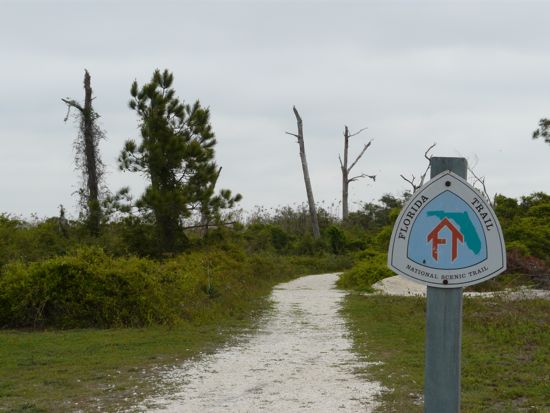
Perfect weather for a walk, and this is the walking trail, .7 miles each direction:
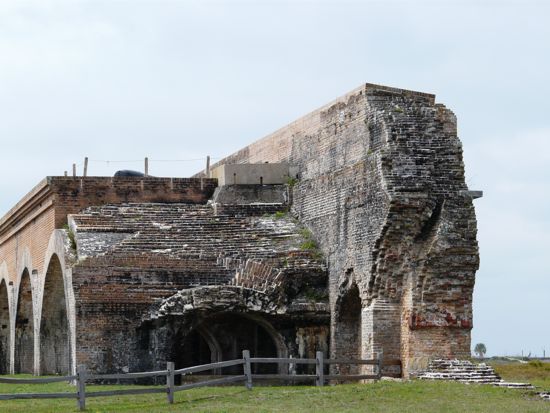
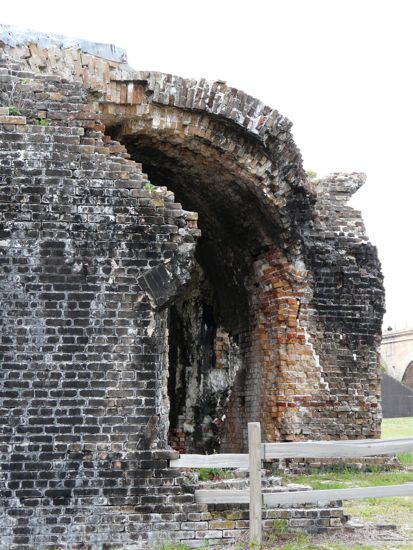
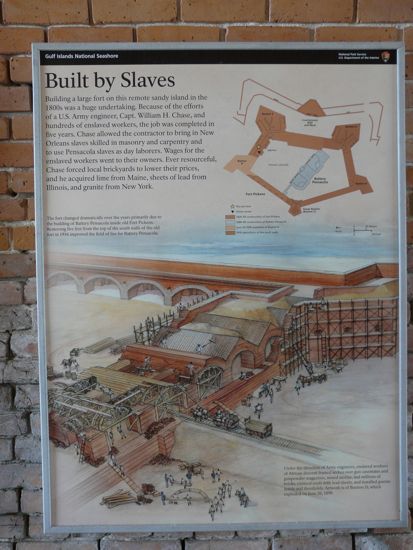
Fort Pickens was constructed to protect the shores from invaders, so this is one of the fortress walls”

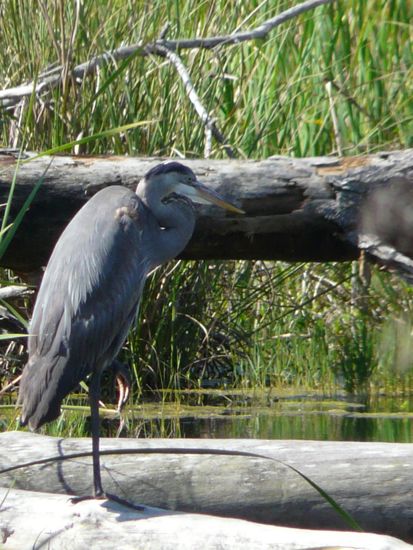
A Heron along the nature trail:
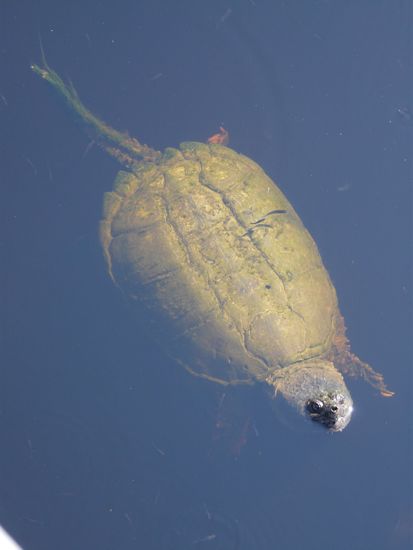
A Turtle (we can’t agree on whether it is a Gopher Turtle or a Snapping Turtle):
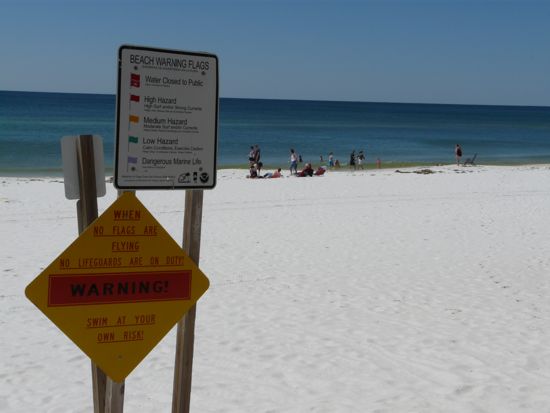
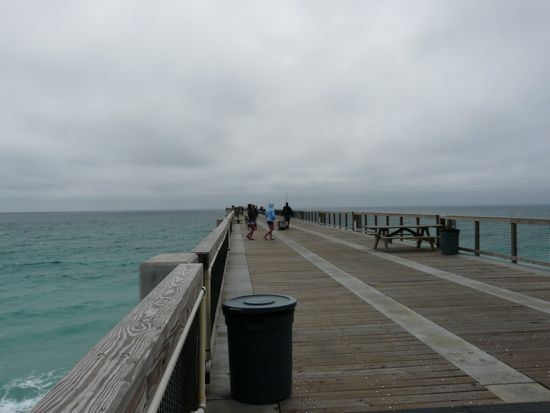
We finished up with a walk along the beach, where our visitors talked with the fishermen along the shore. These are the lines they have out trying to catch some fish, but I really want you to see how clean and beautiful the beach, sand and water are looking 🙂 :

This week, I need to get some things done in the garden, before the weather starts getting too hot!
US Highway Deaths Lowest Since 1949
The major reason? 84% US drivers use seat belts. You can read the entire article at AOL News
WASHINGTON — Highway deaths have plummeted to their lowest levels in more than 60 years, helped by more people wearing seat belts, better safety equipment in cars and efforts to curb drunken driving.
The Transportation Department estimated Friday that 32,788 people were killed on U.S. roads in 2010, a decrease of about 3 percent from 2009. It’s the fewest number of deaths since 1949 — during the presidency of Harry Truman — when more than 30,000 people were killed.
The Pacific Northwest region, which includes Washington state, Oregon, Idaho, Montana and Alaska, saw fatalities fall 12 percent. Western states including Arizona, California and Hawaii also posted large declines.
Government officials said the number of deaths was still significant but credited efforts on multiple fronts to make roadways safer.
“Too many of our friends and neighbors are killed in preventable roadway tragedies every day,” said Transportation Secretary Ray LaHood. “We will continue doing everything possible to make cars safer, increase seat belt use, put a stop to drunk driving and distracted driving and encourage drivers to put safety first.”



Like Cats
I was talking with a friend who had started in a new church about a year ago, around the same time we started at our church. I was telling her about the Service to Others Committee, and how I like everyone working on it, we were all kind of nerds, my favorite kind of people.
She looked a little down, and told me it seemed to be taking some time for her to find her niche in the church, and so I had to share with her my cat theory.
When you bring a new cat into a house where you already have a cat, you have to keep them separated for a while. You put the new cat in a separate room, with separate feeding dishes and litter box. Even so, the original cat is going to be a little wary. He can smell the new cat, it is something new and something strange, and it makes him uneasy.
People, it seems to me, are a little the same way, especially people who are settled. When a new person comes in, it just won’t do to try to be accepted. You just have to come in quietly, don’t intrude, let people get used to you. Little by little, people reach out to you. It can be discouragingly slow. If you have patience, it pays off.
Sometimes, rarely, but sometimes, you meet someone with a widely accepting outlook, and this time, I was lucky, I met a friend at the church who is just so full of life she bubbles with it. She makes things happen. She doesn’t have time for gossip or negative thoughts, and if you are willing to help, that’s good enough for her. She is organized and she is busy, and I feel really lucky to be her friend.
Slowly, people are starting to realize we are not visitors at the church, but here to stay, and are reaching out to greet us. It’s a good feeling.
Tomorrow, we have our first of two sets of house guests arriving. When our first guest leaves, I have 18 hours to get the room and bathroom cleaned, clean sheets on the bed, etc. They are all really good friends, very old friends, and all coming to escape the chill of a seemingly endless winter and enjoy a little sunshine. If you don’t hear much from me, it’s because I’m out playing. 🙂
Failure in Kuwait
This morning, as I was getting out sheets for the guest room, I had a happy surprise – one last 10-pack of personal tissue packets, with an Oud scent.
The first time I bought them, it was an accident. Our son and his wife were visiting, she had a cold, so I ran in to the store, grabbed a packet, (paid) and ran back out to the car. Later in the day, I wondered what perfume she was wearing, I could catch a whiff now and then. I asked her, and she said she didn’t have any perfume on, and she couldn’t smell anything.
We finally figured out it was the tissue. It smells like Oud.
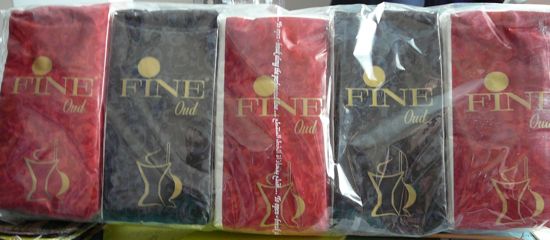
From then on, I bought the Oud tissues. When it came time to leave ‘for good,’ I stocked up. A year later, I thought I had used them all, and I searched every store in Kuwait while I was there to stock up on some more, but – alas! – no one had them in stock.
So it was a truly happy surprise this morning when in the very back of my linen closet, I found this one last remaining 10-pack. I will try to stay as healthy as I can, so I don’t have to use them all up before I can figure out where I can find them around here. The package says they come from Dubai and (wooo HOOOO!) there is a website!
Kuwait National Seismic Network
I don’t know why I am suddenly getting a lot of hits on an old post I wrote when we had an earthquake in Kuwait, and discovered that Kuwait was vulnerable. Somehow, we thought Kuwait was a low risk earthquake area. I thought about it a lot, on the 10th floor of my tower in Fintas, as I watched how other tall buildings were being constructed. 😦
If you need information on earthquakes and / or tsunamis in Kuwait, here is the best place to start: click the blue type
Alexander McCall Smith and The Saturday Big Tent Wedding Party

Just back from a wonderful two day trip to Botswana, visiting my dear and beloved friend Precious Ramotswe, who owns the #1 Ladies Detective Agency. For her, I make an exception to the paperback book rule (buy paperbacks because hard covers can hurt you if you fall asleep and they fall over) and get on the pre-publication order list so that Amazon will send me the book as soon as it comes out.
The Saturday Big Tent Wedding Party arrived Wednesday night. My husband was expecting a friend, and when the doorbell rang I thought “oh my, he is really early!” but it was the UPS guy, who had left a book-sized package on my doorstep. I had just finished an easy but fun book (The Map Thief by Heather Terrell) and was at odd ends as to what to read next, and this was an easy answer. As my husband drank Arabic coffee and sweet sweet Arabic tea, and ate delicate Middle Eastern treats downstairs, I got to start The Saturday Big Tent Wedding Party.
You know the books. They aren’t difficult to read, but while you are reading, you are transported to another world. Precious Ramotswe’s Botswana is not a world without problems, but the solutions to the problems are often found in softer gentler ways, ways that would seem counter-intuitive in our culture, but make total sense when you are raised in Botswana. There is a value placed on peaceable interaction, and maintaining relationships, on forgiveness, and going to extra mile. It’s a sweet world, and a great escape.
As usual, there are several intertwining plot lines with ingenious and unexpected solutions. I suspect that is what keeps me glued to this series – I cannot anticipate the solutions. That, and the gentleness of her outlook, the sweetness of life in Botswana, and the dignity and integrity of McCall’s primary characters.
I don’t know how McCall manages to keep the series fresh, but he avoids the formulaic and I find each book a treat. My favorite part of this book is how Mma Potokwane manages to wangle and invitation to Mma Makutsi’s wedding:
Mma Potokwane noticed the other woman’s uncertainty. “Yes,” she continued. “There’s that problem. And then there’s another problem. Problems come in threes, I find, Mma. So the next one – Problem number two, so to speak – is the cooking of food. You know what I find, Mma, it is this: the people doing the cooking never have enough pots. They say they do, but they do not. And right at the last moment they discover that there are not enough pots, or, more likely, the pots they have are too small. A pot may be big enough to cook your meat and pap at home, just for a family, but do not imagine that it will be big enough to cook for a couple of hundred people. You need big, catering-size pots for that.”
She was now warming to her theme. “And the third problem is the food itself. You may think that you have enough for the feast, and you may be right when it comes to the meat. People usually have enough meat – often rather too much, in fact. But they forget that after their guests have eaten a lot of meat, they need something sweet, and often they have made no arrangements for that. A wedding cake? Yes, but there will only be one small piece of that for each guest – usually not enough. So people find themselves wishing that they had had the foresight to get a supply of ordinary cake for the guests to eat with their tea. And where is this cake? Not there, Mma.”
Mma Ramotswe glanced at Mma Makutsi; this was not the way to speak to a nervous bride, she thought. “I’m sure that everything will work out well,” she said reassuringly. “And if there are any problems, they will surely just be small ones – nothing to worry about.”
Mma Potokwane looked doubtful. “I hope so,” she said. “But in my experience, it never works out like that. I think it’s better to be realistic about these things.”
Mma Makutsi picked up her pencil to add something to her list. “You said something about pots, Mma. Where would I be able to get these big, catering-size pots?”
Mma Potokwane examined her fingernails. “Well, we have them at the orphan farm. Each of the house mothers has a very large pot. I’m sure that we could do something . . . ”
Run to your bookstore and buy The Saturday Big Tent Wedding Party!
Anniversary and Punch List
It’s been a year since we bought the house. We had to have it entirely rewired before we moved in, and now, we are so glad we took that time and spent that money; the insurance companies have gotten more and more finicky about insuring houses in Florida. One of the newest causes for non-renewal is aluminum wiring, which is what we had taken out and replaced with copper wiring, not cheap, we can tell you.
We are so glad our contractor made that recommendation. For one thing, we sleep well at night, knowing the wiring is new and well-installed. For another thing, it was good to get it done while we had nothing in the house, and the workers had easy access to everywhere they needed to tear out walls, rewire, put back walls, etc.
Do you make lists? I have a list I made in November, and today I finished off the list. It had unfinished tasks going back to the move-in. You prioritize, you know? Even when you have accomplished the most important things, sometimes it is just too overwhelming to tackle the next thing so you take a break . . . and that break can stretch.
The little plumbing things are all done. Every single one. Wooo HOOOO. The final light fixtures are all up. Woooo HOOOOO! The outside watering system is working, woooo HOOO, and we have a guy helping us restart our lawn – wooo HOOOO!
It’s kind of like having a baby. If you think about all the things that need to be done before you do it, you might have second thoughts. It’s all-consuming, and it can be exhausting, emotionally and physically and financially. Just like having a baby!
And, now that I have come to the end of my punch-list, I would celebrate, except that new things are cropping up – the gutters, the drainage, the driveway, the air conditioning . . . nothing that needs to be done, no emergencies, but all which need some attention, some fine tuning, so that we are not dealing with an unexpected disaster.
It’s not like Trust Towers in Kuwait, where we lived in Fintas, or Al Fardan Gardens in Qatar, where we could just call the management if anything went wrong, and someone would show up to fix it. Now, we have to think about what we want, how much we are willing to pay, and we have to make decisions.
We are waiting for the air conditioning man to come. The electricians have told us that the inside and outside units (the expensive pieces) are fine; it is the thermostat that needs replacing, so we have to have the A/C people replace that. Meanwhile, I think I will sit back and enjoy our new light fixture.

Here is what I love. AdventureMan and I are so often on the same track. We wanted traditional – a crystal chandelier – but we didn’t want elaborate, we wanted simple lines, not a lot of embellishment. When we found this, we both knew it at once – welcome home, new light fixture!
And here is one other thing we love. Through our contractor, we met the best people. The plumber is good, and thorough, and honest. The electricians are good, and hard working, and serious. They are all knowledgeable professionals, people we can trust.
The electrician didn’t want to charge us. He said these were leftover tasks from last year. We insisted – a year later, this is on us, not on them. We fiddled around a whole year looking for what we wanted; it’s not fair to not pay after a whole year.
Sometimes we just feel so blessed, having come to this broad and spacious place, Pensacola.
Jaco’s on the Pensacola Waterfront
“Where do you want to go for lunch?” asks AdventureMan.
Sometimes I tell him “you choose!” but not today. “Jaco’s” I reply.
“Where is Jaco’s?” he asks, and I tell him it is down by the Pensacola pier. I have seen it, I have wondered about it, and every now and then I hear it mentioned in passing by some friend or another. I want to give it a try.
The minute we walk in, we love it.
First, there is this great place to sit outside, and if it is a little cool, they have these heaters, like they use in Kuwait and Qatar in cool weather, so people can still sit outside. Outside is beautiful, because you are right on the Marina, right on the water.

We got there just in time. Following us, the teeming hoards decended, and we were glad we had ordered and been served while it was still relatively quiet. Jaco’s has definitely been discovered.

The food is great. What? You thought we only ate barbecue? No, we love barbecue, and we seek it out mostly because for lo, these many years, we have been seriously barbecue deprived, it’s not so common in the Arabian Gulf countries to find good ol’ American barbecue.
Nor is it common to find food this good, this well prepared, in Pensacola. Everything we ordered, we loved.
We started with the spinach soup:

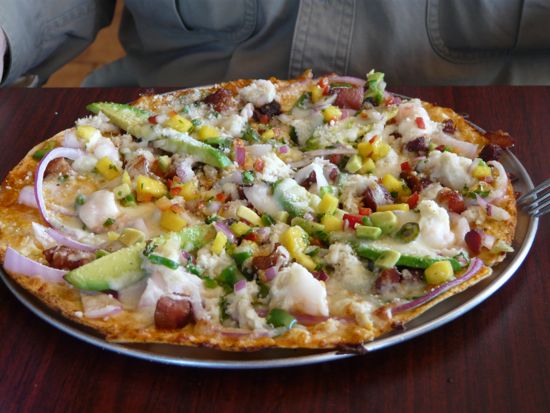
And then I had Antipasto platter, and AdventureMan had a ‘flatbread pizza’, which we found is a whole lot like an Alsatian ‘flammekeuchen.’ Oh Yummmmmmm.

I forgot to take photos of dessert – I had a berry dessert and AdventureMan had a cobbler, again, both yummmmmm.
We love this place. We plan to go there frequently.
We had been recently to another restaurant I will not be reviewing. It thinks a lot of itself. They start you off with ‘the water service.’ I had the ‘most adventuresome’ meal on the menu, the terrine, and it wasn’t all that great. It was just OK. Others at my table had similar experiences, except for the one who ordered the common hamburger, who said it was a really, really good hamburger. It means well; the first time I ate there I had a delicious risotto, but the dessert was only so-so, not worth the hyped up description. We won’t go back.
We will be going back to Jaco’s. Jaco’s is fun, unpretentious, with great, fresh tasty food, a view to die for, good service and a lot of happy patrons.
AdventureMan’s New Talents
This has been a great month for AdventureMan.
He knew what he wanted. He thought about it, planned it, sought out resources. He now has three photo shelves in his office, where he can display a changing round of photographs. He bought the lumber, tacked on the trim and mounted them on the wall, all by himself.

All these years he has worked so hard – he has never had the time for a fun project like this, and he just sits there and grins that something he was able to do himself can give him so much satisfaction and happiness. Retired, maybe, but still learning new skills, scaling new mountains.
Last night, he baked his first pork tenderloin, and then roasted up some asparagus with an olive vinaigrette sauce. Oh, yummmmm. Still growing, still developing new skills, it is so much fun.
Today, he is going out to explore what kind of kayak he wants to buy. 🙂
Recent Comments
intlxpatr on Shampoo Ginger tigerbutterya0c5ff1d… on Shampoo Ginger intlxpatr on British Soldier Kidnapped, Esc… John on British Soldier Kidnapped, Esc… intlxpatr on British Soldier Kidnapped, Esc… Wikipedia Donate Button

Amazina


Early Voting in Florida


